平行链 · 1157

Enterprise blockchain infrastructure Aventus launches Aventus Cloud node sale

On August 12, Aventus, an enterprise blockchain infrastructure provider, announced the official launch of Aventus Cloud node sales. The program aims to expand participation in Aventus network infrastructure by enabling individuals and institutions to run nodes with available computing resources. Established in 2017, Aventus has provided blockchain infrastructure for enterprise applications in the aviation, energy, telecommunications and other industries, and has become a Polkadot parachain. Aventus Cloud went live on the mainnet in April 2026. Nodes can handle verification network activities, and eligible operators can receive network rewards. Currently, Genesis Tranche node licenses cost $1,755, and the network is ultimately planned to have up to 40,000 nodes, and over 2,500 nodes are already active.
10d ago

Over 100 crypto projects have been shut down in 2026, and the industry is experiencing an internet bubble reshuffle

According to Twitter, more than 100 crypto projects have closed, filed for bankruptcy, or permanently ceased operations since 2026, and the pace of withdrawal is accelerating. In late July alone, BitMEX, BitMart, Movement Labs, and Storj Labs announced closures or submitted related applications. The exit project covered trading platforms, wallets, DeFi lending agreements, the NFT marketplace, and the L1 blockchain; Polka's parallel chain Moonbeam also permanently ceased operation on July 31, and user funds that were not bridged in time were stranded. This round of clean-up has been described as similar to the restructuring of the industry after the bursting of the internet bubble. The number of Ethereum's general-purpose L2 grew rapidly in 2023, but as the threshold for the deployment chain was lowered, the market became congested and projects lacked differentiation. Espresso Systems CEO Ben Fisch said that the current integration phase is a general-purpose L2, not all L2s. Lorenzo Valente, research director at ARK Invest, said that the crypto industry is undergoing the largest consolidation in history, capital is becoming more picky, and teams and trading platforms that lack a fit for the actual product market are being shut down; Hyperliquid and Pump.fun already account for 67% of the total revenue of the application layer. The problem with a large number of projects is that they have usage but no revenue in the traditional sense of the word. Many teams use their own tokens to pay engineers, subsidize liquidity, and cover security audits. Recently, most altcoins in the bear market have fallen by 70% to 90%, making token-denominated capital reserves and operating cycle estimates invalid. DAO governance tool platform Tally, which served more than 500 agreements, processed over $1 billion in payments, and helped protect up to $80 billion in on-chain value, was shut down due to the lack of a sustainable business model for governance tools. The security incident further hastened the exit of the project. Blockaid estimates that on-chain attacks lost $1.1 billion in the first half of 2026, more than the full year of 2025; Kelp DAO and Drift Protocol incidents lost $293 million and $285 million, respectively. TRM Labs estimates that North Korea-related attackers accounted for 66% of total crypto attack losses over the same period. Projects that can continue to grow in a bear market generally rely on dollar revenue rather than their own tokens. Hyperliquid's cumulative processing fees exceeded 1 billion US dollars on June 30, and currently accounts for 70% of the decentralized perpetual contract market; as of July, Aave held more than 12 billion US dollars in deposits, and annual loan fees exceeded 100 million US dollars. What these projects have in common is not the most complex technology, the most financing, or the largest community, but rather the establishment of products that users are willing to pay for. This article is sponsored by GENG, Build Your Fortune on GENG (https://geng.one)

13d agoburnking

Moonbeam announced it will shut down on July 31, 2026

Comparing news, cross-chain protocol Wormhole announced that the Moonbeam network will officially shut down on July 31, 2026. Moonbeam will keep the parachain running during the transition period, but the chain will cease operations after July 31. Wormhole notes that after this date, Portal and Wormhole contributors will not be able to assist in recovering any assets deposited on the chain. Wormhole advises users to transfer external assets across the chain through Moonbeam's official channel before the deadline. Earlier, Moonbeam announced a complete exit from the Polkadot ecosystem and the 1:1 migration of GLMR tokens to the Base network.

45d ago

Moonbeam will transform into an AI Agent communication and settlement network, and GLMR will migrate to Base

Comparing news, Polka Parachain Moonbeam announced that it will launch a new Moonbeam protocol and transform it into a decentralized AI Agent communication and settlement network for the future on-chain economy. Meanwhile, GLMR tokens will migrate to Base at a 1:1 ratio and become native ERC-20 tokens. Cross-chain migration is now open and the deadline is July 31, 2026. Officials say users who hold GLMR on centralized exchanges don't need to do anything.

49d ago

Polkadot responds to Hyperbridge vulnerability: only Ethereum-side DOT is affected, mainnet assets are unaffected

Comparatively speaking, Polkadot stated in response to the Hyperbridge vulnerability incident that the vulnerability only affected DOT assets bridged to the Ethereum network through Hyperbridge, and did not involve native DOT or other bridged path assets within the Polkadot ecosystem. Officials said that Polkadot's main network and its parachains are operating normally, and related assets remain safe. Hyperbridge is currently suspended, and the incident is under further investigation. Earlier news: The Polkadot bridge vulnerability was exploited to distribute an additional 1 billion DOT on the Ethereum network and have been sold. The attackers made a profit of 237,000 US dollars.

131d ago

Phala Network plans to fully migrate to Ethereum L2

Comparing news, the decentralized off-chain computing infrastructure Phala Network published an article stating that since Phala's Polkadot parachain slot expires on November 20, 2025, it has now submitted a proposal to stop the parachain and completely migrate to Ethereum L2 to comply with Intel's roadmap (TDX + GPU confidential computing) and the broader EVM ecosystem.

326d ago
Boca Weekly | W3F and Gavin will participate more actively in voting on treasury proposals! Hydration TVL is over $400 million!

Boca Weekly | W3F and Gavin will participate more actively in voting on treasury proposals! Hydration TVL is over $400 million!

Source: PolkaWorld Original Article Link: https://mp.weixin.qq.com/s/_C6Rc2g0h2aAKB2HacYSug本周最重要更新,Gavin Live Highlights: Distribution route: Gavin clearly stated that it supports “hard pressure” (up to 2.1 billion DOT), decreasing every two years on Pi Day (13.14% based on remaining supply). First cut: 2026-03-14; if approved, the plan is incorporated into the v1.8.1 policy goals: The emphasis is on managing “interest rates” rather than nominal inflation; unify pool redistribution (verification/nomination/treasury/others) by decoupling issuance → interest rates → security through the “Revenue Pot”. Validator payments: It is proposed to use DOT-based stablecoins to pay validator returns; solutions such as Hollar can be used in the short term to promote “native, overcollateralized DOT stablecoins” in the long term (and explore stable-ish designs). Nominee mechanism: It is proposed to eliminate slashing and unbundling periods, introduce “zero risk interest rates” (interest rates are low but stable), and maintain the nomination mechanism to bring interest rates closer to real economic regulation. Validator governance: Introduce the Proof of Personhood idea to improve the transparency of identity and node declarations, require a certain degree of self-pledge, and reduce the risk of centralization and tandem connections. Treasury and Governance: After Gavin returns to CEO of Parity, W3F/Parity will vote more actively to establish spending committees and open standards, and move towards more conservative and strategic fiscal discipline. Product and path: Build not only machines, but also applications — Hub+ Coretime two-wheel drive; Parity will build the Hub into a “dual VM (Revm/PolkAVM) contract platform”, and will launch its own products to drive adoption. For more details, see the full Chinese version of “Polkadot Changes: Gavin Supports Hard Pressure and a Complete Reshaping of the Fiscal Expenditure Mechanism!” compiled by PolkaWorld In addition, in this live broadcast, Gavin Wood revealed for the first time his mission and direction after returning to CEO of Parity! He said he will return to the original intention from all aspects — Polkadot should truly reach the public and become a useful product platform. Parity is positioned as a product company that not only makes “machines” (Hub, PoP, JAM...), but also personally applies them. Future direction: Invest strategic capital and concentrate resources → Build a hub smart contract platform, incubate new scenarios such as Proof of Personhood, games, etc. Use the platform yourself + promote Gavin on both lines for users Teaser: New products will be released in the next few months! Learn more in PolkaWorld's latest article “Important! Gavin Wood shares his mission and direction after returning to CEO of Parity! This Friday marks Parity's 10th anniversary! Parity mainly served Ethereum for the first five years and Polkadot for the next five years! Now, on the 10th anniversary of Parity, it has finally opened the doors of Polkadot for Ethereum developers through REVM! Ten years ago, Gavin Wood and core developers brought EVM to the crypto world at ETHCore (now called Parity)! Ten years later, Parity finally allows every Ethereum developer to start over on Polkadot. Polkadot has been behind EVM's source code from the very beginning! If you're a Solidity developer and have had concerns about Boca — now, the launch of REVM has paved the way for you. You no longer need to adapt to a new language, understand Runtime, or restructure your account system. You can continue to use the tools, languages, and ways of thinking you are familiar with to build applications belonging to the next generation multi-chain ecosystem. Welcome to the Polkadot Hub! REVM is waiting for you to deploy the first line of code! “Parity 10th Anniversary: REVM Opens Polkadot Doors for Ethereum Developers!” This week's major developments: 500ms block generation is coming soon! Parity engineers said the feature has been developed and merged as soon as the end of the year, first...

348d agoPolkaWorld#PolkaWorld
Polkadot Weekly | Grayscale Submits Polkadot ETF S-1 File! Gavin to Stream Latest Thoughts on DOT Economic Reform

Polkadot Weekly | Grayscale Submits Polkadot ETF S-1 File! Gavin to Stream Latest Thoughts on DOT Economic Reform

Source: PolkaWorld Original link: https://mp.weixin.qq.com/s/BcgMdUpAevhGTe5396e1NQ重磅! Grayscale Submits Polkadot ETF S-1 File! On August 29, Grayscale submitted an S-1 document for Polkadot's spot ETF to the US SEC — a step often seen as a key step before approval for listing (similar to Bitcoin and Ethereum ETFs). https://x.com/EmilKietzman/status/1961544176354677151EVM Off-chain options! Parity announced: Kusama launches smart contract platform in October Polkadot launches smart contract platform that also supports EVM (compatible with Ethereum applications) + PVM (Polkadot native innovation) dual engines! Current progress in the EVM direction: Revm integration → Solidity contract works with zero changes, Hardhat/Foundry is available. The goal is to complete the first release in early September → full testing. Gas/Fee Model → Fusion of Ethereum Gas and Polkadot weight mapping, delivered in early September. Ethereum block storage → pallet-revive has been implemented, and Merkle proof is supported during testing. DOT accuracy upgrade → 18 decimal places, compatible with the ETH tool ecosystem, completed. Learn more in PolkaWorld's latest article “A New Paradigm Beyond the EVM Chain: Polkadot Smart Contract Platform Launches in October!” LATEST NEWS! Paraguay is tokenizing Asuncion Innovation Valley (AIV) through the Polkadot ecosystem. The project site is located in the capital Asuncion, with a total value of about 6 million US dollars. The project was tokenized by Paradata and managed through Moonbeam's white label platform Better Use Blockchain (BuB) running on Polkadot. Innovation Valley will build hotels, convention centers, universities, and data centers. Profit distribution is expected to be automated through smart contracts by year 3. With Polkadot + Moonbeam, the project will have cross-chain interoperability, scalable transactions, shared security, and on-chain governance capabilities. The project will be officially launched in the third quarter of 2025 and will be connected to global payment gateways and KYC systems. This marks an important step for Paraguay to combine tokenized equity with the real economy through Polkadot. https://x.com/Cointelegraph/status/1961074036772888739之前被 The Polkadot 2.0 Launch Party event proposed by Alice und Bob has been officially upgraded to Polkadot Builder Party! This is a 6-week online hackathon with the theme “Radically Open, Radically Useful” with a total prize pool of $30k! Developers are welcome to build applications based on Polkadot 2.0, parachains and related technologies. Hackathon launch time: October 6, 2025 Submission deadline: November 17, 2025 Learn more: https://forum.polkadot.network/t/polkadot-builder-party-global-hackathon-starts-6th-october-2025/14595关于 The exact time for Polkadot 2.0 to go live is here! Referendum #1721 is being voted on to enable RFC103 functionality in the relay chain's runtime. If the vote passes, the relay chain's Elastic Scaling (Elastic Scaling) feature will be released on September 8th (Monday,...

354d agoPolkaWorld#PolkaWorld
Polkadot Capital Group launches direct connection to Wall Street, W3F warns of inflation risk reduction

Polkadot Capital Group launches direct connection to Wall Street, W3F warns of inflation risk reduction

This week, the Growth Pressure Plan was replaced by the Medium Pressure Plan, which was a relatively less aggressive plan proposed by Alice_und_Bob and Jay after meeting and communicating. We've reorganized a comparison version, but I feel that Medium Pressure is no different from the previous Growth Pressure in terms of market capitalization pressure; it just took a little longer to reach the hard peak. So in the comparison between Hard Pressure and Medium Pressure, we can see: 1. Hard Pressure's annual sales volume initially declined sharply (blue line below); after 2052, or 27 years later, the annual increase was less than 1 million DOT. 2. The overall annual circulation of Medium Pressure is more flat (blue line below), and after 2052, or 27 years, the annual increase in sales was less than 1 million DOT. 3. At the same distribution ratio, Hard Pressure puts more pressure on the market cap than Medium Pressure. 4. Regardless of which plan you choose, in the future, after this proposal, we can adjust the pressure on DOT market value and economic incentives by adjusting the parameters of the distribution ratio. In summary, regardless of the plan, we can adjust how much “pressure” DOT market capitalization needs to face through two types of “pressure”: the first pressure is pressure from varying degrees of decline in inflation, and the second pressure is pressure to reduce the reward ratio for stakers. For specific data reference, please check the chart below. You can also check out PolkaWorld's live replay of this week's proposal for a more detailed explanation: https://x.com/polkaworld_pro/status/1958363607449870719或者查看 PolkaWorld's article to compare all current DOT inflation proposals. “If DOT inflation falls to 3%, how much will the market capitalization be to maintain cybersecurity spending?” In response to these proposals and discussions, Web3 Foundation research scientist Jonas Gehrlein notes that one key issue is being overlooked: economic security. Jonas believes that Polkadot's security does not exist out of thin air, but is based on validator and nominee pledges. In particular, those key validators at the “lower safety limit” rely heavily on inflation incentives for their safety. If inflation is cut drastically, Polkadot's economic resilience will decrease almost proportionately, and the network will be more vulnerable to economic attacks. In the worst case scenario (bribing existing validators), the cost of attacking Polkadot was only 14.71 million DOT, and if inflation were to plummet by half, this lower safety limit would drop directly to 8.18 million DOT, so the difficulty of the system to resist the attack was drastically reduced, and the risk increased dramatically. Jonas's policy suggestions: Minimum Commission & Minimum Self-Staking: Require validators to set a minimum commission (such as 10%) to guarantee their long-term earnings; require validators to have a minimum self-pledge amount (such as 10,000 DOT) to ensure “skin in the game.” The adjusted issuance structure currently adds about 280,000 DOT every day for staking rewards and 50,000 DOT for the treasury; overall inflation can be reduced by adjusting the ratio of the two rather than simply cutting. (Jonas here also confirms the importance of the adjustment ratios and parameters proposed by PolkaWorld in influencing inflation and market capitalization pressure.) Relaxation of the nominee mechanism to remove the reduction and unbinding period for nominees, reduce the risk of participation, and improve liquidity; even if the yield falls, users will still be willing to participate in the pledge to maintain network security. The declining inflation curve + total volume upper limit is designed to continuously decrease the issuance model, so that the total amount of DOT gradually approaches a certain upper limit (such as pi × 10DOT); cooperates with the destruction of coretime and transaction fees to make the economic model more sustainable. Jonas's core view is very clear. Simply cutting inflation = reduced safety; while cutting inflation + policy package = is likely to achieve “low inflation +...

362d agoPolkaWorld#PolkaWorld
HIC Phase II Fund: Bringing capital, applications and liquidity together to Polkadot!

HIC Phase II Fund: Bringing capital, applications and liquidity together to Polkadot!

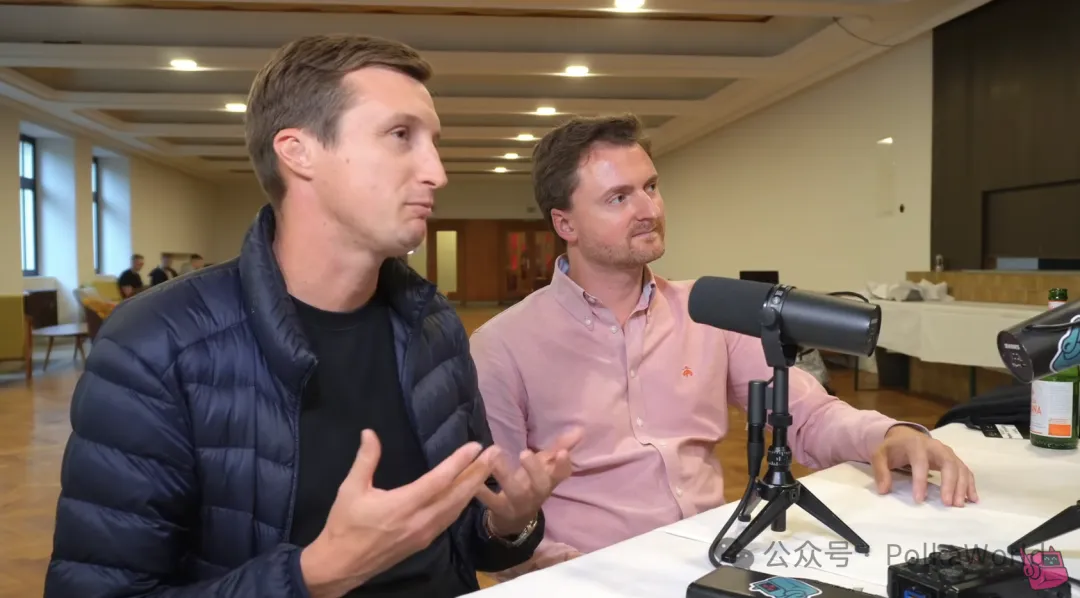
Source: PolkaWorld Original Link: https://mp.weixin.qq.com/s/0vblVUVXubzixdHgWUX9cg在 In the Polkadot ecosystem, there is a category of investors who not only “throw money”, but use capital to leverage application implementation, revitalize on-chain liquidity, and tell the story of the ecosystem to investors around the world. Harbor Industrial Capital (HIC) is one such entity. From the first phase of the fund established in 2022 to the second phase fund now supported by the Web3 Foundation as the first LP, HIC not only invested in star projects such as Peaq, Mythical Games, Mandala, and Xcavate, but also personally ran nodes, worked as LPs, and participated in liquidity pools to activate DOT assets. In their eyes, Polkadot is on the eve of a “Cambrian-style outbreak” — Polkadot Hub will soon be launched, JAM upgrades have yet to be priced by the market, and the potential for RWA, gaming, government services, etc. is “ceiling level”, and Asia is the next engine of growth. In this “Space Monkeys” conversation, the two partners Mario Altenburger and Max Rebol shared their investment logic, lessons learned, observations on the Asian market, and why Polkadot's funding narrative needs to shift from “grants” to “investments.” More than just investing: HIC Phase II brings capital, applications, and liquidity to PolkadotJay: You are preparing a second fund. Compared to the first fund, how is this strategy different? Max: The first phase is a pure private wood fund. The main investors are family offices and institutional investors from Hong Kong and other parts of Asia. And the second phase of the fund, the Web3 Foundation, is also an LP, and it is the first LP, making us a more “official” ecosystem fund. Of course, we will still bring in funding from outside agencies and family offices. Jay: Are there any changes geographically? Last time you mainly focused on Asia, will you expand this time? Mario: Actually, the project itself is global. In the first phase of the fund, we supported a total of 23 projects that won parachain slots in the auction, and also invested in venture capital projects, such as Mythical Games. The difference in the second installment is that there are no slot auctions now, so it will focus more on VC investment; at the same time, it will revitalize token assets and make them work in the secondary market, such as adding liquidity pools (like Hydration) to improve the liquidity of the entire ecosystem. This is part of a dual strategy. In addition, we also use tokens to deploy nodes. For example, on Peaq Network, we run two nodes to support the development of the project from the perspective of long-term holding positions. Jay: So you're not just investing your money, you're also actively operating your assets. Previously, Crowdloans were a good direction indeed. Max: Yes, we initially started with Crowdloans. Peaq Network is arguably one of the most successful examples. We supported them through a Crowdloan, and the returns have been great. It's exciting to have Peaq Network join the Polkadot ecosystem. Although Peaq doesn't stress much about being a Polkadot project in terms of the brand, they do use Polkadot's technology and DOT to buy Coretime. Jay: Yes, they're really cutting edge in technology. I saw that they were testing “elastic scaling”, and the block time seemed to be reduced to 0.4 seconds, which was amazing. peaq is a great example indeed. Mario: Yes, Mythical Games was also one of our most successful investments, and we have great confidence in them. They just launched their new FIFA game, which had 700,000 downloads within a few weeks, and was a huge success. We also invested in Mandala for the second phase of the fund. We helped them get a parachain slot last year, and now we're leading the way in their Pre-Seed round. We are optimistic about their layout in Indonesia — from government services (authentication, healthcare, transportation sector) to introducing private companies, which could be a disruptive change for Southeast Asia. They also...

369d agoPolkaWorld#PolkaWorld