徐明星 · 161
When the regulatory gap is filled, how much competitive advantage does Binance have?

When the regulatory gap is filled, how much competitive advantage does Binance have?

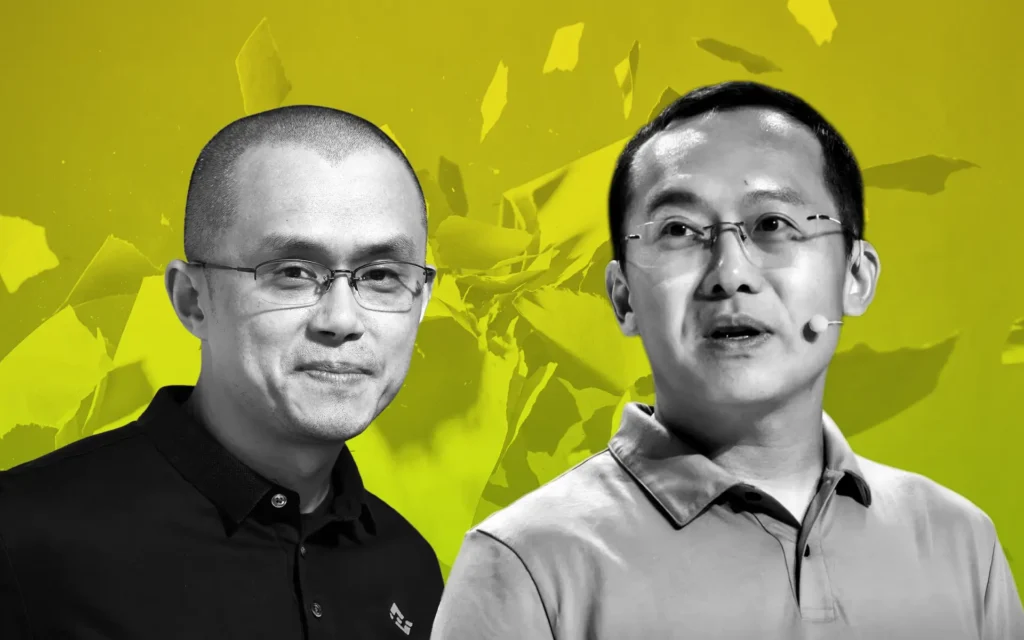
By Chloe, ChainCatcher Original title: What do you think of Binance's competitive advantage? On June 16, 2026, Reuters quoted two people familiar with the matter as reporting that the Greek Capital Markets Commission (HCMC) was preparing to reject Binance's MiCA license application; two days after the news broke, OKX founder Star (Xu Xingxing) published a long article on X to dismantle Binance's competitive advantage in regulatory blind spots. As regulatory pressure continued to heat up, a few days later, on June 24, Binance officially announced that it had decided to withdraw its MiCA license application in Greece and would turn to other EU member states to seek authorization. As we examine the four strengths that Binance has been accused of: regulatory arbitrage, speculative narrative cycle, social media control, and paper compliance, and then compare the MiCA dead line currently unfolding in the EU to examine how many of the moats Binance has accumulated over the past ten years when the rules are gradually completed and all exchanges stand on the same starting line, how much of the moat that Binance has accumulated over the past ten years is actually a real product or technology, and how many are just the dividends of lack of rules? Dismantling Binance's competitive advantage Xu Mingxing split Binance's competitive advantage into four pieces in the article. If you look at them side by side, you'll find one thing in common: each is not “Binance has made a product that others can't do,” but “Binance is not bound where others are bound.” Regulatory arbitrage: Operating where rules are fewest The core argument is that over the past decade, cryptocurrency competition has long been affected by regulatory arbitrage: companies operating under less regulatory constraints often enjoy more advantages than those that invest heavily in licensing, compliance, governance, and regulatory participation. In other words, when an exchange can serve global users without establishing an entity, applying for a license, or cooperating with regulation, its cost structure is inherently lighter than a serious compliant competitor. This gap is not due to the product, but to the lack of rules themselves. Speculative narrative cycle: There is always the next chance to get rich. He described Binance's business model as “a continuous cycle of speculative asset promotion”: when one asset story loses momentum, the other quickly makes up; users lose money in one cycle, and their attention is quickly directed to the next token, the next trend, and the next opportunity. He also pointed out that over the years, Binance has built a huge ecosystem composed of founders, former employees, venture capital funds, incubation projects, and affiliate market participants. Many projects received listing and exposure, but prices fell more than 95% from their peak after launch. Critics believe that the real profits are related insiders and early participants, while much larger retail investors have borne most of the losses. Social media machines: Ability to shape cognition The third advantage is social media control. Xu Mingxing pointed out that over the years, Binance has invested heavily in establishing links with KOLs, media agencies, promotion partners, and the community to develop one of the strongest communication networks in the industry; whenever negative news appears, it is often seen that a group of influential accounts immediately post positive content, while criticism is often questioned, refuted, or attacked. Supporters see it as strong community building and marketing, while critics see it as narrative management. Whichever claim is true, almost no one denies that Binance has built one of the most efficient social media machines in the history of the crypto industry, but this is also not a product power, but rather the distribution of influence in the public opinion arena. Paper compliance: The 1,500-person compliance paradox The fourth one is compliance. Binance often emphasizes that it employs more than 1500 compliance professionals and is one of the most compliant crypto companies in the world. Xu Mingxing's objection is that for any financial institution, compliance is never determined by the number of employees, but depends on whether the organization actually values compliance from a conceptual point of view and establishes control measures to manage real risk exposures. Citing reports from the “Wall Street Journal” and other media, he questioned Binance's “heavy form and light substance” in sanctions risk exposure, market monitoring, and suspicious account handling, and using Binance's sale of business to ComMex after leaving Russia, and the close relationship with Aster as an example to raise a fundamental question: if a business model is so risky that Binance is unwilling to directly operate, then is it acceptable to do it through an “independent” entity that is still closely linked to its ecosystem? These are all one-sided accusations by Xu Mingxing, and Binance does not necessarily agree with them. But what I want to say is actually the same sentence: this is not a company that wins by its products; it is a company that wins by a regulatory gap. MiCA Deadline: The First Positive Collapse of Regulatory Arbitrage Advantages The European Union's “Crypto Asset Market Regulation” (MiCA) came into full effect at the end of 2024, and the transition period will end on June 30, 2026; starting July 1...

57d agoburnking#Binance
Xu Mingxing tore up CZ again; micro-strategy under pressure; Standard Chartered called for 500,000 BTC...

Xu Mingxing tore up CZ again; micro-strategy under pressure; Standard Chartered called for 500,000 BTC...

Dear readers, what have the KOLs on X been talking about in the past 24 hours? Note: The following content is compiled from the X platform. They are all personal opinions. They do not represent the platform's position, let alone constitute investment advice. Star is tearing up CZ again. The community has eaten something online; Xu Star publicly questioned CZ/Aster DEX for “lying to the public again”, alleging that it copied the Hyperliquid model but used Shell to evade regulation, causing a rift in the community. The sharp drop in MicroStrategy's preferred shares may trigger Bitcoin Selling Standard Chartered's optimistic forecast to reach 500,000 BTC by 2030! Sister Mu Tou drastically reduced Tesla's average assets of nearly 200,000 US dollars. This article is sponsored by GENG, Build Your Fortune on GENG (https://geng.one)Twitter:https://twitter.com/BitpushNewsCN比推 TG Exchange Group: https://t.me/BitPushCommunity比推 TG Subscription: https://t.me/bitpush

65d agoWendy#KOL
A book detonates old accounts, and CZ and Star have had another ten-year feud

A book detonates old accounts, and CZ and Star have had another ten-year feud

Article: Cookie, Deep Wave TechFlow Original title: A book detonates ten years of grudges, CZ and Star go to war again Introduction: A $1 billion bet, old contract fraud cases, reporting doubts... The two founders of Binance and OKX have unraveled an old scar at the deepest point in the crypto industry. On April 8, 2026, Zhao Changpeng (CZ)'s autobiography “Freedom of Money” (Freedom of Money) went on sale worldwide. This 457-page memoir, from his childhood in rural Jiangsu to his four months in the US federal prison, all sales were donated to charity and topped Amazon's crypto bestseller list. But the real explosion of this book is not that it tells an inspirational story, but who named it. The most controversial section of the book is this: At a dinner in 2025, Huobi founder Li Lin told CZ that he had seen a screenshot showing OKX founder Xu Mingxing (Star) personally reporting him to the Chinese police, and it was this report that led to Li Lin's detention at the end of 2020. After the bomb was dropped, Star responded by posting several long posts on the X platform, directly calling CZ a “habitual liar,” and unraveling an old case from ten years ago. An open scolding war that continued for many days began. Old Grudge: One contract, two versions. To understand the intensity of this war of insults, we must go back to 2014. That year, CZ joined OKCoin founded by Xu Mingxing as CTO. He stayed there for less than a year. According to CZ in the book, Xu Mingxing tried to renegotiate his 10% share in early 2015, and CZ left the job after the two parties broke down. The departure itself was not unusual, but what happened afterwards made the entire Chinese-speaking crypto community watch a big drama. At the heart of the dispute was a commercial partnership CZ brokered during his tenure: he brought in Roger Ver, an early Bitcoin investor, for OKCoin, and the two sides signed a cooperation agreement on the Bitcoin.com domain. Something went wrong with this contract after CZ left. Two versions of the contract were put on the table, one with a six-month termination clause and one without. OKCoin accuses CZ of falsifying the contract, and CZ in turn accuses OKCoin of manipulating transaction volume and falsifying proof of reserves. Roger Ver later sued OKCoin for $57 million for breach of contract. Ten years have passed, and Rashomon has never come to a conclusion about “who falsified the contract”. This time, Star has re-opened a video of the QQ chat transcript that OKCoin notarized back then. He said the video proved that CZ sent two different versions of the agreement (v7 and v8) to OKCoin's accountant in December 2014, and the evidence of falsification was clear. CZ explained in the book that he rarely used QQ, and that other OKCoin employees logged in to his account and falsified chat history. Two people hold their own opinions, and each has its own “irrefutable proof”. Ten years are like a day. New Feud: Report Doubt and OKEx's “The Darkest Five Weeks” “Life on Binance” that really hit Star's pain point is a story about the regulatory storm in China in 2020. On October 16, 2020, OKEx (the predecessor of OKX) suddenly announced the suspension of all digital asset withdrawals because a private key holder “is cooperating with the investigation by the public security authorities”. The private key holder was later confirmed by Caixin and other media as Xu Mingxing. OKEx's withdrawal suspension continued for a full five weeks. OKB tokens plummeted by more than 15% within 24 hours after the news was announced. Users angrily asked “when can I withdraw money” on Weibo. CZ describes this incident in the book, implying that OKEx's wallet system is at risk of a “single point of failure” because Xu Mingxing was detained alone, causing the entire exchange to fail. He also compared Huobi, saying that Li Lin was also under house arrest for about 90 days during the same period, but Huobi's withdrawals were never interrupted because “Huobi's wallet settings are better.” A month later, Li Lin was also taken into custody. CZ claims in the book that five years later, in 2025, Li Lin told him at the restaurant that he saw a screenshot showing Xu Mingxing reporting him to the Chinese police. S...

134d agoLuxurytracy

Yi Lihua: Where there are people, there are rivers and lakes. The parties involved should resolve grievances and common building industry and prices

Comparing the news, Liquid Capital (former LD Capital) founder Yi Lihua tweeted that wherever there are people, there are grudges, and where there are grudges and grievances, there are rivers and lakes. We've heard the people involved talk about these stories many times, but we can only be spectators. Yi Lihua called for the parties involved (CZ, Xu Mingxing, Li Lin, Sun Yuchen, He Yi) to resolve this historical grudge and share the building industry and prices. He said that gossip and grievances are wonderful to hear, but wallets are more important to everyone. According to reports, CZ mentioned the past intersections of Li Lin, Xu Mingxing, etc. in the new book, and related events are currently being discussed on the X platform.

136d ago

CZ: Li Lin's detention back then was reported by Xu Mingxing to the police

Comparing news, in her personal autobiography “Binance Life,” CZ recalled the details of Xu Mingxing and Li Lin's successive detentions in 2020, saying, “On October 16, 2020, OKCoin suddenly announced an indefinite suspension of withdrawals... There are rumors that the Chinese police imposed “soft detention” on Xu Mingxing, locked him in a hotel, and isolated him from the outside world... Everyone is worried that the police will use user funds, and the Chinese market is in a state of panic. After five full weeks, Xu Mingxing was released from “soft detention” on November 26, 2020, and OKCoin only resumed withdrawal services... Two days after Xu Mingxing's release, on November 28, 2020, Huobi founder Li Lin and 17 other senior executives were taken away by the police at one of their public VIP events... Li Lin was “soft detained” for 90 days. After his release, he decided to quit the industry and list Huobi for sale. Binance was asked if it would take over, but we declined. In the end, Li Lin sold Huobi to Sun Yuchen.” “Five years later, at a dinner in 2025, Li Lin and I met again 11 years apart. Li Lin told me that he had seen a screenshot showing Xu Mingxing personally reporting him to the Chinese police. It was this report that led to his arrest.”

136d ago
From idealism to reality in a game: CZ and Binance's 'big clearance' moment

From idealism to reality in a game: CZ and Binance's 'big clearance' moment

Article: Grandpa Zao Web3 Original title: Big Liquidation: The CZ Doctrine Is Broken, Binance Has Blackened and Completed the Crypto Giants' Path of Atonement, Sister Mudou, ignited the fire. Haseeb is also posing as a great prophet. Xu Mingxing takes on the role of Prometheus, combining traditional Chinese and Western medicine, and teaming up to burn Ho Yi and CZ. Carthage must be destroyed, as must Sodom and Gomorrah. This religious presumption of guilt stems from common psychological contradictions in the crypto industry. The entire history of cryptocurrencies has been on the edge of challenging the rules, wandering in a dark, gray, and ambiguous world. Crypto giants now want to get off the ground and need to solve two problems urgently: how to evolve from arbitrators of the rules to those who follow the rules. For example, if the cost of avoiding the “10.11” liquidation is sacrificing oneself, how should Binance consider it? Seize the power to set crypto rules and gain practical benefits for the industry. For example, Coinbase's attitude can influence the progress of a clear bill. Where does the power come from? On Binance, there is also an additional identity dilemma. SBF can directly ask for forgiveness and distort time and space into the 2022 Republican Party, but CZ and Binance's Chinese identity and Chinese background have always faced a cycle of Western censorship and self-justification. Rules are valuable: the king of crypto is also a cutting board. The purpose of political science is not to create people, but to explore how to use people naturally. I'd like to start by telling a story, an old story where a dragon slayer chose to become an evil dragon. When the Soviet Union came to an end in 1991, history seemed to be coming to an end under neo-liberalism. America seriously governed the Earth through the United Nations system. Faced with Iraq's Saddam's invasion of Kuwait, the United States was authorized by the United Nations to join forces with 35 countries. After only 100 hours of ground action, it was easy to defeat Saddam and restore the sovereignty of Kuwait. At the time, America received sincere praise from all over the world. Just two years later, America was overshadowed in the Somali capital, not being able to achieve its small goal of capturing warlords, but also led to a strong backlash in domestic public opinion. Since then, America's morality has been broken. If there is no good reward for doing good deeds, it seems that there is no special cost for doing evil. Until the 9/11 incident in 2001, America's morals were completely shattered, and then the world fell into the quagmire of the war on terror. Thinking big or small, this story is very interesting. The current crypto dilemma is also the same. It was hard to win the Cold War with Wall Street and the banking industry, and won superior hegemony over tokenization and stablecoins, but internal differences have arisen on the route. The Black Hawk fell, the US directly blackened, and good deeds could not be rewarded. Binance also tried to save the crypto industry and eventually chose to create its own land. Let's go back in time to 2022. When FTX collapsed, Binance once held over 70% of CEX's share, but the entire industry was shrouded in an uncertain future. Binance decided to save the entire industry, and the $1 billion SAFU fund was set up at this point. Of course, it also hid some caution. It mainly consists of its own BUSD and BNB. Recently, it is famous for responding to Ellivan's call to exchange its holdings for BTC. Unfortunately, that's not the whole story. At the same time as SAFU, there was also an industry recovery fund IRI (Industry Recovery Initiative) to jointly carry out industry self-rescue plans with major project parties and exchanges. Binance promised to invest at least $1 billion, hoping that the overall scale would reach more than $2 billion. Now that the IRI program application forms are inaccessible, the industry may have recovered. Photo caption: IRI's funding situation. Image source: @business事实上. As early as 2023, IRI had ceased operations, and many promised funders, such as market makers such as Jump/GSR/Kronos, actually didn't invest at all because the leader Binance only spent $15 million and took away the remaining $985 million. Furthermore, the operation of the entire IRI is extremely opaque; you have no idea which project parties have received the investment, and which have no recourse but just wait to die. If you look further, there is more than IRI, which Binance promised but failed to do. Recently, there is the $400 million fund in the same boat fund after 10.11, and far the $1 billion BSC growth fund established in 2021. Many years after establishment, it began spending 50,000 dollars to buy the “I'm stepping on Malaysia” meme coins. Photo Caption: Binance Ecosystem Funds, Photo Credit: @zuoyeweb3如果细数一下币安发起的各个计划, seems to have a particular preference for the 1 billion figure...

201d agoLuxurytracy

He Yi commented on the OKX order issue: OKX's overall product capabilities are good, so Binance robbed the product manager

Comparing the news, some community users claimed that the Binance API had no issues during the order process, and that it was almost impossible to successfully place an order in OKX's extreme market. In response, who posted an article on the X platform saying, “Need help you @徐明星吗? He's trying to promote Binance. I think their product capabilities are pretty good, so I found his product manager.” Earlier, OKX CEO Star publicly stated that the 10.11 crypto crash was caused by Binance's irresponsible USdE banking activities.

203d ago
Manus Xiao Hong, with that group of interns in the coin industry who “came to the table”

Manus Xiao Hong, with that group of interns in the coin industry who “came to the table”

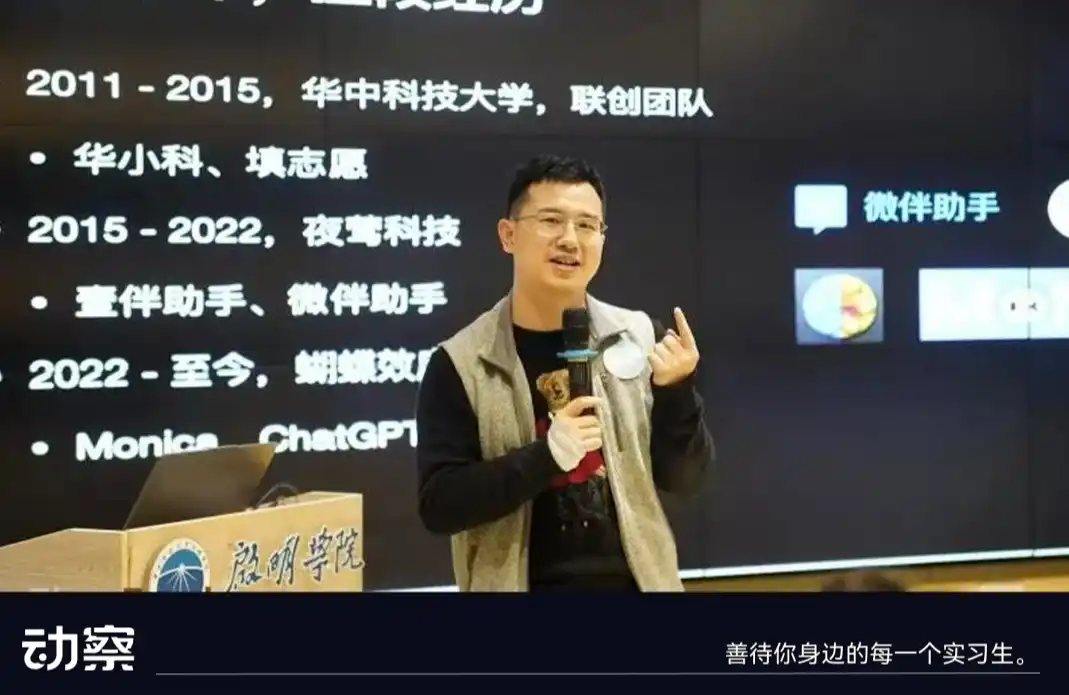
Author: Lin Wanwan, Motion Detective BeatingOriginal title: Starting with Manus Xiao Hong, the biggest news in the tech industry came from Meta: Zuckerberg spent billions of dollars to acquire Manus, an AI company that was founded less than a year ago. This is Meta's third-largest acquisition in history, after WhatsApp and Scale AI. A few days after the news was announced, everyone found that his profile stated: BTC Holder (Bitcoin holder). A tweet appeared on Twitter. The person who tweeted is called “Kamiyu”. His real name is Mao World Bank, one of the earliest Bitcoin miners in China, with a net worth of over 10 billion dollars: “It's no surprise that Manus founder Xiao Hong is a BTC holder — in 2013, he was one of our interns at Huake, and we worked together for 1bit at the time.” 2013. One bit. Huake intern. Xiao Hong, born in '93, is from the small town of Ji'an, Jiangxi. Prior to becoming Meta's vice president, he was best known as the founder of AI products Monica and Manus. But few people know that his first serious internship was at a Bitcoin media company called OneBit. He was in his sophomore year that year and worked on various student programs at Qiming College of Huazhong University of Science and Technology, WeChat drift bottles, WeChat on the wall, and a second-hand trading platform on campus. The vice-captain of the Lianchuang team is already considered a well-known tech geek among his peers. But Bitcoin is still a whole new world for him. One Bit is one of the earliest vertical Bitcoin media in China. Its office is located in Beijing Galaxy SOHO. The founding team included Kamiyu and several similarly young idealists. What they did was simple: translate foreign Bitcoin information, write popular science articles, and try to make more Chinese people understand this new thing called the “Ponzi scheme” by mainstream media at the time. What exactly did Xiao Hong do in Yibit is already difficult to verify. But looking back 12 years later, the significance of this experience has long surpassed the internship itself. The Bitcoin Circle in 2013 was a club of early participants in a major social experiment. There is no regulation, no pricing anchor, no mature business model — just a group of young people who believe “code is the law” to warm up amidst the ridicule of mainstream society. The people who were able to enter at that time were either gamblers or really understood something. Xiao Hong clearly falls into the latter category. Decentralized, permissionless, code autonomy. These ideas seemed like geek pride at the time, but they formed an underlying framework for understanding the world. Twelve years from now, when AI begins to reshape the boundaries of human-computer interaction, this framework may become traceable. From Bitcoin to AI Agents, the forms of technology vary widely, but the underlying logic is the same: it's all about how to make machines run autonomously, how to establish collaboration in an untrustworthy environment, and how to replace intermediaries with code. People who understood Bitcoin in 2013 understood AI Agents hardly needed additional cognitive purchasing in 2025. In that tweet, Kamiyu used a word: “identify vectors.” “In ten years, from Bitcoin to AI Agents, times have changed, and the company's boundaries have blurred. It's not so much about recruiting employees as it is about identifying vectors...” What is a vector? Direction multiplied by speed. Xiao Hong in 2013 is a sophomore who is willing to bet his time on “unreliable” fields. The choice itself is a screening — sifting out those who only look at immediate certainty, leaving behind those willing to pay for long-term possibilities. Twelve years later, this vector points to the position of Meta's vice president. In the cryptocurrency industry, where the myth of making wealth coexists overnight, there is a hidden path to success: follow one person in your early 20s. Around 2013, a group of the smartest and most adventurous young people poured into this barbaric world. Some of them have just dropped out of school, and some haven't graduated yet. Following the craziest entrepreneurs of that era, they work at the grassroots level in trading platforms, mining pools, and media companies. They're betting on some kind of perception. This perception allowed them to recognize opportunities faster than their peers in every wave of technology ten years from now. Buffett once said, “Life is like a snowball; the important thing is to find wet snow and long slopes.” The cryptocurrency industry in 2013 was that wet and long slope. And those who set foot on this slope in their early 20s have been rolling their snowballs for 12 years. Xiao Hong is one of them. But he's not the only one. One sheet...

226d agoburnking#Manus #Meta #trainee #viewpoints
Why are Web3 Chinese entrepreneurs losing their voice in the new era

Why are Web3 Chinese entrepreneurs losing their voice in the new era

Author: Hu Tao, ChianCatcher Original title: The Plight and Future of Web3 Chinese Entrepreneurs At a time when the crypto industry is becoming more and more mainstream, Chinese entrepreneurs seem to be getting farther and farther away from the center of the stage. Once upon a time, projects founded by Chinese people already occupied half of the industry. Familiar cryptocurrency exchanges such as Binance, OKX, Bybit, Bitget, Gate, HTX, and Bitmart were all founded by Chinese. This is even more true in the mining industry. Projects such as Bitmain, Jianan Yunzhi, and Starfire Mining Pool all occupy an important position in the industry. What they all have in common is that they were all founded in 17-18 or even earlier. Although Zhao Changpeng, Xu Mingxing, Wu Jihan, and Sun Yuchen are still active in the industry, after the 2020 DeFi Summer boom, a general consensus has gradually formed: the visibility and voice of a new generation of Chinese entrepreneurs in the global crypto industry has declined, and so far there have been no leaders who can stand side by side with the previous generation of industry figures. Under the gap, what did the Chinese entrepreneur ecosystem actually experience? Where are the future opportunities? Regulation and geopolitical reshaping: The first impact of ecological faults and the most important factor that cannot be ignored in the past five years is a drastic change in the regulatory and geopolitical environment. Beginning in 2021, China's governance of crypto-related activities increased dramatically, and scenarios that were originally scattered in the gray zone, such as trading and mining, were quickly cut off. In recent years, almost any popular concept will be named and matched by regulators. From previous ICOs, NFTs, and digital collectibles to recent payments and real-world assets, this will undoubtedly limit the inflow and support of high-quality resources into the Chinese crypto ecosystem to a certain extent. These attacks have not only led to the accelerated migration of mining and exchange businesses, but more importantly, they have caused Chinese entrepreneurs to lose a local market with natural advantages of network effects, talent density, and capital concentration, and be forced to develop in an unfamiliar overseas environment. In the early crypto ecosystem, many explosively growing Chinese projects rapidly accumulated users under the mobilization mechanism of the Chinese Internet community: WeChat group fission, KOL networks, media matrices, offline gatherings... These channels were once one of the most efficient encrypted narrative transmission systems. However, changes in regulatory policies made this system basically ineffective for a while. What followed was a rapid shift in the center of industry power to Europe and the US — US compliance dominance, the influx of institutional capital, and the growing maturity of the regulatory framework began to shape a completely different industry order from 2017 to 2018. The new narrative, new regulatory landscape, and new capital structure are naturally more biased towards English-speaking markets and compliance-oriented entrepreneurial teams. Cryptographic projects with certain gambling properties, such as the prediction market, are difficult to be born in a Chinese-speaking market environment where gambling is strictly regulated. In such an industry environment, it is also more difficult for a new generation of Chinese entrepreneurs to obtain the “default trust” of global media, regulators, capital, and users. Compared with similar European and American projects, it is necessary to invest more trial and error costs in marketing, compliance, etc. Changes in capital preferences: The secondary impact of the ecological fault is if the institutional gap caused by regulation and the geographical environment is the first one, then the “shift in structural preferences” from the capital market side has further exacerbated the marginalization trend of Chinese entrepreneurs in the new cycle. In today's industry environment, without strong VC funding and resource support, projects will be in a weak state in terms of user acquisition, coin listing, and narrative, and Chinese entrepreneurs are already at a disadvantage on the financial side in the first place. Affected by the poor overall trend of altcoins and a sharp decline in return on investment, VC with a Chinese background has basically drastically reduced the investment frequency in the last 2-3 years, or even completely stopped. Whether in terms of financing or exit paths, the space for Chinese entrepreneurs to choose is very limited. In the face of VCs dominated by Europe and the US, Chinese projects have an unspeakable advantage due to language and cultural differences, so the amount and amount of financing received by Chinese projects has also been declining in recent years. The number of projects in mainland China and the share of financing amount in the industry Source: RootData Since this year, the crypto industry has set off a wave of IPOs and mergers and acquisitions. Companies such as Circle and Gemini have successfully listed on US stocks, and Coinbase and Ripple have frequently taken over. This can be described as greatly increasing confidence in entrepreneurs and even VCs, but these are basically unrelated to Chinese projects. Arguably, European and American projects are enjoying the institutional dividends of the crypto industry's mainstreaming. In terms of mainstream capital, European and American projects have compliance, cultural identity, and withdrawal...

250d agoburnking
From Shanghai startup to White House pardon: Binance's ten-year game and industry transformation

From Shanghai startup to White House pardon: Binance's ten-year game and industry transformation

Author: JayZhou, 3 Blockchain Original title: Why was Binance Zhao Changpeng, who left Shanghai, pardoned by Trump? ——A person in the old money industry's ten-year memory and industry mystery From the reckless era of Beijing's Xierqi in 2014 to Trump's pardon in 2025, Zhao Changpeng's ten-year trajectory is like a mirror, showing the savage growth, regulatory turmoil, and power game of the coin industry. Those details scattered over time all became the key to solving the “mystery of forgiveness.” First encounter: The fireworks of Xierqi and the “careless era” of the coin industry 1. The “trio” in Beijing Yiquanhui's office worked as an advanced product operator on the open platform at Shanda Online in 2010. At that time, Shengda Group invested in hundreds of companies, including Ink Weather, which Zhao Dong co-founded at the time, and Douding Network, where Xu Mingxing served as CTO. My job duty at the time was to connect all the products invested by Shengda series to our Shanda Open Platform. At that time, when I didn't know about Bitcoin, I met Xu Mingxing and was responsible for connecting their Douding Network to the Shanda Open Platform. After I bought Bitcoin for the first time on November 22, 2013, I posted it on my WeChat circle of friends, and hundreds of people liked and commented. In 2013, CZ met a venture capitalist through Texas Hold'em, thus opening his way into the world of cryptocurrencies. As a relatively early believer in cryptocurrencies, when he saw that virtual currency allows money to flow at a high speed, he was keenly aware of what the future would look like. After that, CZ joined the digital wallet provider blockchain.info and began a virtual currency voyage. In Beijing in 2014, blockchain was still a term that needed to be explained for half an hour. In Beijing's Xierqi Yiquanhui office building, “OKCoin” was written on the house plate, which is a product of Beijing Lecouda Network Technology Co., Ltd., then evolved into OKEX after '94 in 2017, until now. Xu Mingxing invited guests that day and said they were “welcoming the technical team.” The glass door was pushed open, and the 20-square-meter office was crowded with more than 10 stations, and the sound of keyboard knocking began to rise one after another. Xu Mingxing was greeted in a plaid shirt and pointed to a man in the corner wearing black-rimmed glasses and a jacket and said, “This is CZ, our new technical director. He's back in Canada and knows blockchain. “He also pointed to the woman in the red dress next to her: “He Yi, who is in charge of the market, used to be the host of Travel TV.” CZ didn't talk much. He was holding a thermos mug in his hand, talking about the matchmaking logic of the Bitcoin trading system, but suddenly opened up a conversation. CZ had just left his job at Blockchain.info at the time, gave up his high salary in Silicon Valley and came to Beijing to get a monthly salary of tens of thousands; He Yigang left his job at CCTV and gave up his stable set-up to enter the “virtual currency” field that no one is optimistic about; Xu Mingxing even put his entire net worth into Bitcoin trading, and his quilt is still piled up on his office bed. He said that OKCoin's system throughput was insufficient at the time, and he was thinking about optimizing the code. “When we get this done, the number of users can triple.” On the sidelines, Ho Yi said that “What is Bitcoin” should be made into a popular science short film “so that grandparents and aunts can understand it.” For lunch that day, the donkey was burnt downstairs. Xu Mingxing rushed to pay and said, “Now the company has just made a profit, so we have to save money.” I only learned later that the 2014 coin industry was “reckless and pure.” Everyone got together just because “I think this thing has a future.” 2 “Jianghu Prototype” in a small salon From 2013 to 2016, most of the activities in the coin industry were “10-person” small salons. The location was either a free conference room for an incubator or a coffee corner in the garage. I've been with Xu Mingxing a few times, and almost every time I've met the later “big guys” such as CZ, He Yi, Li Lin, Du Jun, and Grandpa Bao. What impressed me the most was a salon in the winter of 2014, located on Chuangye Street in Zhongguancun. The theme was “Bitcoin Trends.” Li Lin brought Huobi's technical backbone. He was carrying a sample of a mining machine chip in his hand; he was the most active, and joked, “Although there are few people now, when the coin market becomes popular, we will host a 10,000 people conference.” Back then, CZ didn't show a “hero” temperament; it was more like an engineer obsessed with technology. At the end of the salon, he talked to me about his views on the industry and said, “The biggest issues right now are compliance and technology. Only when these two are solved can blockchain really become a reality.” No one expected that ten years later, it was the word “compliance” that gave him a prison sentence and regained his freedom due to a political game...

302d agoburnking#Binance #Zhao Changpeng