暴跌 · 4552

CATE plummeted by more than 40% in a short period of time, and its market capitalization once fell to 40 million US dollars

Comparative news, according to GMGN data, the price of the meme coin CATE plummeted by more than 40% in a short period of time, and the market capitalization fell to a minimum of about 40 million US dollars, and now it is worth about 50 million US dollars. Reminder: Meme coin prices fluctuate drastically and may rise or fall sharply in a short period of time. Please be aware of liquidity risk and position risk.

1m ago

The sharp decline in Korean stocks made it difficult to stop risk appetite, and retail investors switched to high-interest structured products

Comparative news, according to Kim Sook's report, an unprecedented stock market crash is driving retail investors in South Korea to switch to complex structured products. This group of risk-loving investors is still constantly looking for ways to improve returns. Equity Linked Securities (ELS), which have annualized interest rates of up to 40% to 50%, are once again popular with retail investors. In July, ELS sales rose to a three-year high, with mainly products linked to Samsung Electronics and SK Hynix. Meanwhile, regulators are working to curb retail fervent demand for single-stock leveraged open-ended index funds. This type of product is thought to have amplified market fluctuations during the 22% drop in the benchmark Korea Composite Stock Price Index last month. This shows that one of the largest market crashes in recent memory did little to weaken retail investors' risk appetite; it only changed the types of products they were chasing. The recent market correction seems to have created an attractive entry point for ELS products. This type of product can provide investors with coupon interest as long as the linked stock or index remains within a pre-set range. However, once the market falls sharply, such products may also face huge downside risks.

1m ago

Is it extremely popular? The crypto panic index returns to greed and is close to the highest point before the 1011 crash

Comparative news, according to Alternative data, today's cryptocurrency fear and greed index is 71 (72 yesterday), and market greed sentiment is close to the level before the 1011 crash. The index reached a high of 74 on October 5, 2025 in the past year. Note: The panic index threshold is 0-100, including indicators: volatility (25%) +market trading volume (25%) +social media popularity (15%) +market research (15%) +Bitcoin's share of the overall market (10%) +Google trending words analysis (10%). This article is sponsored by GENG, Build Your Fortune on GENG (https://geng.one)

9h agoburnking
Trump wants to issue coins again? Bitmart officially announced that it is considering restructuring; YuShu Technology has plummeted!

Trump wants to issue coins again? Bitmart officially announced that it is considering restructuring; YuShu Technology has plummeted!

Dear readers, what have the KOLs on X been talking about in the past 24 hours? Note: The following content is compiled from the X platform. They are all personal opinions. They do not represent the platform's position, let alone constitute investment advice. Trump wants to issue coins again? Bull market script, how do you go this time? Bitmart officially announced that it is considering restructuring, YuShu Technology plummeted! Twitter: https://twitter.com/BitpushNewsCN比推 TG Community: https://t.me/BitPushCommunity比推 TG Subscriptions: https://t.me/bitpush

19h agoBitpushNews#KOL

Peter Brandt: The Bitcoin pattern has changed to an effective bottom and was bought when it broke through

Comparing news, Peter Brandt, a famous trader and chart analyst who successfully predicted Bitcoin's collapse in 2018, wrote yesterday that Bitcoin originally had an inverted head and shoulder pattern, and the overall trend was bearish. However, due to the recent surge, Bitcoin's pattern eventually completely changed to an effective bottom. Brandt bluntly stated that he bought when he broke through, for better or worse. On July 20, Peter Brandt stated that the current Bitcoin market cycle is expected to bottom out on October 4, 2026, and believes that the current earnings performance of investing in Bitcoin over the next two to three years may be superior to investing in AI stocks. This article is sponsored by GENG, Build Your Fortune on GENG (https://geng.one)

1d agoburnking

Analysis: Gold may break out of the Q2 collapse, and structural support and core catalysts are in place

Comparing news, the price of gold experienced a sharp sell-off after hitting a record high of nearly 5,600 US dollars earlier this year. In the three months to June, gold recorded its worst quarterly performance since 2013, and the current continuous rebound is quickly repairing this technical gap. Driven by a combination of factors, gold is expected to break out of the haze of having previously recorded its worst quarterly performance in ten years. In a two-way game of long-term structural deficits and short-term pullbacks, Wall Street is anchoring the gold price target for the next 12 months at 5,400 dollars. Despite long-term structural factors that are biased towards optimism, many analysts warned that gold will still face significant macroeconomic resistance and potential pullback pressure in the short term. (CNBC)

1d ago
Are Bitcoin's 80,000, 120,000, and 300,000 still far away?

Are Bitcoin's 80,000, 120,000, and 300,000 still far away?

Author: Debashree Patra Compiled by: Deep Tide TechFlow Original title: Bitcoin Sword Fingers at $80,000: Analysts Predict Breaking 120,000 Next Year and Shocking 300,000 in 2030 DeepWave Guide: Bitcoin rebounds strongly from around $63,000 to $75,401, completing a 5.8 times standard deviation increase within 48 hours, driving analyst Pierre Rochard to reaffirm his bullish roadmap — hitting $80,000 in 2026 and breaking through $120,000 next year. The sword in 2030 is $300,000. In the short term, bear liquidation and downtrend line breakouts provide momentum, but whether the leverage-driven surge can be turned into continued spot demand will determine whether the larger goal is realistic. Pierre Rochard's $80,000-$300,000 roadmap analyst Pierre Rochard (BitcoinPierre) expects Bitcoin to close around $80,000 in 2026. He believes that Bitcoin is not ready for a “parabolic rise,” but it is expected to break through $120,000 next year. In the longer term, he predicted that Bitcoin could reach $300,000 by 2030. The key variables in this forecast are the Federal Reserve and the broader macro environment. Rochard believes that if the economy is weak enough to allow the Federal Reserve to cut interest rates without reigniting inflation, Bitcoin will benefit from improved liquidity. He also pointed out that artificial intelligence (AI) may improve macroeconomic prospects by increasing productivity and reducing inflation. In that situation, interest rate cuts will create a more favorable environment for risky assets such as Bitcoin. The $80,000 target refocused on Bitcoin's latest price trend has shown signs of regaining momentum. BTC climbed from around $63,000 to $75401 in less than 48 hours. Previously, buyers successfully defended in the $63,000 area. Notably, Bitcoin formed higher highs and higher lows. This round of rebound was partly fueled by large-scale short liquidations. According to reports, as Bitcoin and Ethereum soared, around $14 billion to $17 billion of short crypto positions were liquidated, removing bearish leverage. Glassnode indicated an unusual pattern of this fluctuation. They said that Bitcoin's jump from around $75,401 was a 5.8 times standard deviation (5.8 sigma) of its 30-day volatility — the biggest upward move since October 2023. The last time Bitcoin closed at such a large daily rate was in February, which was only a rebound after a sharp drop of -14% the day before. And there's no crash to bounce back this time around — this is a 5.8 times standard deviation fluctuation compared to its own 30-day volatility, the biggest upward move since October 2023. — Glassnode (@glassnode) However, liquidation alone does not confirm the existence of sustainable spot demand. On-chain analyst Onchain Insights said that Bitcoin has broken through the annual downward trend line resistance and recovered to the $70,000 range. If it continues to close above this structural resistance, it may indicate a weakening of selling pressure and further upward momentum. Another analyst also said that short positions have limited resistance until $80,000, making it an important near-term target. The BTC giant whale sells for $74,000 and $80,000. The gap between these resistances is very large. ——CW (@CW8900) On Polymarket, the probability that Bitcoin will hit $80,000 in August rose to 13%, up 9 percentage points within 6 hours. BTC would need to rise about 14% more from $71,000 to reach $80,000. Can the $120,000 be recovered? Rochard expects Bitcoin to easily break through $120,000 next year if the macro environment turns favorable. His long-term goal of $300,000 by 2030 reflects broader bullish arguments around liquidity, supply, and adoption. His opinion was also supported by SkyBridge Capital CEO Anthony Scaramucci, who expected Bitcoin to surpass $100,000. He cites the halving cycle and new supply...

1d ago深潮TechFlow#Bitcoin
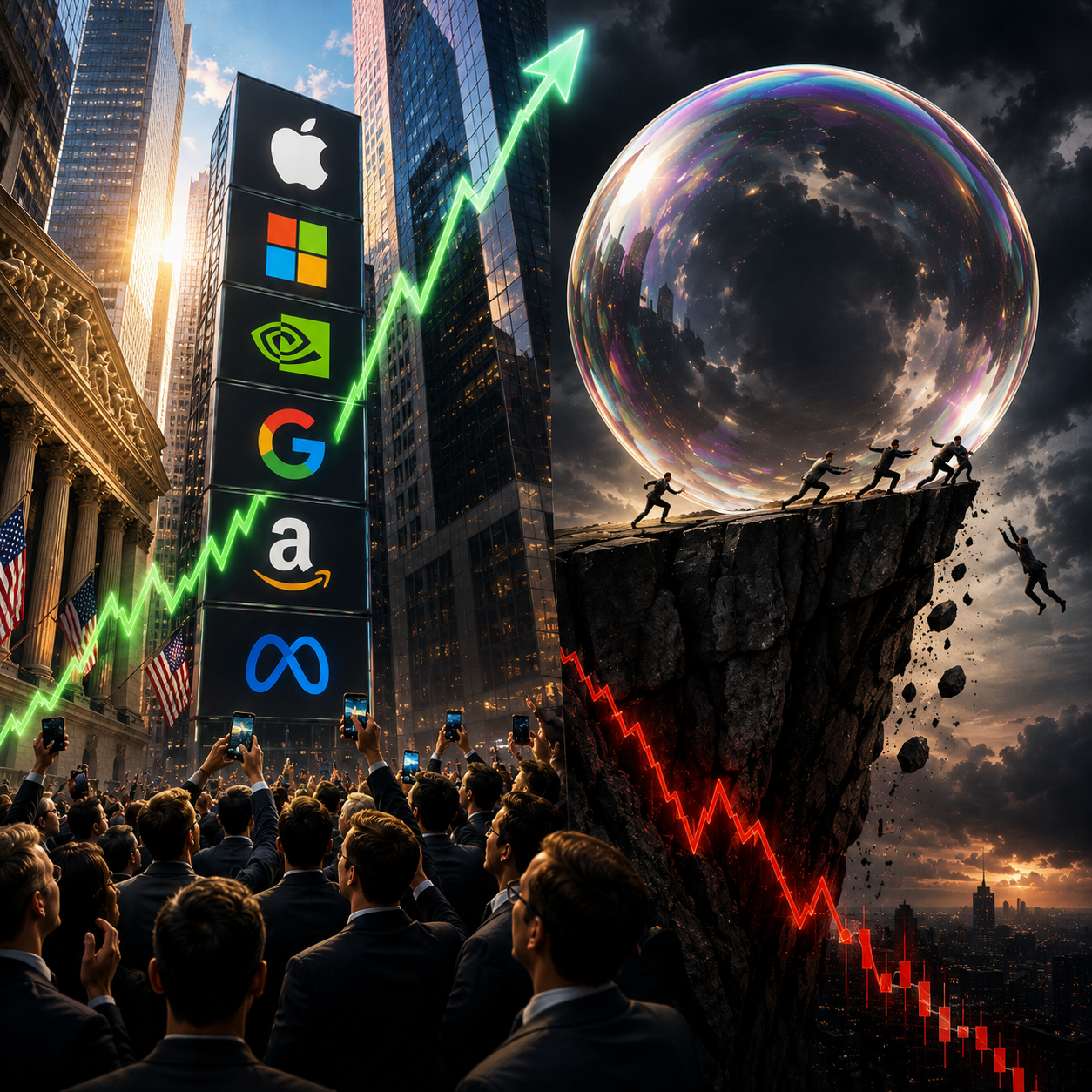
US Stock Value Investing Is Heading Into Another Trap

US Stock Value Investing Is Heading Into Another Trap

Source: Shenchao TechFlow Original title: (Opinion: Value investing in US stocks is not equal to fundamental investment) When “fundamentals are dead” becomes a consensus, investors who blindly organize giants will eventually experience astonishing capital destruction. Guide: When the market shouted “fundamentals are dead” and the capital frenzy formed a group of tech giants, the author used an astronomy discovery to unravel the logical loopholes behind this narrative. Starting from the composition of valuation multiples, this article reminds investors to distinguish between the true quality of an enterprise and the premium that the market is willing to pay. It is particularly cautionary about long-term allocation in the crypto and technology sector. I promise this introduction won't be as long as the last one on the weather. But please give me 90 seconds. More than 100 years ago, a woman named Henrietta Levitt was doing the tedious job of measuring the brightness of thousands of stars on photographic negatives (the way they were imaged before film appeared). She noticed one characteristic of a class of pulsating stars: the slower they pulsate, the brighter they themselves are. ¹ This might just seem a little interesting today, like “OK, that's pretty cool.” But at the time, astronomers couldn't tell the difference between a dark star very close to Earth and a very bright star far away. For them, the two left the same stain on the photographic film. Visual brightness is a messy mix of these two variables: how bright the thing itself is, and how far away it is from us. Henrietta's work decouples these two things: if you can observe the rate of pulsation, you can know its true luminosity; if you know its true luminosity, you can reverse the distance based on how dark it looks. Astronomers call it “standard candlelight.” A few years later, a man named Edwin Hubble discovered one of these pulsating stars, applied Levitt's math, and discovered what he had always thought was a cloud of gas within our galaxy; in fact, it was an entire independent galaxy, one million light years away. So in simple terms, the observable universe has grown about a trillion times larger, just because one person has figured out how to tell the difference between what things look like and what they actually look like. That in itself is obviously pretty cool. But another interesting thing is that around the same time period, two other astronomers each independently drew a scatterplot. One axis was actual luminosity, and the other axis was temperature. They discovered that stars are not randomly distributed in this space, but rather clustered into different families. The meaning behind this is: stars with the exact same visual brightness may and do belong to a completely different family, have a completely different past, and most importantly, have a completely different future... So what is written in the star? Over the past few years, there has been much discussion about markets, narratives, capital, company building, and financial nihilism. This feeling seems to have reached a feverish climax as the tech and financial world begins to face a very different future than a few decades ago. What is particularly clear is that separating progress from asset prices has become more noisy and in many ways more repulsive. But as an investor who makes a living by buying assets that (hopefully) outperform, a simple framework is: forward returns are roughly equal to growth in fundamentals multiplied by changes in valuation multiples (and multiplied by the dividends you've collected along the way). In this case, the valuation multiplier can very cleanly correspond to the smudges on the photographic film. It's an observable data point, but it entangles two things that the market can't directly see: how good the company actually is, and how far (or how long) its future cash flow is now. I think most of the money that can be made comes from investors who are most capable of unraveling these two variables earlier than others (or “perception of differences”), and we will continue to see astonishing capital ruin for investors who treat their stains as stars. Value investing is not equal to fundamental investing. I think there is a misunderstood view: fundamental investing has historically dominated the creation of excess returns. Most of these legends come from the Graham, Buffett, and Tiger Foundation lineage, as well as numerous narratives built around this group of people. It is believed that by some point in the 2000s, this approach was no longer effective, and anyone who invested in this way was overwhelmed by momentum, trends, and “direct buying tech giants.” The conclusion was (and still is?) It's “fundamentals are dead.” ² The modern version of “fundamentals don't matter” itself isn't stupid. It's rooted in a lot of ideas that many of us on the Compound team have written before. The biggest companies get the most mechanical purchases, and the software industry has a winner-take-all economic law. AI means that giants can transform scale into moats faster than challengers, and there are also reasons why the market's microstructure embeds momentum more deeply into our market infrastructure. These are all real...

1d ago深潮TechFlow#US stocks
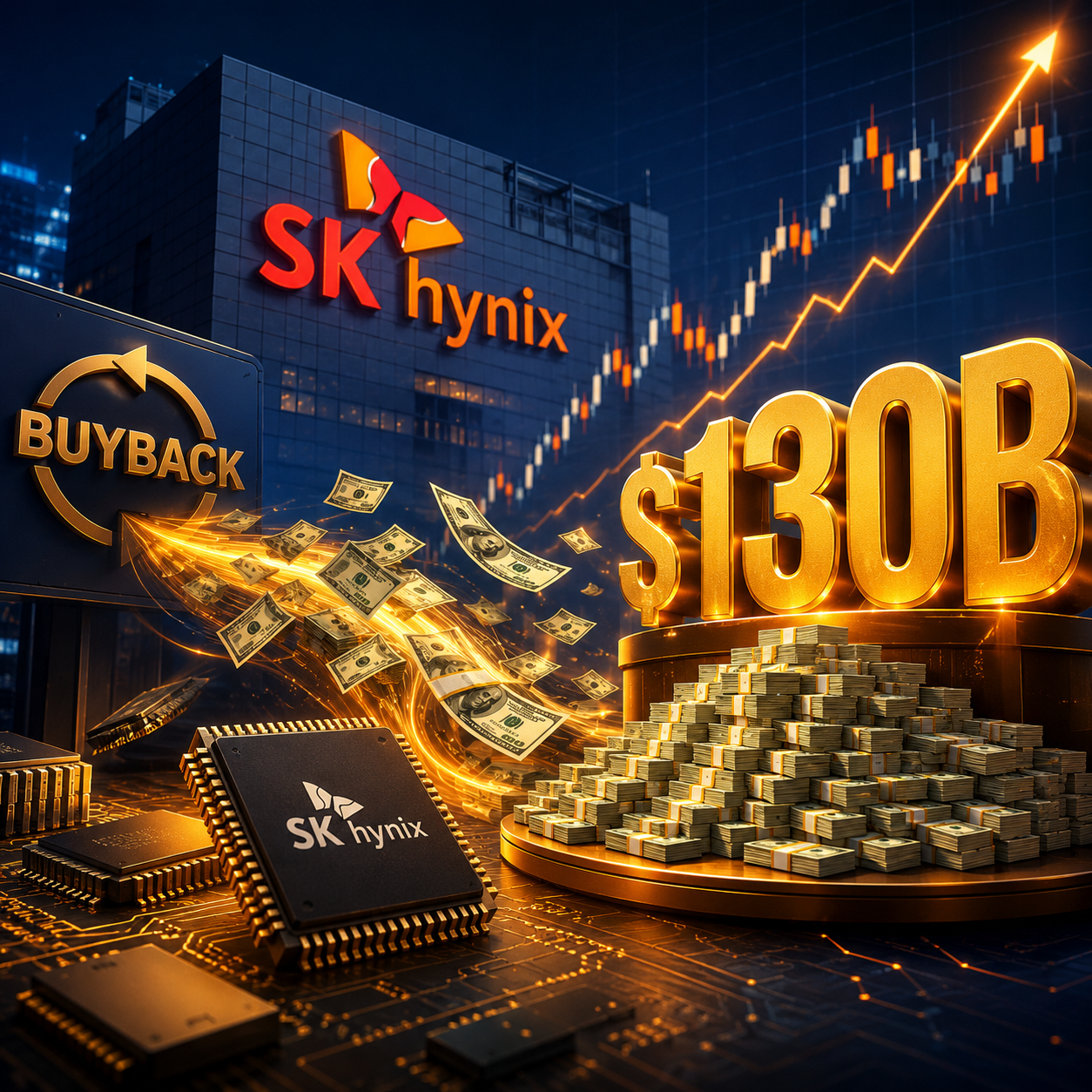
Is 40 trillion just an “appetizer”? The Hynix buyback landed ahead of schedule. Is 130 billion US dollars still ahead?

Is 40 trillion just an “appetizer”? The Hynix buyback landed ahead of schedule. Is 130 billion US dollars still ahead?

Source: Wall Street News Editor: Dong Jing Original title: Wall Street interprets Hynix's repurchase plan: Shareholder return of up to 8% next year, or return at least $130 billion to shareholders by 2027 Summary: J.P. Morgan believes that the shareholder return policy was upgraded from “no more than 50% free cash flow” to “no less than 50%”, changing from the upper limit to the lower limit, sending a clear signal to the market: future shareholder returns will only be greater, not less. Goldman Sachs predicts an 8% shareholder return in 2027, and expects an additional repurchase of approximately 7 trillion won in the future. J.P. Morgan expects additional return of over 16% of its market value by the end of 2027. Follow-up focus will be on the results meeting at the end of October. While the market was still debating the continuation of the AI storage cycle, and SK Hynix's stock price plummeted from a June high, the storage giant suddenly threw a huge bomb on the market. A historic repurchase, which was implemented early, reshaped the market's valuation logic for Hynix! SK Hynix officially announced the market's long-awaited shareholder return policy after closing on August 19, 2026 — it plans to repurchase and cancel 40 trillion won worth of shares, involving 24.07 million shares (3.3% of the shares issued as of the end of the second quarter of 2026), equivalent to about US$28.9 billion. This scale is not only the largest share repurchase in the history of a Korean listed company, but also exceeds the approximately 26.5 billion US dollars that Hynix raised through ADR financing in the US in early July this year. According to Chase Trading Desk, the two top Wall Street agencies, J.P. Morgan Chase and Goldman Sachs, both gave highly positive comments on the announcement in their latest research report on August 20. J.P. Morgan believes that the shareholder return policy has been substantially upgraded from “no more than 50%” to “no less than 50%”, and the policy ceiling has become the policy floor. Following the announcement of a 40 trillion won ($29 billion) share repurchase plan, SK Hynix may return at least $130 billion to shareholders by 2027, according to J.P. Morgan Chase. Goldman Sachs predicts a shareholder return of up to 8% in 2027, and expects an additional repurchase of approximately 7 trillion won in the future. Both J.P. Morgan Chase and Goldman Sachs maintain buying ratings: J.P. Morgan's target price is 2.75 million won (about 84% upside compared to the current price), and Goldman Sachs's target price is 3.5 million won (implying an upward margin of about 133%). The next key catalyst is the third quarter results conference call at the end of October 2026, when the company will reveal a more complete roadmap for shareholder returns. Analysts believe that this aggressive capital action directly proved to Wall Street that the company is “printing money” faster than market expectations. For the stock price, which has plummeted 49% since its high on June 22, this not only completely offset the dilution effect of the recent ADR issuance, but also established a valuation bottom (current annualized price-earnings ratio of only 3.8 times). The scale of the repurchase: The largest in history and earlier than expected. J.P. Morgan analyst Jay Kwon clearly stated that the 40 trillion won repurchase announcement “landed earlier than expected” — previously, the market generally expected the announcement to be released around the end of September, but the company chose to directly disclose it after closing on August 19, showing management's high level of confidence in the company's cash flow situation. In terms of scale, this repurchase has multiple historical significance: 40 trillion won is the largest share repurchase announced by a Korean listed company so far; equivalent to US$28.9 billion, higher than the approximately US$26.5 billion raised by Hynix's US ADR offering in early July, which means that the company actually used the repurchase to “hedge” the previous equity dilution; this amount is equivalent to 63% of the rolling FCF (operating cash flow minus capital expenses) over the past 12 months, & nbsp; It is higher than the previous “no more than 50%” FCF allocation limit policy. At the same time, J.P. Morgan Chase pointed out that if viewed from a valuation perspective, the price-earnings ratio corresponding to Hynix's current stock price is 6.4 times (based on adjusted earnings per share for the past 12 months) or 3.8 times (based on annualized adjusted earnings per share for the first half of 2026). This valuation level can be regarded as a reference benchmark for management to initiate repurchases. Policy upgrade: From “ceiling” to “floor”, the core policy change in this announcement is that the shareholder return ratio statement was upgraded from “up to 50% (no more than 50%)” to “50%”...

1d ago22#SK Hynix #J.P. Morgan Street