梭哈 · 223
Bitcoin's rebound may just be a blood sacrifice for bears after bursting $1.1 billion overnight

Bitcoin's rebound may just be a blood sacrifice for bears after bursting $1.1 billion overnight

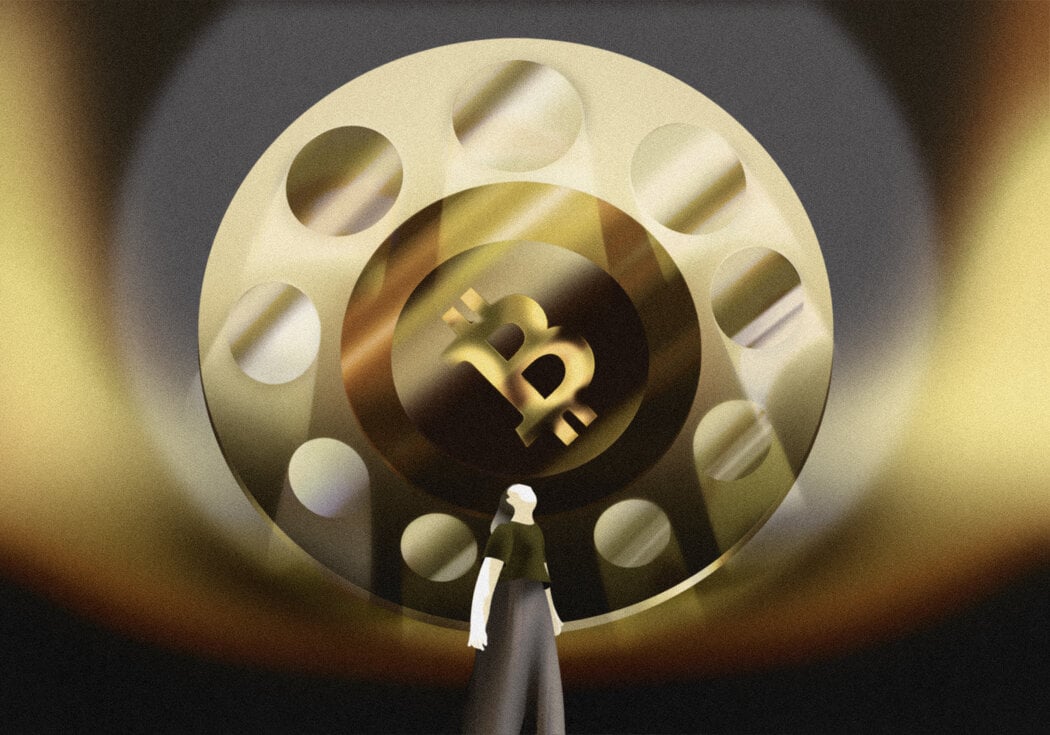
Author: Shenchao TechFlow Original title: BTC's largest single-day short liquidation in history: $1.1 billion of short funds evaporated overnight, but shouting back is too early for every escape from death, requiring empty sacrifices. Bitcoin's intraday volume skyrocketed last night, once approaching the $70,000 mark. While the investment community is full of buoyancy, what you might not know is that last night was the largest single-day short liquidation in crypto history. The network's single-day bears rallied over 1.1 billion US dollars, breaking historical records in a fractured manner. The $1.1 billion bears were tightened overnight, breaking the crypto history record. On the night of August 19, BTC started around $64,000 and rose about 7% in an hour, reaching an intraday high of $69,970, just one step away from the 70,000 mark. This is the highest price since early June and the biggest one-day increase since March. The sharp rise was accompanied by blood washing in the contract market. According to public contract data, the entire network closed out about US$1,345 million in the past 24 hours, involving 105,000 traders, of which short orders were about US$1,191 million, and the long ones were only 153 million. In the most intense hour, the entire network sold out $1,194 million, with bears accounting for 93.5%. By currency type, Bitcoin contract bears were liquidated by about $662 million in 24 hours, while Ethereum bears were about $366 million. Leveraged positions that bet on falling were uprooted almost at the same time. Several whale positions on Hyperliquid totaling nearly $200 million (large highly leveraged companies) have also been completely liquidated. The liquidation itself will speed up the market. A strong bearish position means being forced to buy back up. The higher the price, the more explosive the higher the higher the higher the higher the higher the higher the higher the higher the price, forming a self-reinforcing feedback loop. At the same time, judging from multiple data sources, this is the largest Bitcoin shorting settlement in a single day. The White House summit was only the trigger; the catalyst came from the bond market attributing the surge to the combined benefits of the two. One is the message side. On August 19, Trump met with crypto industry executives such as Coinbase, Kraken's parent company Payward, and Blockchain.com at the White House, and the market's optimism about the shift in regulation heats up. The other one is lower level. On the same day, the US Treasury Department announced a direct doubling of the liquidity support for long-term treasury bond repurchases, raising the upper limit of a single operation from 2 billion US dollars to at least 4 billion US dollars, effective September 9. In the crypto community's view, this is a more tangible sign than the summit: macro liquidity is loosening in the direction of risky assets. The data also confirms institutional buying. U.S. spot Bitcoin ETFs had a net inflow of $297.6 million on Monday and another $189 million on Tuesday; funding rates have risen to a 20-month high. The bulls are crowded, and the bears are even more crowded. Once the price starts, a strong pedal will automatically be relayed. The last big bear liquidation dates back to 5.19, and old chives must remember “5.19” in May 2021: China clearly prohibited financial institutions and payment institutions from carrying out virtual currency-related business. Amidst the panic, Bitcoin hit more than 40,000 US dollars to around 30,000 US dollars in one day, and the entire network closed out about 7 billion US dollars in 24 hours, setting a historical record at the time. The 5.19 collapse liquidated bulls, and about $7.56 billion in long leveraged positions were instantly washed away. However, over the next few days, in the midst of panic, a large number of traders frantically leveraged at the bottom to chase the sky. As a result, there was an extremely violent retaliatory backlash. According to K33 Research quoting Coinglass data, short positions of approximately $757 million in a single day were instantly washed away, making it the largest day for BTC perpetual short settlements in history. And that record was broken just yesterday. After the liquidation of top bears, the market is often polished for a few weeks, and the liquidation of top bears is often a sign that the mid-term phased bottom has been completely consolidated. Positions are cleared after deleveraging, and macro-liquidity is transferred to encryption, and it takes weeks of cold washing and energy in the middle. Will this time be the same? Bitcoin is currently around $69,200, and the 24-hour increase narrowed to 7.6% (as of the morning of August 20). Sentiment indicators are still hesitating: the fear and greed index is 46, which is still in the fear zone; the probability that Bitcoin will reach 70,000 this month on the Polymarket has jumped to about 70% from before the surge. Axel Rudolph, IG's chief technical analyst, observes: Bitcoin is moving towards $70,000, driven by bears' recovery, indicating that buyers are...


2d agoburnking#Bitcoin

Fu Peng: Global assets, including mainstream cryptocurrencies, are tied to liquidity at the bottom. Currently, capital is shifting to austerity, triggering a “shrinking circle” market

Comparing news, Fu Peng, the new chief economist of Xinhuo Group, expressed his opinion yesterday that global assets, including mainstream cryptocurrencies, are tied to liquidity. Currently, the shift from easing to austerity has led to a contraction in the market, and capital is concentrated on high-certainty core assets. Fu Peng believes that the AI industry has reached a critical inflection point, shifting from the money-burning phase of hardware infrastructure to value verification. Free cash flow from major companies such as Google has returned to zero, and the capital market no longer accepts the logic of simple capital expenditure expansion. The AI industry chain is divided into upstream, midstream, and downstream. Each stage has an independent industrial life cycle, and there is a clear window for sector rotation and allocation. Never treat AI as a belief and blindly hold it for a long time. If you make the AI circuit a pure conceptual hype, you will definitely step into the pit. The complete AI industry cycle lasts about 20 to 25 years, and now it has completed 10 years. The main line for the first ten years was upstream hardware infrastructure, and the main line for the next ten years was terminal applications. However, there is currently a cycle fault, and the next 10 to 18 months will be an industry transition window. Don't fill up your stud during this window. Strictly follow the regular layout of the industrial cycle to avoid the risk of fluctuations. On the other hand, the crypto market will follow the contraction of liquidity. Core assets such as Bitcoin and Ethereum stabilized after the big wave, and the speculation of junk coins failed. It is necessary to lay out in stages according to the industrial cycle and be wary of leverage risks. This article is sponsored by GENG, Build Your Fortune on GENG (https://geng.one)

29d agoburnking
Byte employees left their jobs after speculating on US stocks and earned 30 million

Byte employees left their jobs after speculating on US stocks and earned 30 million

Author: Plus Six, Raise Your Voice Beatz Original title: How hot is the stock market now? Byte employees earned 30 million by trading stocks, and just left their jobs, the post “Byte employees earn 30 million by trading stocks” went viral. The main character of the Internet rumor is the group owner of Byte's internal US stock investment group in the early days. Rumor has it that he achieved financial freedom through investment. On the last day, he left two words: working part-time can only maintain his current life, and only by investing can live a better life; the probability of achieving financial freedom by investing is far greater than 4-1 in Bytes. The story of wealth freedom is always so inspiring. It is said that some Byte friends couldn't stand it on the spot. Local loans, Stud shares. The story of the big factory in the past was simple. Join a high-growth company, get high cash income, wait for options to increase in value, and complete the wealth transition through promotion and company listing. Byte himself is one of the most successful samples of this storyline. Business Insider reported last year that Byte valued itself at about 330 billion US dollars in employee buybacks, and the valuation given by Fidelity was even higher; since then, a second-level transaction pushed Byte's implied valuation to about 480 billion US dollars. In other words, from the beginning of employment, Byte employees are exposed to not only “jobs,” but also valuations, options, repurchases, liquidity, and asset revaluation. So stock traders don't even want byte options. I don't see it. This isn't Byte's first urban legend either. Last year, there was a “Beijing speculator” ID that also came from Byte, known as “North God” by Jianghu people. The shareholder community shared his story in many financial reprints: he entered the market in 2007, experienced trial and error in the early days, and later used about 80,000 principal to reach tens of millions of dollars. An article reprinted on NetEase summarized his path as “80,000 to 50 million.” The current stock market is at a historical level. Not only US stocks, but all over the world. For A-shares, the daily turnover of over 3 trillion yuan in the Shanghai and Shenzhen markets has become the norm. This was unimaginable in the last round of the bull market. Korean stocks have exploded even more, and South Koreans have refunded their pensions and insurance money. Stud Hynix. At the end of November 2022, ChatGPT went live. From that moment on, Wall Street was waiting for the AI bubble to burst. However, three and a half years have passed, and not only has this round of market not ended, but it has spread at an accelerated pace. Nvidia went all the way up from a market capitalization of 500 billion US dollars in early 2023 to more than 5 trillion US dollars. In the middle, it experienced a DeepSeek shock, the US-Iran conflict, and an inflationary backlash. After each correction, it was pushed to a new high by stronger earnings reports and larger capital expenditure. By 2025, AI-related stocks contributed about 80% of the S&P 500's full-year increase. However, in the first half of 2026, global stock markets were still in a frenzied round of growth. After all, the mood of the times of this generation is: work is becoming more and more like a side job; stock trading is the main business. Twitter: https://twitter.com/BitpushNewsCN比推 TG Community: https://t.me/BitPushCommunity比推 TG Subscriptions:... https://t.me/bitpush

53d agoburnking#options #US stock topics #stock market
If you don't read financial reports, how can you speculate on new stocks? Supply chain sniper logic for US stock investment in the AI era

If you don't read financial reports, how can you speculate on new stocks? Supply chain sniper logic for US stock investment in the AI era

Author: Jaleel Plus 6 Original title: This year's US stock speculators are no longer looking at financial reports. In the 2026 AI wave of US stocks, the most profitable ones are not holding familiar stocks such as Nvidia, Microsoft, Amazon, and Google. Of course, these trillion-dollar giants are also rising, but it's hard for elephants to dance. A group of newcomers focusing on “supply chain snipers” are popping up in batches from Reddit, X, and Substack, leaving the benefits of Buffett's value investment veterans far behind. What they hold is a bunch of micro-cap stocks with a market capitalization of hundreds of millions to billions of dollars, which Wall Street analysts disdain, and ordinary investors can't even read the names well. And the person who turned these micro-cap stocks into a trading consensus and trend is Leopold Aschenbrenner, a 22-year-old German who used a starting capital of 200 million US dollars to trade stocks to earn 14 billion US dollars, becoming synonymous with “new stock god.” After Leopold, Buffett's fascination accelerated. A group of newcomers focusing on “supply chain sniper” are popping up in batches on Reddit, X, and Substack. Basically, they don't read financial reports; they look at micro-cap stocks that are “stuck in the neck” upstream of the supply chain. Following this logic, Groove Xiaobian has found some new stock giants for everyone to analyze. Are the “New Stock Gods” all from Reddit? Among this group of newcomers, the most popular one recently is Serenity, from the WallStreetBets channel on Reddit. Many readers who speculate on US stocks should be familiar with Serenity's own story. Simply put, he used to be an AI research scientist, participated in the RISC-V Foundation, published a Nature paper, and even mocked himself for rejecting the Nvidia AI team's offer when Nvidia's stock price was 6 dollars. Serenity's true “New Stock Gods” narrative was not these self-described resumes, but because he called out a stock called AXTI on WSB. His core argument is straightforward: the construction of the entire AI industry depends on this $700 million monopoly, and all players, including Google, Nvidia, and Microsoft, have to rely on its indium phosphide substrates and materials. He believes the entire AI industry is shifting from Google TPU to photonics and using optical interconnect technology. Without indium phosphide substrates, the entire AI “growth” story would come to an end in 2026. He directly called out the target price of $15 to $150 in the AXTI hot post, and the title was very straightforward. Related reading: “Rejecting Nvidia's 6 yuan share offer, he says he can make more money by trading stocks”. The stock price gave Serenity the best endorsement. When Serenity discussed AXTI at the time, the stock price was around $12. After that, AXTI went all the way up, first to $70. Serenity itself claimed that this was a single ticket with a floating profit of 1000 percent at one point. At the time of writing, the public market website shows that AXTI has settled at $140.83, which is only a step away from his original target price of $150. This makes Serenity's image more complex and three-dimensional. He is not just a lucky gambler in WSB, but an in-depth researcher in the new technology AI industry chain. Why would someone like this pop up on WallStreetBets Reddit in the first place? Let's take a moment to talk about the history of WallStreetBets. WallStreetBets, WSB for short, is the most famous US retail community on Reddit. It's great, not because everyone here is rational, or because you can always find the right answers here. On the contrary, WSB first became famous because it put the two most extreme aspects of US retail investors on the face: on the one hand, zeroing out short-term options, Stud's bankruptcy, and laughing at each other; on the other, it occasionally pops up a post that changes the market's narrative. The 2021 “retail battle against Wall Street” came from WSB. A large number of retail investors clashed head-on with GameStop and shorting agencies. A game retail stock that was originally treated by the market as a wreck of the old days was bought by global financial news. After that, WSB was no longer just a forum. It became a form of communication...

87d agoburnking#invests #Financial reports. US stock topics
From 0 to Binance | CZ's Ten Life Experiences

From 0 to Binance | CZ's Ten Life Experiences

Editor | Wu said blockchain Original title: Ten Life Experiences Summarized by CZ in “Binance Life” The editor's quote of this article has obtained permission from relevant parties. Readers are invited to buy the genuine version and support charity on Amazon. What needs to be explained in advance is that this article is based on relevant content from CZ's personal memoir “Binance Life.” Since the book is essentially a first-person self-written text, the book's content on upbringing, entrepreneurial decisions, regulatory conflicts, prison sentences, and motivational explanations mainly represents the author's personal memories and positions, and should not be directly regarded as a complete factual overview or independent external conclusion. The focus of this article is not to evaluate CZ himself, nor is it intended to give a praising account of his experiences, but rather to sort out his logic of dealing with affairs and life ideas formed in different periods based on existing materials. The principle that what you can take away is more important than what you have appeared very early and has almost nothing to do with starting a business. CZ grew up in rural Jiangsu. When she was three years old, she moved with her mother to Zhonghu Village near her grandmother's house. At age 10, she moved with her family to Hefei, then flew from Shanghai to Vancouver in 1989. It is written in the book that I look back and see that I move home about every four years, “just carry a suitcase and you will soon be able to settle down in a new place”, and even after a few years, I would like to move to a new place. This habit was just a reality in life at the time, and it wasn't until later that he clearly realized that this “just say it and go” mentality influenced many of his decisions, including commercial development. This isn't a flirtatious personality description. He continued to write in the book. As a result, he developed a habit of not hoarding things and not collecting physical objects such as houses, cars, works of art, and watches, because “it is too troublesome to move around; instead, it has become a burden.” This judgment is not a gesture only made after becoming rich, but rather a specific experience brought about by long-term migration: from Zhonghu Village to Hefei to Canada, the environment is always changing. What is really useful is not assets fixed in a certain place, but rather whether people themselves can walk, adapt, and restore order in a new place. This experience later became linked to “freedom.” As a child, migration was a natural state of affairs for him; when he later went to the US to plead guilty, serve his sentence, and enter a half-way home, his freedom first became a specific condition where he could be deprived. In his foreword, he wrote that in prison, he was only able to write the first draft on a computer with no internet connection or copy and paste; if he wanted to adjust the paragraph, he could only retype it. Freedom is no longer an abstract word here; it is about being able to connect, move, and decide one's own time and actions. Precisely because of this, the position of “time and freedom” in the latter half of the book was raised to a high level. Money to be spent in places that changed paths The book about the family situation in Canada's early years is written in great detail. My father was a PhD student, and the school gave me a monthly subsidy of 1,000 Canadian dollars; on the third day in Canada, she got a job at a garment factory and worked at the minimum hourly wage in front of the sewing machine; the family would drive an old car on the weekend, carry coupons cut out from the newspaper, and go to the store to buy food and meat; going to eat outside is rare. On my sister's 16th birthday, the whole family went to Chinatown for the first time to eat longevity noodles. In such an environment, CZ's understanding of “money” comes first and foremost from limitations. He wrote that he had no pocket money, nor did he think about asking for pocket money; when he saw a 1.99 Canadian dollar toy plane at Safeway, he cried for a long time before his father bought it as an exception, and it became the only toy he had when he was a teenager. Since then, he hasn't asked for toys, and since then he hasn't had much interest in those expensive “toys.” This detail is important because it explains why he later had no interest in luxury cars, luxury goods, and collecting for a long time: it wasn't that he first had an idea and then refused to spend, but he already knew very well when he was a teenager that most consumption didn't change anything. But in the same period, the family made another choice. His father spent 7,000 Canadian dollars to buy him an x286 computer, which is equivalent to seven full months of income. Looking back on this incident, CZ didn't write it as a touching sacrifice, but rather wrote it very directly: it was the most expensive computer my father and myself have ever bought, but “it was a great value. Without that computer, I probably wouldn't be where I am today.” Here we can already see his later stable money ranking: ordinary consumption needs to be compressed, but investment that can change the boundaries of ability and change the path can be very heavy. Get there first, don't break the momentum yourself CZ did a lot of work in middle school. I went to McDonald's when I was 14, washed dishes at the PNE amusement park during the summer vacation at the age of 15, worked the night shift at a gas station at the age of 16, got a volleyball referee certificate, and went to various schools to administer the league. Compared to simply making money, what in the book had a deeper impact on him was the job of “referee”: it didn't take up class time, and it just happened to be himself...

122d agoLuxurytracy
Middle East War: Peace or PTSD|0408 Asian Banzhong

Middle East War: Peace or PTSD|0408 Asian Banzhong

Previous note: At a critical time when both sides secured the critical time to return each other to the Stone Age, the two sides jointly performed the ultimate TACO performance of art. All parties involved were given a chance to take a break. Fix, iterate, and wait for the next impact time. Timestamp: Today, Donghaku District [20260408] is the “41st” day of the 7th outbreak of the Middle East War. Today [East Zone 8 at 8 a.m., 8 a.m. ET, 7 a.m. ET, 8 a.m. ET; 8 a.m., East Zone 3.5, Tehran time at 8 a.m.] At the end of understanding the King's 3rd ultimatum, the US and Iran achieved a cease-fire, which took effect immediately. The cease-fire plan was maintained for two weeks. The two sides held discussions in Islamburg, Pakistan during this period to finalize the terms of “end the war.” ——The following text — “The Seventh Middle East War: An 'Anti-Fragility' Strategy Report” (quoted from the gallery of graphic material sample posts, not listed separately): Introduction: When Understanding Wang's Accent Fraud failed, when the Iranian People's Wall was launched. The leverage on both sides is stretched. However, the winning percentage was less than 50%. Reason triumphed over fanaticism, and the pause was pressed for a moment. But did everything come to an end? As you have already seen and felt, the 7th Middle East War was a serious conflict. The pause key has now been pressed. All risk preferences and risk-averse commodity exchange rate indices derivatives in the market have been fully repriced. ◎ Key Geographic Variables [Big Player Situation] ※If you win, you can't win anymore. It will completely eliminate Iran's nuclear capabilities. Ah Tang explained that the process was over and went to Venezuela to compete for president [No. 1 in the world in crude oil reserves, Iran has the third largest crude oil reserves in the world]. Objectively speaking, the US is currently the biggest beneficiary, stabilizing the US dollar oil determination mechanism and the hegemony of the US dollar. The results of chemical bonds have been remarkable. The market is looking for US dollars and US bonds; once again, what. ※Israel supports a cease-fire led by the United States. However, “there is no cease-fire against Lebanon.” ※NATO participation is limited. The British army provided non-combat support in the early stages. French Charles de Gaulle. They made a strong start to the Eastern Mediterranean, but they haven't settled down yet. The French are pirate and smart; they pick big peaches. ※Iran's 10 cease-fire requirements, the first one requires the US to accept Iran's nuclear activities (completely contrary to the US's core appeal for “Iran to abandon nuclear weapons”). ※After 10 years of cooperation with the Daikoku Kyodo, the speaker visited again. ※The peninsula resolved the drone crisis. Good relationship. ※The island nation was extremely frightened. Or double warfare [strategic oil reserves] ※Southeast Asia was extremely frightened, and they began to know that they should be diligent and establish war savings※The President of Chechnya revealed his face. Like Macron from France, they are big peach pickers. ◎ Progress of the US-Iran Peace Talks and Interference Factors [Nuclear Weapons] ※Iran relinquishes the right to “exclusive operation (control fees)” of nationalizing the Strait of Hormuz. ※Iran accepts joint administration of the Strait of Hormuz with Oman. Strait fees and payment in the form of ship tax are split between Oman and 55 [in line with international practices, but it will significantly boost European shipping. Cost]. ※Iran claims war compensation from the US against Iran (the situation is undecided; it may be an expense of shipping costs in the Strait of Hormuz, which is a terminal purchase order for global fuel use). ※The United States' repeated core appeal: Iran's “complete nuclear abandonment (all concentrated carbon currently at 60% concentration was transferred out of Iran, and nuclear fuel rods removed)”. Civilian nuclear energy applications require the opening of the IAEA [International Atomic Energy Agency] for an unlimited period of time, location, and unlimited “verification”. ※As far as Iran is concerned, the United States' expectation that Iran will abandon its nuclear weapons is that Iran will abandon its military skills and falsification of its own efforts. However, the first of the 10 terms of armistice and peace talks proposed by Iran is that the US must accept Iran's “nuclear activities.” ※Iran's Islamic Revolutionary Guard Corps ballistic missile launch “has not stopped” ※Israel hopes to completely eliminate Iran's nuclear capabilities [nuclear weapons and civilian use] at the physical level. ◎ There were no ground battles [including the capture of Halco Island]. The ultimate attack on Iran's various strategic traffic links and pier city base targets before Stone Age time (7 p.m. EST) was still dominated by air raids. ◎ Situation awareness and military deployment, and failure to observe the suspension or retraction of various US reports. In modern times, wars, and major geopolitical crises in world history, “fighting to promote peace” is often intertwined. Both sides think they need to take a break from blood supplementation, and roll up their sleeves after being charged to get bigger and more upgraded. There is also often [Shangganling is a classic case]. If you don't hit the end, everyone will be happy to accept the code, and if you reach the “stage where you can make concessions,” it won't come to an abrupt end. In fact, the mediator Pakistan issued a cease-fire statement in “Stone Time”. At a time when the global market moved in response, ballistic missiles fired by Iran at Israel were still there...

136d agoLuxurytracy#Blue Chain Think Tank
Robinhood, Coinbase, and Next-Generation Anxious Economics

Robinhood, Coinbase, and Next-Generation Anxious Economics

Source: Artemis Analytics Original title: The Anxiety Economy: Why Trading Exploration: BitPushNews Reveals the Core Underlying Logic of the Financial Market in the Next Ten Years Too Long to Read the Hard Truth: A whole generation has already settled the “passive investment” account and concluded that this is simply not enough. Financial anxiety will replace greed and become the primary driver of trading explosions. Instantaneous transactions: From generating a market view to completing an order, the gap between the two is disappearing. The AI paradox: Although AI has narrowed the knowledge gap between retail investors and institutions, the performance of the vast majority of active traders will still outperform the market. Big winners: Robinhood, Coinbase, Interactive Brokers (Yingtou Securities) Big losers: traditional brokerage firms that are still peddling “patience” to young people hungry for speed. Brutal math problems cost $1,200 per month. Let's say you start at 26 and start from scratch. Annualized return: 8% Duration of struggle: 24 years Final result: At age 50, you can only have 1 million dollars. Get out your calculator and do the math yourself. You earn $90,000 a year, but after deducting taxes, expensive New York rents, and student loans, you can save up to $1,200 a month. Put it into the S&P 500 index fund. After 10 years, you'll have $220,000, and 20 years later, you'll have $710,000. If you've had the best of luck in your life, no illnesses, no disasters, and no unemployment, you may have barely made it into the ranks of “millionaires” at age 50. But this is just a benchmark situation under “everything went well.” Then you turn on your phone: your college roommate posted last week that she had just cashed out a $800,000 startup option; the house your cousin bought in 2019 had already gone up 60%; and a 24-year-old kid you never met on X (originally Twitter) turned $10,000 into $400,000 in a few weeks. You are intellectually aware that these are all survivor biases, and you know that people never pay lost bills. But that's not important. That stifling feeling of “I'm being left behind” is real. So, you started trading. This is the anxiety economy (Anxiety Economy) — in an age where financial anxiety is the core driver of an entire product category. It is for those who have sorted out math problems and realized that “steady and steady” is simply impossible to achieve class transcendence. Everyone is talking about the increase in trading volume because of better products, lower fees, and stronger AI tools. These are all true, but not exhaustive. The deep driving force is emotion. An entire industry is rebuilding around this feeling: “I'm behind and I need a faster way to catch up.” There is more and more evidence that you are not basing your fears. Wealth divide: Since 2000, the S&P 500 has risen by about 400%, and housing prices have risen by about 230%, yet median wages in the US have only increased by about 110%. If you're on the market, your wealth is compounding; if you're off the market, you're being thrown farther and farther away. Concentration of equity: The richest 10% of households in the US now own 87% of the shares, up from 82% in 1989. The wealth gap is accelerating. Sleep crisis: A recent study by Amerissleep found that 49% of Americans have insomnia due to financial stress. Among Gen Z, that number is as high as 69%. When saving and investing don't feel safe, people start to play games. Is passive investing effective? Of course it works. If you are on the market, you can get an annualized return of 8%. The problem isn't the math, it's the starting point. The bottom half of American households own less than 1% of stock assets. When you roll 8% compound interest with $15,000 and someone else rolls the same 8% with $1.5 million, the rate of return is the same, but life is completely different. That's why the old school advice sounds both right and hollow: “Be patient.” “Buy index funds.” “Fixed pitch.” “Make time your friend.” These are good suggestions for getting rich slowly, but they don't work at all for people who want to close the gap between rich and poor in their lifetime. Some people call it Financial Nihilism (Financial Nihilism) — they think the system is broken, so it's better than Stud. This perception misses the point. These people haven't given up; they're working harder than ever because the “safe path” is too slow. This is the difference between investing and trading: investing is rational and based on a long cycle. Trading is about pursuing asymmetric explosive returns within a compressed timeline. Options, forever...

142d agoWendy#AI #Coinbase #Interactive brokers #Robinhood #transactions

Analysis: BTC faith buyers' holdings set a new record for the current cycle, and are no longer far from the bottom of the bear market

Comparing news, crypto analyst Murphy said that analyzing on-chain data from the two dimensions of space and time is currently no longer far from bottom of the bear. In terms of space, take the previous cycle as an example. In June 2022, BTC dropped to a minimum of $17,000, which is not much different from the final absolute bottom price of $15,000, which means that the space is already in a bear bottom range, but it took a full 7 months to actually get out of the bottom and complete the restructuring. Currently, it is getting closer to the bottom of the bear in space, but there is still quite a distance in time. Focus on the behavior of faith-driven buyers (Conviction Buyers, hereinafter referred to as CB). As the smartest diamond players in this market, they often buy in the midst of a decline and sell after rising. Another way to understand it is not so much that they often buy at the bottom, but rather that the bottom is often structured by that segment of buyers. As of February, faith buyers had accumulated 3.48 million BTC holdings, once again setting a new record for the current cycle. Since January of this year, there has been a significant increase of 1.22 million units. This figure far exceeds that of the 5.19 incident in the previous cycle, LUNA thunderstorm, and FTX thunderstorms. Moreover, the current BTC price is higher than the above time points, and smart decision makers are investing more money at this time. Although the final bottom position is difficult to predict, for the CB group, they don't expect a Stud to be at the bottom; as long as it is cost-effective enough, they will keep buying until all of the excess supply is absorbed. When there is a balance between supply and demand, it forms the bottom of the bear market. After that, through months of consensus restructuring, a new round of trends emerged. Judging from historical data, the firmness and strength shown by current faith-driving buyers has fully met the standards that are not far from bottom of the bear.

182d ago
Bulls and bears have nothing to do with it: the crypto world's long-term survival logic

Bulls and bears have nothing to do with it: the crypto world's long-term survival logic

Author: Pickle Cat Original title: No Fear of Bulls and Bears: Crypto Rules for Survival Chapter 1: Your “Quick Money” mentality is the main culprit preventing you from making a lot of money — By Pickle Cat I bought my first Bitcoin in 2013. As an old leek who lived through a cycle of more than ten years until 2026, I have seen 10,000 ways in which this market created death and life. I've discovered that over this long period of time, there seems to be an iron law that cannot be ignored: in this circle, the definition of “winning” is never how much money you have earned. Everyone who has come into contact with this circle has earned money at least once, and even if he is small, he can become a “genius” for a short time. So what exactly is a “win”? It was you who made the money, and now, many years later, you are still able to keep that money. In other words, if you want to change your life through the coin industry, you first have to realize that this is not a “who earns the most” or “who doubles the most” competition, but a “who can live to the end” competition. However, the reality is harsh. Most “geniuses” have become fuel, and only a few people can successfully survive the next cycle, and among these survivors, only a few can actually achieve compound benefits. After 10/11, market sentiment once again returned to the dry period I was familiar with. On that day, I also lost a lot of friends I thought I'd be able to fight side by side in the coin industry for many years. Although this kind of “farewell” has been performed countless times, every time I encounter it, I subconsciously unravel some of the reflections I've written over the years. I think it's time to sort it out. To figure out the ultimate proposition: what exactly is it, and are there any characteristics that can be replicated in order to survive until the end in the coin industry? To this end, I also talked to a few old friends who are still active in the coin industry, so I came up with this article. This article is my exclusive opinion, a painstaking work. It will try to explain the following points: Why can some people survive in this cyclical “sea of blood” while others just return home alone? How can we maintain hope when the bear market hurts and we don't want to live? What do you have to do to become the person described above? In order to fully understand this principle, we must first get back to the basics. Please forget all the things others have told you about this circle. “The only real wisdom is to know that you know nothing” — the Socratic text will briefly explain the history of the development of the coin industry and the essence of the coin industry. Most new players will ignore these elements. After all, it is easy (painful) to know how to make money (lose money) by making an order right away. But according to my personal experience, it is precisely this secret that has been overlooked that makes people not afraid of bulls and bears, as the philosopher George Santayana said: “People who don't remember the past are doomed to repeat it.” In this article, I'll take you to understand: I. What exactly can make the coin market return, and how can I tell the difference between “starting the market” and “going back to the picture”? It includes 3 case studies and a basic “Judgment Criteria” II that you can directly use. What exactly do you need to do to increase your chances of catching the “next big moment”? III. What exactly do people who can cross multiple cycles of blood and continue to make money have in common? If you've ever “decentralized” your wallet in the coin industry, then this article is for you. I. The real driving force that freed the coin industry from the sideways market. Whenever people ask why the crypto market has stagnated, the answer is almost the same: a new story hasn't been born yet! The agency has not yet entered the market in full! The technological revolution hasn't started yet! Blame those market makers and KOLs who cut people! It's all because so and so the exchange/project/company are screwed up! These factors are indeed important, but addressing them has never been the real reason to end the crypto winter. If you go through enough bulls and bears, you'll see a clear pattern: the crypto market is once again flourishing, not because it's becoming more like the traditional system, but because it reminds people once again — the suffocating 778 of the old system. Crypto's stagnation is not due to a lack of innovation, nor is it just a liquidity issue. Essentially, collaboration fails — more accurately, stagnation occurs when the following three fail at the same time: capital is exhausted without interest, and the current consensus is no longer able to explain “why do we care about this circle”. In a situation where prices are weak, it is not because crypto is “dead,” but because there are no new elements that can enable new players to join forces. This is the source of confusion for most people. They always think the next cycle will be triggered by a “better, more explosive” product, feature, or new narrative. But these are just results, not causes. The real turning point, at a deeper level...

192d agoLuxurytracy