
活动 · 18383

Predict.fun Dota 2 Losers Finals is live, and more markets will be opened during the Finals phase

Comparative news, according to official sources, The Predict International, a Dota 2 prediction campaign under Predict.fun, has launched a market related to the Losers Finals. As the tournament enters its final stage, the platform will open up more prediction markets for the finals, and the overall AP rewards that can be obtained in individual markets will also be higher. Due to the short interval between the Loser Group finals and the finals, users may only have a short time to complete predictions and share lock-up after the finals go live. Users planning to participate in the final round should keep an eye on the event page. Total rewards for The Predict International event include 100,000 USDT and 5,000,000 Predict Points.

1m ago
Hong Kong Securities Regulatory Commission: Including King Kong Coin/King Kong Fund as a questionable investment product

Comparatively, the Hong Kong Securities Regulatory Commission announced that it has included the “King Kong Coin/King Kong Fund” as a questionable investment product related to digital tokens. The Hong Kong Securities Regulatory Commission said that the product involves a digital token called King Kong Coin, which claims to represent a number of interests in a fund that invests in ancient art and historical relics, called the “King Kong Fund”, with a target annualized return of over 30%. The promotion campaign held earlier in Hong Kong promoted investors, and the Hong Kong Securities Regulatory Commission reminded investors to beware of any social media accounts or posts related to this product.

5h ago

Grayscale: New US SEC regulations may benefit ETH, SOL, and BNB; on-chain issuance will drive the return of value

Comparatively, according to Bitcoin.com, Grayscale Research Director Zach Pandl pointed out in the analysis report that if the SEC's proposed new regulation of crypto assets (Crypto Assets) is finally implemented, Ethereum, Solana, and BNB Chain may become the main beneficiaries. The proposal establishes two exemption routes: projects with financing under $5 million can be exempted from registration for 4 years, projects with financing under 75 million US dollars can be exempted from registration for 1 year, and a conditional safe haven. The aim is to provide a clear domestic compliance path for the issuance of crypto assets and reduce issuers' motivation to operate overseas. Pandl pointed out that tokenized financing was previously blocked due to vague regulations. If the new regulations stimulate issuance activities, it will bring more US issuers and investors to go online and drive value back to underlying networks and native tokens such as ETH, SOL, and BNB. The proposal is still in the comment phase, and the final rules may be adjusted due to public comments and SEC review, and larger network activity does not guarantee a rise in the token price. This article is sponsored by GENG, Build Your Fortune on GENG (https://geng.one)

9h agoburnking

Next week's macro outlook: US and Iran sanctions, Jackson Hole, PCE, and Nvidia's earnings report are coming in four major variables. The gold sword points to $4,700

Comparing news, the global market will face multiple risk events next week. The escalation of US and Iran sanctions, Federal Reserve Chairman Walsh's debut at the Jackson Hole World Central Bank Annual Meeting, the release of PCE inflation data in the US for July, and the disclosure of Nvidia's earnings report may become core variables affecting risk asset trends. This week, the sharp rise in US long-term bond yields raised market concerns. After the Treasury expanded the scale of long-term US bond repurchases, the pressure on the bond market eased somewhat, but investors are still concerned about the US fiscal deficit, inflation, and developments in the Middle East. Driven by US debt sustainability concerns, the weakening dollar, and the Treasury Department's expansion of the US bond repurchase program, spot gold surpassed 4,600 US dollars/ounce this week, rising for the third consecutive week, and hit a high of around $4,632 on Friday. Analysts believe that if gold effectively breaks through $4,600, the next target may be at $4680 or even $4,700. Next week, the US-Iran relationship will be the primary focus of the market. US Treasury Secretary Bessent said that the Trump administration will announce new sanctions against Iran on Monday. Trump previously warned that any country providing support to Iran could face economic consequences. Meanwhile, transportation activities in the Strait of Hormuz continue to be blocked, and energy supply risks are driving crude oil to rise continuously. On the Federal Reserve side, the Jackson Hole Global Central Bank Annual Meeting will be held from August 27th to 29th, and Federal Reserve Chairman Walsh will deliver his first speech on August 28. The market is concerned about whether it will release future interest rate path signals and whether it can ease recent pressure on the US bond market. Currently, the market expects that the probability that the Federal Reserve will cut interest rates in September has declined, and traders will focus on Walsh's statement on the 2% inflation target, long-term interest rate, and monetary policy framework. In terms of economic data, the US core PCE price index for July will be released next week. This is the inflation indicator that the Federal Reserve is focusing on. The market expects core PCE to rise 0.2% month-on-month. If the data is higher than expected, it may weaken expectations of interest rate cuts and put pressure on gold; if it falls short, it may further drive the rise of precious metals. In addition, revised US second-quarter GDP values, durable goods orders, consumer confidence index, and revised non-farm payroll benchmark data will also be released one after another next week. On the corporate side, Nvidia's (NVDA) earnings report will be the focus of the US stock market. Technology stocks have recently been under pressure. The Nasdaq index fell about 2% this week, and the semiconductor sector fell by more than 4%. The market will focus on Nvidia's continued investment in AI infrastructure, the progress of Rubin chips, and the state of business in China. Analysts believe that if Nvidia's performance continues to strengthen AI growth expectations, it may become an important catalyst for the S&P 500 index to hit 8,000 points; if performance or guidance falls short of expectations, it may increase the pressure on technology stocks to adjust.

12h ago

Korea Financial Supervisory Service Launches Real-Time AI Platform: Detecting Cryptocurrency Price Manipulation

Comparing news, according to N reports, Korea's Financial Supervisory Service has launched a real-time artificial intelligence platform to detect cryptocurrency price manipulation. One of the core functions of the system is the ability to identify short-term price manipulation by referring to a historical database of known market abuse strategies. The Korea Financial Supervisory Service will next expand the system to track cross-exchange capital flows and on-chain blockchain activity.

13h ago

UK Inland Revenue and Customs: 8.1 million encrypted tax warning letters were issued in the past 12 months, the number increased by 25%

Comparatively, the UK Revenue and Customs Service (HMRC) has issued 81,000 warning letters to cryptocurrency investors suspected of not paying taxes in the past 12 months, an increase of 25% over the previous year's approximately 65,000. The purpose of such letters is to induce the recipient to disclose unpaid taxes before HMRC initiates a formal investigation. Cryptocurrency exchanges, the use of tokens to buy goods or services, and the transfer of tokens to others may all constitute taxable dispositions. Income tax rules may apply to income from borrowing, pledging, etc., and UK residents are generally required to pay taxes on relevant income and earnings worldwide. The rules, which are scheduled to be implemented in April 2027, will apply no-profit and no-loss treatment to eligible crypto loans and automated market-making arrangements until economic disposition occurs, which is expected to affect approximately 700,000 people. The crypto asset reporting framework requires service providers to submit 2026 transaction data for the reporting period from January 1 to May 31, 2027. It is anticipated that 52 jurisdictions will exchange relevant data in 2027, with 15 more in 2028.

15h ago

Smart Spectrum gave away another 100 million tokens: 50,000 copies were prepared this time, but it was crowded out in the last round

Comparative News, AI News, and Smart Spectrum also issued GLM-5.3 free credits to new ZCode users. From 0:00 a.m. on August 22 to 9:00 p.m. on August 24, Beijing time, new users who log in to zCode for the first time can automatically receive 100 million tokens, a total of 50,000, on a first-come, first-served basis. The credit can only be used within zCode, and if it is not used up after the event ends, it will immediately expire. This is already the second round of the same event. After the previous round started on August 16, zCode soon suspended the continued issuance of 100 million tokens due to demand exceeding service capacity. The event started again a few days later. This time, the official directly stated the quota for 50,000 copies. 100 million is watching a lot, but Agent programming is also good at eating tokens. If you run heavy and long tasks, you can run out of 100 million tokens in a few hours. The GLM-5.3 API has also been opened, but this wave of free credits is still exclusive to zCode and cannot be used as a regular API balance.

15h ago
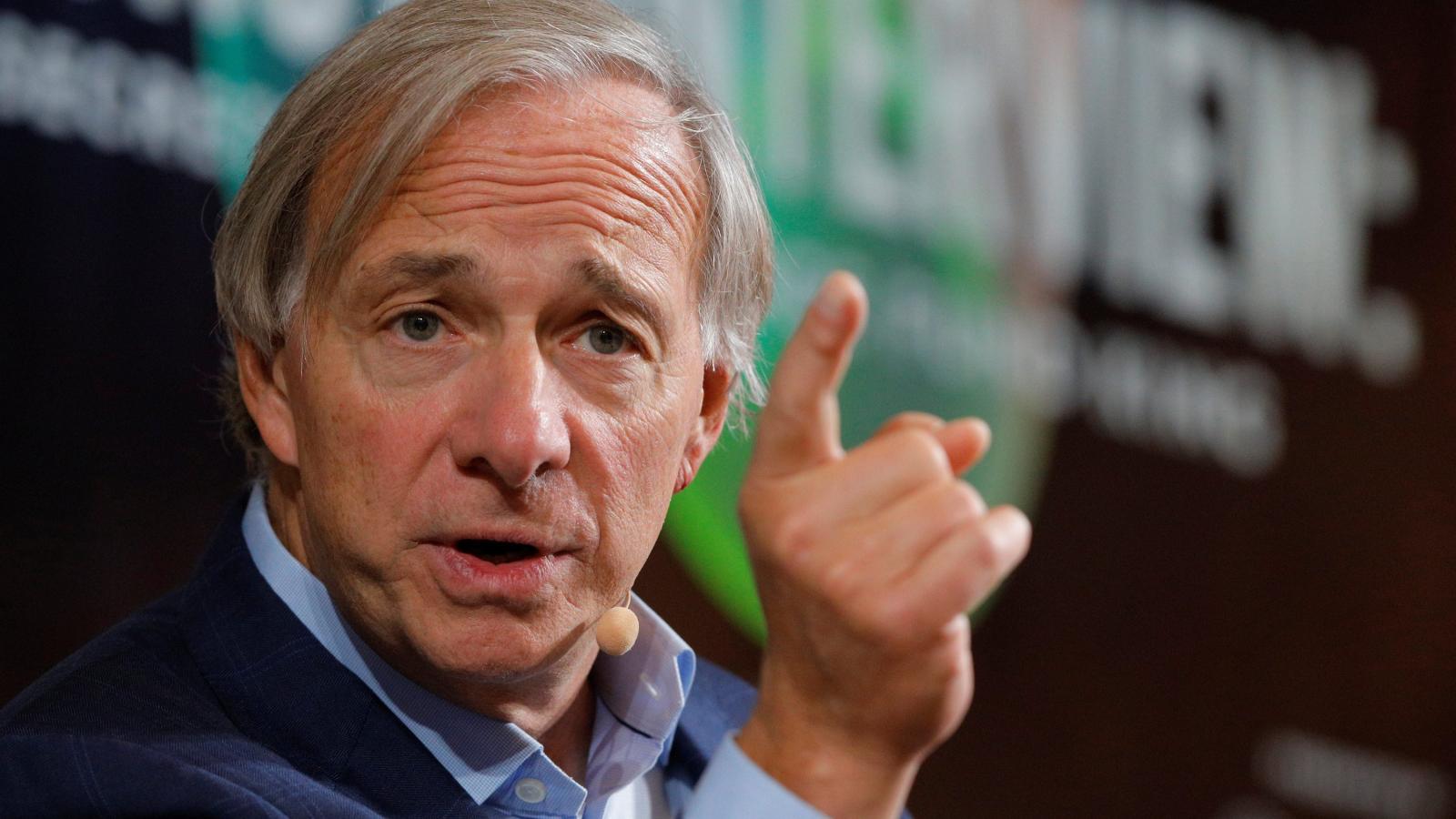
Dalio's latest warning: the US debt crisis may explode within three years. The antidote is...

Dalio's latest warning: the US debt crisis may explode within three years. The antidote is...

Author: Ray Dalio, founder of Qiaoshui Foundation Original title: How Countries Go Broke: The Dynamic Behind What is Incurable Now Compiled and organized by: bitPushNews In “How Countries Go Bankrupt: The Big Cycle,” I detailed an analytical framework to describe dynamic processes that are highly likely to occur due to unsustainable imbalances between debt supply and demand. Recently, three things happened at the same time: 1) The Japanese government sold part of its US Treasury holdings to return capital to Japan to support the yen and the Japanese capital market, and reduce exposure to US Treasury bonds while avoiding being forced to raise interest rates beyond its wishes in order to support the yen; 2) US bond yields hit new highs under long-term leadership, while the dollar weakened. The reasons include not only the current and anticipated supply of huge debt, but also weak demand for US bonds; 3) Treasury Secretary Bessent announced this week that the US Treasury would buy US Treasury bonds and be able to buy other US Treasury bonds The amount of capital used is limited, and many people ask me : Do these events fit the classic template I set out in my book? The answer is yes. To anticipate what might happen next, let's first review this operating mechanism. The operating mechanism explains in detail that the central government's debt dynamics are the same principles as the debt dynamics of individuals or companies. The only difference is that the central government has a central bank that can print money (this will depreciate the currency), and it can obtain funds from the public through taxation. Because of this, if you imagine how the debt dynamic would work if you or the business you run could print money, or get capital from people through taxation — then you can understand this process. But remember, your goal is for the entire system to work well, not only for yourself, but for all citizens. In my opinion, the credit/market system is like the human body's circulatory system, delivering nutrients to every corner that makes up the market and economy. If credit is used effectively, it can generate productivity and income to repay debt and interest on debt, which is a healthy state of affairs. However, if credit is not properly used to generate sufficient income to repay debts and interest, debt payments will continue to pile up like plaques in blood vessels, squeezing other expenses. When debt payments become very large, debt repayment problems arise, and eventually evolve into debt rollover problems — because debt holders are unwilling to continue to roll over and instead want to sell. Naturally, this will lead to a shortage of demand and sell-off of debt instruments such as bonds; when demand is scarce relative to supply, it either causes a) interest rates to rise, thereby suppressing the market and economic downturn, or b) the central bank “prints money” and buys debt, which will reduce the value of the currency, thereby driving up inflation (compared to the original level). Banknote printing also artificially lowers interest rates and harms lenders' returns. Both options are bad. When debt sell-offs are too large and difficult to contain, and the central bank has already purchased large amounts of debt, rising interest rates can cause the central bank to lose money and damage its cash flow. If this continues, the central bank will fall into a situation where net assets are negative. When this situation became serious, the central government and central bank needed to borrow money to repay the principal and interest of the debt, while the central bank printed money to provide loans due to insufficient free market demand, so a self-reinforcing spiral between debt/banknote printing/inflation formed. In summary, the classic indicators to pay attention to are the following: the ratio of government debt payments to government revenue (which is like the amount of plaque in the circulatory system), the ratio of government debt sold to the demand for government debt (this is like a plaque falling off and causing a heart attack), and the amount of government debt purchased by the central bank to cover the gap between the demand for government debt and the supply of government debt to be sold (this is like the central bank applying a larger dose of liquidity/credit to mitigate liquidity shortages, and the central bank has a risk appetite for these debts). These indicators usually rise over a long cycle of decades — debt and debt payments continue to grow in relation to income — until this state of affairs cannot continue because: 1) debt repayment expenses unacceptably crowd out other expenses, 2) the supply of debt that must be purchased is too large, causing interest rates to rise sharply, leading to a sharp decline in the market and economy, or 3) central banks are unwilling to let interest rates rise and suffer bad market/economic consequences, so they print large amounts of money and buy large amounts of government debt to cover the demand gap, thereby making the value of the currency significant Decreased. Either way, the return on bonds will be poor until the money and debt eventually become cheap enough to attract demand, or the government can cheaply buy back or repay...

1d agoBitpushNews#indebtedness #Bitcoin #economic crisis #US debt #DALIO #gold

The US composite PMI hit a four-year high in August, and expectations of interest rate cuts have cooled

Comparing news, on Friday, S&P Global released the latest PMI survey data. The data showed that the US composite output index rose strongly to 56.0 from 54.5 last month in August, the highest level since April 2022. This overall acceleration was driven entirely by an unexpected spike in the service sector. The initial service sector PMI recorded 56.8 in August, significantly higher than 54.6 in July, setting a new record high since December 2024. Normally, a PMI reading above 50 indicates that related economic activity is expanding. The data completely shattered Wall Street's previous cooling expectations. Economists generally expected the services PMI to fall back to 54 in August. S&P Global predicts that the current third-quarter survey data shows that the US annualized economic growth rate is approaching 3.0%. Compared to the 1.5% growth rate in the second quarter, this figure achieved a solid double jump. However, the rapid pace of the economy is still accompanied by latent risks of inflation. The latest report shows that although inflationary pressure subsided slightly in August, the growth rate of investment costs and sales prices remained high.

1d ago

The US IRS warns of a new type of cryptocurrency phishing attack: forged letters use QR codes to steal private wallet keys

According to CoinDesk, according to CoinDesk, the US Internal Revenue Service (IRS) issued a warning that an advanced email phishing campaign targeting US cryptocurrency holders is spreading. By falsifying official tax letters, attackers induce users to scan malicious QR codes to steal encrypted wallet credentials and private keys. According to reports, the attackers impersonated the IRS to send paper letters, used names such as “tax compliance” and “account verification” to create a sense of urgency, and attached QR codes to the letters. Once scanned, users may be directed to a counterfeit website, which in turn leaks wallet login information, mnemonic words, or private keys, leading to the theft of digital assets. The IRS reminds taxpayers that official agencies will not require users to provide private cryptographic wallet keys, mnemonics, or perform similar “wallet verification” operations through unofficial channels. Cryptocurrency holders should be wary of any suspicious emails and letters asking to scan QR codes, connect to wallets, or submit sensitive information. As the number of crypto asset holders expands, social engineering attacks on digital wallets continue to increase, and regulators and security agencies are stepping up prevention reminders about related fraudulent activities.

1d ago#On-chain dynamics