
流动性 · 17130

If Bitcoin surpasses $80,000, the cumulative liquidation intensity of mainstream CEX empty orders will reach 1,393 billion

Comparatively, according to Coinglass data, if Bitcoin exceeds $80,000, the cumulative liquidation intensity of mainstream CEX empty orders will reach 1,393 billion. Conversely, if Bitcoin falls below $75,000, the cumulative liquidation intensity of mainstream CEX orders will reach 1,142 billion. Note: The liquidation chart does not show the exact number of contracts to be liquidated, or the exact value of the contracts to be liquidated. What the columns on the liquidation chart show is actually the importance, or intensity, of each liquidation cluster that is relatively close to the liquidation cluster. Therefore, the liquidation chart shows the extent to which the target price will be affected when it reaches a certain position. A higher clearing bar indicates that once the price arrives, there will be a stronger reaction due to a wave of liquidity.
1h ago

Bonk Guy: Major public chains are fully competing for retail investors, liquidity, and users. The on-chain market may explode in this round

Comparing news, crypto KOL “Bonk Guy” Unipcs wrote that the market may have seriously underestimated the scale of development of the on-chain market in this round. Currently, Robinhood, BNB Chain, Base, and Solana are all vying for retail market, liquidity, users, and attention. Unipcs believes that all major ecosystems hope to become the leading chain in this cycle and are willing to invest significant resources to promote ecological growth. It is expected that competition and activity in the on-chain market will further heat up.

1h ago

Yi Lihua: Continued bullish, weekend fine-tuning will not affect the trend

Comparing the news, Yi Lihua wrote, “Continuing to be bullish and fine-tuning over the weekend. It's just that the Air Force used its weak liquidity time to fight back a little, without affecting the trend. It is highly recommended not to go short. It is common to rise to a certain position, and pullbacks always occur in phased positions.”

3h ago

The US debt repurchase program unexpectedly boosted Bitcoin by 25%, and the scale of short liquidations reached $4 billion

Comparatively, after the US Treasury expanded the scale of long-term US bond repurchases, the yield on 30-year US bonds fell from a 19-year high of 5.34% to about 5.19%, while Bitcoin rose by about 25% within a few days, breaking through $79,000 at one point. Approximately $4 billion of short cryptocurrency positions were liquidated during this period, further amplifying the gains. The US Treasury Department previously announced that it would increase the scale of the longest term treasury bond repurchase operation from a single $2 billion to $4 billion. Analysts pointed out that this operation is not equivalent to the Federal Reserve's quantitative easing (QE). The main effect is to improve the liquidity of old securities and optimize the debt structure, but the market sees it as a signal of policy support for long-term US bond yields. Analysts believe that the key to Bitcoin's surge is not the buyback itself, but rather that the market's previous short positions were too concentrated. After the long-term decline in US bond yields, bears were forced to close their positions, creating a strong shorting market. Meanwhile, the net inflow of US spot Bitcoin ETFs was around $6.5 billion this week, and Trump once again urged Congress to move forward with the CLARITY Act to further strengthen market risk appetite. CoinEx chief analyst Jeff Ko said that the key right now is whether Bitcoin can hold the 200-day EMA of around $69,000 and turn it from resistance to support. Market participants also warned that if the 10-year US Treasury yield rises above 4.7% and the 30-year yield approaches 5.3%, Bitcoin's current breakthrough may face a new test. Bitcoin has now broken through the 200-day EMA and continues to rise. In the next phase, the market will focus on whether it can maintain its gains in a high-yield environment.

7h ago

The Sandbox confirms SAND cross-chain bridge vulnerability: Base and BSC networks are affected, and cross-chain functionality has been suspended

Comparing news, The Sandbox officially stated that the team has confirmed and fully controlled the recent SAND cross-chain bridge vulnerability incident involving the Base and BNB Smart Chain (BSC) networks. Officials say the impact of this incident was limited, involving less than 0.01% of SAND's total supply of tokens. SAND on Ethereum (Ethereum) and Polygon is unaffected, user wallets have not been compromised, and relevant coin holders and liquidity providers are not required to take action. According to reports, attackers have minted unsecured SAND tokens on the Base and BSC networks through exploits. Currently, The Sandbox has shut down the SAND cross-chain feature of the two networks, and SAND on Base and BSC have been isolated and cannot be transferred or exchanged for the time being. The Sandbox reminds users not to buy, sell, or trade SAND on the Base and BSC networks as liquidity on these networks has been affected. The team said it has completed a pre-incident snapshot and is formulating a compensation plan for affected liquidity pool (LP) users, while continuing to investigate the scope of impact of the vulnerability. A full incident report and technical review will be released later.

8h ago

Aave V4 deposits are close to $750 million, attracting over $300 million in the past week

Comparatively, according to Cointelegraph, the deposit size of the V4 version of the decentralized lending protocol Aave is approaching $750 million. Over the past week, the release has attracted more than $3 billion in capital inflows, and deposits have grown significantly. As a mainstream DeFi lending platform, Aave's V4 upgrade continues to receive market attention, and recent net capital inflows reflect users' recognition of the protocol's liquidity and functionality.

11h ago

Review of this week's macro hot topics: the US debt crisis, AI infrastructure, and geopolitical conflicts are the main lines of the market this week

Comparing news, the global market this week focused on US debt pressure, AI capital expansion, and the US-Iran economic game. After the US Treasury expanded the scale of long-term treasury bond repurchases, US bond yields declined briefly, but the market feared that fiscal deficits and debt growth pressure would be difficult to ease through liquidity tools. The US federal government debt surpassed 40 trillion US dollars for the first time. The yield on 30-year US bonds once rose to a high level since 2007, and the global long-term bond market was under pressure simultaneously. The minutes of the Federal Reserve's July meeting show that internal hawkish forces are growing, and there are more than three voting members supporting interest rate hikes. Some officials are concerned that tariffs, energy prices, and AI infrastructure investments could drive up inflation. Meanwhile, Federal Reserve Chairman Walsh suggested that in the future, consideration could be given to reducing the number of annual meetings from 8 to 6. Driven by the weakening dollar and risk aversion, gold broke through the 4,600 US dollars/ounce mark this week and rose for the third week in a row; crude oil was higher, supported by the risk of the Strait of Hormuz and expectations of US sanctions against Iran. Geographically, the US-Iran relationship is shifting to putting pressure on the economy. The US plans to weaken Iran's economy by expanding sanctions and economic isolation, while Iran is studying countermeasures against energy transportation nodes, and the safety of the Strait of Hormuz has become the focus of market attention. In the field of technology, AI infrastructure competition continues to escalate. Nvidia guarantees up to $105 billion for the OpenAI data center project, and Broadcom is also planning an AI financing plan of up to $100 billion. Meanwhile, Anthropic's revenue surpassed OpenAI for the first time, and plans to advance IPOs, further intensifying AI companies' commercialization competition. On the capital market side, Yushu Technology skyrocketed on the first day it landed on the Science and Technology Innovation Board. At one point, its market capitalization exceeded 44 billion yuan, and founder Wang Xingxing's net worth increased dramatically. South Korean semiconductor giant SK Hynix announced a repurchase plan of approximately 40 trillion won, and Samsung is also planning to increase shareholder returns. Furthermore, trade negotiations between the US and Canada ushered in a critical window. The US suspended the imposition of up to 50% tariffs on Canadian goods for three days, and the two sides continued to seek trade agreements. The core logic of the market this week still revolves around three themes: whether US fiscal pressure worsens further, whether AI capital investment is forming a new round of asset bubbles, and whether global geopolitical risks are driving safe-haven assets to continue to rise.

12h ago

ENA rose more than 19% in 24 hours, and its market capitalization rose to $1,387 billion

Comparative news, according to HTX market data, ENA rose more than 19% in 24 hours. The current price is $0.1409, and the market value has risen to US$1,387 million. According to the news, on August 11, Arthur Hayes wrote an article publicly optimistic about ENA, believing that if the increase in US dollar liquidity drives the rise of BTC, the recovery in Bitcoin's base earnings may re-attract capital into USDE, adding that ENA is likely to achieve a fivefold increase in the next few months. On August 13, USDE issuer Ethena announced that it had reached a cooperation with FalconX, a tier-1 digital asset broker, to become its institutional loan partner. Ethena will be overcollateralized to invest in FalconX Global stablecoin loan arrangements as part of its institutional loan allocations.

15h ago
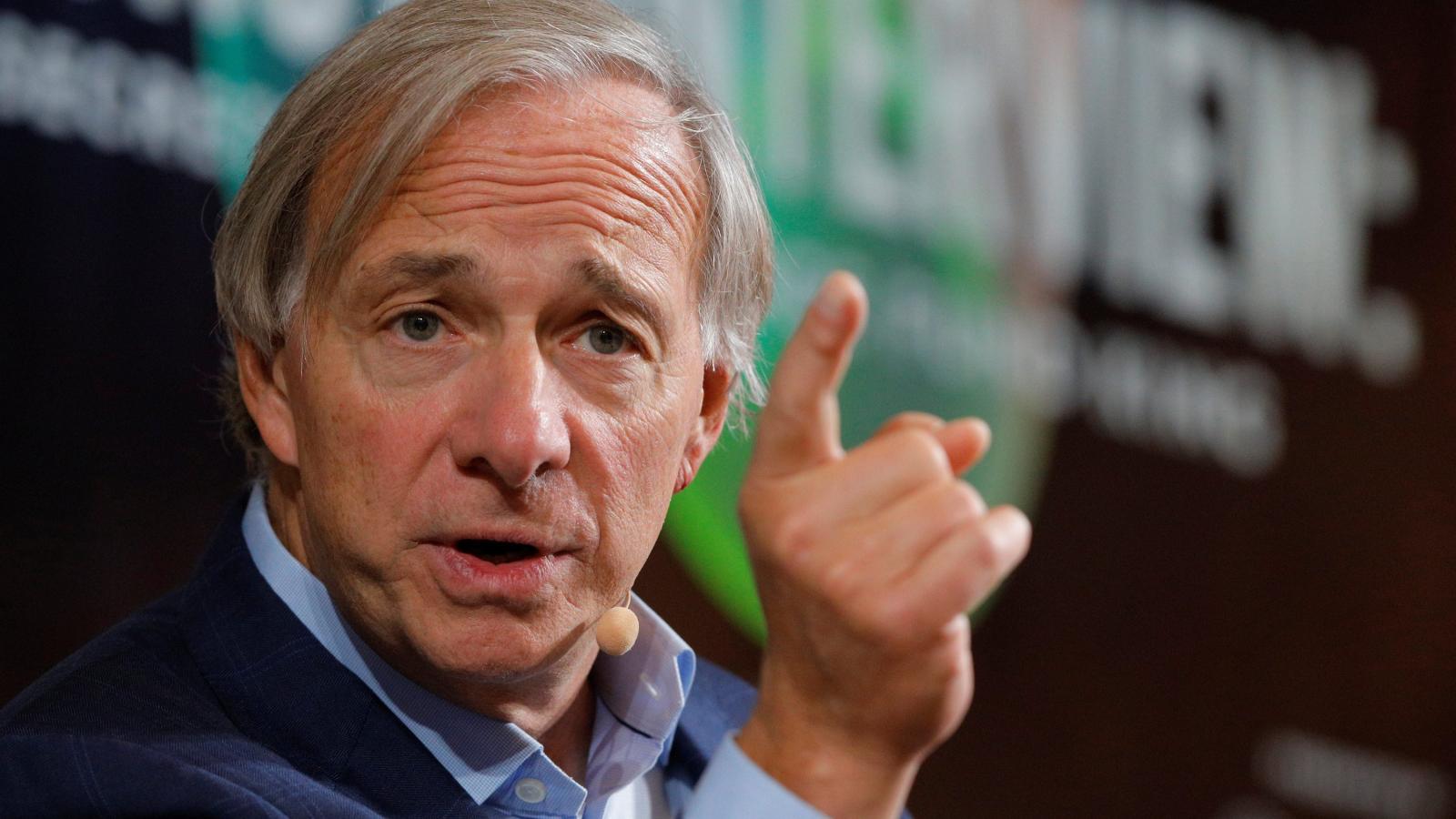
Dalio's latest warning: the US debt crisis may explode within three years. The antidote is...

Dalio's latest warning: the US debt crisis may explode within three years. The antidote is...

Author: Ray Dalio, founder of Qiaoshui Foundation Original title: How Countries Go Broke: The Dynamic Behind What is Incurable Now Compiled and organized by: bitPushNews In “How Countries Go Bankrupt: The Big Cycle,” I detailed an analytical framework to describe dynamic processes that are highly likely to occur due to unsustainable imbalances between debt supply and demand. Recently, three things happened at the same time: 1) The Japanese government sold part of its US Treasury holdings to return capital to Japan to support the yen and the Japanese capital market, and reduce exposure to US Treasury bonds while avoiding being forced to raise interest rates beyond its wishes in order to support the yen; 2) US bond yields hit new highs under long-term leadership, while the dollar weakened. The reasons include not only the current and anticipated supply of huge debt, but also weak demand for US bonds; 3) Treasury Secretary Bessent announced this week that the US Treasury would buy US Treasury bonds and be able to buy other US Treasury bonds The amount of capital used is limited, and many people ask me : Do these events fit the classic template I set out in my book? The answer is yes. To anticipate what might happen next, let's first review this operating mechanism. The operating mechanism explains in detail that the central government's debt dynamics are the same principles as the debt dynamics of individuals or companies. The only difference is that the central government has a central bank that can print money (this will depreciate the currency), and it can obtain funds from the public through taxation. Because of this, if you imagine how the debt dynamic would work if you or the business you run could print money, or get capital from people through taxation — then you can understand this process. But remember, your goal is for the entire system to work well, not only for yourself, but for all citizens. In my opinion, the credit/market system is like the human body's circulatory system, delivering nutrients to every corner that makes up the market and economy. If credit is used effectively, it can generate productivity and income to repay debt and interest on debt, which is a healthy state of affairs. However, if credit is not properly used to generate sufficient income to repay debts and interest, debt payments will continue to pile up like plaques in blood vessels, squeezing other expenses. When debt payments become very large, debt repayment problems arise, and eventually evolve into debt rollover problems — because debt holders are unwilling to continue to roll over and instead want to sell. Naturally, this will lead to a shortage of demand and sell-off of debt instruments such as bonds; when demand is scarce relative to supply, it either causes a) interest rates to rise, thereby suppressing the market and economic downturn, or b) the central bank “prints money” and buys debt, which will reduce the value of the currency, thereby driving up inflation (compared to the original level). Banknote printing also artificially lowers interest rates and harms lenders' returns. Both options are bad. When debt sell-offs are too large and difficult to contain, and the central bank has already purchased large amounts of debt, rising interest rates can cause the central bank to lose money and damage its cash flow. If this continues, the central bank will fall into a situation where net assets are negative. When this situation became serious, the central government and central bank needed to borrow money to repay the principal and interest of the debt, while the central bank printed money to provide loans due to insufficient free market demand, so a self-reinforcing spiral between debt/banknote printing/inflation formed. In summary, the classic indicators to pay attention to are the following: the ratio of government debt payments to government revenue (which is like the amount of plaque in the circulatory system), the ratio of government debt sold to the demand for government debt (this is like a plaque falling off and causing a heart attack), and the amount of government debt purchased by the central bank to cover the gap between the demand for government debt and the supply of government debt to be sold (this is like the central bank applying a larger dose of liquidity/credit to mitigate liquidity shortages, and the central bank has a risk appetite for these debts). These indicators usually rise over a long cycle of decades — debt and debt payments continue to grow in relation to income — until this state of affairs cannot continue because: 1) debt repayment expenses unacceptably crowd out other expenses, 2) the supply of debt that must be purchased is too large, causing interest rates to rise sharply, leading to a sharp decline in the market and economy, or 3) central banks are unwilling to let interest rates rise and suffer bad market/economic consequences, so they print large amounts of money and buy large amounts of government debt to cover the demand gap, thereby making the value of the currency significant Decreased. Either way, the return on bonds will be poor until the money and debt eventually become cheap enough to attract demand, or the government can cheaply buy back or repay...

19h agoBitpushNews#indebtedness #Bitcoin #economic crisis #US debt #DALIO #gold