清华 · 357
Yao Shunyu reorganizes Tencent's multi-modal route: closer to Liang Wenfeng and away from Li Feifei

Yao Shunyu reorganizes Tencent's multi-modal route: closer to Liang Wenfeng and away from Li Feifei

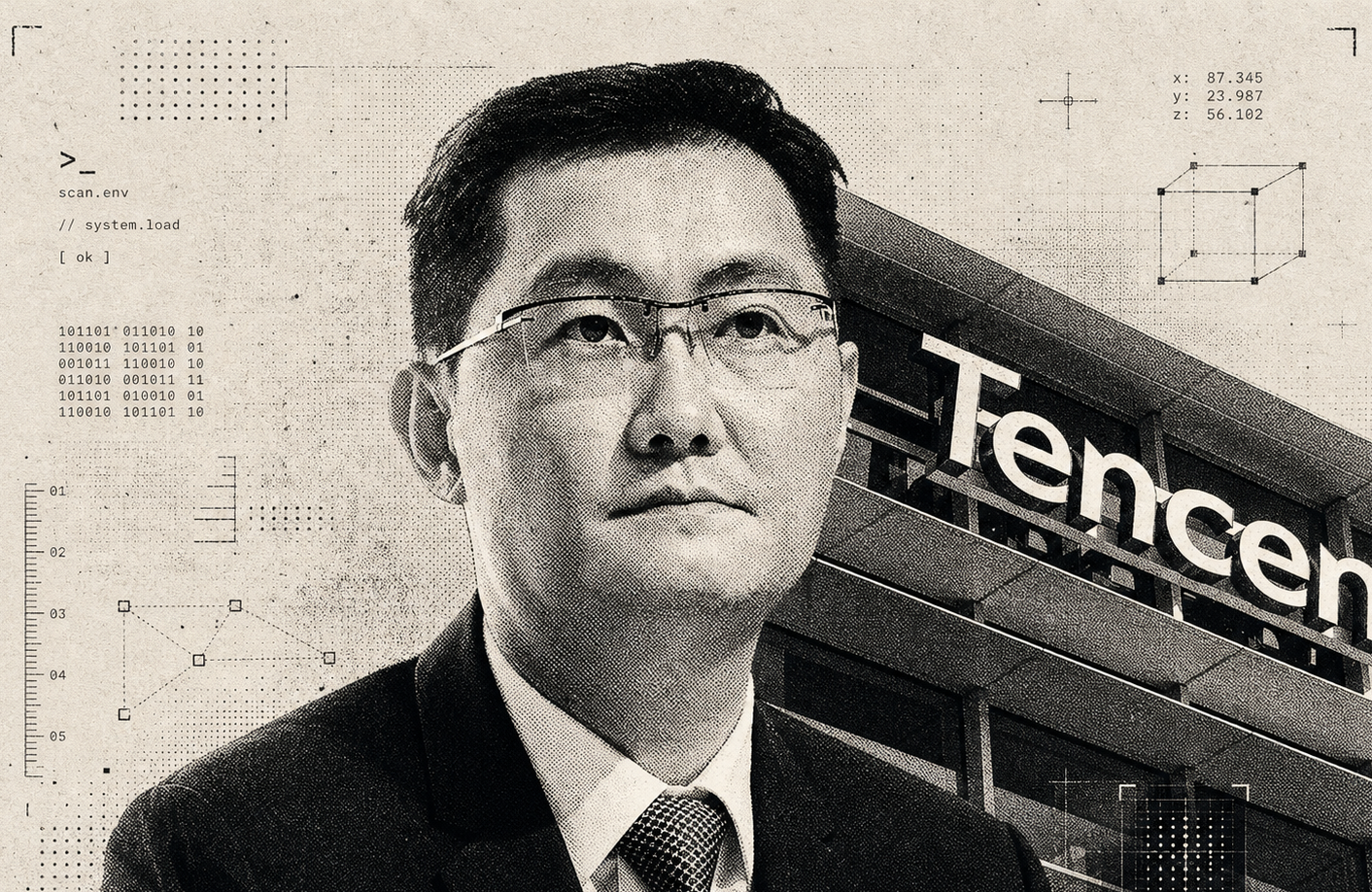
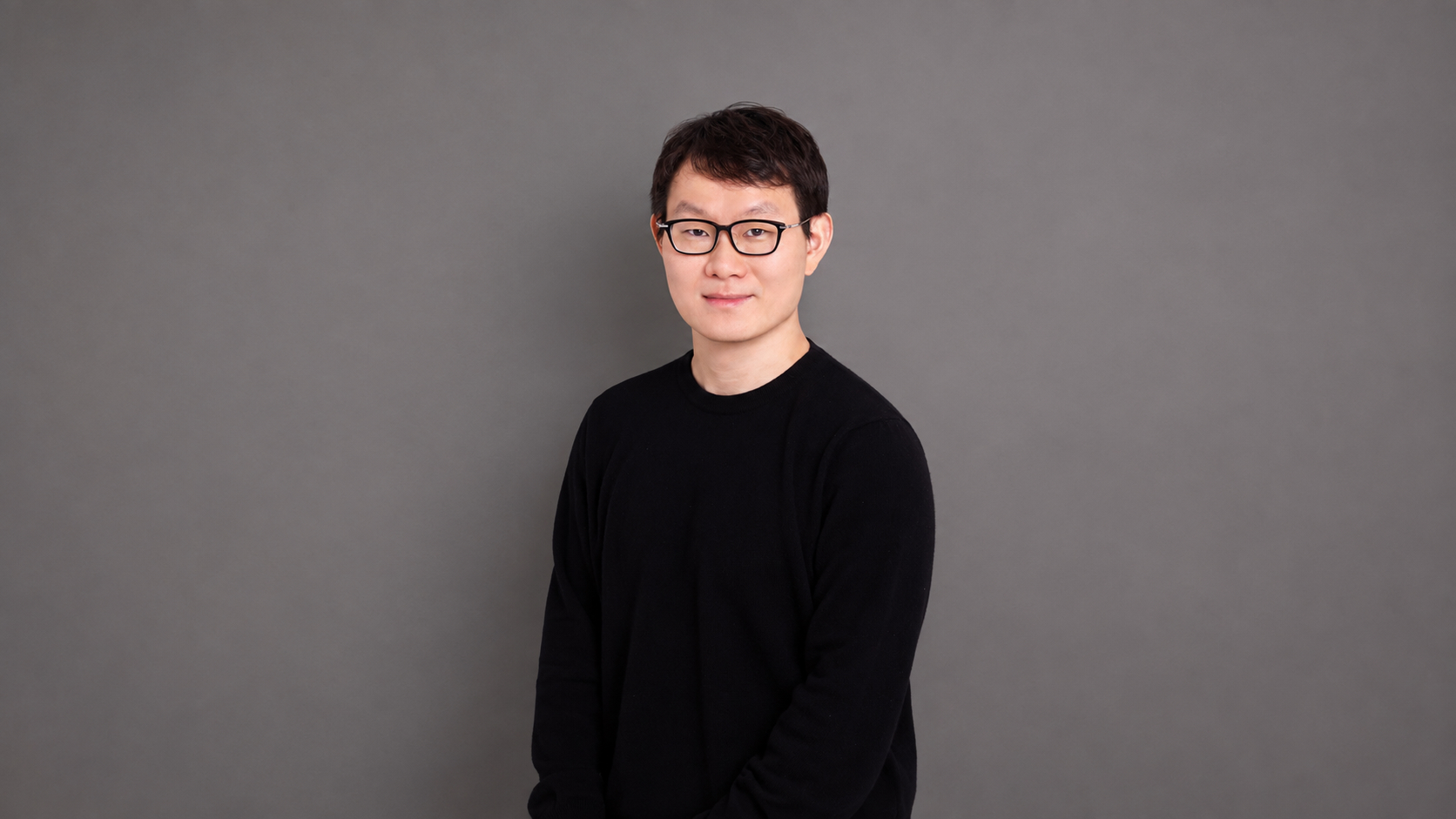
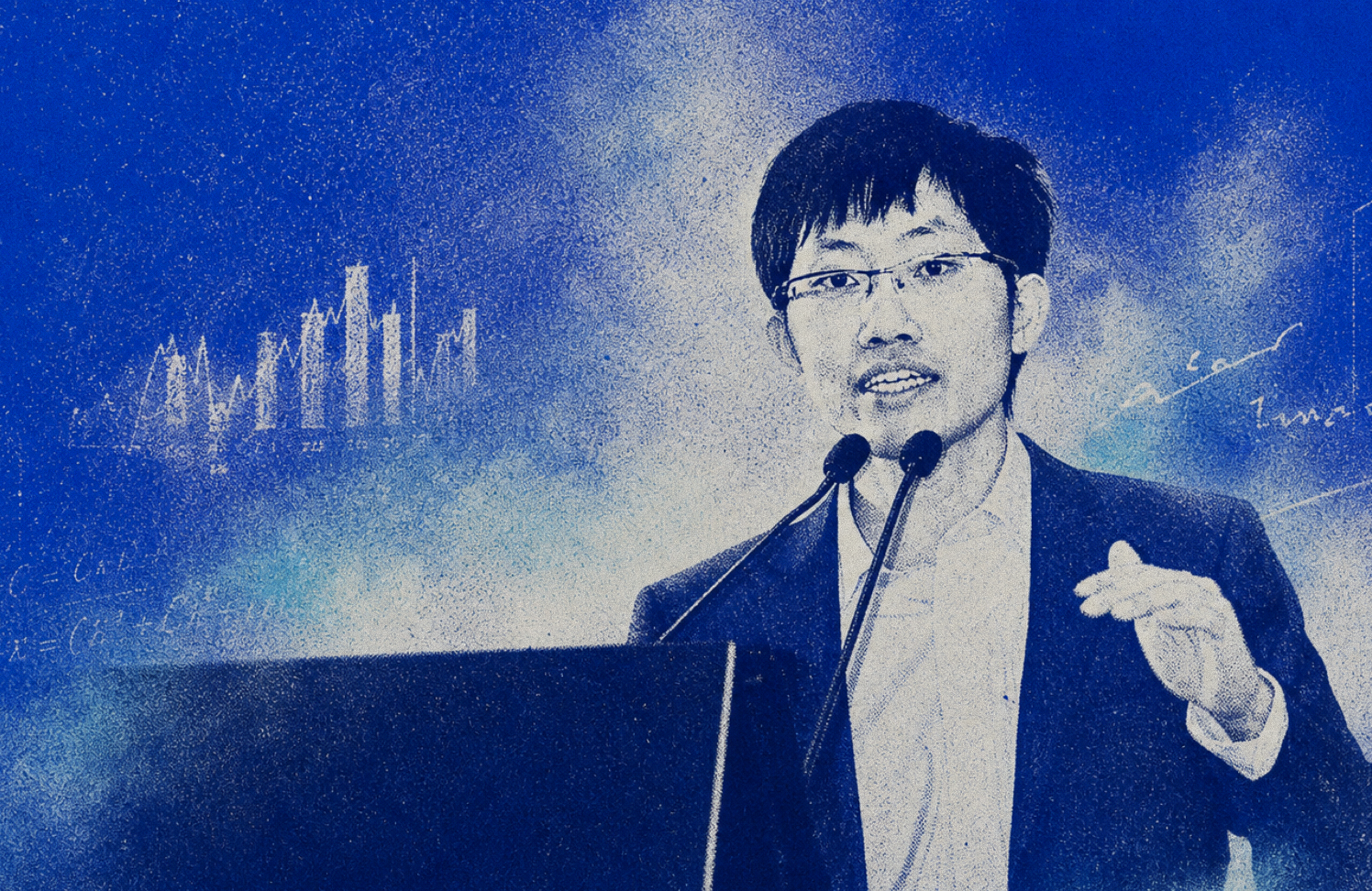
Text | Miao Zheng Editor | Wang Jing Source | Letter AI Tencent's mixed element multi-modal team has undergone another personnel change. According to media reports, Lin Xudong, who was responsible for xAI's multi-modal understanding, has left xAI and joined Tencent's mixed element as the head of the multi-modal content generation algorithm. The reason this personnel news is worth paying attention to is that it takes place in the context of continuous adjustments of mixed and multi-modal teams. Over the past period of time, news of the departure of the person in charge, the transfer of researchers, and the addition of new members came out one after another within the mixed yuan. Hu Han, the former head of multimodal understanding, left his career to start a business, and Tian Yonglong and others joined Tencent. The reporting relationship between the original multi-modal team also changed with the integration of the big language model department and the multimodal model department. However, does this mean that Tencent's multi-modal team is “changing the dynasty” is currently unable to draw a direct conclusion. What can be confirmed by public information is that mixed forces have indeed experienced personnel movements and organizational restructuring. The rumor of Lin Xudong's addition is more like a new signal in this adjustment: Tencent is recombining the two routes of multimodal understanding and content generation. So the question is, what exactly did Lin Xudong come from, and what abilities can he add to Tencent? And is Tencent's multi-modal approach shifting from “generating content” to Yao Shunyu's more biased “understanding context and acting in the world”? What is Lin Xudong's origin and what can he do after joining Tencent? According to public information, Lin Xudong graduated from Tsinghua University in 2018 and then went to Columbia University to study for his doctorate. While studying at the blog, his research interests included embedded learning, video analysis, and generative models. He also participated in the Vx2Text project in collaboration with Columbia University and Facebook AI. V indicates video, x indicates unknown, can be sound, voice, or even ambient sound. 2 represents TO, and Text represents subtitles. Its logic is to first convert different modes such as video and sound into vectors similar to “language tokens”, then uniformly feed the language model for fusion, and finally generate open text by an autoregressive decoder. Transformer can only understand tokens, so AI essentially doesn't understand video and audio file formats, making it even less likely to convert them into text. For example, if a dog jumps into the water next to a swimming pool, Vx2Text's video recognizer (V) will output keywords: dog, jump, pool; sound reader (x) will output: sound of water, fluttering. Although the product function of Vx2Text is “generation,” the core difficulty of the product is “understanding.” Of course, Vx2Text doesn't simply “translate” a screen into a few sentences. Models need to recognize people, objects, movements, and events from videos, understand how these things change over time, and finally organize visual information into language. After graduating from his PhD, Lin Xudong joined DeepMind and participated in Gemini-related multi-modal pre-training and post-training work. In 2025, he also joined xAI. According to public information, it is responsible for the direction of multimodal understanding and participating in the training of multimodal content understanding and generation models. Now that he has joined Tencent Hybrid, he will be responsible for the hybrid multi-modal content generation algorithm. Lin Xudong was added not so much to improve the performance of mixed-element multi-modal generation, but rather to solve a problem that plagues all multimodals — understanding. The previous generation model was more like a picture maker. Give it a hint, and it can generate an image or a video. But as long as users make more complex requests, the model just can't keep up. For example, the characters change in the long video, the shape of the object is not consistent before and after, the camera movement does not match the spatial relationship, etc. It's not because the model doesn't generate, but because it doesn't remember and understand the world steadily. Therefore, putting Lin Xudong in the position of multi-modal content generation is probably because he “translated” multi-modality into something AI can understand. Lin Xudong's addition can only be clearly seen in a larger context. That is, now Tencent's mixed element is reorganizing its multi-modal route. In January 2025, Tencent Outstanding Scientist (Tencent Distinguished Scientist) Hu Han succeeded Liu Wei, who had previously left his job, and was fully responsible for the research and development of mixed-element multi-modal models, and also served as Tencent's mixed-element big model Tech Lead. Tencent's internal organization was adjusted in the second half of 2025. He transferred from the Multimodal Model Department to the “Frontier” Frontier Technology Research Group under the Big Language Model Department. The title was changed to Head of the Multimodal Understanding Direction, and the reporting line was also changed to report to Yao Shunyu. The actual position changed from “the head of an independent department” to a “big language model...

2d ago字母AI#AI #Li Feifei #Liang Wenfeng #Tencent

Mecamand passed the Hong Kong Stock Exchange hearing. It is the first unicorn company in Xiong'an New Area

Comparatively, Mecamand (Xiong'an) Robotics Technology Co., Ltd. passed the Hong Kong Stock Exchange listing hearing on August 16, becoming the first company to declare and pass the hearing from Xiong'an. The company was founded by the Tsinghua Overseas Returnees team in 2016 and moved its registered place of registration to Xiong'an in 2024. It is the first unicorn company in Xiong'an New Area. Mercamander positions “AI+3D vision+robot” and independently develops the Mech-GPT multi-modal large model and “eye to hand” full-stack technology system. In 2025, it ranked first in the global AI+3D vision-guided general intelligent robot component market with a 22.1% share. Revenue from 2023 to 2025 increased from $181 million to $389 million, adjusted net loss narrowed to $109 million, and the share of overseas revenue rose to 50.3%. The company has deployed more than 27,000 units, and its customers include Ningde Times, BYD, Toyota, BMW, etc. Previously, it was invested by institutions such as Qiming Venture Capital, Intel Capital, Meituan, IDG, and Sequoia China.

3d ago
Why is capital chasing AI Native and ignoring the old Internet

Why is capital chasing AI Native and ignoring the old Internet

Capital doesn't reward being old-fashioned, not because old-fashioned people are at fault. The old part is clearly priced. There is no bad information, so there is no excess profit. Global venture capital was $510 billion in the first half of 2026, surpassing $44 billion for the full year of 2025 in one and a half months. More than 70% have entered AI; OpenAI and Anthropic took 217 billion dollars, accounting for 43%. With that much money, you'd think everyone could share a little bit. The truth is that distribution is more extreme than total volume, and the first sieve doesn't screen the industry, it screens people. The category that has been screened out now has an unkind name: the internet is old. Let's just say one thing: the “old man” in this article has nothing to do with age. It refers to a set of methodologies that have been formed in the mobile internet cycle, have been tested over and over, and have brought huge returns to holders. The person holding it may be 45 years old or 32 years old. It was this methodology that was being repriced, not the year of birth. Confusing these two things is Lao Deng's most common mistake and one of the most comfortable mistakes — because if the problem is someone else's age discrimination, you don't need to change a single word. 01 What is AI Native The term has been misused. They can use ChatGPT not called AI native, nor AI in the company name, let alone in their twenties. There are three things that really separate people. First, the starting point is a model, not a requirement. The order in which Lao Deng makes a product is: look at what the user wants, write down the requirements, and find technology to implement it. The order of AI natives is reversed: first figure out what level the model is capable of today and what step it is likely to reach tomorrow, and then move from this capability boundary to the external product. The former uses the model as a tool, and the latter uses the model as the foundation. There was no difference between these two kinds of things made by humans in the first edition; by the third edition, there was a difference of one species. Article 2. The default unit of an organization is not a person. The division of labor in the Internet age is the division of one thing into ten people. AI Native's division of labor is to take ten things from one person and add a bunch of agents. The CEO of a domestic application company said that the team consists of less than ten people, but a large number of AI work at night, and the first thing employees do every morning is check the work the AI handed in the night before. Cursor's side is even more extreme. Public reports mention that the company doesn't have a product manager; engineers write their own code, talk to users themselves, and participate in recruiting people themselves. Article 3. Information is first-hand. AI Native's input sources are papers, model cards, GitHub issues, original discussions on X, and self-run evals. Lao Deng's input sources are industry summits, closed-door meetings, brokerage reports, interpretation of public accounts, and finding someone to drink coffee with. This one is the least obscure and most lethal; I'll talk about that separately later. I'm satisfied with all three. The 25-year-old is an AI native, and so is the 45-year-old. I'm not satisfied with the three rules; I'm still an old man at the age of 25. AI natives are a state, not an age group. The trouble is that tickets in this state are works, not resumes. 02 The two lists spread the results of this round on the table. These are two lists. The first one is an all-AI native company. Their valuations are not rising; they are exchanging orders of magnitude. List 1 · Upstream OpenAI raised $122 billion in a single round of financing in Q1 2026, followed by $852 billion, the largest private equity financing in history. Anthropic Q2 had a single round of $65 billion, after investing $965 billion, accounting for about half of the total global venture capital for the quarter; the revenue operating rate in May reached about $47 billion. DeepSeek raised about 70 billion yuan in its first round of financing in May 2026. In April of the same year, Liang Wenfeng raised his direct shareholding from 1% to 34%, and controlled a total of about 84.29% of the shares through related entities. The Dark Side of the Moon (Kimi) was estimated at $4.3 billion in December 2025; it went for three consecutive rounds from January to February 2026 to reach 18 billion; the D round in May was about $2 billion, breaking 20 billion dollars after the investment; the July round surpassed $3.5 billion, after investing 35 billion dollars; the pre-IPO target was 50 billion dollars. ARR broke 100 million in March, 200 million in May, and held steady at 300 million US dollars in June, with APIs accounting for more than 70%. Smart Spectrum · MiniMax successively landed in Hong Kong stocks in early 2026, with a market capitalization exceeding 100 billion yuan. It was one of the first major model companies listed in China. The second one...

4d agoWendy#AI #DeepSeek
Meta can't keep the Chinese University of Science and Technology hegemony: the big model in Silicon Valley, the Chinese are starting to form their own games

Meta can't keep the Chinese University of Science and Technology hegemony: the big model in Silicon Valley, the Chinese are starting to form their own games

He dropped a $100 million, four-year “contract” in exchange for leaving after 14 months — the talent Zuckerberg had taken from OpenAI and left Meta. In the summer of 2025, Zuckerberg personally knocked out Jiahui Yu (Jiahui Yu), the head of multimodal research, from OpenAI using a salary plan with a total value of up to 100 million US dollars and covering four years. Silicon Valley is on the sidelines, and the industry calls it “stealing people at sky-high prices.” However, just 14 months later — on August 14, 2026, the star researcher, whom Meta had high hopes for, announced his departure and started his own business. A year ago, the blockbuster in the industry ended up being held for a shorter period of time than an NBA season. Just eight days before leaving his job, Muse Spark, the multi-modal model he led, had just been updated to version 1.2. From forming the team to continuously launching the four product lines Muse Spark, Voice Mode, Muse Image, and Muse Video, Yu Jiahui's year at Meta covered almost the entire process of this new team from construction to intensive delivery. Muse Image finished second in the Arena Wensheng Trials Test, beating Google Nano Banana, behind OpenAI GPT Image 2; Muse Video ranked third in the Wensheng video rankings. For Meta, this is certainly an impressive report card. But for Yu Jiahui, this is just an interlude. In his departure statement, he said he was “increasingly drawn to an issue that is critical to the future of humanity but has yet to be fully explored.” Details of the new company have not been disclosed, but he has decided to leave. From the junior class to the history of Yu Jiahui, the top in Silicon Valley, he is at the “top” level for any major AI company. Born in 1995 in Cixi, Zhejiang. In 2012, while still in his sophomore year of high school, he was admitted early to the Junior Class College of the Chinese University of Science and Technology. During his undergraduate studies, he won several contests, including the National Parallel Application Challenge Championship. After graduating in 2016, he went to the University of Illinois at Urbana-Champaign (UIUC) to study for his PhD in computer vision. This scholar trained many famous figures in the field of AI, such as Zhou Xi, founder of Yuncong Technology, and Han Xu, founder of Wenyuan Zhixing. After graduating from her PhD, Yu Jiahui's career progressed step by step. He has worked as a senior research scientist and manager at Google Brain and Google DeepMind, and has participated in the development of visual modules for the Gemini multi-modal project. Joined OpenAI in October 2023 as the head of the Perception (Perception) team, leading the development of GPT-4O and O-series inference models. In June 2025, Zuckerberg personally stepped down, and Yu Jiahui joined former OpenAI researchers such as Zhao Shengjia, Bi Shuchao, and Ren Hongyu into Meta's newly formed super intelligent team. According to foreign media Wired, Meta's compensation package was as high as $100 million — although Meta CTO Andrew Bosworth later clarified that this was not a one-time signing bonus, but a four-year total compensation plan that included stocks, bonuses, and performance conditions. But even so, this is one of the few sky-high contracts in the AI field. (Photo source: One mu of three-quarters of land) After conversion, even though Yu Jiahui only worked for 14 months, Meta paid an estimated cost of more than 25 million dollars for this short period of cooperation — but the actual cost of sunk was even higher. After all, the investment in team building and project start-up cannot be proportionately calculated. The fanaticism of the capital market is driving Silicon Valley's talent exodus, and Yu Jiahui's departure is by no means an exception. In fact, Silicon Valley in 2026 is experiencing an unprecedented “exodus” of AI talents. According to data from the research platform AlphaXiv, Meta alone has lost more than 200 well-known researchers, and another 929 researchers have “worked at Meta but have left their jobs.” In October of last year, Meta drastically cut more than 600 researchers in the AI business. In June of this year, with Llama 4's poor market performance and the company's implementation of more stringent performance reviews, it is expected that 15% to 20% of employees will be rated as “below expectations”, and many senior researchers have switched to competitors. Tech author Gergely Orosz pointed out that Meta's internal organizational restructuring and efficiency adjustments have caused engineers to feel uneasy, and many senior experts have begun to remain open to external opportunities. Google's situation is no less than happy...

5d agoBitpushNews#AI #Yu Jiahui #original #Silicon Valley
After disbanding AI Lab and spending 84.6 billion dollars to buy cards in half a year, Tencent is going against the current

After disbanding AI Lab and spending 84.6 billion dollars to buy cards in half a year, Tencent is going against the current

Author: Activision BeatingOriginal title: Tencent Still Has Dreams On August 12, 2026, Tencent released its financial report for the second quarter. Capital expenditure for a single quarter, $52.78 billion. Three months ago, that number was 31.9 billion. Moving forward a year, the total for the whole year would be less than 79.2 billion. This company has always been known for spending money with restraint. The speed at which it bought cards was once slow enough to make the market wonder if it actually wanted AI at the table. Now, it has brought the speed of spending money to this level within a year. At the earnings conference on the same day, Ma Huateng said that Tencent is “building a brand new, AI-enabled Tencent.” The hybrid was renamed HY, and Hy4 will be released soon. The last time this company described itself as “brand new” was in the era when WeChat was born. Tencent still has dreams. Its dream is not just AI; it needs to relearn to be an unstable company. In 2018, Pan Ran said in “Tencent Has No Dreams” that Tencent is a company like water. Water is good for all things, and there is no dispute; wherever there is a channel, it flows. Water has no personality, so water doesn't have dreams. It is natural for water to flow to a low place; backflow is for those who have reflux. In 2026, the 28-year-old company did something against nature. It admits that the article from eight years ago was right. It admits that it is no longer possible to live like water. On Wednesday, May 5, at 9 p.m., “Tencent Has No Dreams” was published. 13,000 words. At 2 o'clock in the evening, Liu Chiping and Tencent PR director Zhang Jun responded in the circle of friends. Liu Chiping said that Tencent is a larger organization and ecosystem than the outside world can imagine. “It's too narrow to reduce Tencent to the gains and losses of a product, a kind of strategic deployment, and one person's will.” At 2:19, a screenshot suspected of Ma Huateng's response began circulating in the circle of friends. At 2:39 the real Ma Huateng spoke up, saying “It's nice to have criticism” to a friend who cares about him. Afterwards, he said, “From writing the first line of code, my dream was how to make the best product, not how much money to make.” During the day, the national media quoted almost the full screenshot of Ma Huateng's response. Even Zhang Yiming spoke for Tencent in his circle of friends, saying this was a “Don Quixote imagination.” Tencent is not only powerful, but it is also constantly evolving in every dimension. Zhang Jun was on the long-haul flight that day. After landing, he said, “We certainly weren't as bad as the outside world thought, but the criticism also made us realize that we weren't as good as we thought.” Of course, there were a few different voices about that article at the time. Hong Bo said that many of the questions mentioned in the article are real questions, but is there only one correct answer for such a large company? “Perhaps the author thinks Zhang Yiming is the only correct answer. He is a bit superstitious about Zhang Yiming.” That article also recorded an earlier story. At the beginning of 2011, just after the 3Q war ended, Tencent held a general meeting to discuss what Tencent's ability to open up is. Ma Huateng asked the 16 executives who attended each to write down what they thought Tencent's core competencies were on paper, and came up with a total of 21 answers. Finally, decide on two. Capital, flow. The term capital was advocated by Liu Chiping. Opening up means releasing traffic and turning it into an investment. Traffic is open, capital is open, “I don't do it myself anymore.” These two terms have governed Tencent for ten years. The entrance to WeChat traffic and the exit of investment traffic is in the middle is a steady stream of cash generated by games and advertisements. JD's e-commerce portal entered the WeChat Jiugong grid. Sogou picked up the search, and Meituan took over the local life. Traffic is exchanged for shares, and shares are exchanged for allies. In ten years, Tencent's market capitalization has increased tenfold, surpassing Facebook's. When that article was published, it still looked invincible. If you look back and reread it eight years later, you'll find that the article predicted almost every time Tencent fell since then. Ten years later, on December 23, 2021, Tencent distributed 14.7% of JD shares to its shareholders, with a market value of about HK$100 billion. In January 2022, Sea holdings were reduced and $3.2 billion was cashed out. In November 2022, 9.6% of Meituan was split, or approximately HK$159.4 billion. The capital, which was designated as a “core competency” back then, was personally destroyed by Tencent. The water has flowed back and forth for the first time in decades. There is a section in the first AI Dream article that not many people paid attention back then. It's written in Tencent's AI. The Go program “Amazing Art” created by AI Lab successively lost to two amateur games. One is the personal hobby of Headline's vice president, and the other is an amateur work by several engineers on the WeChat translation team. Few people realize that...

5d ago动察Beating#AI
From Avenir to UMX, Li Lin's return and new propositions

From Avenir to UMX, Li Lin's return and new propositions

Author: Eric, Foresight News In the summer of 2026, UMX, which was incubated by Li Lin's Avenir Group, began public testing, which also made outsiders once again set their sights on this group of Chinese entrepreneurs in the crypto industry. Thirteen years have passed since Huobi was founded in 2013. At that time, Li Lin was standing in a market that had just taken shape. The problem he faced was very straightforward: how to make it easier for more people to trade Bitcoin. Thirteen years later, the crypto industry has moved from a relatively independent digital asset market to a new stage of continuous convergence with ETFs, stablecoins, RWA, and traditional securities. Over the past few years, Li Lin's role has also changed. In 2023, he founded Avenir Group in Hong Kong, gradually shifting from a frontline entrepreneur to an investor and asset allocator, continuing to focus on digital assets, securities trading, and financial infrastructure. Today, UMX has emerged as an “Avenir Group Incubator”, giving these seemingly scattered investment leads over the past few years a new perspective. Problems also followed. In the years since Huobi founded Avenir Group, what exactly is Li Lin doing, and what is it that has made him stand back to the stage now? From Beijing to Hong Kong, from athletes to referees, to understand this return, they must first go back to where they left. In September 2013, Huobi went online. It was a crazy year when Bitcoin rushed from 800 yuan to 8,000 yuan. It was also a year on the eve of Mentougou's collapse and the industry grew reckless. A young man from Hengyang, graduated from the Tsinghua Automation Department, wrote code for Oracle, and had started a business twice. Using the “permanent exemption of processing fees,” he cut through the Bitcoin exchange market, which had experienced rough experiences at the time. Half a year after launch, Huobi's daily transaction volume exceeded 1.5 billion yuan. At its peak, it occupied more than half of the global Bitcoin exchange market. Zhenge Fund, Dai Zhikang, and Sequoia Capital followed one after another, and Li Lin became one of the most familiar faces of entrepreneurs in the Chinese crypto world. Over the next decade, Huobi and Li Lin experienced a complete cycle of the crypto industry from early recklessness to global compliance competition. For an entrepreneur, this experience left behind not only how to become a trading platform, but also a complete set of perceptions about trading, liquidity, user needs, account systems, and risks. However, running a platform and allocating a sum of money is not the same way to look at the market. In 2023, Li Lin founded Avenir Group in Hong Kong. The name comes from French and means “better future”. From managing an exchange with your own hands to managing a multi-strategy family office, the roles have changed, and so has the way you look at the market. In the past, he was an athlete on the field, watching user growth, transaction volume, product lines, and liquidity, and was fighting closely with his opponents every minute and every second. Now he is sitting on the sidelines and working as a fund allocator, but what he sees is a different set of problems. Where are funds left idle, where are assets split, why can't accounts be exchanged, and why is risk difficult to be managed uniformly. These issues are hard to see from an operator's perspective, because exchanges naturally only care about matters within their own market. From the perspective of the configurator, they are so dazzling that one cannot ignore them. Avenir's actions over the past few years have vaguely outlined a main line. The list has been drawn up for a long time. It has taken a stake in UP Fintech, the parent company of Tiger Securities, as a core investor, participated in the US$300 million equity financing of the Hong Kong licensed platform OSL, invested in the institutional order routing company CoinRoutes and options derivatives infrastructure SignalPlus, led the AI native quantification platform Inference Research, and signed multiple assets with Tiger Securities and AMINA Bank on Consensus Hong Kong Infrastructure Cooperation Memorandum. According to the 13F filing submitted to the SEC, Avenir ranked first among Asian Bitcoin ETF institutions for eight consecutive quarters, with BlackRock IBIT alone holding more than 18 million shares. In addition, Avenir launched a $500 million quantitative partnership program to provide capital and ecological support to mature quantitative trading teams, and also acquired the Japanese compliant trading platform BitTrade through the Xinhua Group. The investment reach of licensed platforms, brokerage services, transaction execution, quantitative capabilities, and stablecoin payments covers almost every aspect required to connect the two markets. Looking at individual projects, these investments are scattered across different products and markets. When you look at it together, the direction gradually...

10d agoForesight News#web 3.0

Potential World Technology completed a seed round of hundreds of millions of yuan, and Gao Lin Venture Capital and others participated in the investment

Comparative news, according to a report by Interface News, the self-contained pedestal model company LatentVerse (Potential World Technology) announced the completion of hundreds of millions of yuan in seed round financing. Investors include Gao Lin Venture Capital, Qingliu Capital, Inno Fund, Zhiyuan, and Star Dynamics. According to information, LatentVerse was founded in May 2026 by an embodying intelligence research team from the Institute of Interdisciplinary Information Research at Tsinghua University.

11d ago#financing
What kind of path did Liang Wenfeng follow when his 80,000 capital went to DeepSeek to shake Silicon Valley?

What kind of path did Liang Wenfeng follow when his 80,000 capital went to DeepSeek to shake Silicon Valley?

Author: Motion Cha BeatingOriginal title: Liang Wenfeng Youth Past Stories: 80,000 Capital, a Fiat, and One Man's Long March, January 27, 2025, Monday. Liang Wenfeng is playing with several middle school students on a court in Wu Chuan. Seven days ago, Deepseek-R1 was released. Seven days later, the news crossed the Pacific Ocean, causing turmoil in the US capital market. Nvidia's stock price fell by more than 16% in a single day, and the market value evaporated by nearly 600 billion US dollars. The US media picked up old words from the Cold War era and called this day a new “Sputnik moment.” DeepSeek is already at the top of the free app store list in both China and the US. People in Silicon Valley learned to read an unfamiliar Chinese name overnight. Interview emails flocked to Hangzhou from all over the world, and reporters went around asking where Liang Wenfeng had gone. No one found him. That afternoon, he wore a jersey and ran back and forth at a stadium in a county-level city in western Guangdong. The ball falls to his foot, he catches it, turns around, and passes it out. The world outside the field is shaking for him, and the game on the court continues. The next day was New Year's Eve. When Liang Wenfeng returned to Mililing Village, he had already pulled up a banner with white letters on the red background, “Warmly welcome Wen Feng, the pride and hope of his hometown.” Visitors came one by one, standing under the banner and taking pictures. Some people bent down, grabbed a handful of dirt from the side of the road, and carefully collected it, as if they wanted to take some good luck from this village. Liang Wenfeng's high school classmate, Mr. Chen, told the reporter that he promised to go back to Wu Chuan for the New Year, but after returning, he would find a place to hide. Children of Mililing Village In 1985, Liang Wenfeng was born in Mililing Village, Qinba Town, Wuchuan City. Wu Chuan is in western Guangdong. It is surrounded by rivers on three sides and faces the sea on the south side. The Jianjiang River came all the way down from the north, then suddenly turned a corner and flowed south into the sea. In the past, merchant ships running along the waterways were often anchored in the river bay, and the warehouses on the shore were connected, and it was very noisy. As a result, this county town received a very impressive name, “Little Buddha Mountain.” Wu Chuan also believes in reading. Xiajie Village, the hometown of Qing champion Lin Zhaotang, is not far from Mililing Village. The county register records that there was a champion here, 20 contestants, and 165 people. For hundreds of years, generations of young people have set out from here and followed the same narrow road to counties, provincial towns, and Beijing. Fame has long been a thing of the past, and the idea that studying can change one's life has always remained in this land. Mililing Village also has its own story. When talking about their ancestors, they talk about anti-Japanese general Leung Wah Shing, and Leung Tai-hee, who graduated from Sun Yat-sen University in 1936. According to village records, after liberation, nearly 100 students have been admitted to national key universities from here. However, Liang Wenfeng grew up in the 90s. It was the age of money in Guangdong. Factories were recruiting people, business was booming, and coastal cities were the same day by day. A young man who is willing to suffer hardships and dares to break through may not need to sit in a classroom for many years; he also has the opportunity to earn money he never dared to think of before. In contrast, studying is too slow. You have to work year after year, and no one can say for sure what you can get in return. Many parents in the village decided that studying was useless, and even made a special trip to Leung's family to persuade his father not to let his children continue reading. At that time, the imagination of fame that Mililing Village had accumulated over hundreds of years was being overshadowed by fresh and hot stories of wealth in Guangdong. Many years later, Liang Wenfeng talked about this past in an interview: “I grew up in a fifth-tier city in Guangdong in the 80s. My father is an elementary school teacher. In the 90s, there were many opportunities to earn money in Guangdong. At the time, quite a few parents came to my house; basically, my parents felt that studying was useless. But now that I look back, my ideas have all changed. Because the money wasn't easy to make, I probably didn't even have the chance to drive a taxi. Time has changed in one generation.” “Time has changed in one generation.” This phrase refers to the 90s, and it also refers to 2024. When he said this, he was doing another thing that was just as slow and just as difficult to explain. Liang Wenfeng's father taught at Meiyi Elementary School and later became the Deputy Teaching Director. Her mother was also a teacher and taught at Bianling Elementary School. This family doesn't have much to do with scientific research, but books are piled up in the attic all year round. According to local media reports, the largest collection of books was in the thousands. My father set two rules for the family. At the dinner table, we don't talk about studying; we only talk about family life; after dinner, the whole family finds a book to read on their own. Whether Liang Wenfeng did well or not, his father rarely questioned him. What he says more often is that solving problems is more important than scores. The Leung Family's most valuable appliance is a Feiyue radio. A black case, a metal knob, and an antenna that can be pulled out one section at a time. When the switch is turned, a rustling current sound comes out of the speaker. After the frequency is adjusted, the sound from a faraway place slowly comes out of the noise. When Liang Wenfeng was in fourth grade, he took this radio apart. Remove the screws,...

17d agoburnking
After financing 1 billion dollars in half a year, the AI Token company of Tsinghua teachers and students was robbed

After financing 1 billion dollars in half a year, the AI Token company of Tsinghua teachers and students was robbed

Author/Wu Qiong Report/Investment Community PEDaily Original Title/AI Token Factory Explodes, Tsinghua Teachers and Students Raise 1 Billion Dollars in Half a Year Who Produces “Hydropower and Coal” in the AI Era? A round of financing came into our view — on July 13, Chujing Technology's Series A round of financing surfaced, led by Henan Investment Group's HuiRong Fund. Old shareholders such as True Knowledge Capital, Shangshi Capital, Starlink Capital, Shanghai Guofang Innovation, Honghui Fund, and Hangzhou Fucheng continued to increase their investment. This is a team of Tsinghua teachers and students: founder and CEO Ai Zhiyuan and CTO Chen Xianglin are all from the Tsinghua University Computer Department High Performance Institute; Zheng Weimin, an Academician of the Chinese Academy of Engineering, also from the High Performance Institute; Professor Wu Yongwei of Tsinghua University is the chief scientist; Zhang Mingxing, an associate professor of computer science at Tsinghua University, as a co-sponsor, has led the company's technology strategy and key R&D research for a long time, and continues to drive breakthroughs in cutting-edge technology. Three years ago, most domestic AI startups focused on big models. Even startups in the AI infrastructure field mostly focused on training, but Trendline Technology chose to start with a big model inference circuit to build a high-quality AI token factory. Now, with demand for AI tokens growing exponentially, this once hidden racetrack has finally caught fire. Similar to Smart Spectrum, Chujing Technology has completed the Tsinghua University technology transfer and shareholding, making it a typical project for the transformation of Tsinghua's scientific and technological achievements. In just half a year, Chujing Technology has accumulated more than 1 billion dollars in financing. One by one, 100 billion and trillion-level high-quality AI token factories have been completed one after another, creating a new picture of the AI industry. The deep integration of industry and research to build a high-quality AI token factory returns to 2023, and ChatGPT ignited a global wave of generative AI. Seeing this historic opportunity, Wu Yongwei, professor of computer science at Tsinghua University, and Ren Xuyang, founder of Zhenzhi Capital, decided to co-launch Trend Technology. Their starting point for technology was the Institute of High Performance Computing at Tsinghua University. At the end of December of the same year, Chujing Technology was formally established. The founder and CEO of the company, Ai Zhiyuan, Ph.D., of the Institute of High Performance Computing at Tsinghua University, has worked as a R&D leader in various key departments such as big data, digitalization, and AI applications in listed companies, and has accumulated complete industry experience from technology research and development to large-scale implementation. Co-sponsor Zhang Mingming, an associate professor at Tsinghua University, has mainly carried out research work in the field of computer system architecture and has been deeply involved in infrastructure construction for leading model manufacturers. As the company enters the accelerated phase of marketization, in March of this year, Dr. Wu Wenjie became the president of Trend Technology. As a senior financial and strategy expert in the industry, he has a doctorate degree in finance from the University of Hong Kong, further strengthening the company's capabilities in strategy, investment and financing, internal control management, and global operations. As a result, a core team with technical background, commercial perspective and industry experience was formed. Anchoring AI, the team made a choice that didn't seem mainstream at the time — when most AI entrepreneurs chose to invest in big model training, Trendland Technology focused on AI reasoning from the beginning. Simply understand, training is about creating a “smart brain,” and reasoning is how to use the brain efficiently. “Training is a cost item; reasoning is a money-making item,” Ai Zhiyuan explained. At the time, their judgment was that only reasoning would actually produce economic benefits, and it would be a wider market. What Chujing Technology needs to do is to become the best partner for the construction and operation of token factories in the AI era, making the process of using the “brain” more efficient. This is also the position of Trendland Technology — compared to other AI Token factories, Trendland aims to produce high-quality AI tokens. Ai Zhiyuan further explained that when the big model actually enters the production stage, the customer no longer needs a big model that “can chat”, but that can complete the actual business stably, efficiently, and inexpensively. However, AI tokens that actually have enterprise-level implementation value need to continuously meet many important requirements such as low initial token latency, high concurrent carrying, stable output quality, structured result generation, and function calls on 100 billion or even trillion parameter models, while keeping the unit generation cost within an acceptable range for enterprises. None of these capabilities are the hardest to achieve alone, and this is the choice of most AI infra companies. The real challenge, however, is that the customer's real demand is to establish these indicators simultaneously under actual production loads and remain stable over long periods of operation. According to data estimates, with different combinations of capabilities, there can be gaps of several times or even tens of times in production efficiency. In order to achieve this goal, Chujing Technology has adopted “system-wide heterogeneity collaboration”, “storage conversion” and “fictitious and real isomorphism”...

18d agoWendy#AI #token #Tsinghua #financing
The three-year valuation rose from 300 million to 35 billion. How did Kimi do that?

The three-year valuation rose from 300 million to 35 billion. How did Kimi do that?

Author: Mochi Beating Original title: Kimi completed more than 3.5 billion US dollars in financing, and the valuation rose to 35 billion US dollars. The pre-IPO round has already started early, Kimi has just opened up K3's model weight, and a new round of financing for Dark Side of the Moon has also been settled. According to an exclusive report from the “Science and Technology Innovation Board Daily” reporter, Dark Side of the Moon has completed Series F financing. The financing amount exceeds 3.5 billion US dollars, and the post-investment valuation has reached 35 billion US dollars. There were no plans to raise this much money in this round of financing. The report said that Dark Side of the Moon closed the F round early because the investors' subscription amount exceeded the original target by more than three times. Series G financing, which was originally scheduled to start in August of this year, also began early. Round G will be the pre-IPO round before Dark Side of the Moon goes public, and the pre-investment valuation has already risen to $50 billion. A week ago, the version that came out on the market is that Dark Side of the Moon will launch the final round of private equity financing in August after completing a pre-investment round of financing valued at approximately US$31.5 billion. Today, the final round of round F funding is over $3.5 billion, and the post-investment valuation has reached $35 billion, and the next round won't wait until August. Both the money and the valuation came faster than originally planned. Since its establishment in 2023, Dark Side of the Moon has only taken more than three years to push its valuation from $300 million to $35 billion. The ongoing pre-IPO round has put the next price tag at 50 billion US dollars. With more than ten rounds of financing over three years, the valuation rose from 300 million US dollars to 35 billion US dollars. The dark side was founded in April 2023. It was co-founded by Yang Zhilin, Zhang Yutao, Zhou Xinyu, and Wu Yuxin. The company completed an angel round of financing of more than $200 million about two months after its establishment, and the post-investment valuation was approximately $300 million. For a big model startup that hasn't officially launched a product, this is already a rare early-stage financing. What really brought the dark side of the moon to the center of the capital table was the A+ round of financing completed in February 2024. The scale of this round of financing exceeded 1 billion US dollars. Alibaba led the investment, with the participation of institutions and industrial capital such as Sequoia China, Xiaohongshu, Meituan, etc., and the valuation of Dark Side of the Moon was pushed to about 2.5 billion US dollars. Half a year later, the Series B round surpassed $300 million, and the company's valuation continued to rise to $3.3 billion. However, after the 2024 round of financing, the Dark Side of the Moon's financing pace slowed down for a while. Over the year, China's big model market has changed markedly. Major companies such as Byte and Ali continue to lower model prices. DeepSeek is rapidly rising with open source and cost efficiency, and competition for general chat products is also gradually shifting from user growth to model capabilities, reasoning costs, and commercial revenue. Kimi used to take the lead with long texts, but with just one product label, it's already difficult to support higher valuations. By the end of 2025, Dark Side of the Moon completed Series C financing of 500 million US dollars, and the post-investment valuation reached 4.3 billion US dollars. Since then, the company's financing has accelerated markedly. In the first two months of 2026, Dark Side of the Moon completed multiple rounds of financing, and the valuation rose from the previous 4.3 billion US dollars to 10 billion US dollars, and further reached 18 billion US dollars. In May of this year, the company also completed Series D financing of about 2 billion US dollars, and the post-investment valuation reached 20 billion US dollars. Participants are no longer just internet companies and market-based investment institutions; China Mobile, Guozhi Investment, CPE Yuanfeng, and several state-owned background funds have also begun to enter the shareholder list. Round D has just been completed, and a new round of funding will commence in June. At that time, the pre-investment valuation reported in the market had reached 31.5 billion US dollars. Today, the round has finally ended with over $3.5 billion in funding, and the post-investment valuation of Dark Side of the Moon has risen to $35 billion. Looking back at this financing curve, the most obvious change occurred in the past six months. At the end of 2025, Dark Side of the Moon was still valued at $4.3 billion. More than half a year later, that figure has reached $35 billion, a seven-fold increase. If the next round is completed according to the $50 billion pre-investment valuation, the valuation of Dark Side of the Moon will increase by more than 160 times in more than three years. The reasons given by capital are also becoming more straightforward. In the past, investors were betting on Yang Zhilin and a Tsinghua technical team; now they are betting on whether Dark Side of the Moon can become one of the few companies in China to stay on the cutting edge of the global model table. After K3, Dark Side of the Moon returned to the center of the table where this round of financing was closed early, just after Kimi K3 was released. On July 16, The Dark Side of the Moon was released...

23d agoburnking#IPOs #KIMI #Pre #financing