激励 · 7221

Polygon Plans to Advance Staking and Token Economy Reform Proposals

Comparing news, Polygon co-founder Sandeep Nailwal said that in response to community calls, the team is advancing proposals for staking and token economy reforms. He revealed that Polygon's revenue has increased tenfold this year, has delivered 5k TPS, reduced block generation time by 25%, and is moving towards less than 1 second block generation time. Now it's the stakers' turn to get their due share. Key points of the proposal include: launching L1-like native staking on Polygon PoS, which can be used in parallel with Ethereum staking; priority fees for each transaction will go to POL stakers (PIP-85 has been approved; native staking can make implementation simpler); staking revenue is expected to nearly double, supported by real network fees rather than inflation; staking POL may receive additional incentives such as discounted gas fees; and SPOL remains liquid and can be used in DeFi. Polygon Labs will write the code and submit the proposal to the community forum for consideration.
1m ago
Millions of dollars are rushing into the market, but some are in a hurry to exit: Pharos's high-interest treasury causes a “view of time” collision

Millions of dollars are rushing into the market, but some are in a hurry to exit: Pharos's high-interest treasury causes a “view of time” collision

Article: Sanqing, Foresight NewsSharos Network joined forces with Vault infrastructure agreement R25 and credit asset management agency Axil to launch Axil Prime Credit Vault (APC), an institutional consumer credit RWA wealth management product issued by Pharos on July 15. The products were launched simultaneously with Binance Wallet, TopNod, OKX Wallet, Bitget Wallet, and KuCoin Wallet, with a total fundraising limit of 100 million USDC, with a target annualization of about 14.3%. As of the closing of the deposit window, a total of $45.39 million had been deposited. This year, there have been frequent security explosions in Web3 on-chain strategies. User funds are looking for new stable income sources, and project parties are also there. Binance Wallet is now offering an additional $300,000 PROS as an incentive to explore RWA Vault's market space, causing the Vault to generate a lot of discussion in the market. The launch time coincided with the redemption period of the Pharos TGE pre-deposit campaign. The previous treasury required the submission of a redemption application about half a month before the end of the lockdown period, stop accruing interest on July 20, and complete the redemption within 7 days. Users accustomed to DeFi T+0 looked back and found that they couldn't help but missed the redemption period and began to question the redemption time and asset safety. R25 and Axil then held an AMA at Binance Square. Well-known KOLs such as Haotian and Tianqing participated in discussions, detailing the differences between RWA assets and DeFi Vault, the role of fund managers (Curators), why consumer credit is worth allocating, and risk management methods from pre-investment to post-investment. In complex asset logic and mixed social media discussions, some users put in one million funds on the last day, while others sought early redemptions from the project party. On July 23, Pharos issued an announcement: Users who submitted applications on time in the previous issue have received all principal and interest, breaking the “financial security” concerns; funds that missed the window will automatically be carried forward to the next three-month cycle according to the treasury's preset rules, and interest will continue to be accrued at 14% USDC per annum. The controversy revealed more important issues than the redemption itself. Although the RWA TVL has exceeded $38 billion, non-institutional chain users are clearly dissatisfied when investing in RWA products. Institution-driven, stable, and high interest rates, but often require longer lockdown periods and complex understanding costs. From DeFi to RWA, is the market really ready? High yield, low threshold, and high liquidity. BlackRock's “impossible triangle” of RWA's BUIDL threshold is $5 million. It is only open to qualified buyers, yet it can be redeemed almost instantly through the stablecoin channel; the APC threshold is so low that ordinary users can buy it at will; instead, it must be locked for three months. Liquidity has never been determined by how high or low the threshold is, but rather how quickly the underlying assets can be realized. The bottom layer of BUIDL is US treasury bonds, and the world's deepest secondary market can take over at any time; the bottom layer of APC is hundreds of thousands of emerging market consumer loans, and few people are ready to buy large amounts of capital at any time. This has formed a triangle that RWA cannot bypass at this stage: high yield, low threshold, and high liquidity; the three can only take two. For example, Franklin Templeton's BENJI starts at $20 (low threshold) and supports daily redemption (high liquidity), and the annualization is only 3% to 5%; if you want double-digit returns, you have to accept non-standard assets and a lock-up period. This is the liquidity premium. A significant portion of the excess income is the consideration for abandoning liquidity. APC, on the other hand, is a combination of high returns and a low threshold, and the cost is liquidity. There is nothing wrong with this trade-off itself; it also explains the full source of this controversy. Retail investors have obtained assets that were originally only open to institutions, and they have also taken over the agency's time rules that focus on long-term matching. The period of use of institutional funds is scheduled before investment, and the lockdown period is a predictable cost; private equity credit and closed-end funds already have redemption restrictions. However, most ordinary users on the chain are not the same; most of the latter's first appeal is to go in and out. So the current “retail” RWA is mostly just distribution-side retailing, to be precise. Web3 wallets and low initial investment amounts have contributed to a low threshold, but the liquidity structure is still designed according to institutional logic. Having understood this triangle, the remaining questions became specific: why must the liquidity side be sacrificed, a high income of 14.3%...

2d agoForesight News#WEB3

Solana ID announces shutdown, treasury SOLID has been destroyed

Comparing news, Solana ID, the Solana ecosystem identity and user incentive program, announced that it will gradually shut down its business. Solana ID Hub, API Services, and Solana Display Network will cease operations at the end of September 2026, and are no longer accepting new cooperative activities. User data will be deleted before the end of this year, and related mailing lists will also be purged, unless users actively opt in to new mailing lists unrelated to Solana ID. The team said the project had launched SOLID Priority Pass, completed SwissBorg and BorgPad token sales, and launched the Hub to attract more than 17,000 users, while continuing to carry out collaborative activities and SOLID Talks. However, it was difficult to cold start the bilateral market, the equity supply cycle was too long, and it was difficult for the display network to obtain leading application traffic. Combined with the shrinking marketing budget and limited financing space in the bear market, it was finally decided to stop operations. All SOLID held in the company's treasury has been destroyed, accounting for about 73.78% of the total token supply. The tokens remain on the chain and the liquidity pool is locked. The team said they are open to selling the brand and technology, and said members will continue to deeply cultivate the Solana ecosystem.

3d ago
The migrant workers who got on the bus with 1 yuan/share finally waited until the day Yuju went public

The migrant workers who got on the bus with 1 yuan/share finally waited until the day Yuju went public

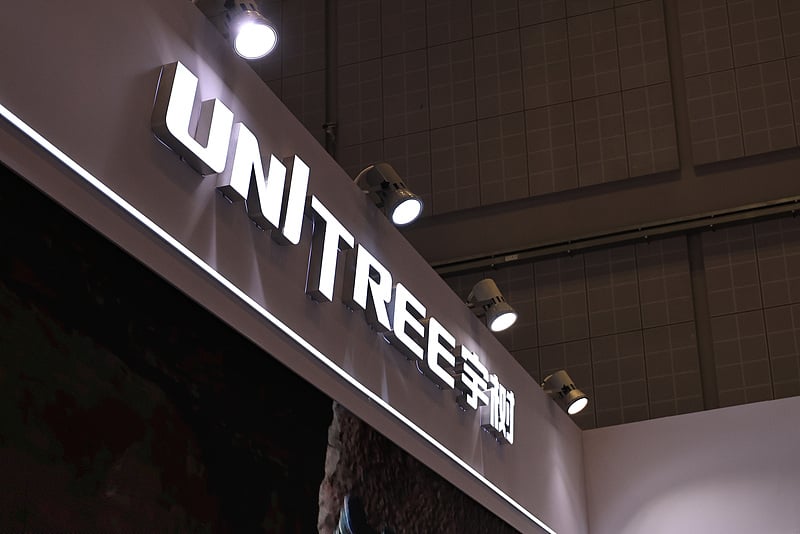
Author: David, Shenchao TechFlow Original title: Yu Shu with a market value of 400 billion yuan, and a “multi-millionaire” migrant worker with a market value of 1 yuan/share. On August 19, Yushu Technology landed on the Science and Technology Innovation Board. The opening market rose 629% to 1,100 yuan, and at one point the market capitalization reached 444.9 billion yuan. The retail investors that won the lottery made a profit of 470,000. The entire network is keen to watch the rich-making effects after the stock listing. For example, founder Wang Xingxing's net worth was 133.5 billion, and the richest man in the post-90s changed hands. Lei Jun's Shunwei capital also surged 15.2 billion dollars due to previous investments. The largest external shareholder, Meituan, surpassed 333 billion dollars in profit. Even Liang Wenfeng's Deep Search and Magic Square, and Daxin have also collected 1.1 billion dollars. The bosses counted the money, the retail investors were overwhelmed, and it was a lively meal of wealth. It's just that these numbers have nothing to do with the vast majority of migrant workers. When the spotlight falls on Wang Xingxing, who is ringing the bell, and VC investors, the story that is actually closer to the ceiling of migrant workers getting rich is actually hidden in a company called “Shanghai Yuyi” in Yushu Technology's prospectus. This company does not have “Yuki” in its name, but it is Yushu's employee equity incentive platform and holds 10.94% of Yushu Technology's shares. The batch of 1 yuan/share options that Yu Shu signed to employees in 2017 when they couldn't pay their wages were packed inside. Today, among the owners of this batch of options, the highest net worth at current prices has reached 1.58 billion. Yu Yi and Yu Yi followed the prospectus to check the above. Shanghai Yu Yi is a limited partnership. Employees do not directly hold Yuki shares, but rather hold shares in this partnership company and use it to hold shares indirectly. The partner list contains several layers of shareholding platforms and dozens of natural employees. At the top of the list were the three post-90s. Yang Zhiyu, head of mechanical structure, born in 1991, majoring in machinery and automation at Zhejiang University. He joined the company as soon as it was founded in 2016 and has indirect shareholding of approximately 1.7837 million shares. Based on Yu Shu's high stock price on the first day, the paper net worth was 1.58 billion yuan. Chen Li, head of sales and service system, born in 1990, holds approximately 946,400 shares and has a net worth of 840 million yuan. Zhang Yangguang, head of algorithms and software, born in 1993, majoring in automation at Nankai University. At the 2025 CCTV Spring Festival Gala, “Yang BOT”, a robot twisting songs, went viral all over the country, and he led the development of the function of generating action programs directly from videos. It holds approximately 546,000 shares and has a net worth of 480 million yuan. But in addition to these 3 people, where are the equity incentives for the more migrant workers mentioned earlier? Shanghai Yuyi has only 6 direct partners in total. Wang Xingxing, Chen Li, and Yang Zhiyu are executive partners, plus two partnership companies, Hangzhou Yixin and Hangzhou Yiyi. However, the vast majority of employees' names don't fit into this list. Since limited partnerships only allow 50 partners at most, Yushu Company also added a “share container” with two shares, the next heart and the next intention, on top of it, forming a three-tier structure of “Shanghai Yuyi, Next Heart, Second Mind, Employees”. Therefore, more of this company's incentives for ordinary migrant workers are included in the above two second-level platforms. And when the list goes up to this level, it's where ordinary migrant workers pile up. More than 60 front-line R&D technical supervisors and core technical employees received shares ranging from 0.01% to 0.05% through the platform; based on the closing market value of 358 billion dollars on the first day, their net worth was between 35 million and 170 million. The equity plan that was signed when wages could not be paid went back to 2017. Yushu was founded in the second year. After the financing was spent, the wages could not be paid. In November of that year, Tian Jiangchuan, the original capital, met Wang Xingxing. After talking for a long time but not investing, he wrote four words in his internal investment notes: background grass roots. Three years later, the original capital re-entered at a valuation of 4 times, and Taegawa later attributed his initial misjudgment to his “elitist arrogance.” However, in the early days when there was no capital injection, Wang Xingxing's decision was to stop his own wages and pay employees out of his own pocket. In September of that year, the company signed the first batch of option agreements with 17 first-generation core employees including Yang Zhiyu, at an exercise price of 1 yuan/registered capital. Over the next few years, the company carried out multiple rounds of equity incentives one after another, and eventually all of them were managed uniformly by the Shanghai Yuyi platform. The three 90s at the top of the list, and more than 100 people closely behind, came in one by one. now...

3d ago深潮TechFlow#public #Yushu Technology
540 million airdrops face cancellation, OP governance vote engulfed in civil war

540 million airdrops face cancellation, OP governance vote engulfed in civil war

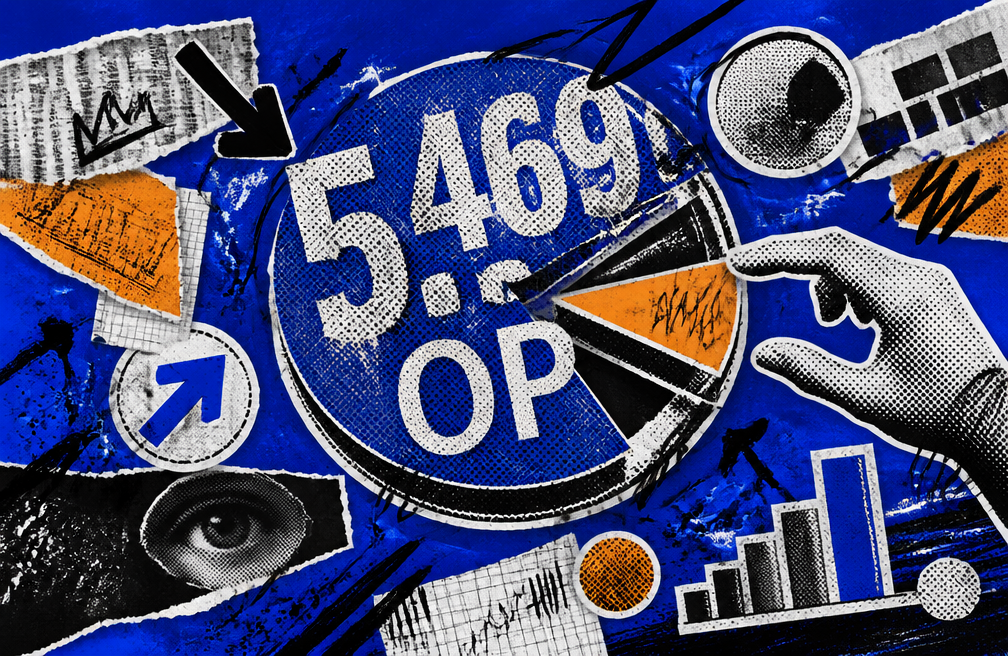
Author: Foresight News Original title: 540 million token airdrop about to be confiscated? The OP governance vote fell into the civil war in early August, and the Optimism Foundation officially submitted a proposal to reclassify the remaining 546.9 million OPs in user airdrop allocations as “strategic ecological funds”. Because it may substantially affect token holders' expectations for future airdrops, it needs to be approved by vote. Voting began on August 14, Beijing time, and the deadline is 12:07 on August 20. Up to now, according to the latest on-chain data, there are about 9.105 million OP votes in favor and 4.258 million OP votes against. A quorum of approximately 16.54 million OPs is required, and there is still a clear gap between the current scale of participation and compliance. The voting results have yet to be finalized, and the community game continues. After May of this year, OP repurchases were suspended, and the total initial supply of OP was approximately 4.295 billion pieces. Of these, 19% (approximately 816 million) were explicitly reserved for users to airdrop. Although this arrangement is an unofficial legal obligation, Optimism has repeatedly confirmed it in public communication over many years, including that when Airdrop 5 was released in October 2024, it was still mentioned that approximately 550 million copies can be used for future airdrops. Actual implementation shows that a total of five rounds of airdrops were completed between 2022 and 2024, and a total of about 269.1 million OPs were distributed, accounting for about 33% of the total amount reserved. The first round accounted for the highest proportion, and standards continued to be adjusted in subsequent rounds, gradually shifting from early use and gas consumption to delegated governance, OP mainnet activity, NFT creators, and Superchain activities. There were no new airdrops in the fourth year (May 2025 to April 2026), and the government clearly switched to “targeted growth projects that can measure retention and revenue results.” On-chain data also shows that Optimism hasn't bought back OP as planned since May. After completing the second and third rounds (March and April) of monthly community repurchases, the government unilaterally suspended the subsequent repurchase program. Officials spent 367.905 ETH to buy back 6951,453 OPs in March, and 50.16 ETH to repurchase 925654 OPs in April. Up to now, the total number of OPs repurchased is 945,1924 OP, which is worth about $756,200 based on the latest price of $0.08. The foundation said it will re-evaluate after the 12-month period ends and does not promise a long-term continuation. At the same time, the overall OP investment in the fourth year decreased by about 35% compared to the third year. New circulation of governance funds decreased by 53% year over year, and Retro Funding (OP is a public product funding mechanism that rewards actual contributions.) Spending dropped by 30%, and airdrops returned to zero. The Foundation simultaneously released the fourth year budget update and the fifth year outlook. It expects to add about 273 million OPs in circulation in the fifth year (not including the airdrop quota that may be restructured this time), of which the Ecosystem Fund is expected to invest about 200 million. According to DeFilLama data, its total TVL has now dropped sharply from its peak of US$5.5 billion to US$526 million. The strategy is shifting to enterprise growth in the crypto market. Second-tier networks are currently facing problems such as loss of users and weak innovation. According to Token Terminal's latest data, its core developers have been reduced to 42, while at its peak at the end of 2024, this number was 144. Currently, Optimism is shifting to the corporate market, including fintech, trading platforms, payment institutions and traditional financial institutions. Currently, partnerships include Bitpanda, Ink, and Dunamu. Specifically, the proposal calls for: · creating a new allocation category “strategic ecosystem fund”; · reassigning the remaining 546.9 million OPs from the user airdrop category to the fund; · Uses include facilitating cooperative transactions involving chains, agreements, institutions and infrastructure to join OP Stack, deepening incentives for OP Mainnet chain activity and liquidity, and expanding cooperation with top brands and institutions. Airdrops that have already been issued are unaffected. If the proposal is approved, the Foundation will update token allocation documents and public accounting records, and follow the established grant monitoring and annual budget reporting mechanisms. The fifth year budget outlook itself...

3d agoForesight News#optimism #token #proposals #governing #airdrop

OpenAI has $6.7 billion in revenue and $12.3 billion in operating losses: overtaken by Anthropic for the first time

Compared to Twitter News, AI News, OpenAI's second-quarter revenue was 6.7 billion US dollars, up only 18% from the first quarter's 5.7 billion US dollars. Operating losses increased from $9.3 billion to $12.3 billion during the same period, and losses grew significantly faster than revenue. Some investors were disappointed with this performance. Anthropic's revenue for the same period reached $11.6 billion, more than double that of the first quarter. It was also the first time Anthropic's quarterly revenue surpassed OpenAI. Anthropic also recorded a slightly adjusted operating profit, opening a more marked gap with OpenAI, which is still losing a lot. However, the profit figures of the two companies cannot be completely directly compared. OpenAI's operating losses include equity incentives, and Anthropic's adjusted profit may have excluded this portion of the cost. The real definitive reversal was revenue: Anthropic had gone from a chaser to a leader in the second quarter. OpenAI told investors that after launching a new batch of models in July, the revenue growth rate has picked up again. But it remains to be seen if this round of backlash can reclaim the gap with Anthropic.

3d ago

Yushu Technology's core technicians have a net worth of over 100 million

Comparing news, Yushu Technology (688836), the “first stock of humanoid robots”, landed on the Science and Technology Innovation Board today. After opening, it rose more than 500%, and its market value exceeded 350 billion yuan. Before the issuance, the company had an equity incentive platform, Shanghai Yuyi, which held 398.286 million shares of the company, with a shareholding ratio of 10.9414%. Yang Zhiyu, head of mechanical structure, Chen Li, head of sales and service system, and Zhang Yangyang, head of algorithms and software, have indirect shareholding ratios of 0.49%, 0.26%, and 0.15%, respectively, through Shanghai Yuyi. Based on a market value of 350 billion yuan, the market value of shares held by the three reached 1,715 billion yuan, 91 billion yuan, and 525 million yuan respectively.

3d ago

Wang Xingxing's net worth exceeds 100 billion yuan, becoming the richest person in the post-90s

Comparing news, Yushu Technology was officially listed and traded on the Science and Technology Innovation Board. The opening market rose by more than 500%, and the market capitalization exceeded 350 billion yuan. According to the prospectus, Wang Xingxing, chairman, general manager and chief technical officer of Yushu Technology, directly held 86.7149.64 million shares of the company, accounting for 21.4395% of the company's total share capital after issuance. Wang Xingxing also held 9.5367% of the company's shares indirectly through the equity incentive platform Shanghai Yuyi before issuance. Calculated, the total share ratio of the company's direct and indirect holdings is around 30%, and the market value of its holdings exceeds 100 billion yuan, making it the richest “post-90s”. According to the list of post-90s entrepreneurs published by “New Fortune Magazine” in 2025, Liu Jingkang, founder of Shadow Stone Innovation, became the new richest person in the post-90s with a net worth of 20.2 billion yuan. (One fortune)

3d ago
Why is capital chasing AI Native and ignoring the old Internet

Why is capital chasing AI Native and ignoring the old Internet

Capital doesn't reward being old-fashioned, not because old-fashioned people are at fault. The old part is clearly priced. There is no bad information, so there is no excess profit. Global venture capital was $510 billion in the first half of 2026, surpassing $44 billion for the full year of 2025 in one and a half months. More than 70% have entered AI; OpenAI and Anthropic took 217 billion dollars, accounting for 43%. With that much money, you'd think everyone could share a little bit. The truth is that distribution is more extreme than total volume, and the first sieve doesn't screen the industry, it screens people. The category that has been screened out now has an unkind name: the internet is old. Let's just say one thing: the “old man” in this article has nothing to do with age. It refers to a set of methodologies that have been formed in the mobile internet cycle, have been tested over and over, and have brought huge returns to holders. The person holding it may be 45 years old or 32 years old. It was this methodology that was being repriced, not the year of birth. Confusing these two things is Lao Deng's most common mistake and one of the most comfortable mistakes — because if the problem is someone else's age discrimination, you don't need to change a single word. 01 What is AI Native The term has been misused. They can use ChatGPT not called AI native, nor AI in the company name, let alone in their twenties. There are three things that really separate people. First, the starting point is a model, not a requirement. The order in which Lao Deng makes a product is: look at what the user wants, write down the requirements, and find technology to implement it. The order of AI natives is reversed: first figure out what level the model is capable of today and what step it is likely to reach tomorrow, and then move from this capability boundary to the external product. The former uses the model as a tool, and the latter uses the model as the foundation. There was no difference between these two kinds of things made by humans in the first edition; by the third edition, there was a difference of one species. Article 2. The default unit of an organization is not a person. The division of labor in the Internet age is the division of one thing into ten people. AI Native's division of labor is to take ten things from one person and add a bunch of agents. The CEO of a domestic application company said that the team consists of less than ten people, but a large number of AI work at night, and the first thing employees do every morning is check the work the AI handed in the night before. Cursor's side is even more extreme. Public reports mention that the company doesn't have a product manager; engineers write their own code, talk to users themselves, and participate in recruiting people themselves. Article 3. Information is first-hand. AI Native's input sources are papers, model cards, GitHub issues, original discussions on X, and self-run evals. Lao Deng's input sources are industry summits, closed-door meetings, brokerage reports, interpretation of public accounts, and finding someone to drink coffee with. This one is the least obscure and most lethal; I'll talk about that separately later. I'm satisfied with all three. The 25-year-old is an AI native, and so is the 45-year-old. I'm not satisfied with the three rules; I'm still an old man at the age of 25. AI natives are a state, not an age group. The trouble is that tickets in this state are works, not resumes. 02 The two lists spread the results of this round on the table. These are two lists. The first one is an all-AI native company. Their valuations are not rising; they are exchanging orders of magnitude. List 1 · Upstream OpenAI raised $122 billion in a single round of financing in Q1 2026, followed by $852 billion, the largest private equity financing in history. Anthropic Q2 had a single round of $65 billion, after investing $965 billion, accounting for about half of the total global venture capital for the quarter; the revenue operating rate in May reached about $47 billion. DeepSeek raised about 70 billion yuan in its first round of financing in May 2026. In April of the same year, Liang Wenfeng raised his direct shareholding from 1% to 34%, and controlled a total of about 84.29% of the shares through related entities. The Dark Side of the Moon (Kimi) was estimated at $4.3 billion in December 2025; it went for three consecutive rounds from January to February 2026 to reach 18 billion; the D round in May was about $2 billion, breaking 20 billion dollars after the investment; the July round surpassed $3.5 billion, after investing 35 billion dollars; the pre-IPO target was 50 billion dollars. ARR broke 100 million in March, 200 million in May, and held steady at 300 million US dollars in June, with APIs accounting for more than 70%. Smart Spectrum · MiniMax successively landed in Hong Kong stocks in early 2026, with a market capitalization exceeding 100 billion yuan. It was one of the first major model companies listed in China. The second one...

4d agoWendy#AI #DeepSeek
Fireworks that came out of Meta to talk about open source and closed source. Who will win?

Fireworks that came out of Meta to talk about open source and closed source. Who will win?

Author: Silicon Valley Vector Silicon Valley Coordinates Editor: Peggy, BlockBeats Original title: Silicon Valley Coordinates x Fireworks Co-Founder Benny Chen: Open Source Models, Token Growth, Inference Optimization, and Model Customization Editor's Note: In the context of open source models speeding up and approaching cutting-edge closed-source models, industry discussions are shifting from “who has the most capable model” to “who can put models into production at a lower cost”. However, when model capabilities converged and token consumption increased, a lower-level question began to emerge: are companies really willing to pay a cheaper model call, or exclusive intelligence that can perform specific tasks in a stable manner? Recently, Cao Qingyun, host of “Silicon Valley Coordinates”, had a conversation with Chen Yufei, co-founder of Fireworks AI. Located between models and enterprise applications, Fireworks mainly provides customers with open source model inference, performance optimization, and customization services. Rather than simply discussing whether open source can catch up with closed sources, Chen Yufei's observations are closer to actual workloads: where tokens flow, why companies pay, and what is still missing from the model from proof of concept to production. In this conversation, Chen Yufei disassembled “who wins between open source and closed source” into a set of lower level structural questions: can token growth be converted into revenue, can generic capabilities replace vertical accumulation, can the low price model pass corporate evaluation, and how the inference platform can gain value between cloud vendors and application companies. First, the scale of use and commercial value of the open source model are diverging. In the past, the ability to catch up and call price were the main indicators for judging the competitiveness of open source; today, the Fireworks platform processes about 40 trillion to 50 trillion tokens every day, and the actual usage of the open source model has rapidly expanded. However, free traffic, promotional subsidies, and model price differences will cause Token statistics to overestimate some demand. Customers may heavily use lower-cost models and still hand over the highest budget to the best-performing closed source model. This means that the next phase of open source is not just expanding traffic, but proving that it can meet or even surpass cutting-edge models for high-value tasks, and turn cost advantages into willingness to pay. Second, the general model and the vertical model are beginning to evolve in different directions. In the past, every time a cutting-edge model was upgraded, it was possible to directly eliminate a number of fine-tuned models; now, vertical applications such as law, medical care, and programming are accumulating more detailed evaluations, data, and workflows, and their optimization goals are gradually separated from cutting-edge laboratories. Generic models need to increase the upper limit of capabilities, while vertical models require stable delivery of results in limited scenarios. The former can solve a wider range of problems, while the latter has a better understanding of how users define “right.” This means that the barrier for vertical companies is not just having a customized model, but being able to continuously transform industry needs into an evaluation system and migrate over and over again as the basic model is updated. Third, the bottleneck in enterprise AI implementation is shifting from model supply to evaluation capabilities. In the past, enterprise proof of concept often relied on trial experience and subjective judgment; now, when AI enters production processes such as call centers, legal searches, and medical assistance, it is no longer possible to support procurement decisions simply by “looking good.” Businesses must know what tasks the model works for, when it fails, and how much the cost and quality of switching from closed source to open source changes. Assessment is therefore no longer an ancillary tool, but an infrastructure connecting procurement, training, and production deployment. Who can define tasks, establish test distributions, and continuously update standards can truly control model choices. Fourth, the value of inference platforms is shifting from “selling cheap computing power” to organizational models, hardware, and workflows. In the past, inference optimization was mainly understood to reduce the cost of a single token; now, caching, task splitting, model routing, and context management can all directly change the task completion rate. Different models don't have to compete for the same position; they can act as performers and advisors separately. Fireworks' business logic is also based on this: instead of building asset-heavy hardware, revenue is tied to actual use of customer models through training, customization, and continuous reasoning. But the main rival in this path is not a single new cloud company, but a large cloud vendor that can simultaneously control computing power, software, and customer portals. Fifth, the rise of the open source model may not reduce infrastructure requirements; on the contrary, it may reduce model layer premiums and further push value towards reasoning and computing power. Tech giants continue to increase capital spending, not just calculating short-term returns, but measuring missed AI cycles...

4d ago律动BlockBeats#AI