狗狗币 · 1439

Analyst: Dogecoin Volatility Squeezed to Its Lowest Since September 2023, Big Fluctuations May Be Imminent

Comparing news, crypto analyst Ali wrote on the X platform that Dogecoin (DOGE) is currently experiencing the worst contraction of the Bollinger Bands (Bollinger Bands) since September 2023. Ali pointed out that the DOGE price fluctuation range has narrowed drastically. Extreme compression of the Bollinger band usually means that market volatility is building up, and there may be a sharp price breakthrough in the future. Bollinger band contraction is generally seen as a sign of a period of low volatility, and historically similar extreme compression has often been accompanied by trend direction selection. However, changes in relevant indicators do not necessarily mean that prices will rise; the final direction still depends on market capital inflows, transaction volume, and the overall crypto market environment.


5d ago

Analyst: Bitcoin's volatility has fallen to the bottom of historical support, so we need to be wary of the risk of drastic fluctuations

Comparatively, Bitcoin's 30-day implied volatility fell back to the bottom of long-term support of 36%, and the price of the currency remained volatile in a narrow range below $65,000. Adam Haeems, head of asset management at Tesseract Group, warned that a low volatility environment will reduce transaction costs, which in turn encourages traders to establish large-scale directional betting and hedging positions; once the market breaks through key prices, the passive hedging behavior of market makers will amplify market fluctuations and drive the volatility to return to the mean. In terms of market sentiment, Paul-Howard, senior director of Wincent, said that demand for put options is currently cooling down significantly, but there is also a lack of buying for call options. Glassnode summarizes this state of affairs as “there is neither capital to pay for the rise, nor capital to pay for the decline,” believing that this phenomenon often indicates that the market is nearing the bottom of the cycle. The divergence of trends between Dogecoin and Bitcoin also reflects the continued slump in speculative sentiment. Howard believes that favorable regulation, such as the Clarity Act, which promotes institutional ETF capital inflows, may become an important catalyst for the next round of markets; however, the failure of negotiations in the Strait of Hormuz and inflation exceeding expectations are the main downside risks. This article is sponsored by GENG, Build Your Fortune on GENG (https://geng.one)

16d agoburnking
Predicting market revenue surpassing stock trading, Robinhood changed from a stock trading platform to an event casino

Predicting market revenue surpassing stock trading, Robinhood changed from a stock trading platform to an event casino

Author: Long Yue, Wall Street News Original title: “Influencer Broker” Robinhood's revenue structure has changed dramatically: It is predicted that market revenue has surpassed stock trading. This brokerage firm, which started with zero commissions, is turning gambling and betting on elections into a big business. Robinhood released its second-quarter earnings report last week, predicting that market revenue surged more than tenfold year-on-year to US$156 million, accounting for 20% of total transaction revenue, surpassing stocks and cryptocurrencies for the first time, becoming the second-largest trading business after options. This change is less than two years since Robinhood officially entered the forecast market. What does this number mean? Based on data for the second quarter, Robinhood predicts that the annualized revenue of the market business has exceeded 600 million US dollars. Mizuho Securities stock research analyst Dan Dolev said bluntly: “Users on Robinhood just love to gamble and predict where the market is in their hands. It's the perfect alternative to cryptocurrency because it gives the brain a sense of reward quicker — you don't have to wait.” From stock trading to betting on the World Cup: What are users chasing The logic of predicting the market is simple: users bet on the outcome of real-world events in the form of “yes/no”, including World Cup matches, elections, and even the weather. This instant, simple gameplay is highly compatible with Robinhood's retail user base. Over the timeline, Robinhood's transaction revenue structure has been shifting along with market hot spots. Stock and options revenue surged during the 2021 meme boom; cryptocurrencies then took over, and memes such as Dogecoin led to a surge in crypto trading revenue; until the end of 2024, cryptocurrencies remained Robinhood's biggest source of trading revenue. The turning point came around the 2024 US election. A sharp rise in market popularity is predicted, and a large influx of capital is betting on the election results. Kalshi was approved to operate legally in the US that year, paving the way for other platforms to follow suit. Robinhood then launched its first event contract at the end of 2024, allowing users to bet on the results of the US presidential election, and then launched categories such as sporting events one after another. The peak in revenue in the second quarter was largely due to the World Cup. Compass Point stock research analyst Ed Engel pointed out in the research report that this made the June and July trading volume “unusually strong.” However, he also mentioned that the US rugby season will begin this fall, which is expected to bring a new round of boost. Self-built trading platform, “split” with Kalshi Robinhood initially did not have its own predictive market trading platform, but instead directed user orders to Kalshi. The two parties split the cost of 2 cents per contract. This pattern is changing. In June of this year, Robinhood and Susquehanna International Group jointly established the prediction market trading platform Rothera and began transferring some orders (including World Cup-related bets) to the platform for execution. The fee structure was adjusted accordingly. Robinhood currently charges users up to 1 cent/contract, plus a fee that varies depending on the execution platform — if the order is still sent to Kalshi, Kalshi charges an additional 1 cent/contract. The result was a marked decline in the interdependence between the two companies. According to Artemis data, the share of Robinhood orders in Kalshi's trading volume fell from nearly 50% in the same period last year to 17.5% in the second quarter of this year. Dan Dolev believes that using Rothera will give Robinhood “more control over the forecasting market business.” But at the same time, he pointed out that since Robinhood needs to provide incentives to users, the difference in profit margins between the two models will not be too big. Industry landscape: Kalshi is still the boss. Despite Robinhood's strong momentum, Kalshi's dominant position in predicting the market remains unshaken. According to Artemis data, Kalshi's monthly nominal trading volume in June this year was about $33 billion, Polymarket was $14 billion, while Rothera (who also executed transactions for Robinhood and some market makers) was $2.1 billion. At the income level, Kalshi's annualized revenue for June this year...

18d agoburnking#Predicting the market
KOSPI melted seven times during the year, and global stock markets are replicating the coin industry script

KOSPI melted seven times during the year, and global stock markets are replicating the coin industry script

Author: Doumaru Original title: Welcome back to your native family. The global stock market is being coin-circled in Seoul on July 13, 2026. Korea Composite Index KOSPI plummeted 8.95% in a single day, breaking for the 7th time in the year. SK Hynix, the “national transport stock” in the eyes of Koreans, fell sharply by 15.37% in a single day. We have not seen such a sharp decline in nearly 20 years. Samsung Electronics also dropped more than 10%. More than 1.2 million leveraged accounts popped up with deposit recovery notifications, and the brokerage system automatically closed 320,000 to 460,000 accounts. What's even more worrisome is that 62% of those who closed out positions were young people aged 20 to 30, some lost their down payment for a wedding house, and others took loans to trade stocks... A young man in his 20s in Busan directly stabbed the blogger because he listened to the loss recommended by a stock YouTuber. In the past, these words were probably used to describe the scene after the coin industry plummeted; now, it is being repeated in the South Korean, American, and Japanese markets after the decline in technology stocks. The sharp rise and fall is only an indication. What really changed was the pricing method. The narrative overweighed the valuation, the leverage amplified sentiment, and social media quickly pushed the consensus to the extreme. The global stock market, especially technology stocks, is becoming more and more like a coin. Return to Native Family “Welcome back to Native Family.” After the sharp decline, traders in the coin industry who switched to the stock market wrote short loss essays one after another. The above comments can be found everywhere in the comment area. The so-called “native family” refers to cryptocurrencies. From the second half of 2025 to the beginning of 2026, a “run away from the native family” drama was staged in the coin industry. A group of KOLs and veteran players who have been struggling in the cryptocurrency market for many years are beginning to lose confidence in the cryptocurrency industry. Bitcoin fluctuated sideways, trading volume was weak, and meme coins were cut back and forth. Many people felt that “this circle is weak” and began to turn their attention to US stocks. This seems like a reasonable choice. Shares have revenue, profit, financial reports, and are regulated by the SEC. Compared to crypto projects that lack cash flow and rely entirely on consensus pricing, US stocks are at least a more mature and secure asset. Not only did traders in the coin industry take away liquidity, but they also carried the trading methods of the past. In the crypto market, they are used to chasing new narratives, finding highly flexible targets, using leverage, and quickly changing positions based on social media sentiment. Since entering the stock market, this method has hardly changed, except that trading partners have switched from tokens to AI, memory chips, and leveraged ETFs, and achieved great results over and over again. Storage stocks soon became the new collective consensus. The logic is not complicated: AI servers require more high-bandwidth memory, HBM is in short supply, and storage prices are rising. Naturally, Micron, Samsung Electronics, and SK Hynix have become the most direct “sellers”. Brother Sun's phrase “never lacking storage” is even more deeply rooted in the hearts of the people. Many crypto KOLs have changed and started talking about US stocks, storage cycles, and AI capital expenses. Doubling products such as SK Hynix is also used as a “more efficient” betting tool than ordinary stocks. Until the market reversed in July. Instead, Bitcoin has become a “low volatility asset”. How long will it take to drop in half from the top? It took 268 days for Bitcoin and 169 days for silver to complete a similar retracement. In contrast, it only took 36 days for SanDisk to drop about 55%, and it only took 34 days for SK Hynix to drop about 53%. Also, it was a “backlog”. Bitcoin was used for almost nine months, and storage stocks only used for over a month. This is exactly what is strange about this round of the market: in the past, investors feared that Bitcoin would soar and fall within a few days, while stocks relied on profits and slow valuation adjustments; now, some tech stocks are completing a complete bubble burst in a shorter period of time than cryptocurrencies. Very counterintuitive. Compared to some tech stocks, Bitcoin is becoming relatively stable. According to Carson Wealth Management statistics, Bitcoin's historical volatility in 2025 was about 42%, with a maximum retracement of about 32%; during the same period, Tesla's volatility was about 63%, the maximum retracement was 48%, Nvidia's volatility was about 50%, and the maximum retracement was 37%. Bitcoin is still a high-risk asset, but some big tech stocks are more volatile. In its 2026 outlook, Bitwise even predicted that Bitcoin's overall volatility may continue to be lower than Nvidia. So the current situation is quite absurd: Bitcoin is becoming more and more like technology stocks, but technology stocks are becoming more and more like Bitcoin. There is an old saying in the coin industry when narratives become valuation anchors; speculating on coins is speculating on narratives. Global tech stocks in 2026 are turning this statement into reality. AI is certainly not air, Nvidia...

23d agoburnking#KOSPI #stocks

SHIB's market capitalization surged by about $1 billion in a single day, and the Korea Exchange became the main source of buying

Comparing news, at the same time, Dogecoin (DOGE) only rose by about 6% during the same period, while other Dogecoin-themed tokens mostly rose by around 10%, indicating that capital flows were mainly concentrated into SHIB. In the derivatives market, the SHIB and 1,000 SHIB positions of about 2,300 traders were liquidated during this round of growth, with a total settlement of about US$6 million, of which bears accounted for about US$5 million. However, analysts believe that closing short positions is more a result of price increases and is not the main driving factor in this market.

27d ago

Ansem responds to creator token controversy: won't run away and uses Dogecoin and BONK as examples to explain the concept

Comparing news, crypto KOL Ansem is responding to the controversy sparked by the recent launch of the creator token trend. He admits that he was cautious about issuing coins to celebrities before because he misjudged that the other party would have the same moral standards as himself and would not cut chives for millions of dollars. This assumption was wrong, but he would not make the same mistake again, and emphasized that he was not a celebrity and had no plan to cut chives. Ansem said he believes there is a way to issue coins that can be a win-win for everyone: attract new users into the crypto industry, allow people to participate through speculative targets, re-provide liquidity to old leeks at the bottom of a bear market, and then channel the attention gained from this to really meaningful projects and teams within the industry. He used Dogecoin and BONK as examples — the former started at 0 and still has a market capitalization of $11 billion and was a major customer acquisition event in the crypto industry; the latter revived the Solana ecosystem at the bottom of the market where FTX crashed and airdropped tokens to core developers and teams. Ansem also revealed that since entering the business in 2017, he quit his job as a software engineer in 2021 to dedicate himself fully to the crypto field, and is now co-founding the trading app Bullpen.fi and running a podcast program. He stressed that this is the first project he has led and controlled the supply of most tokens. Many degen coins he previously supported were all smashed due to anonymous teams hoarding coins in advance and using their influence to speculate. This article is sponsored by GENG, Build Your Fortune on GENG (https://geng.one)

53d agoburnking

The US SEC approves T. Rowe Price's application for an actively managed crypto ETF to include up to 15 crypto assets

According to US SEC documents, the US Securities and Exchange Commission recently officially approved a rule change application for T. Rowe Price Active Crypto ETF (T. Rowe Price Active Crypto ETF) listed and traded on NYSE Arca. NYSE Arca first submitted a rule change request in November 2025, and was finally approved after two revisions. The ETF invests in seeking long-term capital appreciation and will hold 5 to 15 crypto assets under normal circumstances. As of the date of submission of the application documents, eligible assets identified by the sponsor include Bitcoin (BTC), Ethereum (ETH), Solana (SOL), XRP, Cardano (ADA), Avalanche (AVAX), Litecoin (LTC), Polkadot (DOT), Dogecoin (DOGE), Hedera (HBAR), Bitcoin Cash (BCH), Chainlink (LINK), Stellar (XLM), Shiba Inu (SHIB), and Sui ( SUI). Additionally, the fund can also hold USDC as operating capital to pay expenses and buy assets, but not as an investment object.

69d ago
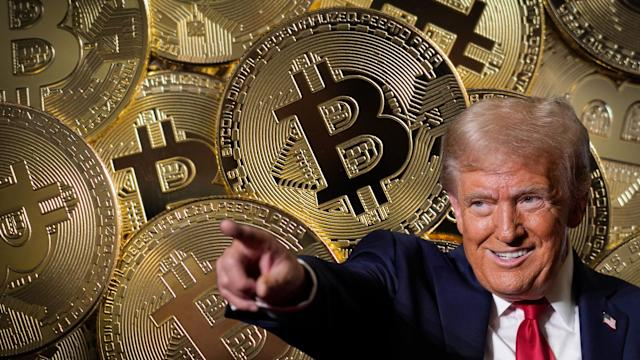
Trump's Crypto Business Is Dismantled: Capital, Traffic, and New Entrances

Trump's Crypto Business Is Dismantled: Capital, Traffic, and New Entrances

In June 2026, Reuters published two consecutive in-depth investigation reports on the Trump family's crypto business landscape, which attracted widespread attention in global financial markets and media. According to the survey, since Trump returned to the White House, his family has accumulated about 2.3 billion US dollars in revenue through four core crypto businesses — World Liberty Financial (WLFI), $TRUMP Meme Coin, American Bitcoin, and Alt5 Sigma (later renamed AI Financial) — while at the same time, a large number of investors involved in these projects have also lost close to 2.3 billion US dollars. Although “families profit $2.3 billion and investors lose $2.3 billion” does not mean that there is a strict one-to-one correlation between the two, this figure still clearly reflects a reality: in the crypto boom of the past two years, the Trump family received huge profits through brand licensing, equity arrangements, token allocations, and capital operations, while many ordinary investors took most of the risks after the market became less popular. What is more noteworthy is that although these four businesses are distributed on different tracks and cover various fields such as decentralized finance, stablecoins, memes, Bitcoin mining, and digital payments, their underlying logic is highly consistent. None of them rely on revolutionary technological innovation to achieve success, nor do they rely on a steady increase in commercial revenue to establish market value. Instead, they largely use the huge influence and topical effects of Trump, a world-famous politician, to transform political brands into financial assets, and then package financial assets as investment opportunities and sell them to the market. From “Bitcoin is a scam” to building a crypto empire, if you look back at Trump's open attitude towards digital currencies in the past, this shift is actually quite dramatic. As early as 2019 to 2021, Trump repeatedly expressed skepticism about Bitcoin and other digital assets. Not only has he publicly stated that he is not a supporter of Bitcoin, he also believes that digital currency may threaten the US dollar's status as a global reserve currency, and even once called Bitcoin “something that looks like a scam.” However, as the US crypto industry gradually grew into an important political donation force, and the digital asset market attracted the attention of more and more young voters and investors, Trump's position began to change markedly. During the 2024 presidential campaign, he began to frequently send friendly signals to the crypto industry, promising to push the US to become a global cryptocurrency center, oppose excessive regulation, and support digital asset innovation. As the campaign succeeded and the crypto industry's expectations for its policies continued to heat up, Trump was gradually portrayed by the market as a so-called “crypto president.” Against this backdrop of mutually reinforcing political and market sentiments, a crypto business network built around the Trump family quickly took shape. Unlike traditional entrepreneurs who need to invest in technology development, infrastructure construction, or long-term business operations, the Trump family actually has only one most important asset — the name Trump itself. The name represents political influence, media attention, and enthusiasm for social discussion, and became the core foundation for all subsequent commercial operations. World Liberty Financial: The most important money printer in Trump's crypto empire Among all of the Trump family's crypto projects, World Liberty Financial is undoubtedly the core and most profitable business. Judging from public publicity, the project is positioned as a decentralized finance platform, hoping to build a comprehensive ecosystem integrating lending, stablecoin issuance, on-chain asset management, and digital financial services. However, what really supports its market value is not technological innovation, but political brand endorsement provided by the Trump family. World Liberty Financial was first raised by issuing WLFI governance tokens. Unlike ordinary cryptocurrencies, this type of token does not have free trade attributes. Investors are locked up for a long time after purchase, and their main function is to participate in project governance voting. Judging from business logic, this means that investors bear the risk of asset price fluctuations, but are not getting the liquidity they should have in a normal market. More importantly, according to publicly disclosed information, Trump-related entities have important financial interests in the project and receive a high share of token sales revenue. In other words, when investors buy WLFI tokens, a large amount of money goes directly into the project system, and a significant portion of the proceeds end up going to the Trump family. Reuters estimates that this business alone generated about $1.6 billion in revenue for the Trump family, accounting for most of the total revenue of the entire crypto landscape...

72d agoLuxurytracy

HYPE broke through $75 for a short time and reached a record high, rising more than 85% since May

Comparative news, according to HTX market data, HYPE broke through $75 for a short time and reached a record high. It is now reporting $73.64, up more than 2.5% in 24 hours, and up more than 85% since May 1. The current market capitalization is estimated at $16.36 billion, surpassing Dogecoin DOGE to rank 7th in the cryptocurrency market capitalization ranking (excluding stablecoins), and FDV rose to $70.2 billion.

81d ago

HYPE broke through $72 and reached a record high, rising more than 80% since May

Comparative news, according to HTX market data, HYPE broke through $72 and hit a record high. At one point, it rose to $72.955, now reported at $71.76, up more than 6.1% in 24 hours, and over 80% since May 1. The current market capitalization is tentatively reported at $16 billion, surpassing Dogecoin DOGE to rank 7th in the cryptocurrency market capitalization ranking (excluding stablecoins), and FDV rose to $68.7 billion.

82d ago