白话区块链 · 168
Interview with Pantera's founder: Bitcoin is speeding away from traditional assets, and the bottom will have to wait 6-8 months

Interview with Pantera's founder: Bitcoin is speeding away from traditional assets, and the bottom will have to wait 6-8 months

Author: The Master Investor Podcast with Wilfred Frost Compiled by: Vernacular Blockchain Original Title: Conversation with Pantera Founder: BTC has reached the speed of escape, and traditional assets are being left behind. In this interview, Wilfred Frost had a second in-depth conversation with Pantera Capital founder Dan Morehead. They discussed Bitcoin's cyclical position after retreating 50% from its high point; how the devaluation of fiat currency created an intergenerational wealth conflict; and why this round of “smart money” was the last to enter the market. Highlights Summary Most institutional investors' positions on the blockchain are still 0.0%, literally zero. It wasn't gold that hit a new high; it was banknotes that were at a record low. This is probably the first last-entry deal for “smart money” in history. The average age of first-time home buyers in the US has been delayed from 28 to 40. We are facing an intergenerational inflection point where the currency is separated from the country. Stablecoins are likely to take half of bank deposits within ten years. Bitcoin has reached the speed of escape, and I can't find anything that could derail this process. If you don't have any blockchain exposure, you're already shorting this trend to some extent. 01. “It's still the most asymmetric transaction in history” Moderator: The last time you came, we thoroughly discussed the macro-logic of cryptocurrencies. The price of Bitcoin you bought for the first time was astonishingly low. How much was it? Dan Morehead: $65. Moderator: $65, compared to our price of around $66,000 today, are two worlds. In that episode, you described Bitcoin as “the most asymmetric transaction in history.” Do you still hold on to this point of view today? Dan Morehead: Yes, I'm still convinced of that. Throughout my career, I've been looking for asymmetric opportunities where the upside potential far outweighs the downside risk. Bitcoin, and the broader field of cryptography, is the most asymmetric transaction I've ever seen. Early on, I'll tell others: it's entirely possible that you'll lose all of your capital, so don't invest more than you can afford. But at the same time, you're likely to get 5x, 10x, or even 1000x returns. The reason I'm still optimistic is that we're still in the early stages. Most institutional investors' positions on blockchain and cryptocurrencies are still 0.0%. Literally zero. As long as the downside risk is insignificant compared to the world's huge financial assets, and the upside is to redefine the entire monetary system, this asymmetry will not disappear. 02. The four-year cycle proved the host again: Our last recording was on October 12, and the timing was very interesting at the time. The cryptocurrency reached a phased high around October 6, followed by a pullback. Since then, Bitcoin has dropped by roughly 50%. As someone who has gone through multiple cycles, how do you interpret this sharp drop? Dan Morehead: Anything that tries to change the world comes with lots of hype and fluctuation. Optimism abounds at highs, and pessimism at lows. Pantera has been deeply involved in the industry for 13 years and has gone through four full four-year cycles. These cycles are actually very regular and can even be predicted. When we met in October, it happened to be near the high we had predicted two or three years ago. Based on our model estimates for the first three cycles, we expect Bitcoin to reach a phased high around August 2025. Although we hoped at the time that we would see different results this time, such as the government's new policy breaking the cycle, in hindsight, the cycle rules have once again realized themselves. The market is back 50%. It sounds like a lot, but compared to the 85% decline in the previous cycle, this time it was actually much more moderate. The market may take about a year to bottom out, which is in line with the rules of the past. Moderator: You didn't appear to be bearish at the time. Do you think this cycle will end up falling 75% to 80% like before? Dan Morehead: That's a critical question. I really didn't anticipate a drop this much at the time because there were so many positive factors at the time. But the market has its own pace. I would like to point out that at the previous few highs, the price deviated far from the long-term logarithmic trend line, showing a crazy parabolic trend. For example, in 2013, prices increased tenfold in the first four months of the peak. And this time around, the price didn't show that extreme overheating; it just roughly returned to 2021 levels. So I...


142d agoLuxurytracy
An Hour with Circle's CPO: How Stablecoins Are Reshaping Global Money Flows

An Hour with Circle's CPO: How Stablecoins Are Reshaping Global Money Flows

Author: The Defiant Compiled by: Blockchain in Vernacular Original Title: Interview with Circle's Chief Product Officer: Redefining Global Money Flow In the traditional financial system, the flow of capital across countries is like a frictional marathon. About $3 trillion is “in transit” all year round, becoming a sunken cost that cannot generate benefits. As blockchain technology and regulatory frameworks become more mature, stablecoins are moving from the edge of the crypto world to the core of the global economy. This interview has an in-depth conversation with Circle's Chief Product Officer Nikil Tandog (Nikil Tandog), who reveals how Circle evolved from a single stablecoin issuer to a full-stack platform company covering assets, payments, and infrastructure from the perspective of both a technology expert and a global observer. This article not only explores how USDC is reshaping market trust through a compliance path in the post-banking crisis era, but also predicts the financial picture for 2030 in a forward-looking way: at that time, money will become a programmable primitive like electricity, AI agents will replace humans as payment subjects, and the new legal framework codified by the Genius Act will pave the way for internet-scale fintech companies. It's an in-depth reflection on unlocking productivity, economic inclusion, and the “money is code” vision, providing key footnotes to our understanding of how wealth flows in the next decade. 1. From issuers to platform companies: Circle's strategic evolution and core logic Moderator: We all know that USDC is Circle's iconic product and the mainstream representative of stablecoins. Under current industry consensus, stablecoins have become the most successful entry point for cryptocurrencies. Please talk about the core arguments currently driving Circle? What's your main strategy, and how has it evolved since its early days? Nikhil: Circle has been a company with a history of 12 or 13 years, and we have been deeply involved in the stablecoin field for a long time. USDC has also been around 7 years since its launch. For a long time, stablecoins weren't seen as a core use case for cryptocurrencies. At the time, people were more inclined to build a completely decentralized self-sovereign currency, and thought “uploading the US dollar to the Internet” seemed unimaginative. But it was something I was most excited about when I joined the company. Because globally, getting dollars is a kind of “superpower.” I grew up in India, and I know how much people outside of the West place importance on the US financial system and the US dollar. More than just a financial instrument, stablecoins are a solution for economic inclusion. Our development went through several stages: First, we built one of the largest stablecoin networks in the world. The value of the network lies in the wishes of both parties to the transaction, and the reason why USDC is successful is because the recipient is willing to receive payments. By establishing a large number of fiat currency entrances and exits (on/off-RAMPS), we have embedded USDC into the traditional crypto ecosystem and modern payment ecosystem. Second, Circle is transforming from a single stablecoin issuer to a “three-tier” platform company. This includes: Core Asset Layer: In addition to USDC, we also issue EURC (Euro stablecoin) and USYC. Application and Payment Layer (CPN): Circle Payment Network (CPN), which can be viewed as an advanced stablecoin application to handle actual payment needs. Infrastructure layer (ARC): This is the lower technology stack we are building to provide a lower level of technical support for stablecoins. This evolution is actually living out the vision of our founder Jeremy Allaire (Jeremy Allaire) many years ago. We must get to the present day step by step and accumulate sufficient market share and trust before we can actually start building this complete platform architecture. 2. Resilient growth after the crisis: The path to compliance and the impact of the Genius Act Moderator: When the US commercial banking crisis broke out last year, USDC's circulation was impacted because some banks that held collateral had problems. There was some crisis of trust in the market at the time, but you managed to bounce back and resume growth. What is the driving force behind this growth? Nikhil: Growth comes from the market's reunderstanding of asset value and functionality. In the core asset trading market, USDC is seen as more valuable than it used to be. In the payment system, it shows greater programmability and infrastructure support, which other stablecoins lack. Currently, USDC is operating on 28 public chains, and we are also operating...

194d agoLuxurytracy
Truth, Bubbles, and Illusions: A Look Back at 2025's Crypto Report Card

Truth, Bubbles, and Illusions: A Look Back at 2025's Crypto Report Card

Author: Ignas Compiled by: Blockchain in Vernacular Original Title: Crypto Truths and Lies: 2025 Report Card Review A year ago, I wrote “Truths and Lies of the 2025 Crypto Market”. Everyone was sharing a higher target price for Bitcoin back then. I wanted to find a different framework, find out where the public might be wrong, and make a differentiated layout. The goal is simple: look for ideas that already exist but have been overlooked, hated, or misunderstood. Before sharing the 2026 edition, here's a clear review of what really matters in 2025. What did we do, what we did wrong, and what we should learn from it. If you don't examine your own thinking, then you're not investing; you're speculating. Quick summary “BTC peaked in Q4”: Most people expected it, but this seemed too good to be true. Turns out they were right, I was wrong (and paid for it). Unless BTC starts to skyrocket and breaks the 4-year cycle pattern from now on, I'll lose this game. “Retail investors prefer Memecoins (Memecoins)”: The truth is that retail investors don't prefer cryptocurrencies at all. They bought gold, silver, AI stocks, and anything that wasn't cryptocurrency. The supercycle of meme coins or AI agents (AI agents) did not occur either. “AI x Crypto remains strong”: mixed. Projects continue to be delivered, x402 standards continue to evolve, and funding continues. However, Token failed to maintain any gains. “NFTs are dead”: Yes. These are all easy to review. The real insight lies in the following five larger topics. 1. Spot ETFs are the bottom line, not the ceiling. Since March 2024, Bitcoin long-term holders (OGs) have sold around 1.4 million BTC worth around $121.17 billion. Imagine how bloody the crypto market would be without ETFs: BTC ETF inflows remained positive ($26.9 billion) despite falling prices. The approximately $950 billion gap is the reason why BTC's performance lags behind almost all macro assets. There's nothing wrong with BTC itself, and it doesn't even need to dig deep into unemployment or manufacturing data to explain it — it's just a “big rotation” between big players and “4-year cycle believers.” More importantly, Bitcoin's correlation with traditional risk assets such as Nasdaq fell to its lowest level since 2022 (-0.42). Although everyone is hoping for an upward breakthrough in correlation, in the long run, this is bullish as an uncorrelated portfolio asset sought by institutions. There are signs that the supply shock is over. Therefore, I dare to predict the 2026 BTC price of $17.4 million (equivalent to 10% of the market value of gold). 2. Airdrops apparently “haven't” disappeared The crypto community (CT) once again claims that airdrops are dead. But in 2025, we saw a massive airdrop distribution of nearly $4.5 billion: Story Protocol (IP): ~$1.4bBeraChain (BERA): ~$1.17bJupiter (JUP): ~$7.91ManiCoin (ANIME): ~$7.11M The changes were: point fatigue, stronger witch detection, and declining valuations. You also need to “sell when you get it” to maximize profits. 2026 will be the big year of airdrops, Polymarket, Metamask, Base (?) Wait for the heavyweight players to be ready to issue coins. This isn't a year to stop clicking buttons; it's a year to stop blind betting. Airdrop “wobble” requires concentration of energy to play a heavy duty game. 3. Fee Switch (Fee Switch) is not an engine for price increases, but the bottom line. My prediction is that fee switching will not automatically increase the price of the coin. Most agreements don't generate enough revenue to support their huge market capitalization. “The fee switch does not affect how high the token can increase; instead, it sets a 'floor price'.” Look at the projects ranked by “holder income” on DeFilLama: with the exception of $HYPE, all high-revenue sharing tokens outperformed ETH (although ETH is now a benchmark for everyone to challenge). Surprisingly, $UNI. Uniswap finally turned on the switch and even destroyed $100 million in tokens. UNI initially surged 75%, but then threw back all of its gains. Three takeaways: Token repurchases set a lower price limit, not an upper limit. Everything in this cycle is a trade (see...

222d agoLuxurytracy
Maduro Arrested, A $600 Million Bitcoin Case Surfaces

Maduro Arrested, A $600 Million Bitcoin Case Surfaces

By Cathy, Blockchain Vernacular Original Title: Did Maduro Really Hide $600 Million in BTC? In the early morning of January 3, 2026, US special forces arrested Venezuelan President Nicolas Maduro in Caracas during a military operation codenamed “Absolute Determination.” The incident raised a huge question in the crypto community: does the Maduro regime actually harbor the rumored “shadow reserves”? According to a report by the investigation agency Whale Hunting and multiple intelligence sources, an alarming rumor is circulating in the market: the Maduro regime may hold between 600,000 and 660,000 bitcoins. If this rumor is true, the total value would be as high as $60-67 billion based on market prices in early 2026. What kind of concept is this? MicroStrategy (now renamed Strategy), the company known as the “Bitcoin Giant Whale,” holds over 670,000 BTC worth around $61.3 billion as of January 2026. If the rumor is true, Venezuela's holdings would be comparable to the world's largest corporate buyers, accounting for about 3% of the total Bitcoin supply (21 million pieces). But the question is: does this wealth really exist? If it exists, where is it hidden? In the crypto world, there's an iron rule: “Not your keys, not your coins” (no private keys, no coins). 01 How did the rumor come about? To understand where the “600,000 BTC” rumor comes from, we need to first understand how the Maduro regime is theoretically capable of accumulating Bitcoin. It should be emphasized that the following analysis is based on public reports and intelligence estimates, and is not factual. Method 1: Petro (Petro) — Paving the way for encryption In February 2018, under the weight of US sanctions, Maduro announced the release of the world's first “national cryptocurrency” — Petro (Petro). The government claims to have raised $735 million on the first day, with a total funding target of $60 billion. However, multiple surveys have shown that this ICO had serious problems from the beginning. Petrocoin first claimed to be based on Ethereum, then on NEM, and eventually seemed to run on a private chain that didn't exist at all. The government claims that petro coins are supported by 5.3 billion barrels of crude oil in the Ayacucho block, but field research shows that the infrastructure there is dilapidated and there is no mining activity at all. So-called “financing” is probably just the left hand against the right hand of the regime's internal assets. But while Petrocoin failed, it left behind a key by-product: Sunacrip (National Cryptographic Asset Supervisory Authority). This agency has been given the power to oversee all crypto activities, issue mining licenses, and even directly operate national mining pools. It's not a supervisory authority, but a national money laundering center. In January 2024, Maduro officially shut down Petrocoin. This is not a failure, but a strategic shift — from an “issuer” to a “holder,” a comprehensive shift to Bitcoin and USDT with real global liquidity. Path 2: PDVSA-Crypto scandal — the whereabouts of the $21 billion is unknown. Market rumors suggest that the core source of the Maduro administration's Bitcoin reserves may have come from the misappropriation of oil export revenue from state-owned oil company PDVSA. In 2019, the US imposed comprehensive sanctions on PDVSA, cutting off its access to the global banking system. To survive, PDVSA launched an “anti-blockade” strategy: Dark Fleet: Using tankers with shuttered transponders to transport crude oil to “teapot refineries” (small non-state-owned refineries) in Asia. Intermediary network: Covering up the origin of crude oil through shell companies registered in the UAE, Russia, etc. These intermediaries often have no experience in oil trade; their only qualification is personal relationships with key figures in the regime. Crypto settlement: Since US dollar wire transfers cannot be received, the intermediary was instructed to pay the oil payment in USDT (Tether). In March 2023, Venezuela experienced a “PDVSA-Crypto” scandal that shocked the nation. The government's internal audit revealed that between 2020 and 2023, the whereabouts of approximately $21 billion in oil export accounts receivable are unknown. Where did this money go? It's still a mystery. Some intelligence analysts speculate that some of this may have been returned to wallets controlled by the regime through cryptocurrency. Allegedly, Sunacrip has set up an automated “springboard” mechanism: Receiving: An intermediary transfers USDT to an intermediary wallet controlled by Sunacrip for cleaning: Through Tornado Cash...

228d agoburnking
From principles to the future: How quantum computing is reshaping the blockchain security landscape

From principles to the future: How quantum computing is reshaping the blockchain security landscape

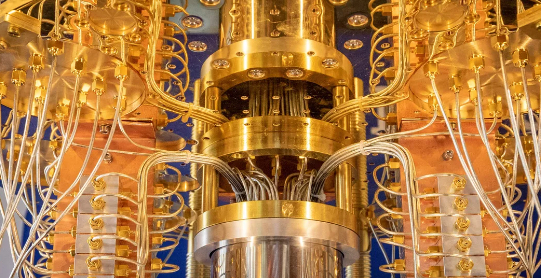
Author: Justin Thaler Compiled by: Blockchain in vernacular Original title: How big is the current threat quantum computing poses to blockchain? The timeline for cryptographic-related quantum computers is often exaggerated — leading to the need for an urgent, full transition to post-quantum cryptography. But these calls often overlook the costs and risks of premature migration, and ignore the vastly different risk profiles between different cryptographic primitives: post-quantum cryptography, despite its cost, requires immediate deployment: “Harvest-Now-Decrypt-Later, HNDL” (Harvest-Now-Decrypt-Later (HNDL) attacks are already underway, because today's encrypted sensitive data will still be valuable when quantum computers arrive, even decades later. The performance overhead and implementation risks of post-quantum cryptography are real, but HNDL attacks leave data that requires long-term confidentiality with no choice. Post-quantum signatures face different considerations. They are less vulnerable to HNDL attacks, and their costs and risks (greater size, performance overhead, immature implementation, and errors) require careful consideration rather than immediate migration. These differences are critical. Misunderstandings can distort the cost-benefit analysis and cause the team to ignore more prominent security risks — such as program bugs (bugs). The real challenge in successfully transitioning to post-quantum cryptography is to match urgency with actual threats. Below, I'll clarify common misconceptions about quantum threats to cryptography—covering cryptography, signatures, and zero-knowledge proof—and focus specifically on their impact on blockchains. How is our timeline progressing? Despite high-profile claims, it is extremely unlikely that cryptographic-related quantum computers (CRQC) will emerge in the 2020s. What I mean by “cryptography-related quantum computer” is a fault-tolerant, error-correcting quantum computer that can run the Shor algorithm on a scale sufficient to break {secp} 256 {k} 1 or {RSA-2048} attack elliptic curve cryptography or RSA within a reasonable time frame (for example, up to one month of continuous computation). Based on any reasonable interpretation of public milestones and resource estimates, we're still far from cryptographic-related quantum computers. Companies sometimes claim that CRQC may be around 2030 or well before 2035, but publicly known developments don't support these claims. As a background, in all current architectures — captive ions, superconducting qubits, and neutral atomic systems — today's quantum computing platforms aren't close to the hundreds of thousands to millions of physical qubits required to run the Shor algorithm to attack {RSA-2048} or {secp} 256 {k} 1 (depending on the error rate and error correction scheme). The limiting factors are not only the number of qubits, but also gate fidelity, qubit connectivity, and the continuous error correction circuit depth required to run deep quantum algorithms. While some systems now exceed 1,000 physical qubits, the original qubit count itself is misleading: these systems lack the qubit connectivity and gate fidelity required for cryptographic-related computations. Recent systems are close to the physical error rate at which quantum error correction begins to work, yet no one has proven that more than a few logical qubits have continuous error correction circuit depth... let alone the thousands of high-fidelity, deep circuitry, fault-tolerant logical qubits required to actually run the Shor algorithm. The gap between proving that quantum error correction is theoretically possible and the scale required to implement cryptographic analysis is still huge. In short: unless the number of qubits and fidelity are increased by several orders of magnitude, cryptographic-related quantum computers are still out of reach. However, corporate press releases and media coverage can easily be confusing. Here are some common sources of misunderstanding and confusion, including: a demonstration claiming “quantum superiority,” which currently targets human-designed tasks. These tasks were chosen not because of their utility, but because they can run on existing hardware while appearing to show significant quantum acceleration — a fact often blurred in announcements. The company claims to have achieved thousands of physical qubits. But this refers to quantum annealing machines, not the gate model machines required to run the Shor algorithm to attack public-key cryptography. The company freely uses the term “logical qubit.” Physical qubits are noisy. As mentioned earlier, quantum algorithms require logical qubits; Shor algorithms require thousands. Using quantum error correction, many physical qubits can be used to achieve a logical qubit — usually hundreds to thousands, depending on the error rate. But some companies have extended the term beyond recognition. For example, a recent one...

255d agoLuxurytracy#quantum computer
Tether: the biggest yet weakest pillar in the crypto world

Tether: the biggest yet weakest pillar in the crypto world

Author: Clow Produced by: Vernacular Blockchain Original title: Tether with a tightrope of 184 billion US dollars, Tether (USDT) with a market value of 184 billion US dollars is the foundation of liquidity in the crypto market, and the daily transaction volume often exceeds that of Bitcoin and Ethereum combined. However, this digital dollar empire is facing an unprecedented triple crisis. In the fourth quarter of 2025, Standard & Poor's downgraded its rating to the lowest “weak” level; BitMEX founder Arthur Hayes warned that a 30% drop in gold and bitcoin holdings would cause it to go bankrupt; the United Nations and consumer organizations accuse USDT as the preferred tool for fraud and money laundering networks and sanctioned entities in Southeast Asia. Is Tether an impenetrable fortress or a crumbling giant? 01. S&P handed down a death sentence. In November 2025, S&P cut the Tether score from “4 (limited)” to “5 (weak)” — the lowest score in the rating system. For institutional investors subject to strict compliance restrictions, holding “weak” rated assets is tantamount to suicide on the board of directors. The reason for S&P is straightforward: Tether is frantically increasing positions on high-risk assets. The data doesn't lie. According to the assurance report for the third quarter of 2025, the share of high-risk assets soared from 17% to 24%. Behind every $100 USDT, $24 is staked on Bitcoin, gold, mystery loans, and “other investments”: Bitcoin: $9.85 billion Precious metals such as gold: $12.9 billion Secured loans: $14.6 billion Other investments: $3.9 billion Key data: Tether's share capital buffer is about $6.8 billion, and Bitcoin holdings exceed this figure. “If the price of Bitcoin falls sharply, combined with the depreciation of other high-risk assets, Tether reserve coverage will fall below 100%,” S&P unceremoniously wrote. By contrast, Circle (USDC) received a “strong” rating because it is almost entirely backed by US Treasury bonds and bank deposits. Tether, on the other hand, is more like an aggressive macro-hedge fund. While using US bonds to earn interest, it invests profits in Bitcoin and gold, betting on the long-term depreciation of the US dollar. Tether CEO Paolo Ardoino resolutely responded: “We wear your loathing with pride (We wear your loathing with pride).” He has ambition: Tether holds more than $100 billion in US Treasury bonds, has an annualized yield of 4-5%, and is making billions of dollars every year. Which traditional bank doesn't operate with high leverage? Tether is at least fully stocked. However, the market will not change the rules due to toughness. S&P's downgrade has drawn a big cross on the institutional investor compliance list. 02. A trader's apocalyptic deduction Arthur Hayes calculated the accounts for Tether — simple to cruel. The logic is based on the elementary school formula: share capital = total assets - total liabilities According to Tether's data report for the third quarter of 2025 published by the accounting firm BDO: Total assets: $181.2 billion Total liabilities: $174.4 billion Share capital buffer: $6.8 billion Hayes targets “dangerous goods” on the asset side: $22.8 billion in Bitcoin and gold. Stress test: If it falls 30% at the same time, Tether would lose 22.8 billion × 30% = US$6.84 billion, which would have eliminated all of its share capital. 30% is not an extreme assumption. On March 12, 2020, Bitcoin plummeted 40%, and LUNA crashed in 2022, falling 35%. In the crypto market, this is a reality that is likely to be faced. But the counterattack came soon. Former Citibank analyst Joseph Ayoub pointed out that Hayes overlooked the key: Tether has a money printer. US debt of 135 billion US dollars, at 4% annualized, means a monthly profit of 450 million US dollars. Even with a book loss of 6.8 billion dollars, it can be covered in 15 months. The premise is: Don't run into large-scale clashes. More importantly, Tether has $140 billion in liquid assets. Even in the event of a redemption of 50 billion US dollars (far exceeding the scale of the FTX collapse), it is possible to cope by selling off US debt, and there is no need to sell Bitcoin at a low price. As long as the market doesn't plummet and become crowded at the same time, Tether can hold on. But crises often go hand in hand. This is how Lehman fell in 2008: market plumme+liquidity depletion+counterparty refusal to cooperate. Tether is no longer a “stablecoin,” but a leveraged macro-hedge fund. 03. The original crime of tools? In 2025, the public opinion war against Tether reached new heights. Consumer groups bombarded Times Square and TV networks across the US, accusing Tether of being “the first criminal...

263d agoburnking#Tether
Fake ETF Accelerator Race: Complete Bitcoin's 10-Year Journey in Six Months

Fake ETF Accelerator Race: Complete Bitcoin's 10-Year Journey in Six Months

Author: Clow Published by: Vernacular Blockchain Original title: The explosion of copycat ETFs. After half a year, it took nearly ten years for Bitcoin ETFs to be approved, and altcoins only used for half a year. In November 2025, something incredible happened on Wall Street. Solana, XRP, Dogecoin — these altcoins, once viewed as “speculative toys” by mainstream finance, have collectively landed on the New York Stock Exchange and NASDAQ in just a few weeks, turning into regulated ETF products. What's even more magical is that instead of being strictly approved by the SEC one by one, these ETFs use a new set of “general listing standards” and a little-known “Clause 8 (a)” fast track, which almost automatically takes effect with the “acquiescence” of regulators. The rules of the game are being completely rewritten. 01. “Strategic abandonment” of regulation For a long time, the SEC's attitude towards cryptocurrency ETFs can be summed up in four words: if it can be delayed. Every new crypto ETF application requires the exchange to submit a rule change application. The SEC has a review period of up to 240 days, and often rejects it before the deadline on the grounds of “risk of market manipulation.” This kind of “law enforcement and supervision” has left countless applications in vain. But on September 17, 2025, everything suddenly changed. The SEC has approved proposals to revise the “General Listing Standards” proposed by the three major exchanges. This seemingly technical adjustment actually opens the door for copycat ETFs: crypto assets that meet specific conditions can be directly listed without individual approval. The core entry requirements are simple: either, the asset has been traded in the CFTC-regulated futures market for at least 6 months, and the exchange has signed a monitoring agreement with that market; or, there is an ETF precedent in the market that holds at least 40% exposure to the asset. As long as one of these items is satisfied, a copycat ETF can go on the “fast track.” Solana, XRP, and Dogecoin all just happened to meet the standards. More aggressively, publishers have also found another “accelerator” — Clause 8 (a). Traditional ETF applications include a “deferred amendment” clause, which allows the SEC to review indefinitely. However, in the fourth quarter of 2025, publishers such as Bitwise and Franklin Templeton began removing this clause from applications. According to section 8 (a) of the 1933 Securities Act, if the registration statement does not have language to delay entry into force, the document will automatically take effect 20 days after submission, unless the SEC initiates an active cessation order. It's like giving the SEC a choice question: either find a good reason to stop within 20 days, or just watch the product launch automatically. Due to insufficient manpower due to the government shutdown, and pressure from judicial decisions such as the Ripple case and Grayscale case, the SEC is almost unable to handle the backlog of hundreds of applications. More importantly, on January 20, 2025, SEC Chairman Gary Gensler resigned, and the entire regulator became a “lame duck.” The publishers are seizing this once-in-a-lifetime window and sprinting like crazy. 02. Solana ETF: A bold attempt at staking profits Solana has become the third “blue chip” asset to become the third ETF “blue chip” asset after BTC and ETH with the technical aura of a high-performance public chain. As of November 2025, 6 Solana ETFs have been listed, including Bitwise's BSOL, Grayscale's GSOL, and Vaneck's VSOL. Among them, Bitwise's BSOL is the most aggressive — it not only provides SOL price exposure, but also attempts to distribute on-chain earnings to investors through a staking mechanism. This is a bold attempt. The SEC has long regarded pledge services as securities issuance, but Bitwise clearly labeled a “staking ETF” in the S-1 file in an attempt to design a compliance structure to distribute pledge proceeds. If successful, this would allow the Solana ETF not only to capture price increases, but also to provide “dividend-like” cash flow, making it far more attractive than unprofitable Bitcoin ETFs. Another point of contention is that Solana does not have futures contracts on CME. According to the SEC's historical logic, this should have been a reason for refusal. However, the final release by the regulatory authorities may mean that they have acknowledged that the long-term trading history of regulated exchanges such as Coinbase is sufficient to form an effective price discovery. The market performance was equally impressive. According to SosoValue data, the Solana ETF has recorded net inflows for 20 consecutive days since its launch, with a cumulative inflow of US$568 million. When Bitcoin and Ethereum ETFs meet in November...

268d agoLuxurytracy#ETF
Market sentiment has fallen below zero: an opportunity to break the bottom, or is it shaking hands?

Market sentiment has fallen below zero: an opportunity to break the bottom, or is it shaking hands?

Author: Daii Produced by: Vernacular Blockchain Original Title: The Panic Index Has Fallen to a Freezing Point: Is It Time to Bottom? The market is experiencing a “major loss of blood”. On November 16, the “Cryptocurrency Fear and Greed Index” once fell to 9, the lowest point since the COVID-19 pandemic caused the global market crash in March 2020. As of November 18, although the index had slightly recovered to 12, it was still in the “extreme fear” zone. As a leader in the industry, Bitcoin not only fell below the major psychological threshold of 100,000 US dollars, but also hit a six-month low of 90,940 US dollars on the morning of November 18, triggering a sharp decline in altcoins across the board. However, a puzzling paradox is at hand: why is the level of fear shown by the market when the price of Bitcoin is still above 90,000 US dollars, compared to when the price of Bitcoin was only 5,000 dollars in 2020? 01. Why is the market so panicked? To understand this extreme fear, we must dissect the multiple factors that caused this storm one by one. First, there are dark clouds from the outside macroeconomic world. The crypto market is no longer an island; it is closely linked to the pulse of the global macroeconomy. “The Federal Reserve's curse”: The market previously generally expected the Fed to cut interest rates in December, which was seen as the “last hope” to support risky assets. However, the hawkish stance of the Federal Reserve completely shattered this expectation. Cutting interest rates is tantamount to “releasing water” into the market, while maintaining high interest rates is tantamount to “shutting down the faucet.” Liquidity was taken away, and investors were forced to withdraw from high-risk assets such as cryptocurrencies. “Data black hole” and uncertainty: Due to the previous 43-day shutdown of the US government, the release of key economic data (such as employment reports) was seriously delayed. As a result, both investors and the Federal Reserve are “flying blind” (flying blind). What the market hates most is not bad news, but lack of news. This uncertainty has forced fund managers to choose to “avoid risk.” The spillover effects of the “AI bubble”: Global technology stocks, particularly AI-related stocks viewed as “market engines,” are experiencing a sharp correction. For example, SoftBank (SoftBank) has massively sold its Nvidia shares, raising market concerns that the AI bubble may be bursting. In the eyes of institutional investors, cryptocurrencies and tech stocks are in the same “high-risk” basket, and they are selling both at the same time. If macro is the background, then the collapse within the crypto ecosystem is a direct trigger for panic. This crisis is not only about price, but also about “narrative.” This bull market is based on two major narrative cornerstones: “institutional entry”: represented by spot ETFs, which symbolizes the full acceptance of cryptocurrencies by traditional finance. “Long-term holding”: Represented by the HODL beliefs of “giant whales” and “diamond hands,” they are not supposed to sell during short-term fluctuations. In the November 2025 storm, these two cornerstones simultaneously rift. Narrative collapse (1): ETF's “betrayal” of spot Bitcoin ETFs were once seen as the “engine” of this bull market, but now this “engine” is reversing. The market has witnessed a record net outflow of capital. Data shows that since November alone, the total net outflow from Bitcoin ETFs has exceeded $2.3 billion. The net outflow for one day (November 13) was as high as $866 million to $870 million, one of the worst outflow records since its listing. On-chain data company Glassnode also confirmed that ETF traffic had turned “moderately negative.” Narrative collapse (2): The giant whale's “turn around” This is one of the most disturbing internal signals. On-chain data shows that in early November, long-term holders sell-off around 815,000 BTC on a rare scale. Data platform Santiment also confirmed that since October 12, the “giant whale” wallet holding 10 to 10,000 BTC has sold about 32,500 bitcoins. When the market discovers that the “hero who saved the market” will also “betray” (ETF outflow) and that “believers” are also “cashing out” (giant whales selling off), it is not surprising that such fears arise. 02. The truth about “big asset transfers” When “extreme fear” continues and worsens, the market enters a critical stage — “capitulation” (capitulation). We are seeing clear signs of “surrender”: extreme sentiment readings: the panic index falls to the 9-18 range. Massive “realized losses”: On-chain data shows that the market has just experienced “the biggest realized loss day in the past six months.” This means huge amounts of assets are being sold for less than their purchase price, and people are “cutting...

277d agoLuxurytracy#markets #Read the bottom #BEARISH #Bull market #Market #Market topics
The Brutal Truth About Crypto Trading: 25 Facts You'll Have to Face Sooner or Later

The Brutal Truth About Crypto Trading: 25 Facts You'll Have to Face Sooner or Later

Author: Alertforalpha Compiled by: Blockchain in Vernacular Original Title: Crypto Trader's Handbook: A Quick Look at 25 Harsh Truths Here are 25 cruel truths that no one will ever tell you — but every serious trader will eventually understand these truths through painful lessons. Most traders are losing money. Because most people trade emotions, not data. Opportunity outweighs talent. You can be smart, but if you come in too early or too late, you're all bankrupt. Bull markets make idiots look like geniuses. Don't mistake luck for ability. You'll never “get the bottom of it.” Stop fantasizing about the perfect starting points—waiting for them just makes you lose track. No one cares about your beliefs. The market does not reward belief; it rewards execution. Your pride is your biggest position. And it's likely to be your first wreck. You're not a long-term investor — you're just aiming for a pullback. When “holding” simply denies reality, it's not a strategy. Which influencer do you follow? Most likely they are shipping to you. If everything is plummeting, diversification won't save you. In a bear market, the correlation (of assets) will approach 1. If you can't afford a 50% retracement, then you've made a mistake. Volatility is the “ticket” you pay for cryptocurrency earnings. Greed and fear aren't just emotions — they're market cycles. Either get hold of them, or be destroyed by them. Most traders are boring. No hype, no FOMO (fear of missing out) — just a consistent process. You need more tokens. You need more assurance with fewer investment scales. Charts can't predict the future—they map your emotions. Most people read perceptions (of their own opinions), not data. Airdrops and meme coins (memes) won't make you rich. Discipline and wisdom will do. Cash is also a type of position. Sometimes the smartest deal is not to trade. You're going to miss out on lots of 100x increases — that's OK. Your job isn't to catch a rocket, it's to crash every time. The market doesn't owe you a rebound. If you close your position, start over — not a retaliatory trade. Leverage doesn't make you a pro. It will only speed up your Manhattan. Don't fight against liquidity (megatrends). If big players are selling off, your beliefs are worth nothing. Plans are useless if you can't stick to them. Execution > Policies > Empty Talk. No one went bankrupt because of the last wave of bankruptcy. But everyone went bankrupt because of the last wave of bankruptcy. If you can't sleep peacefully, don't trade. If a position destroys your peace of mind, then it's serious. You are your own worst enemy. Every bad decision starts with “just this one time.” The goal isn't to win every deal. Instead, stay in the game long enough to grab those right deals. Final conclusion: Cryptocurrency rewards not passion — it's discipline. Twitter: https://twitter.com/BitpushNewsCN比推 TG Community: https://t.me/BitPushCommunity比推 TG Subscriptions:... https://t.me/bitpush

278d agoLuxurytracy#crypto trading
Data analysis: Is global liquidity running out?

Data analysis: Is global liquidity running out?

Author: Michael Nadeau Compiled: Vernacular The post-pandemic blockchain era has always been defined by fiscal dominance — an economy driven by government deficits and short-term treasury bond issuance, where liquidity remains high even when the Federal Reserve maintains high interest rates. Today, we are entering a phase dominated by the private sector, and compared to the previous administration, the Ministry of Finance is taking back liquidity through tariffs and spending restrictions. That's why interest rates need to fall. We analyze the current cycle from the perspective of global liquidity to highlight why the current round of “devaluation transactions” has reached its final stage. Is fiscal dominance coming to an end? We always want to “fall to the bottom” when everyone is “chasing the upside.” That's why all of the recent discussions about “devaluation deals” have caught our attention. Data: Google Trends (Google Trends) We think the time of interest in “devaluation deals” was a few years ago. At that time, the price of Bitcoin was $25,000, and the price of gold was $2,000. Back then, no one was talking about it other than cryptocurrencies and macro analysts. In our opinion, this “deal” is almost complete. So our job is to understand the conditions that created it and whether those conditions will continue to exist. What's driving this deal? In our opinion, there are two main factors. 1. Treasury expenditure. During the Biden administration, we implemented a massive fiscal deficit. Data: The US Treasury (US Treasury) fiscal year 2025 just ended, and the deficit fell slightly — this was mainly due to increased taxes (tariffs) rather than reduced spending. However, the Big Beautiful Bill (Big Beautiful Bill) is expected to cut spending by cutting Medicaid (Medicaid) and Supplemental Nutrition Assistance Program (SNAP) benefits. Data: Comparison of KFF (Kaiser Family Foundation) cuts and current spending trajectories During Biden's administration, government spending and transfers continued to inject liquidity into the economy. However, under the Great America Act, spending growth has slowed. This means that the government is pouring less money into the economy. Furthermore, the government is extracting money from the economy through tariffs. Data: The combination of FRED (St. Louis Federal Reserve Economic Data) spending restrictions (relative to the previous administration) and tariff increases means that the Treasury is now absorbing liquidity rather than supply liquidity. That's why we need to cut interest rates. “We will re-privatize the economy, revive the private sector, and shrink the government sector.” -Scott Bessent (Scott Bessent) 2. “Treasury QE” (Treasury QE). To fund excessive Treasury spending during the Biden administration, we have also seen a new form of “quantitative easing” (QE). We can observe this below (black line). “Treasury quantitative easing” supports the market by funding government spending through short-term notes rather than long-term bonds. Data: Global Liquidity Index (Global Liquidity Index) We believe it was fiscal spending and quantitative easing by the Ministry of Finance that drove the formation of the “devaluation transactions” and “everything bubbles” (“everything bubbles”) we have seen over the past few years. But now we are transitioning to a “Trump economy,” with the private sector taking over the Treasury's baton. Also, this is why they need to cut interest rates. Start the private sector through bank loans. As we enter this transition period, the global liquidity cycle seems to be peaking... The global liquidity cycle is peaking and falling back below the average cycle. We can observe the comparison between the current cycle (red line) and the historical average cycle (gray line) since 1970. Data: Global Liquidity Index (Global Liquidity Index) Asset Allocation is based on Mr. Howell's work on global liquidity indices. We can observe typical liquidity cycles and how well they fit into asset allocation. Commodities are often the last assets to fall, which is what we see today (gold, silver, copper, palladium). From this perspective, the current cycle looks pretty typical. Data: Global Liquidity Index (Global Liquidity Index) So. If liquidity is indeed peaking, we expect investors to rotate into cash and bonds as the environment changes. To be clear, this part of the process hasn't started yet...

292d agoLuxurytracy#Treasury bonds #Federal Reserve #Market topics