
白银 · 1571
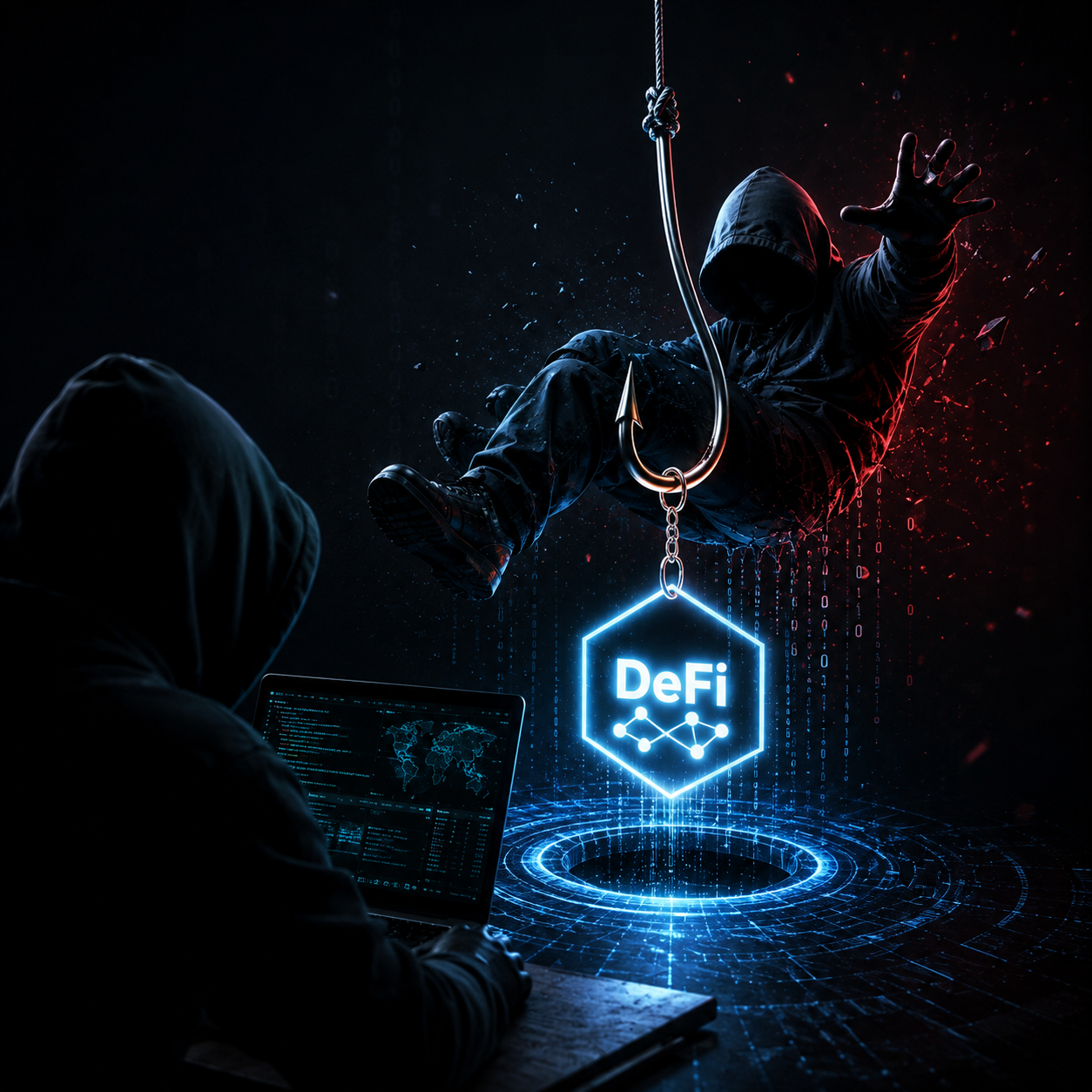
Black eats black? Fake DeFi actually snatched out North Korea's Lazarus real hacker

Black eats black? Fake DeFi actually snatched out North Korea's Lazarus real hacker

Source: Security Company ANY.RUN Compiled by: Daily Planet Daily Original title: Fishing Show of the Year, Fake DeFi Picks Out North Korea's Lazarus, Real Madrid Fans, Real Madrid Fans. With a mathematical background, they only use AI to write code. Core point of view: By setting up a fake DeFi company, the security agency successfully infiltrated the “Famous Chollima” hacker group under North Korea's Lazarus Group, revealed its complete process of using false identities, AI tools, and remote collaboration to infiltrate Western companies, and revealed its evolving toolset and infrastructure. Key element: The researchers disguised themselves as recruiters and recruited three North Korean agents within a few months to record their operation behavior, tool usage, and collaboration patterns in real time through the ANY.RUN sandbox environment. Agents used forged driver's licenses, stolen social security numbers, and mule accounts to complete the onboarding process. Some of these documents were processed by Google Gemini and had SynthID watermarks, revealing signs of forgery. Attackers rely on AI tools such as ChatGPT and Google Gemini to encode, translate, and modify files, and use AstrillVPN, remote desktop software, and dedicated servers to covertly access corporate environments. The three agents showed insufficient skills during development, frequently searched for basic issues, and exposed more proxy server and infrastructure information induced by selective network outages and captcha. The investigation found that Famous Chollima aims to lurk within the enterprise for a long time and legally obtain access to code, systems, and intellectual property rights, and is not limited to short-term attacks, and the threat persists significantly. Crypto friends who are often phished have probably heard of the North Korean hacker group Lazarus Group. Its well-known “campaigns” include, but are not limited to: Bybit ($1.5 billion) theft, Ronin Network/Axie Infinity Bridge attack ($6.2 billion), DMM Bitcoin/Ginco related attack ($308 million), Harmony Horizon Bridge attack ($100 million), and Atomic Wallet attacks ($100 million), etc. And the key to the success of these attacks is social engineering — hackers usually disguise themselves as normal job applicants, lurk at crypto companies for years, and wait for the right time. Recently, security agency ANY.RUN joined forces with BCA LTD (a company dedicated to threat intelligence and hunting) and NorthScan (a threat intelligence program to uncover the infiltration of North Korean IT workers) to effectively crack down on North Korean hacker agents. The researchers created a fake DeFi startup and successfully recruited “Famous Chollima” agents under North Korea's Lazarus Group who specialize in human infiltration, to gain an inside perspective on the actions of North Korea's IT workers. The ANY.RUN sandbox environment shows the agent's behavior patterns in real time, revealing their evolving toolsets, remote access workflows, AI tool usage, and supporting infrastructure. This survey went beyond the simple recruitment process and showed in depth how these agents collaborated, obtained, and used company resources after joining the company. The findings suggest that the North Korean IT worker program not only poses a recruitment risk; once agents sneak inside the organization, they can legally obtain access to code, systems, intellectual property, and critical business processes. The following is a report co-authored by the three parties, compiled by Daily Planet Daily. ——————Introduction In December of last year, we fully recorded the infiltration cycle of “Famous Chollima” for the first time. From recruiting collaborators to help them join Western companies, to falsifying documents, shipping laptops to intermediaries, and even using AI tools to assist and translate in real time during interviews, everything is under control. In that survey, we pretended to be a middleman willing to interview them and lend them a laptop in exchange for a percentage of their salary. The point is that those laptops are actually ANY.RUN sandbox environments that record every click and every step they take. This provided us with massive metrics, hours of computer operation videos, and face-to-face contact images, making an unprecedented survey and making headlines in many media. (“Famous Chollima...

1d agoOdaily星球日报#wallet security #hacks

The gold sector of the US stock market rose across the board at the beginning of the session, and may be affected by the rise in spot gold

Comparative news, according to MSX.COM data, spot gold rose nearly 3% during the day, or was affected by this. The US gold sector rose across the board at the beginning of the session, with Coldallen Mining up more than 7%, Eagle Mining, Newman Mining, and Kinross Gold by more than 6%, and Pan American Silver, Goldfield, and Barrick Mining by more than 5%. This article is sponsored by GENG, Build Your Fortune on GENG (https://geng.one)

3d agoburnking

Kalshi applied to launch US stock index perpetual futures to further enter the traditional exchange market

Comparing news, the prediction market platform Kalshi submitted regulatory documents to the US Commodity Futures Trading Commission (CFTC) to apply for the launch of perpetual futures linked to stock indices to further expand from the prediction market to the traditional financial derivatives sector. According to the documents, Kalshi's proposed US500 perpetual futures will track the MerQube US large-cap index, which covers 500 large companies listed in the US. Perpetual futures have no expiration date, traders do not need to hold the underlying asset, and the contract continuously tracks the underlying price through a funding rate mechanism. At the end of May this year, Kalshi received approval to launch cryptocurrency perpetual futures, which was officially launched in June. The company then applied to launch perpetual futures for precious metals such as gold and silver, and now further applied for perpetual futures on copper and stock indices. Kalshi said that the global perpetual futures trading volume exceeded 90 trillion US dollars in 2025, and the nominal trading volume surpassed 1 billion US dollars a week after the launch of its own product. Kalshi's foray into perpetual futures has raised concerns on traditional exchanges. The stock prices of CME Group and Cboe Global Markets were previously pressured by the US approval of domestic perpetual futures, and CME even sued the federal court for related regulatory approvals. At the time of publication, CME was up about 1.26% and Cboe was up about 0.12%.

3d ago
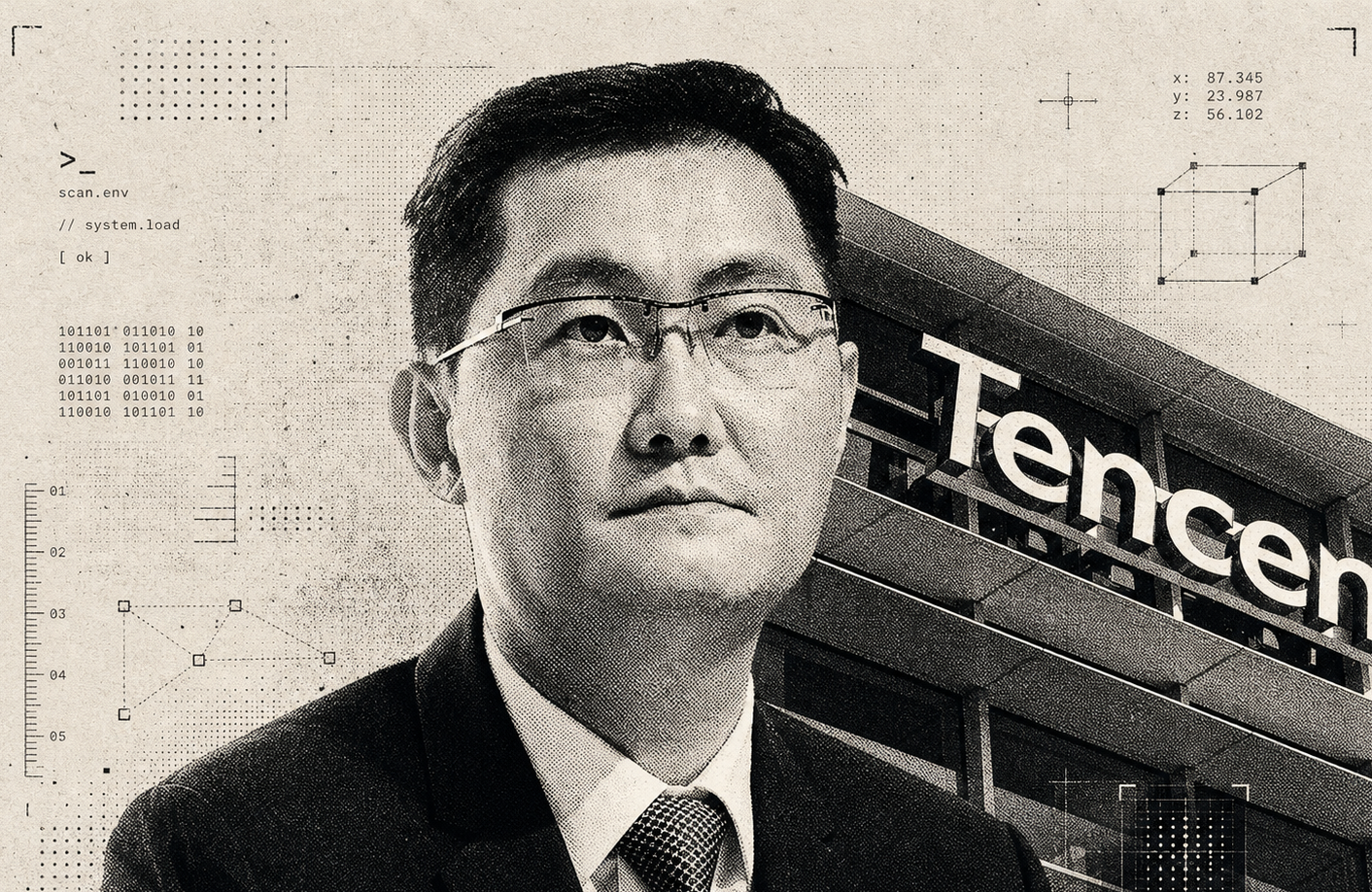
After disbanding AI Lab and spending 84.6 billion dollars to buy cards in half a year, Tencent is going against the current

After disbanding AI Lab and spending 84.6 billion dollars to buy cards in half a year, Tencent is going against the current

Author: Activision BeatingOriginal title: Tencent Still Has Dreams On August 12, 2026, Tencent released its financial report for the second quarter. Capital expenditure for a single quarter, $52.78 billion. Three months ago, that number was 31.9 billion. Moving forward a year, the total for the whole year would be less than 79.2 billion. This company has always been known for spending money with restraint. The speed at which it bought cards was once slow enough to make the market wonder if it actually wanted AI at the table. Now, it has brought the speed of spending money to this level within a year. At the earnings conference on the same day, Ma Huateng said that Tencent is “building a brand new, AI-enabled Tencent.” The hybrid was renamed HY, and Hy4 will be released soon. The last time this company described itself as “brand new” was in the era when WeChat was born. Tencent still has dreams. Its dream is not just AI; it needs to relearn to be an unstable company. In 2018, Pan Ran said in “Tencent Has No Dreams” that Tencent is a company like water. Water is good for all things, and there is no dispute; wherever there is a channel, it flows. Water has no personality, so water doesn't have dreams. It is natural for water to flow to a low place; backflow is for those who have reflux. In 2026, the 28-year-old company did something against nature. It admits that the article from eight years ago was right. It admits that it is no longer possible to live like water. On Wednesday, May 5, at 9 p.m., “Tencent Has No Dreams” was published. 13,000 words. At 2 o'clock in the evening, Liu Chiping and Tencent PR director Zhang Jun responded in the circle of friends. Liu Chiping said that Tencent is a larger organization and ecosystem than the outside world can imagine. “It's too narrow to reduce Tencent to the gains and losses of a product, a kind of strategic deployment, and one person's will.” At 2:19, a screenshot suspected of Ma Huateng's response began circulating in the circle of friends. At 2:39 the real Ma Huateng spoke up, saying “It's nice to have criticism” to a friend who cares about him. Afterwards, he said, “From writing the first line of code, my dream was how to make the best product, not how much money to make.” During the day, the national media quoted almost the full screenshot of Ma Huateng's response. Even Zhang Yiming spoke for Tencent in his circle of friends, saying this was a “Don Quixote imagination.” Tencent is not only powerful, but it is also constantly evolving in every dimension. Zhang Jun was on the long-haul flight that day. After landing, he said, “We certainly weren't as bad as the outside world thought, but the criticism also made us realize that we weren't as good as we thought.” Of course, there were a few different voices about that article at the time. Hong Bo said that many of the questions mentioned in the article are real questions, but is there only one correct answer for such a large company? “Perhaps the author thinks Zhang Yiming is the only correct answer. He is a bit superstitious about Zhang Yiming.” That article also recorded an earlier story. At the beginning of 2011, just after the 3Q war ended, Tencent held a general meeting to discuss what Tencent's ability to open up is. Ma Huateng asked the 16 executives who attended each to write down what they thought Tencent's core competencies were on paper, and came up with a total of 21 answers. Finally, decide on two. Capital, flow. The term capital was advocated by Liu Chiping. Opening up means releasing traffic and turning it into an investment. Traffic is open, capital is open, “I don't do it myself anymore.” These two terms have governed Tencent for ten years. The entrance to WeChat traffic and the exit of investment traffic is in the middle is a steady stream of cash generated by games and advertisements. JD's e-commerce portal entered the WeChat Jiugong grid. Sogou picked up the search, and Meituan took over the local life. Traffic is exchanged for shares, and shares are exchanged for allies. In ten years, Tencent's market capitalization has increased tenfold, surpassing Facebook's. When that article was published, it still looked invincible. If you look back and reread it eight years later, you'll find that the article predicted almost every time Tencent fell since then. Ten years later, on December 23, 2021, Tencent distributed 14.7% of JD shares to its shareholders, with a market value of about HK$100 billion. In January 2022, Sea holdings were reduced and $3.2 billion was cashed out. In November 2022, 9.6% of Meituan was split, or approximately HK$159.4 billion. The capital, which was designated as a “core competency” back then, was personally destroyed by Tencent. The water has flowed back and forth for the first time in decades. There is a section in the first AI Dream article that not many people paid attention back then. It's written in Tencent's AI. The Go program “Amazing Art” created by AI Lab successively lost to two amateur games. One is the personal hobby of Headline's vice president, and the other is an amateur work by several engineers on the WeChat translation team. Few people realize that...

5d ago动察Beating#AI

Chicago Board Options Exchange applies to list 3x leveraged ETFs such as Bitcoin, Ethereum, Gold, and Natural Gas

Comparatively, according to Cointelegraph, the Chicago Board Options Exchange (Cboe) has submitted an application to list a 3x leveraged ETF for Bitcoin, Ethereum, gold, silver, crude oil, and natural gas. The above products cover crypto assets and traditional commodities. If approved, they will provide investors with higher multiples of leveraged trading tools and further enrich ETF product lines in related markets.

6d ago

SEC reviews Cboe's listing applications for six 3x leveraged commodity ETFs, covering Bitcoin and Ethereum

Comparatively, the US Securities and Exchange Commission (SEC) is reviewing a rule change application submitted by the Cboe BZX exchange involving 6 leveraged commodity ETFs that track 3 times the benchmark's single-day performance. The initial SEC review period is 45 days after publication in the Federal Register. Volatility Shares LLC is the relevant fund sponsor. The products include 3x gold, silver, Bitcoin, Ethereum, crude oil, and gas ETFs, all of which intend to operate on a commodity pool and are not an investment company. Among them, Bitcoin and Ethereum ETFs will mainly invest in recent and next month futures contracts on the Chicago Mercantile Exchange (CME), rather than directly holding Bitcoin or Ethereum, and allocating cash and cash equivalents as collateral or margin. Before the relevant products are listed, the SEC must approve changes in exchange rules, and the trust's Form S-1 registration statement must also take effect. Each fund must have at least 100,000 shares at the time of listing, and authorized participants can purchase or redeem each 10,000 shares in cash.

6d ago
From crypto to AI: Why are believers turning collectively?

From crypto to AI: Why are believers turning collectively?

Source: Wall Street Journal Author: Vicky Ge Huang Compiled by Chopper Original title: Why are cryptocurrency believers “throwing coins into AI”? Summary: Individual investors are withdrawing from the cryptocurrency market and switching to AI stocks. Daniel Koss, a 30-year-old investor, cleared Bitcoin and invested all of them on the AI circuit; Ryan Ho, the founder of the social networking platform, also replaced his seven-digit Bitcoin holdings with chip stocks, believing that the structure of the crypto market is weakening and the AI application scenarios are more realistic. Another trader, Minh Le, cashed out some of his crypto assets to buy Ferraris and anime collectibles. Although he recently re-entered the market, his strategy is conservative. Bitcoin fell from a high of $126,000 to around $60,000, decoupling from the trend of US stocks, while AI stock derivatives launched on platforms such as Hyperliquid also boosted capital migration. Bloomberg analysts say the crypto market is undergoing a deep clean-up, and investors believe that the era of Bitcoin's high-multiple growth is over. Daniel Koss has bought Bitcoin in a big way, and he is convinced that cryptocurrency will reshape the financial industry. But after the advent of the AI boom, he changed his investment direction. The 30-year-old investor believes that rapidly developing artificial intelligence technology has the potential to disrupt many industries, so he entered the market decisively. In August of last year, he cleared his six-digit Bitcoin holdings, and now all of his money is invested in the artificial intelligence circuit. “It felt like primitive humans discovered Tinder.” Koss, who is in Zug, Switzerland, said. Koss's position adjustment choice reflects the major capital migration that has taken the entire market by storm over the past year: individual investors and hedge funds have successively sold Bitcoin and various tokens to chase AI stocks. This asset rotation also explains Bitcoin's price dilemma: since it hit an all-time high of over $126,000 in October last year, Bitcoin has continued to be under pressure and has been hovering around $60,000 for a long time. At the time, the Trump administration threatened to impose new tariffs on China, triggering investors to sell high-risk assets. At the same time, chip makers and other AI concept stocks have broken out of the boom that only existed in the crypto market in the past. Bloomberg Industry Research Advanced Commodity Strategy Mike McGlone said, “The crypto market is undergoing a round of deep clean-up, and this is just the beginning.” The US stock market continued to hit new highs this year, yet Bitcoin continued to weaken. Koss has no plans to re-trade Bitcoin anytime soon. In his view, crypto assets have matured, and the era of exponential skyrocketing surges is over. He believes that Bitcoin will never increase tenfold in a year. “Bitcoin is already so large that even doubling it would be extremely profitable.” Even staunch crypto believers are reducing their crypto holdings and turning to volatile AI stocks. Ryan Ho, founder of the social trading platform Legend, revealed that when the price of Bitcoin was close to $120,000, he held a seven-digit Bitcoin position. At the time, he was convinced that Bitcoin “will never fall below $100,000 again.” However, the market backfired. In December of last year, he swapped a large number of bitcoins and altcoin holdings to buy AI-related stocks such as chip companies, including Intel. Currently, he still holds hundreds of thousands of dollars in Bitcoin. Ryan Ho, a 25-year-old entrepreneur, said that the core reason for the reduction in crypto assets was the structural weakening of the crypto market. In his view, after the sharp decline in October, the crypto market no longer has the characteristics of a health-risk asset: demand for buying has dried up, and institutional capital continues to flow to the AI sector. The crypto market then decoupled from the trend of US stocks. US stocks continued to rise, and the crypto market stagnated. Ryan Ho believes that ordinary investors are more likely to be optimistic about the growth prospects of AI. Artificial intelligence has a large number of real implementation scenarios such as ChatGPT and AI-assisted programming. Another driving force behind the shift of capital from crypto to AI is the launch of AI stock derivatives on mainstream crypto trading platforms such as Hyperliquid. “A large number of crypto traders have started trading AI stocks in the past few months, and the core reason is that related trading channels have been opened up.” Ryan Ho said. There are also some crypto traders who chose to settle the bag and end the previous round of sharp increases in Bitcoin and mainstream tokens. Trader and digital artist Minh Le recently monetized some of his crypto assets to buy a Ferrari, while also allocating a large amount of profit to a Japanese anime collection, including “One Piece” and Pokémon collectible cards. Minh LeMinh Le relies on...

8d ago22#AI #Bitcoin