算力 · 3966

Starcloud closes a new round of funding with $250 million led by Manhattan West Ventures

Comparatively, according to TechCrunch, the space computing power startup Starcloud announced the completion of a new round of financing of 250 million US dollars, led by Manhattan West Ventures, with Nvidia, Cisco, Benchmark, EQT and other institutions participating. Of these, Nvidia invested about 25 million US dollars in this round of financing. The new funding will be used to expand satellite manufacturing facilities and advance research and development of the next-generation orbital data center satellite Starcloud-3. Starcloud revealed that the company is already running the Nvidia H100 data center GPU in orbit and has completed model training based on that GPU. Currently, most space computing projects use edge computing chips, and Starcloud is collaborating with Nvidia to provide test data for future Vera Rubin Space-1 GPUs designed specifically for space environments. Starcloud CEO Philip Johnston also previously indicated plans to mine Bitcoin in space. This article is sponsored by GENG, Build Your Fortune on GENG (https://geng.one)

4h agoburnking#financing

Arthur Hayes Reminder: FLOP has not been released yet, and there are no presales or meme coins

BitMEX co-founder Arthur Hayes wrote a reminder that Flop Labs has not yet issued FLOP tokens, and there are no pre-sales or meme coins. Hayes stated that FLOP is not officially launched yet, and reminded the community not to mistake related tokens appearing on the market for official assets. He said Flop Labs is expected to launch an airdrop in the next few months and plans to launch the mainnet next year. According to previous public information, the project had previously planned a large-scale airdrop in the fourth quarter of 2026, and the target time for the main network Genesis block is the first quarter of 2027. Hayes previously announced that he will be leading Flop Labs, a project aimed at building economic infrastructure for AI agents, and FLOP will be designed as a native asset for AI agents to pay for resources such as computing power and storage.

5h ago

ZEC has increased 20 times in a year, and the strongest privacy coin favors the intensive catalytic market

Comparative news, according to HTX market data, ZEC rose above 833 US dollars for a short time this morning to set a new historical record. The increase reached 67% in the past 7 days, 230% in the past 180 days, and 1970% in the past year. Recent major benefits include: · Grayscale submitted the fourth S-3 amendment, promoted the conversion of Zcash Trust into a spot ETF (pseudo ticker ZCSH), and disclosed that DCG subsidiaries were in non-binding discussions to inject about 200,000 ZEC (worth about $110 million at the time). · Cypherpunk Technologies, supported by Winklevoss, launched the world's largest ZEC mining cluster, controlling about 18% of the entire network's computing power and continuing to increase the ZEC treasury. · The Ironwood Network Upgrade (NU6.3) has been launched to fix previous Orchard privacy pool vulnerabilities, strengthen the security and verifiability of the shielded pool, and promote capital migration and restoration of ecological confidence. Combined with rising privacy narratives and market bearish pressure, ZEC has become one of the strongest performing privacy coins in this round. Currently, the price is still in a high fluctuation range.

11h ago
[Comparative Daily News Picks] Anthropic plans to include anti-AI sentiment as the main risk factor in the prospectus; Strategy's stock price hit a two-month high, and STRC returned above $96; Bernstein: Even if the “Clarity Act” is not passed, the SEC and CFTC will speed up rule-making; Dalio: The US debt crisis may break out within three years, and it is recommended to increase gold holdings

[Comparative Daily News Picks] Anthropic plans to include anti-AI sentiment as the main risk factor in the prospectus; Strategy's stock price hit a two-month high, and STRC returned above $96; Bernstein: Even if the “Clarity Act” is not passed, the SEC and CFTC will speed up rule-making; Dalio: The US debt crisis may break out within three years, and it is recommended to increase gold holdings

Daily AI · Crypto · Macro · Market Highlights, Bitpush helps you set priorities ↓ AI · News [Anthropic plans to include anti-AI sentiment as the main risk factor in the prospectus]. According to CNBC, Anthropic is expected to list the public's negative sentiment about artificial intelligence and data centers as a risk factor in the IPO prospectus to be released in the next few weeks. According to people familiar with the matter, Anthropic recently held a pre-listing “market trial” meeting with bankers and investors. Investors focused on competitive pressure, the impact of open source models on profit margins, and the risks that may be brought about by a slowdown in data center construction. Anthropic is currently valued at close to $1 trillion in the private equity market and is preparing to hit a major IPO. However, as Americans' concerns about AI replacing employment and data center expansion heat up, the related backlash sentiment is becoming a new challenge facing the company's listing. The company has previously achieved an annualized revenue operating rate of more than 65 billion US dollars. [Apple cuts Siri and Vision Pro team positions, and resources shift to AI and new devices] Compared to news, Apple (AAPL.O) is laying off employees from various teams responsible for Siri's digital assistants and Vision Pro headsets. The total impact of this layoff is more than 200 people. Of these, about 100 jobs in the Vision Pro department have been abolished, and about 100 other positions in the Siri and software teams have been cut. The move is part of the company's efforts to focus resources on new devices and artificial intelligence. People familiar with the matter said that in this adjustment, Apple has basically shut down a team dedicated to the Vision Pro game business, while also reducing the size of the department responsible for producing immersive video content for the device. Apple admitted in a statement that the company is making adjustments to some teams “to drive business development and provide the best experience for users.” [Castle Securities: Over 80% of the overall risk in the Situational Awareness Fund portfolio has been divested] According to the Financial Times, Castle Securities founder Ken Griffin responded to the company's acquisition of Situational Awareness assets under Leopold (Leopold) in a letter to clients on Friday. According to a letter obtained by CNBC, Griffin told clients that Castle Securities had divested more than 80% of the overall risk in the original purchased portfolio by conducting more than 100 major transactions (with a market value of more than $4 billion). In his letter, Griffin wrote, “A transaction of this scale would not have been possible without the full cooperation of the transaction teams and lead brokerage teams of the banks serving the two companies. I am very grateful for their dedicated efforts to complete the portfolio transfer quickly.” Griffin also confirmed that the company's flagship multi-strategy fund, the Wellington Fund, had a return of 5.94% in July, which is the fund's best monthly performance since 2022. [AI cloud company Nscale seeks to raise 3 billion US dollars in US IPOs] In comparison, AI cloud company Nscale is reportedly seeking to raise 3 billion US dollars in a US IPO. In the crypto market [Strategy stock price hit a two-month high, STRC returned above $96], the Bitcoin treasury company Strategy (MSTR) stock price rose to a two-month high today as the Bitcoin price briefly broke through $79,400. It broke through $120 during the intraday period, then partially regained its gains. Meanwhile, the price of STRC, Strategy's preferred stock product, also surpassed $96 for the first time since June. Previously, STRC's price once fell below $70 due to concerns about its ability to pay dividends and the ability of the stock price to maintain the $100 target for a long time. [Bernstein: Even if the Clarity Act is not passed, the SEC and CFTC will speed up rulemaking] Comparing news, the Bernstein analyst team led by Gautam Chhugani released a report stating that regardless of the procedural voting results of the “Clarity Act” on September 15, the certainty of US crypto regulation is expected to increase. They expect the SEC and CFTC to accelerate rulemaking in areas such as native crypto asset issuance, tokenized stocks, perpetual futures, computing power derivatives, and predictive markets. This regulatory clarity of expectations has become one of the broader supporting factors in the crypto market. 【A...

15h agoBitpushNews#Compare Daily Picks

Bernstein: Even if the Clarity Act doesn't pass, the SEC and CFTC will speed up rulemaking

Comparing news, Bernstein's team of analysts led by Gautam Chhugani released a report stating that regardless of the September 15 “Clarity Act” procedural voting results, the certainty of US crypto regulation is expected to increase. They expect the SEC and CFTC to accelerate rulemaking in areas such as native crypto asset issuance, tokenized stocks, perpetual futures, computing power derivatives, and predictive markets. This regulatory clarity of expectations has become one of the broader supporting factors in the crypto market.

20h agoWendy#starters

Central Cyber Security and Information Technology Commission: Guiding the collaborative layout of new computing power facilities and renewable energy power generation

Comparatively, the Central Cyber Security and Information Technology Commission issued the “Action Plan to Promote the High-Quality Development of Internet Communications Enterprises (2026-2030)”. Among them, it is mentioned to promote green and low-carbon enterprise development. Guide and support the green and low-carbon development of Internet communication enterprises, achieve green design, packaging, delivery and operation throughout the entire process of office, production, transportation, and service, and regularly disclose progress in carbon reduction. Support enterprises to improve the level of renewable energy utilization, guide the collaborative layout of new computing power facilities and renewable energy power generation, etc., and continue to build national green computing power facilities. Update the recommended catalogue of energy-saving carbon reduction technology and equipment in a timely manner, and promote advanced and applicable energy-saving carbon reduction technologies such as liquid cooling technology and waste heat recovery. Encourage ecologically-oriented and industry-leading enterprises to help upstream and downstream enterprises improve carbon reduction capabilities, accelerate the construction and application of digital energy and carbon management centers, and build green value chains and supply chains. Encourage all regions to build green transformation service platforms to provide enterprises with low-cost, standardized carbon emission accounting tools, energy efficiency diagnosis services, etc., and lower the threshold for green transformation of enterprises. This article is sponsored by GENG, Build Your Fortune on GENG (https://geng.one)

1d agoburnking

Bernstein: Bitcoin's shock to $80,000 was driven by liquidity, ETF funding flows have picked up

Comparative news, according to The Block, analysts at Bernstein believe that Bitcoin's rebound over the past two days may mark a shift in market momentum, behind which is an improvement in the liquidity environment, a recovery in ETF demand, and friendly regulation. Bitcoin hit $79,500 on Friday and then fell back to about $78,000. Analysts linked this round of rebound to the US Treasury's announcement to increase repurchases of long-term treasury bonds, believing that liquidity expansion has always been beneficial to Bitcoin. Furthermore, Ethereum outperformed Bitcoin in this round of rebound, which analysts attributed to ETH's higher exposure to stablecoins, tokenization, and real assets. Spot Bitcoin ETF capital flows have changed from net outflows in May and June to net inflows of $1.6 billion this week, and the management scale has risen to over $85 billion; Strategy holdings have changed to surplus of over $2 billion, and cash reserves can cover 2.8-year dividend expenses. Bernstein also mentioned that regardless of whether the much-publicized “CLARITY Act” (which will be subject to a procedural vote on September 15) is passed, the SEC and CFTC are expected to speed up the legislative process in areas such as native token issuance, equity tokenization, perpetual contracts, computing power derivatives, and predictive markets. This article is sponsored by GENG, Build Your Fortune on GENG (https://geng.one)

1d agoburnking

The wave of AI infrastructure financing is competing with US bonds for long-term capital, and market concerns are driving up interest rate pressure

Comparing news, AI infrastructure investment is becoming a new variable in the US bond market. As tech giants expand the construction of data centers, chips, and computing power, AI companies' demand for financing grew rapidly, and they began to compete with the US government for capital from core bond buyers such as insurance companies, pensions, and long-term asset management institutions. According to the data, as of August, the issuance of US investment-grade corporate bonds reached about 1.7 trillion US dollars, a record high for the same period. According to Goldman Sachs data, the four major US technology companies have issued more than 170 billion US dollars in bonds since this year, which is more than the full year of 2025. Meanwhile, Broadcom is seeking chip and infrastructure financing for AI companies such as Anthropic, and the potential debt may be close to $100 billion. Market institutions pointed out that AI brought not only an increase in the supply of US bonds, but also a long-term expansion of supply in the entire bond market. When the government and technology companies simultaneously increase long-term financing needs, and the long-term capital pool is limited, the market may require higher returns to attract buyers. St. Louis Federal Reserve Chairman Mussalem said earlier that capital competition is forming between the US government's financing needs and AI infrastructure construction. Recently, the US bond market continued to be under pressure. The yield on US 30-year Treasury bonds once rose to 5.34%, a record high since 2007, and the 10-year US bond yield rose to 4.7%. The high interest rate environment is likely to further raise corporate financing costs and influence market pricing for AI companies through valuation discount rates. Meanwhile, US consumption data showed signs of weakness. Walmart's stock price fell about 9% in a single day, the biggest drop since 2022. The reason was that its same-store sales growth rate fell to its lowest level in six years, falling short of market expectations, indicating that consumer spending is slowing down. Against the backdrop of slowing economic growth and ongoing inflationary pressure, the Federal Reserve's policy faces a dilemma. The US Treasury recently expanded the scale of long-term US bond repurchases, raising the maximum single repurchase limit for 10-20- and 20-year US bonds from $2 billion to at least $4 billion. The market believes that the move is more of a signal. It has relieved the pressure on yield in the short term, but it has not changed the long-term supply and demand conflict. Analysts believe that future market attention will focus on US fiscal financing needs, AI capital expenditure expansion, and long-term interest rate trends. If long-term US bond yields continue to rise, the market may rediscuss policy tools such as yield curve control (YCC) or quantitative easing (QE). This article is sponsored by GENG, Build Your Fortune on GENG (https://geng.one)

1d agoburnking
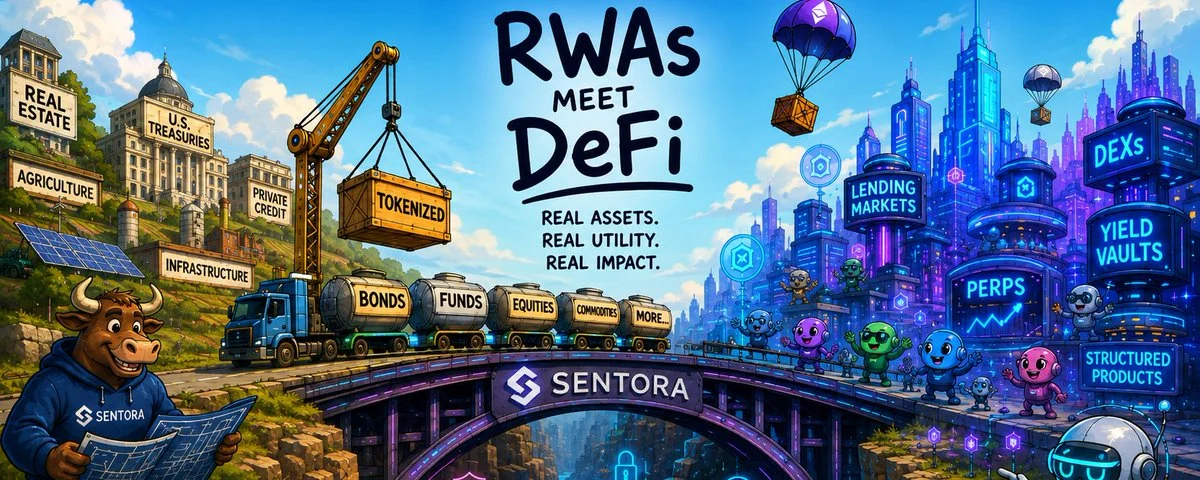
If it's just tokenized assets and doesn't connect to DeFi, what's left of RWA?

If it's just tokenized assets and doesn't connect to DeFi, what's left of RWA?

Author: Jesus Rodriguez, co-founder of Sentora Compiled by: Luffy, Foresight News Original title: Does RWA still make sense without DeFi? Discussions in the RWA industry often begin with a simple vision: take a treasury bill, fund share, stock, invoice, megawatt hour, or GPU for one hour, then mint a token representing it. Is it useful? It's really useful. But can it be called transformative? It's far from there. This is like putting a bar code on a container and claiming that a global trade problem has been solved. Barcodes make containers recognizable and machine-readable, but they don't create ports, cranes, customs, insurance, financing, shipping routes out of thin air, or bring in buyers from afar. A token is simply an addressable token of interest, and DeFi is a marketplace operating system. The question really worth discussing is not how many types of assets can go on the chain, but how many assets can complete valuation, financing, hedging, transaction monetization, and loss disposal in a stressful environment, and there is no need for offline meetings and coordination every time a transaction occurs. Tokenization completes the representation of equity; what DeFi brings is actual utility. Tokenization is just a bar code, and a similar scene has happened in the history of the supply chain finance market. The reason why mortgages can be scaled up is not as simple as turning a paper document into an electronic record. To actually achieve large-scale expansion, a complete set of operating mechanisms was created around this type of asset: credit review, post-loan services, securitization, credit rating, warehousing and financing, repurchases, hedging, clearing and settlement, and loss allocation rules. RWA also needed to go through the exact same evolutionary process. An asset that can be adapted to DeFi requires six levels: legally enforceable rights, reliable data sources, clear transfer and redemption rules, enforceable secondary market liquidity, collateral parameters that match actual behavior, and a credible settlement and loss disposal path. Most tokenization projects, on the other hand, tend to stop at the top five levels. There is a simple test that can be used to test the maturity of an asset. It only requires answering three questions: How much is this asset currently worth? Can the agreement complete withdrawal and monetization at this point? If the first two judgments are all wrong, who bears the loss? When smart contracts can definitively answer the above three questions, RWA can truly become a basic component of finance. Before that, it was mostly just a digital packaging shell. The deepest technical contradiction of RWA's quadruple time clock is that RWA runs under multiple sets of different time clocks at the same time. The blockchain can complete settlement in seconds and operate uninterrupted for 7 x 24 hours; oracles may update prices every hour or every day; underlying traditional exchanges are closed at night and on weekends; custodians follow bank working days; and the asset redemption process may take 1 day, 5 days, or even 30 days. If you use such a slow-paced RWA asset to support fast-maturing DeFi liabilities, such as stablecoin loans. This is the term shift, and it is also the core model that banks have relied on for hundreds of years: using short-term debt to fund long-term slow assets. This model has practical value, but the risk must be reasonably priced. Imagine a scenario: At 2 a.m. on Sunday, assets hit the liquidation threshold. Smart contracts can seize tokens immediately, but the underlying real-world market won't open until Monday, and the issuer's redemption business will not be processed until Tuesday. On-chain liquidation has been completed, and real-world asset disposal has only just begun. This creates a clearing gap. DeFi requires immediate withdrawal for monetization, but the real world does not allow it. The time difference between the two. This gap has counterintuitive consequences. Even treasury bonds with very low volatility are riskier than native crypto assets that are more volatile when used as collateral. The price of ETH fluctuates drastically, but it can be traded around the clock; the price of RWA assets appears to be stable, and it may only be up to a dozen hours without a new price tag. A flat price sometimes represents safety, and sometimes it's just a disguise of stale data. Liquidity is an exit channel, not TVL. The digital public also has common misunderstandings about liquidity. Liquidity is not equal to TVL, does not equal the existence of a trading pair, nor does it mean that the issuer promises to eventually redeem it according to net worth. Liquidity refers to the ability to convert a position into the settlement asset you need at an acceptable discount within the time window allowed by your debt. Take a crowded theater for example: the size of the hall cannot determine whether it is safe in the event of a fire; what really matters is the width of the exit channel. One copy of RWA to...

1d agoForesight News#DeFi #RWA

Goldman Sachs Raises CoreWeave Price Target to $139, Maintains Neutral Rating

Comparative news, according to Goldman Sachs's August 20 research report, CoreWeave's second-quarter revenue was in line with expectations. The EBIT profit margin was 200 basis points higher than the market consensus, and the 2026 revenue guidance exceeded market expectations by 1%. The revenue backlog increased 5% month-on-month to US$104 billion, adding more than US$25 billion in committed orders since the third quarter. Active electricity installed capacity increased from 1 GW in the first quarter to more than 1.5 GW, and the contracted electricity installed capacity reached 4.2 GW. Goldman Sachs raised its 12-month price target from $121 to $139, which has 53% upside from the current share price and maintains a neutral rating. Goldman Sachs believes that CoreWeave's short-term certainty is clear: demand continues to lead supply, intergenerational pricing for old and new GPUs remains high, and production capacity is expanding as scheduled. Next-generation chips (Blackwell, Vera Rubin) continue to hit new highs, and recent A100 contract deliveries have been extended to 2029. The share of enterprise customers has increased (Caterpillar, IBM, Nissan, ZF), and demand for AI computing power is spreading from tech giants to the real economy. Goldman Sachs expects EBITDA to increase from $3.1 billion in 2025 to $31.3 billion in 2028. A neutral rating reflects waiting for software and platform services to become a more definite contributor to profit margins before making more positive judgments.

1d ago