

胡定核 · 3
Conversation with Hu Dinghe: From Bitcoin to the Metaverse

Conversation with Hu Dinghe: From Bitcoin to the Metaverse

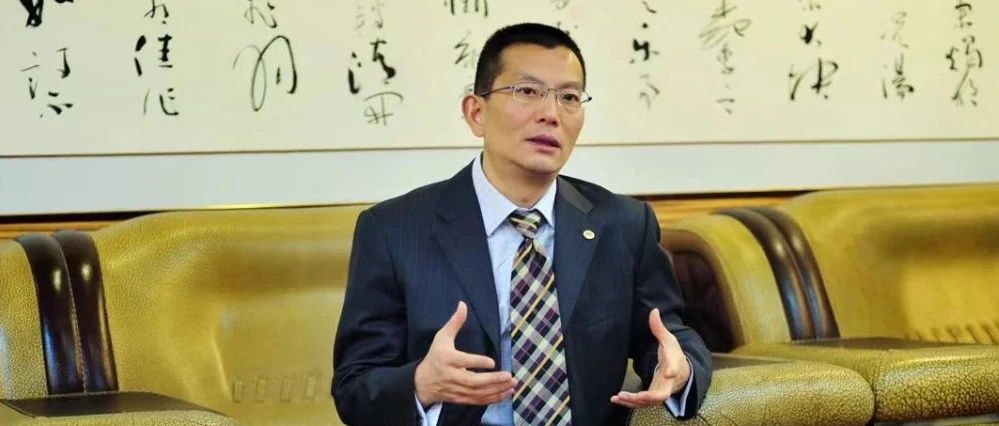
Editor's note: Since its inception, Bitcoin has had a profound impact on the global digital economy: on the one hand, it has spawned a complex cryptocurrency market; on the other hand, it has spawned an all-encompassing blockchain technology system. They have created new business models and are also “absorbed” by traditional finance and industry. New ecosystems such as the metaverse and AIGC can also be seamlessly connected to them. Scholar Hu Dinghe studied in depth during his visit to Harvard University and wrote “The Time of the Storm on Bitcoin”. Editorial board member Bai Liang of this magazine and Mr. Hu Dinghe had a conversation about the development and future trends of Bitcoin over ten years; at the same time, we have excerpted the chapter “Bitcoin 2022” for the benefit of readers. As stated in the book's introduction, “Bitcoin is an economic phenomenon; it itself is still growing and evolving, and so are the questions and answers.” Bitcoin and the virtual currency market derived from it are still in the early stages of development, and different countries and regions around the world face different regulatory rules. The contents of this book and this conversation are all opinions and family comments, and do not involve any investment suggestions. 01 Bitcoin did not appear by chance Bai Liang: You have studied the development process of Bitcoin since its inception and wrote the book “Meeting Bitcoin in the Wind”. A “turbulent event” means that Bitcoin did not appear by chance, but rather the result of various factors such as society, economy, and technology. What do you think were the conditions that led to the birth of Bitcoin? Was it a coincidence or a necessity? Hu Dinghe: I do believe that the emergence of Bitcoin was not an accident, but an inevitable result of social, economic, and technological factors. From an economic point of view, in 1976, Hayek officially proposed the denationalization of money, believing that only denationalization of money can control the circulation of money and prevent artificial depreciation of the currency. He believes that inflation is caused by the country controlling the amount of currency issued, and is unavoidable, even in Europe and America. In reality, currency issuance in Europe and America is not something that can be decided unilaterally by the government; it also requires various institutions such as the parliament and central bank to play, control, and consult with each other before making a decision. However, Hayek believes that even so, as long as the currency is controlled by the country, it will inevitably be overissued. In fact, the same is true. The amount of British pounds and dollars has increased greatly in the past 100 years, and as a result, they have all depreciated very much. The dollar's purchasing power is probably only about 3.87% of what it was 100 years ago. In terms of technology, Bitcoin is the result of the co-evolution of multiple technologies. In 1981, the hash chain data was continuously complete, and the predecessor of blockchain technology began to appear. In 1982, an untraceable cryptographic online payment system appeared again. In 1991 and 1992, private keys and proof of work mechanisms appeared. In 1998, an experiment with distributed digital currency appeared. In 2001, the SHA256 algorithm, or secure hashing algorithm, appeared. In 2008, after the global financial crisis caused inflation, “Satoshi Nakamoto” sent an email. He believed that in order to solve the inflation caused by the financial crisis, it was necessary to create a decentralized currency, a currency with peer-to-peer payments. This is Bitcoin. He believes that only a currency such as Bitcoin, which has no center, no authority, and no third party guarantees, but can also establish a trustworthy mechanism, can solve the inflation caused by the financial crisis. In my opinion, this is an inevitable result of the development and application of the concept of a market economy to digital currencies. The great Adam Smith founded Market Economics. Theoretically, the production and sale of products are all completed through a completely competitive market. However, in terms of currency, it is still up to the country to control it, issue it by the country, and increase the credit of the authorities. I think in fact, currency is also a special product. Like other products, it can also be distributed and used through market competition, so that everyone can freely choose. If we think that an enterprise or product is completely controlled by a state-owned company, and that it is better to use market competition to do better, then currency may also achieve optimal choices through market competition, bringing maximum benefits to society. Bitcoin is a completely market-based currency, while fiat currency is controlled by the state. Thank you for the interview with me today. It may have been an accumulation. Suddenly I changed my mind and my mind was illuminated: If the market economy may gradually replace the planned economy, why can't market currencies compete with planned currencies (that is, fiat currencies)? Think about how convenient WeChat and Alipay have brought! Competition will inevitably lead to optimization, leading to the maximization of human social welfare. In the spring of 1992, Comrade Xiaoping fearlessly and shockingly proposed a socialist market economy, making a name for a vibrant market economy. Now, can't we realistically think and discuss the issues of market currency and digital currency as reforms deepen? 02 Bitcoin is already difficult to manipulate Bai Liang...
1176d ago01区块链#01 metaverse #Bitcoin #Hu Dinghe
Conversation with Hu Dinghe: From Bitcoin to the Metaverse

Conversation with Hu Dinghe: From Bitcoin to the Metaverse

This article was first published in “Value Line” magazine Editor's note: Since its inception, Bitcoin has had a profound impact on the global digital economy: on the one hand, it has spawned a complex cryptocurrency market; on the other hand, it has spawned an all-encompassing blockchain technology system. They have created new business models and are also “absorbed” by traditional finance and industry. New ecosystems such as the metaverse and AIGC can also be seamlessly connected to them. Scholar Hu Dinghe studied in depth during his visit to Harvard University and wrote “The Time of the Storm on Bitcoin”. Editorial board member Bai Liang of this magazine and Mr. Hu Dinghe had a conversation about the development and future trends of Bitcoin over ten years; at the same time, we have excerpted the chapter “Bitcoin 2022” for the benefit of readers. As stated in the book's introduction, “Bitcoin is an economic phenomenon; it itself is still growing and evolving, and so are the questions and answers.” Bitcoin and the virtual currency market derived from it are still in the early stages of development, and different countries and regions around the world face different regulatory rules. The contents of this book and this conversation are all opinions and family comments, and do not involve any investment suggestions. 01 Bitcoin did not appear by chance Bai Liang: You have studied the development process of Bitcoin since its inception and wrote the book “Meeting Bitcoin in the Wind”. A “turbulent event” means that Bitcoin did not appear by chance, but rather the result of various factors such as society, economy, and technology. What do you think were the conditions that led to the birth of Bitcoin? Was it a coincidence or a necessity? Hu Dinghe: I do believe that the emergence of Bitcoin was not an accident, but an inevitable result of social, economic, and technological factors. From an economic point of view, in 1976, Hayek officially proposed the denationalization of money, believing that only denationalization of money can control the circulation of money and prevent artificial depreciation of the currency. He believes that inflation is caused by the country controlling the amount of currency issued, and is unavoidable, even in Europe and America. In reality, currency issuance in Europe and America is not something that can be decided unilaterally by the government; it also requires various institutions such as the parliament and central bank to play, control, and consult with each other before making a decision. However, Hayek believes that even so, as long as the currency is controlled by the country, it will inevitably be overissued. In fact, the same is true. The amount of British pounds and dollars has increased greatly in the past 100 years, and as a result, they have all depreciated very much. The dollar's purchasing power is probably only about 3.87% of what it was 100 years ago. In terms of technology, Bitcoin is the result of the co-evolution of multiple technologies. In 1981, the hash chain data was continuously complete, and the predecessor of blockchain technology began to appear. In 1982, an untraceable cryptographic online payment system appeared again. In 1991 and 1992, private keys and proof of work mechanisms appeared. In 1998, an experiment with distributed digital currency appeared. In 2001, the SHA256 algorithm, or secure hashing algorithm, appeared. In 2008, after the global financial crisis caused inflation, “Satoshi Nakamoto” sent an email. He believed that in order to solve the inflation caused by the financial crisis, it was necessary to create a decentralized currency, a currency with peer-to-peer payments. This is Bitcoin. He believes that only a currency such as Bitcoin, which has no center, no authority, and no third party guarantees, but can also establish a trustworthy mechanism, can solve the inflation caused by the financial crisis. In my opinion, this is an inevitable result of the development and application of the concept of a market economy to digital currencies. The great Adam Smith founded Market Economics. Theoretically, the production and sale of products are all completed through a completely competitive market. However, in terms of currency, it is still up to the country to control it, issue it by the country, and increase the credit of the authorities. I think in fact, currency is also a special product. Like other products, it can also be distributed and used through market competition, so that everyone can freely choose. If we think that an enterprise or product is completely controlled by a state-owned company, and that it is better to use market competition to do better, then currency may also achieve optimal choices through market competition, bringing maximum benefits to society. Bitcoin is a completely market-based currency, while fiat currency is controlled by the state. Thank you for the interview with me today. It may have been an accumulation. Suddenly I changed my mind and my mind was illuminated: If the market economy may gradually replace the planned economy, why can't market currencies compete with planned currencies (that is, fiat currencies)? Think about how convenient WeChat and Alipay have brought! Competition will inevitably lead to optimization, leading to the maximization of human social welfare. In the spring of 1992, Comrade Xiaoping fearlessly and shockingly proposed a socialist market economy, making a name for a vibrant market economy. Now, can't we realistically think and discuss the issues of market currency and digital currency as reforms deepen? 02 ratio...

1178d ago01区块链#01 metaverse
Newton Project Rating: BB, stable outlook | TokenInsight

Newton Project Rating: BB, stable outlook | TokenInsight

The Newton Project is committed to building a social economy infrastructure to upgrade the corporate economy into a new community economy where “everyone contributes and everyone benefits” by providing services such as governance, collaboration, and incentives. The implementation of this idea is based on Newton's full-stack technology architecture, including basic technologies such as the underlying public chain NewChain, distributed storage NewNet, and NewIoT (covering more than ten sensors). In terms of actual implementation, NewMall, Newton's first DApp chain retail store, is already in operation. However, Newton faced many technical challenges, and implementation was difficult. We will continue to monitor and observe the specific results of the project. Overall, TokenInsight rated Newton BB, and the outlook is stable. Summary of key points 1. The cryptocurrency market is an emerging financial sector, and its market capitalization is quite volatile. After bottoming out in February in 2019, prices are currently in an upward phase. Across the world, recognition of cryptocurrency assets as a new asset allocation category is increasing widely; 2. On the legal side, although there is currently no clear regulation, all major economies in the world are actively enacting relevant laws in terms of compliance, auditing, etc., to speed up the pace of blockchain regulation; 3. The Newton Project is committed to building a social economy infrastructure to upgrade the corporate economy into a new community economy where “everyone contributes and everyone benefits” by providing services such as governance, collaboration, and incentives. The implementation of this idea is based on Newton's full-stack technology architecture, including basic technologies such as the underlying public chain NewChain, distributed storage NewNet, and NewIoT (covering more than ten sensors). On top of the basic technology layer, Super Exchange Protocol (HEP) has been built, including: digital identity and credit, supply chain, digital marketing, transaction and payment, trusted physical channels, self-finance, and NNIO to support application development in e-commerce, logistics, traceability, etc.; 4. On the team side, the company's founding team has rich experience in e-commerce and blockchain, and has played a certain role in supporting the implementation of the Newton project. According to the project cornerstone investor information displayed on Newton's official website, Wang Feng of Mars Finance participated in the cornerstone investment. Well-known participating institutions include JLAB, Consensus Laboratories, and Genesis Capital; 5. Newton is committed to reshaping existing business models and building a social economy infrastructure platform based on blockchain, AI, IoT and other technologies. In terms of actual implementation, NewMall, the first DApp chain retail mall, has been launched. However, Newton faced many technical challenges, and implementation was difficult. We will continue to monitor and observe the specific results of the project. 1. Market development The cryptocurrency market is an emerging financial sector. It only took 8 years for its market capitalization to reach a peak of $800 billion. However, with the strengthening of regulations in various countries and the receding of irrational speculation in the industry, the market value of the cryptocurrency market has also declined quite a bit. Take Bitcoin as an example. During 2018, the market value of Bitcoin dropped all the way from a peak of US$318 billion to US$57.3 billion. The overall price shrank by 80.5%, and the overall daily confirmed transaction volume decreased by 56%. However, in 2019, after experiencing a bottom in February, the price of Bitcoin continued to rise, and the daily transaction volume peaked at 452,646 in May, up 114% 1 from the previous year. As of June 10, 2019, the total market value of the global cryptocurrency market was around US$245 billion. The acceptance of Bitcoin as an alternative asset for asset allocation is also growing widely. Currently, CICC is conducting a comparative analysis of the returns of major asset classes in the current market, and Bitcoin is leading the way with a yield of more than 60%. In terms of financing, the traditional “initial coin offering” model has led to a continuous decline in financing amounts due to repeated suspected fraud, illegal fund-raising, etc. Meanwhile, IEO (Initial Exchange Offer), which is based on exchange credit endorsements, has reopened a new financing window, but due to uneven project quality, problems such as high market control still exist, which has also brought controversy to this new model. 1.1 Policy Level At the policy level, major countries in the world are trying to formulate corresponding regulatory measures for the blockchain industry. On October 19, 2018, the State Internet Information Office issued the “Regulations on the Administration of Blockchain Information Services (Draft for Comments)” through the Chinese Government Legislative Information Network to solicit comments from the whole community...

2611d agoTokenInsight#Newton #tokenInsight #blockchain #Bitcoin #Community economy #Project ratings
No more