
融资 · 18932

The global bond market is currently selling off, and the scale of panda bond issuance has reached a record high

Comparative news. According to CCTV financial reports, the yield on long-term treasury bonds of the world's major economies has continued to rise recently, and the sell-off pressure on the bond market is heating up. However, the Chinese bond market and exchange rate have maintained a relatively smooth operation, and the scale of panda bond issuance has reached a record high for the same period in history. According to the data, as of August 21, the cumulative issuance scale of panda bonds in 2026 reached 209.975 billion yuan, an increase of over 73% over the previous year. Against the backdrop of drastic fluctuations in global bond markets, international institutions are increasing domestic RMB financing, drawing attention. According to industry insiders, we are in a completely different economic and monetary cycle than overseas. Foreign capital accounts for only about 5%-8% of China's bond market, and domestic capital has absolute pricing power. Combined with our monetary policy, we insist that I am the main focus, and overseas shocks cannot reverse the overall trend of the domestic bond market. Looking ahead to the future market, industry insiders believe that the yield on overseas bonds is likely to remain high, the allocation value of RMB bonds is prominent, and the medium to long term may welcome a continuous increase in foreign capital allocation. However, it is also important to note that higher yields on US bonds have raised the return threshold for global allocated funds, and may disrupt the will of overseas institutions to increase their holdings of RMB bonds. Furthermore, the rapid rise in bond yields in overseas developed countries may also limit domestic risk asset valuations.
1m ago

Grayscale: New US SEC regulations may benefit ETH, SOL, and BNB; on-chain issuance will drive the return of value

Comparatively, according to Bitcoin.com, Grayscale Research Director Zach Pandl pointed out in the analysis report that if the SEC's proposed new regulation of crypto assets (Crypto Assets) is finally implemented, Ethereum, Solana, and BNB Chain may become the main beneficiaries. The proposal establishes two exemption routes: projects with financing under $5 million can be exempted from registration for 4 years, projects with financing under 75 million US dollars can be exempted from registration for 1 year, and a conditional safe haven. The aim is to provide a clear domestic compliance path for the issuance of crypto assets and reduce issuers' motivation to operate overseas. Pandl pointed out that tokenized financing was previously blocked due to vague regulations. If the new regulations stimulate issuance activities, it will bring more US issuers and investors to go online and drive value back to underlying networks and native tokens such as ETH, SOL, and BNB. The proposal is still in the comment phase, and the final rules may be adjusted due to public comments and SEC review, and larger network activity does not guarantee a rise in the token price. This article is sponsored by GENG, Build Your Fortune on GENG (https://geng.one)

3h agoburnking

Starcloud closes a new round of funding with $250 million led by Manhattan West Ventures

Comparatively, according to TechCrunch, the space computing power startup Starcloud announced the completion of a new round of financing of 250 million US dollars, led by Manhattan West Ventures, with Nvidia, Cisco, Benchmark, EQT and other institutions participating. Of these, Nvidia invested about 25 million US dollars in this round of financing. The new funding will be used to expand satellite manufacturing facilities and advance research and development of the next-generation orbital data center satellite Starcloud-3. Starcloud revealed that the company is already running the Nvidia H100 data center GPU in orbit and has completed model training based on that GPU. Currently, most space computing projects use edge computing chips, and Starcloud is collaborating with Nvidia to provide test data for future Vera Rubin Space-1 GPUs designed specifically for space environments. Starcloud CEO Philip Johnston also previously indicated plans to mine Bitcoin in space. This article is sponsored by GENG, Build Your Fortune on GENG (https://geng.one)

4h agoburnking#financing

Tencent's chip leader Gao Jianlin left his job and started a business to target the RISC-V high-performance AI CPU circuit

According to MaxForAI, according to MaxForAI, the core head of Tencent's chip research and development, has recently left Tencent and started a business. He plans to develop high-performance CPUs based on the RISC-V architecture around high-performance AI servers and agentic AI (intelligent AI). Gao Jianlin is regarded as one of the early core promoters of Tencent's self-developed chip system. According to data, he formed an FPGA hardware team within Tencent in 2013, began setting up AI chip research and development in 2018, established the Penglai Laboratory in 2020, and promoted Tencent's development of various AI chips and data center deployment. This startup focuses on CPUs rather than the currently competitive AI GPU market. According to the report, Gao Jianlin believes that with the rapid development of Agentic AI, the AI inference process will involve model call, tool execution, search, database interaction, and large-scale task scheduling, and the CPU will assume a more important scheduling and control role in the AI system. According to reports, Gao Jianlin was involved in RISC-V related research and development during his time at Tencent, and participated in various technical directions such as chip architecture, verification, and back-end. Its new company plans to build high-performance server CPUs based on the open instruction set RISC-V to enter the AI infrastructure market. Currently, the name of Gao Jianlin's new company, financing conditions, and specific product launch dates have not been disclosed. The market is concerned about whether it will become another emerging force in the field of AI chips in China targeting server CPUs and smart body infrastructure.

7h ago

FT: The economy was under pressure in the Trump era, oil prices rose at the same time as mortgage interest rates, and US debt surpassed $40 trillion

Comparing news, the Financial Times article said that the Trump administration's economic policy is facing multiple pressures: US federal debt has surpassed 40 trillion US dollars, long-term US bond yields have risen to a 19-year high, the Iran war has driven up energy prices, and mortgage interest rates have continued to rise. This week, the US long-term treasury bond market experienced sharp fluctuations. Investors are driving long-term US bond yields higher due to concerns about the expansion of government borrowing and the risk of inflation brought about by the war. US Treasury Secretary Bezent then announced an expansion of the long-term treasury bond repurchase program and plans to introduce measures to reduce the fiscal deficit, but the market response was limited, and the US dollar weakened. According to the data, the size of the US government debt surpassed 40 trillion US dollars for the first time this week, and the growth rate of federal spending reached the fastest level since the pandemic. The US fiscal deficit fell only slightly to 5.8% of GDP in FY2025, and Trump's tax cuts are expected to further increase fiscal pressure in the future. On the energy side, the US-Iran conflict is driving up fuel prices in the US. The price of gasoline rose by about 40% from before the war, to $4.11 per gallon; the price of diesel rose to $5.58 per gallon. Rising energy costs have weakened Trump's previous policy goals of reducing living costs and energy prices. The housing market was also under pressure, and interest rates on 30-year US mortgages rose to 6.65%, up from 5.98% before the war broke out. Meanwhile, consumer inflation in the US rose to a three-year high of 4.2% in May and fell back to 3.4% in July, but Federal Reserve officials are still worried that inflationary pressure continues. Although the US economy is still supported by consumer spending and AI infrastructure investment by big tech companies, the growth rate is below the government's previous target. The annualized growth rate of US GDP in the second quarter of 2026 was about 1.5%, lower than the previously proposed growth forecast of 3% or more. Market participants believe that high debt, high financing costs, and rising energy prices are weakening consumer confidence and may become important political pressures facing the Trump administration. Bessent said that the US is still expected to improve its fiscal situation through economic growth.

8h ago

Review of this week's macro hot topics: the US debt crisis, AI infrastructure, and geopolitical conflicts are the main lines of the market this week

Comparing news, the global market this week focused on US debt pressure, AI capital expansion, and the US-Iran economic game. After the US Treasury expanded the scale of long-term treasury bond repurchases, US bond yields declined briefly, but the market feared that fiscal deficits and debt growth pressure would be difficult to ease through liquidity tools. The US federal government debt surpassed 40 trillion US dollars for the first time. The yield on 30-year US bonds once rose to a high level since 2007, and the global long-term bond market was under pressure simultaneously. The minutes of the Federal Reserve's July meeting show that internal hawkish forces are growing, and there are more than three voting members supporting interest rate hikes. Some officials are concerned that tariffs, energy prices, and AI infrastructure investments could drive up inflation. Meanwhile, Federal Reserve Chairman Walsh suggested that in the future, consideration could be given to reducing the number of annual meetings from 8 to 6. Driven by the weakening dollar and risk aversion, gold broke through the 4,600 US dollars/ounce mark this week and rose for the third week in a row; crude oil was higher, supported by the risk of the Strait of Hormuz and expectations of US sanctions against Iran. Geographically, the US-Iran relationship is shifting to putting pressure on the economy. The US plans to weaken Iran's economy by expanding sanctions and economic isolation, while Iran is studying countermeasures against energy transportation nodes, and the safety of the Strait of Hormuz has become the focus of market attention. In the field of technology, AI infrastructure competition continues to escalate. Nvidia guarantees up to $105 billion for the OpenAI data center project, and Broadcom is also planning an AI financing plan of up to $100 billion. Meanwhile, Anthropic's revenue surpassed OpenAI for the first time, and plans to advance IPOs, further intensifying AI companies' commercialization competition. On the capital market side, Yushu Technology skyrocketed on the first day it landed on the Science and Technology Innovation Board. At one point, its market capitalization exceeded 44 billion yuan, and founder Wang Xingxing's net worth increased dramatically. South Korean semiconductor giant SK Hynix announced a repurchase plan of approximately 40 trillion won, and Samsung is also planning to increase shareholder returns. Furthermore, trade negotiations between the US and Canada ushered in a critical window. The US suspended the imposition of up to 50% tariffs on Canadian goods for three days, and the two sides continued to seek trade agreements. The core logic of the market this week still revolves around three themes: whether US fiscal pressure worsens further, whether AI capital investment is forming a new round of asset bubbles, and whether global geopolitical risks are driving safe-haven assets to continue to rise.

10h ago

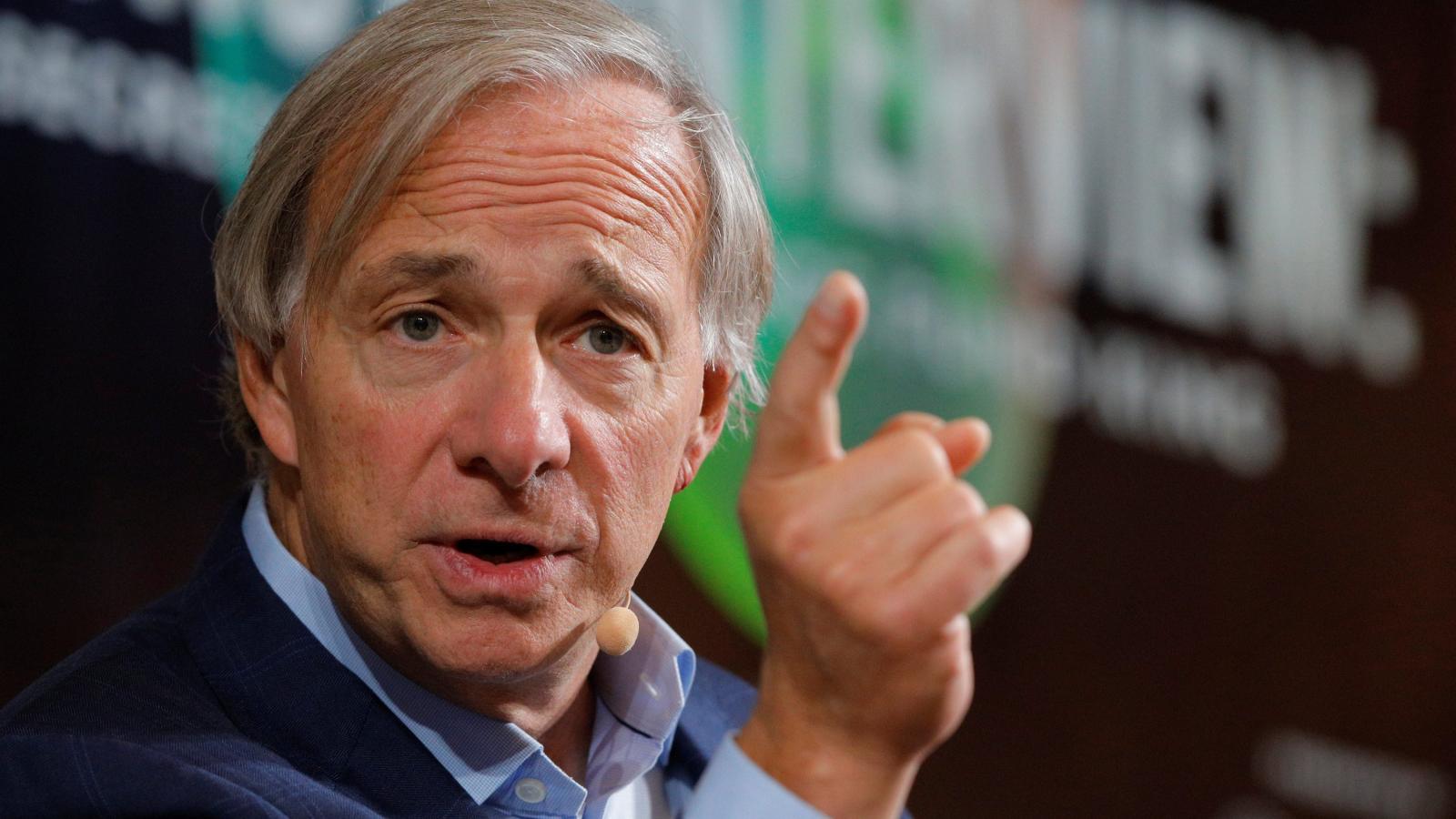
Dalio, founder of Qiaoshui Fund: Warns that the US debt crisis will arrive within three years as soon as possible. It is recommended to reduce bond holdings and increase the allocation of gold and Bitcoin

Comparing news, Dalio, founder of the Bridgewater Fund, warned that the US annual balance gap is as high as 2 trillion US dollars, and that about 10 trillion US dollars of debt needs to be refunded urgently. If the current trajectory is not changed, the debt crisis “within three years, with an error of up and down” of two years, may arrive. In terms of asset allocation, Dalio suggests investors reduce their bond holdings to avoid debt risks; increase their holdings to 10% to 15% of the portfolio by allocating additional gold; and hold a small amount of Bitcoin to hedge against government credit risk. Dalio also called on the US to reduce the budget deficit from the current level of about 6% of GDP to 3%, including by cutting spending, increasing taxes, and lowering interest rates. Affected by these remarks, the price of gold rose to its highest level since May on Friday, and Bitcoin surpassed $77,000, the biggest weekly increase since 2023.

13h ago

Anthropic's valuation targets $2 trillion, funding may exceed $100 billion

Comparing the news, according to the “New York Times”, two people familiar with the matter revealed that Anthropic recently stated during discussions with potential investors that the San Francisco-based company may seek to raise more than 100 billion US dollars in an initial public offering. According to people familiar with the matter, the offering could also raise the company's valuation to $2 trillion. If successful, Anthropic, which is only five years old, will set the record for the largest public offering in history, surpassing the record set by Musk's SpaceX in June this year — the latter was valued at $1.77 trillion when it went public and raised $85.7 billion. It would also be a major leap forward for Anthropic. The company reached a valuation of $900 billion in a private funding round this year and submitted a listing application in June.

13h ago
Dalio's latest warning: the US debt crisis may explode within three years. The antidote is...

Dalio's latest warning: the US debt crisis may explode within three years. The antidote is...

Author: Ray Dalio, founder of Qiaoshui Foundation Original title: How Countries Go Broke: The Dynamic Behind What is Incurable Now Compiled and organized by: bitPushNews In “How Countries Go Bankrupt: The Big Cycle,” I detailed an analytical framework to describe dynamic processes that are highly likely to occur due to unsustainable imbalances between debt supply and demand. Recently, three things happened at the same time: 1) The Japanese government sold part of its US Treasury holdings to return capital to Japan to support the yen and the Japanese capital market, and reduce exposure to US Treasury bonds while avoiding being forced to raise interest rates beyond its wishes in order to support the yen; 2) US bond yields hit new highs under long-term leadership, while the dollar weakened. The reasons include not only the current and anticipated supply of huge debt, but also weak demand for US bonds; 3) Treasury Secretary Bessent announced this week that the US Treasury would buy US Treasury bonds and be able to buy other US Treasury bonds The amount of capital used is limited, and many people ask me : Do these events fit the classic template I set out in my book? The answer is yes. To anticipate what might happen next, let's first review this operating mechanism. The operating mechanism explains in detail that the central government's debt dynamics are the same principles as the debt dynamics of individuals or companies. The only difference is that the central government has a central bank that can print money (this will depreciate the currency), and it can obtain funds from the public through taxation. Because of this, if you imagine how the debt dynamic would work if you or the business you run could print money, or get capital from people through taxation — then you can understand this process. But remember, your goal is for the entire system to work well, not only for yourself, but for all citizens. In my opinion, the credit/market system is like the human body's circulatory system, delivering nutrients to every corner that makes up the market and economy. If credit is used effectively, it can generate productivity and income to repay debt and interest on debt, which is a healthy state of affairs. However, if credit is not properly used to generate sufficient income to repay debts and interest, debt payments will continue to pile up like plaques in blood vessels, squeezing other expenses. When debt payments become very large, debt repayment problems arise, and eventually evolve into debt rollover problems — because debt holders are unwilling to continue to roll over and instead want to sell. Naturally, this will lead to a shortage of demand and sell-off of debt instruments such as bonds; when demand is scarce relative to supply, it either causes a) interest rates to rise, thereby suppressing the market and economic downturn, or b) the central bank “prints money” and buys debt, which will reduce the value of the currency, thereby driving up inflation (compared to the original level). Banknote printing also artificially lowers interest rates and harms lenders' returns. Both options are bad. When debt sell-offs are too large and difficult to contain, and the central bank has already purchased large amounts of debt, rising interest rates can cause the central bank to lose money and damage its cash flow. If this continues, the central bank will fall into a situation where net assets are negative. When this situation became serious, the central government and central bank needed to borrow money to repay the principal and interest of the debt, while the central bank printed money to provide loans due to insufficient free market demand, so a self-reinforcing spiral between debt/banknote printing/inflation formed. In summary, the classic indicators to pay attention to are the following: the ratio of government debt payments to government revenue (which is like the amount of plaque in the circulatory system), the ratio of government debt sold to the demand for government debt (this is like a plaque falling off and causing a heart attack), and the amount of government debt purchased by the central bank to cover the gap between the demand for government debt and the supply of government debt to be sold (this is like the central bank applying a larger dose of liquidity/credit to mitigate liquidity shortages, and the central bank has a risk appetite for these debts). These indicators usually rise over a long cycle of decades — debt and debt payments continue to grow in relation to income — until this state of affairs cannot continue because: 1) debt repayment expenses unacceptably crowd out other expenses, 2) the supply of debt that must be purchased is too large, causing interest rates to rise sharply, leading to a sharp decline in the market and economy, or 3) central banks are unwilling to let interest rates rise and suffer bad market/economic consequences, so they print large amounts of money and buy large amounts of government debt to cover the demand gap, thereby making the value of the currency significant Decreased. Either way, the return on bonds will be poor until the money and debt eventually become cheap enough to attract demand, or the government can cheaply buy back or repay...

18h agoBitpushNews#indebtedness #Bitcoin #economic crisis #US debt #DALIO #gold