
证券时报 · 115
150.8 yuan/share! Yushu IPOs: Another batch of post-90s, collective wealth is free

150.8 yuan/share! Yushu IPOs: Another batch of post-90s, collective wealth is free

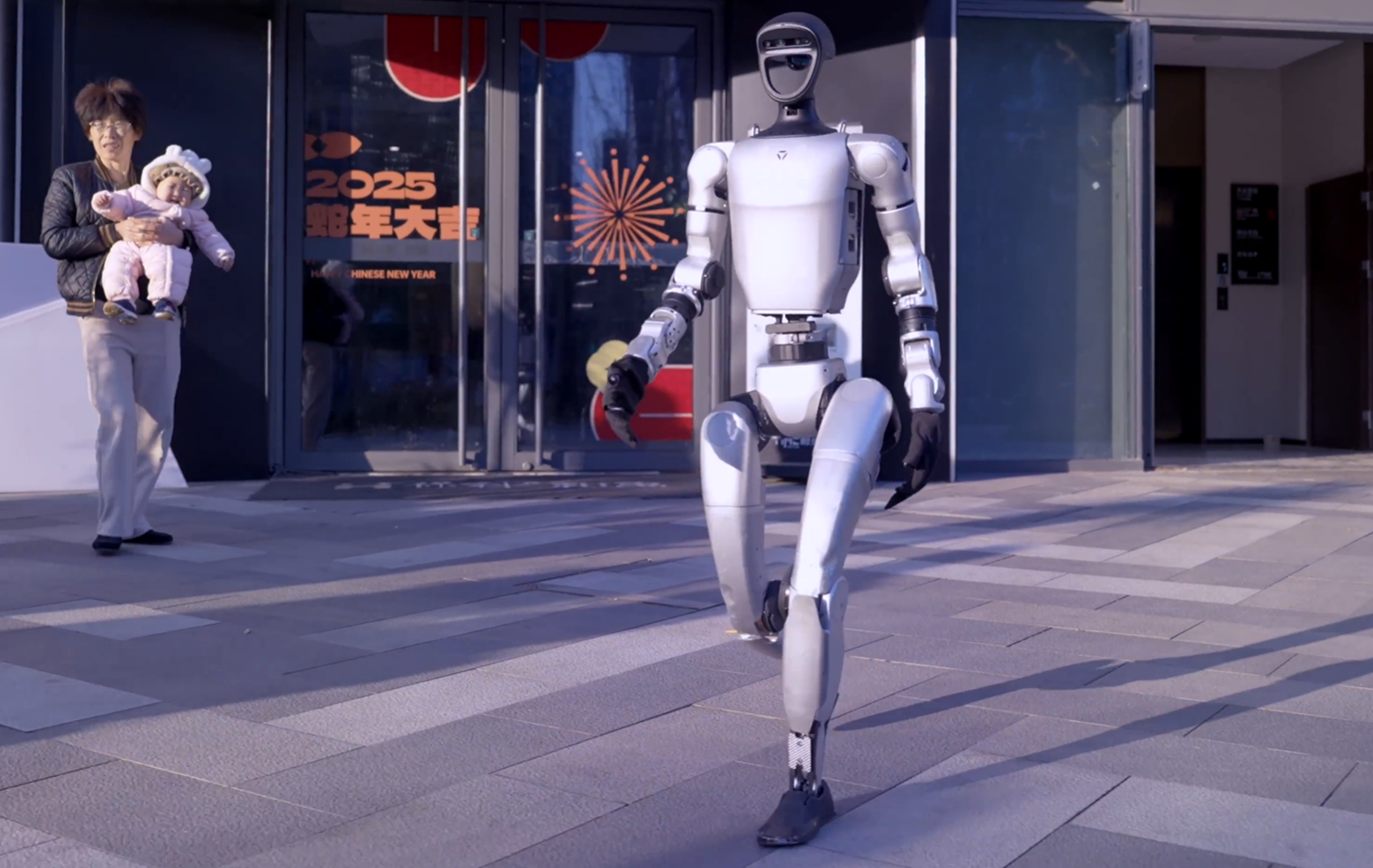
Source | Phoenix News Finance “Company Research Institute” Original title | 150.8 yuan/share! Yushu Technology's early employees surged 150 times more, and a group of post-90s millionaires may soon launch the subscription for Yushu Technology, the “first stock in humanoid robots,” and an A-share “first share in humanoid robots”. Just now, Yushu Technology announced its initial public offering of shares and listing on the Science and Technology Innovation Board on the Shanghai Stock Exchange website. The issue price is 150.80 yuan/share, and the total amount of capital raised is estimated to be about 6.099 billion yuan. After deducting the issuance fee, the net amount of capital raised is estimated to be about 5.917 billion yuan. The announcement also made it clear that online and offline subscriptions will begin on August 10, 2026 (T-day). As a major annual IPO in the field of high-end equipment on the Science and Technology Innovation Board, Yushu Technology broke through the four-legged robot circuit in ten years and achieved the number one shipment volume for humanoid robots in the world, illustrating the typical path of hard technology companies from technological breakthroughs to commercialization. If this launch is successfully implemented, founder Wang Xingxing, 44 strategic investment institutions, and 171 core employees will share the capital dividends of embodying the smart wave. 01 Wang Xingxing's net worth is expected to exceed 36 billion dollars, and the groundwork will be laid for the birth of a group of post-90s millionaire Yu Shu employees to become rich. It was already laid down as early as 2017. Back then, the company was still attacking four-legged robotics technology, and signed the first batch of option agreements with 17 first-generation core employees including Yang Zhiyu in September. The exercise price was only 1 yuan/share. Over the next few years, the company introduced multiple rounds of equity incentive programs, and eventually all of them were integrated into the management of the “Shanghai Yuyi” shareholding platform system. Standing at the current IPO node, it is estimated at an issue price of only 150.8 yuan/share. This group of core employees who first chose to share risks with the company had a book profit of more than 150 times. In addition, according to the prospectus, Yushu Technology's current IPO passed two asset management plans, allowing 171 employees to directly subscribe for new shares at the issue price to participate in the strategic placement, with a total subscription of 271.5 billion yuan, for a maximum period of 3 years. Among them, Asset Management Plan No. 1 targets a wider range of core employees. A total of 161 people participated, raised 218.5 million yuan, and was locked in for 12 months. Financial director Wang Feng and board secretary Fu Fenghua each subscribed for 7 million yuan. They are the two largest investors in this plan. A large number of technical executives and business leaders concentrated their subscription amounts between 1 million yuan and 3.5 million yuan. Only 10 executives and core employees participated in the No. 2 Asset Management Plan, raising 53 million yuan, and the lockdown period lasted 36 months. As the founder, Wang Xingxing alone subscribed for 15 million yuan. He is the person who invested the most in this plan. The other three R&D system leaders Zhang Yangguang, Yang Zhiyu, and Wu Jinze each invested 9 million yuan. The picture shows Wang Xingxing's voting power situation source: Internet Wang Xingxing himself has long held firm control of the company through special voting rights. In theory, there is no need to pay out of his own pocket to subscribe for new shares. This subscription is more like showing the market an attitude of optimism about the company's long-term development. Picture of Zhang Yangguang Source: Internet What is more remarkable is that the executives of Yushu Technology are a very representative post-90s startup team. Founder Wang Xingxing (1990), R&D Software Director Zhang Yangguang (1993), R&D Structure Director Yang Zhiyu (1991), and Sales Director Chen Li (1990) are all post-90s. The picture shows the top ten shareholders before the issuance: Before the online issuance, in addition to directly holding 23.82% of Yushu's shares, Wang Xingxing also held 9.54% of shares indirectly through Shanghai Yuyi, and his total personal shareholding was about 33.36%. Based on the 150.8 yuan/share issue price alone, Wang Xingxing's shareholding value was about 20.3 billion yuan. However, according to CCB International's research report, Yushu's target price for listing in 2026 corresponds to a market value of about 109 billion yuan, which is equivalent to about 1.8 times the issue price. According to this optimistic forecast, only 6 core employees with subscription amounts of 5 million yuan or more will have a chance to join the “Multi-Millionaire Club,” and Wang Xingxing's own shareholding value will also soar to 36 billion yuan. In addition to employees, the old shareholder camp is also star-studded. Industrial capital and the national team gathered together to bet on an intelligent future. The picture shows the Meituan investment situation. In terms of online industry capital, Meituan holds a total of 9.65% of the shares through Hanhai Information, GalaxyZ, and Chengdu Dragon Ball, making it the largest institutional investor. In the last round of financing in June 2025, industrial capital such as Tencent Technology, China Mobile and Innovation, and Wuxi Jinqiu entered the market collectively. The capital increase price was about 46.26 yuan/share, corresponding to a post-investment valuation of 12.7 billion yuan, which also provided a market-based anchor for this IPO pricing. The picture shows the director of Wolong Electric Drive replying to investor news Source: In terms of network supply chain partners, A-share listed company Wolong Electric Drive...

16d agoWendy#AI #AI #humanoid robot #Yushu Technology #Wang Xing Xing

UBS Analyst: I Don't Think There's a Bubble in China's AI Industry

Comparing the news, Xiong Wei, a Chinese internet industry analyst at UBS Securities, said that Chinese cloud vendors are investing at a more steady pace, emphasizing ROI and sustainability, and don't think there is a bubble in China's AI industry. Meanwhile, as model capabilities continue to improve and inference demand continues to increase, investment in China's AI industry will gradually increase. (Securities Times)

29d ago

China's Ministry of Commerce: Will speed up the revision and introduction of regulations on mergers and acquisitions of domestic enterprises by foreign investors

Comparative news, according to the “Securities Times” report, Meng Huating, director of the Foreign Investment Management Department of China's Ministry of Commerce, said at a press conference that in the second half of the year, he will continue to focus on the goal of using foreign capital to stabilize and promote excellence, further shape new advantages in attracting foreign investment, and do a good job of expanding volume, stabilizing stocks, and improving quality. In terms of volume expansion, we will continue to implement a high level of opening-up to the outside world, steadily and orderly deepen open pilot projects in fields such as value-added telecommunications, biotechnology, wholly foreign-owned hospitals, and vocational skills training institutions, to support Beijing in raising the level of construction of a comprehensive national service industry demonstration zone. It will also speed up the revision and introduction of regulations on mergers and acquisitions of domestic enterprises by foreign investors.

30d ago

Baidu Group: Apply for dual major listing in Hong Kong and NASDAQ

Comparative news, according to the Securities Times, Baidu Group issued an announcement. The board of directors of the company has authorized management to promote a voluntary transition to a major listing on the main board of the Hong Kong Stock Exchange, which is expected to take effect within this year. After completing the relevant procedures, Baidu will achieve dual major listings in Hong Kong and NASDAQ. Once the dual primary listing takes effect, it will enhance the liquidity of the company's securities, expand the investor base, and provide greater flexibility to enter the two capital markets.

37d ago

Large Model Safety Assessment Benchmark Co-Construction Campaign Officially Launched

Comparative news, according to the “Securities Times” report, the National Industrial Information Security Development Research Center is building a large-scale model security evaluation benchmark, based on technical accumulation and practical experience in the field of large-scale model security assessment. It has now begun to solicit large-scale model safety assessment benchmark co-construction units to create a full-dimensional and systematic artificial intelligence security evaluation system. The big model security evaluation benchmark built this time constructs a panoramic evaluation framework around the security governance requirements in the actual application of the big model, covering the six core security dimensions of content security, value alignment, robustness and stability, fairness and unbiased, privacy protection, and real trustworthiness, forming a systematic full-link evaluation system.

40d ago

Alibaba has invested a total of about 7.6 billion yuan in Changxin Technology, making it the industry investor with the highest shareholding ratio

Comparative news, according to the Securities Times, Alibaba has invested a total of about 7.6 billion yuan in Changxin Technology, making it the industry investor with the highest shareholding ratio. According to Changxin Technology's prospectus and public information, Alibaba first took a stake in Changxin Technology in December 2021. After multiple rounds of financing dilution, the corresponding shareholding ratio for this investment was around 1%. Three and a half years later, in June 2025, Alibaba made a significant additional investment, increasing its pre-IPO shareholding ratio to about 5%, of which Alibaba Cloud Computing held 3.85% of the shares and Alibaba Network held 1.12% of the shares. As a result, Ali invested a total of about 7.6 billion yuan in Changxin. According to information, Alibaba Cloud Computing is also one of the largest single investors in the last round of capital increases before Changxin Technology went public.

44d ago

Agency: Global semiconductor device industry revenue may approach $2 trillion as early as 2027

Comparatively, according to Yole Group's latest research, the global semiconductor device industry's revenue is expected to reach 1.6 trillion US dollars in 2026, and is expected to approach 2 trillion US dollars as early as 2027. The agency believes that this growth is not a simple continuation of the traditional semiconductor cycle, but rather the result of AI infrastructure, high-bandwidth memory (HBM), advanced packaging, and data center investments jointly driving profound changes in the industrial value chain. According to the data, the top five semiconductor companies contributed more than half of the total revenue of the top 80 companies. Meanwhile, China's semiconductor industry continues to enhance its competitiveness, and the gap with European and Japanese semiconductor manufacturers is rapidly narrowing. (Securities Times)

44d ago

Meta “crashed” tech stocks? Industry insiders: Excessive computing power is a misinterpretation

Comparative news, according to the Securities Times, A-share technology stocks have plummeted, and sectors such as semiconductors, computing power hardware, and memory chips have declined significantly. Take the “Double Innovation Board” where technology stocks are piled up as an example. The GEM Index and the Science and Innovation Composite Index fell 5.71% and 5.64%, respectively. Judging from the market situation, the sharp decline in A-share technology stocks stemmed from the news that Meta was selling computing power to foreign countries, which was interpreted by the market as excessive computing power. However, many industry insiders believe that the news is a misinterpretation. Meta's sale of computing power is not the end of AI capital expenditure, but rather means that the AI infrastructure business model is mature.

51d ago

Dark Side of the Moon (Kimi): No third party is authorized to handle financing transactions, and the company is directly responsible for all financing activities

Comparing news, the AI model company Moonshot AI (Moonshot AI) issued a statement saying that there have been many cases of false financing and equity transaction information under the name Dark Side of the Moon in the market recently, and the company has discovered that some institutions and individuals are suspected of fraud. The company is directly responsible for all of its financing activities. The company has not appointed or authorized any third party agency to handle any financing transactions as financial advisors or financial advisors, including new stock transactions and old stock transfer transactions. The company emphasizes that transfers of old shares (including common shares, incentive shares, etc.) must be approved by the company's internal approval. Any old stock transaction that occurs without the company's approval is invalid, and the company will refuse any form of affirmative registration, and reserves the right to use legal means to hold the transferor liable for breach of contract. The dark side of the month also said that the company's IPO financing quota allocations are based on confirmation of actual capital payments. No advance promises or fixed amounts have been made to any institution or individual, and no agency will actively request or authorize any institution to issue asset certificates. Any act that claims to have locked in the Dark Side of the Moon's investment share, presented a so-called company seal to secure the share, or request proof of assets in the name of the company is false or fraudulent, and Dark Side of the Moon is not responsible for this. According to public information, Dark Side of the Moon was founded in early 2023 to create Kimi, an AI assistant product. The investors behind it include Ali, Sequoia, Meituan Dragon Ball, Tencent Investment, IDG Capital, and Today Capital. In the first half of 2026, the market had many dark side financing news, including the completion of about US$2 billion in financing in early May, the post-investment valuation surpassing US$20 billion, and seeking a new round of US$2 billion financing on June 8, with a valuation of US$30 billion; the company did not respond to this round of financing. (Securities Times)

53d ago
More than 10 giants collectively raised prices, and semiconductors ushered in an “era of structural price increases”

More than 10 giants collectively raised prices, and semiconductors ushered in an “era of structural price increases”

Author: Claude, Shenchao TechFlow Original title: The wave of price increases swept through the global chip industry chain in July, and the semiconductor sector of the Asian stock market continued to rise. Guide: Entering July, the global semiconductor industry chain ushered in a new round of collective price increases. More than 10 giants, including Murata, Infineon, and Texas Instruments, announced price increases of up to 40% starting July 1. On the same day, Samsung Group announced an investment plan of 10 trillion won (about 648 billion US dollars) in South Korea over the next ten years, with chip manufacturing as the core direction. The A-share semiconductor sector continued to rise today, with Galaxy Microelectronics rising and stopping 20cm. Demand for AI computing power is rewriting the pricing rules of the global semiconductor industry chain. According to various media reports such as the Securities Times and 21st Century Economic Report, starting July 1, more than 10 leading semiconductor and electronic component companies, including Infineon, Texas Instruments (TI), Murata, and Yangjie Technology, will collectively implement a new round of price increases, covering various key aspects from upstream foundry to terminal chips. Meanwhile, on June 29, Samsung Group officially announced an industrial blueprint to invest 1000 trillion won over the next 10 years at South Korea's presidential office in Cheongwadae, of which about 300 trillion won will be invested in chip manufacturing. In the A-share market, the semiconductor industry chain continued to rise today. Galaxy Microelectronics rose or stopped 20cm, and Yangjie Technology, Hongwei Technology, etc. rose more than 5%. More than 10 giants collectively raised prices in July. The core driving force of AI demand crowding out the production capacity of the entire industry chain in this round of price increases is not the traditional inventory cycle, but the structural squeeze of AI computing power demand on the global semiconductor supply chain. Infineon has issued a notice to customers to increase the prices of some products starting July 1. This is the company's second price increase in 2026. According to the Securities Times, Infineon CEO Jochen Hanebeck said during an earnings call in early May that AI data center power solutions are in high demand. Infineon's power and sensor systems division's second-fiscal quarter sales increased 26% year over year to €1.26 billion, and the company has raised its sales forecast for the 2026 fiscal year from “moderate growth” to “significant year-over-year growth.” Texas Instruments also plans to increase prices for core products such as power management ICs starting July 1. This is the company's fourth price adjustment in 2026. According to China Business Daily, in the last round of price increases of Texas Instruments on April 1, core products such as power management ICs increased 15% to 85%. TI's data center revenue in the first quarter increased by about 90% year-on-year, indicating that AI demand is spreading rapidly from GPUs to fields such as power management, server power supply systems, and high-voltage MOSFETs. In the field of passive components, Murata, the world's largest MLCC supplier, has previously initiated an overall price increase for AI servers and automotive-grade MLCCs, with an increase of 15% to 35%. According to the Shanghai Securities News, Murata holds about 70% of the market share of the global AI server MLCC. Its president, Keiju Nakajima, publicly stated in February this year that the customer order volume is double the current production capacity and “cannot be satisfied at all.” Domestic manufacturers are following up simultaneously. Power semiconductor leader Yangjie Technology announced a 10% to 15% price increase for a full range of products starting July 1, due to the continued increase in the prices of upstream chip wafers, bulk metals and packaging materials. According to a report by Pengpai, this round of price increases covered almost all IC design companies in Taiwan, and many Taiwanese IC design manufacturers such as Lianyong, Silicon Innovation, and Silicon Lijie have issued price increase notices one after another. Bernstein pointed out in the latest follow-up report that due to the triple factors of AI server power demand crowding out production capacity, price increases in upstream foundry prices, and geopolitics driving up raw materials and energy costs, this round of price increases is not an isolated case, but a cyclical resonance throughout the industry. Samsung's 648 billion US dollars is the “biggest investment in history,” and chip manufacturing accounts for the core. At a time when the wave of price increases in the industrial chain is spreading rapidly, Samsung Group, the world's largest memory chip manufacturer, officially announced an investment plan that set a record in Korean corporate history at Cheongwadae on June 29. The Samsung Group will invest more than 1000 trillion won (about 648 billion US dollars) in South Korea over the next ten years, which is equivalent to half of South Korea's GDP, as reported by the Financial Association, citing South Korea's “Mainichi Keizai Shimbun”. South Korea's President Lee Jae-myung presided over the “Korea Big Leap Forward National Report Meeting”. Samsung Electronics Vice Chairman Jeon Young-hyeon, SK Hynix CEO Guo Luzheng, and other companies...

54d agoburnking#semiconductors #stock market