


150.8 yuan/share! Yushu IPOs: Another batch of post-90s, collective wealth is free
Source | Phoenix Finance “Company Research Institute”
Original title | 150.8 yuan/share! Yushu Technology's early employees surged 150 times more, and a group of post-90s millionaires may be born
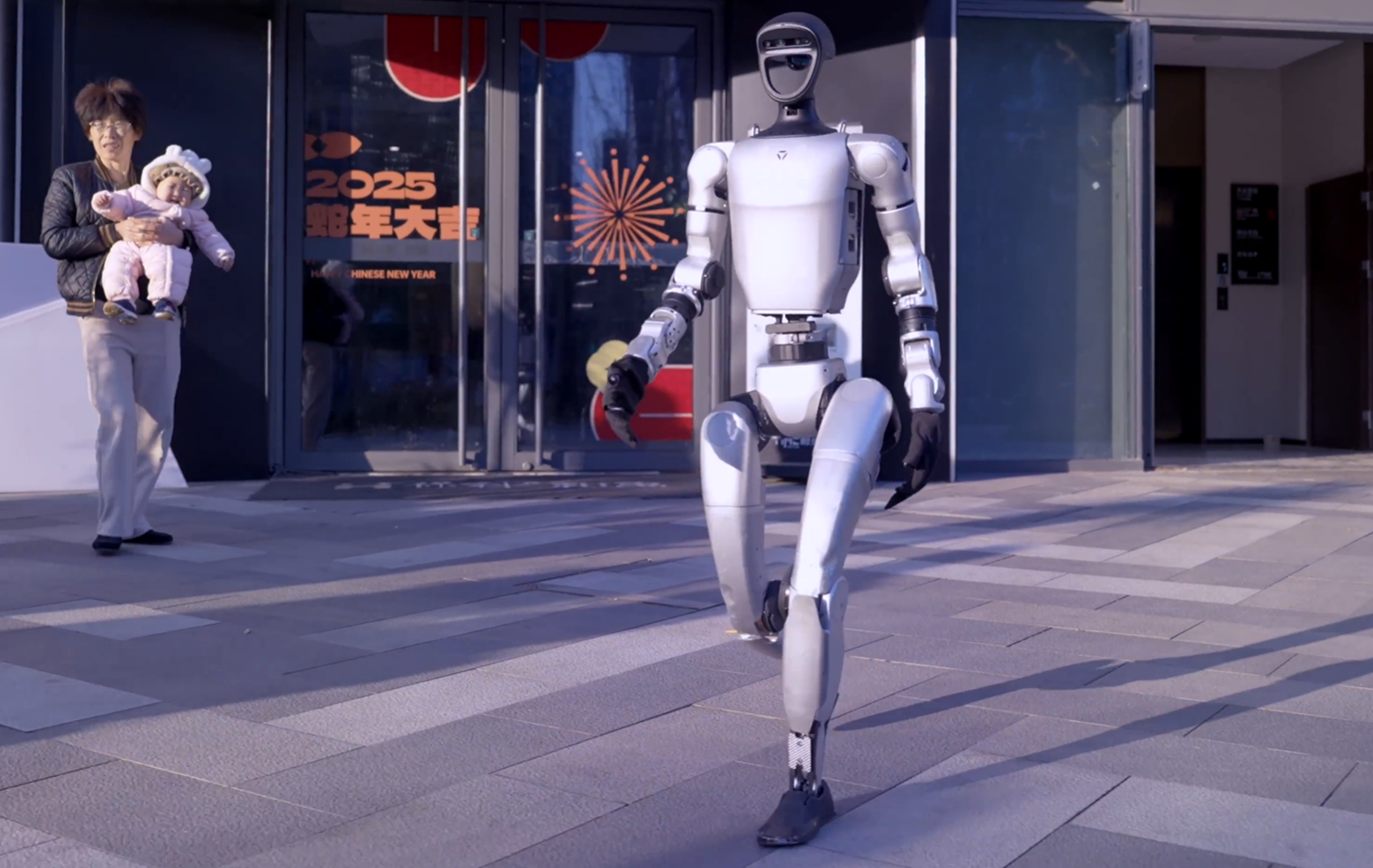
The subscription for A-share “the first stock of humanoid robots” Yushu Technology will soon open.
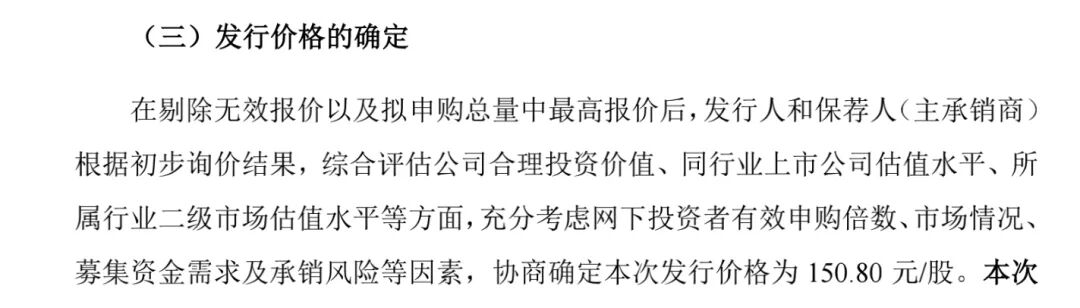
Just now, Yushu Technology announced its initial public offering of shares and listing on the Science and Technology Innovation Board on the Shanghai Stock Exchange website. The issue price is 150.80 yuan/share, and the total amount of capital raised is estimated to be about 6.099 billion yuan. After deducting the issuance fee, the net amount of capital raised is estimated to be about 5.917 billion yuan.
The announcement also made it clear that online and offline subscriptions will begin on August 10, 2026 (T-day).
As a major annual IPO in the field of high-end equipment on the Science and Technology Innovation Board, Yushu Technology broke through the four-legged robot circuit in ten years and achieved the number one shipment volume for humanoid robots in the world, illustrating the typical path of hard technology companies from technological breakthroughs to commercialization.
If this launch is successfully implemented, founder Wang Xingxing, 44 strategic investment institutions, and 171 core employees will share the capital dividends of embodying the smart wave.
01Wang Xingxing's net worth is expected to exceed 36 billion dollars, and a group of post-90s millionaires will be born
The groundwork for Yuuki's employees to become rich was laid as early as 2017.
Back then, the company was still attacking four-legged robotics technology, and signed the first batch of option agreements with 17 first-generation core employees including Yang Zhiyu in September. The exercise price was only 1 yuan/share.
Over the next few years, the company introduced multiple rounds of equity incentive programs, and eventually all of them were integrated into the management of the “Shanghai Yuyi” shareholding platform system.
Standing at the current IPO node, it is estimated at an issue price of only 150.8 yuan/share. This group of core employees who first chose to share risks with the company had a book profit of more than 150 times.
In addition, according to the prospectus, Yushu Technology's current IPO passed two asset management plans, allowing 171 employees to directly subscribe for new shares at the issue price to participate in the strategic placement, with a total subscription of 271.5 billion yuan, for a maximum period of 3 years.
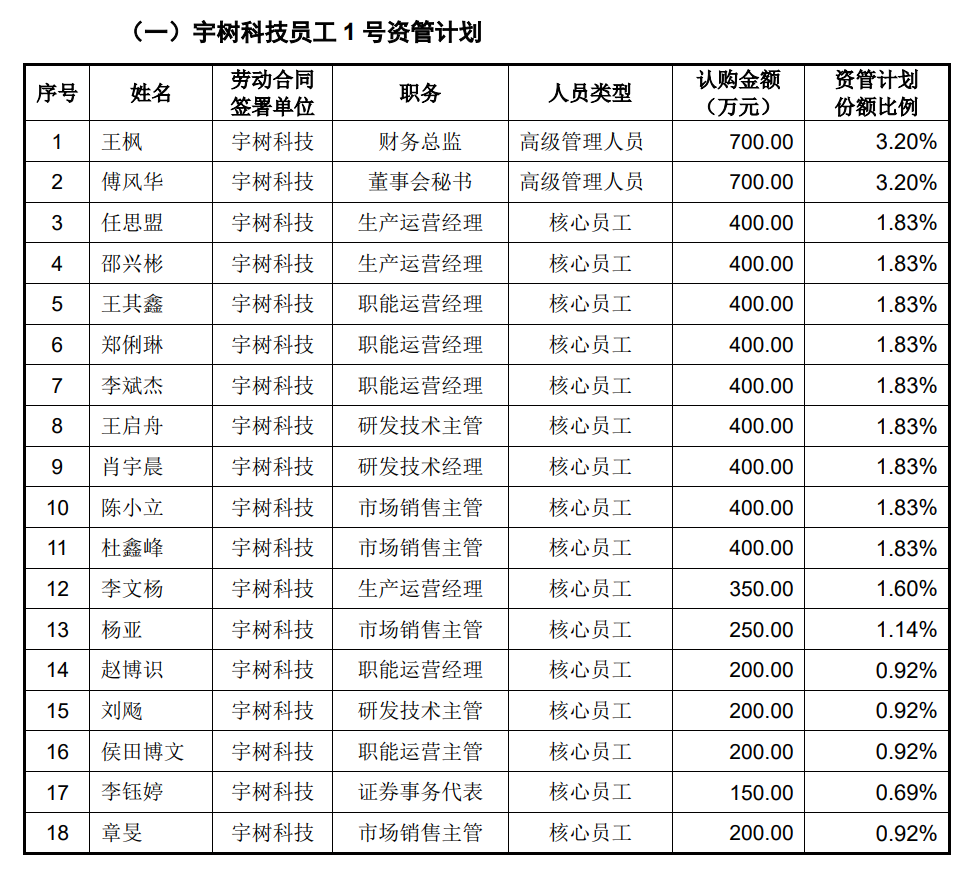
Among them, Asset Management Plan No. 1 targets a wider range of core employees. A total of 161 people participated, raised 218.5 million yuan, and was locked in for 12 months.
Financial director Wang Feng and board secretary Fu Fenghua each subscribed for 7 million yuan. They are the two largest investors in this plan. A large number of technical executives and business leaders concentrated their subscription amounts between 1 million yuan and 3.5 million yuan.
Only 10 executives and core employees participated in the No. 2 Asset Management Plan, raising 53 million yuan, and the lockdown period lasted 36 months.
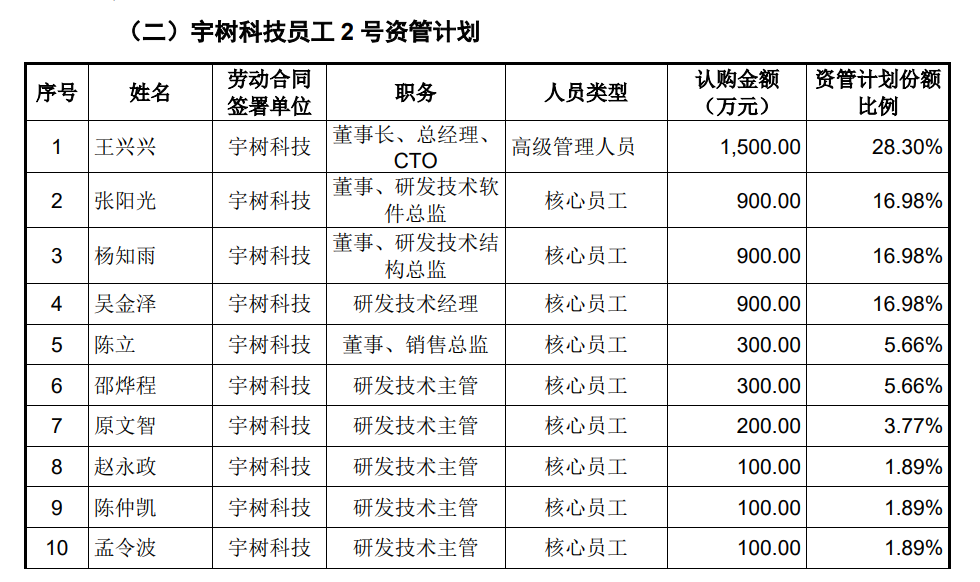
As the founder, Wang Xingxing alone subscribed for 15 million yuan. He is the person who invested the most in this plan. The other three R&D system leaders Zhang Yangguang, Yang Zhiyu, and Wu Jinze each invested 9 million yuan.
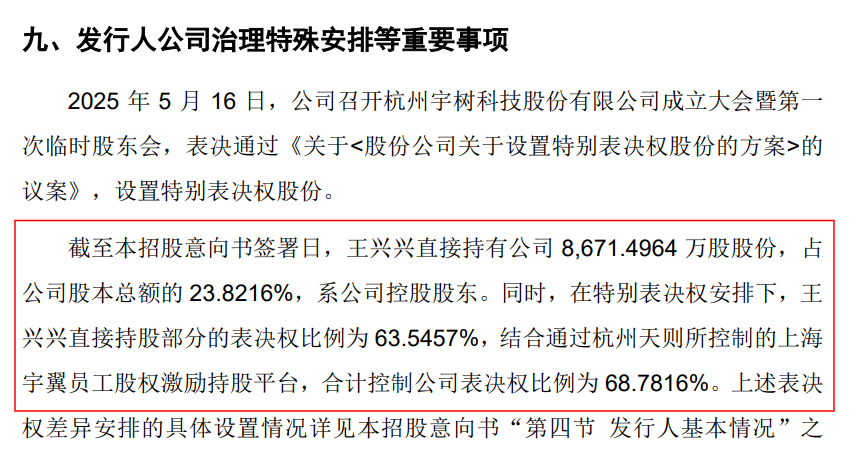
The picture shows Wang Xingxing's voting rights Source: Internet
Wang Xingxing himself has long held firm control of the company through special voting rights. Theoretically, there is no need to pay out of his own pocket to subscribe for new shares. This subscription is more like showing the market an attitude of optimism about the company's long-term development.
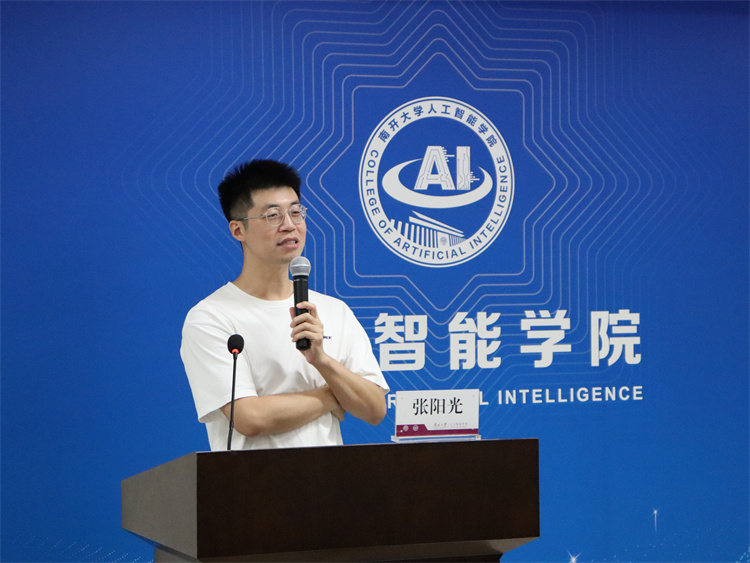
The picture shows Zhang Yangguang Source: Internet
What is more noteworthy is that the executives of Yushu Technology are a very representative post-90s startup team. Founder Wang Xingxing (1990), R&D Software Director Zhang Yangguang (1993), R&D Structure Director Yang Zhiyu (1991), and Sales Director Chen Li (1990) are all post-90s.
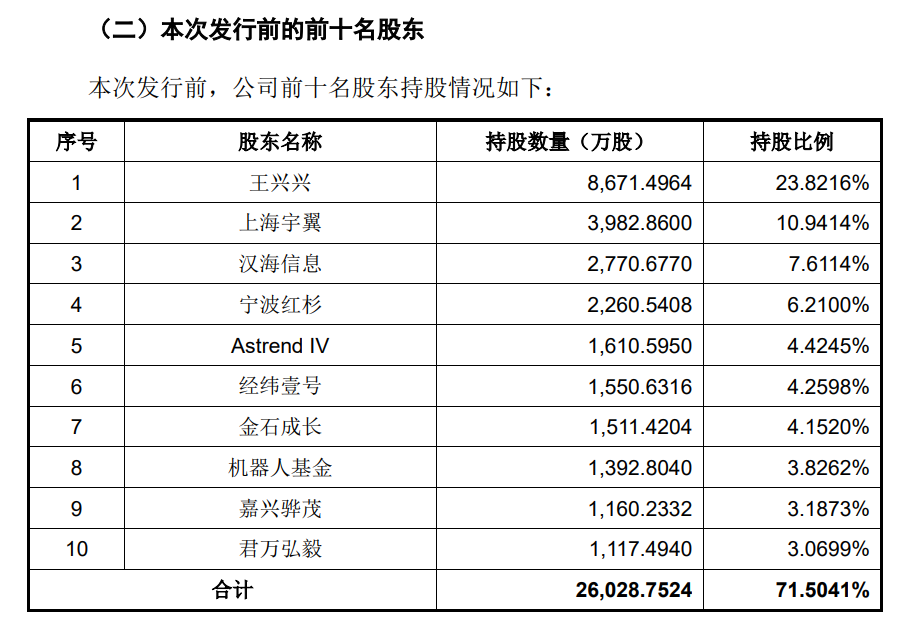
The picture shows the top ten shareholders before issuance Source: Internet
Prior to the issuance, in addition to directly holding 23.82% of Yu Shu's shares, Wang Xingxing also held 9.54% of shares indirectly through Shanghai Yuyi, and his total personal shareholding was about 33.36%. Based on the issuance price of 150.8 yuan/share alone, Wang Xingxing's shareholding value was about 20.3 billion yuan.
However, according to CCB International's research report, Yushu's target price for listing in 2026 corresponds to a market value of about 109 billion yuan, which is equivalent to about 1.8 times the issue price.
According to this optimistic forecast, only 6 core employees with subscription amounts of 5 million yuan or more will have a chance to join the “Multi-Millionaire Club,” and Wang Xingxing's own shareholding value will also soar to 36 billion yuan.
In addition to employees, the old shareholder camp is also star-studded. Industrial capital and the national team gathered together to bet on an intelligent future.
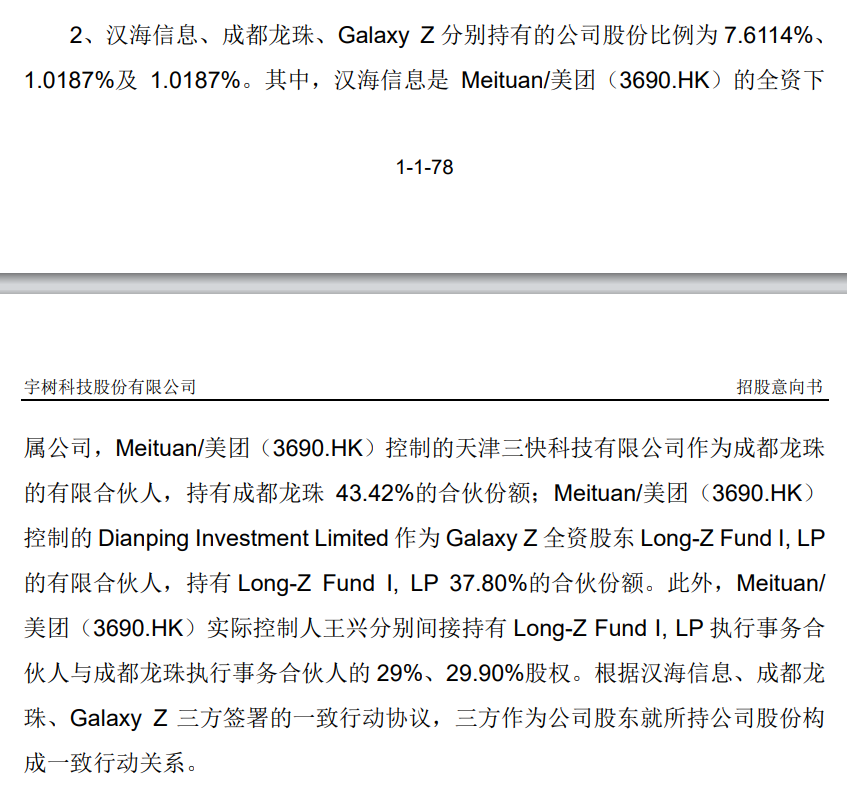
The picture shows the investment situation of Meituan Department Source: Internet
In terms of industrial capital, Meituan holds a total of 9.65% of the shares through Hanhai Information, GalaxyZ, and Chengdu Dragon Ball, making it the largest institutional investor.
In the last round of financing in June 2025, industrial capital such as Tencent Technology, China Mobile and Innovation, and Wuxi Jinqiu entered the market collectively. The capital increase price was about 46.26 yuan/share, corresponding to a post-investment valuation of 12.7 billion yuan, which also provided a market-based anchor for this IPO pricing.
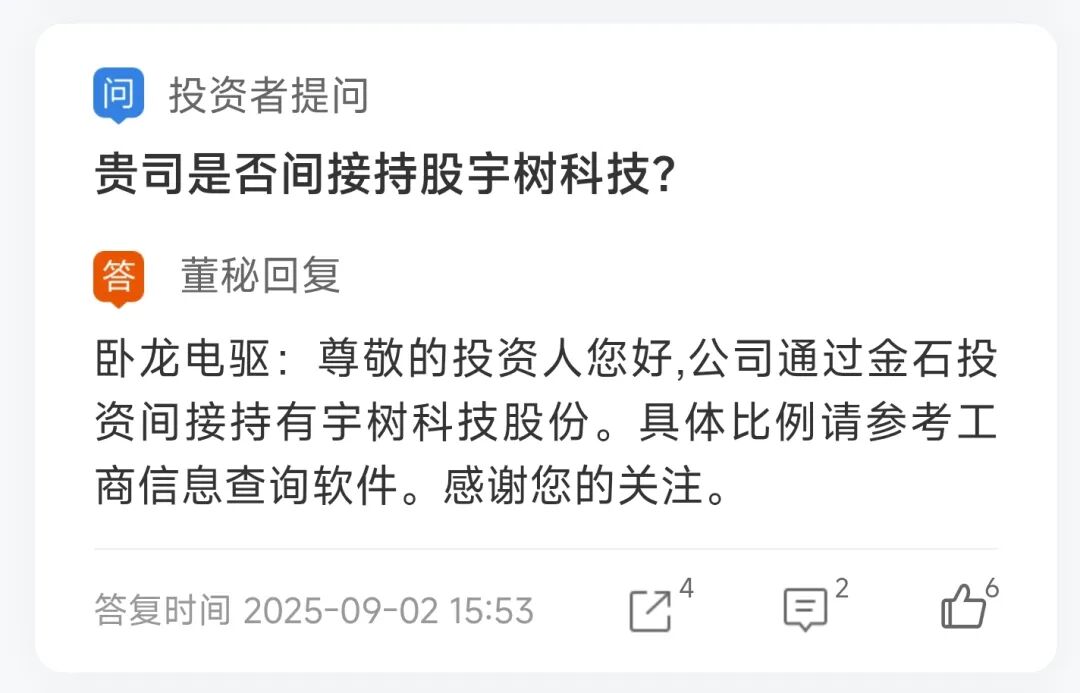
The picture shows the director of Wolong Electric Drive replying to investor news Source: Internet
In terms of supply chain partners, A-share listed companies Wolong Electric Drive (600580.SH) and Jinjin Technology (600143.SH) formed a “sharehold+business” double bond with Yushu through indirect shareholding in Jinshi Growth LP. Among them, Wolong Electric Drive is the core supplier of Yushu's frameless torque joint motors, while Golden Technology supplies PEEK lightweight materials for use in robot housings and other components.
The insurance company “kept a low profile” during this IPO process.
Although it is difficult to find any traces of insurance companies in Yushu's direct shareholder list, it can be found that, for example, Taibao Changhang Equity Investment Fund, AIA Life, and China United Pacific MetLife directly hold 1.193% of Yushu through Nanjing Jingweichuang 3.
According to incomplete statistics from the Securities Times, there are more than 20 insurance companies, including China Post Life Insurance, Ruizhong Life Insurance, and Xinhua Insurance, which indirectly hold shares in Yushu Technology through multiple channels.
There is also China Open Investment, a special fund for robotics, and the full layout of state-owned assets for science and innovation in various provinces and cities, demonstrating the strategic value of creating an intelligent circuit.
02 Start with a 200 yuan MCU
Compared to the capital story, Wang Xingxing's own experience was even more exciting.
In 2009, 19-year-old Wang Xingxing was admitted to the School of Mechanical and Automatic Control at Zhejiang University of Technology, majoring in mechatronics.
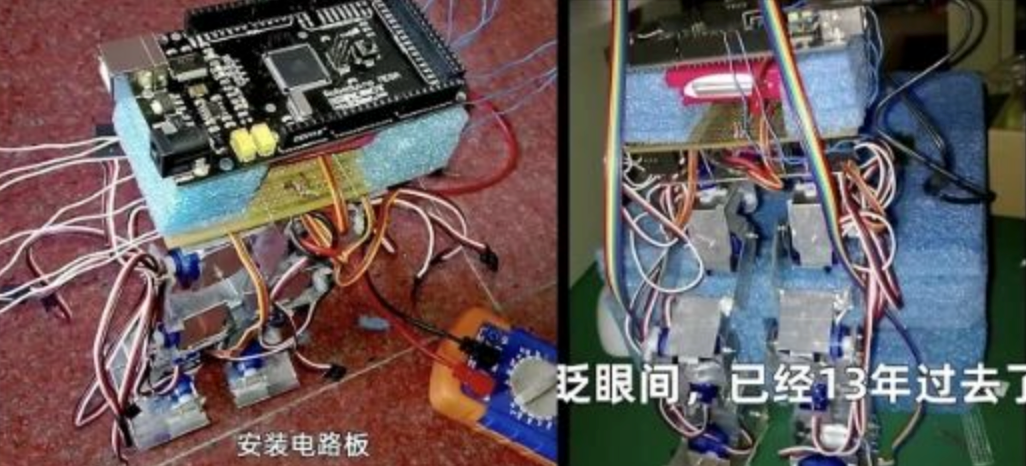
The picture shows the robot Wang Xingxing built in the early days Source: Internet
In the winter of his freshman year, he played with a MCU for the first time, drawing, cutting, and polishing parts by hand. In the end, he only spent 200 yuan to make a biped humanoid robot with 14 degrees of freedom — although he was barely able to walk two steps, this was the starting point of his “craft” with robots.
After graduating from undergraduate studies, he wanted to take the Zhejiang University exam. His grades passed, but he was transferred to Shanghai University to major in mechanical engineering because of a slight difference in English alone.
While studying, with the support of his mentor Jia Wenchuan, he received 12,000 yuan in research funding to build the four-legged robot xDog by doing the whole process himself, from the motor drive board to the complete machine structure to the motion control algorithm.
Among them, the motor drive replaced the hydraulic solution recognized by the industry at the time. This technical route was about a year earlier than Boston Dynamics unveiled a similar solution.
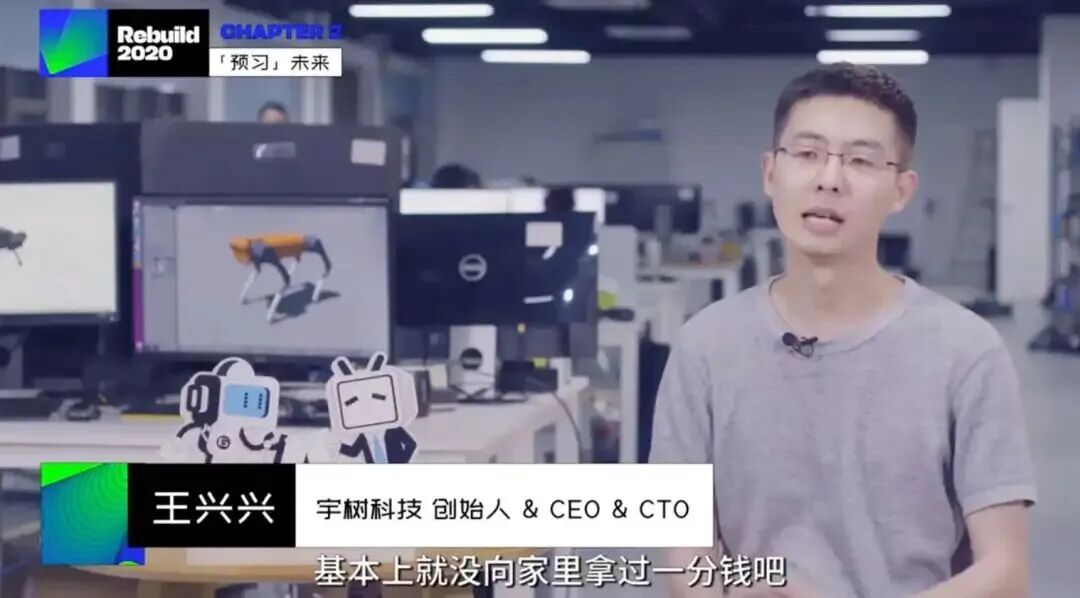
The picture shows Wang Xingxing's interview Source: Internet
xDog later won the second prize in the robot competition, with a prize of 80,000 yuan. Wang Xingxing hasn't asked his family for more than a penny since then.
After graduating from his master's degree in 2016, he joined DJI, but left after only a few months.
Because of the attention xDog has garnered online, it has already garnered the attention of many investors. He simply followed the trend and founded Yushu Technology with an angel round of financing of 2 million yuan.
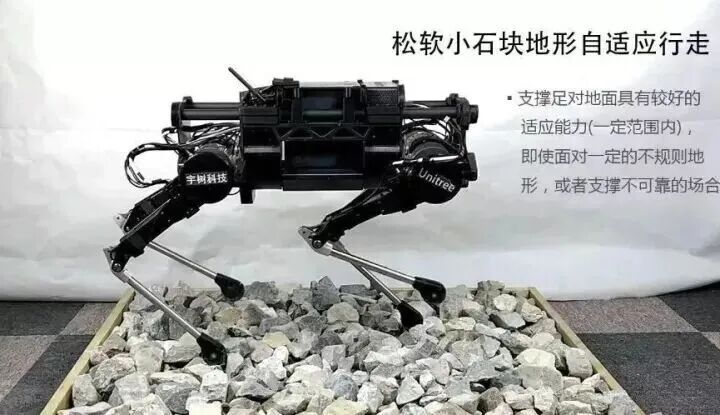
The picture shows Laikago, an early product of Yushu Technology Source: Internet
In 2017, the company released its first product, named “Laikago” (Laika Dog) — the name comes from Laika, the first Soviet space dog to enter space.
This four-legged robot, which costs about 20,000 US dollars, technically achieved full independent intellectual property rights, but the market response was lukewarm because the four-legged robot was generally regarded as an “aristocrat toy” at the time, and no one believed it could be commercialized.
The turning point came in 2021.
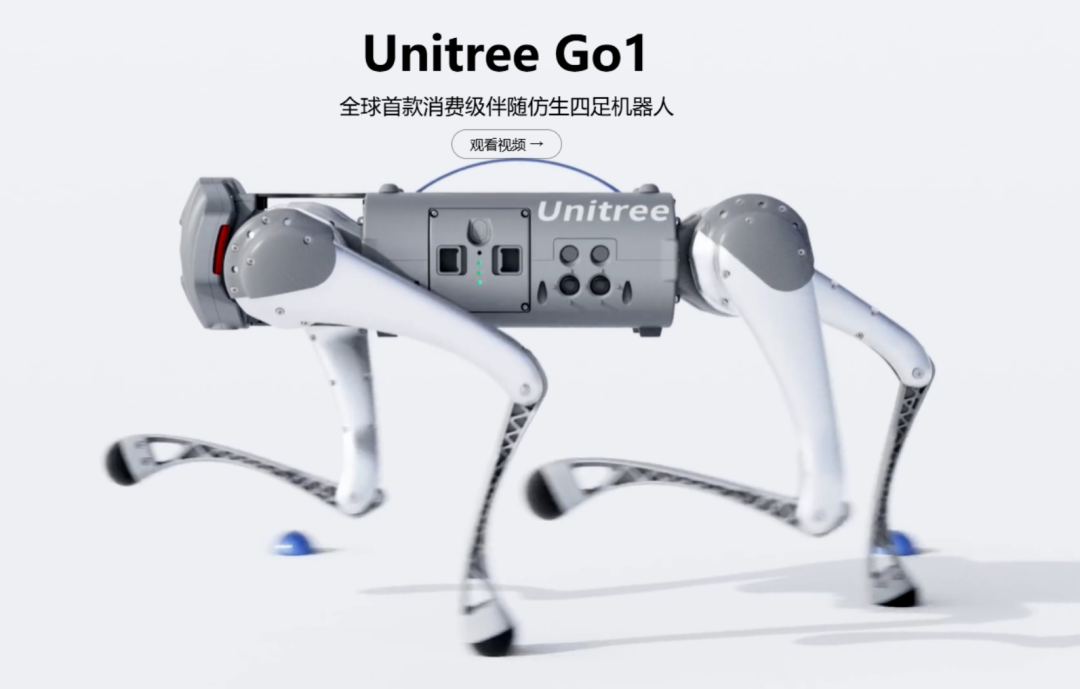
The picture shows Yushu Technology's four-legged robot Go1 Source: Internet
This year, Yu Shu did two major events. On the spring evening of February, 24 Yushu A1 performed on the same stage as the maverick “BenBen,” completing the world's first four-legged robot dynamic positioning cluster dance. Afterwards, the consumer-grade four-legged robot Go1 was released in June. The starting price was reduced to 16,000 yuan, drastically lowering the consumption threshold.
Since then, more investors have followed suit, and Yushu Technology's financing path has taken small steps along the way.
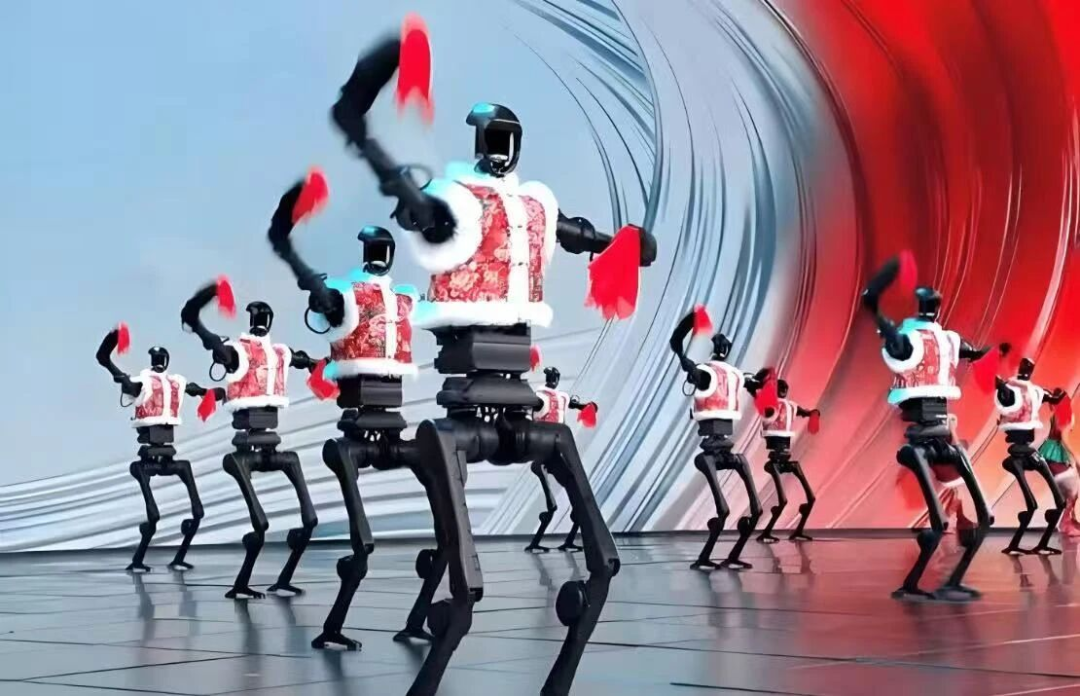
What really brought Yu Shu to the public eye was the 2025 Year of the Snake Spring Festival Gala — 16 H1 humanoid robots dressed in big flower jackets and red handkerchiefs danced on the same stage with real dancers. “Humanoid robots” became the hottest phenomenal topic at the Spring Festival Gala back then.
And the upcoming listing is by no means the end of Yushu Technology.
First, competition on high-performance general-purpose robot circuits around the world is becoming increasingly heated.
Overseas companies such as Tesla, Boston Dynamics, and FigureAI have deep pioneering experience in the field of low-level embodied intelligence frameworks. Domestic robotics tracks, as well as well-known manufacturers such as Zhiyuan Robotics and Premium Choice, continue to divide the market share.
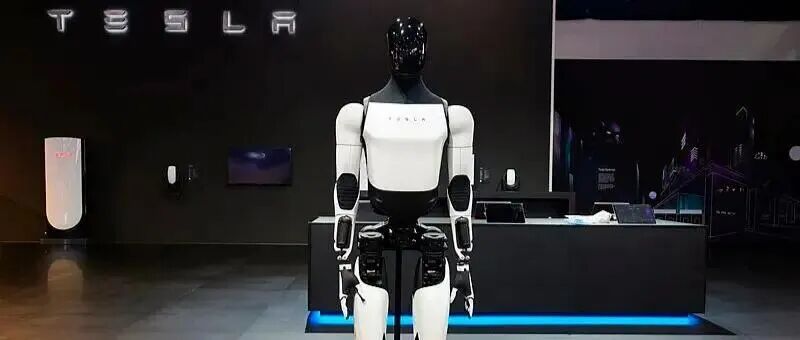
The picture shows the Tesla Optimus robot Source: Internet
Among them, Tesla is the most threatening competitor. According to the prospectus, Tesla has large-scale mass production capabilities, a mature supply chain, and the advantages of deploying its own factory, and the third-generation humanoid robot Optimus has announced the launch of small-batch trial production.
Back then, when Tesla Model 3 entered China, local electric vehicle companies followed the pace for several years. Will the humanoid robot circuit repeat this time?
Once Tesla's Optimus debuted, it brought a level of maturity beyond imagination, along with the rise in the pace of mass production of robots, the R&D window left for Yuki might not be generous.
Another risk comes from regulatory risk on the other side of the ocean.
The reason why overseas policy supervision is particularly sensitive is because Yuuki's share of overseas revenue is not low.
During the reporting period, the company's overseas main business revenue accounted for 55.63%, 55.74%, and 43.65%, respectively. Although the proportion is declining, it is still close to half.

The picture shows the FCC DA 26-786 announcement Source: Internet
On July 28 of this year, the US Federal Communications Commission (FCC) issued an announcement adding advanced robotics equipment and power inverters manufactured overseas to the “Controlled Equipment and Services List.”
Although the G1, H2, and R1 humanoid robots and Go2, B2, and A2 four-legged robots currently being sold by Yuki have all obtained FCC certification and can continue to be sold in the US according to current rules, they will not be affected for the time being; however, the prospectus also admits that subsequent newly developed models may no longer be certified to enter the US market unless specific exemptions or conditional approval are obtained.
For the robot circuit where Yushu Technology is located, the technical route for embodying intelligence is far from being defined. Large-scale commercial implementation is still being explored, and the technology iteration competition has not yet begun as vigorously as the big AI model.
Twitter:https://twitter.com/BitpushNewsCN
Compare the TG exchange group:https://t.me/BitPushCommunity
Compare TG subscriptions:https://t.me/bitpush
