
谷歌 · 3252

Korean retail investors are frantically betting on the recovery of the memory chip sector: 118.5 billion won in a single week to buy US memory ETFs

According to data from the Korea Securities Depository and Settlement Agency, Korean retail investors made net purchases of the “Roundhill Memory ETF” between August 14 and 20 this week, making it the second-largest net purchase of the country's overseas individual stocks and ETF investments (after Alphabet, Google's parent company). This ETF is an actively managed product, mainly investing in major memory chip companies such as Samsung Electronics, SK Hynix, and Micron. Recently, memory chip stocks have clearly picked up. The stock prices of SK Hynix and Samsung Electronics rose 21.6% and 21.8% respectively from August 10 to 21, both exceeding the 10.4% increase of the Korea Composite Index (KOSPI) during the same period. In the US market, Micron rose about 11% over the same period, and SanDisk increased by about 32%. South Korea's domestic ETF market also saw capital inflows. The data shows that the net inflow of the “TIGER US S&P500 ETF” tracking the S&P 500 index from August 14 to 20 was 1709 billion won, and the net inflow of the “KODEX US NASDAQ 100 ETF” tracking the NASDAQ 100 index was 132.3 billion won. Market participants believe that as expectations for the recovery of the semiconductor cycle heat up, investors are increasing their allocation to the AI chip and memory chip industry chain. (Daum) This article is sponsored by GENG, Build Your Fortune on GENG (https://geng.one)
43m agoburnking

Is it extremely popular? The crypto panic index returns to greed and is close to the highest point before the 1011 crash

Comparative news, according to Alternative data, today's cryptocurrency fear and greed index is 71 (72 yesterday), and market greed sentiment is close to the level before the 1011 crash. The index reached a high of 74 on October 5, 2025 in the past year. Note: The panic index threshold is 0-100, including indicators: volatility (25%) +market trading volume (25%) +social media popularity (15%) +market research (15%) +Bitcoin's share of the overall market (10%) +Google trending words analysis (10%). This article is sponsored by GENG, Build Your Fortune on GENG (https://geng.one)

2h agoburnking

Gemini 3.7 Flash hits the market: a week after launch, breaking growth records

Comparative News, AI News, Google CEO Sundar Pichai said that in the first week of Gemini 3.7 Flash launch, it broke the previous Gemini model growth record and became Google's fastest growing Gemini model so far. However, Google did not announce the exact scale of growth and scale of use. This model really hits the cost-effective dessert zone. Artificial Analysis gave it a comprehensive intelligence index of 56. The high inference mode output speed was about 340 token/s, each evaluation task cost about 0.40 US dollars, and it entered the Pareto frontier of intelligence and completion time. The cost of the medium inference model was further reduced to $0.26, entering the Pareto frontier of intelligence and cost. In ARC Prize's independent verification, Gemini 3.7 Flash High Inference Mode received 84.6% in ARC-AGI-2 (Abstract Reasoning Benchmark), and cost only $0.25 per task. Google also quickly introduced 3.7 Flash into its products. Gemini App, Antigravity, and AI Studio are already connected, and Google Search is starting to use this model.

5h ago

Google installs a remote control for Antigravity: the phone directly takes over the local agent

Twitter News, AI Alerts, Google launches remote control function for Antigravity 2.0. While the agent on the computer is still working, people can directly leave the desktop and continue to control it using the browser on the phone or other device. There's no need to install a separate phone app. The remote end can view running sessions, resume tasks, and check plans and products. Users can also connect to a laptop, desktop, and server at the same time and switch between different machines. The mobile terminal can also enable push, and the agent will actively alert when a round is completed or when manual confirmation is required. Google also supports connecting the server to remote control. Even without a graphical interface, you can keep running the Agent on the server and manage it remotely using a mobile phone or browser. The feature is currently being rolled out in batches, with priority given to Google AI Ultra users.

6h ago

Anthropic hires Google chip business executives to speed up the deployment of self-developed chips

According to news, Anthropic has hired Amir Salek (Amir Salek), one of the founders of Google's custom chip project under Alphabet (GOOG.O). As this artificial intelligence lab paves the way to enter the field of self-developed semiconductors, Salek joined as part of its hardware layout. Anthropic said on Friday that Salek will join the AI company's computing team. Salek was previously responsible for Google's Tensor Processor (TPU) business until he left office in 2022, and led the delivery of the first seven generations of TPU chips. Anthropic currently purchases chips from multiple vendors, including Nvidia (NVDA.O), Google, and Amazon (AMZN.O). However, the company has recently released signals that it wants to establish its own internal chip business. San Francisco-based Anthropic has begun recruiting people for this project and posting relevant positions.

10h ago
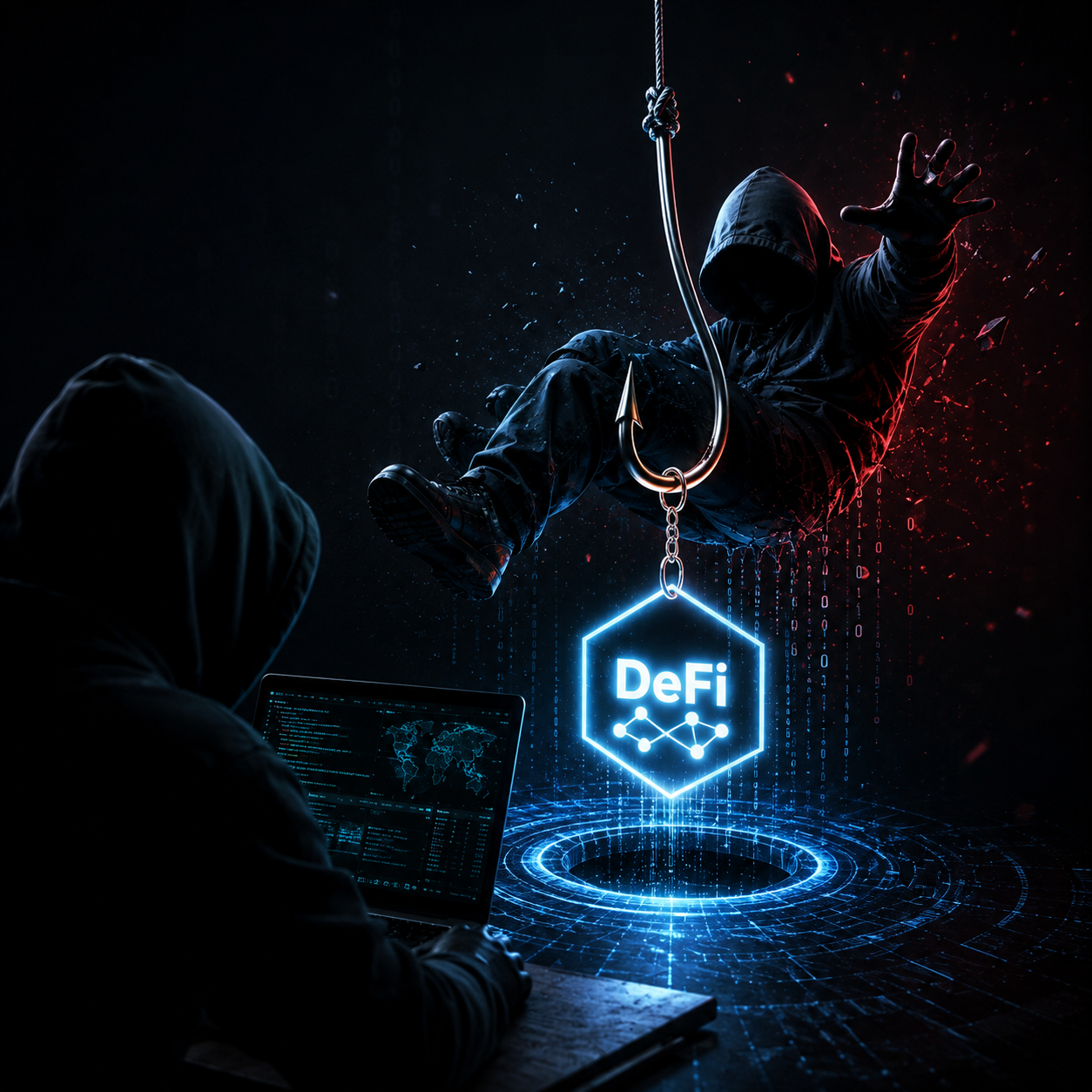
Black eats black? Fake DeFi actually snatched out North Korea's Lazarus real hacker

Black eats black? Fake DeFi actually snatched out North Korea's Lazarus real hacker

Source: Security Company ANY.RUN Compiled by: Daily Planet Daily Original title: Fishing Show of the Year, Fake DeFi Picks Out North Korea's Lazarus, Real Madrid Fans, Real Madrid Fans. With a mathematical background, they only use AI to write code. Core point of view: By setting up a fake DeFi company, the security agency successfully infiltrated the “Famous Chollima” hacker group under North Korea's Lazarus Group, revealed its complete process of using false identities, AI tools, and remote collaboration to infiltrate Western companies, and revealed its evolving toolset and infrastructure. Key element: The researchers disguised themselves as recruiters and recruited three North Korean agents within a few months to record their operation behavior, tool usage, and collaboration patterns in real time through the ANY.RUN sandbox environment. Agents used forged driver's licenses, stolen social security numbers, and mule accounts to complete the onboarding process. Some of these documents were processed by Google Gemini and had SynthID watermarks, revealing signs of forgery. Attackers rely on AI tools such as ChatGPT and Google Gemini to encode, translate, and modify files, and use AstrillVPN, remote desktop software, and dedicated servers to covertly access corporate environments. The three agents showed insufficient skills during development, frequently searched for basic issues, and exposed more proxy server and infrastructure information induced by selective network outages and captcha. The investigation found that Famous Chollima aims to lurk within the enterprise for a long time and legally obtain access to code, systems, and intellectual property rights, and is not limited to short-term attacks, and the threat persists significantly. Crypto friends who are often phished have probably heard of the North Korean hacker group Lazarus Group. Its well-known “campaigns” include, but are not limited to: Bybit ($1.5 billion) theft, Ronin Network/Axie Infinity Bridge attack ($6.2 billion), DMM Bitcoin/Ginco related attack ($308 million), Harmony Horizon Bridge attack ($100 million), and Atomic Wallet attacks ($100 million), etc. And the key to the success of these attacks is social engineering — hackers usually disguise themselves as normal job applicants, lurk at crypto companies for years, and wait for the right time. Recently, security agency ANY.RUN joined forces with BCA LTD (a company dedicated to threat intelligence and hunting) and NorthScan (a threat intelligence program to uncover the infiltration of North Korean IT workers) to effectively crack down on North Korean hacker agents. The researchers created a fake DeFi startup and successfully recruited “Famous Chollima” agents under North Korea's Lazarus Group who specialize in human infiltration, to gain an inside perspective on the actions of North Korea's IT workers. The ANY.RUN sandbox environment shows the agent's behavior patterns in real time, revealing their evolving toolsets, remote access workflows, AI tool usage, and supporting infrastructure. This survey went beyond the simple recruitment process and showed in depth how these agents collaborated, obtained, and used company resources after joining the company. The findings suggest that the North Korean IT worker program not only poses a recruitment risk; once agents sneak inside the organization, they can legally obtain access to code, systems, intellectual property, and critical business processes. The following is a report co-authored by the three parties, compiled by Daily Planet Daily. ——————Introduction In December of last year, we fully recorded the infiltration cycle of “Famous Chollima” for the first time. From recruiting collaborators to help them join Western companies, to falsifying documents, shipping laptops to intermediaries, and even using AI tools to assist and translate in real time during interviews, everything is under control. In that survey, we pretended to be a middleman willing to interview them and lend them a laptop in exchange for a percentage of their salary. The point is that those laptops are actually ANY.RUN sandbox environments that record every click and every step they take. This provided us with massive metrics, hours of computer operation videos, and face-to-face contact images, making an unprecedented survey and making headlines in many media. (“Famous Chollima...

1d agoOdaily星球日报#wallet security #hacks

Waymo, a subsidiary of Google, announced the development of its own custom chip

Comparing news, Waymo, a subsidiary of Google, has developed a custom chip to improve the performance of its driverless taxis and expand the chip supply source from third party companies such as Nvidia to self-developed channels. This application-specific integrated circuit (ASIC) chip has been mass-produced in Waymo's latest generation of unmanned taxis, and will improve the vehicle's response speed and navigation ability. Waymo said the chip has over 1000 TOPS of computing power and is manufactured using TSMC's 5 nm process.

1d ago

AI space technology company Muon Space completes $250 million Series C financing, Google and others participate

In comparison, AI space technology company Muon Space announced the completion of a $250 million Series C round, led by Eclipse Capital, Google, Salesforce Ventures, Galvanize, Wellington Management, I Squared Capital, Woven Capital, and Radical Ventures and Congruent Ventures Wait to participate. The new funding will be used to accelerate large-scale satellite constellation production, expand dual-use spacecraft platforms, enhance in-orbit artificial intelligence computing power, and provide real-time ultra-high bandwidth satellite connectivity capabilities in collaboration with SpaceX Starlink. This article is sponsored by GENG, Build Your Fortune on GENG (https://geng.one)

2d agoburnking#financing