陈榕 · 6
[Comparative Interview] Founder of Elastos: Building an Intelligent Network to Revolutionize the Future of the Internet

[Comparative Interview] Founder of Elastos: Building an Intelligent Network to Revolutionize the Future of the Internet

At the Bitcoin 2024 conference in Nashville, Tennessee, Bitui had the privilege of interviewing Chen Rong, founder of Elastos and a senior expert in the field of operating systems. An in-depth discussion of Web3, smart networking capabilities, and Elastos' innovations and latest releases. Elastos was founded in 2018. The company aims to revolutionize the Internet by combining operating systems and blockchain architectures. The L1 blockchain is designed for secure and transactional purposes, and is complemented by sidechains and L2 to run decentralized applications and enhance scalability. ELA, the native token of Elastos, can be used to pay transaction fees and staking, and enhance security through joint mining with Bitcoin. The idea behind Elastos dates back to 2000, when Chen Rong wanted to create an “Internet operating system.” Although the design and functionality slowly changed from 2000 until now, his original vision remains the same: to provide a decentralized operating system for the internet. Chen Rong said that the problem with Web3 is its lack of inclusiveness: “Web 1.0 is for everyone to read, Web 2.0 is for reading and writing, but Web 3.0 only involves cryptocurrency fanatics... Reading, writing, and owning should serve everyone.” Therefore, he called his version of the internet the Smart Web (SmartWeb). One of the main goals of intelligent networks is to create better digital rights management (DRM) for non-physical assets. Chen Rong explained, “Assuming I own a copyright, can I rent it out? Can I buy a limited-edition virtual movie? How do you guarantee that there are only 500 copies?” He pointed out that the existing online movie distribution system is too concentrated and relies on a few large companies such as Netflix and Amazon. In order to solve this problem, the Elacity project built on Elastos came into being. Currently, the project is online and provides streaming and purchasing services. The recently released BeL2 solution aims to enhance interoperability and become a “native BTC DeFi decentralized clearing network service.” Chen Rong gave an example of an intelligent online e-commerce store. The funds will only be handed over to the merchant after receiving the delivery receipt. Bel2 uses zero-knowledge proofs to allow people to use BTC to settle on DeFi without leaving the Bitcoin mainnet. Although ELA tokens have dropped 97% from their all-time high in 2018, Chen Rong's team is still doing their best to improve the product's fit with the market. From attending the Bitcoin 2024 conference to switching to Bitcoin L2, Elastos has remained relevant in the ever-expanding Bitcoin ecosystem and is seeking to establish itself as an internet operating system that can stand the test of time. Whether Elastos and BeL2 can achieve these goals is still unknown, but their ambition and drive must be confirmed. Author: BitPushNews Lincoln Murr Compiled by BitPushNews Scott LiuTwitter: https://twitter.com/BitpushNewsCN比推 TG Community: https://t.me/BitPushCommunity比推 TG Subscriptions: Btok Subscriptions: & https://t.me/bitpush比推 nbsp; https://btok360.com/bitpush...

749d agoscottliu#BeL2 #Elastos BeL2 #WEB3 #Elaiyun Elastos #Chen Rong
[Comparative character] PhD student in quantum mechanics/middle-aged entrepreneurship/wealth freedom... the slash life of Han Feng, co-founder of Yilaiyun

[Comparative character] PhD student in quantum mechanics/middle-aged entrepreneurship/wealth freedom... the slash life of Han Feng, co-founder of Yilaiyun

Han Feng, read Bo Qinghua's quantum attack, pioneered Yunzhou and later became Ai. At the end of my life, I first learned about Bitcoin and blockchain, so I preached in Kyushu and was famous all over the world. In AD 2015, investing in “Little Ant” was 700 times more profitable. When I met Chen Rong, an expert in computing, and co-created “Yilaiyun,” he was convicted in eight cases, and his reputation was ruined. However, he went back and forth, and his ambition was unswerving. Han Feng is the co-founder of Yilaiyun. Visiting researcher at Columbia University, mentor at Tsinghua University iCenter, former blockchain consultant at the Huawei Research Institute, Secretary General of the Asian DACA Blockchain Association, US Oracle Education Foundation China Project Partner, Bitcoin Foundation Lifetime VIP Member, author of the bestselling books “Blockchain: A View of Quantum Wealth” and “Blockchain: From Digital Currency to Credit Society”. My first experience in starting a business. From its peak to the bottom of the 90s of the last century, the Internet was only just emerging in China, and the trend of going out to sea and entrepreneurial culture gradually became popular. Han Feng, who is studying for a PhD in quantum mechanics in Tsinghua, also joined the wave of entrepreneurship. He founded Yunzhou, which is said to be “almost the first O2O education website in China.” His annual income in 1998 was 1/3 of New Oriental, the most popular study abroad institution at the time, and he soon earned the first pot of money in his life. Han Feng later fell into a period of confusion in his life. He was no longer able to feel the excitement of being a business. He thought he still liked to study quantum mechanics, and that Yunzhou began to go downhill continuously. In 2013, Han Feng was only able to endure the pain of reselling the company at a low price. He also owed a huge debt. At the same time, he was forced to get divorced, and had to leave the villa for his daughter and ex-wife. Han Feng once described his difficulties at the time: the standard for finding a hotel in Zhongguancun was “not to spend more than 100 yuan a day”; “I went to Tsinghua during the day to have advanced exchanges and a hotel where I slept for 100 yuan at night”; “I was hesitant to buy a high-speed rail ticket due to financial difficulties at the time.” 1. There was no way to repeat that. Liu An Huaming and Han Feng, who is almost 50 years old, went back to Tsinghua to study quantum mechanics with his mentor Zhang Li. By chance, he listened to Tsinghua alumnus Deng Di's speech on Bitcoin, which stimulated his interest in Bitcoin and blockchain. He was interested in being the best teacher. Afterwards, Han Feng began teaching himself Bitcoin knowledge online, studying Satoshi Nakamoto's Bitcoin essays, and actively participated in various lectures. Coupled with his background in quantum mechanics, he soon formed his own knowledge framework. At a party organized by Tsinghua alumni, Han Feng explained Bitcoin to everyone as the keynote speaker, which was well received. He was greatly encouraged by this. He continued to explore the underlying logic of Bitcoin and blockchain. He also asked Professor Tsinghua and cryptography expert Wang Xiaoyun about cryptography knowledge, and wrote an article based on his own understanding, making it a must-read Bitcoin introductory science article for many people. Coupled with his humble personality and his own intellectual system, Han Feng gradually became a well-known evangelist in the community. Some people were willing to pay 10,000 yuan to give him a lecture on Bitcoin and blockchain at Beijing's famous Wudaokou School of Finance; Okcoin's Xu Mingxing invited him to work as a consultant for three years; how appealing was Han Feng's speech? At one point, he taught quantum mechanics and Bitcoin at Chaos University and received more than 50,000 red envelopes in rewards from thousands of students! You need to know that Zhou Hongli, the founder of 360, which was already very successful at the time, received more than 10,000 at Chaos University. 2 These reactions made Han Feng more firm in his choice, and quantum mechanics+blockchain will definitely be widely recognized. As Han Feng's influence in the community gradually expanded, in May 2014, he registered DACA (Digital Assets Coalition Asia), the first private blockchain data asset association in Hong Kong with Liao Xiang, Yang Linke, and Hu Hongjie. Han Feng has raised 300 bitcoins for DACA, and has regularly held free DACA blockchain technology open courses for the industry, and has held blockchain lectures at nearly 100 universities in China. The year 2015 was the darkest time for the Bitcoin market after losing his money, but Han Feng still has a firm belief in Bitcoin. He bottomed out Ethereum and waited until it rose 7 times, then sold it in exchange for 200 bitcoins, and waited for the bull market to arrive. In the same year, Han Feng invested in NEO (Little Ant). The highlight of the Little Ant project is the use of blockchain to solve the equity problems of startups. Han Feng believes that this market has unlimited potential, because he knows the financing pain points of startups, so he spared no effort to promote and give speeches for Little Ant. Later, the news that Fuxing Capital wanted to invest also caused Little Ant's worth to skyrocket. Thanks to the trend of the 2017 bull market, the price of Little Ant soared from less than a dime to 65 yuan. Han Feng sold all of his coins and obtained nearly 700 times the profit...

2123d agoWendy#Yilaiyun #blockchain #Little ants #Comparative character series #Bitcoin #Tsinghua #quantum mechanics #Han Feng
What do the bosses think of Filecoin? Filecoin Mining Pre-Closed Meeting Roundtable Discussion Transcript

What do the bosses think of Filecoin? Filecoin Mining Pre-Closed Meeting Roundtable Discussion Transcript

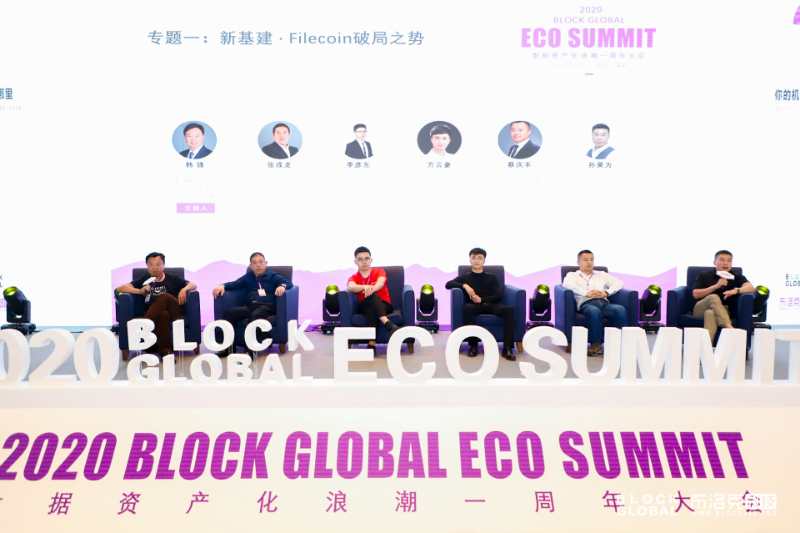
The first anniversary conference of the data capitalization wave was held in Shenzhen. The FiLDA industry alliance also joined forces such as Cloud, IPFS Power Zone, Starland, and UKEX to use core resources to create leading advantages, build a bridge between FIL and DeFi, and create a one-stop financial services alliance around Filecoin. Prior to the Filecoin Mining closed-door meeting, Han Feng, co-founder of Yilaiyun, presided over a round-table discussion organized by Bullock Finance. The following is a transcript of the discussion. Moderator: We invited our special guests, Zhang Chenglong, founder and CEO of IPFS Power Zone; Li Yandong, Chairman of Shenzhen Starland Technology Co., Ltd.; Fang Yunhao, open source mining partner; Cai Qingfeng (voice), CEO of Starsky Data (voice); and Zheng Xiping of 1024IPFS and Auto Miner. Han Feng: Today's round table is very significant because everyone knows how popular Filecoin is these days. About three days ago, Filecoin's main network went live, and one Filecoin hit 200 US dollars that night. At the time, “Guo Erbao” called me from Silicon Valley. Excitedly, they all said it was bad, saying that Filecoin's market value had already surpassed Bitcoin. Of course, this is a temporary financial phenomenon. The most fundamental thing is that Filecoin represents decentralized storage. This is why it is particularly important in the future, causing so much excitement and popularity in the global capital market. The most fundamental thing is that it can support data capitalization. Because of data capitalization, the data itself must be privatized and protected. This is Yilaiyun's Chen Rong's consistent philosophy, which is what Yilaiyun will support in the future. Therefore, the Internet of the future, the Internet that supports the capitalization of data, must have decentralized storage. In order to hurry up, there will soon be a closed-door meeting next. This is the focus of everyone's attention in the entire mining industry. Because of the price of Filecoin these days, I think everyone knows more or less that the whole roller coaster is full of clouds and rain. Various comments are flying all over the internet. Exactly at 2 o'clock, our mining bosses had a closed-door meeting, and they basically took up 50% of the computing power, so in order to hurry up, I won't let them introduce them all by themselves. I'll just introduce them; let's just talk about opinions. This is Zhang Chenglong, the founder of the famous Force Community. The industry is known as Dragon King. I really admire the Force Community. Starting in 2018, they began to pay attention to IPFS very early. This kind of decentralized storage concept still started with the community, and now it has made such a big deal, accounting for almost 20% of the entire network. On the Starland side, CEO Li Yandong also accounts for more than 20% of the computing power. Juan (voice) seems to have personally visited your company when he arrived in Shenzhen. He has shown me all the photos. He is definitely a leader in the industry. Fang Yunhao, the open source mining farm, always invested by Du Jun, is also very good in terms of technology. Cai always used to be responsible for server storage at Huawei. He was a senior figure. He was later selected by the listed company Yiyatong. Now he is working on a Star Palace data and is also mining Filecoin, and it started very well. 1024 was invested by Block Finance. I heard that it is also quite famous in the industry, ranking in the top three in a space race. Basically, they are all representative figures of the Chinese mining industry. The first question, of course, is that you have been cooperating with the Filecoin Official Agreement Laboratory for almost two years. What kind of problems have arisen in Filecoin's overall economic model, including what problems have arisen in cooperation with them, what solutions do you think can be solved, and what are your expectations for their government? Zhang Chenglong: One is the set-up of the mechanism and the release of pre-collateral and 180-day post-mortgage. According to these rules, many miners had no place to find collateral coins in the early stages. In the past two days, everyone also paid attention. Before the main network went live, it basically exceeded 33.5 PB every day at its peak, but the computing power increased by 33.5 every day. Up to now, yesterday it grew by 1.9, less than 2. Today I looked at the entire network, which is relatively a bit more. In other words, this computing power can only reach 1/8 or 1/7 of the original situation. It mainly comes from miners not having collateral coins. Currently, the number of machines in the entire Filecoin mining circle cannot be used enough. This is a mine for current miners. Now 25% has been released, which may relatively ease the pressure on some miners. After 25% release, you may be able to increase your BP computing power every day, which will be much better. At the same time, as the circulation of coins increases, the increase in computing power is likely to be relatively stable. Next is what Teacher Han Feng said. The major domestic mining industry, including us, will have a closed-door meeting. Whether this is bad or good? I think today will have one...

2131d agoLiang#FiLda #Filecoin #IPFS #Yilaiyun
Elastos Integrates Chainlink and Releases DeFi Roadmap

Elastos Integrates Chainlink and Releases DeFi Roadmap

On September 22, 2020, following the announcement of the integration with Chainlink, a market-leading decentralized oracle service provider, Elastos developed a detailed roadmap and is working to build a DeFi-related toolkit. As a global open source project, Elastos previously held a three-year anniversary celebration to share the progress of the project with the community, and will continue to work to build a blockchain-driven, decentralized internet operating system. The Cyber Republic ETH working group is currently working with Chainlink to integrate the oracle functionality into the Elastos ETH sidechain. The Elastos ETH sidechain is an EVM compatible blockchain running on Elastos' secure network. Once integrated, it will enable DeFi dApps to access basic price points and external data required for financial functions. Beginning in August, Chainlink integrated the ELA/USD price reference data model to perform collateral checks on Elastos' upcoming cross-chain stablecoin protocol. The agreement will be used to collateral ELA and lend stablecoins pegged to the US dollar, thereby providing greater utility to ELA holders. By integrating Chainlink with the Elastos ETH sidechain, developers can build their own unique DeFi platform on top of Elastos Smartweb's fully scalable architecture. Next is the launch of a cross-chain stable link from ERC-20 to Elastos, which will enable Elastos to wrap and bring Ethereum's ERC-20 token into its own ecosystem through the ETH sidechain. Meanwhile, it is expected that in December, Elastos' ELA will be supported by Chainlink's price data reference model. Once the relevant technology integration is complete, Elastos will be an ideal platform for building and implementing products related to loans, loans, synthetic assets, asset management, and tokenization. Product ideas currently being discussed include liquidity pools, bundled stablecoins, and ELA second-tier payment network. Clarence Liu of the Elastos ETH working group said: “The inability of Ethereum to scale up has hindered innovation in DeFi. Elastos combines the best of these two fields: Ethereum's network effects, plus Elastos' secure and scalable DPoS network, and is supported by Bitcoin infrastructure through joint mining. This enables developers on Elastos to build scalable dApps that can access price sources and other data points on Ethereum, thus creating a platform where good ideas can flourish. “Elastos, founded by OS expert Chen Rong, is building the most comprehensive and interoperable open source platform in the blockchain industry. Elastos' Smartweb uses an AuxPow+DPoS hybrid consensus mechanism, which relies on Bitcoin's powerful computing power and the democratic ideals of DPoS, and is a fully decentralized internet system. At the same time, Elastos not only uses blockchain technology, but also uses peer-to-peer network communication carriers, decentralized data storage service Hive, and decentralized ID (DID) systems for all digital assets. And with sidechains like Ethereum, Elastos is not only the foundation for ensuring truly scalable decentralized applications, but also the foundation for true data ownership. As the flagship product of Elastos Smartweb, Elastos integrates the entire decentralized ecosystem into a single app. Currently, the Android version of the app has been released, and iOS and desktop systems are under development. To learn more, visit the Elastos.Info website, Elastos website, Elastos, or CR Pioneer News. If you're a developer, visit Elastos Academy, Elastos Developer, or Elastos Developers Telegram. Elastos is also actively searching for new and existing dApp projects through Cyber Republic to help early...

2159d agody zhang#Chainlink #DeFi #elastos
[Exclusive] Han Feng, co-founder of Yilaiyun: I saw the future

[Exclusive] Han Feng, co-founder of Yilaiyun: I saw the future

If you bought $1,000 in Bitcoin in 2010, it would be close to $128 million in 2017. There is no price for anything in history. Even Dutch tulips back then, the French Mississippi company bubble, and the South China Sea stock bubble in the UK could double so much at their peak. Is Bitcoin speculative in a new era or is it representative of new technology born in a new historical era? Han Feng, co-founder of Yilaiyun, has his own unique opinion on this. Han Feng joined Bitcoin in 2013 and is in the limelight of digital currency, winning the top poker cards in the cryptocurrency industry. What sets him apart is his background as a PhD in quantum mechanics. Although he has gained huge wealth by investing in Bitcoin, what he is most interested in is a life need or hobby that comes from his heart, that is, being able to have a more self-satisfied explanation for the whole world. Just why did Bitcoin appear? Why did blockchain come about? Why does Bitcoin have the current price trend? Blockchain is the new wealth Han Feng is currently a visiting scholar at Columbia University. I met him at a coffee shop in Columbia University. He wears a half-length jacket and carries a backpack. It's like studying hard in a foreign country. Because he wanted to improve his English, he insisted on using English for interviews. He compared blockchain technology to the year Columbus discovered a new continent. “We have discovered a new continent of wealth,” Han Feng said. “Its scale was unimaginable before.” why? “Because Bitcoin was the first digital asset. Blockchain technology can confirm the authenticity of personal data. You can own your own data and transfer it to others; the data becomes an asset.” Han Feng's theory is that in the Internet age, people think that data is free and has no value. But now privately designed Bitcoin has solved this problem. Data can belong to individuals and is a leap from zero to having real value. That's why Bitcoin is so valuable. In other words, Jews have successfully enabled the world to measure the value of love with diamonds, and blockchain has made it possible to measure the value of personal data. Han Feng is currently a blockchain consultant at the Huawei Central Research Institute, the secretary general of the Asian Blockchain DACA Association, and the editor-in-chief of monographs such as “Blueprint and Guide to the New Blockchain Economy” and “Blockchain: A View of Quantum Wealth”. He likes to track the value of blockchain from a historical perspective. In a conversation with Xu Xiaoping in January, Han Feng said, “I discovered that it is not technology itself; it is just that we need to stand in the context of the entire history of human economic development, financial development, and the current Internet economy to explain why the blockchain boom is emerging now, and such digital currencies, including their price and value.” Going back to its roots, Han Feng believes that for the first time in human history, Bitcoin has confirmed digital rights on the Internet. Originally, it's completely unclear who the numbers on the internet belong to. What do you rely on to confirm authority? Cryptography and private key signatures are no different from the principles of checks. You have a private key, this number belongs to you, and you have confirmed your rights, just like a real estate certificate. Second, the contract can be transferred. With blockchain for network-wide accounting, it can only be transferred once, and cannot be copied repeatedly. Since then, numbers have entered an era where they can become wealth, so the logic is simple. The biggest promise of blockchain technology is that everyone's numbers can become their own wealth. Poor Dads and Rich Dads “Poor Dads and Rich Dads” is an enduring book about how individuals accumulate wealth. The difference between poor dads and rich dads is that poor dads only use their salary to consider the present; they are consumers. Rich dads believe that wealth belongs to the future. They invest to obtain future value, and are investors. In a traditional society, there is usually a big difference between poor dads and rich dads. Many people can only earn a salary for the rest of their lives and become poor dads. Very few people can create value for the future. Han Feng believes that blockchain brings poor dads together with rich dads. The distance between consumers and investors is shrinking. “Using blockchain, consumers can obtain some data, and it may also create value for the future,” Han Feng explained using Taobao and JD as examples. There are points for Taobao purchases. These points belong to Taobao. Blockchain can be decentralized, and points can be exchanged for any currency with anyone. The condition is that these points have a limited amount, cannot be changed, and can be authorized through the blockchain. For example, JD stipulates that 10,000 points will be issued every year, so if someone saves up points when shopping at JD in the first year, the value of these points will increase a lot after 10 years. “This is what unites the Chopper Party,” Han Feng said with a smile. He discussed this process in detail in an article of the same name. The value of a stock is equal to a discount on its future cash flow. “Get the ball rolling”...

3007d agoyf2101#Comparatively exclusive
Han Feng talks with Jim Glassman, JP Morgan's chief economist

Han Feng talks with Jim Glassman, JP Morgan's chief economist

On the afternoon of March 28, Jim Glassman (hereafter G), JP Morgan's chief economist, met with Han Feng (hereinafter referred to as H), co-founder of Yilaiyun and a visiting scholar at Columbia University, at the JP Morgan Building. They discussed blockchain and digital finance. G: In China, I think it might be like this. I've always been skeptical that cryptocurrencies can compete with traditional financial payment systems because the overall idea is like this, right? At first it was about making transactions more efficiently, and blockchain technology allows you to do that. The problem is that regulators can carry out a major crackdown on this area. Just like our banks experienced, because of these regulations, bank practitioners must know what your customer's business is and who your customers are. So they're afraid to do (cryptocurrency) transactions, and we don't understand these transactions. I'm always worried about regulators: cryptocurrencies are powerful because you can avoid existing financial markets to trade, yet I've heard that regulators have this ability to crack down on the cryptocurrency system if they think these transactions involve illegal financial activity. So I was told that cryptocurrencies are under threat. For me, the real benefit of cryptocurrency isn't an effective way to pay, because we're developing blockchain technology, so financial institutions can use the basic blockchain technology to suit their work. But I think it's dangerous if you're fighting against the financing system because it's strictly regulated. Although I don't think this is true, I've always believed that the main driving force behind cryptocurrencies is Chinese investors. I don't know if it's because this is a way to obtain funds from RMB and other fiat currencies; is there such a requirement? So the Chinese government is probably very nervous about this; they don't like it. I don't know how much the Chinese government can restrain. H: Currently, I know that China may introduce some policies to raise electricity prices and thus limit Bitcoin mining activities. G: I'm guessing different cryptocurrencies have different situations, right? What is a breakthrough factor? Is that what we're talking about right now? Perhaps the central government issued announcements that prompted local governments to raise electricity prices, causing Bitcoin miners to abandon their own mining pools locally. But I know some situations. Some local governments actually like Bitcoin mining pools because it's a local economic factor: the local community can't send electricity out through power transmission lines because the cost of electricity transmission is too high, and the better option is to allow Bitcoin mining pools to exist in their regions. Other countries I know, like Canada, welcome Chinese miners because they have lots of power plants. There will be a major Bitcoin mining conference in Vancouver in May this year, which is supported by the local government. In the last century, the dollar gave up anchoring gold, and now you are the largest producer of credit resources in the global economy. After that, most of the credit resources were only controlled by the center, probably the Federal Reserve, or maybe the Central Bank of China. Some central institutions may be able to create credit resources for the global market, but there are also many problems: in China, most credit comes from the central government, and their interests are controlled by companies or organizations closely linked to the government. For example, large state-owned enterprises or real estate companies have the most abundant credit resources, while small enterprises or ordinary customers have limited credit resources. This imbalance causes China to produce many, many products but cannot digest them within the Chinese market, so they seek export. So why the US? Because the US can create most of the world's credit resources: you have dollar money printers and capital markets that can monetize the future, the US always has sufficient capital, so Chinese products are exported here. However, I predict that in the future, blockchain technology can confirm everyone's information rights, big data can become everyone's asset, and credit resources can be created from the most basic level of the market. Recently, internet companies like Facebook have always collected their customer data and then used that data to make a profit. Alibaba and WeChat in China are doing the same thing: almost every internet company in the world uses the same business model to obtain user data and then sell it. Using a private key to sign Bitcoin is the first digital asset that actually belongs to you, and it can use blockchain to exchange data. If each user's data could become their personal asset, I believe such a credit monetization system would be great. In China, we face many problems because credit resources are only created by the central government and central bank. Blockchain doesn't just come...

3035d agoyf2101
No more