降息 · 5435

Next week's macro outlook: US and Iran sanctions, Jackson Hole, PCE, and Nvidia's earnings report are coming in four major variables. The gold sword points to $4,700

Comparing news, the global market will face multiple risk events next week. The escalation of US and Iran sanctions, Federal Reserve Chairman Walsh's debut at the Jackson Hole World Central Bank Annual Meeting, the release of PCE inflation data in the US for July, and the disclosure of Nvidia's earnings report may become core variables affecting risk asset trends. This week, the sharp rise in US long-term bond yields raised market concerns. After the Treasury expanded the scale of long-term US bond repurchases, the pressure on the bond market eased somewhat, but investors are still concerned about the US fiscal deficit, inflation, and developments in the Middle East. Driven by US debt sustainability concerns, the weakening dollar, and the Treasury Department's expansion of the US bond repurchase program, spot gold surpassed 4,600 US dollars/ounce this week, rising for the third consecutive week, and hit a high of around $4,632 on Friday. Analysts believe that if gold effectively breaks through $4,600, the next target may be at $4680 or even $4,700. Next week, the US-Iran relationship will be the primary focus of the market. US Treasury Secretary Bessent said that the Trump administration will announce new sanctions against Iran on Monday. Trump previously warned that any country providing support to Iran could face economic consequences. Meanwhile, transportation activities in the Strait of Hormuz continue to be blocked, and energy supply risks are driving crude oil to rise continuously. On the Federal Reserve side, the Jackson Hole Global Central Bank Annual Meeting will be held from August 27th to 29th, and Federal Reserve Chairman Walsh will deliver his first speech on August 28. The market is concerned about whether it will release future interest rate path signals and whether it can ease recent pressure on the US bond market. Currently, the market expects that the probability that the Federal Reserve will cut interest rates in September has declined, and traders will focus on Walsh's statement on the 2% inflation target, long-term interest rate, and monetary policy framework. In terms of economic data, the US core PCE price index for July will be released next week. This is the inflation indicator that the Federal Reserve is focusing on. The market expects core PCE to rise 0.2% month-on-month. If the data is higher than expected, it may weaken expectations of interest rate cuts and put pressure on gold; if it falls short, it may further drive the rise of precious metals. In addition, revised US second-quarter GDP values, durable goods orders, consumer confidence index, and revised non-farm payroll benchmark data will also be released one after another next week. On the corporate side, Nvidia's (NVDA) earnings report will be the focus of the US stock market. Technology stocks have recently been under pressure. The Nasdaq index fell about 2% this week, and the semiconductor sector fell by more than 4%. The market will focus on Nvidia's continued investment in AI infrastructure, the progress of Rubin chips, and the state of business in China. Analysts believe that if Nvidia's performance continues to strengthen AI growth expectations, it may become an important catalyst for the S&P 500 index to hit 8,000 points; if performance or guidance falls short of expectations, it may increase the pressure on technology stocks to adjust.
4h ago
Dalio's latest warning: the US debt crisis may explode within three years. The antidote is...

Dalio's latest warning: the US debt crisis may explode within three years. The antidote is...

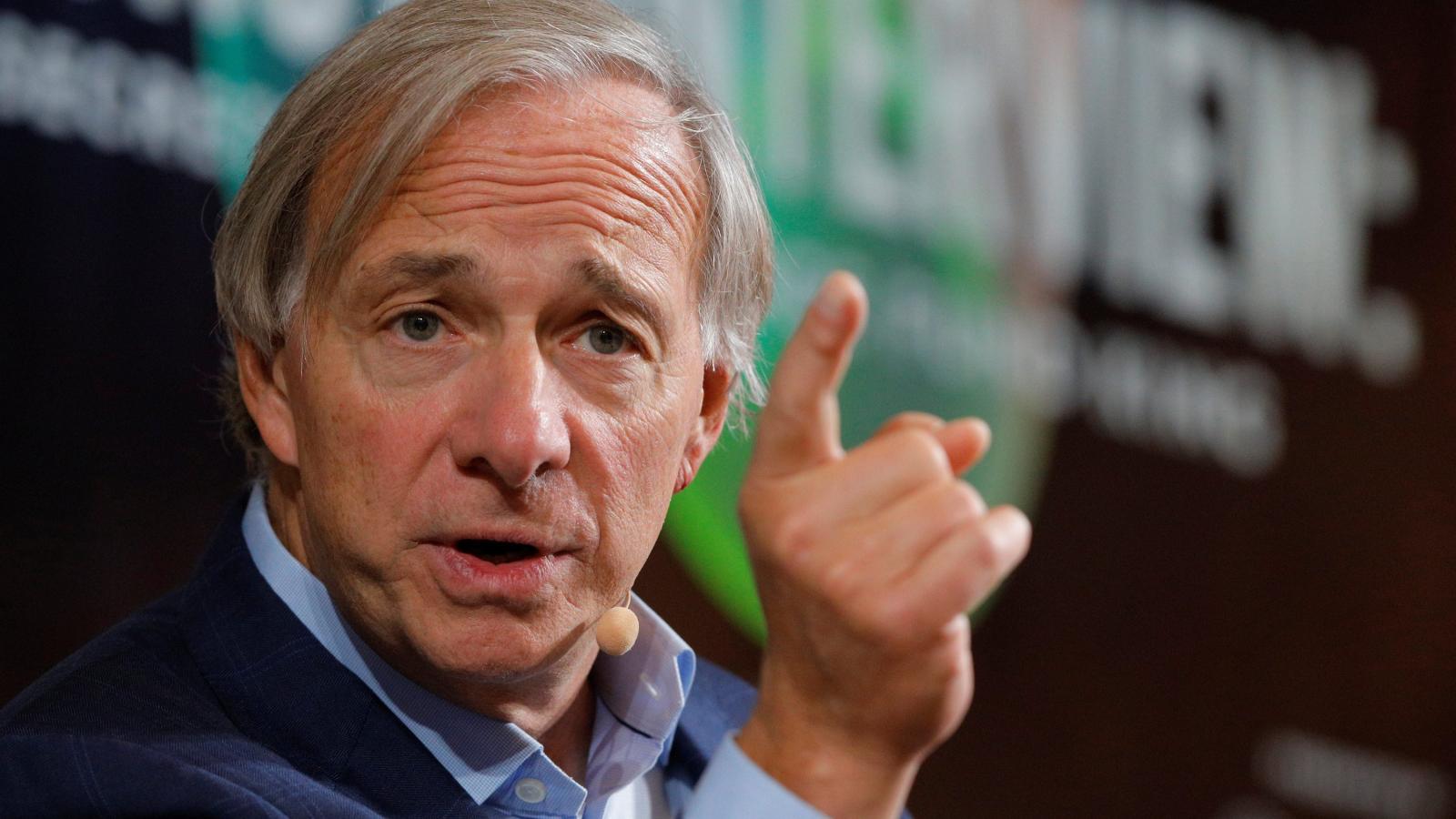
Author: Ray Dalio, founder of Qiaoshui Foundation Original title: How Countries Go Broke: The Dynamic Behind What is Incurable Now Compiled and organized by: bitPushNews In “How Countries Go Bankrupt: The Big Cycle,” I detailed an analytical framework to describe dynamic processes that are highly likely to occur due to unsustainable imbalances between debt supply and demand. Recently, three things happened at the same time: 1) The Japanese government sold part of its US Treasury holdings to return capital to Japan to support the yen and the Japanese capital market, and reduce exposure to US Treasury bonds while avoiding being forced to raise interest rates beyond its wishes in order to support the yen; 2) US bond yields hit new highs under long-term leadership, while the dollar weakened. The reasons include not only the current and anticipated supply of huge debt, but also weak demand for US bonds; 3) Treasury Secretary Bessent announced this week that the US Treasury would buy US Treasury bonds and be able to buy other US Treasury bonds The amount of capital used is limited, and many people ask me : Do these events fit the classic template I set out in my book? The answer is yes. To anticipate what might happen next, let's first review this operating mechanism. The operating mechanism explains in detail that the central government's debt dynamics are the same principles as the debt dynamics of individuals or companies. The only difference is that the central government has a central bank that can print money (this will depreciate the currency), and it can obtain funds from the public through taxation. Because of this, if you imagine how the debt dynamic would work if you or the business you run could print money, or get capital from people through taxation — then you can understand this process. But remember, your goal is for the entire system to work well, not only for yourself, but for all citizens. In my opinion, the credit/market system is like the human body's circulatory system, delivering nutrients to every corner that makes up the market and economy. If credit is used effectively, it can generate productivity and income to repay debt and interest on debt, which is a healthy state of affairs. However, if credit is not properly used to generate sufficient income to repay debts and interest, debt payments will continue to pile up like plaques in blood vessels, squeezing other expenses. When debt payments become very large, debt repayment problems arise, and eventually evolve into debt rollover problems — because debt holders are unwilling to continue to roll over and instead want to sell. Naturally, this will lead to a shortage of demand and sell-off of debt instruments such as bonds; when demand is scarce relative to supply, it either causes a) interest rates to rise, thereby suppressing the market and economic downturn, or b) the central bank “prints money” and buys debt, which will reduce the value of the currency, thereby driving up inflation (compared to the original level). Banknote printing also artificially lowers interest rates and harms lenders' returns. Both options are bad. When debt sell-offs are too large and difficult to contain, and the central bank has already purchased large amounts of debt, rising interest rates can cause the central bank to lose money and damage its cash flow. If this continues, the central bank will fall into a situation where net assets are negative. When this situation became serious, the central government and central bank needed to borrow money to repay the principal and interest of the debt, while the central bank printed money to provide loans due to insufficient free market demand, so a self-reinforcing spiral between debt/banknote printing/inflation formed. In summary, the classic indicators to pay attention to are the following: the ratio of government debt payments to government revenue (which is like the amount of plaque in the circulatory system), the ratio of government debt sold to the demand for government debt (this is like a plaque falling off and causing a heart attack), and the amount of government debt purchased by the central bank to cover the gap between the demand for government debt and the supply of government debt to be sold (this is like the central bank applying a larger dose of liquidity/credit to mitigate liquidity shortages, and the central bank has a risk appetite for these debts). These indicators usually rise over a long cycle of decades — debt and debt payments continue to grow in relation to income — until this state of affairs cannot continue because: 1) debt repayment expenses unacceptably crowd out other expenses, 2) the supply of debt that must be purchased is too large, causing interest rates to rise sharply, leading to a sharp decline in the market and economy, or 3) central banks are unwilling to let interest rates rise and suffer bad market/economic consequences, so they print large amounts of money and buy large amounts of government debt to cover the demand gap, thereby making the value of the currency significant Decreased. Either way, the return on bonds will be poor until the money and debt eventually become cheap enough to attract demand, or the government can cheaply buy back or repay...

15h agoBitpushNews#indebtedness #Bitcoin #economic crisis #US debt #DALIO #gold

The US composite PMI hit a four-year high in August, and expectations of interest rate cuts have cooled

Comparing news, on Friday, S&P Global released the latest PMI survey data. The data showed that the US composite output index rose strongly to 56.0 from 54.5 last month in August, the highest level since April 2022. This overall acceleration was driven entirely by an unexpected spike in the service sector. The initial service sector PMI recorded 56.8 in August, significantly higher than 54.6 in July, setting a new record high since December 2024. Normally, a PMI reading above 50 indicates that related economic activity is expanding. The data completely shattered Wall Street's previous cooling expectations. Economists generally expected the services PMI to fall back to 54 in August. S&P Global predicts that the current third-quarter survey data shows that the US annualized economic growth rate is approaching 3.0%. Compared to the 1.5% growth rate in the second quarter, this figure achieved a solid double jump. However, the rapid pace of the economy is still accompanied by latent risks of inflation. The latest report shows that although inflationary pressure subsided slightly in August, the growth rate of investment costs and sales prices remained high.

20h ago
Are Bitcoin's 80,000, 120,000, and 300,000 still far away?

Are Bitcoin's 80,000, 120,000, and 300,000 still far away?

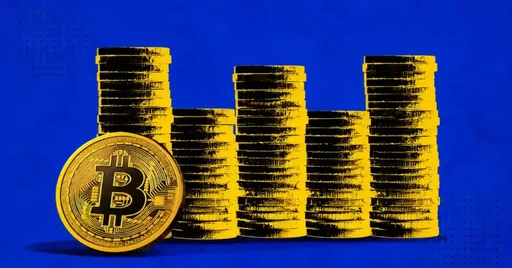
Author: Debashree Patra Compiled by: Deep Tide TechFlow Original title: Bitcoin Sword Fingers at $80,000: Analysts Predict Breaking 120,000 Next Year and Shocking 300,000 in 2030 DeepWave Guide: Bitcoin rebounds strongly from around $63,000 to $75,401, completing a 5.8 times standard deviation increase within 48 hours, driving analyst Pierre Rochard to reaffirm his bullish roadmap — hitting $80,000 in 2026 and breaking through $120,000 next year. The sword in 2030 is $300,000. In the short term, bear liquidation and downtrend line breakouts provide momentum, but whether the leverage-driven surge can be turned into continued spot demand will determine whether the larger goal is realistic. Pierre Rochard's $80,000-$300,000 roadmap analyst Pierre Rochard (BitcoinPierre) expects Bitcoin to close around $80,000 in 2026. He believes that Bitcoin is not ready for a “parabolic rise,” but it is expected to break through $120,000 next year. In the longer term, he predicted that Bitcoin could reach $300,000 by 2030. The key variables in this forecast are the Federal Reserve and the broader macro environment. Rochard believes that if the economy is weak enough to allow the Federal Reserve to cut interest rates without reigniting inflation, Bitcoin will benefit from improved liquidity. He also pointed out that artificial intelligence (AI) may improve macroeconomic prospects by increasing productivity and reducing inflation. In that situation, interest rate cuts will create a more favorable environment for risky assets such as Bitcoin. The $80,000 target refocused on Bitcoin's latest price trend has shown signs of regaining momentum. BTC climbed from around $63,000 to $75401 in less than 48 hours. Previously, buyers successfully defended in the $63,000 area. Notably, Bitcoin formed higher highs and higher lows. This round of rebound was partly fueled by large-scale short liquidations. According to reports, as Bitcoin and Ethereum soared, around $14 billion to $17 billion of short crypto positions were liquidated, removing bearish leverage. Glassnode indicated an unusual pattern of this fluctuation. They said that Bitcoin's jump from around $75,401 was a 5.8 times standard deviation (5.8 sigma) of its 30-day volatility — the biggest upward move since October 2023. The last time Bitcoin closed at such a large daily rate was in February, which was only a rebound after a sharp drop of -14% the day before. And there's no crash to bounce back this time around — this is a 5.8 times standard deviation fluctuation compared to its own 30-day volatility, the biggest upward move since October 2023. — Glassnode (@glassnode) However, liquidation alone does not confirm the existence of sustainable spot demand. On-chain analyst Onchain Insights said that Bitcoin has broken through the annual downward trend line resistance and recovered to the $70,000 range. If it continues to close above this structural resistance, it may indicate a weakening of selling pressure and further upward momentum. Another analyst also said that short positions have limited resistance until $80,000, making it an important near-term target. The BTC giant whale sells for $74,000 and $80,000. The gap between these resistances is very large. ——CW (@CW8900) On Polymarket, the probability that Bitcoin will hit $80,000 in August rose to 13%, up 9 percentage points within 6 hours. BTC would need to rise about 14% more from $71,000 to reach $80,000. Can the $120,000 be recovered? Rochard expects Bitcoin to easily break through $120,000 next year if the macro environment turns favorable. His long-term goal of $300,000 by 2030 reflects broader bullish arguments around liquidity, supply, and adoption. His opinion was also supported by SkyBridge Capital CEO Anthony Scaramucci, who expected Bitcoin to surpass $100,000. He cites the halving cycle and new supply...

22h ago深潮TechFlow#Bitcoin

Bitunix Analyst: The Ministry of Finance interferes with long-term debt, the Federal Trade Union will still prevent inflation, and BTC has risen strongly by nearly 20%

Comparing news, the US Treasury continues to stabilize the bond market by expanding long-term US bond repurchases. Treasury Secretary Bezent also stated that the size of a single repurchase may exceed 4 billion US dollars, indicating that the government's sensitivity to long-term financing costs is increasing. However, the judgment of the Board's officials on inflation did not simultaneously shift to easing. Daley believes that no evidence of an early interest rate hike is needed, but Mussalem believes that raising interest rates early may help avoid more aggressive policy tightening in the future. The Ministry of Finance wants to reduce long-term yield, and the Federal Reserve must prevent excessive easing of financial conditions. The policy tension between the two is rising. What is more noteworthy is that the decline in interest rates brought about by the repurchase of US bonds did not continue, and the long-term yield soon rose again, reflecting that the real transactions in the market were still 40 trillion US dollars of debt, about 6% fiscal deficit, huge government financing requirements and term premiums, rather than a single repurchase policy. As a result, the Treasury's actions can improve short-term liquidity and market sentiment, but it is difficult to change the structural pressure on America's long-term debt supply alone. This policy environment is also being reflected in the dollar and asset prices. Citi lowered its US dollar forecast, believing that the Fed would turn to pigeons and that the repurchase of US bonds would put pressure on the US dollar; against the backdrop of a weak dollar, gold continued to strengthen, while BTC had accumulated a cumulative increase of about 19.9% since Monday, rising to around $75,400, and the 24-hour short position reached 1.08 billion US dollars, creating a clear bearish squeeze. Over the same period, cryptocurrency ETFs recorded a net inflow of about $859 million, including BTC ETF inflows of $606 million and ETH ETF inflows of $220 million, indicating that this round of gains has not only made up for short leveraged orders, but also spot capital has re-entered the market. Therefore, what is really worth watching for BTC at present is not simply the expectation of interest rate hikes or interest rate cuts, but whether the US dollar, US bond yield, and liquidity can maintain the current combination. If long-term yield is suppressed by Treasury operations, the US dollar continues to weaken, and ETF capital inflows are maintained, BTC still has conditions to continue to be strong; conversely, if $40 trillion debt and inflationary pressure push up term premiums again and force the Federal Reserve to adopt a tighter policy, then the current high beta market in the crypto market will also face repricing pressure.

1d ago

Bitget CFD Chief Analyst: FOMC minutes are hawkish, and the market focuses on high interest rates for longer

Comparing news, Lewis Huang, chief analyst of Bitget CFD, said in a live broadcast yesterday that the minutes of the Federal Reserve's July FOMC meeting overall sent an eagle signal. Despite keeping interest rates unchanged at this meeting, many officials emphasized that if inflation does not continue to fall back to the 2% target, further policy tightening or even raising interest rates again is still a viable option. This means that the market should not simply trade expectations of interest rate cuts in the short term, but should re-evaluate the impact of “maintaining high interest rates for longer” on the US dollar, US bond yields, gold, and US stock valuations. Lewis Huang pointed out that the future direction of the market will be determined by a combination of inflation and employment data: if CPI, PCE, or wage data rises and the job market remains resilient, US dollar and US bond yields may strengthen, and highly valued assets such as gold and Nasdaq 100 may be under pressure; conversely, if inflation cools down significantly and employment and consumption weaken at the same time, the market will once again raise the Fed's easing expectations, and gold, non-US currencies, and risk assets are expected to be supported. He recommended that CFD traders focus on the trend of US two-year treasury bond yields, the US dollar index and gold, wait for price breakouts and retracement confirmation after major data is released, avoid chasing the first wave of fluctuations, and strictly control leverage and stop-loss risks.

1d ago

Federal Reserve Officials Downplay Risk of US Debt Selloff, but September Policy Disagreements Remain

Comparing news, US bonds have recently been drastically sold off, and long-term yields once rose to the highest level since 2007, yet Federal Reserve officials have downplayed concerns about the so-called damage to the market's policy credibility. San Francisco Federal Reserve Chairman Daly and St. Louis Federal Reserve Chairman Mussalem both believe that the increase in long-term US bond yields is more due to government financing needs and capital requirements brought about by AI infrastructure construction, rather than inflation expectations getting out of control. However, the two clearly disagree on the September monetary policy. Daly believes that recent inflation, retail sales, and employment data have mitigated the need for further policy tightening. Currently, the policy is in a good state, and there is insufficient pre-emptive basis for interest rate hikes or interest rate cuts. Mussalem, on the other hand, is hawkish, saying that the underlying inflation rate is still at a high level of 2.5% to 3%. The current policy may be close to neutral or even loose, and revealed that it is more inclined to raise interest rates at the July meeting. At present, the market's expectations for the September rate hike have cooled down drastically, and the relevant probability has dropped from over 70% at the end of July to about 30%. It is worth noting that neither of them has the right to vote in the FOMC this year, and 3 officials already opposed keeping interest rates unchanged at the July meeting, indicating that the internal policy differences of the Federal Reserve have not been resolved.

1d ago

Bitunix Analyst: The pressure on US debt of $40 trillion heats up, the Ministry of Finance takes steps to reduce long-term bond yields, the dollar falls sharply, and BTC strengthens at the same time as gold

Comparatively, the US federal debt officially surpassed 40 trillion US dollars, and the monthly fiscal deficit reached 432 billion US dollars in July, while interest expenses on debt surpassed health insurance in the first 10 months before fiscal 2026, making it the second-largest federal budget item after social security spending. While the fiscal deficit still accounts for about 6% of GDP and the supply of long-term debt continues to increase, the problems facing US bond yields are not just inflation, but fiscal supply, government financing requirements, and term premiums are rising at the same time. At the same time, the Ministry of Finance announced an increase in the repurchase scale of 10-year to 30-year US bonds in an attempt to ease the upward pressure on long-term yields. This move improved bond market sentiment in the short term, and also reflected that the government is more sensitive to the pressure on financing costs brought about by high long-term bond yields. The market quickly reflected this policy signal yesterday. DXY fell 0.9% to about 97.9, BTC surged 7.13% to $69,310, and gold rose 4.31% to 4,522 US dollars at the same time. The weakening of the US dollar and the decline in long-term yield rates have given room for repricing non-dollar assets and high-beta assets. The simultaneous strengthening of BTC and gold is particularly noteworthy. However, it should be noted that the latest minutes of the Joint Committee meeting still show that many officials believe that if inflation does not continue to fall, interest rates may still be raised in the future, indicating that monetary policy has not shifted to easing. As a result, yesterday's market was closer to the easing of financial conditions brought about by the Ministry of Finance's intervention in the long-term bond market and the repricing of the US dollar, rather than an interest rate cut transaction. For BTC, the next key is whether long-term yields on DXY and US bonds can remain weak. If the US dollar continues to weaken and long-term bond yields stabilize, BTC is expected to continue this round of rebound; however, if inflation stickiness and $40 trillion debt push up maturity premiums again, US bond yields will rise again, putting renewed valuation pressure on the crypto market.

2d ago
Overnight skyrocketing 20%! Trump is sending a big signal, the crypto market is crazy

Overnight skyrocketing 20%! Trump is sending a big signal, the crypto market is crazy

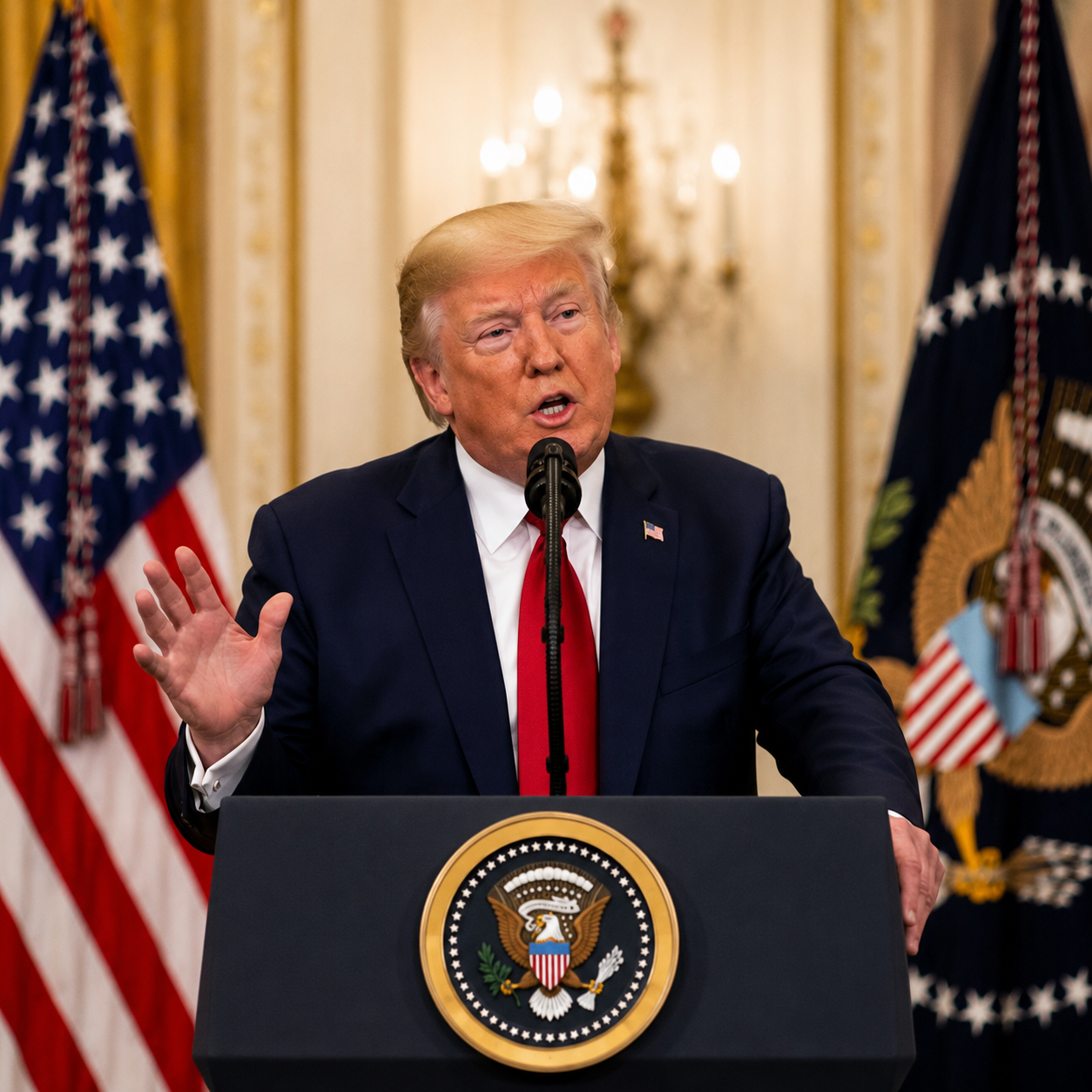
Source: Trump's White House speech compilation: Odaily Planet Daily Original title: What did Trump say on the night of the cryptocurrency explosion? The White House organized a “Cow Comes” show! Core point of view: At the White House cryptocurrency industry executives gathering, Trump explained the results of his administration's policies to promote the development of digital assets, emphasized America's position as a global leader through executive orders, legislation, and regulatory reforms, and called on Congress to pass the CLARITY Act to strengthen competitive advantage. Key elements: 1. Participants included SEC Chairman Paul Atkins, CFTC Chairman Michael Selig, and executives such as Coinbase, Robinhood, and Ripple, highlighting the trend of cooperation between the industry and the government. During the conference, BTC once surpassed 70,000 US dollars, ETH rose nearly 20%, and the market response was positive. 2. Trump announced the dismissal of former SEC Chairman Gary Gensler, terminated “Operation Blockpoint 2.0,” and signed an executive order banning CBDC and launching “Project Crypto” to reform the rules. 3. The government establishes US strategic Bitcoin reserves and digital asset reserves to use Bitcoin as a permanent asset of the Treasury; the “GENIUS Act” paves the way for widespread adoption of US dollar stablecoins. 4. The CFTC approved the first Bitcoin perpetual futures contract and promoted Hyperliquid compliance into the US, showing the gradual implementation of the regulatory framework. 5. Trump criticized the high interest rate policy, arguing that interest rates should be cut to support growth when economic data is strong; he emphasized that the fintech revolution has created jobs and wealth, and that the stock market has reached 80 new highs in a year and a half. 6. He called on Congress to pass the “CLARITY Act” as market structure legislation to ensure that the US continues to lead competitors such as China in the fields of encryption and AI. Editor's note: In the early morning of August 20, Beijing time, the White House held a meeting of cryptocurrency industry executives. Trump himself attended and delivered a speech. Government executives such as SEC and CFTC, industry representatives from Robinhood, Coinbase, Ripple, Gemini, a16z, etc., and senior traditional finance executives such as the Intercontinental Exchange and NASDAQ all attended the conference. Perhaps influenced by this positive signal, the cryptocurrency industry soared at night. At one point, BTC broke the $70,000 mark, and ETH rose close to 20%. Below is Trump's own statement on his speech at the conference. Seriously, a group of important people came to the scene today. If you love the world of finance as much as I do — I really love finance — all of you here today are big names in the financial world. It's incredible that you might not know some of them, but anyone in the financial world should know every one of them. Thank you so much for being here today. We're excited to welcome some of America's best talent in finance, cryptocurrency, and technology. In Washington, D.C., we are about to welcome the first meeting of the US Commodity Futures Trading Commission (CFTC) Innovation Advisory Committee (Innovation Advisory Committee). It's a committee of very smart people who will give us suggestions and tell us what we should do. Right, Paul (referring to SEC Chairman Paul Atkins)? They'll tell us a few things. But I think Paul probably knows these issues better than anyone else, and he did a great job. We're very happy with Paul, and I think everyone thinks the same. He's really amazing. From the cryptocurrency market and prediction market, to traditional finance, to decentralized finance, the people in this room are making sure that the future of the commercial market can be created and improved here in the US. We are competing with many other countries for control of these markets, market share, and the profits, jobs, and everything else they create. And we did a great job. We are leading the way in every aspect, including artificial intelligence, and by a huge margin. We want to continue this lead. I would like to thank CFTC Chairman Michael Selig for his outstanding leadership. (Find someone first) Michael, come over... (Then suddenly found him around) Why am I so close that I almost didn't recognize you. At the same time, I would like to thank a very special person, someone who has been respected by everyone for a long time. I would have liked him to take this role — I wanted him to do this job before he became SEC chairman. Paul Atk...

2d ago22#BTC skyrocketed #Trump

Trump once again criticized the Federal Reserve's high interest rate policy, saying that the US should bear lower financing costs

Comparing news, US President Trump once again criticized the Federal Reserve's interest rate policy on Wednesday, saying that the central bank still should not prevent interest rate cuts when economic data is improving, and that the US should pay much lower interest rates. Trump said that Federal Reserve Chairman Kevin Warsh (Kevin Warsh) did a good job, but criticized the Federal Reserve Board for political factors, saying that some members were appointed by Obama, Biden, and themselves, and may support maintaining high interest rates for political reasons. Trump said that in the past, improved economic data usually drove interest rates down, but now the better the data, the higher the interest rate. He believes that cutting interest rates will not only help the economy grow, but will also reduce the financing pressure on the US debt of nearly 40 trillion US dollars. However, the Federal Reserve has not raised interest rates since 2023, and began a cycle of cutting interest rates in the second half of 2025, with a cumulative total of 6 interest rate cuts. The minutes of the Federal Reserve's July meeting show that most officials believe that if inflation cannot cool down further, it may still be necessary to maintain higher interest rates in the future. Trump also complained that the US interest rate level is higher than that of some overseas economies, and using Switzerland's benchmark interest rate of about 0.5% as an example, he said that the current US interest rate level of about 3.5% is unreasonable. On the same day, the US Treasury Department announced the expansion of long-term treasury bond repurchases to at least double the scale of 10-year to 30-year treasury repurchase operations, from a single $2 billion to $4 billion to enhance the liquidity of the long-term bond market. The market believes that this measure will help ease the recent upward pressure on US bond yields.

2d ago