领导干部 · 23
Accept virtual currency worth tens of millions of yuan, and put the hardware wallet in the office drawer! Securities Regulatory Commission discloses details of the Yaoqian case

Accept virtual currency worth tens of millions of yuan, and put the hardware wallet in the office drawer! Securities Regulatory Commission discloses details of the Yaoqian case

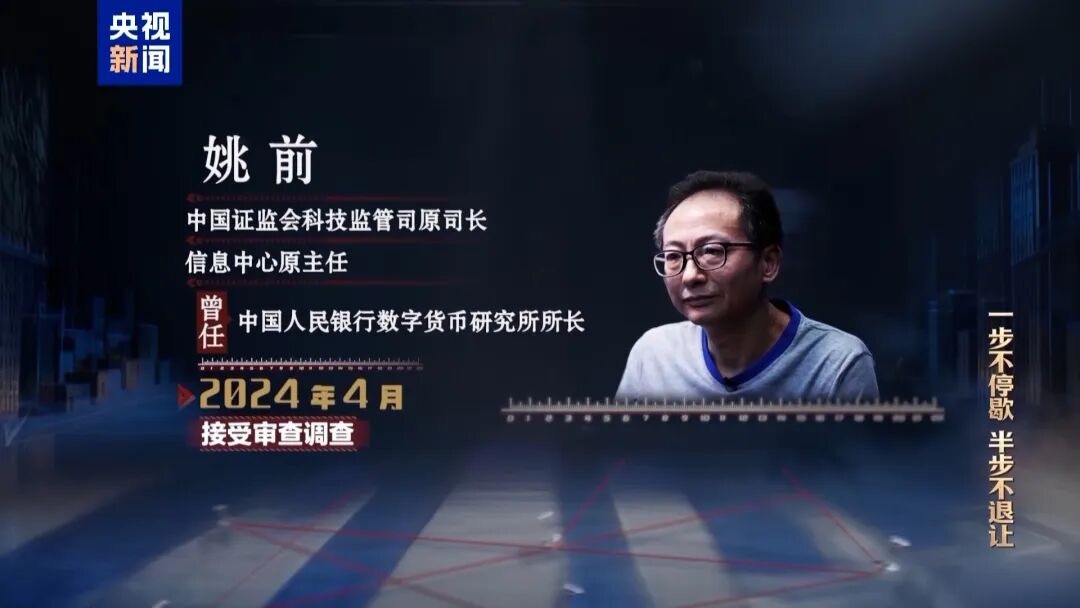
Source: Securities Times Network Original title: Once receiving tens of millions of yuan in ether, the details of the case of Yao Qian, former director of the Science and Technology Supervision Department of the Securities Regulatory Commission, revealed the details of the case of Yao Qian, the fourth episode of the TV feature film “One Step, No Stop, No Retreat”, “Technology Empowers the Fight against Corruption” aired on the evening of January 14, Beijing time. Among them, the case of Yao Qian, former director of the Science and Technology Supervision Department of the China Securities Regulatory Commission and former director of the Information Center, was analyzed. According to public information, in April 2024, Yao Qian was investigated for serious disciplinary violations, and in November 2024, Yao Qian was “double dismissed”. The report shows that after investigation, Yao Qian betrayed his original mission, did not talk about politics, and sought to be a false name. He claimed to be a fintech expert, spared no effort to support specific technology service providers for his own selfishness, and was willing to be a “key training target” for hunters. Abuse supervisory powers such as the right to suggest policies, set up power, and execute power, abandon scientific and technological supervisory duties, obtain improper benefits for others in information technology system service agencies to expand their business, purchase software and hardware, etc., and use virtual currency, etc. to carry out power and money transactions. Engage in superstitious activities; disregard the spirit of the Eight Regulations of the Central Committee; accept valuable items such as Maotai liquor and banquets in violation of regulations; violate organizational principles to obtain benefits for others in employee recruitment; violate integrity discipline, hand over rental car and other expenses that should be paid by individuals to the supervisors, borrow large sums of money from supervisors in violation of regulations, and invest in enterprises in violation of regulations. The illegal receipt of property was extremely large. The following is a partial transcript of the fourth episode “Technology Empowers the Fight against Corruption” of “One Step Without Stopping Half a Step”: In addition to spatial isolation at home and abroad, physical isolation between online and offline has also become a means for current corrupt elements to cover up corrupt practices. Gold, cash, and valuables are all common carriers of power and money transactions in traditional corruption cases. With the advent of the digital age, virtual currency relies on blockchain technology to continue to develop, and new forms of corruption have emerged that must be watched out for. These are key evidence discovered in a case involving disciplinary violations by leading cadres. They look like mobile phones, some look like USB sticks, and some look like remote controls. In fact, they are all different types of hardware wallets for storing and managing virtual currencies. The total estimated value of these three seemingly inconspicuous little “wallets” of virtual currency stored in them is equivalent to tens of millions of yuan. People who accept bribes in this way also used to have luck and thought they were covert enough. Yao Qian, former director of the Science and Technology Supervision Department of the China Securities Regulatory Commission: To be honest, I know this is a sneaky act; how can you do it? It's just that before, you thought it was hard to have proof. Yao Qian, former director of the Science and Technology Supervision Department of the China Securities Regulatory Commission and former director of the Information Center, was the former director of the Digital Currency Research Institute of the People's Bank of China. The case was opened for review and investigation in April 2024. The Discipline Inspection and Monitoring Team of the Central Commission for Discipline Inspection and the State Supervision Commission in the China Securities Regulatory Commission and the Guangdong Shanwei Municipal Supervisory Commission formed a special task force to handle this case. From the beginning, the task force carried out an in-depth analysis based on Yao Qian's own characteristics. Zou Rong, a staff member of the Discipline Inspection and Monitoring Team of the Central Commission for Discipline Inspection and the State Supervision Commission in the China Securities Regulatory Commission: The supervision of this person is meant to be portrayed. He has a long working experience in digital currencies. Is there also this corruption problem of using virtual currency for power and money transactions behind this? Looking at anti-corruption practices in capital markets, the problems of new types of corruption and hidden corruption are quite prominent. As the review and investigation deepened, the task force's initial predictions were confirmed. Yao's previous several large power and money transactions all used new forms of corruption and hidden corruption, including the acceptance of virtual currency. Virtual currency is just a string of numbers in the network. Not only is it separated from the identity of the holder, but it is also completely isolated from commercial banks and payment institution systems. It can be freely traded on the blockchain, and can circulate across borders without geographical restrictions. It is extremely hidden and extremely difficult to supervise. However, the task force was fully prepared from the beginning. By learning a great deal of expertise and thoroughly understanding the operating mechanism of virtual currency, the task force identified the key points of the review and investigation. Zou Rong: Holders mainly rely on private keys to control virtual currency on blockchain addresses. This private key consists of a string of tens of characters long, and is not easy to remember. Generally, a hardware wallet is used to store it. Cai Kunting, a staff member of the Guangdong Shanwei Municipal Commission for Discipline Inspection: The search requires two items. The first is whether there is a hardware wallet; the second is whether there are any notes with irregular mnemonic words written on them. This is essential during the search. Sure enough, the task force found a hardware wallet in a drawer in Yao Qian's office. At the same time, the task force strictly followed the rules, discipline and law, and made full use of big data information technology to conduct a comprehensive investigation into Yao Qian's relevant situation, and also discovered relevant traces. Judging from checking account information according to law, although there are no obvious abnormalities in Yao Qian's own account,...

220d agoWendy#Ethereum #bribery #Yao Qian #hardware wallet #private key #Securities Regulatory Commission
Qinghai Daily: Using Blockchain Thinking to Enhance the “Four Forces” of Party Building Work

Qinghai Daily: Using Blockchain Thinking to Enhance the “Four Forces” of Party Building Work

General Secretary Xi Jinping pointed out during the 18th collective study of the Political Bureau of the Central Committee that the application of blockchain technology has been extended to many fields, and blockchain technology should play a greater role. Blockchain technology has advantages in promoting data sharing, optimizing business processes, improving collaboration efficiency, and building trusted systems. Promoting the high-quality development of party building in the new era and improving the technical ability to use blockchain can further stimulate the Party's ideological leadership, cohesion of party members, implementation of main responsibilities, and the ability to govern and serve the people. Strengthen the Party's ideological leadership. From blockchain thinking analysis, every party branch is a node in the blockchain. It can launch at a single point, speak out, and spread on the chain, so that ideological and political work can “ignite the stars.” The Party branch encouraged Party members to adhere to the first topic system of studying Xi Jinping's ideology of socialism with Chinese characteristics in the new era and the spirit of General Secretary Xi Jinping's important speech, important instructions and instructions, leading Party members to learn, really understand, believe, and use, and promote the normalization of institutionalization of studies and implementation. The Party branch secretary took the lead in learning the spirit of the decisions and arrangements and important meetings of the Party Central Committee, the State Council, the provincial committee and provincial government, told the Party's story well, guided the Party members to continuously strengthen their “Four Consciousness”, firmly establish the “Four Confidence”, and achieve “two maintenance.” Through intelligent networks, each branch accurately portrays party member groups with different characteristics, implements personalized education, and does a good job in data management and information services to form a closed loop of knowledge to strengthen understanding, digestion and absorption, and summarize and improve. After listening to the “radio,” party members recorded their studies on their “ledgers” according to the chronological order, exchanged discussions and published suggestions on the chain, and effectively transformed the process of combining learning and thinking into a process of self-improvement, forging consensus, and solving difficult problems. Branches have broken up information barriers, checked the learning content and schedule of other branches at any time through on-chain records, and learned from each other's good experiences and practices, creating a strong atmosphere of comparison and catching up and introducing new ideas. Enhance the cohesion of party members. Blockchain data has the characteristics of being open, transparent, traceable, and immutable. Party building work can make the daily supervision and management of party members more efficient and convenient by putting the data on the chain. Through the blockchain distributed data storage system, the information of every party member and every party branch, especially mobile party members and mobile party branches, can be entered into the data chain to ensure that the data is authentic and tamper-proof. Through methods such as sending party affairs knowledge on a “chain” and revisiting their oath to join the party, we can help mobile party members to accurately understand the Party and national policies, guide them to think well, and give back to their hometown. The blockchain data operation platform can track and trace party members' participation in “three sessions and one lesson”, party organization life meetings, party fee collection, party building and business work planning, same deployment, same progress, and same assessment. Using Internet video and other information technology, daily work is more detailed and transparent, and existing shortcomings are detected in a timely manner, and new and old problems such as “dark under the light” where party building work is blurred, weakened and softened, and build a clean political organ. Through effective integration of massive data and efficient computation, emerging and tendentious problems of Party members and cadres in politics, ideology, discipline, etc. are discovered in a timely manner, keeping an eye on key people and events, interviewing education, guidance and assistance as soon as possible. Through strict control and love to motivate cadres to take responsibility, the happiness and sense of belonging of the majority of Party members continues to improve, thus uniting more consciously and closely around the Party. Strengthen the ability to implement principal responsibilities. Blockchain has distributed expansion functions, which can allow daily supervision and discipline enforcement to touch all blind spots and break the bottleneck of trust instead of supervision. Using the “blockchain+smart supervision” model, the implementation of responsibilities is promoted from centralized assessment at the end of the year to real-time dynamic recording through “people working, clouds moving, and counting” to constantly monitor the Party Committee's principal responsibilities, the supervisory responsibilities of the Commission for Discipline Inspection, the responsibilities of the first responsible person in charge and the implementation of “one post and double responsibilities” by other members, the “first leader” personally deploys key tasks, personally coordinates key links, and personally supervises important cases. Blockchain technology has made the work process more scientific and accurate, changing the previous form of relying on on-site inspections or reports from superiors to inspect work. Higher level organizations can focus more energy on solving “unreal” and “good or bad” issues to ensure that all tasks are implemented in detail. At the same time, by making data “speak out”, blockchain big data platforms can provide an important basis for judging the selection of good cadres and strong teams, the leadership team, and the annual comprehensive assessment of leading cadres. By making data “anti-corruption” and using correlation analysis and comparison to carry out a “data medical examination,” it sounded a wake-up call for Party members and cadres who were lucky, forced them to cultivate a good field of responsibility, continue to push for a change in style of work, and promote not daring to corrupt, not being corrupt, and not wanting to be corrupt. Strengthen the ability of the administration to serve the people. Blockchain is also a form of recording and transmission of credit,...

1977d agody zhang#blockchain #apps
Full transcript 丨 Ling listens to 2021 New Year's Eve speech: 10,000 words to make a “year-end summary” for blockchain

Full transcript 丨 Ling listens to 2021 New Year's Eve speech: 10,000 words to make a “year-end summary” for blockchain

Blockchain will become the infrastructure of the national economy like “water, electricity, and coal.” Speech: Tang Xialing, Vice President and Editor-in-Chief of Babbitt, on December 28, the world's first blockchain New Year's Eve speech “Ling Ting 2021” was held at the Hangzhou Grand Theatre. In a speech of over an hour, Babbitt's Vice President/Editor-in-Chief and Founder of Blockchain Tang Xialing summarized 2020 and looked forward to 2021 from the perspective of a deep industry participant and observer under the theme of “Me and Infinity”. The event also invited four guests, Deng Yun, vice president of Microsoft Greater China, Wu Xiao, founder of Pure White Matrix, Wang Yuyi, researcher at ETH Zurich, and Zhang Kaixiang, chief blockchain architect of WeBank, to share their in-depth observations and latest thoughts on industry, scientific research, technology, and entrepreneurship, starting from their respective industries. At this time last year, “Ling Ting 2020” debuted in Hangzhou. A total of nearly 1,000 applications were received from 59 cities around the world. In the end, 378 guests attended. Many people's fond memories of 2019 were fixed there. This year's event gathered 350 super listeners from 200 physical industries, the vast majority of whom were the core management of the enterprise. At the intersection of old and new years, they thought deeply and listened together. China's and the world's “Time Magazine” named 2020 “the worst year in history.” The International Monetary Fund called this crisis a “big blockade,” and it became the worst economic recession since the “Great Depression.” The International Monetary Fund predicts that the economy will be in deep recession in 2020, with a global growth rate of -4.4%. However, the report predicts that China's growth rate is estimated at 1.9%. China became the first major economy to resume growth since the outbreak of the epidemic, and China will continue to play the role of a “leader” in global economic recovery. China and the world are also re-examining their relationships. The world is moving towards “internalization” in a closed loop, and our country is entering a new “double cycle” development pattern. The McCarthy report shows that China's economic dependence on the world continues to decline, and the world needs China more and more. The top ten blockchain news events of the year March, the global financial market experienced a sharp fall in April, the Libra 2.0 white paper was released in May, Bitcoin was halved for the third time in July, the Ministry of Public Security commanded the “Plus Token Platform” online pyramid scheme case in August. Traditional giants such as Grayscale continued to buy BTC in September, and DeFi broke out in October. Payment giant PayPal announced support for Bitcoin payments in October to November. The central bank's digital currency red envelope test December, and Ethereum 2.0 officially launched in December Bitcoin reached a record high 2020 can be said to be the year Bitcoin entered the market. This year, more and more institutions and listed companies are starting to buy Bitcoin with real money. According to incomplete statistics, as of December 15, 23 companies around the world held approximately $17 billion worth of bitcoin. J.P. Morgan even pointed out in its latest report that gold played an important role during the pandemic this year, but as a traditional safe-haven asset, its luster is being overshadowed by the emerging asset Bitcoin. The 6 major discoveries of industrial blockchain discovered 1. Cities: the opportunity for second-tier and third-tier cities to overtake the curve as blockchain. All over the country are running on the same line. At this time, whoever takes the lead can break through. At the same time, blockchain in second- and third-tier cities has no benchmarking, no burdens, and plenty of room for fault tolerance. “Although the conditions are difficult, there is a way forward.” Discovery 2. Policy: The six major directions of blockchain policy are building blockchain public service platforms to build industrial parks, building industrial bases, and supporting leading blockchain enterprises to train industry talents with relevant financial subsidies. Open blockchain application demonstration scenario discovery 3. Macro: The blockchain industry is undergoing structural adjustments to the public chain, alliance chain, and industrial ecology. These three waves of forces are at play, contributing to this round of structural adjustment of the industry. To follow the path of integration between blockchain and industry, the following “three forces model” is essential. The first is industrial understanding. We need to deeply understand the business models and operating processes of traditional industries, understand the pain points in the industry, understand the ecological structure of upstream, downstream, and vertical industries, etc. The second is technical implementation. How to clearly explain the logic, so that technology and industry can be better integrated, form logical self-agreement, and truly achieve solutions that reduce costs, increase efficiency, and bring value. The third is resource monetization. In the face of new production relationships and new solutions, resource monetization not only becomes money, but may also become a solution or a valuable technology...

2061d agody zhang#DeFi #Grayscale #Libra #Paypal #Industrial blockchain #Ethereum #Traditional finance #markets #Policies and regulations #Bitcoin #Chain of alliances #viewpoints
People's Daily: Covering multiple scenarios, the application prospects of “blockchain+government affairs” are broad

People's Daily: Covering multiple scenarios, the application prospects of “blockchain+government affairs” are broad

For government blockchain to play a role, cross-departmental and cross-sector connectivity is still the key. Author: Yu Sinan Digital government is an important vehicle for promoting the refinement and intelligence of public services and social governance. Recently, Beijing, Hebei, Hunan, Guizhou and other places have successively issued plans to actively promote the application of blockchain in government systems. “On-chain government” helps take digital government to the next level, and the courage to experiment with new technologies in various regions is worthy of recognition. In recent years, with the deepening promotion of “Internet +” applications, China's digital government service capabilities have improved markedly. However, due to factors such as security and privacy, digital government still exists in silos in some places. For example, although many government offices have “moved” to online platforms, data often lacks interconnection. Since there is no unified interface, matters are not synchronized online, and when handling different businesses, people need to repeatedly authenticate and download various platform software. Furthermore, some of the key aspects of some businesses rely on offline, and people still can't save themselves from running errands. To solve these blockages, people are looking at the characteristics of blockchain such as decentralization, immutability, and traceability. The “government chain” can not only guarantee the safety of data circulation and eliminate sharing concerns, but also build a trust network with multi-party participation and act as a trust intermediary, which can better unleash the potential of government data. From this point of view, blockchain has further promoted the deep integration of the Internet and government affairs, providing new solutions for digital government to the next level. Currently, government blockchain already covers various scenarios such as digital identity, electronic storage, electronic bills, property rights registration, and industrial and commercial registration. For example, in Beijing, 140 government services are on the chain, and many services only need to “run at most once”; in Shenzhen, the blockchain electronic license application platform has integrated more than 100 high-frequency government service matters. During the COVID-19 epidemic prevention and control period, government blockchain also played an important role in enterprises applying to resume work and resume production. The spark created by “blockchain+government affairs”, while providing convenience to people, also showed the whole society its broad application prospects. Although there are some implemented applications, the “government chain” is generally in the pilot phase. First, blockchain application scenarios are complex, and they themselves need to solve technical problems such as system stability and application security. The government service group is large and covers a wide range of areas. Considering factors such as cost and safety, at this stage, only high-value data that can be shared by multiple parties has on-chain value. This requires, on the one hand, breaking through key technologies to improve the performance, efficiency, security, and economy of blockchain; on the other hand, thoroughly understanding government scenarios and finding the real needs of going online. After all, going up the chain of government affairs does not mean that political achievements go up on the chain; rather, the pain points of actual government services should be solved. Furthermore, research and analysis of blockchain security risks cannot be ignored. It is also essential to guide and promote blockchain developers and platform operators to strengthen self-discipline and implement security responsibilities. More importantly, for government blockchain to work, connectivity across departments and fields is still the key. Currently, the “government chain” is in a period of rapid development, and regulation and guidance are lagging behind. Some government blockchains, if limited to a certain link and do not form closed-loop services based on business processes, will not only bring about new “data silos”, but may also cause repeated construction and waste of resources. Going up the chain is not about simply moving government services; it is necessary to clear application links and push the implementation of government blockchain into practice. Therefore, it is necessary to strengthen the top-level design of blockchain government applications, and make full cooperation between management departments, enterprises and other participants to establish uniform technical standards. China has a good foundation in the blockchain field and is quite rich in scenarios. Some applications are being piloted, and it is inevitable that it will encounter some new situations and problems. Facing up to the application difficulties of blockchain in government affairs and looking for practical countermeasures, we hope to explore a new governance model suitable for the digital economy era. Relevant leading cadres should also understand the current status and trends of new technologies such as blockchain, update relevant knowledge in a timely manner, continuously improve governance capabilities, and build a good service-oriented government through practical actions. Source: People's Daily...

2185d agody zhang#Upper chain #Government affairs
Central Party School Press's new book “Talking to Leading Cadres about Blockchain”

Central Party School Press's new book “Talking to Leading Cadres about Blockchain”

What kind of book is this? This book is detailed and comprehensive, focused, illustrated, and rich in case studies. It introduces the basic situation of blockchain technology from the global context and the current state of blockchain development in China, focuses on the basic composition and application direction of blockchain technology, and provides a detailed analysis of the key areas of the blockchain industry and its development, which helps readers understand the overall situation and main direction of the blockchain industry. This book has an objective and calm understanding of the main problems and security risks faced by blockchain development, and proposes ideas and countermeasures for blockchain security and the rule of law based on systematic analysis. In the post-pandemic era, blockchain has become an important part of new infrastructure. The book can be used as a reference for leading cadres to make decisions on blockchain technology and applications, and also allows readers to quickly grasp the development trends and trends of blockchain technology. Who is the author of this book? Professor Huang Zhen, professor at the Central University of Finance and Economics, director of the China Internet Finance Innovation Research Institute, chief economist of the Beijing Internet Finance Industry Association, director of the Internet Finance Center at the International Financial Forum, an expert member of the National Internet Finance Security Technical Committee, a senior researcher at the Chongyang Institute of Finance Research of Renmin University of China, vice president of the Beijing Internet Finance Law Research Association, and a postdoctoral supervisor at the Shenzhen Stock Exchange. Source: Wu Says Blockchain Real

2237d agody zhang#blockchain #Leading cadres
How does the central bank's digital currency DC/EP affect you and me?

How does the central bank's digital currency DC/EP affect you and me?

In 2014, the People's Bank of China initiated forward-looking research on central bank digital currencies. In 2016, the Digital Currency Research Institute of the People's Bank of China was established, becoming the first official agency in the world to develop digital currencies for legal central banks. The picture shows visitors from the People's Bank of China experiencing the convenience that financial services bring to life at the China International Finance (Banking) Technology and Equipment Exhibition. “The central bank's digital currency is coming!” Recently, a picture of the central bank's digital currency closed testing on the Agricultural Bank's account went viral on the Internet. Subsequently, the progress of the central bank's digital currency pilot project was revealed one after another by various departments in many places, which attracted widespread attention. What is a central bank digital currency? How is the central bank's digital currency used? What impact will it have on economic and social development and people's daily lives? The central bank's digital currency is the digitization of the renminbi. China was one of the first countries to study the central bank's digital currency. As early as 2014, the People's Bank of China initiated forward-looking research on central bank digital currencies. In 2016, the Digital Currency Research Institute of the People's Bank of China was established, becoming the first official agency in the world to develop digital currencies for legal central banks. At the end of 2017, the State Council approved the People's Bank of China to lead commercial institutions to develop a digital renminbi system (English name: digital currency/electronic payment, DC/EP for short). “The central bank's digital currency is a digital form of RMB; it itself is not a new currency.” Mu Changchun, director of the Digital Currency Research Institute of the People's Bank of China, told the reporter that digital yuan is a controlled and anonymous payment instrument issued by the People's Bank of China, with designated operating institutions participating in the operation and exchanging to the public. It is based on a broad account system, supports the loosely coupled function of bank accounts, is equivalent to banknotes and coins, and has value characteristics and legality. Specifically, first, the digital yuan is issued by the People's Bank of China. It is a legal tender with national credit endorsement and legal solvency. Compared with virtual currencies such as Bitcoin, digital yuan is fiat currency, equivalent to fiat currency, and is the most effective and secure. Bitcoin is a virtual asset that has no value base, does not enjoy any sovereign credit guarantee, and cannot guarantee stable value. This is the most fundamental difference between central bank digital currencies and crypto assets such as Bitcoin. In terms of issuance and exchange, the digital yuan has adopted a two-tier operating system. In other words, the People's Bank of China does not directly issue and exchange central bank digital currency to the public; instead, it first exchanges digital yuan with designated operating institutions, such as commercial banks or other commercial institutions, and then these institutions exchange it for the public. This two-tier operating system is basically the same as issuing banknotes, so it will not have a big impact on the existing financial system, nor will it have a big impact on the real economy or financial stability. Regarding the broad account system as a basis, Mu Changchun explained that the bank account system is a very strict system. Generally, many documents and personal information must be submitted to open a bank account, and under the central bank's digital currency system, anything that can form a unique personal identity can become an account. “As long as you can prove your identity, you can use it as an account. For example, your license plate number can be used as a digital yuan sub-wallet to pay when you pass the highway or park. This is the concept of a broad account system.” The so-called support for loose bank account coupling means that a digital yuan wallet can be opened without a bank account. For people in some rural areas or remote mountainous areas, even if they don't have a bank account, they can enjoy corresponding financial services through digital wallets, which helps to achieve inclusive finance. Furthermore, for overseas travelers and other people without a domestic bank account, they can also make small payments more conveniently by opening a digital yuan wallet. How is the digital yuan equivalent to banknotes and coins? In fact, when the People's Bank of China exchanges the central bank's digital currency with a designated operating agency for issuance, the institution is required to pay 100% of the reserve to the People's Bank of China. This is a 1:1 exchange process. This can guarantee that the central bank's digital currency will not be overissued, and there is no room for market speculation. “It all boils down to one point. The central bank's digital currency is a payment instrument, reflecting the basic function of money.” Mu Changchun said that the central bank's digital currency is actually the digitization of the RMB; it is a digital version of the RMB. It will not impact WeChat Alipay. According to the “2018 China Inclusive Finance Index Analysis Report” released by the central bank in October 2019, by the end of 2018, China had 7.22 bank accounts per capita, and the proportion of adults using electronic payments nationwide exceeded 80%. So, with China's electronic payment system so developed, why should the central bank's digital currency be studied and launched? The launch of the central bank's digital currency has...

2266d agody zhang#cryptocurrency #digital currency
Wu Xiaoling, Former Vice Governor of the Central Bank: Looking forward to the future of finance from digital currencies

Wu Xiaoling, Former Vice Governor of the Central Bank: Looking forward to the future of finance from digital currencies

Author: Wu Xiaoling, former vice president of the People's Bank of China, and Chairman of the Wudaokou School of Finance at Tsinghua University Note: This article is the preface to the new book “Talking to Leading Cadres about Blockchain”. The essence of abridged finance is a time transfer of value. It is naturally linked to numbers, and has always been a user of advanced information technology. Marked by the decoupling of the US dollar from gold in 1973, the world entered the era of credit money, and finance began investing and financing services and asset allocation activities around credit money. The application of information technology has not changed the nature of finance. With the development of information technology, technological methods are being used to collect and process information in traditional financial services, spawning new business formats such as third-party payments, account management systems, and credit evaluation. These innovations must be in awe of financial rules and differentiate between financial activities and activities that serve financial services. If it is the former, that is, the activity of financial intermediation and credit intermediation, a licensed operation must be carried out, and if it is an activity for financial services, there must also be some monitoring. However, in practice, these rules refined by the financial market are often easily broken through intentionally or unintentionally. This is an important reason for risky incidents in fintech innovation in recent years. Understanding digital currencies related to the digitalization of finance is very beneficial for us to understand the future development of fintech and finance. Digital currency can be described as one of the new forms of finance that has attracted the most attention in recent years. It has gradually expanded from the relatively narrow description of Bitcoin to fiat digital currencies, stablecoins linked to fiat currencies, global private tokens issued mainly by tech giants, and various private securities digital currencies. Bitcoin is the most successful commercial application of blockchain technology. The 2008 financial crisis made people disappointed with the monetary policies of central banks in various countries, and Bitcoin, a digital currency issued by no center, entered people's eyes. As a private currency, Bitcoin has a market basis for its existence, but it is also limited to the private currency sector. Today, when a sovereign country exists, it cannot replace a legal tender issued by a country. And even as a private currency, Bitcoin has fatal weaknesses — the reason is that the currency itself must have a certain stable value, but the value of Bitcoin fluctuates greatly. Currently, regulatory authorities in various countries rarely recognize the attributes of Bitcoin as a currency; they basically treat it as a digital asset. If we limit our vision to Bitcoin's risk supervision, it is not conducive to responding to the objective demand for improved financial efficiency and financial inclusion, nor is it conducive to exploiting the potential effectiveness of blockchain technology, the underlying technology of digital currency, as a new type of information infrastructure. After years of preparation, the People's Bank of China's fiat digital currency has already launched pilot operations in some fields. In the future, fiat digital currencies will play an important role in reducing transaction costs, optimizing the transmission effects of monetary policy, anti-money laundering, and financial data protection. So has the attitude towards digital currency completely changed from risk prevention and control to encouraging innovation? This issue cannot be generalized. The digitization of money or digitized money must be rooted in the need for transactions, investment and financing. The attributes of digital currency and digital assets may be currencies, virtual goods, payment instruments, or securities in different scenarios. Financial services activities of this nature currently have mature management rules, and financial service activities required to support the different asset attributes of digital currencies also need to follow the existing regulatory framework. Innovative business formats are not disrupting all financial laws and rules. In the future, digital currencies will increasingly be integrated into social behavior, and we must have a careful and objective understanding of them. Wu Xiaoling, former vice president of the People's Bank of China Source: Blockchain Information...

2269d agody zhang#Wu Xiaoling #digital currency

CPC Central Party School Press publishes and distributes the book “Talking with Leading Cadres about Digital Currency”

Comparing news, the Party School Press of the CPC Central Committee organized the preparation of the “Talking with Leading Cadres about Black Technology Series”. The series is headed by Chen Zhaoxiong, Vice Minister of Industry and Information Technology. This book is one of the results of the book series, written by Yang Dong and Ma Yang, with Wu Xiaoling, former vice president of the People's Bank of China; Wang Hongzhang, former chairman of China Construction Bank; Wang Zhongmin, former vice chairman of the National Social Security Fund Council; Zhou Yanli, former vice chairman of the China Insurance Regulatory Commission; Sun Guofeng, director of the monetary policy department of the People's Bank of China; and Yao Qian, director of the China Securities Regulatory Commission. Starting from the origin and history of money to explore the essence and future of digital currencies, this book provides comparative analysis on cutting-edge issues such as fiat digital currencies, Libra complex cross-border payment digital currencies, supranational currencies, stablecoins, token issuance and financing (ICO), and digital currency exchanges. It also discusses and thinks in multiple dimensions of theory, system, and practice, warns about the risks of various types of digital currency finance and proposes regulatory countermeasures.

2286d agoLiang#PRC #digital currency
Li Lihui: A digital currency regulation system should be formulated as soon as possible and be wary that the US is in a position to approve Libra

Li Lihui: A digital currency regulation system should be formulated as soon as possible and be wary that the US is in a position to approve Libra

On January 13, 2020, Li Lihui, a member of the Finance and Economics Committee of the 12th National People's Congress and former Governor of the Bank of China, delivered a keynote speech at the “Future of Digital Currency” seminar and “Digital Currency - Reading Book for Leading Cadres” held by the Peking University Digital Finance Research Center, Peking University National Development Research Institute, and People's Daily Press. Li Lihui gave an updated and detailed summary of the central bank's digital currency issuance methods, technology routes, and future prospects. In addition, he also expressed his views on the economic reasons for the growth of virtual currencies and the advantages associated with Libra. The following is a wonderful summary of the contents of Golden Finance's speech. Talking about digital currency When talking about digital currency, he said that whether digital currency will actually restructure our monetary system, including our Chinese monetary system, and even the global monetary system, I think this is a very important question. I call all forms that use digital technology digital currency, and I roughly divide digital currency into three categories. All fiat digital currencies in the first category, or central bank digital currencies. The second category is like Bitcoin and Ether. They call it virtual currency, and some also call it some kind of asset. The third category classifies it as a digital currency of a trusted institution. If it is further derived on the basis of the digital currency of a trusted institution, it may be derived from the digital currency of a trusted institution into a global digital currency. Regarding some specific forms of digital currency, he believes that the focus of attention should be on high concurrency and high reliability. Digital currencies with legal status, national sovereignty endorsement, and issuer responsibility are called legal digital currencies. Their essence is still a legal digital currency and payment instrument. Since 2014, central banks in many countries have announced the launch of digital currency research and development, but technologies that may be applied to digital currencies, including consensus mechanisms, distributed ledgers, blockchain, encryption algorithms, etc., are currently unable to meet the high concurrency requirements of retail businesses in mega-markets. I think it's mainly because technological bottlenecks have not been broken through, so the world is still in the process of weighing choices, and no choice has been made yet. Despite this, central banks in many countries have basically reached a general consensus, and the IMF also recently released some reports. The reports indicate that central banks in many countries are of the opinion that digital currencies have potential benefits. First, it can save the cost of cash circulation, especially in remote and large regions, and in scenarios such as cross-border retail payments, fiat digital currency can effectively reduce the cost of cash flow, and also help prevent counterfeit money. Second, it is possible to strengthen the public nature of the future society and promote facilitation finance. They believe that fiat digital currencies can provide the public with highly secure and highly liquid tools. Commercial bank accounts are no longer required, and commercial banks are no longer required as payment intermediaries. Third, fiat digital currencies can provide end-to-end reliable payment tools for digital asset transactions, blockchain smart contracts, keys, etc., and automatically execute asset transfers in accordance with agreed commercial terms and applicable laws. Fourth, it is possible to strengthen the transmission mechanism of monetary policy, especially during the long-term economic recession. We use the form of fiat digital currency, which may be more convenient to implement special monetary policies such as negative interest rates. Further research is needed on this. Under the fiat digital currency system, what problems will we encounter when implementing a negative interest rate policy may require further research. At the same time, the central bank also believes that fiat digital currencies also have some potential risks and problems. Li Lihui made a three-point summary based on the opinions discussed by some experts. First, it may weaken the initial creditworthiness and profitability of commercial banks. Fiat digital currencies can be issued in two ways. One is indirect issuance. The central bank issues currency to the public through commercial banks, which is the same as our current issuance model. There is another type. Due to the special nature of the fiat digital currency structure, fiat digital currencies are issued directly to the public. No matter what form of central bank is under the fiat digital currency structure, it can absorb public deposits. There will be a problem. Public deposits may flow from commercial banks to central banks. In this way, commercial banks will be forced to raise interest rates to obtain funds to retain customers, and commercial banks' costs will increase. Second, it may be more likely to promote systemic financial risks. In particular, when an economic crisis or financial crisis occurs, commercial banks with lower trust levels may experience a shortage of digital currencies that are difficult to control and cause a chain reaction. Everyone knows that under the traditional money issuance system, it's cash. If a bank goes wrong, as long as the big banks support the past, this kind of crowding can easily be prevented. Fiat digital currency deposits are as long as...

2412d agody zhang#Libra #digital currency #Li Lihui
People's Daily News: Blockchain - A Reading Book for Leading Cadres (Revised Edition)” published

People's Daily News: Blockchain - A Reading Book for Leading Cadres (Revised Edition)” published

It is of great reference significance for leading cadres to apply digital technology such as artificial intelligence and blockchain to continuously improve their decision-making level and ability to govern, and build a digital China and smart society. Author Li An's picture shows “Blockchain - A Reading Book for Leading Cadres (Revised Edition)”. Photo by the publishing house The book “Blockchain - A Reading Book for Leading Cadres (Revised Edition)” was recently published and distributed by People's Daily Press. Guided by the 18th collective learning spirit of the Political Bureau of the Central Committee, the book adjusts 80% of the text on the basis of the original version, focusing on the current status and development trends of blockchain technology, and provides a systematic explanation and detailed interpretation of the four aspects of blockchain technology: definition, application, regulation, and future prospects. The safe and orderly development of blockchain technology requires further guidance and regulation of the current state of the industry. Academician Chen Chun, who explained for the 18th Politburo Group Study, emphasized in the article “Alliance Blockchain Key Technologies and Blockchain Regulation” that “any good technology or tool needs to be used correctly in order to exert maximum value.” Zhao Feng, member of the Blockchain Professional Committee of the China Communications Industry Association, proposed in “Blockchain: From Birth to Empowering the Real Economy”, “Blockchain can create ten times more value than the Internet, making trust simpler, more efficient, and more cost-effective.” Looking forward to the future, Li Lihui, former governor of the Bank of China and head of the Blockchain Research Working Group of the China Internet Finance Association, expressed confidence in blockchain technology in “From Blockchain Technology Architecture to National Strategy for the Digital Economy”. “The application of digital technology such as blockchain can establish a new digital trust mechanism”, “will restructure the industrial model”, and “has epoch-making significance.” “Blockchain - A Reader for Leading Cadres (Revised Edition)” has comprehensively revised the “Blockchain - Reading Book for Leading Cadres” around “Current Status and Development Trends of Blockchain Technology”, including Xu Zhong, a researcher at the People's Bank of China Research Bureau, “What Can and Can't Blockchain Do?” , Wang He, Vice Chairman of the China Association of Actuaries, “Insurance: A Typical Scenario for Blockchain Applications”, Ba Shusong, Executive Director of the HSBC Financial Research Institute at Peking University, “Blockchain is a Solution to Credit Reporting Market Problems”, and Xiao Feng, Vice Chairman of China Wanxiang Holdings Co., Ltd., “Blockchain is not only a new technology, but also a new mechanism design”. Various experts and scholars analyze the development status and trends of blockchain technology from different angles, which helps Party members and cadres to thoroughly understand blockchain technology, improve their ability to use and manage blockchain technology, and make blockchain technology play a greater role in building a network power, developing the digital economy, and helping economic and social development. “Blockchain - Reading Book for Leading Cadres (Revised Edition)” and books such as “Artificial Intelligence - Reading Book for Leading Cadres”, “Digital China - Reading Book for Leading Cadres”, “Smart Society - Reading Book for Leading Cadres”, and “Media Integration Development - Study Book”, which were previously published by the People's Daily Press, have formed a series. This series of books closely follows the new global technological revolution and the cutting edge of industrial development. It is of great reference significance for leading cadres to apply digital technology such as artificial intelligence and blockchain to continuously improve decision-making levels and governance capabilities, and build a digital China and smart society. Source: People's Daily News...

2460d agody zhang#People's Daily News #blockchain #Leading cadres