
黄仁勋 · 367
US Stock Value Investing Is Heading Into Another Trap

US Stock Value Investing Is Heading Into Another Trap

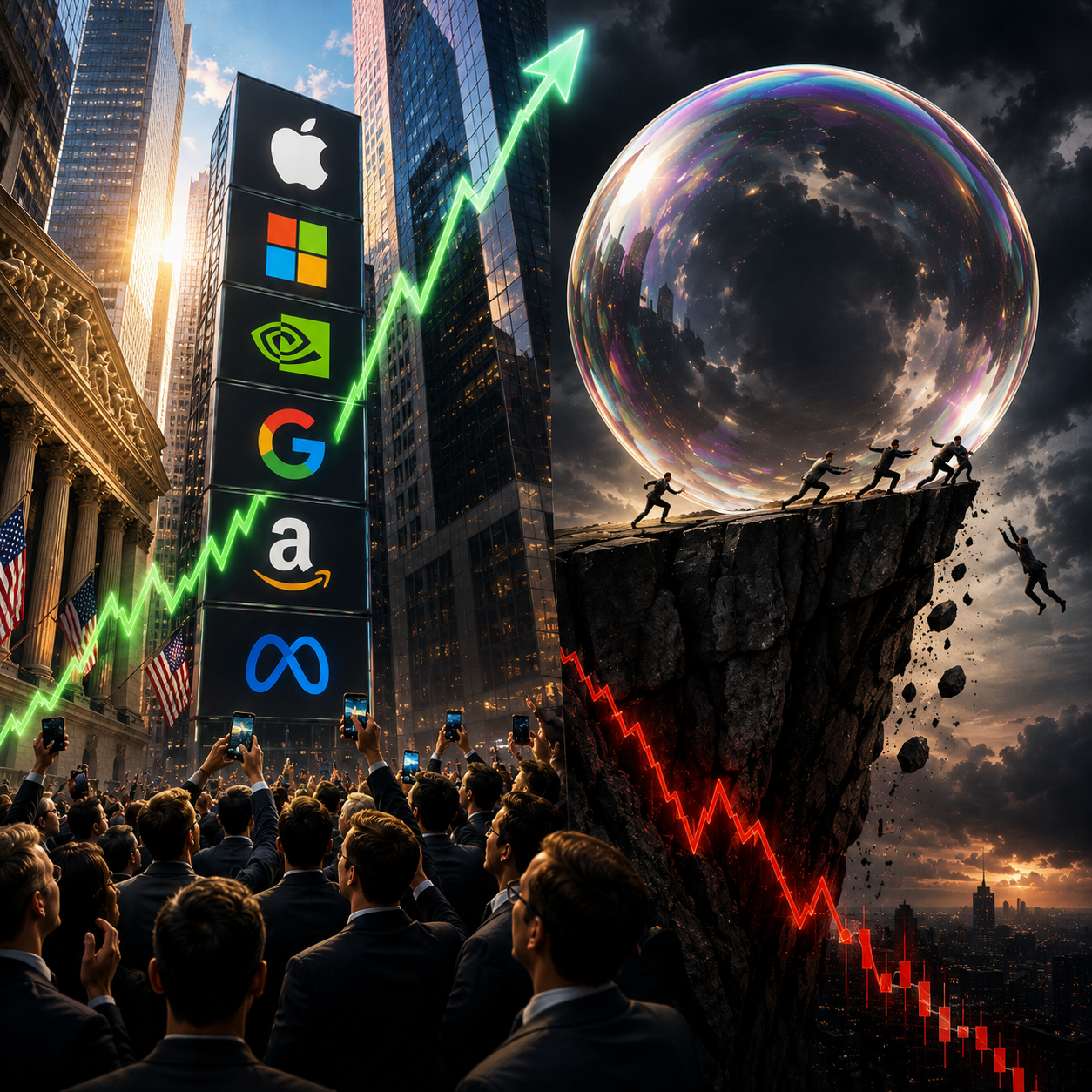
Source: Shenchao TechFlow Original title: (Opinion: Value investing in US stocks is not equal to fundamental investment) When “fundamentals are dead” becomes a consensus, investors who blindly organize giants will eventually experience astonishing capital destruction. Guide: When the market shouted “fundamentals are dead” and the capital frenzy formed a group of tech giants, the author used an astronomy discovery to unravel the logical loopholes behind this narrative. Starting from the composition of valuation multiples, this article reminds investors to distinguish between the true quality of an enterprise and the premium that the market is willing to pay. It is particularly cautionary about long-term allocation in the crypto and technology sector. I promise this introduction won't be as long as the last one on the weather. But please give me 90 seconds. More than 100 years ago, a woman named Henrietta Levitt was doing the tedious job of measuring the brightness of thousands of stars on photographic negatives (the way they were imaged before film appeared). She noticed one characteristic of a class of pulsating stars: the slower they pulsate, the brighter they themselves are. ¹ This might just seem a little interesting today, like “OK, that's pretty cool.” But at the time, astronomers couldn't tell the difference between a dark star very close to Earth and a very bright star far away. For them, the two left the same stain on the photographic film. Visual brightness is a messy mix of these two variables: how bright the thing itself is, and how far away it is from us. Henrietta's work decouples these two things: if you can observe the rate of pulsation, you can know its true luminosity; if you know its true luminosity, you can reverse the distance based on how dark it looks. Astronomers call it “standard candlelight.” A few years later, a man named Edwin Hubble discovered one of these pulsating stars, applied Levitt's math, and discovered what he had always thought was a cloud of gas within our galaxy; in fact, it was an entire independent galaxy, one million light years away. So in simple terms, the observable universe has grown about a trillion times larger, just because one person has figured out how to tell the difference between what things look like and what they actually look like. That in itself is obviously pretty cool. But another interesting thing is that around the same time period, two other astronomers each independently drew a scatterplot. One axis was actual luminosity, and the other axis was temperature. They discovered that stars are not randomly distributed in this space, but rather clustered into different families. The meaning behind this is: stars with the exact same visual brightness may and do belong to a completely different family, have a completely different past, and most importantly, have a completely different future... So what is written in the star? Over the past few years, there has been much discussion about markets, narratives, capital, company building, and financial nihilism. This feeling seems to have reached a feverish climax as the tech and financial world begins to face a very different future than a few decades ago. What is particularly clear is that separating progress from asset prices has become more noisy and in many ways more repulsive. But as an investor who makes a living by buying assets that (hopefully) outperform, a simple framework is: forward returns are roughly equal to growth in fundamentals multiplied by changes in valuation multiples (and multiplied by the dividends you've collected along the way). In this case, the valuation multiplier can very cleanly correspond to the smudges on the photographic film. It's an observable data point, but it entangles two things that the market can't directly see: how good the company actually is, and how far (or how long) its future cash flow is now. I think most of the money that can be made comes from investors who are most capable of unraveling these two variables earlier than others (or “perception of differences”), and we will continue to see astonishing capital ruin for investors who treat their stains as stars. Value investing is not equal to fundamental investing. I think there is a misunderstood view: fundamental investing has historically dominated the creation of excess returns. Most of these legends come from the Graham, Buffett, and Tiger Foundation lineage, as well as numerous narratives built around this group of people. It is believed that by some point in the 2000s, this approach was no longer effective, and anyone who invested in this way was overwhelmed by momentum, trends, and “direct buying tech giants.” The conclusion was (and still is?) It's “fundamentals are dead.” ² The modern version of “fundamentals don't matter” itself isn't stupid. It's rooted in a lot of ideas that many of us on the Compound team have written before. The biggest companies get the most mechanical purchases, and the software industry has a winner-take-all economic law. AI means that giants can transform scale into moats faster than challengers, and there are also reasons why the market's microstructure embeds momentum more deeply into our market infrastructure. These are all real...

1d ago深潮TechFlow#US stocks

Nvidia is revealed to be planning to ship Groq LPU chips to China, official denies

Comparatively, according to The Information, citing two Nvidia employees, Nvidia plans to ship an LPU (language processor) based on Groq technology in small batches to Chinese customers before the end of the year, and several Chinese customers have already placed orders. The report said that there is no need to reduce the specifications of the chip; it can only be used with processors available in the Chinese market through software adjustments. Nvidia later denied the report, saying it was “incorrect”. The company currently has no LPU sales in China, and there are no “Chinese special LPUs” in its product roadmap. In March of this year, Reuters also quoted people familiar with the matter as reporting that Nvidia is preparing to sell Groq chips to China. In an interview with Punchbowl, Huang Renxun later called the report “completely wrong,” making it clear that Groq chips will not enter China. The recommendation is based on the official statement.

1d ago
MicroStrategy paid back; Hwang In-hoon's daughter went to Beijing; OpenAI secretly cut quotas...

MicroStrategy paid back; Hwang In-hoon's daughter went to Beijing; OpenAI secretly cut quotas...

Dear readers, what have the KOLs on X been talking about in the past 24 hours? Note: The following content is compiled from the X platform. They are all personal opinions. They do not represent the platform's position, let alone constitute investment advice. MicroStrategy returns, Huang Renxun's daughter went to Beijing to secretly cut quotas with OpenAI, Musk comments on Suzaku Rocket: Twitter: https://twitter.com/BitpushNewsCN比推 TG Exchange Group: https://t.me/BitPushCommunity比推 TG Subscriptions: https://t.me/bitpush

1d agoBitpushNews#KOL

Nvidia's AI moat changes: from chip hegemon to capital player

Comparing news, Nvidia is using strong cash flow and financing capabilities to extend AI competition from the chip sector to the capital market. Over the past week, Nvidia first reached an agreement with Wall Street agencies such as Goldman Sachs, Blackstone, Blackrock, and Apollo to boost GPU financing of up to $500 billion; later, it announced that it would provide up to $105 billion in support for the OpenAI Ohio data center project. Nvidia CEO Hwang In-hoon said that many cutting-edge AI labs are growing faster than their balance sheets and long-term creditworthiness, and need external capital to support AI infrastructure construction. Nvidia also plans to provide up to 25% underwriting support for related loans and continue to lay out the AI industry chain through equity investment. As Google's TPU and AMD speed up to catch up, Nvidia's chip technology advantage is being challenged. Analysts believe Nvidia is expanding its ecological control through the chip+capital model, further consolidating its dominant position in the market while promoting investment in AI infrastructure.

4d ago

Hwang In-hoon's daughter visited the LG Electronics Robotics Center to discuss expanding cooperation between the two sides in the field of AI infrastructure and robotics

According to news, Nvidia's senior director, Maddie Huang, visited LG Electronics' robot R&D center in South Korea on Tuesday to meet with LG Electronics executives to discuss plans to expand cooperation in the field of artificial intelligence infrastructure and robotics. Last week, LG Electronics announced plans to launch a next-generation humanoid robot that can walk on both legs in the first quarter of 2027, based on the Nvidia robotics platform.

4d ago
[Comparative Daily News Picks] Yushu Technology will be listed on the Science and Technology Innovation Board on August 19; Anthropic's annualized revenue exceeded 65 billion US dollars before the IPO; Ethereum developers plan to upgrade Hegotá's priority promotion of private transaction proposals in 2027, and FOCIL has confirmed inclusion; the US-Iran situation has added another variable, and the yield on 30-year US bonds hit a new high in 19 years

[Comparative Daily News Picks] Yushu Technology will be listed on the Science and Technology Innovation Board on August 19; Anthropic's annualized revenue exceeded 65 billion US dollars before the IPO; Ethereum developers plan to upgrade Hegotá's priority promotion of private transaction proposals in 2027, and FOCIL has confirmed inclusion; the US-Iran situation has added another variable, and the yield on 30-year US bonds hit a new high in 19 years

Daily AI · Crypto · Macro · Market News, Bitpush helps you set priorities ↓ AI · News [Yushu Technology will be listed on the Science and Technology Innovation Board on August 19]. Comparing news, Yushu Technology announced that the company's shares will be listed on the Science and Technology Innovation Board of the Shanghai Stock Exchange on August 19, 2026. [Anthropic's annualized revenue surpassed 65 billion US dollars before the IPO] In comparison, according to people familiar with the matter, Anthropic's current performance means that the company's annualized revenue is expected to exceed 65 billion US dollars, an increase of more than seven times from the level at the end of last year. As of the end of July, Anthropic's annual recurring revenue (ARR) had reached $65 billion, according to people familiar with the matter. One of the people familiar with the matter said that Anthropic shared this data when regularly updating investors on the company's situation. The sharp acceleration in revenue has further strengthened Anthropic's confidence in advancing its listing plan. Both Anthropic and OpenAI have secretly submitted documents related to the listing. Anthropic is expected to land on Wall Street as soon as this fall, possibly earlier than OpenAI. [OpenAI Super Data Center officially launched, Nvidia covered up to 105 billion US dollars] Comparing news, OpenAI's Ohio Super Data Center officially signed a contract. This project was previously revealed. At the time, OpenAI was still discussing a long-term lease with SB Energy, and Nvidia was only considering providing a guarantee. Now that the first 4.25 GW has been officially launched, Nvidia can continue to lock in the remaining 3.75 GW. Previously, the two sides discussed guarantees of up to 250 billion US dollars, and in the end, the initial liability was limited to 105 billion US dollars. This isn't money given directly to OpenAI. Only if OpenAI goes bankrupt or doesn't pay rent, and there is still a gap after the project is re-leased or sold, will Nvidia need to make up the difference. After that, OpenAI will also have to pay back the money actually advanced by Nvidia. Nvidia will also invest $1.5 billion in developer SB Energy, and the park will mainly use Nvidia's AI computing power. Hwang In-hoon estimates that each generation of systems deployed here may correspond to about 1.5 million GPUs and 150 billion to 200 billion US dollars in revenue. Until now, outsiders have been questioning that this model is circular financing: Nvidia backs up the customer's infrastructure, and the customer then uses the money to buy Nvidia chips. Hwang In-hoon also specifically responded this time, stressing that Nvidia only bears specific rent, electricity, and asset residual value risks; it is not responsible for the entire project on behalf of OpenAI. Crypto · Market [Ethereum developers plan to prioritize private transaction proposals in the 2027 Hegotá upgrade, FOCIL has confirmed inclusion] In comparison, Ethereum Foundation researcher Toni Wahrstätter said that the protocol architecture team hopes to prioritize Frame Transactions (EIP-8141) and FOCIL (EIP-7805) in the Hegotá upgrade planned for 2027. Frame Transactions can collaborate with Keyed Nonces and Recent Roots (EIP-8272) and Transaction Assertions (EIP-7906) to enable the privacy pool to pay transaction fees and let the wallet set execution conditions after transaction submission. FOCIL can provide agreement layer inclusion guarantees for eligible transactions. Currently, FOCIL is the only proposal that Hegotá has confirmed inclusion, and the Frame Transactions related scheme is one of 66 proposals currently being evaluated. Other candidate solutions include transaction pricing, status growth, block access lists, and optional zkEVM certification for the main network. Vitalik Buterin previously proposed improving Ethereum's privacy, resisting quantum security, and reducing reliance on second-layer networks. Hegotá will follow Glamsterdam, and the developers plan to complete Glamsterdam by the end of 2026. [CleanSpark, BitFufu, and Canan Technology's Bitcoin production in July fell by about 5%, 10%, and 28%, respectively] In comparison news, according to The Block, Bitcoin mining companies CleanSpark, BitF...

4d agoBitpushNews#Compare Daily Picks

OpenAI super data center officially launched, Nvidia backed up to 105 billion US dollars

Comparative news, according to monitoring, OpenAI's Ohio Super Data Center officially signed a contract. This project was previously revealed. At the time, OpenAI was still discussing a long-term lease with SB Energy, and Nvidia was only considering providing a guarantee. Now that the first 4.25 GW has been officially launched, Nvidia can continue to lock in the remaining 3.75 GW. Previously, the two sides discussed guarantees of up to 250 billion US dollars, and in the end, the initial liability was limited to 105 billion US dollars. This isn't money given directly to OpenAI. Only if OpenAI goes bankrupt or doesn't pay rent, and there is still a gap after the project is re-leased or sold, will Nvidia need to make up the difference. After that, OpenAI will also have to pay back the money actually advanced by Nvidia. Nvidia will also invest $1.5 billion in developer SB Energy, and the park will mainly use Nvidia's AI computing power. Hwang In-hoon estimates that each generation of systems deployed here may correspond to about 1.5 million GPUs and 150 billion to 200 billion US dollars in revenue. Until now, outsiders have been questioning that this model is circular financing: Nvidia backs up the customer's infrastructure, and the customer then uses the money to buy Nvidia chips. Hwang In-hoon also specifically responded this time, stressing that Nvidia only bears specific rent, electricity, and asset residual value risks; it is not responsible for the entire project on behalf of OpenAI.

5d ago

“Godfather of AI” Hinton agrees with Musk: AI may cause large-scale unemployment, and the employment pattern in the next 10 years is difficult to predict

Comparing news, computer scientist Geoffrey Hinton, known as the “Godfather of AI,” said that artificial intelligence may cause large-scale unemployment, and tech giants are betting on AI to replace a large number of human jobs. Tech leaders, including Nvidia CEO Hwang In-hoon, Elon Musk, Bill Gates and others, have previously made predictions that AI will change the job market are not unrealistic. He believes that the economic transformation brought about by AI may have a widespread impact, putting a large number of workers under pressure to find employment. Hinton believes that AI will indeed create new jobs, but the number of new jobs may not be able to make up for the jobs that are being replaced. He previously warned that the tech industry is overly focused on short-term commercial benefits, driving companies to replace labor with cheaper AI systems. However, Hinton also emphasized that predicting the long-term impact of AI is very difficult. “Predicting the future is like driving in the fog. We can still see clearly in a year or two, but we have no idea what will happen in 10 years.” Despite the risks, Hinton said workers who can adapt to AI and use AI to enhance their capabilities will have a better chance of coping with future changes in the employment environment.

6d ago

Serenity: Investing in AI is simpler than expected. Nvidia and Huang Renxun continue to clearly guide the direction, and the market always recognizes the market after it actually happens

Comparing the news, Serenity wrote that AI investment is far less complicated than what the market imagined, because Nvidia and Hwang In-hoon have been clearly telling everyone the next direction, but the market almost every time chose to ignore it until the market actually happened. Back in 2025, Nvidia placed EML and laser production capacity ahead of schedule. At the time, the market denounced photonics as a bubble, and related companies were labeled a scam; a year later, LITE rose 678%, AAOI rose 475%, COHR rose 261%, and AXTI rose 3844%, and only then did the market acknowledge this round of optical interconnection. Serenity further stated that in 2026, Nvidia is repeating the same script, locking in CW/EML production capacity through LTA, driving 800V architectures, betting unusually clearly on CPO switching, and making physical AI the next topic. However, the current market still mocks CW players as meme stocks, 800V and CPO are still early, and humanoid robots don't make money. Serenity made it clear: 2027 will tell. I chose to bet my money on leading indicators such as Hwang In-hoon and Nvidia.

6d ago

An AI company's shadow credit guarantee of about 70 billion US dollars raises concerns in the bond market, and Nvidia may provide tens of billion US dollars of residual value support

Comparatively, according to Bloomberg, bond investors are looking at the potential guarantee obligations of large AI companies about $70 billion not included in the balance sheet. As AI chip financing scales up, such residual value support arrangements are likely to increase further. After Nvidia announced a $500 billion financing cooperation plan this week, it may also provide tens of billions of dollars of residual value support for related debt transactions. This type of financing usually involves borrowing money from a special purpose carrier to buy a chip and rely on cash flow generated by the user contract to repay the debt; if the customer stops paying, the relevant assets are re-leased or sold to repay the debt, and if there is still a gap, the party providing the guarantee makes up. Nvidia CEO Hwang In-hoon said that according to the specific project, the company can provide residual value support for up to 25% of the project. According to CreditSights analysts, this is actually similar to Nvidia selling put options: the cost is very low during the AI boom phase, but if the industry suddenly falls seriously, customers default, and hardware values fall, the importance of related guarantees will increase markedly. Rating agencies are also beginning to treat some of the arrangements as being similar to debts or obligations. Previously, Meta had adopted a similar structure in data center debt financing of approximately $27 billion and $13 billion; Broadcom provided most of the residual value support for Anthropic-related AI chip financing of $35 billion. Moody's warned that a significant increase in such transactions in the short term could limit Broadcom's financial flexibility and put pressure on its credit position.

6d ago