01元宇宙 · 30
Beijing Internet Finance Industry Association Hong Kong Stablecoin and RWA Development Frontier Seminar successfully held

Beijing Internet Finance Industry Association Hong Kong Stablecoin and RWA Development Frontier Seminar successfully held

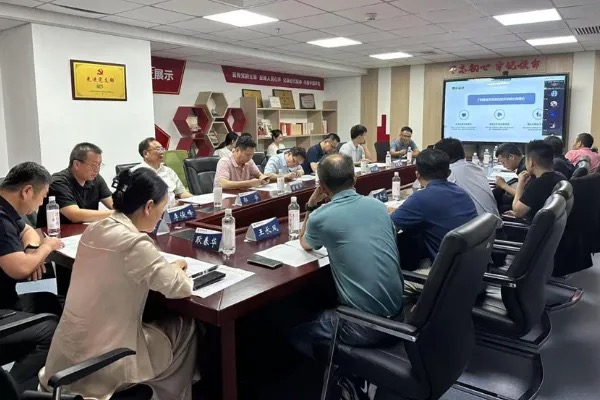
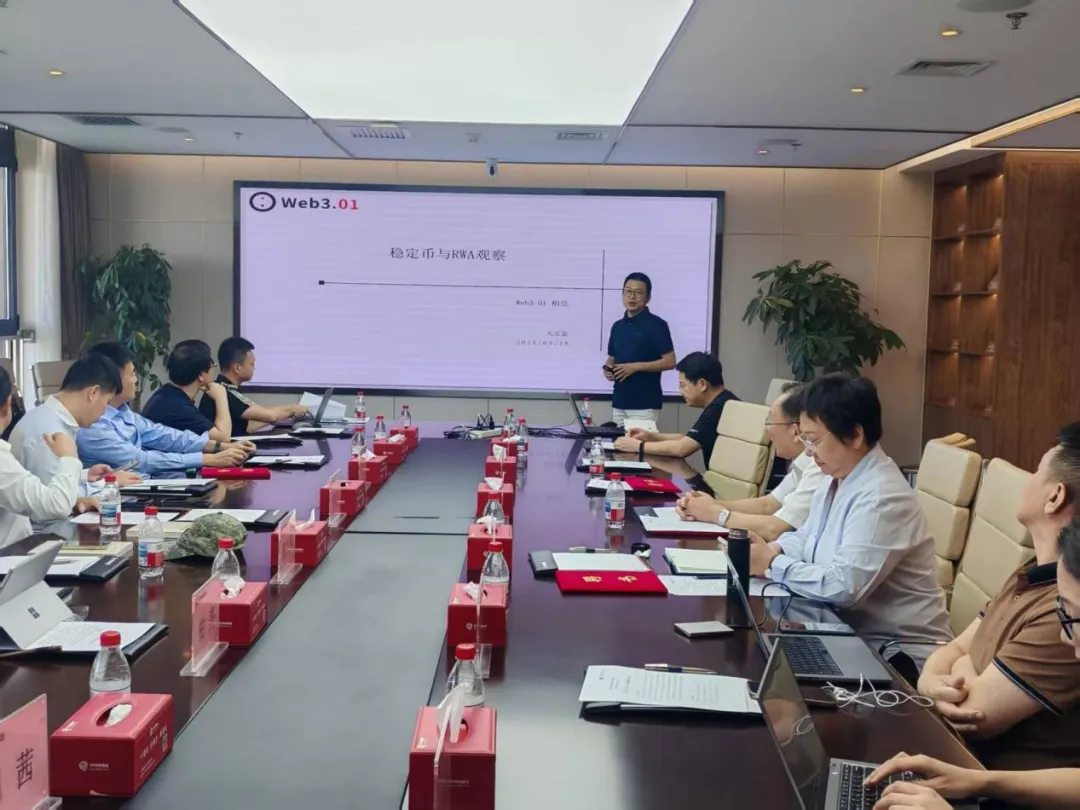
Source: 01 Metaverse Original link: https://mp.weixin.qq.com/s/0VOy28ntVjdSO9ZUmGArPQ2025年9月18日,由北京市互联网金融行业协会主办的“香港稳定币与RWA发展前沿研讨会”在91科技大厦顺利举行. Association leaders, professors from well-known domestic universities, industry experts and business representatives gathered to have in-depth exchanges on the compliance path, practical cases and future trends of stablecoins and RWA (real world assets) to inject new momentum into digital asset research and industry connections. The Association's president, Xu Zewei, delivered an opening speech. He said that Hong Kong's core status as a free port has never changed, and that the accelerated return of international capital not only confirms its position, but also shows firm confidence in the Chinese economy. This market trust resonates with domestic development confidence and innovation energy, and has laid a solid foundation for stablecoin and RWA compliance research. He stressed that the Association has included this field in the research category, and in the future, it will give full play to its role as a bridge link and gather resources from all parties to promote in-depth research and compliance practices. Subsequently, the Association announced the establishment of the Digital Asset Research Center, awarded a license on site and appointed Bai Liang, CEO of 01 Finance, as the center director to coordinate research organizations, industry exploration and leadership, and industrial resource docking. At the same time, the Association issued letters of appointment for “Digital Asset Research Center Expert Committee Members” to the first group of experts. The candidates included well-known scholars such as Professor Guo Hua and Professor Guo Tianyong of the Central University of Finance and Economics, Professor Wang Lai of the Shanghai University of Political Science and Law, as well as business executives in the industry. The expert committee will continue to expand, and more authoritative figures covering the fields of law, finance, technology, etc. will be hired in the future to establish a comprehensive research support system. During the opinion sharing session, guests from all walks of life contributed their insights. Bai Liang, CEO of 01 Finance, reviewed the stablecoin development process, saying that the stablecoin market has gone from barbaric growth to compliant development. RWA tokenization is injecting vitality into global finance. Hong Kong's practice in tokenized green bonds and other fields provides an important reference sample for the industry to understand relevant system design and operation models, and the integration of stablecoins and RWA will become a key driving force for the development of digital finance. From a legal perspective, Professor Wang Lai of the Shanghai University of Political Science and Law suggested conducting thematic discussions according to enterprise types to accurately explore Hong Kong's compliance path; Professor Guo Tianyong of the Central University of Finance and Economics emphasized the need to balance cross-border capital flows and regulatory requirements and be wary of systemic risks; Professor Guo Hua focused on the core contradiction between “real name and anonymity” and proposed that interaction mechanisms between stable coins, RWA and digital yuan should be gradually explored; Guo Dagang, strategic adviser to the Beijing Internet Finance Industry Association, called for the establishment of a synchronized institutional restraint and risk control framework to ensure steady development. In combination with practice, business representatives believe that asset tokenization needs to solve the underlying asset authenticity and compliance issues, and at the same time establish and improve transaction mechanisms and investor appropriateness management systems. Guo Dagang said that in the next step, the Association will focus on promoting the establishment of a special stablecoin and RWA compliance research team to continuously track domestic and foreign policy and market trends, study cross-border capital flows and risk control plans, and promote industry-university-research cooperation to ensure that research results can be applied in a timely manner. At the end of the conference, Xu Zewei said that stablecoins and RWA are strategic opportunities to promote the integrated development of digital finance. The Association will rely on the Digital Asset Research Center to regularly organize research and exchanges to form a series of research results and policy suggestions to provide reference for regulatory decisions and provide direction for industry development. In particular, he mentioned that on July 9, the Association issued a “Risk Reminder on Being Wary of Using New Concepts such as “Stablecoins” to raise funds illegally” through its official WeChat account to remind the market to pay attention to related potential risks. The holding of this seminar continued the Association's consistent risk warning and industry self-discipline spirit, and also reflected the attitude of actively promoting research and industrial practice on the premise that risks are manageable. He hopes that through the joint efforts of academia, industry, associations, and regulation, the practice of stablecoins and RWA in China will be healthy and orderly. Twitter: https://twitter.com/BitpushNewsCN比推 TG Community: https://t.me/BitPushCommunity比推 TG Subscriptions:... https://t.me/bitpush

332d ago01区块链#01 metaverse
How many stablecoins does Hong Kong need

How many stablecoins does Hong Kong need

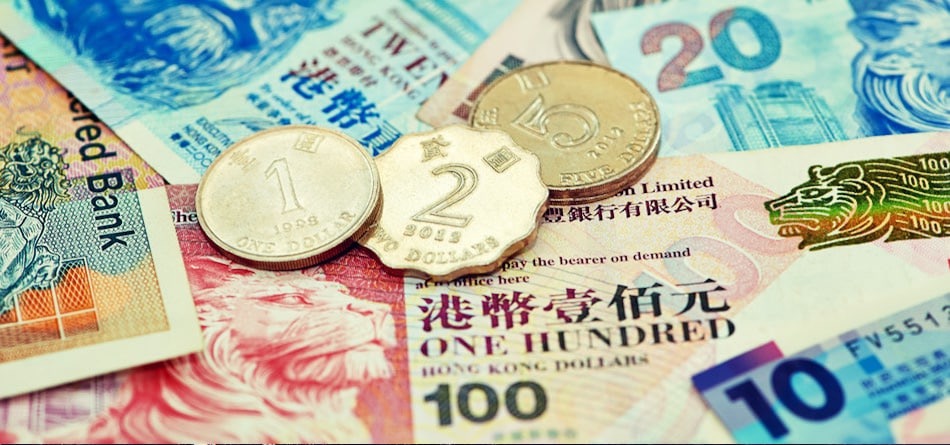
Source: The development path for the 01 metaverse Hong Kong stablecoin may be: the license will be issued early next year. Under the premise of compliance and effective supervision, the Hong Kong dollar stablecoin will take the lead in expanding; while offshore RMB stablecoins are constrained by insufficient supply capacity, and a series of tasks will need to be done before they can actually scale up. Hong Kong's Stablecoin Ordinance came into effect on August 1, 2025 and began accepting license applications from fiat-anchored stablecoin issuers. The first batch of licenses is expected to be issued in early 2026. According to the HKMA data, up to 77 applications had been received by the end of August. The first round of applications ended on September 30, indicating that the Hong Kong stablecoin license is progressing step by step. Recently, there have also been some different voices about Hong Kong stablecoins. Judging from the game between China and the US, it seems unlikely that the new opportunities for the development of the Hong Kong dollar and offshore RMB stablecoins on the chain will be abandoned. Offshore RMB stablecoins may also help promote the internationalization of the RMB, and at the same time drive an increase in the size of offshore RMB bonds. Implementing HKD and offshore RMB stablecoins on the basis of compliance, effective regulation, and manageable risk may be the wish of the supervisory authorities. We expect that after the first batch of stablecoin licenses in Hong Kong is issued early next year, it will mainly test the waters for Hong Kong dollar stablecoins, while the issuance of offshore RMB stablecoins may take some time to prepare, including increasing the size of the offshore RMB bond market. · The Hong Kong Monetary Authority's requirements for stablecoin application scenarios focus on whether they can “perform a real and beneficial function in the financial system”. We assume that Hong Kong dollar stablecoins will all be mainly used in Hong Kong's cross-border trade settlement. In 2024, Hong Kong's total trade volume is 1.2 trillion US dollars. Assuming that 5% of Hong Kong dollar stablecoins will be settled, the amount is over 60 billion US dollars. Assuming that the circulation rate of Hong Kong dollar stablecoins is 6, the demand for Hong Kong dollar stablecoins due to trade settlements alone is $10 billion. · By the same logic, China's total trade volume in 2024 is 6.2 trillion US dollars, a 5% penetration rate, and a circulation rate of about 6, which means that the demand for RMB stablecoins for trade settlements will exceed 50 billion US dollars. The above is probably the lower limit of the market's reasonable demand for HKD and RMB stablecoins. This does not include the demand for Hong Kong dollars and RMB stablecoins for crypto asset transactions or even real-world asset tokenization. However, in terms of supply capacity, the supply of Hong Kong dollar stablecoins is basically sufficient; however, the supply capacity of RMB stablecoins is seriously lacking. · According to HKMA data, as of 2024, the balance of unliquidated HKD bonds is US$153.7 billion, with corporate bonds of US$114.2 billion deducted. The balance of Hong Kong government bonds is around US$40 billion, corresponding to the HK$10 billion stablecoin demand, and the coverage ratio will be less than 4 (considering that 40 billion government bonds will not be short-term bonds, and the reserve assets behind stablecoins are mainly short-term government bonds); · Looking at the supply of offshore RMB stablecoins, it will be mainly limited by the low size of offshore RMB government bonds in Hong Kong. According to HKMA data, as of 2024, offshore RMB government bonds are less than 50 billion US dollars, and according to the above calculation, trade settlement demand alone will drive 50 billion US dollars in stablecoin demand. The backward development of the offshore RMB bond market will be the biggest obstacle to the development of offshore RMB stablecoins. Looking ahead, the development path of Hong Kong's stablecoins may be that a license will be issued early next year. Under the premise of compliance and effective supervision, the Hong Kong dollar stablecoin will take the lead in expanding the scale. Offshore RMB government bonds (including central bank notes) may increase issuance efforts, and the scale of RMB swaps may also increase to increase offshore RMB stocks. Only after making these related preparations can offshore RMB stablecoins actually scale up. Chart 1: The size of Hong Kong dollar bonds and the size of offshore RMB bonds. Data source: Hong Kong Monetary Authority, Yinuo Asset...

341d ago01区块链#01 metaverse
Stablecoin Success or Failure Revelation 2: Hong Kong's only way out is to build the world's number one stablecoin market

Stablecoin Success or Failure Revelation 2: Hong Kong's only way out is to build the world's number one stablecoin market

(Source: 01 Metaverse Original Link: https://mp.weixin.qq.com/s/nc4qkWfTZisi40rz5iRzqg原文标题:稳定币成败启示录之二:香港的唯一出路是打造全球第一的稳定币市场在上一篇文章中(稳定币成败启示录之一:为什么美元赢了,欧洲输了?) We have analyzed the dual nature of the stablecoin world: with “vague wisdom” and market power, the US quickly iterated and gained ground with USDT and USDC, and was backed by compliance legislation to create today's US dollar stablecoin empire; while Europe and Singapore have personally stifled the development of innovation in their own countries due to “perfect regulation.” The lesson of history is clear and profound: in the field of financial innovation, timing and ecology are far more important than perfect rules. What are the implications for Hong Kong? In May of this year, the Hong Kong Stablecoin Regulations were passed by the Legislative Council, officially entered into force on August 1, and a series of guidelines and rules were issued. The world's eyes are on Hong Kong. Is there an opportunity for Hong Kong to become a new growth pole in the stablecoin sector rather than just a regulatory sample like Europe and Singapore? Frankly speaking, if Hong Kong continues on its current path — pursuing a “perfect” regulatory framework, careful market cultivation, and progressive innovation pilots — the answer is no. Hong Kong needs to recognize a harsh reality: in the current stablecoin world, MeToo's “good boy” is bound to fail. The success or failure of Hong Kong's stablecoin must not only be viewed as a financial regulation issue; it must be elevated to the level of a national digital finance strategy. The only way out for Hong Kong is not to design an impeccable regulatory framework, but to make every effort to create a stablecoin market with the most abundant liquidity, the richest application scenarios, and the most dynamic in the world. And the burgeoning RWA is a strategic gripper for stablecoins. Hong Kong should forge a “stablecoin corridor” with a higher pattern and more innovative thinking, so as to seize the initiative of the stablecoin revolution and become a solid fulcrum of the national strategy rather than a passive defensive follower. 01 Breaking the “regulatory trap”: A shift in thinking from a “regulator” to a “market nurturer” The biggest risk currently is that Hong Kong may inadvertently slip into a “regulatory trap.” It's a seemingly responsible, but in fact fatal, mindset: trying to anticipate and eliminate all risks by making exhaustive rules. The result, as Europe's MiCA Act shows, is the creation of a “delicate empty shell” — the system is perfect, but the market is in decline. Compared to Europe and Singapore, Hong Kong's unique pattern gives it a transcendent potential. The development of stablecoins in Hong Kong is not limited to local regulatory experiments. Hong Kong regulators must complete a profound shift in thinking: from “financial regulators” to “market nurturers”. The goal of regulation should not be to “do nothing”, but to “get things done” — to cultivate a prosperous ecosystem on the premise of maintaining the bottom line of financial security. This means that regulation itself needs to become a service (Regulation as a Service), and its core KPIs (key performance indicators) should be the depth of liquidity in the market, the number of ecological projects, and the share of stablecoins issued in Hong Kong in global settlements, especially RWA settlements. Stablecoins are the infrastructure that powers the digital economy, cross-border payments, and DeFi. The consequences of excessive regulation are obvious: SMEs and startups are excluded from high thresholds, forming an oligopoly and stifling diversified innovation; stablecoins and DeFi ecosystems are fragmented, causing Hong Kong to be marginalized in the Web3 wave and unable to integrate into global decentralized networks; the “regulatory arbitrage” effect is prominent, and potential projects flow to more flexible jurisdictions such as the US, Dubai, or Abu Dhabi. Instead, Hong Kong is left behind in the digital finance competition. To solve this dilemma, Hong Kong can introduce hierarchical classification and regulation under existing regulations, stratified according to scale: large-scale, public-facing stablecoins (such as banks or tech giants) can carry out appropriate strict management of sufficient capital, reserve disclosure, and risk areas; small-scale, experimental stablecoins can first test the waters within a relatively relaxed “regulatory sandbox” and receive exemption or leniency treatment. Classification by function: payment stablecoins emphasize reliability; investment or experimental types focus on disclosure and protection rather than total restraint. Progressive in stages: Startups start in a sandbox and gradually move into full supervision as the scale expands to avoid “one-size-fits-all” stifling new forces. Furthermore, the space for innovation is worth exploring boldly: normalizing the sandbox to rapidly iterate stablecoin issuance platforms. Here in Hong Kong, we must change our way of thinking and change the sandbox from a single one...

341d ago01区块链#01 metaverse
Song Min | Stablecoin Risk and Regulation: Monetary Sovereignty and Financial Policy Challenges

Song Min | Stablecoin Risk and Regulation: Monetary Sovereignty and Financial Policy Challenges

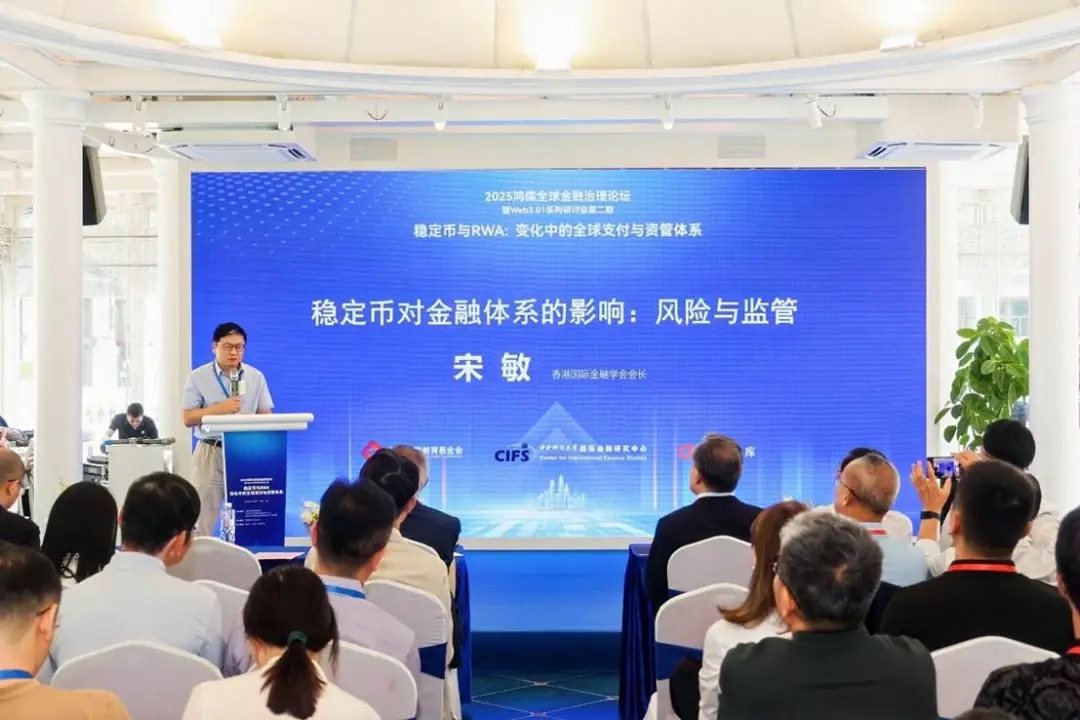
Source: 01 Metaverse Editors: On July 18, 2025, the “2025 Hongru Global Financial Governance Forum” was successfully held in Shenzhen, co-hosted by the Hongru Financial Education Foundation, the International Finance Research Center of the Central University of Finance and Economics, and Tsinghua University's Wudaokou School of Finance alumni in the Greater Bay Area, hosted by 01 Think Tank and Web3.01. The theme of this forum was “Stablecoins and RWA: The Changing Global Payment and Asset Management System”. Song Min, a professor at the School of Economics and Management at Wuhan University and president of the Hong Kong Society of International Finance, was invited to deliver a keynote speech on “Stablecoin Risk and Regulation: Challenges of Monetary Sovereignty and Financial Policy”. This article is based on the content of the speech and has been confirmed by me. Song Min delivered a keynote speech With the development of crypto assets and cryptocurrencies, stablecoins have been further developed as a pricing and trading tool for crypto assets during transactions. As a fiat token, stablecoins have the characteristics of quasi-currency. They are infrastructure for cryptographic finance and a bridge between crypto finance and traditional finance. Without stablecoins, the above two types of finance will develop in isolation. Cryptofinance will not have an impact in the real economy. Most cryptocurrencies can only be used as speculative tools, and stablecoins can connect these two markets. As a bridge, stablecoins have broadened the scope of use of crypto finance, but at the same time, they may also push the risks of crypto finance to the traditional financial system. Conversely, the risks arising from the traditional financial system will also spread to the crypto finance space. The application of stablecoins stems from the demand for cryptocurrency transactions, but with the introduction of stablecoins, it has begun to enter more physical spaces such as cross-border payments, and may also enter supply chain finance such as retail and B2B in the future. It has begun to move from on-chain payments to off-chain, and its importance is becoming more and more prominent. Furthermore, as more off-chain assets go onto the chain, the so-called RWA, on-chain transactions will increasingly demand stablecoins as payment and trading instruments. Therefore, we must consider the impact and risk that stablecoins bring to the financial system. 01 Stablecoins and the banking system Although stablecoins are tokens of existing currencies, in some countries with a low level of financial development or high inflation, people already widely use stablecoins as payment tools in commercial activities. At the same time, stablecoins also perform the function of value scale and value storage, and have become actual currencies. With the increase in off-chain applications, especially the gradual application of stablecoins in cross-border payments, the monetary function of stablecoins is becoming more and more prominent. This trend has had a certain impact on traditional banks' payment systems. Stablecoins may also have a structural impact on banks, causing deposits to shift from small amounts to large deposits and concentrate from small banks to large banks. In the process, although the total amount of deposits remained the same, the deposit structure changed. Large banks will get more large deposits and business opportunities, while small to medium banks may be at a competitive disadvantage. This change will not only affect the bank's business model, but may also have a profound impact on the stability of financial markets. 02 Relationship between stablecoins and central bank digital currencies Stablecoins and central bank digital currencies are not necessarily competitive relationships, but may have division of labor and synergy. For example, transactions between state-owned enterprises and large enterprises may rely more on a more secure central bank digital currency system, while many small and medium-sized enterprises and individuals prefer to use market-based stablecoins because they require higher transaction speed and convenience. This division of labor allows stablecoins and central bank digital currencies to complement each other. Furthermore, there can be coordination between them. For example, stablecoin issuers are required to hold the central bank's digital currency CBDC as reserves, directly linked to the central bank's digital currency, rather than simply relying on short-term treasury bonds. In economies with high inflation and low levels of financial development, the US dollar stablecoin may replace the local currency, and the so-called dollarization phenomenon will occur. This is beneficial to the US dollar's international status and has increased the dollar's hegemony, but the risk of the US is also very high. If the US were to issue US dollars on the global chain, it would be equivalent to the development of offshore dollars back then. Currently, the offshore dollar is very large, which poses a certain challenge for the Federal Reserve to control the total amount of money and interest rates. The dollar on the chain may also be very large in the future. Similar to a huge offshore dollar, the US dollar stablecoin will also have an impact on the decisions of the US monetary authorities. 03 Stablecoins and macroeconomic policies With the diversification of stablecoin issuers, fintech companies are gradually becoming important participants in currency issuance. This trend has both positive aspects and new risks. If stablecoins are issued on the basis of treasury bonds held by fintech companies, currencies...

367d ago01区块链#01 metaverse #stablecoins #Monetary sovereignty
2025 Hongru Global Financial Governance Forum “Stablecoins and RWA: Changing Global Payment and Asset Management Systems” was successfully held

2025 Hongru Global Financial Governance Forum “Stablecoins and RWA: Changing Global Payment and Asset Management Systems” was successfully held

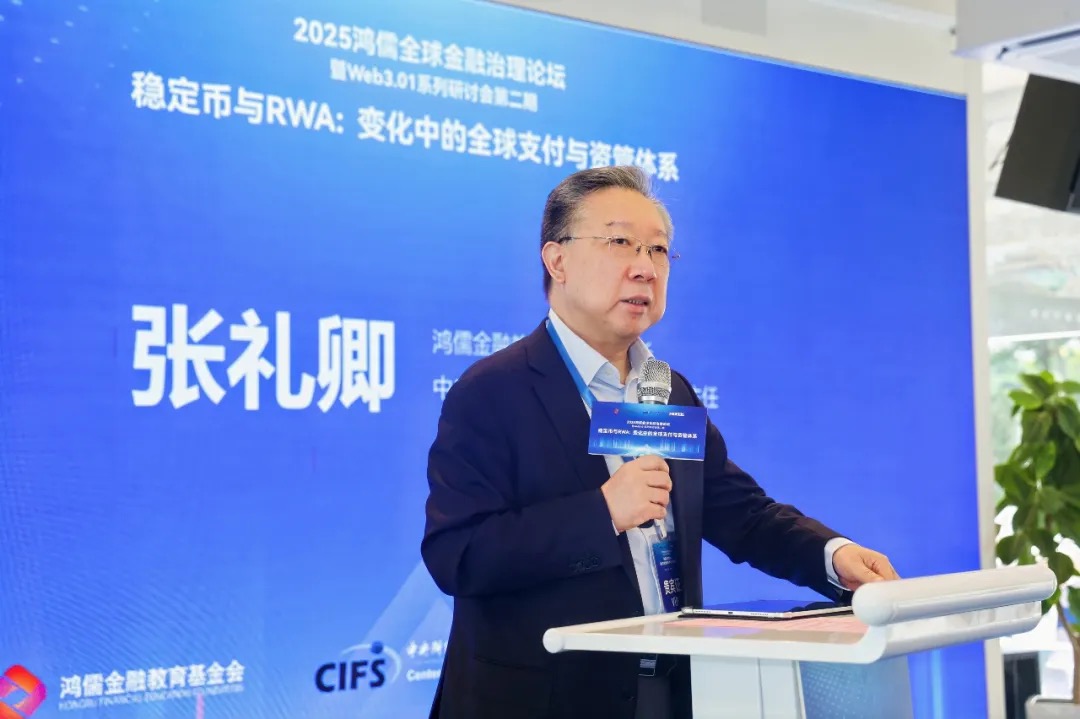
Source: 01 Metaverse Original link: https://mp.weixin.qq.com/s/hkNHhskgygFbWv72PUkXIg2025年7月18日,由鸿儒金融教育基金会、中央财经大学国际金融研究中心和清华大学五道口金融学院科企大湾区校友联合主办,零壹智库承办的“2025鸿儒全球金融治理论坛”在深圳成功举办. The theme of this forum is “Stablecoins and RWA: The Changing Global Payment and Asset Management System”. Zhang Liqing delivered a welcome address and opening speech Professor Zhang Liqing, Chairman of the Hongru Financial Education Foundation and Director of the Center for International Finance Research at the Central University of Finance and Economics, delivered the opening speech. Professor Zhang pointed out that since 2023, the European Union, Singapore, Hong Kong, China, and the United States have successively completed legislative procedures for compliance management of stablecoins, making provisions on the definition of stablecoins, entry thresholds for issuers, currency stabilization mechanisms and maintenance of reserve assets, circulation compliance requirements, and special regulatory rules for important stablecoins, indicating that the issuance of stablecoins, which had previously grown savagely, is entering a stage where stablecoins are being strictly regulated. Currently, academia, industry, and regulators have not reached a complete consensus on stablecoins and RWA. From an international perspective, the Trump administration actively supports the development of compliance with crypto assets and stablecoins, while the Bank for International Settlements and the European Central Bank, led by Lagarde, have taken a very cautious or even relatively negative stance. From a domestic perspective, the industry has many expectations, but the regulatory authorities are more cautious. In view of this situation, it is very meaningful to communicate and even argue through forums, meetings, etc. Professor Zhang Liqing stressed that due to anchoring fiat currency or other assets with stable value and peer-to-peer value transfers through blockchain, stablecoins have obvious advantages as a cross-border payment tool; however, they also have many problems and flaws, including weakening monetary sovereignty, affecting monetary policy and banking system stability, and facilitating money laundering and terrorist financing. In the future, as compliance regulations are strengthened, the superiority of stablecoins in terms of speed and cost as a means of cross-border payment will weaken, and the growth in market capitalization and transaction volume is likely to slow down. US dollar stablecoins are expected to increase demand for US treasury bonds in the short term, thereby consolidating the US dollar's hegemonic position; however, in the long run, the increase in demand for US bonds is unsustainable, and it is impossible for US dollar stablecoins to stop the eventual decline of the dollar's status. While continuing to push forward the central bank's digital yuan and “currency bridge” project tests, China should step up research on offshore RMB stablecoins. Professor Zhang Liqing believes that the essence of RWA is to transform real-world valuable assets (such as real estate, stocks, bonds, receivables, etc.) into digital tokens through blockchain technology, so that traditional assets can be traded, distributed, and managed on the blockchain, which is of positive significance in revitalizing existing assets and promoting their rational allocation on a global scale. This process is closely linked to the development of stablecoins and will have a significant impact on the entire financial system. There are currently quite a few successful cases overseas. However, due to capital controls, RWA cannot be implemented in mainland China for the time being. Relevant parties should actively carry out relevant research and explore the possibility of piloting it within a certain range. Joyd delivered a keynote speech Joyd, Vice Chairman and Secretary General of the Shanghai Development Research Foundation, delivered a keynote speech on “Exploring the Essence, Role, and Development Prospects of Stablecoins from the Rise and Fall of Libra”. Joyd pointed out that the original purpose of Libra was to establish a “borderless currency and financial infrastructure to serve billions of people,” yet Libra declined because it hit the red line of regulation. The essence of stablecoins is a digital asset payment tool that uses blockchain and distributed account technology to achieve relatively stable prices through a value anchoring mechanism. Compared to Libra, stablecoins are a mixture of “decentralization” and “centralization,” and the relationship with fiat money is an attachment rather than a replacement. Stablecoins can link virtual assets with the real economy, improve cross-border payments, and preserve value for residents in some developing countries; in the short term, they are beneficial to expanding the use of the US dollar and may enhance the status of the US dollar, but there are also hidden risks, which have a major impact on the global monetary system, but it is difficult to say about restructuring or disrupting it. Joyd believes that the development prospects of stablecoins depend on the positions of major countries, the attitude of international economic organizations, the central bank's digital currency CBDC progress, and its own operation. The most likely outcome for stablecoins is to complement fiat currencies rather than replace fiat currencies. Song Min delivered a keynote speech Professor Song Min, President of the Hong Kong Society of International Finance, delivered a keynote speech on “The Impact of Stablecoins on the Financial System: Risk and Regulation” to discuss in depth...

383d ago01区块链#01 metaverse #stablecoins
RWA+ stablecoin compliance innovation and development summit held, industry compliance development became the focus of attention

RWA+ stablecoin compliance innovation and development summit held, industry compliance development became the focus of attention

Source: 01 Metaverse Original link: https://mp.weixin.qq.com/s/YA882zToeji1VsZoToUMhg7月23日,由中央财经大学金融创新与风险管理研究中心、中国移动通信联合会区块链与数据要素专委会、国声智库文化发展中心、新华网上市公司研究院联合主办的“RWA+稳定币合规创新发展峰会”在北京召开. With the theme of “RWA+ Stablecoins: New Changes in Global Payments, Asset Allocation and Financial Systems”, the summit brought together dozens of industry experts, academic representatives and business people from relevant departments in mainland China, Hong Kong and Macau, Singapore and the US to discuss cutting-edge issues of real-world assets (RWA) and stablecoins in compliance innovation, technology application, and regulatory frameworks. Gu Weiyu, the host of the “RWA+ Stablecoin Compliance, Innovation and Development Summit” live summit and director of the Financial Innovation and Risk Management Research Center at the Central University of Finance and Economics, pointed out that the combination of RWA and stablecoins is an important force in promoting the integration of finance and the real economy in the digital age, and the industry needs in-depth discussions across fields and borders to clarify the development logic. Qiu Xiaomin, executive vice director of the Xinhua Online Market Research Institute, said that the development of stablecoins and RWA has become an important issue in the global economy. The US and Hong Kong, China and other places have introduced regulatory frameworks, but we need to be wary of issues such as liquidity management and money laundering risks. At the summit, many experts and scholars, including Zhao Jian, director of the Xijing Research Institute, Bai Liang, CEO of the 01 think tank, Guo Hua, professor at the Central University of Finance and Economics, and Li Junfeng, a professor at the Central University of Finance and Economics, conducted in-depth discussions on the business development and policy supervision of stablecoins from the dimensions of the international monetary system, regulatory practices, and technology application. During the technical application and practice sharing session of the summit, Liu Meeting, vice president of Sanwei Xin'an, explained in detail the security fundamentals of RWA and stablecoins from a cryptographic perspective. He believes that the integration of technologies such as blockchain and private computing is the key to trustful integration of physical assets onto the chain, and that anti-quantum cryptography and other technologies will improve the level of security compliance. Chen Xiaohua, director of the Blockchain and Data Elements Special Committee of the China Mobile Communications Federation, introduced the agency's practical results in the field of data elements, including formulating data asset standards and promoting the “RWA Ecological Partner Action Plan.” He stressed that the development of the industry needs to focus on physical fields with stable returns, such as new energy and the industrial Internet, to achieve the value of stablecoins through deep integration of technology and industry. At the opening ceremony of the RWA and Stablecoin 50-person Forum, Xu Yunfeng, executive director of Guosheng Think Tank, said that the summit not only built a platform for cross-regional and cross-sector exchanges, but also provided a concrete gripper for the development of the industry by releasing practical projects. With the rapid evolution of the global RWA and stablecoin markets, China needs to collaborate in theory, policy and technology, use Hong Kong as a fulcrum to connect with international rules, and at the same time rely on the mainland's huge physical assets and application scenarios to explore compliance development paths with Chinese characteristics...

390d ago01区块链#01 metaverse #RWA #stablecoins
Xiao Geng: Hong Kong's development of RMB stablecoins can improve the valuation of RMB assets

Xiao Geng: Hong Kong's development of RMB stablecoins can improve the valuation of RMB assets

Source: 01 Metaverse author Xiao Geng, an expert group member of the Hong Kong Special Administrative Region Chief Executive Policy Group, and Professor and Vice Dean of the School of Public Policy of the Chinese University of Hong Kong (Shenzhen), reprinted from the 20th issue of the “Hong Kong International Financial Review”. Under the “Stablecoin Bill,” issuing fiat stablecoins in Hong Kong, China, issuing Hong Kong dollar stablecoins, and actively promoting the issuance of fiat stablecoins to the Hong Kong public requires applying for a license. These latest legal and regulatory changes will push Hong Kong to create a future digital financial infrastructure based on stablecoins, blockchain, and smart contracts, and are of profound significance in consolidating and enhancing Hong Kong's status as an international financial center. [1] As the world's leading offshore international financial center, Hong Kong has truly achieved global trading and global pricing of assets, because its market participants include investors from China as well as investors from other regions of the world, and capital can be freely entered and exited. The price signals for financial assets generated by it are very important, providing global investors and enterprises with almost unique high-quality asset pricing and trading services. These advantages can play an important role in the future fiat stablecoin product ecosystem. All sectors of society need to re-understand the advantages and position of the Hong Kong Special Administrative Region in national development. In particular, it is necessary to understand the regulatory function of currency. For example, economic and financial contracts and transactions based on RMB actually form a financial product ecosystem that circulates within China, and contracts and transactions based on the Hong Kong dollar, including future stablecoin products in Hong Kong, will form China's external circulation financial products ecosystem. These two financial product ecosystems are both linked and different, and an appropriate connection between the two can balance efficiency and risk. Unlike Bitcoin's basic decentralized framework, Hong Kong's fiat stablecoins are unlikely to be fully decentralized because they require proper supervision, including anti-money laundering, not violating the Mainland's foreign exchange control regulations, not affecting the mainland's monetary policy, and the use of blockchain and smart contract technology with certain restrictions. Over the past 10 years, the US has implemented a combination strategy and policy of strong dollar, strong macroeconomic stimulus, and high return on capital markets, while China has actually adopted a combination strategy and policy of weak yuan, limited macroeconomic stimulus, and relatively low capital market returns. The two largest and second-largest countries in the world have led to overvaluation of US dollar assets and undervaluation of RMB assets due to completely different monetary, financial, and macroeconomic policies. The specific manifestation is that the US has experienced continuous trade deficits, high return on capital, high fiscal deficit, and high federal government debt ratio. Trade surpluses, low inflation, low return on capital, low fiscal deficit, and low central government debt ratio. The emergence of such disparate macroeconomic indicators between China and the US is closely related to the level and stage of financial market development of the two countries. Looking ahead, China needs to compete with the US in terms of digital finance, and Hong Kong's development of stablecoins linked to offshore RMB can help upgrade and open up the Chinese financial industry and enhance the market valuation of RMB assets, because the new stablecoin technology can better balance the market's demand to reduce transaction costs and increase return on capital with the government's requirements for regulation and compliance (including the mainland government's foreign exchange control). Financial products based on stablecoins, blockchains, and smart contracts have huge potential and may have a huge impact on traditional financial markets and institutions, because they can replace existing traditional financial products more efficiently, have low transaction costs, and can be settled instantaneously. However, in mainland China and the US, due to the large scale of the traditional financial industry and the influence of vested interests, it will be difficult to fully implement digital financial products based on stablecoins, blockchain, and smart contracts, while Hong Kong has the conditions to take the lead in piloting digital financial products such as stablecoins due to the small size and flexibility of the overall financial industry. The traditional Hong Kong dollar can be viewed as a stablecoin without fintech technology. A simple linked exchange rate mechanism ensures that the Hong Kong dollar is linked to the US dollar, that is, it maintains a fixed exchange rate and the same interest rate as the US dollar. Hong Kong's upcoming fiat stablecoins will first be pegged to the Hong Kong dollar. Since the Hong Kong dollar is already linked to the US dollar, the Hong Kong dollar stablecoin and related financial products are still in the financial product ecosystem of the US dollar and US dollar assets. However, once the issuance of Hong Kong dollar stablecoins is mature, Hong Kong should further issue stablecoins linked to offshore RMB and supervised by the Hong Kong Special Administrative Region, as well as related offshore RMB asset management platforms, with the aim of extending many offshore assets linked to RMB in order to promote the internationalization of RMB and RMB assets. As an important pilot zone for the internationalization of the RMB, Hong Kong is the world's largest offshore...

403d ago01区块链#01 metaverse
Stablecoins: the “new anchor” of global finance

Stablecoins: the “new anchor” of global finance

Source: 01 Metaverse Original title: Anchor in the Storm: How can stablecoins reshape the global financial landscape? The global financial system is undergoing a dramatic transformation, and what is at the center of this “financial revolution” is not just Bitcoin or Ethereum, where prices have skyrocketed and plummeted, but their seemingly low-key but essential “stabilizers” — stablecoins. These crypto assets, which aim to anchor the value of fiat currency, have quietly grown from marginal experiments to the core bridge connecting traditional finance and the crypto world, and their influence is penetrating deep into the capillaries of the global economy. Imagine: the cost and time of cross-border payments was reduced from a few days or tens of dollars to a few seconds or a few cents; people in emerging markets were able to avoid sharp fluctuations in the local currency and easily access dollar assets; the decentralized finance (DeFi) ecosystem flourished due to reliable value scales and exchange media... All of this, stablecoins are making or are about to make it a reality. It is not only a “safe haven” for cryptocurrency transactions, but also shows disruptive potential in reshaping payment systems, improving financial inclusiveness, and even challenging the intermediary role of traditional banks. However, with huge opportunities come unprecedented challenges. How can the regulatory fog be cleared? How can transparency and trustworthiness of reserves be ensured? Will systemic risk accumulate at the interface between cryptography and traditional finance? Facing the rise of central bank digital currencies (CBDCs), how will stablecoins position themselves? Will it become the infrastructure for global financial inclusion in the future, or is it the trigger for a new crisis? The book “Cryptocurrency and Financial Changes” thoroughly analyzes stablecoins as a key variable in the “financial revolution.” This book not only reveals how it profoundly affects global payments, monetary policy, capital markets, and even the geo-financial landscape, but also explores the core topics of its future development path and regulatory game in a forward-looking manner. The impact of stablecoins on the global financial economy and the future development direction worth paying attention to are the following five aspects. 01 The strategic concept of the “Bretton Woods System 3.0” on the US chain Bitcoin Research Institute, a Bitcoin think tank, said in the 2024 “Global Economic Restructuring”: Competition between China and the US and Bitcoin as a tool for US governance, the US must adopt a forward-looking strategy to redefine the meaning of global economic participation. The strategy must integrate monetary, technological, industrial, and geopolitical policies to address structural vulnerabilities, enhance the resilience of the US economy, and curb the ambitions of hostile forces. The core of this potential geo-economic strategy lies in a new monetary system — the “Bretton Woods System 3.0,” which combines the stability of traditional reserve assets such as gold and US Treasury bonds with emerging financial instruments such as Bitcoin and dollar-backed stablecoins. By utilizing these assets, the US can modernize its financial architecture, stabilize its fiscal position, and strengthen trust in the dollar system. Tools such as long-term bonds, strategic gold revaluations, and expanded swap lines will allow allies to be more closely linked to the US-centered financial network, while creating a buffer against fragmentation. First, with stablecoins, the US is committed to leading a new era of digital finance. According to the March 27, 2025 article “Trump's Stablecoin Strategy Will Consolidate the Dominance of the US Dollar” in Forbes magazine, the 1944 Bretton Woods Agreement placed the US dollar at the center of global finance. Today, a new transformation is happening — not in closed-door meetings at ski resorts, but in GitHub repositories and smart contracts. With stablecoins, the US is committed to leading a new era of digital finance — the dollar's dominance not only through historical heritage, but also through new strategic and forward-looking public policies, and bold private sector-led commercial and technological innovation driven by market competition. The magazine also stated that the “National Innovation Act to Guide and Establish the US Stablecoin” is not only a regulation, but also the foundation for building a new blockchain-based dollar system. If the bill is passed, the dollar will expand further — not only through banks and borders, but also through crypto wallets and codes. Second, stablecoins offer a possibility to reshape the way money is stored and moved across borders. According to a March 27, 2025 article in Forbes magazine, consulting firm McKinsey's research indicates that the global financial system holds $117 trillion in bank deposits, including $65 trillion in personal deposits. Stablecoins offer a possibility to reshape the way money is stored and moved across borders. By supporting dollar-denominated stablecoins licensed and regulated by the US in traditional banks...

407d agoWendy#SEC #pays #bill #custodial #stablecoins #Stablecoin topic
The 20 most important data, trends, and facts about the metaverse in 2023

The 20 most important data, trends, and facts about the metaverse in 2023

Key Takeaways There's no fixed definition of the metaverse, but most people think of it as a three-dimensional virtual space that adds a visual interface to common online activities. After Facebook changed its name to “Meta,” many companies invested billions of dollars in the metaverse. However, interest waned by 2023. Most consumers are interested in the metaverse in social interaction and doing things they can't do in the real world. Since Neil Stephenson's novel “Avalanche” first appeared in 1992, the term “metaverse” has gone from science fiction to reality. The metaverse is a shared virtual reality (VR), where avatars interact in a vast digital space, and it will soon impact our lives like the internet — but will it? Just take a look at the metaverse statistics below to see how things are progressing. It's unclear whether the metaverse trend heralds true Web 3.0, or just a moment of popularity, but given the funding to develop it ($120 billion was invested in the first five months of 2022 alone), we'll hear about the metaverse for at least a few years to come. Facebook, for example, put a lot of effort into this concept and changed the company name to Meta. We've compiled a list of metaverse statistics to keep you informed as the media continues to report on this potentially revolutionary concept. “5 Key Metaverse Statistics for 2023 Most potential metaverse users (44%) would most like to use the metaverse to communicate with friends and family in a more immersive way. Three-quarters (77%) of Americans believe the metaverse could cause “serious harm” to real life. At the end of 2021, Google searches for the term “metaverse” peaked, with over 1 million monthly searches, and then began to drop sharply in early 2022. Real estate transactions in the metaverse once surpassed $500 million, but as interest declined, transactions also slowed. Despite slowing growth, assuming an annual growth rate of 41.6%, the metaverse market will reach $936.57 billion by 2030. 01. What exactly is the metaverse? As a concept that only recently emerged from science fiction, the metaverse doesn't have a universally accepted definition. It is widely believed that this is a shared, three-dimensional, explorable digital space where users can fully exist in a way they cannot currently do on the internet. IoT hardware devices often play a key role. Most concepts about the metaverse are perceived through virtual reality devices. Other than that, there are lots of questions. Is the metaverse a video game, social networking, chat app, augmented reality platform, some combination of the above, or something completely different? Until now, efforts to build the metaverse have been fragmented, and companies are unwilling to cooperate to build a huge shared world like the one featured in movies such as “Number One Player.” Proponents of the metaverse sometimes use this term to describe different aspects of the experience, from content to the driving engine, to underlying concepts like blockchain, causing confusion. Despite this, through some research, we can tell where the builders of the metaverse have reached consensus and where there are still differences. “1. There is currently no unified metaverse Most proponents of the metaverse don't refer to a single platform. Instead, they use the “metaverse” the same way people use the term “internet,” to describe a single technology adopted by everyone through global consensus. No such metaverse exists. Several competing virtual worlds, including Roblox, Decentraland, and The Sandbox, can all claim to be a nascent metaverse, but “metaverse” means complete interoperability, meaning that every digital world can interact seamlessly, just like unrelated websites on a global information network. “2. Consumers are passionate about building social connections In April 2022, researchers surveyed 2,939 people in Europe and Asia about the metaverse; 59% of respondents said they would rather participate in at least one event virtually rather than actually participate. Of these respondents, 44% said they are most looking forward to using the metaverse to connect with friends and family in a more immersive way. Another 26% said they're excited to “explore the digital world,” 10% said they would use it to work remotely, and 9% are most passionate about using NFTs and real estate to use metaverse tokens...

1038d ago元宇宙之心MetaverseHub#MetaverseHub #metaverse
ConsenSys, Ethereum's Most Influential and Powerful Company

ConsenSys, Ethereum's Most Influential and Powerful Company

ConsenSys is one of the most influential and powerful companies in the Ethereum ecosystem. It is committed to promoting the development and application of blockchain technology and providing blockchain solutions and services to enterprises and individuals. In addition to products, ConsenSys is also actively launching educational resources, investing in emerging companies, incubating emerging projects, etc., while communicating and cooperating with the government, hoping to promote blockchain technology. Due to its influence and technology, ConsenSys once grew its valuation from $3.2 billion to $7 billion within 5 months. About ConsenSys ConsenSys is a blockchain software technology company founded by Ethereum co-founder Joseph Lubin in 2014 and headquartered in Brooklyn, New York. Consensys provides blockchain development solutions, blockchain consulting services and related software tools, hoping to lower the development threshold for decentralized applications (Dapps) on Ethereum. In December 2018, ConsenSys announced a restructuring in the midst of the cold blockchain winter, laying off 13% of employees, and announced further layoffs of 14% in February 2020. In January 2023, the blockchain industry experienced another cold winter, and ConsenSys continued to lay off 11% of its employees. Due to the dissipation of the blockchain and metaverse boom, as well as frequent thunderstorms on FTX and other exchanges, related companies are not having a good time and are starting to lay off employees one after another. In November 2021, ConsenSys raised $200 million from Animoca Brands, Coinbase Ventures, and HSBC Bank at a valuation of $3.2 billion. In March 2022, ConsenSys completed Series D financing of 450 million US dollars at a valuation of 7 billion US dollars, led by Parafi Capital, and Microsoft, SoftBank, and Temasek. Table 1: ConsenSys equity financing situation Source: 01 Metaverse collates ConsenSys is also focusing on investing in emerging projects in the blockchain field. It is hoped that these projects will bring more contributions to Ethereum in the future. ConsenSys Ventures is the venture capital division of ConsenSys. Since inception, ConsenSys Ventures has made 38 investments. Judging from recent investment projects, ConsenSys generally tends to invest in early-stage blockchain startups, especially those related to Web 3 finance. Table: Some ConsenSys past financing details Source: 01 Metaverse collated based on public data ConsenSys's business model ConsenSys's main revenue comes from MetaMask's transaction fees (virtual wallets on the Ethereum network) and Infura subscription service. Other sub-services obtain related profits based on completed projects or consulting services. Additionally, to diversify revenue, ConsenSys invests part of its capital into crypto assets within the Ethereum ecosystem and manages an enterprise venture fund to support newly incubated/young/early-stage projects. According to ConsenSys, its 2021 revenue surpassed $100 million, mainly due to an increase in the number of MetaMask users due to emerging NFT and DeFi trends. ConsenSys also provides educational resources and training programs to help developers and businesses understand blockchain technology and its applications. The company provides training courses, seminars, and educational materials to help businesses and developers learn how to build and deploy decentralized applications on the Ethereum network. Overall, ConsenSys's business model focuses on providing value to businesses and developers by providing blockchain solutions and services, enabling them to build decentralized applications and innovate in the blockchain space, and continue to grow and thrive in the blockchain space. The relationship between Consensys and the Ethereum ecosystem Consensys is a very important company in the Ethereum ecosystem and has a very close relationship with Ethereum. As mentioned earlier, Joseph Lubin, one of the founders of Consensys, is one of the co-founders of Ethereum. He played a very important role in the development of Ethereum, providing many infrastructure services and development tools to help developers build, test, and deploy smart contracts more easily, and promote the development and innovation of Ethereum technology. Consensys has an incubator program that supports and invests in startups and projects to help more...

1163d ago01区块链#01 metaverse