AGI · 242

Gemini 3.7 Flash hits the market: a week after launch, breaking growth records

Comparative News, AI News, Google CEO Sundar Pichai said that in the first week of Gemini 3.7 Flash launch, it broke the previous Gemini model growth record and became Google's fastest growing Gemini model so far. However, Google did not announce the exact scale of growth and scale of use. This model really hits the cost-effective dessert zone. Artificial Analysis gave it a comprehensive intelligence index of 56. The high inference mode output speed was about 340 token/s, each evaluation task cost about 0.40 US dollars, and it entered the Pareto frontier of intelligence and completion time. The cost of the medium inference model was further reduced to $0.26, entering the Pareto frontier of intelligence and cost. In ARC Prize's independent verification, Gemini 3.7 Flash High Inference Mode received 84.6% in ARC-AGI-2 (Abstract Reasoning Benchmark), and cost only $0.25 per task. Google also quickly introduced 3.7 Flash into its products. Gemini App, Antigravity, and AI Studio are already connected, and Google Search is starting to use this model.
17h ago
US Stock Value Investing Is Heading Into Another Trap

US Stock Value Investing Is Heading Into Another Trap

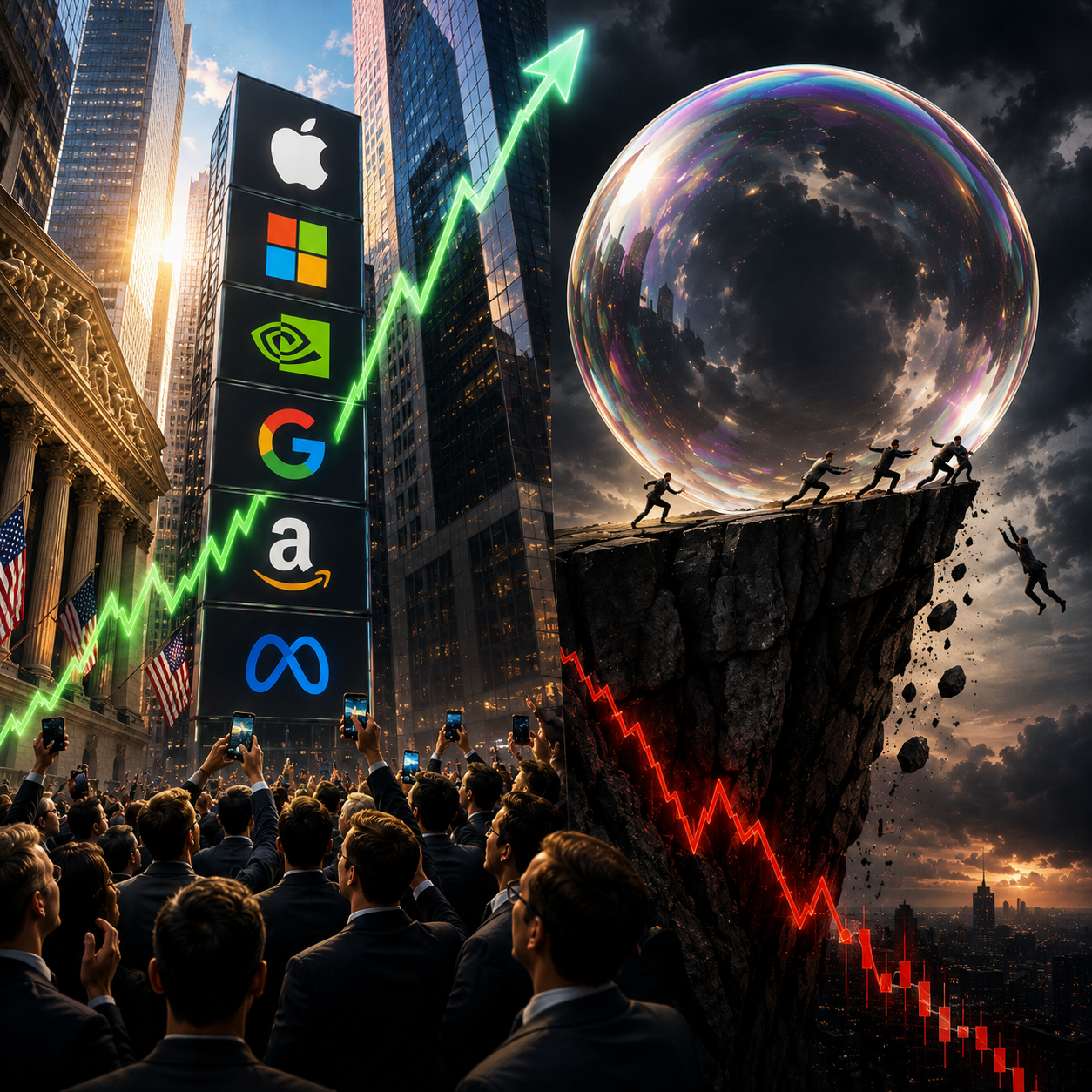
Source: Shenchao TechFlow Original title: (Opinion: Value investing in US stocks is not equal to fundamental investment) When “fundamentals are dead” becomes a consensus, investors who blindly organize giants will eventually experience astonishing capital destruction. Guide: When the market shouted “fundamentals are dead” and the capital frenzy formed a group of tech giants, the author used an astronomy discovery to unravel the logical loopholes behind this narrative. Starting from the composition of valuation multiples, this article reminds investors to distinguish between the true quality of an enterprise and the premium that the market is willing to pay. It is particularly cautionary about long-term allocation in the crypto and technology sector. I promise this introduction won't be as long as the last one on the weather. But please give me 90 seconds. More than 100 years ago, a woman named Henrietta Levitt was doing the tedious job of measuring the brightness of thousands of stars on photographic negatives (the way they were imaged before film appeared). She noticed one characteristic of a class of pulsating stars: the slower they pulsate, the brighter they themselves are. ¹ This might just seem a little interesting today, like “OK, that's pretty cool.” But at the time, astronomers couldn't tell the difference between a dark star very close to Earth and a very bright star far away. For them, the two left the same stain on the photographic film. Visual brightness is a messy mix of these two variables: how bright the thing itself is, and how far away it is from us. Henrietta's work decouples these two things: if you can observe the rate of pulsation, you can know its true luminosity; if you know its true luminosity, you can reverse the distance based on how dark it looks. Astronomers call it “standard candlelight.” A few years later, a man named Edwin Hubble discovered one of these pulsating stars, applied Levitt's math, and discovered what he had always thought was a cloud of gas within our galaxy; in fact, it was an entire independent galaxy, one million light years away. So in simple terms, the observable universe has grown about a trillion times larger, just because one person has figured out how to tell the difference between what things look like and what they actually look like. That in itself is obviously pretty cool. But another interesting thing is that around the same time period, two other astronomers each independently drew a scatterplot. One axis was actual luminosity, and the other axis was temperature. They discovered that stars are not randomly distributed in this space, but rather clustered into different families. The meaning behind this is: stars with the exact same visual brightness may and do belong to a completely different family, have a completely different past, and most importantly, have a completely different future... So what is written in the star? Over the past few years, there has been much discussion about markets, narratives, capital, company building, and financial nihilism. This feeling seems to have reached a feverish climax as the tech and financial world begins to face a very different future than a few decades ago. What is particularly clear is that separating progress from asset prices has become more noisy and in many ways more repulsive. But as an investor who makes a living by buying assets that (hopefully) outperform, a simple framework is: forward returns are roughly equal to growth in fundamentals multiplied by changes in valuation multiples (and multiplied by the dividends you've collected along the way). In this case, the valuation multiplier can very cleanly correspond to the smudges on the photographic film. It's an observable data point, but it entangles two things that the market can't directly see: how good the company actually is, and how far (or how long) its future cash flow is now. I think most of the money that can be made comes from investors who are most capable of unraveling these two variables earlier than others (or “perception of differences”), and we will continue to see astonishing capital ruin for investors who treat their stains as stars. Value investing is not equal to fundamental investing. I think there is a misunderstood view: fundamental investing has historically dominated the creation of excess returns. Most of these legends come from the Graham, Buffett, and Tiger Foundation lineage, as well as numerous narratives built around this group of people. It is believed that by some point in the 2000s, this approach was no longer effective, and anyone who invested in this way was overwhelmed by momentum, trends, and “direct buying tech giants.” The conclusion was (and still is?) It's “fundamentals are dead.” ² The modern version of “fundamentals don't matter” itself isn't stupid. It's rooted in a lot of ideas that many of us on the Compound team have written before. The biggest companies get the most mechanical purchases, and the software industry has a winner-take-all economic law. AI means that giants can transform scale into moats faster than challengers, and there are also reasons why the market's microstructure embeds momentum more deeply into our market infrastructure. These are all real...

1d ago深潮TechFlow#US stocks
Yao Shunyu reorganizes Tencent's multi-modal route: closer to Liang Wenfeng and away from Li Feifei

Yao Shunyu reorganizes Tencent's multi-modal route: closer to Liang Wenfeng and away from Li Feifei

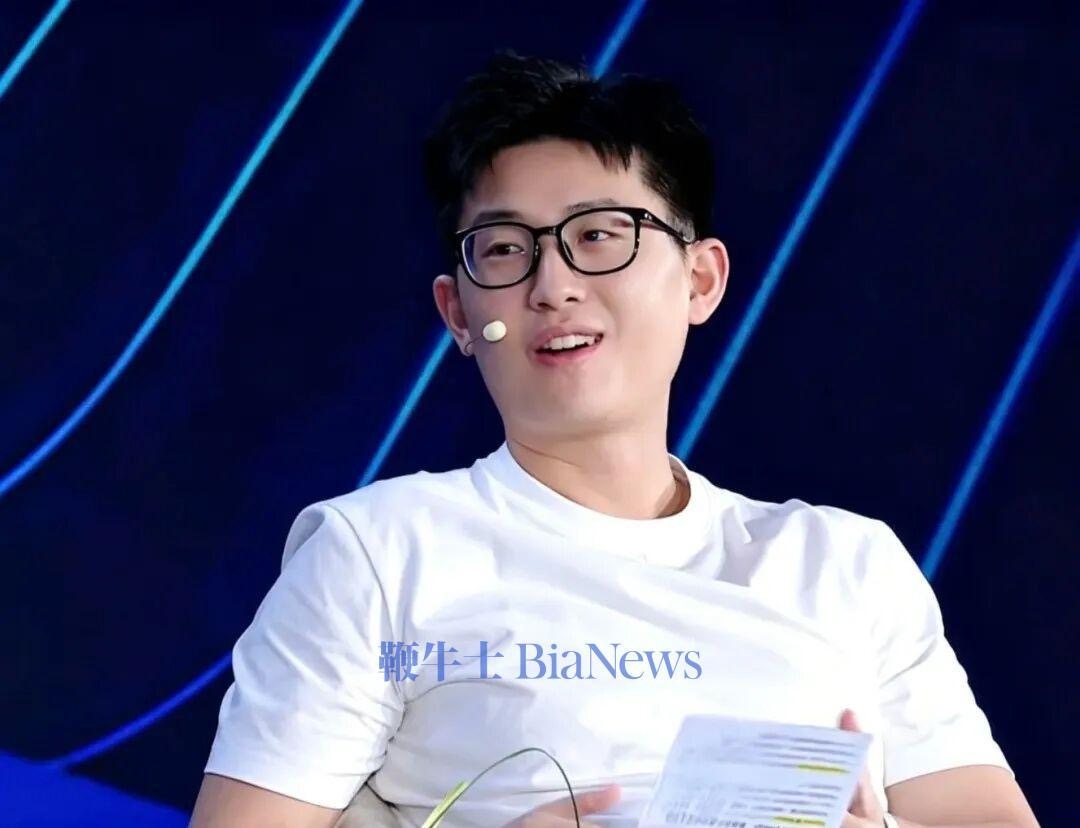
Text | Miao Zheng Editor | Wang Jing Source | Letter AI Tencent's mixed element multi-modal team has undergone another personnel change. According to media reports, Lin Xudong, who was responsible for xAI's multi-modal understanding, has left xAI and joined Tencent's mixed element as the head of the multi-modal content generation algorithm. The reason this personnel news is worth paying attention to is that it takes place in the context of continuous adjustments of mixed and multi-modal teams. Over the past period of time, news of the departure of the person in charge, the transfer of researchers, and the addition of new members came out one after another within the mixed yuan. Hu Han, the former head of multimodal understanding, left his career to start a business, and Tian Yonglong and others joined Tencent. The reporting relationship between the original multi-modal team also changed with the integration of the big language model department and the multimodal model department. However, does this mean that Tencent's multi-modal team is “changing the dynasty” is currently unable to draw a direct conclusion. What can be confirmed by public information is that mixed forces have indeed experienced personnel movements and organizational restructuring. The rumor of Lin Xudong's addition is more like a new signal in this adjustment: Tencent is recombining the two routes of multimodal understanding and content generation. So the question is, what exactly did Lin Xudong come from, and what abilities can he add to Tencent? And is Tencent's multi-modal approach shifting from “generating content” to Yao Shunyu's more biased “understanding context and acting in the world”? What is Lin Xudong's origin and what can he do after joining Tencent? According to public information, Lin Xudong graduated from Tsinghua University in 2018 and then went to Columbia University to study for his doctorate. While studying at the blog, his research interests included embedded learning, video analysis, and generative models. He also participated in the Vx2Text project in collaboration with Columbia University and Facebook AI. V indicates video, x indicates unknown, can be sound, voice, or even ambient sound. 2 represents TO, and Text represents subtitles. Its logic is to first convert different modes such as video and sound into vectors similar to “language tokens”, then uniformly feed the language model for fusion, and finally generate open text by an autoregressive decoder. Transformer can only understand tokens, so AI essentially doesn't understand video and audio file formats, making it even less likely to convert them into text. For example, if a dog jumps into the water next to a swimming pool, Vx2Text's video recognizer (V) will output keywords: dog, jump, pool; sound reader (x) will output: sound of water, fluttering. Although the product function of Vx2Text is “generation,” the core difficulty of the product is “understanding.” Of course, Vx2Text doesn't simply “translate” a screen into a few sentences. Models need to recognize people, objects, movements, and events from videos, understand how these things change over time, and finally organize visual information into language. After graduating from his PhD, Lin Xudong joined DeepMind and participated in Gemini-related multi-modal pre-training and post-training work. In 2025, he also joined xAI. According to public information, it is responsible for the direction of multimodal understanding and participating in the training of multimodal content understanding and generation models. Now that he has joined Tencent Hybrid, he will be responsible for the hybrid multi-modal content generation algorithm. Lin Xudong was added not so much to improve the performance of mixed-element multi-modal generation, but rather to solve a problem that plagues all multimodals — understanding. The previous generation model was more like a picture maker. Give it a hint, and it can generate an image or a video. But as long as users make more complex requests, the model just can't keep up. For example, the characters change in the long video, the shape of the object is not consistent before and after, the camera movement does not match the spatial relationship, etc. It's not because the model doesn't generate, but because it doesn't remember and understand the world steadily. Therefore, putting Lin Xudong in the position of multi-modal content generation is probably because he “translated” multi-modality into something AI can understand. Lin Xudong's addition can only be clearly seen in a larger context. That is, now Tencent's mixed element is reorganizing its multi-modal route. In January 2025, Tencent Outstanding Scientist (Tencent Distinguished Scientist) Hu Han succeeded Liu Wei, who had previously left his job, and was fully responsible for the research and development of mixed-element multi-modal models, and also served as Tencent's mixed-element big model Tech Lead. Tencent's internal organization was adjusted in the second half of 2025. He transferred from the Multimodal Model Department to the “Frontier” Frontier Technology Research Group under the Big Language Model Department. The title was changed to Head of the Multimodal Understanding Direction, and the reporting line was also changed to report to Yao Shunyu. The actual position changed from “the head of an independent department” to a “big language model...

3d ago字母AI#AI #Li Feifei #Liang Wenfeng #Tencent

Byte discusses training a model with over 5 trillion parameters, and the Seed base model team adjusts the architecture

Comparatively, according to a late LatePost report, ByteDance is currently discussing a large model with training parameters exceeding 5 trillion yuan, surpassing Ali Qwen 3.8-Max (2.4 trillion yuan) and Dark Side of the Moon K3 (2.8 trillion yuan), making it the largest solution currently known in China. The plan is still in its early stages, which doesn't mean it will eventually be released. The new model is to be led by Xiang Liang, head of Seed Foundation, and in collaboration with Shen Ke, the head of pre-training data for the big language model. Seed is reorganizing the organization, dividing responsibilities, and allocating resources based on this. Two weeks ago, ByteDance founder Zhang Yiming and Seed head Wu Yonghui held a full staff meeting. Zhang Yiming's appeasement team said that it was already very difficult to train the big model. He hoped to pursue the upper limit of intelligence and rank first in the world. He acknowledged that programming is currently the key direction, advocates integrating volcano engines, Feishu, and Doubao resources to build computing power and data advantages, and reminded not to be led by a single hotspot. He praised Seedance's differentiated leadership and clearly opposed distillation, arguing that it is difficult to truly surpass, that the AGI barrier should be built from a lower level, and said the company will continue to invest more in AI. Seed's multi-modal performance has been outstanding in the past six months. Seedance 2.0, Seedream, etc. drive volcanic engine MaaS, but the market response of the language model Seed 2.0 has been limited, and poor coding capabilities affect the revenue structure. Byte has introduced Guo Daya to specialize in coding with a high salary, and has collected related resources. Facing the general trend of increasing model sizes in the industry, Byte hopes to seek to overtake cars on a larger scale, push for the cancellation of horse racing, break down departmental walls, and concentrate efforts.

3d ago
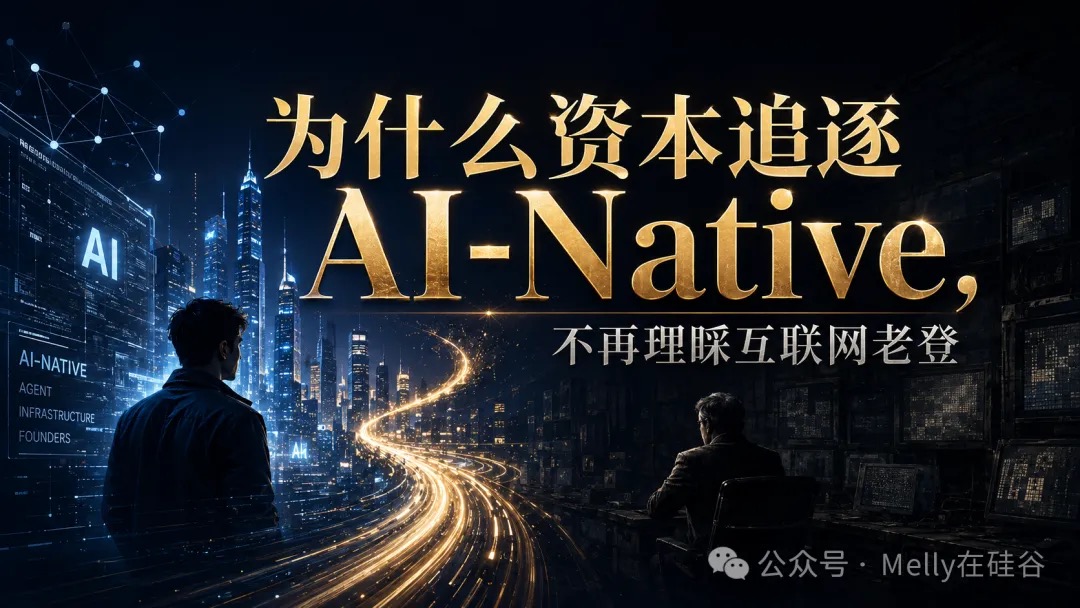
Why is capital chasing AI Native and ignoring the old Internet

Why is capital chasing AI Native and ignoring the old Internet

Capital doesn't reward being old-fashioned, not because old-fashioned people are at fault. The old part is clearly priced. There is no bad information, so there is no excess profit. Global venture capital was $510 billion in the first half of 2026, surpassing $44 billion for the full year of 2025 in one and a half months. More than 70% have entered AI; OpenAI and Anthropic took 217 billion dollars, accounting for 43%. With that much money, you'd think everyone could share a little bit. The truth is that distribution is more extreme than total volume, and the first sieve doesn't screen the industry, it screens people. The category that has been screened out now has an unkind name: the internet is old. Let's just say one thing: the “old man” in this article has nothing to do with age. It refers to a set of methodologies that have been formed in the mobile internet cycle, have been tested over and over, and have brought huge returns to holders. The person holding it may be 45 years old or 32 years old. It was this methodology that was being repriced, not the year of birth. Confusing these two things is Lao Deng's most common mistake and one of the most comfortable mistakes — because if the problem is someone else's age discrimination, you don't need to change a single word. 01 What is AI Native The term has been misused. They can use ChatGPT not called AI native, nor AI in the company name, let alone in their twenties. There are three things that really separate people. First, the starting point is a model, not a requirement. The order in which Lao Deng makes a product is: look at what the user wants, write down the requirements, and find technology to implement it. The order of AI natives is reversed: first figure out what level the model is capable of today and what step it is likely to reach tomorrow, and then move from this capability boundary to the external product. The former uses the model as a tool, and the latter uses the model as the foundation. There was no difference between these two kinds of things made by humans in the first edition; by the third edition, there was a difference of one species. Article 2. The default unit of an organization is not a person. The division of labor in the Internet age is the division of one thing into ten people. AI Native's division of labor is to take ten things from one person and add a bunch of agents. The CEO of a domestic application company said that the team consists of less than ten people, but a large number of AI work at night, and the first thing employees do every morning is check the work the AI handed in the night before. Cursor's side is even more extreme. Public reports mention that the company doesn't have a product manager; engineers write their own code, talk to users themselves, and participate in recruiting people themselves. Article 3. Information is first-hand. AI Native's input sources are papers, model cards, GitHub issues, original discussions on X, and self-run evals. Lao Deng's input sources are industry summits, closed-door meetings, brokerage reports, interpretation of public accounts, and finding someone to drink coffee with. This one is the least obscure and most lethal; I'll talk about that separately later. I'm satisfied with all three. The 25-year-old is an AI native, and so is the 45-year-old. I'm not satisfied with the three rules; I'm still an old man at the age of 25. AI natives are a state, not an age group. The trouble is that tickets in this state are works, not resumes. 02 The two lists spread the results of this round on the table. These are two lists. The first one is an all-AI native company. Their valuations are not rising; they are exchanging orders of magnitude. List 1 · Upstream OpenAI raised $122 billion in a single round of financing in Q1 2026, followed by $852 billion, the largest private equity financing in history. Anthropic Q2 had a single round of $65 billion, after investing $965 billion, accounting for about half of the total global venture capital for the quarter; the revenue operating rate in May reached about $47 billion. DeepSeek raised about 70 billion yuan in its first round of financing in May 2026. In April of the same year, Liang Wenfeng raised his direct shareholding from 1% to 34%, and controlled a total of about 84.29% of the shares through related entities. The Dark Side of the Moon (Kimi) was estimated at $4.3 billion in December 2025; it went for three consecutive rounds from January to February 2026 to reach 18 billion; the D round in May was about $2 billion, breaking 20 billion dollars after the investment; the July round surpassed $3.5 billion, after investing 35 billion dollars; the pre-IPO target was 50 billion dollars. ARR broke 100 million in March, 200 million in May, and held steady at 300 million US dollars in June, with APIs accounting for more than 70%. Smart Spectrum · MiniMax successively landed in Hong Kong stocks in early 2026, with a market capitalization exceeding 100 billion yuan. It was one of the first major model companies listed in China. The second one...

4d agoWendy#AI #DeepSeek

Geosheng Intelligent Robotics Co., Ltd. plans to go to Hong Kong for an IPO, raising up to 300 million US dollars

Comparing news, according to Bloomberg, people familiar with the matter revealed that Alibaba-supported robot manufacturer LimX Dynamics (LiMx Dynamics) has secretly submitted an IPO application in Hong Kong to raise up to 300 million US dollars. The wave of Chinese robotics company listings is once again growing. LimX Dynamics is partnering with CITIC Securities to advance the deal. LimX Dynamics (LimX Dynamics) is a embodied intelligent robotics company headquartered in Shenzhen, China. It was founded in 2022 and focuses on the R&D, manufacturing and commercialization of general-purpose robots. Core products include full-sized humanoid robots LimX Oli and LimX Luna, as well as the TRON series of modular robots, and the in-house development of the humanoid brain system LimX COSA. It is committed to promoting the implementation of AGI in the physical world, with the three major technologies of hardware design and manufacturing, integration of cognitive and motor intelligence, and embodied intelligent operating systems. The products have been used in scientific research, commercial services, and industrial inspection. The company received strategic investments from Alibaba, JD, etc., and recently completed multiple rounds of financing.

4d ago#financing

Former DeepMind scientist Cao Yuan: It will take at least 20 or 30 years for AI to win the Nobel Prize

Comparative news, according to monitoring, Cao Yuan, a former senior research scientist at Google DeepMind and co-founder and CEO of Unreasonable Labs, believes that AI for Science is entering a period of explosion. However, it will take at least 20 to 30 years for AI to truly independently make Nobel Prize-level scientific discoveries. Cao Yuan has participated in projects such as Gemini before, and now the direction of starting a business is to let AI discover new knowledge. He believes that the biggest bottleneck right now is verification. Code can be written to run tests right away, and math can also be proven using Lean step-by-step checks. But in the end, biology, materials, and physics all require real experiments. One experiment may be expensive, or it may take a long time, and it is difficult for AI to continuously test and error as fast as Coding Agent. What's more difficult is creating new concepts. Cao Yuan believes that the current model is likely to search for answers in existing knowledge, definitions, and theorems, but it still won't abstract new mathematical objects, definitions, and theories like top scientists. He abstractly refers to this concept as the last mile of AGI.

5d ago
Clark, the mysterious woman behind the $13 trillion IPO

Clark, the mysterious woman behind the $13 trillion IPO

When Indian Prime Minister Narendra Modi invited global AI leaders to meet in New Delhi earlier this year, each executive was only allowed to carry one entourage. Most people brought colleagues, while Anthropic CEO Dario Amodei brought his wife Cami Clark. Clark doesn't have any official position at Anthropic, yet he almost never misses her husband's important occasions — whether it's a front row seat at the Davos Forum or an Allen & Co. investor party in Sun Valley. According to people familiar with the matter, she is Amodei's most important strategic advisor and emotional pillar, while also managing the family's personal investment strategies and assisting in screening external investment invitations. More importantly, it was she who brought former Google CEO Eric Schmidt into Anthropic's early investor camp, laying an important foundation for the company's start. Clark's existence is under unprecedented scrutiny, as soon as Anthropic hit an IPO worth over 2 trillion US dollars (about 13.49 trillion yuan) this fall. The Wall Street Journal and The Information have recently released in-depth reports to restore the twists and turns of the “First Lady of Anthropic” from a Reno blue-collar family to the core of the world's hottest AI company — including a little-known past: she tried to raise funds from registered sex offender Epstein to seek investment in her adult film company. There is an alarming gap between the influence of Clark, a deliberately hidden “shadow advisor”, and his online presence. According to Wall Street Journal analysis and a source familiar with the matter, information about Clark on the Internet is extremely scarce, and some people have taken the initiative to delete related records. Her personal website has gone offline, her LinkedIn homepage has disappeared, and Instagram has stopped being updated. Amodei's Wikipedia page did not state that she was married until this summer, and she hasn't listed her wife's name yet. When I Google “Dario Amodei's wife,” a picture of her sister, Anthropic co-founder Daniela Amodei, often pops up. Even Anthropic's own AI chatbot, Claude, can only answer when asked about related questions: “Dario Amodei's marital status doesn't seem to have been clearly confirmed. “But in the real world, Clark's presence is very different. She accompanied her husband to high-profile events such as Davos, New Delhi, and Sun Valley, and made up for Amodei's lack of restrained personality with her outgoing social style. According to people familiar with the matter, she will take the initiative to discuss with politicians and potential investors before introducing them to her husband. At the Sun Valley conference in July of this year, she had lunch with Ivanka Trump and chatted with Jared Kushner — previously Amodei had approached Kushner to seek investment. A person who met the couple said that although the two have been together for over ten years, they “felt as close as a newlywed couple” when they saw them at an event recently. From Reno to Silicon Valley: A Winding Entrepreneurial Road Clark was born in Reno, Nevada in 1979 and grew up in a blue-collar family. According to a person familiar with her, she began working part-time at the plumber's union with her grandmother and aunt when she was 14 years old. After high school, she went to the San Francisco Bay Area to study architecture at the California Institute of the Arts, then worked in business development at high-end office furniture company Herman Miller, thus gaining her first window into the technology industry. In 1999, Clark, who was only 20, married 64-year-old Reno architect Waldemar Eklof III and divorced three years later. Since then, she has traveled between San Francisco, New York, and Los Angeles. Her San Francisco apartment was foreclosed by the bank in 2007 and filed for bankruptcy in 2009. However, she never stopped trying to start a business. Around 2009, Clark and Michelle Capocefalo co-founded Eddice, an adult film company targeting women, under the slogan “intellectually promising”...

8d ago华尔街见闻#AI #Anthropic #Dario Amodei

DeepSeek is laying out the direction of emotional AI and recruiting emotional intelligence data product managers

Comparative news, according to Intelligent Era AGI's exclusive information, DeepSeek is recruiting a large number of emotional intelligence data product manager positions with a daily salary of 510 yuan. They are responsible for optimizing the DeepSeek model's ability performance in emotional scenarios, enhancing the realism and immersion of role-playing and emotional interaction, and digging deeper into badcases in emotional scenes and performing attribution analysis. The recruitment information shows that DeepSeek is expanding from basic abilities such as programming to emotional interaction closer to human language. The product is positioned like a bean bag, aiming to create an AI model system with more “personalized” characteristics rather than being limited to programming scenarios. Previously, DeepSeek launched a preview of Harness for developers on August 13. According to Citigroup Research and Yiguan data, the current cross-platform MAU of WorkBuddy, a similar product in the market, has exceeded 20 million, and the number of monthly PC visits is 20.97 million. DeepSeek has yet to explain specific product plans in the direction of emotional AI.

8d ago

Analysis: AI stock god Leopold only keeps Anthropic holdings, and AGI's long-term belief remains unchanged

Comparatively, AI investor Leopold Aschenbrenner's Situational Awareness Fund cleared almost all of its open market stock positions in late July, retaining only private equity positions in Anthropic. Allegedly, Ken Griffin's Citadel took over most of the stock assets sold by the fund. Situational Awareness's management scale previously reached 45 billion US dollars, but after losing money on AI infrastructure-related stocks, the fund drastically cut public stock positions. With almost all of its public shares being sold, Anthropic became the only core holding that remained untapped. According to reports, Aschenbrenner saw Anthropic's potential IPO as an important catalyst in an investor letter released in July. Anthropic is one of the world's highest-valued private AI companies, and if it goes public in the future, early investors will have the opportunity to exit and redeem their earnings. Analysts believe that Aschenbrenner chose to keep Anthropic's holdings even after experiencing drastic adjustments in AI infrastructure stocks, reflecting his continued optimism about Anthropic and its own AGI long-term investment logic. Currently, Anthropic is not listed, and ordinary investors cannot directly trade its shares. The relevant open market targets in the market mainly include Amazon and Nvidia, both of which have invested heavily in AI infrastructure.

8d ago