
CLUB · 1096

US debt nears $40 trillion, investors turn to Bitcoin and gold to hedge against dollar depreciation

Comparatively, as US government debt continues to rise, investors are refocusing on scarce assets such as Bitcoin and gold as a hedge against the declining purchasing power of the US dollar. As of last Friday, the US federal debt had risen to a record $39.7 trillion, according to the US Treasury's one-cent debt data. Some market sources pointed out that US government debt is currently increasing by about 7 billion US dollars every day. If calculated by market value, this increase already exceeds that of most crypto assets. The founder of LondonCryptoClub said that the growth rate of US debt is driving so-called currency depreciation transactions, where investors buy assets with limited supply, such as gold and Bitcoin, to cope with the risk of long-term devaluation of fiat currencies. The agency believes that in a fiscal dominance (fiscal dominance) environment, the Fed's policy may be affected by government financing needs, and interest rates need to be kept low while continuing to provide liquidity to help refinance debt. Apollo's chief economist Torsten Slok previously warned that US debt already accounts for more than 120% of GDP, and there is limited room for fiscal stimulus during future economic recessions. At the same time, it is difficult for the Federal Reserve to cut interest rates as drastically as in the past, because interest rate cuts may increase inflation, reduce treasury bond yields, and affect government financing. Currently, the price of Bitcoin remains above $65,000. Driven by the easing of the situation in the US and Iran and falling oil prices, market risk appetite has rebounded. Meanwhile, Ethereum has recently outperformed Bitcoin, and the ETH/BTC exchange rate has broken through the 100-day and 200-day EMAs, and the market believes that the altcoin market may be heating up. However, analysts pointed out that since its inception in 2010, Bitcoin's price trend is more similar to technology stocks than traditional safe-haven assets, and its safe-haven properties are still disputed. This article is sponsored by GENG, Build Your Fortune on GENG (https://geng.one)
26d agoburnking

Big Brother Ma Ji's Hyperliquid was liquidated again, selling 34 BAYC and lost $6.31 million

In comparison, according to Lookonchain monitoring, Big Brother Ma Ji (@machibigbrother) sold 34 Bored Ape Yacht Club for 326 ETH ($5.14 million) in the past month, losing 399 ETH ($6.31 million). Among them, Bored Ape #6057 was purchased for 76.84 ETH 4 years ago and is now sold for 7.65 ETH, with a loss of 90%. Over the same period, it was liquidated several times with Hyperliquid's ETH transactions, and the account balance dropped to $81,000 after the most recent liquidation 3 hours ago.

55d ago

Osasuna denies involvement in rumours that Kalshi predicts downgrading, predicting that the “insurization” mechanism of the market has attracted regulatory attention

Comparing news, Spanish soccer club Club Atlético Osasuna (Club Atlético Osasuna) recently got involved in a controversy surrounding the prediction market platform Kalshi. Earlier, according to market sources, the trading volume of a Kalshi contract related to the club rapidly expanded, reaching a scale of about 591,600 US dollars. The market predicted that it might be relegated to La Liga in the 2025-2026 season, triggering speculation that the club might be hedging the revenue risks caused by the downgrade through “reverse betting”. In response, Osasuna publicly denied direct participation in any predictive market transactions and emphasized that “no bets have been placed on Kalshi or any similar platform.” The club also confirmed that it has purchased about 1.2 million euros of downgraded risk insurance through insurance brokerage firm Howden. Kalshi, on the other hand, said that the incident is closer to the redistribution of traditional insurance risk in the forecasting market: insurance brokers assume risk hedging, rather than clubs directly participating in the transaction, adding that the structure is functionally similar to a reinsurance mechanism. Notably, despite losing in key matches, Osasuna was eventually relegated due to competitors' points failure. The incident also sparked discussions in the market about predicting market usage boundaries: it is extending from speculative tools to actual risk hedging tools, and may play an “insurance-like” role in sports finance. Meanwhile, the Spanish Ministry of Consumer Affairs has launched a regulatory investigation into Kalshi and Polymarket and requested the temporary blocking of relevant platforms on the grounds that they operate without a license, but the government emphasized that the action was not directly related to the Osasuna incident.

71d ago

BAYC #8554 changed hands yesterday for only $13,000, and the transaction price shrunk by more than 91% from its 2021 high

According to CLLCT founder Darren Rovell's article on the X platform, “Bored Ape Yacht Club (BAYC) #8554 was sold for only $13,046 yesterday, and the NFT was sold for $147,953 on November 5, 2021, and the price dropped sharply by more than 90%. Analysts believe that this transaction reflects significant value fluctuations in some high-end NFTs during the market adjustment period.

76d ago

Decentralized computing platform VORAN closes $3 million seed round

Comparing news, decentralized computing platform VORAN announced the successful completion of a $3 million seed round. Investors in this round include IBC Group, CGV, All In Club, Harbor Digital Ventures, and some Web3 veterans. It is reported that VORAN aims to provide scalable decentralized computing services to the world. Officials said that the funds raised in this round will mainly be used to accelerate the development and iteration of platform applications and further expand its underlying infrastructure.

120d ago

Crypto futures exchange KieDEX closes $3.5 million funding round led by Marqel Capital

Crypto futures exchange KieDex announced a $3.5 million funding round led by Marqel Capital. The company said that this round of funding will be used to build the KieDEX platform to build a next-generation cryptocurrency futures exchange, focusing on a fast, secure and motivation-driven trading experience. Partners involved in support include Hidden Street Capital, Caviar, CSP DAO, Solulu Club, Rocket, TPC, Devmons, TATATU, etc.

127d ago
From canals to straits, Bitcoin is turning into a “hard currency” in turbulent times

From canals to straits, Bitcoin is turning into a “hard currency” in turbulent times

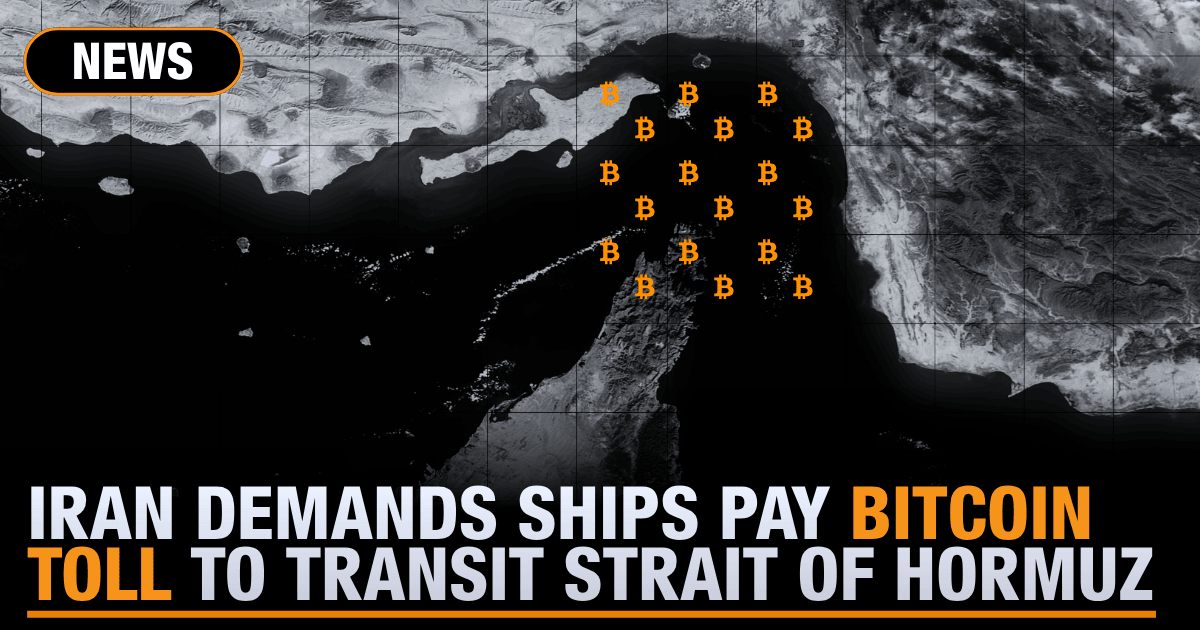
By Bill Qian, former Cypher & Phoenix co-founder & former Binance Investment Director Every war is a testing ground for innovation: tanks on the Somme battlefield in 1916, aircraft carriers that sneak up on Pearl Harbor in 1941, atomic bombs over Hiroshima and Nagasaki in 1945, and drones in the Russian-Ukrainian battlefield in 2022 and the 2026 Middle East conflict. In the Strait of Hormuz this time, cryptocurrency is also participating as an innovation in fintech — it also tells us from another perspective that the “censorship resistance” and relative “decentralization” of cryptocurrencies have become a convenient method for all parties to trade in a troubled world. Iranians want to start using cryptocurrencies and RMB for settlements. I think the probability of using mainstream stablecoins such as USDT and USDC is very small, because essentially these are all products that the US government says can be frozen; in contrast, Bitcoin is more likely to be adopted because Bitcoin is almost the only payment instrument in the current world that has no “counterparty risk.” Some people would say there's no gold, that's right, but now it's not the 19th century, and no one wants to trade physical gold. Using history as a mirror, we can compare the Suez Canal crisis in 1956 and see how then-Egyptian President Nasser dealt with it without Bitcoin. On July 26, 1956, Nasser announced the nationalization of the Suez Canal Company. The compensation agreement between the Egyptian government and the original shareholders shows that although the compensation amount is denominated in Egyptian pounds, “no less than 40% must be paid in pounds, and the rest can be paid in francs”, and the exchange rate anchors the US dollar parity as stipulated by the IMF. As a result, the entire settlement system still belongs to the British pound and dollar system from beginning to end, because Egyptians also needed the “hard currency” of the world at the time. Britain, France, and the US immediately froze all of Egypt's foreign exchange assets within its borders — including the Egyptian pound balance frozen in London, totaling about £128 million. Once this money is frozen, it lasts for three years. It wasn't until February 28, 1959 that Britain and Egypt signed the “Anglo-Egyptian Financial Agreement”, which gradually resolved this issue. Nasser won the battle, but the currency battle was bought back with money. The deeper outcome is that in 1979, Egypt signed the Camp David Agreement, becoming the first Arab country to recognize Israel. Since then, it has received about 2 billion US dollars in aid from the US every year, becoming one of Washington's most important allies in the Middle East. The canal's dollar earnings have never been frozen since — not because Egypt found a way around the system, but because Egypt chose to join the system. This was Nasser's only way out back then, and today's Iran cannot choose this path. Today's story between Iran and the Strait of Hormuz is a bit different: Iran can threaten to block the channel, but as long as its oil export revenue is still settled in SWIFT and the US dollar system, there is a risk that it will be frozen at any time. Egypt's solution is to surrender; Iran is completely unable to follow this path. Thus, Bitcoin is the first tool that really makes “circumvention” possible because it doesn't have any counterparty that can be pressured by politics. After World War II, three iterations in 70 years of global fintech Since the establishment of the Bretton Woods system in 1944, global fintech has gone through many stages of development. Essentially, it can be split into three levels: What currency do you use? What settlement system do you use? What front-end application services do you use? Phase 1 (1944—1990): Restoring order empowered by IT technology. The US dollar and SWIFT became the core of this phase of the post-war core financial order. It was the reshaping of order — America was crowned as the “New Roman Empire” and the initial application of digital technology. After World War II, in the currency layer, the world first adopted the US dollar; at the settlement system level, organizations such as SWIFT (established in 1973 and officially launched in 1977) and Visa, Mastercard, JCB, and China UnionPay appeared; in the front-end service layer, plastic cards appeared — the first credit card was Diners Club in 1950, and the first debit card was a pilot project of the Bank of Delaware in 1966. Meanwhile, in 1967, a cool financial technology, or ATM, appeared around the world. For a while, Japan even showed off the extent of its modernization with “how many ATMs per 100,000 people have.” It's important to note that here...

130d agoLuxurytracy

Polymarket's probability that the market value of FDV will exceed 50 million dollars a day after the opening of OneFootball Club falls to 14%, and the 24H decline is 51%

Comparing news, monitoring shows that the probability of “FDV's market capitalization exceeding 50 million US dollars a day after the opening of OneFootball Club” on Polymarket fell to 14%, a 24H drop of 51%. Yesterday afternoon, OneFootball Club posted an article on the X platform announcing the official launch of its token, OFC, with a market capitalization of 45 million US dollars. Keep an eye on predicting the market and see changes before pricing.

134d ago