
Chainlink · 2103

Is crypto returning to secondary investment? Take stock of high-quality tokens that have been rated by Standard Chartered

Comparing the news, with Bitcoin's recent 3-day rise of 20%, investors are speeding up the pace of returning to the native crypto family. According to the data, contract trading volume on the Binance platform soared by more than 600% in 3 days, indicating that investors may be stepping up the deployment of secondary market crypto projects. Standard Chartered Bank gave several initial ratings to various crypto market targets in the second half of this year, and the pull effect was evident after most of the ratings. Along with the strengthening of the market, there is a positive feedback effect on the tokenomics of most projects, and related projects may benefit from the recovery of cryptography and increase in market capitalization. The rating items and target prices are summarized as follows: On June 16, Standard Chartered Bank's research report covered Uniswap for the first time and predicted that its UNI token could rise 40 times to $100 by the end of 2030; On June 23, Geoff Kendrick, head of digital asset research at Standard Chartered, predicted that AAVE may rise to $3,500 by the end of 2030, which is about 50 times higher than the level of about $70 when the research report was published. On July 1, Standard Chartered Bank rated Morpho for the first time, and the project's token price is expected to rise 33 times to $60 by the end of 2030; On August 10, Standard Chartered Bank's research report covered Chainlink for the first time and predicted that its LINK token could rise 25 times to $200 by the end of 2030 from around $8 currently. It is worth pointing out that yesterday, Standard Chartered Bank analyst Geoff Kendrick said that Bitcoin may rise to $100,000 by the end of 2026, and its current key technical level is $65,500. If it breaks through this level, it may confirm that a low point in the current cycle has occurred. This article is sponsored by GENG, Build Your Fortune on GENG (https://geng.one)

1d agoburnking

Chainlink CEO: The speed with which the US financial system goes up the chain will determine its global position

Comparing news, Chainlink co-founder and CEO Sergey Nazarov said at the first meeting of the US CFTC Innovation Advisory Committee that he thanked the CFTC and SEC for finally starting an efficient and constructive cooperation rather than publicly clashing with each other before. He believes that this in itself has significantly boosted the reputation and trust of the US financial market, and helped form a unified regulatory vision to prevent the 16 or 25 conflicting rules of the past from hindering innovation. Nazarov notes that regulatory fragmentation has taken a serious toll. Chainlink provides data, cross-chain and other infrastructure for thousands of applications, and supports most of the DeFi ecosystem. Over the past seven years, he has seen with his own eyes that hundreds of developers have chosen to leave the US due to uncertainty, no longer build high-quality apps in the US, and no longer serve American consumers. These innovators are no longer on the conference site, a huge loss for the US financial system and consumers. He emphasized that the next trend is clear: tokenizing equity will unlock significant on-chain value. The US stock market currently accounts for about 60% of the value and flow of the global equity market. If the global financial system speeds up the chain, the US must push the chain up at the same or even faster speed in order to maintain this dominant position. Otherwise, innovation and market advantage may be lost.

1d ago

An artificial bull market? Crypto executives gather for the first meeting of the US CFTC Innovation Advisory Committee

Comparing news, the cryptocurrency sector has been picking up for three consecutive days. Bitcoin once surpassed $75,000 this morning and now remains near the $74,500 mark. Following US President Trump's intensive favorable remarks on the cryptocurrency sector this Wednesday, the first meeting of the US Commodity Futures Trading Commission (CFTC) Innovation Advisory Committee was held this Thursday, presided over by CFTC Chairman Michael S. Selig and others. A large number of founders and executives in the cryptocurrency field appeared on the conference list. These include: Coinbase CEO Brian Armstrong; Uniswap Labs CEO Hayden Adams; Polymarket CEO Shayne CoplanRipple CEO Brad Garlinghouse; a16z Crypto Managing Partner Chris Dixon; Co-Founder of Multicoin Capital Tushar Jainkalshi Co-founder Luana Lopes Lara; Chainlink Labs CEO Sergey Nazarov; Gemini CEO Tyler WinklevosSkraken Co-CEO Arjun Sethi; Robinhood CEO Vlad Tenev; Solana Labs CEO Anatoly Yakovenko; Representatives of companies such as Anchorage Digital, Grayscale, OKX, and Consensys. Traditional financial institutions and exchange executives (such as CME Group, Cboe, Nasdaq, ICE, etc.) also attended. The conference focused on topics such as the evolution of crypto regulation, artificial intelligence, and predictive markets. The U.S. CFTC Innovation Advisory Committee (IAC) was formally established on January 12, 2026. On the same day, CFTC Chairman Michael S. Selig announced the launch of the committee and changed its name from the original Technology Advisory Committee (Technology Advisory Committee) to provide advice to the committee on innovative topics such as fintech, crypto assets, and artificial intelligence.

1d ago

Trump Seeks Opinions from Crypto and Finance CEOs, Is “Optimistic” About the Clarity Act

Comparing news, according to Coindesk quoting sources, Trump held a closed-door meeting with crypto and traditional finance executives on Wednesday afternoon. At the meeting, he was “optimistic” about promoting the “Clarity Act” legislation. Earlier at the press conference, Trump had called for a “fair version” of the bill and said that regulators are working to introduce Hyperliquid to the US. Chainlink co-founder Sergey Nazarov revealed that the conference focused on the obstacles to advancing the bill and seeking support from pending senators. Strategic Bitcoin reserves were also mentioned but there were no details. Executives from Nasdaq, Robinhood, Coinbase, Kraken, and Ripple attended. The Senate is scheduled to hold its first procedural vote on the bill on September 15.

1d agoWendy#starters
Millions of dollars are rushing into the market, but some are in a hurry to exit: Pharos's high-interest treasury causes a “view of time” collision

Millions of dollars are rushing into the market, but some are in a hurry to exit: Pharos's high-interest treasury causes a “view of time” collision

Article: Sanqing, Foresight NewsSharos Network joined forces with Vault infrastructure agreement R25 and credit asset management agency Axil to launch Axil Prime Credit Vault (APC), an institutional consumer credit RWA wealth management product issued by Pharos on July 15. The products were launched simultaneously with Binance Wallet, TopNod, OKX Wallet, Bitget Wallet, and KuCoin Wallet, with a total fundraising limit of 100 million USDC, with a target annualization of about 14.3%. As of the closing of the deposit window, a total of $45.39 million had been deposited. This year, there have been frequent security explosions in Web3 on-chain strategies. User funds are looking for new stable income sources, and project parties are also there. Binance Wallet is now offering an additional $300,000 PROS as an incentive to explore RWA Vault's market space, causing the Vault to generate a lot of discussion in the market. The launch time coincided with the redemption period of the Pharos TGE pre-deposit campaign. The previous treasury required the submission of a redemption application about half a month before the end of the lockdown period, stop accruing interest on July 20, and complete the redemption within 7 days. Users accustomed to DeFi T+0 looked back and found that they couldn't help but missed the redemption period and began to question the redemption time and asset safety. R25 and Axil then held an AMA at Binance Square. Well-known KOLs such as Haotian and Tianqing participated in discussions, detailing the differences between RWA assets and DeFi Vault, the role of fund managers (Curators), why consumer credit is worth allocating, and risk management methods from pre-investment to post-investment. In complex asset logic and mixed social media discussions, some users put in one million funds on the last day, while others sought early redemptions from the project party. On July 23, Pharos issued an announcement: Users who submitted applications on time in the previous issue have received all principal and interest, breaking the “financial security” concerns; funds that missed the window will automatically be carried forward to the next three-month cycle according to the treasury's preset rules, and interest will continue to be accrued at 14% USDC per annum. The controversy revealed more important issues than the redemption itself. Although the RWA TVL has exceeded $38 billion, non-institutional chain users are clearly dissatisfied when investing in RWA products. Institution-driven, stable, and high interest rates, but often require longer lockdown periods and complex understanding costs. From DeFi to RWA, is the market really ready? High yield, low threshold, and high liquidity. BlackRock's “impossible triangle” of RWA's BUIDL threshold is $5 million. It is only open to qualified buyers, yet it can be redeemed almost instantly through the stablecoin channel; the APC threshold is so low that ordinary users can buy it at will; instead, it must be locked for three months. Liquidity has never been determined by how high or low the threshold is, but rather how quickly the underlying assets can be realized. The bottom layer of BUIDL is US treasury bonds, and the world's deepest secondary market can take over at any time; the bottom layer of APC is hundreds of thousands of emerging market consumer loans, and few people are ready to buy large amounts of capital at any time. This has formed a triangle that RWA cannot bypass at this stage: high yield, low threshold, and high liquidity; the three can only take two. For example, Franklin Templeton's BENJI starts at $20 (low threshold) and supports daily redemption (high liquidity), and the annualization is only 3% to 5%; if you want double-digit returns, you have to accept non-standard assets and a lock-up period. This is the liquidity premium. A significant portion of the excess income is the consideration for abandoning liquidity. APC, on the other hand, is a combination of high returns and a low threshold, and the cost is liquidity. There is nothing wrong with this trade-off itself; it also explains the full source of this controversy. Retail investors have obtained assets that were originally only open to institutions, and they have also taken over the agency's time rules that focus on long-term matching. The period of use of institutional funds is scheduled before investment, and the lockdown period is a predictable cost; private equity credit and closed-end funds already have redemption restrictions. However, most ordinary users on the chain are not the same; most of the latter's first appeal is to go in and out. So the current “retail” RWA is mostly just distribution-side retailing, to be precise. Web3 wallets and low initial investment amounts have contributed to a low threshold, but the liquidity structure is still designed according to institutional logic. Having understood this triangle, the remaining questions became specific: why must the liquidity side be sacrificed, a high income of 14.3%...

2d agoForesight News#WEB3
Overnight skyrocketing 20%! Trump is sending a big signal, the crypto market is crazy

Overnight skyrocketing 20%! Trump is sending a big signal, the crypto market is crazy

Source: Trump's White House speech compilation: Odaily Planet Daily Original title: What did Trump say on the night of the cryptocurrency explosion? The White House organized a “Cow Comes” show! Core point of view: At the White House cryptocurrency industry executives gathering, Trump explained the results of his administration's policies to promote the development of digital assets, emphasized America's position as a global leader through executive orders, legislation, and regulatory reforms, and called on Congress to pass the CLARITY Act to strengthen competitive advantage. Key elements: 1. Participants included SEC Chairman Paul Atkins, CFTC Chairman Michael Selig, and executives such as Coinbase, Robinhood, and Ripple, highlighting the trend of cooperation between the industry and the government. During the conference, BTC once surpassed 70,000 US dollars, ETH rose nearly 20%, and the market response was positive. 2. Trump announced the dismissal of former SEC Chairman Gary Gensler, terminated “Operation Blockpoint 2.0,” and signed an executive order banning CBDC and launching “Project Crypto” to reform the rules. 3. The government establishes US strategic Bitcoin reserves and digital asset reserves to use Bitcoin as a permanent asset of the Treasury; the “GENIUS Act” paves the way for widespread adoption of US dollar stablecoins. 4. The CFTC approved the first Bitcoin perpetual futures contract and promoted Hyperliquid compliance into the US, showing the gradual implementation of the regulatory framework. 5. Trump criticized the high interest rate policy, arguing that interest rates should be cut to support growth when economic data is strong; he emphasized that the fintech revolution has created jobs and wealth, and that the stock market has reached 80 new highs in a year and a half. 6. He called on Congress to pass the “CLARITY Act” as market structure legislation to ensure that the US continues to lead competitors such as China in the fields of encryption and AI. Editor's note: In the early morning of August 20, Beijing time, the White House held a meeting of cryptocurrency industry executives. Trump himself attended and delivered a speech. Government executives such as SEC and CFTC, industry representatives from Robinhood, Coinbase, Ripple, Gemini, a16z, etc., and senior traditional finance executives such as the Intercontinental Exchange and NASDAQ all attended the conference. Perhaps influenced by this positive signal, the cryptocurrency industry soared at night. At one point, BTC broke the $70,000 mark, and ETH rose close to 20%. Below is Trump's own statement on his speech at the conference. Seriously, a group of important people came to the scene today. If you love the world of finance as much as I do — I really love finance — all of you here today are big names in the financial world. It's incredible that you might not know some of them, but anyone in the financial world should know every one of them. Thank you so much for being here today. We're excited to welcome some of America's best talent in finance, cryptocurrency, and technology. In Washington, D.C., we are about to welcome the first meeting of the US Commodity Futures Trading Commission (CFTC) Innovation Advisory Committee (Innovation Advisory Committee). It's a committee of very smart people who will give us suggestions and tell us what we should do. Right, Paul (referring to SEC Chairman Paul Atkins)? They'll tell us a few things. But I think Paul probably knows these issues better than anyone else, and he did a great job. We're very happy with Paul, and I think everyone thinks the same. He's really amazing. From the cryptocurrency market and prediction market, to traditional finance, to decentralized finance, the people in this room are making sure that the future of the commercial market can be created and improved here in the US. We are competing with many other countries for control of these markets, market share, and the profits, jobs, and everything else they create. And we did a great job. We are leading the way in every aspect, including artificial intelligence, and by a huge margin. We want to continue this lead. I would like to thank CFTC Chairman Michael Selig for his outstanding leadership. (Find someone first) Michael, come over... (Then suddenly found him around) Why am I so close that I almost didn't recognize you. At the same time, I would like to thank a very special person, someone who has been respected by everyone for a long time. I would have liked him to take this role — I wanted him to do this job before he became SEC chairman. Paul Atk...

2d ago22#BTC skyrocketed #Trump

Trump urges Congress to pass a fair version of the Clarity Act

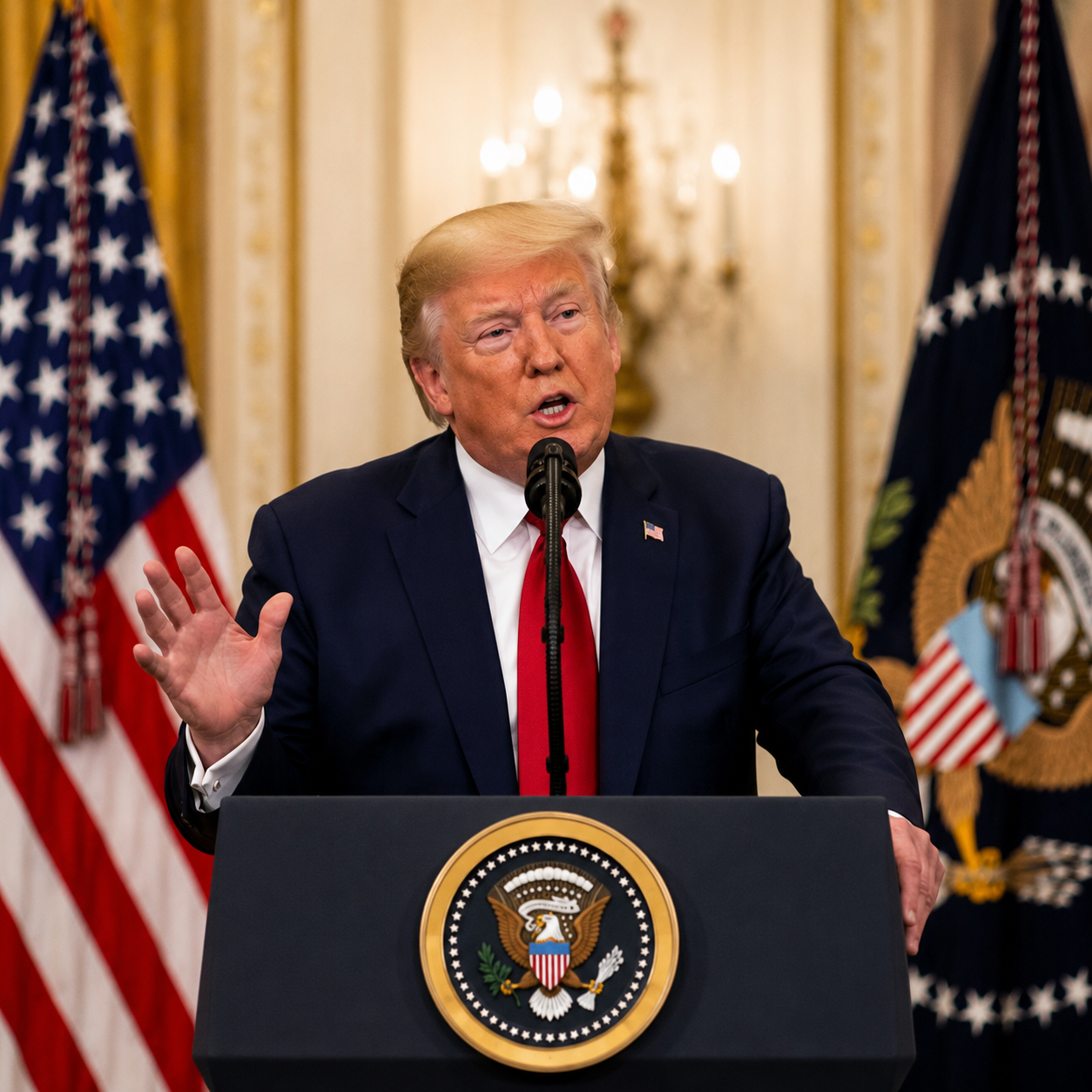
Comparatively, US President Trump said during a meeting with crypto industry and financial institution executives at the White House that he urged Congress to pass a fair version of the “Clarity Act” (Crypto Market Structure Act) to establish a more clear regulatory framework for digital assets. Trump said the bill would help the US maintain its leading position in the cryptocurrency sector and open up space for the next round of innovation and entrepreneurship. He said the US needs clear regulatory rules to prevent crypto companies from moving overseas due to policy uncertainty. The conference included several crypto and finance company executives including Coinbase, Ripple, Robinhood, Kraken, Chainlink, and Gemini, as well as SEC Chairman Paul Atkins, CFTC Chairman Michael Selig, and White House crypto advisor Patrick Witt. The Clarity Act aims to clarify the powers of the SEC and CFTC in digital asset regulation and establish a federal-level crypto market regulation system. The bill is expected to be re-submitted to the Senate for consideration in September. Currently, the Republican Party still needs to seek the support of about 6 Democratic lawmakers to reach the 60-vote threshold. Additionally, Trump emphasized that his administration has promoted strategic Bitcoin reserves, a digital asset reserve plan, a ban on the Bank of America digital currency (CBDC), and crypto-related policies such as the Clarity Act. Earlier, the US SEC has proposed new crypto asset issuance rules, and plans to provide regulatory exemptions for some token offerings and lower the funding threshold for eligible crypto projects.

2d ago

Ethereum core development team Nethermind abandons LayerZero and switches to Chainlink CCIP

Comparatively, according to The Block, Nethermind, a core contributor to the Ethereum ecosystem, announced that it will withdraw from the LayerZero decentralized verification network (DVN) business and migrate the cross-chain infrastructure to the Chainlink network after a “thorough review”. Nethermind said it has stopped operating LayerZero's DVN and joined the Chainlink network as a node operator and strategic technology provider. In the future, Nethermind will provide engineering tools, infrastructure services, and integration support for blockchain application developers. It is reported that this shift occurred after the LayerZero ecosystem experienced a security incident. In April of this year, Kelp DAO's RsETH cross-chain bridge was attacked, losing about 116,500 RsETH, worth about $292 million at the time. Following this incident, several companies have begun to shift their cross-chain business from LayerZero to Chainlink. However, Nethermind did not specify whether the migration was directly related to the Kelp DAO incident, nor did it disclose that LayerZero had specific technical issues or changes in the commercial terms of both parties.

3d ago#On-chain dynamics

The White House Tech Leaders Meeting will be held today. Trump will attend with SEC, CFTC Chairs, and a number of crypto industry executives

Comparing news, crypto journalist Eleanor Terrett wrote that the White House Tech Leaders Meeting will begin at 2:30 p.m. EST today, and US President Trump is expected to deliver a speech along with SEC Chairman Paul Atkins and CFTC Chairman Selig. Crypto and traditional finance executives expected to attend include Coinbase CEO Brian Armstrong, Ripple CEO Brad Garlinghouse, Payward/Kraken Co-CEO Arjun Sethi, Gemini Co-Founders Cameron Winklevoss and Tyler Winklevoss, Chainlink Co-Founder Sergey Nazarov , a16z partner Chris Dixon, Blockchain.com CEO Peter Smith, BitGo CEO Mike Belshe, etc. In addition, heads of industry organizations such as the Digital Chamber, Blockchain Association, Crypto Council for Innovation, and ICE (NYSE parent company) CEO Jeff Sprecher and Nasdaq CEO Adena Friedman are also expected to attend. Patrick Witt, executive director of the White House Commission on Cryptography, will also attend the meeting.

3d ago

Wyoming moves FRNT stablecoin from LayerZero to Chainlink CCIP

Comparatively, the Wyoming Stablecoin Commission has migrated its issued Frontier Stable Token (FRNT) from LayerZero to Chainlink's cross-chain interoperability protocol CCIP, and will completely stop implementing the LayerZero token after completing a full security review. CCIP will be FRNT's sole cross-chain infrastructure under a multi-year contract. This is the first time that a US government entity has publicly changed blockchain infrastructure on security grounds. FRNT is currently the only stablecoin issued by a US public agency and backed by full fiat reserves. The reserve proceeds are used to support the state's school foundation projects. The tokens have been deployed on chains such as Ethereum, Base, and Avalanche, and the market capitalization is currently less than 1 million US dollars. The decision was released four months after Kelp DAO's LayerZero-based bridge was attacked and approximately 116,500 RSetH (worth about $292 million at the time) was stolen. The incident sparked a wave of industry security reviews and migrations. So far, nearly $15 billion of related assets have been transferred from LayerZero to Chainlink. Early migrators include Kelp, Solv Protocol, Re, Kraken, etc. BitGo then chose CCIP and completed the migration of approximately $7.7 billion of encapsulated bitcoins, bringing the total amount to the current level. Also, according to the LayerZero case study in January of this year, Wyoming operated its own decentralized verification network and controlled verification and compliance functions.

3d ago#On-chain dynamics