DeFi · 14513

Aave V4 deposits are close to $750 million, attracting over $300 million in the past week

Comparatively, according to Cointelegraph, the deposit size of the V4 version of the decentralized lending protocol Aave is approaching $750 million. Over the past week, the release has attracted more than $3 billion in capital inflows, and deposits have grown significantly. As a mainstream DeFi lending platform, Aave's V4 upgrade continues to receive market attention, and recent net capital inflows reflect users' recognition of the protocol's liquidity and functionality.

7h ago
BounceBit Chain updates vulnerability attack progress: will permanently shut down the chain and migrate to BNB Chain

Comparatively, cross-chain revenue protocol BanceBit issued a security incident announcement stating that its blockchain network was attacked by a protocol-level vulnerability attack between 8:02 UTC on August 19 and 01:54 UTC on August 20. The attackers used authorization flaws in the Evmos underlying architecture to transfer BB tokens from 9 main network accounts without the authorization of the account owners. According to the announcement, the attackers transferred a total of approximately 286.5 million BBs through 14 transactions. The impact of the incident was limited to BanceBit Chain itself, and did not involve private key leaks, signature forgery, wallet, hardware devices, or exchange account security issues. BanceBit CeDeFi Strategy, Promo Vaults, Prime, and RWA products were not affected. BounceBit stated that the vulnerability stemmed from a protocol native module authorization verification flaw in the Evmos architecture. When calling the relevant module through a smart contract, the attackers bypass security checks that should verify the authorization relationship of the fund source account, making it possible to specify any account as the source of funds. After the incident, BounceBit Chain stopped generating blocks at block height 20,702,857, then the team decided not to upgrade the chain, but to permanently shut down Bouncbit Chain and re-issue BB as an BEP-20 token based on BNB Chain. BounceBit stated that the new BB token supply will be based on an on-chain snapshot before the first abnormal transfer (block height 20,697,260), and the 286,543,148 BBs transferred by the attackers will not be included in the new token balance. Users do not need to submit an application or migrate their wallets, and the official plan is to automatically distribute the new BB to the corresponding BNB Chain addresses. Regarding the BB in the pledge, BounceBit said it will be restored as soon as the snapshot is in time, and there is no need for coin holders to perform unbundling or redemption operations. Currently, BounceBit has submitted requests for suspension and assistance to relevant exchanges, and reminds users to be wary of scams and not to click on any BB migration or receipt links that have not been officially confirmed. The team said that the new BEP-20 BB contract address and reissue progress will be announced later. This article is sponsored by GENG, Build Your Fortune on GENG (https://geng.one)

23h agoburnking
If it's just tokenized assets and doesn't connect to DeFi, what's left of RWA?

If it's just tokenized assets and doesn't connect to DeFi, what's left of RWA?

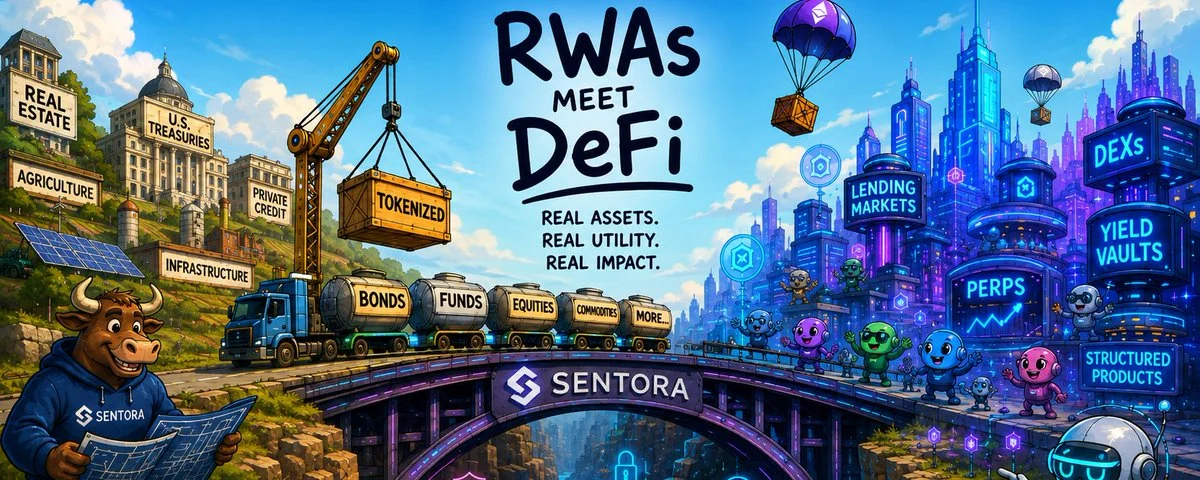
Author: Jesus Rodriguez, co-founder of Sentora Compiled by: Luffy, Foresight News Original title: Does RWA still make sense without DeFi? Discussions in the RWA industry often begin with a simple vision: take a treasury bill, fund share, stock, invoice, megawatt hour, or GPU for one hour, then mint a token representing it. Is it useful? It's really useful. But can it be called transformative? It's far from there. This is like putting a bar code on a container and claiming that a global trade problem has been solved. Barcodes make containers recognizable and machine-readable, but they don't create ports, cranes, customs, insurance, financing, shipping routes out of thin air, or bring in buyers from afar. A token is simply an addressable token of interest, and DeFi is a marketplace operating system. The question really worth discussing is not how many types of assets can go on the chain, but how many assets can complete valuation, financing, hedging, transaction monetization, and loss disposal in a stressful environment, and there is no need for offline meetings and coordination every time a transaction occurs. Tokenization completes the representation of equity; what DeFi brings is actual utility. Tokenization is just a bar code, and a similar scene has happened in the history of the supply chain finance market. The reason why mortgages can be scaled up is not as simple as turning a paper document into an electronic record. To actually achieve large-scale expansion, a complete set of operating mechanisms was created around this type of asset: credit review, post-loan services, securitization, credit rating, warehousing and financing, repurchases, hedging, clearing and settlement, and loss allocation rules. RWA also needed to go through the exact same evolutionary process. An asset that can be adapted to DeFi requires six levels: legally enforceable rights, reliable data sources, clear transfer and redemption rules, enforceable secondary market liquidity, collateral parameters that match actual behavior, and a credible settlement and loss disposal path. Most tokenization projects, on the other hand, tend to stop at the top five levels. There is a simple test that can be used to test the maturity of an asset. It only requires answering three questions: How much is this asset currently worth? Can the agreement complete withdrawal and monetization at this point? If the first two judgments are all wrong, who bears the loss? When smart contracts can definitively answer the above three questions, RWA can truly become a basic component of finance. Before that, it was mostly just a digital packaging shell. The deepest technical contradiction of RWA's quadruple time clock is that RWA runs under multiple sets of different time clocks at the same time. The blockchain can complete settlement in seconds and operate uninterrupted for 7 x 24 hours; oracles may update prices every hour or every day; underlying traditional exchanges are closed at night and on weekends; custodians follow bank working days; and the asset redemption process may take 1 day, 5 days, or even 30 days. If you use such a slow-paced RWA asset to support fast-maturing DeFi liabilities, such as stablecoin loans. This is the term shift, and it is also the core model that banks have relied on for hundreds of years: using short-term debt to fund long-term slow assets. This model has practical value, but the risk must be reasonably priced. Imagine a scenario: At 2 a.m. on Sunday, assets hit the liquidation threshold. Smart contracts can seize tokens immediately, but the underlying real-world market won't open until Monday, and the issuer's redemption business will not be processed until Tuesday. On-chain liquidation has been completed, and real-world asset disposal has only just begun. This creates a clearing gap. DeFi requires immediate withdrawal for monetization, but the real world does not allow it. The time difference between the two. This gap has counterintuitive consequences. Even treasury bonds with very low volatility are riskier than native crypto assets that are more volatile when used as collateral. The price of ETH fluctuates drastically, but it can be traded around the clock; the price of RWA assets appears to be stable, and it may only be up to a dozen hours without a new price tag. A flat price sometimes represents safety, and sometimes it's just a disguise of stale data. Liquidity is an exit channel, not TVL. The digital public also has common misunderstandings about liquidity. Liquidity is not equal to TVL, does not equal the existence of a trading pair, nor does it mean that the issuer promises to eventually redeem it according to net worth. Liquidity refers to the ability to convert a position into the settlement asset you need at an acceptable discount within the time window allowed by your debt. Take a crowded theater for example: the size of the hall cannot determine whether it is safe in the event of a fire; what really matters is the width of the exit channel. One copy of RWA to...

1d agoForesight News#DeFi #RWA

HertzFlow's $4.44 million USD1Genesis Vault has been filled, and the mainnet will open for trading on August 24

In comparison, HertzFlow announced that its $4.44 million USD1 Genesis Reserve Vault has been fully booked. HertzFlow officially stated that this is an important milestone before the launch of the main network of the project, and final preparations are currently being made for the official opening of the main network for trading on August 24. According to reports, HertzFlow aims to create a leveraged trading market with assets supported by oracles without permission, further activate BNB Chain's on-chain liquidity through composable DeFi strategies, and transform more on-chain capital into liquid assets that generate sustainable returns.

1d ago

Starkiller: A new round of bull market is starting, and all short positions were closed last month

Comparing news, crypto investment agency Starkiller recently posted that BTC has risen strongly in the past two days. Combined with market performance over the past month, the agency is highly confident that the digital asset cycle has bottomed out, and revealed that it has closed all short positions last month. Starkiller said that BTC and ETH previously experienced peak retracement of 54% and 70% respectively, and are now back on the 200-day EMA. This is the first time since the end of the previous cycle; their quantitative model also shows that after stabilizing near the 50-day EMA, BTC and ETH broke through volume and are back on VWAP since the beginning of the year. Furthermore, the current bear market cycle has continued for about 315 days, which is close to the historical average. Starkiller believes that the recent active promotion of digital asset market rules by US regulators and the expansion of long-term US bond repurchases by the US Treasury are important catalysts for the reversal of the market cycle. Although this is not quantitative easing, the Treasury's focus on long-term yields may improve the liquidity environment, and BTC is still highly dependent on liquidity. Regarding the new cycle, Starkiller believes that most traditional cryptographic native assets may not replicate previous bull market performance, and investors will pay more attention to real income and agreements that can return value to token holders after experiencing this round of market elimination. It is expected that assets with actual revenue or value capture mechanisms such as HYPE, LIT, PUMP, VVV, and DRV may receive more attention, while a large number of tokens lacking fundamental support may become shorting opportunities in the new upward cycle. Starkiller also said that BTC may experience a phased adjustment near $80,000 in the short term, a position close to the all-time high of VWAP. Despite this, the agency remains highly optimistic about stablecoins, asset tokenization, prediction markets, and on-chain perpetual contracts, and says it is already more optimistic about its long and short liquidity token strategy and DeFi market-neutral return strategy.

1d ago
Black eats black? Fake DeFi actually snatched out North Korea's Lazarus real hacker

Black eats black? Fake DeFi actually snatched out North Korea's Lazarus real hacker

Source: Security Company ANY.RUN Compiled by: Daily Planet Daily Original title: Fishing Show of the Year, Fake DeFi Picks Out North Korea's Lazarus, Real Madrid Fans, Real Madrid Fans. With a mathematical background, they only use AI to write code. Core point of view: By setting up a fake DeFi company, the security agency successfully infiltrated the “Famous Chollima” hacker group under North Korea's Lazarus Group, revealed its complete process of using false identities, AI tools, and remote collaboration to infiltrate Western companies, and revealed its evolving toolset and infrastructure. Key element: The researchers disguised themselves as recruiters and recruited three North Korean agents within a few months to record their operation behavior, tool usage, and collaboration patterns in real time through the ANY.RUN sandbox environment. Agents used forged driver's licenses, stolen social security numbers, and mule accounts to complete the onboarding process. Some of these documents were processed by Google Gemini and had SynthID watermarks, revealing signs of forgery. Attackers rely on AI tools such as ChatGPT and Google Gemini to encode, translate, and modify files, and use AstrillVPN, remote desktop software, and dedicated servers to covertly access corporate environments. The three agents showed insufficient skills during development, frequently searched for basic issues, and exposed more proxy server and infrastructure information induced by selective network outages and captcha. The investigation found that Famous Chollima aims to lurk within the enterprise for a long time and legally obtain access to code, systems, and intellectual property rights, and is not limited to short-term attacks, and the threat persists significantly. Crypto friends who are often phished have probably heard of the North Korean hacker group Lazarus Group. Its well-known “campaigns” include, but are not limited to: Bybit ($1.5 billion) theft, Ronin Network/Axie Infinity Bridge attack ($6.2 billion), DMM Bitcoin/Ginco related attack ($308 million), Harmony Horizon Bridge attack ($100 million), and Atomic Wallet attacks ($100 million), etc. And the key to the success of these attacks is social engineering — hackers usually disguise themselves as normal job applicants, lurk at crypto companies for years, and wait for the right time. Recently, security agency ANY.RUN joined forces with BCA LTD (a company dedicated to threat intelligence and hunting) and NorthScan (a threat intelligence program to uncover the infiltration of North Korean IT workers) to effectively crack down on North Korean hacker agents. The researchers created a fake DeFi startup and successfully recruited “Famous Chollima” agents under North Korea's Lazarus Group who specialize in human infiltration, to gain an inside perspective on the actions of North Korea's IT workers. The ANY.RUN sandbox environment shows the agent's behavior patterns in real time, revealing their evolving toolsets, remote access workflows, AI tool usage, and supporting infrastructure. This survey went beyond the simple recruitment process and showed in depth how these agents collaborated, obtained, and used company resources after joining the company. The findings suggest that the North Korean IT worker program not only poses a recruitment risk; once agents sneak inside the organization, they can legally obtain access to code, systems, intellectual property, and critical business processes. The following is a report co-authored by the three parties, compiled by Daily Planet Daily. ——————Introduction In December of last year, we fully recorded the infiltration cycle of “Famous Chollima” for the first time. From recruiting collaborators to help them join Western companies, to falsifying documents, shipping laptops to intermediaries, and even using AI tools to assist and translate in real time during interviews, everything is under control. In that survey, we pretended to be a middleman willing to interview them and lend them a laptop in exchange for a percentage of their salary. The point is that those laptops are actually ANY.RUN sandbox environments that record every click and every step they take. This provided us with massive metrics, hours of computer operation videos, and face-to-face contact images, making an unprecedented survey and making headlines in many media. (“Famous Chollima...

1d agoOdaily星球日报#wallet security #hacks

Data: DeFi's TVL skyrocketed 9.15% to $83.3 billion in a single day, and DEX trading volume broke 10 billion for the first time in two months

Comparative news, according to Defillama data, the DeFi market rebounded strongly. TVL jumped 9.15% to US$83.216 billion in a single day, and spot DEX trading volume reached US$10.886 billion, breaking the $10 billion mark for the first time since June 5. The decentralized perpetual contract platform's turnover reached US$36.72 billion, of which Hyperliquid's daily processing volume reached US$15.205 billion, accounting for about 45% of the total perpetual DEX transaction volume, and its HYPE token price rose to the $70 range. Uniswap continues to lead spot DEX with a turnover of around $3.1 to 3.4 billion, while Solana ranked first in spot DEX activity in various cycles.

1d ago#On-chain dynamics

Chainlink CEO: The speed with which the US financial system goes up the chain will determine its global position

Comparing news, Chainlink co-founder and CEO Sergey Nazarov said at the first meeting of the US CFTC Innovation Advisory Committee that he thanked the CFTC and SEC for finally starting an efficient and constructive cooperation rather than publicly clashing with each other before. He believes that this in itself has significantly boosted the reputation and trust of the US financial market, and helped form a unified regulatory vision to prevent the 16 or 25 conflicting rules of the past from hindering innovation. Nazarov notes that regulatory fragmentation has taken a serious toll. Chainlink provides data, cross-chain and other infrastructure for thousands of applications, and supports most of the DeFi ecosystem. Over the past seven years, he has seen with his own eyes that hundreds of developers have chosen to leave the US due to uncertainty, no longer build high-quality apps in the US, and no longer serve American consumers. These innovators are no longer on the conference site, a huge loss for the US financial system and consumers. He emphasized that the next trend is clear: tokenizing equity will unlock significant on-chain value. The US stock market currently accounts for about 60% of the value and flow of the global equity market. If the global financial system speeds up the chain, the US must push the chain up at the same or even faster speed in order to maintain this dominant position. Otherwise, innovation and market advantage may be lost.

1d ago

Lighter CEO: DeFi shouldn't be the antithesis of regulators, AI, or democratize finance

Comparing news, Lighter CEO Vladimir Novakovski said at the first meeting of the US CFTC Innovation Advisory Committee that DeFi has been misunderstood for a long time and should not be viewed as the antithesis of regulators. He pointed out that DeFi transactions are recorded in an on-chain ledger in a verifiable manner, which helps regulators work on transparency, consumer protection, and fair market equity. Novakovski said that decentralized and verifiable finance is expected to become an important part of America's future financial infrastructure. In particular, in terms of cybersecurity and operational resilience, the industry should push for more technologies to open source and verifiable technology stacks. Furthermore, he said that AI has an opportunity to democratize finance, and users can use AI to construct a package of transactions or investment strategies based on their own judgments in macroeconomics, industry, etc. In the past, such capabilities were mainly aimed at high-net-worth individuals and professional fund managers. Novakovski pointed out that the main risks facing AI in the financial sector are consumer protection risks, such as users not understanding the actual effects of AI models, or model functions being misrepresented. Therefore, before the AI model is applied to consumers on a large scale, it is necessary to establish a corresponding sandbox mechanism and verify the model's effectiveness and formalized verifiability.

1d ago

Multicoin Capital Co-Creation: Pre-IPO perpetual futures should be launched to allow ordinary US investors to share the AI wealth feast

Comparing news, the first US CFTC Innovation Advisory Committee was held this morning. Multicoin Capital co-founder Tushar Jain put forward three suggestions at the meeting. First, it provides a safe haven or innovative exemption mechanism for emerging markets such as computing power derivatives, and allows developers to test new products and business models under a compliance framework. Second, support DeFi's adoption of compliant privacy and confidentiality tools to ensure the privacy of institutional investors' transactions while providing sufficient transparency for regulators to identify and manage systemic risks. Third, support the launch of pre-IPO perpetual futures (pre-IPO perpetual futures), so that ordinary US investors can participate in wealth growth in emerging industries such as AI, and avoid being excluded due to restrictions on private equity market access, or being forced to participate indirectly through special purpose carriers (SPVs) that lack transparency. At the same time, Jain said that he also had discussions with US Securities and Exchange Commission (SEC) Chairman Paul Atkins on the same day, and said he is optimistic about regulators promoting financial innovation and the future development of the US.

1d ago