Fintech · 543
Does the forecast market with monthly turnover of 44.8 billion US dollars need a main broker?

Does the forecast market with monthly turnover of 44.8 billion US dollars need a main broker?

Source: Fintech Blueprint Compiled and edited by BitPushNewsBetterment recently published its 2026 retail investor survey. The main conclusion is that 26% of Gen Z investors see sports betting as part of their long-term financial strategy, and 52% have invested the money they originally intended to invest into it last year. The survey of 1000 US retail investors in early April showed that proportion rapidly declined as people grew older — 31% and 14% for millennials, 10% and 6% for Gen X, and 4% and 1% for Baby Boomers. Betterment CEO Sarah Levy put it bluntly: The problem comes when a prediction market or sports betting platform starts to feel like a retirement strategy. The combined monthly trading volume of Kalshi and Polymarket reached $44.8 billion in June, which is more than three times the average monthly transaction volume of approximately $14 billion for all US legal sports betting in 2025. Source: Bloomberg/Betterment Let's explore whether this transaction volume is huge enough to support the dedicated agency hierarchy below. Earlier this month, River Markets raised $8.5 million in seed funding to build what it calls “the first institutional-grade execution and prime broker platform for the prediction market.” Led by Haun Ventures, Y Combinator, Coinbase Ventures, Qube Research & Technologies, and Cherry Ventures participated, in addition to angel investors from Citadel, HRT, J.P. Morgan, Nvidia, and Google. The company has been online with trading clients since May 1 and has publicly listed five client names: Chimera Capital Management, Game Point Capital, Cleat Street, Skywalk, and 646 Equity. It claims to own three of the top ten traders on Kalshi and Polymarket, as well as several quantitative funds running on its API. The problems they are solving are real and unremarkable. The liquidity of the prediction market is distributed across multiple trading sites, which may have different quotes on the results of the same event, involving separate accounts, separate balances, independent APIs, and no uniform view of risk. A trader who trades the same event on Kalshi and Polymarket actually manually manipulates the two books and then reconcile the accounts. River integrates these sites into a single terminal and an API, uses a unified code system, adds execution algorithms (iceberg orders, linked orders, stop-loss orders, take-profit orders) not native to the exchange, and routes eligible orders to the best prices in the online ledger. It's live on Kalshi, Polymarket, and Polymarket US, and is integrating Novig and Crypto.com. Today, it's more like an order and execution management system than a Prime Broker (PB) — a boundary drawn by River itself. Its FAQ states that the real-time platform covers execution, routing, data, and profit and loss, that customer funds are kept in venue accounts rather than centrally pooled, and that companies are invited to contact them about financing, collateral, and cross-market requirements. Source: Allium predicts that the cumulative historical trading volume of the market exceeded 150 billion US dollars in May. Kalshi alone reached 31.5 billion US dollars in June, while Polymarket was 10.8 billion US dollars. Kalshi is currently in final negotiations to finance at least $750 million, with a valuation of $40 billion; Polymarket is financing at a valuation of $15 billion, after ICE had already committed $2 billion in two instalments. Kalshi's annualized revenue surpassed $4 billion in July, roughly double the $2 billion annualized pace two months ago. At the peak of the World Cup,...

4d agoBitpushNews#HYPERLIQUID #Kalshi #Ondo

The ULTRA Web3 Festival in Kuala Lumpur came to a successful conclusion and will join Web3Labs at the GWDC 2026 Korea Conference

Comparatively, the ULTRA Web3 Festival came to a successful conclusion from July 30 to 31 at The Arch Galeries in Kuala Lumpur. As the core site of the “Global Conference Series on Integrating Web3, Traditional Finance and Artificial Intelligence”, the two-day summit brought together international builders, business leaders, and institutional investors to jointly build a bridge between decentralized technology and traditional markets. The success of Kuala Lumpur was supported by a broad coalition of visionaries and industry-leading sponsors, including Pudgy Penguins, Orca, DDNEXUS, Alpha Insight, AI Nova, Decentralized Intelligence, SuperFlow, CloudBank, Morpheus, Razer, ChainUP, DYLI, Saat Dimensi, Oper8 Capital, Lavo Protocol, WageFlow, Echobit Exchange, LifyX Exchange, X18, and Starshine. Additionally, the event further expanded its impact through strategic collaborations with key ecosystem partners such as the Access Blockchain Association, CCACC, Emerge Group, Global Impact Fintech, Web3Labs, and ADI Foundation. It is reported that ULTRA Web3 Festival will soon enter the Korean market and will join hands with Web3Labs as an official global business partner at the 2nd Global Web3 Developers Conference (GWDC 2026 Korea). The conference is scheduled to be held at the Seoul aT Center from September 29th to 30th. The two sides will jointly promote cross-border collaboration, technical exchanges, and promote international business growth in the Asia-Pacific region. This article is sponsored by GENG, Build Your Fortune on GENG (https://geng.one)

5d agoburnking
From Avenir to UMX, Li Lin's return and new propositions

From Avenir to UMX, Li Lin's return and new propositions

Author: Eric, Foresight News In the summer of 2026, UMX, which was incubated by Li Lin's Avenir Group, began public testing, which also made outsiders once again set their sights on this group of Chinese entrepreneurs in the crypto industry. Thirteen years have passed since Huobi was founded in 2013. At that time, Li Lin was standing in a market that had just taken shape. The problem he faced was very straightforward: how to make it easier for more people to trade Bitcoin. Thirteen years later, the crypto industry has moved from a relatively independent digital asset market to a new stage of continuous convergence with ETFs, stablecoins, RWA, and traditional securities. Over the past few years, Li Lin's role has also changed. In 2023, he founded Avenir Group in Hong Kong, gradually shifting from a frontline entrepreneur to an investor and asset allocator, continuing to focus on digital assets, securities trading, and financial infrastructure. Today, UMX has emerged as an “Avenir Group Incubator”, giving these seemingly scattered investment leads over the past few years a new perspective. Problems also followed. In the years since Huobi founded Avenir Group, what exactly is Li Lin doing, and what is it that has made him stand back to the stage now? From Beijing to Hong Kong, from athletes to referees, to understand this return, they must first go back to where they left. In September 2013, Huobi went online. It was a crazy year when Bitcoin rushed from 800 yuan to 8,000 yuan. It was also a year on the eve of Mentougou's collapse and the industry grew reckless. A young man from Hengyang, graduated from the Tsinghua Automation Department, wrote code for Oracle, and had started a business twice. Using the “permanent exemption of processing fees,” he cut through the Bitcoin exchange market, which had experienced rough experiences at the time. Half a year after launch, Huobi's daily transaction volume exceeded 1.5 billion yuan. At its peak, it occupied more than half of the global Bitcoin exchange market. Zhenge Fund, Dai Zhikang, and Sequoia Capital followed one after another, and Li Lin became one of the most familiar faces of entrepreneurs in the Chinese crypto world. Over the next decade, Huobi and Li Lin experienced a complete cycle of the crypto industry from early recklessness to global compliance competition. For an entrepreneur, this experience left behind not only how to become a trading platform, but also a complete set of perceptions about trading, liquidity, user needs, account systems, and risks. However, running a platform and allocating a sum of money is not the same way to look at the market. In 2023, Li Lin founded Avenir Group in Hong Kong. The name comes from French and means “better future”. From managing an exchange with your own hands to managing a multi-strategy family office, the roles have changed, and so has the way you look at the market. In the past, he was an athlete on the field, watching user growth, transaction volume, product lines, and liquidity, and was fighting closely with his opponents every minute and every second. Now he is sitting on the sidelines and working as a fund allocator, but what he sees is a different set of problems. Where are funds left idle, where are assets split, why can't accounts be exchanged, and why is risk difficult to be managed uniformly. These issues are hard to see from an operator's perspective, because exchanges naturally only care about matters within their own market. From the perspective of the configurator, they are so dazzling that one cannot ignore them. Avenir's actions over the past few years have vaguely outlined a main line. The list has been drawn up for a long time. It has taken a stake in UP Fintech, the parent company of Tiger Securities, as a core investor, participated in the US$300 million equity financing of the Hong Kong licensed platform OSL, invested in the institutional order routing company CoinRoutes and options derivatives infrastructure SignalPlus, led the AI native quantification platform Inference Research, and signed multiple assets with Tiger Securities and AMINA Bank on Consensus Hong Kong Infrastructure Cooperation Memorandum. According to the 13F filing submitted to the SEC, Avenir ranked first among Asian Bitcoin ETF institutions for eight consecutive quarters, with BlackRock IBIT alone holding more than 18 million shares. In addition, Avenir launched a $500 million quantitative partnership program to provide capital and ecological support to mature quantitative trading teams, and also acquired the Japanese compliant trading platform BitTrade through the Xinhua Group. The investment reach of licensed platforms, brokerage services, transaction execution, quantitative capabilities, and stablecoin payments covers almost every aspect required to connect the two markets. Looking at individual projects, these investments are scattered across different products and markets. When you look at it together, the direction gradually...

10d agoForesight News#web 3.0
Coin Circle OG Ye Junde fell naked and died: from the peak of his wealth to the last early morning

Coin Circle OG Ye Junde fell naked and died: from the peak of his wealth to the last early morning

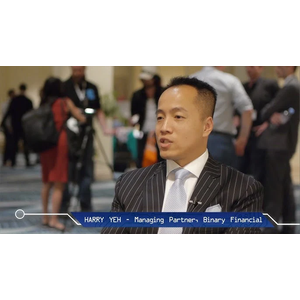
Source: Shenchao TechFlow Author: Lin Zhengying Original title: Coin Circle Who Fell Naked OG: Ye Junde's Wealth, Gambling, and Asunción's 100-meter altitude in the last early hours of the morning. At 4:30 a.m. on August 7, 2026, the 911 alarm center in Asunción, the capital of Paraguay, received a call: A dead body was lying downstairs in Jade Park, an upscale apartment building in the Trinidad district. When the police arrived, they saw strange images: the deceased was naked, covered in a black plastic bag, and suspected to have fallen from 30 floors about 100 meters high. The deceased was soon initially identified — Harry Chun Tak Yeh, Chinese name Ye Junde, founder and managing partner of cryptocurrency fund Quantum Fintech Group, a Chinese crypto investor claiming to be in charge of more than $2.4 billion in assets. Investigators went up to the 30th floor and found that the doors of the apartment he was living in were wide open, and the house was a mess, but it was empty. He also has another apartment on the 27th floor of the same building where his Brazilian girlfriend, Isadora de Proenca Braganholo Carvalho, 29, lives. Faced with questioning by the prosecution, she said she didn't know anything, and the police have not publicly charged her with any wrongdoing so far. Prosecutor María del Carmen Palazón led the investigation and investigated the three possibilities of accident, suicide, and homicide. Everything waited until the autopsy results were discussed. The $500 entry history of Ye Junde's family is the most classic screenplay in the coin industry. He was born in Hong Kong and immigrated to Canada as a child. He studied electrical engineering at the University of California, Berkeley as an undergraduate, and later got an MBA at Stanford Business School. At least that's what he described as his resume. Prior to entering the crypto world, he followed the standard Silicon Valley elite route: an engineer, CTO and co-founder of several startups, running a technology consulting firm, and serving organizations with revenues ranging from $5 million to $200 million. Bitcoin was still hovering around $60 in 2013. Ye Junde used $500 to buy his first BTC, set up his first fund with $250,000 in the same year, set up the venture capital company Binary Financial, and later changed its name to Quantum Fintech Group several times. It was a pioneering era. Doing crypto OTC OTC trading and managing hedge funds for high-net-worth clients, Ye Junde caught up with Bitcoin's entire curve from $60 to tens of thousands of dollars. By 2023, he and his team claimed to have managed more than $2.4 billion in hedge funds and private equity networks. He began appearing frequently in the industry spotlight: he discussed Bitcoin forks and ICOs on CNBC in 2017, and was a guest on the Bloomberg crypto show in 2022, calling Bitcoin “digital gold,” and speaking on the same stage as Mark Cuban, Tether co-founder Craig Sellars, and others. He also took over the production team for the North American Bitcoin Conference (TNABC) and the Fantom Developer Conference, and set up his own Quantum Miami conference, which the mayor of Miami personally stood for. Highlight moment: In four months, between 2.5 million and 1.6 billion, the most legendary “investment” of Ye Junde's career occurred in the Fantom ecosystem. Fantom is one of the hottest public chains in the “DeFi Summer” of 2021, and was personally coded by Andre Cronje, known as the “Godfather of DeFi.” In September 2021, Tomb Finance, an algorithmic stablecoin project on Fantom, fell into a trust crisis due to a bug called “Gatekeeper” and was on the verge of collapse. Yip Chun-tak took over the team as a member of the Fantom Foundation. The next four months were a magical moment for Tomb Finance: the total hedged volume (TVL) went all the way from $2.5 million to a peak of $1.6 billion, and within two months, TVL skyrocketed nearly 80 times, making it the brightest project in the Fantom ecosystem. This battle established Yip Chun-tak's position within the Fantom community. Someone at X missed it: “Even if Harry turned to the dirty one at the end...

12d ago22#Harry Chun Tak Yeh

Well-known crypto investor Harry Yeh died in a bizarre fall. The situation at the scene basically ruled out the possibility of suicide

Comparatively, according to the International Business Times, well-known crypto investor Harry Yeh died when he fell from a luxury residential building in the Paraguayan capital Asuncion from a height of about 30 floors. Local police received an alarm at about 4:30 a.m. on Friday morning, and Yeh's body was later found at the bottom of the Jade Park residential building. According to reports, the body was naked at the time, covered with a black plastic bag, and fell about 100 meters high. Police then investigated Yeh's apartment on the 30th floor and found that the door was open and the house was messy, but no one else was found at the scene. The police also collected evidence on the 27- and 30-story apartments relating to Yeh and submitted the relevant evidence to the prosecution. Police have yet to determine why Yeh fell, and her 29-year-old Brazilian partner has also been questioned by the police, but has not been charged with misconduct by the police so far. Yeh's body has been taken to the judicial morgue for autopsy, and the police are awaiting forensic findings. Yeh began investing in Bitcoin in 2013, when the price of Bitcoin was around $60. Since then, Yeh founded Quantum Fintech Group, involved in digital assets and blockchain projects, and participated in LIF3, L3 Reserve, Tomb Finance, etc. He and his company have claimed to have managed or invested more than $2 billion in digital assets, but the relevant data has not been independently verified. Currently, the case is still under investigation.

12d ago

Chinese crypto investor Harry Yeh falls from 30-story building in Paraguay, police investigate cause of death

According to La Tribuna, the body of a Chinese man was found outside Jade Park, a high-rise apartment in the Trinidad district of Asunción, Paraguay, and his identity was initially confirmed as Harry Chun Tak Yeh, founder and managing partner of Quantum Fintech Group. Police said it was suspected that he had fallen from the 30th floor of the building, and his body was found completely naked and covered in a black plastic bag. Investigators found the doors open and the interior was heavily cluttered in the suspected 30-story apartment, and confirmed that it also had another apartment on the 27th floor in the same building. Criminal technicians have collected evidence outside the building and two apartments, and the relevant physical evidence has been handed over to the prosecution. The prosecution is currently investigating various possibilities such as accidents, suspected suicides, and homicides. The judicial department will determine the specific cause and circumstances of death through an autopsy. According to reports, Harry Yeh, a Chinese cryptocurrency investor, entered the Bitcoin market in 2013. At the time, the BTC transaction price was 60 US dollars. He used 250,000 US dollars to launch his first fund. His investment network claims to manage more than 2.4 billion US dollars in assets, which are closely linked to Fantom, Tomb Finance, Lif3, ZooCoin, L3 USD, and L3 Reserve.

13d ago
Apple didn't make up with a loss of 7 billion dollars. Why did Musk kill X Money?

Apple didn't make up with a loss of 7 billion dollars. Why did Musk kill X Money?

Source: Fintech Blueprint Author: Michiel Milanovic Compiled and edited by: bitPushNews Elon Musk finally launched the product he had been aiming to build since 1999. X has begun gradually rolling out X Money to US Premium and Premium+ subscribers, bundling cash accounts with 6% annualized returns, Visa debit cards with 3% cashback, and free instant transfers between X accounts. These motivational numbers are quite aggressive, and the timing of the launch is also quite delicate for this social media app. X now belongs to SpaceX. The stock price has dropped by about 30% since the IPO, and the current valuation is 1.51 trillion US dollars. This article will thoroughly analyze X Money's core, analyze its opportunities, selected financial technology stacks, and strategies to turn 550 million users into bank customers. X (formerly Twitter) remains one of the world's largest social media companies. The app reports that it has 550 million monthly active users and posts around 350 million daily posts. However, its core business now belongs to Musk's sister company Xai, which acquired X in March 2025. SpaceX also acquired xAI in February 2026, merging this platform into a company with a total value of 1.5 trillion US dollars today. According to SpaceX's S-1 files, X was not described as a media asset. Instead, it is positioned as Grok's “basic distribution and data engine,” providing a real-time daily stream of posts, which the company believes will improve the timeliness and context-awareness of the model. The logic is as follows: X provides data for Grok, Grok makes X more useful, and more useful X makes users willing to pay for it. X Money is the latest attempt to shape X into a “one-size-fits-all app” — the document clearly states that this will cover payments, banking, and business services. The move comes at a time when ad revenue is declining steadily and subscription revenue is gradually rising. In the first quarter of 2026, X's annualized advertising revenue was US$1.37 billion, down 40% from 2023. Meanwhile, subscription revenue (a major component under AI solutions and infrastructure) continued to grow over the same period. In 2025, subscription revenue increased by $365 million. This shows that the company is replacing its advertising business with a subscription-led model; X Money is one part of it. The service is only open to Premium and Premium+ subscribers. These two categories total 4.4 million users, accounting for only 0.8% of the 550 million total users. Its strategy is to provide attractive X Money benefits to attract more users to subscribe to Premium and Premium+ services. X Money itself is not a bank, but rather partners with Cross River, which holds deposits and provides FDIC insurance. This is the same cooperative banking model behind Chime, Cash App, and Klarna, and it also brings the same trade-off: sharing the financial benefits in exchange for a lighter regulatory burden. This makes the 6% annualized return a particularly expensive benefit. Dollars stored in Cross River are almost impossible to earn far more than a risk-free interest rate of about 3.5% until anyone shares the profits. Even if X takes the full spread, it still has a gap of about 235 basis points in the promised returns to savers. Assuming Cross River retains its usual share, the gap will widen to around 400 basis points. The same is how cashback works. Cross River's assets are less than $10 billion and are therefore not subject to the Durbin Amendment fee cap, which allows it to earn unregulated exchange fees of around 1.1-1.2% of the transaction amount. That's less than half of X's 3% cashback. As such, subscription fees are likely a source of funding. The 6% annualized revenue is only available to Premium+ subscribers, who pay $40 per month, or $480 per year, which can cover approximately 4% of the revenue gap on the $12,000 deposit. But if you count cashback, users will soon run out of that budget. Our guess is that Musk is happy to accept losses from this business. Even if X Money absorbed $1 billion in deposits, the loss of several hundred basis points was only a fraction of the total loss of 2.5 billion US dollars in the AI sector in the first quarter of 2026. If X eventually gets its own banking license, earn...

16d agoWendy#X Money #license plate #apples #banks #Musk
Daikodo Keisen vs. “Bullish Hedge” |0805 Global

Daikodo Keisen vs. “Bullish Hedge” |0805 Global

Note: The big bears once again reminded the stock market to look at its peak. We also determined that the “short-term” bulls have increased their offshore positions, which indicates that the short-term tactic “large-scale counterattack” is about to begin. “Force majeure”: In any case, the text section will be abbreviated/distorted as much as possible, and the core views, data, conclusions, or displayed in the corresponding gallery, or unlocked separately after necessary KYC (Know Your Customer) is required. Other than those listed in the Research Gallery, the rest of the time stamps are between UTC+8202608050400-1020. “Research Methods and Strategic Attributes” adjustment explanation: Based on all current major changes in major variables [financial reports, land prices, energy, EI Nino, interest rates, QT, bonds, etc.], the strategy group research focus, standard strategy, transaction structure, and Portfolios will be updated in depth. The importance ranking is “technology, disaster mitigation, war selection, geography, energy”, and will be based on the “globality” of offshore strategies, based on the “global nature” across time zones, markets, events, and types. Preventing conflicts of interest [Strictly follow the strategic separation wall, silence period, and crossing the separation wall system]. [Betting on China from a global perspective] | [Discovering value every hour] ——————Below is the text————◎ Japanese yen※The interest rate hike came to an abrupt halt, and the central bank's deposit rate. Pull the yen back from a 40-year low of 163 back to the previous long-term average of around 155. Destroy a group of Mrs. Watanabe who had gone short. ※Currently, the yen is still unsettled, and the trend of interest rate hikes is still strong due to prices, etc. ◎ Technology※SPCX earnings report exceeded expectations. Funding for technology has brought confidence and fresh water to the market. While driving the Dow and S&P 500 to break through historical extremes, it gave a strong impetus to both NASDAQ and COPH. ※At the close of the US stock market, major Chinese financial companies have already listed SPCX's financial highlights, mainly revenue exceeding expectations, user growth, successful trial launches in the short term, and large government orders. Strategy Group Assessment. Other than these, there are 2 possible weights that have been underestimated. One was a test flight of a starship in the Indian Ocean, and the landing at the ocean was assessed by Chinese self-media as a failure at the time. The truth is not true. Book a plan. All were completed, and no “chopsticks holder” facility was installed, which proved the convenience of its global deployment. Second, SpaceX announced that it plans to implement manned starship flight/recycling by the end of 2027. ◎ semiconductor※ policy amendments. The Korean police have filed a criminal lawsuit against the head of the government who launched a single-stock ETF product to appease shareholders. A group of shareholders filed a lawsuit against Samsung Hynix executives for loss of trust, and the police filed a lawsuit. ※The ban on optical modules has some effects. ※The bears are slowing down and turning. The effects of leverage have been evident, and the intentions and frequency of shareholders' transactions in the Korean stock market have all reached record lows. Currently, the cost of shorting has risen sharply, and there are both moral and legal risks, and the benefits have declined markedly. ◎ Geopolitical, TACO PLUS※I understand that Wang shrunk all his resources and attention to survival in the mid-term elections. It reduces sensitivity to stimulants of a sharp rise in crude oil in terms of both policy and military action. ※Fuel prices have plummeted continuously due to the Takagake Free Battle Pass. Currently, all major products have reached less than 80 yuan. ※Saudi oil tankers have tried to explore the Red Sea (the Houthis have all hit Egyptian ports, and it is possible that the Suez Canal will also be blocked; in fact, it is still a spillover of war between Iran and proxy wars). Freight costs and premiums have been calculated in the price of oil products, but this has not stopped crude oil from plummeting. ◎ US bonds, dollar tide, cash flow, liquidity, interest rates. ※The market is extremely prosperous. The Dow and S&P 500 both hit record highs, and the Philadelphia Semiconductor Circuitry held steady mid-track and rebounded strongly. ※Since the end of July and the beginning of August, the Hengke Index has lost its appeal to technology funding and has also lost its high degree of linkage with the NASDAQ. Even with sufficient liquidity, the technology sector in the Asia Pacific period mainly flows in other major markets. However, several days of continuous recovery and sharp rise may create some room for arbitrage between the Japan-Korea Science and Technology Innovation 50 and the Hang Seng Index (showing signs of a southward trend). Focus on Hengke's expression in the latter half of Japan. ※The contradiction between US debt avoidance and the prosperity of the stock market. In the overnight market, US 10-year Treasury yields plummeted and fell sharply by more than one point. Since the US stock market index continued to break through previous highs, the strategy group determined that the bulls were holding back the rapid depreciation of the yen, to prevent the yen from continuing to plummet after interest rate hikes, and at a time when the stock market rose rapidly, the “downside risk protection,” which the bulls progressed, carried out a “hedging arrangement” for overall fund positions. ※ VIX Panic Index. As the S&P 500 continues to break new highs, the ViX panic index bucked the trend. Like the yield on 10-year government bonds, it is a conflicting indicator. Expression, but VI...

17d agoburnking#Blue Chain Think Tank

ESMA adds 12 companies to the MiCA registration list, bringing the total number of CASPs authorized to 321

According to Twitter, the European Securities and Markets Authority (ESMA) updated the Crypto Asset Market Regulation (MiCA) registration list on July 31, adding 12 new companies. This is the fourth update after the transition period on July 1, bringing the total number of authorized crypto asset service providers (CASP) under MiCA to 321. New entities added include three German partner banks Volksbank Raiffeisenbank Oberbayern Südost, VR Bank Schleswig-Holstein Mitte and VR-Bank Landau-Mengkofen, Spain's Basque Pay, Fintech Payments, and France's Finary, Woorton, and Blockchain Process Security and Shares Financial Assets. ESMA also added Cervo Rendisco, Flandenzo, and Corona Fondenza to the list of non-compliant entities, with the relevant marks from Italian securities regulator Condemned One Nazionale per le Società e la Borsa (CONSOB). The list of non-compliant entities currently contains 167 entries. This update does not involve any other MiCA-related registration list changes. The number of authorized electronic currency token (EMT) issuers remains at 41, and there are currently no entities on the Asset Reference Token (ART) issuer registration list.

17d ago
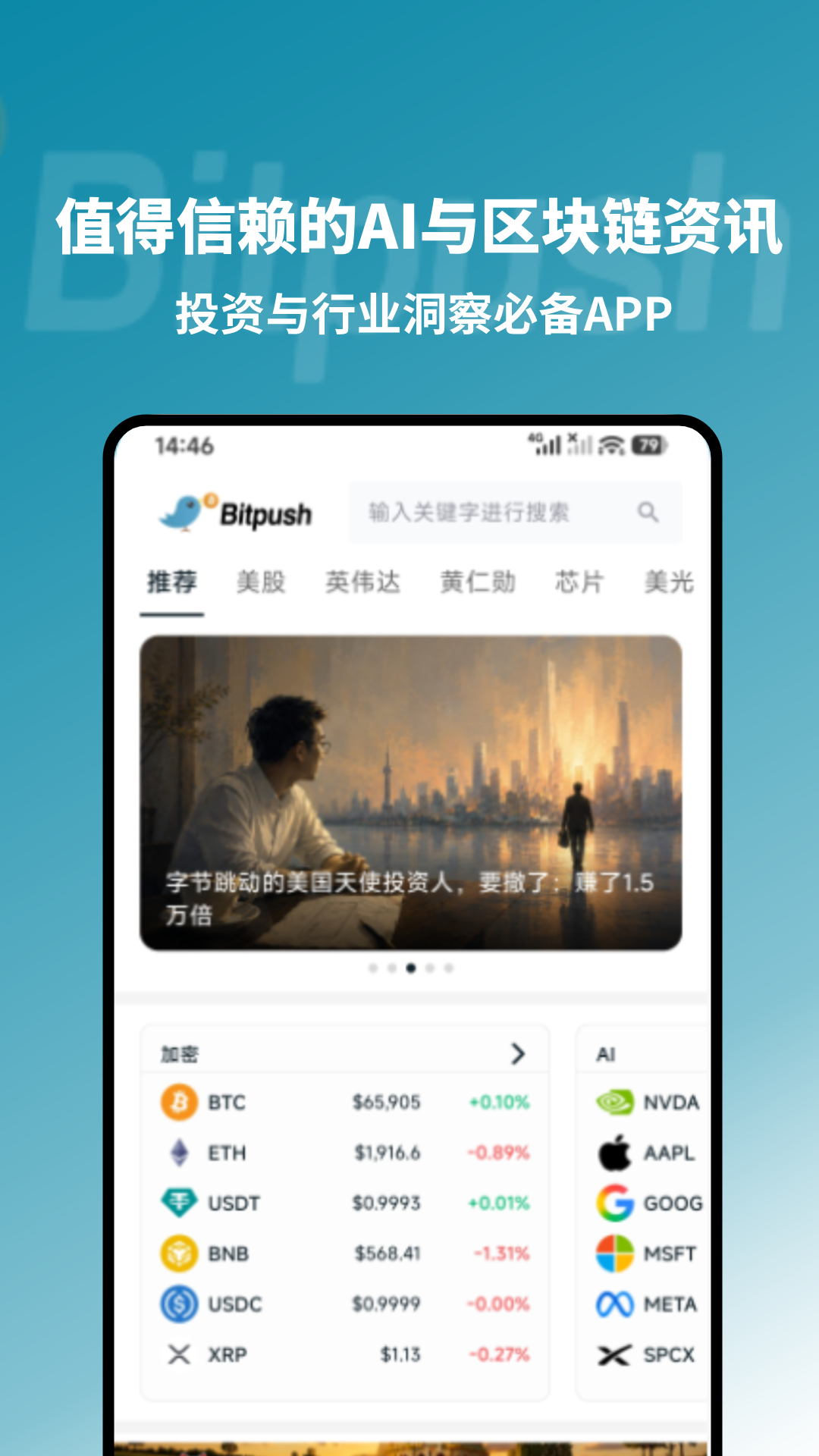
Refreshed! Bitpush launches new app to overcome information noise and understand AI and blockchain

Refreshed! Bitpush launches new app to overcome information noise and understand AI and blockchain

In an age of information overload, we are never short of information. What is really scarce is information that has been screened and is trustworthy to help you see trends clearly. The new Bitpush app has been released. Faster, sharper, and purer, it accompanies you through the noise and uncovers the information that really matters. 7×24 hour coverage, with a global vision based on a globally distributed content team. Bitpush tracks global market trends around the clock, continuously covering blockchain, AI, FinTech and macro trends. From instant updates, original reports, to in-depth interviews and trend interpretations, we don't do low-quality handling, don't chase meaningless traffic, and only present content worth paying attention to. Important news, the market never waits, and important information often determines the next decision. Bitpush continuously tracks global industry trends and captures policy changes, market changes and major events in a timely manner, so you can grasp key signals earlier and not miss every important change. Frontier trends, early seeing the continuous emergence of new technology and rapid changes in new tracks. Real valuable opportunities are often hidden before trends are formed. The “Market Radar” focuses on cutting-edge AI and Crypto transactions. MEME detectives capture on-chain hot spots in real time and continuously track emerging agreements, capital flows, and market changes. If you see it one step earlier than others, you can think one step further. Minimalist and fresh, no ads to disturb the blue and white main tone, clean and unobtrusive. Card-style information flow, zero advertisement insertion throughout the process. Swipe to follow, so it's comfortable to read late at night. Multiple verifications. If you don't follow fake hot spots, you can manufacture them; trust can only be accumulated. Each piece of information has been cross-verified from multiple sources and reviewed collaboratively by humans and machines. It does not spread unproven “small essays”, does not amplify emotions, and does not create anxiety. What we care more about is not grabbing every hot spot, but getting infinitely close to the truth. Now, download the new version of bitPushiOS: https://apps.apple.com/cn/app/bitpush-ai%E5%8C%BA%E5%9D%97%E9%93%BE%E6%AF%94%E7%89%B9%E5%B8%81web3%E8%B5%84%E8%AE%AF%E5%B9%B3%E5%8F%B0/id1359810708Android(Google Play): https://play.google.com/store/apps/details?id=com.flashfresh.bitpush&hl=zh把噪音关在门外,把真正有价值的资讯留在身边. Bitpush sees the future with a global perspective. Twitter: https://twitter.com/BitpushNewsCN比推 TG Community: https://t.me/BitPushCommunity比推 TG Subscriptions:... https://t.me/bitpush

22d agoWendy