GENIUS法案 · 532

Opinion: Changing key provisions of the Clarity Act would cause legislation to fail and should be passed as soon as possible

Comparing news, Summer Mersinger, CEO of the US Blockchain Association (Blockchain Association), wrote that there are less than four weeks left until the US Senate votes to advance the “Clarity Act” debate on September 15. Reopening the provisions that have been under negotiation for several months at this time will not improve the bill; on the contrary, it will restart the unfinished negotiation process, which may eventually lead to the failure of the legislation. Mersinger said that the two proposed revisions proposed by the American Bankers Association (ABA) — replacing the existing standard with substantially similar interest and removing the word “simply” were not simple text adjustments, but major policy changes. She pointed out that similar interest is essentially a flexible legal standard, which may allow regulators to expand the scope of interpretation; and removing Solely will change the scope of application of stablecoin income restrictions in the GENIUS Act and affect the policy boundaries previously set by Congress. Mersinger stated that ABA's concerns that stablecoins may cause bank deposits to be lost have no real basis. The data shows that since the GENIUS Act was passed, bank of America deposits have grown for three consecutive quarters, with a cumulative increase of more than 800 billion US dollars. She stressed that what is really needed to protect consumers is to establish a digital asset regulatory framework. The Clarity Act will clarify the regulatory boundaries between the US Securities and Exchange Commission (SEC) and the Commodity Futures Trading Commission (CFTC), require registration of platforms serving US users, and implement customer asset isolation, information disclosure, and conflict of interest management rules. Mersinger finally called on the US Senate not to restart negotiations. The bill has been completed, the relevant work has been completed, and the Senate has an opportunity to push it forward on September 15, and it should be passed directly.

19h ago

Circle CEO: FASB Proposed Digital Asset Accounting Rules or Drive USDC Institutional Adoption

Comparing news, Circle CEO Jeremy Allaire said that the new proposed accounting rules will form an important strategic impetus for the adoption of digital dollars such as USDC. Allegedly, in conjunction with the GENIUS Act, the FASB rules will enable USDC to be widely used by businesses and financial institutions around the world, and this matter is strategically important.

1d ago

Bank of Italy research: Stablecoin remittances have no systemic cost advantage, and on-chain links account for only a small part

Comparatively, in a research report released in July 2026, the Bank of Italy first passed the “mystery customer” empirical survey to track 200 USDC transfers across ten corridors between Italy and Argentina, Brazil, South Africa, the United Arab Emirates, and Japan. The results showed that the total cost of stablecoin remittance fluctuated greatly, with a minimum of only 0.3% and a maximum close to 9%. The average transfer on the blockchain chain accounts for only 0.4%. Most of the costs are concentrated in fiat currency withdrawal and recharge — traditional intermediary fees such as exchange transaction price differences, credit card fees, and withdrawal fees are decisive factors. Compared with traditional channels such as Wise, stablecoins have a cost advantage in some channels such as Brazil → Italy, but channels such as the UAE → Italy are more expensive and show a high degree of “channel specificity.” In terms of speed, blockchain transfers themselves only take a few minutes, but end-to-end efficiency depends entirely on the quality of traditional payment infrastructure in the destination country. Countries with instant payment systems such as Brazil (PIX), Italy (TIPS), and Argentina (Transferencias 3.0) can control the entire process within 20 minutes; countries that rely on traditional bank transfers, such as South Africa, extend the delivery time to 1 to 2 business days. The report points out that the efficiency of stablecoin remittance is determined by itself and the surrounding traditional payment infrastructure, and the two are complementary rather than alternative relationships. The report also analyzed the impact of global regulatory fragmentation: the European Union's MiCA and the US GENIUS Act represent a mature compliance framework; Japan's strict “safety priority” entry reduces nominal costs, but the process is complicated, causing users to flow out to offshore platforms; countries such as India and Turkey are in a transitional regulatory phase; prohibited countries such as Egypt and Saudi Arabia have failed to curb demand and instead push transactions into gray channels. This article is sponsored by GENG, Build Your Fortune on GENG (https://geng.one)

1d agoburnking
Is “Cow Lai” really here? Bitcoin skyrocketed, and $2,743 billion bears were brutally liquidated

Is “Cow Lai” really here? Bitcoin skyrocketed, and $2,743 billion bears were brutally liquidated

Source: PanNews Author: Nancy Original title: Is “Cow Coming” Really Here? Bitcoin changed overnight, and bears hit the main points of the biggest liquidation day in history: Bitcoin rebounded strongly on August 19, with an intraday increase of more than 7.4%, once approaching 70,000 US dollars, a new high since the beginning of June; Ethereum simultaneously broke through 2,300 US dollars. Over the past 24 hours, the entire network closed out more than 2,986 billion US dollars, of which short liquidations reached 2,743 billion US dollars, setting a new record for short liquidation in a single day. The recovery in the market was driven by multiple factors: the US Treasury expanded the scale of long-term treasury bond repurchases to improve liquidity; the SEC proposed new crypto asset issuance rules to exempt some registration requirements; and Trump met with crypto business executives and made supporting remarks, urging Congress to pass the Clarity Act. Furthermore, the net inflow of Bitcoin spot ETFs has exceeded US$480 million in the past two days, causing large-scale short liquidation effects. On-chain data shows that spot demand is about to improve, with a median increase of about 18.1% over the next 60 days. However, Glassnode pointed out that high real interest rates are still a suppressing factor, the market is still bottoming out, and the capitulation is not completely over. VanEck believes that 8 of the 12 capitulation indicators have been triggered, but this is not a sign of bottoming out. The potential cumulative window may be from September to November. Standard Chartered Bank expects Bitcoin to rise to 100,000 US dollars by the end of 2026. If it effectively breaks through $65,500, it may confirm the low in the cycle. CEO Strive believes that the long-term downward trend in the US dollar may bring the strongest macro tailwind to Bitcoin. Overall, there are positive signs in the market, but continued strengthening still requires verification of demand, liquidity, and macro environment, and investors should maintain reasonable positions. While the movie “Cow Lai” continues to be popular, the market's expectations for a “return to the bull market” are also constantly being ignited. Coincidentally, the crypto market also suddenly ushered in a long-lost “bull attack”. Bitcoin's strong counterattack overnight led to a collective recovery of the market. For the crypto market, which has been dormant for a long time, this surge not only means a breakthrough in price, but also a return to market volatility. After the market heated up rapidly, market sentiment was instantly ignited, and coin industry players even ridiculed that “native families are finally getting better.” Meanwhile, this sudden strong rebound also simultaneously triggered a single-day liquidation wave of bears on an astonishing scale. Bitcoin fought back strongly. On the evening of August 19, the bears experienced the biggest wave of liquidation in history. On the evening of August 19, Bitcoin broke out of a long-lost positive line and strongly broke through the consolidation range that continued for several months. According to CoinGecko data, Bitcoin suddenly experienced a strong rebound, with an intraday increase of more than 7.4%, once approaching 70,000 US dollars, a new high since the beginning of June. Ethereum strengthened at the same time. At one point, the price broke through 2,300 US dollars, reaching a new high of nearly three months. Mainstream assets rose collectively, rapidly driving the overall recovery of the crypto market. Over the past 24 hours, the total crypto market capitalization has risen by around 7.5%, recovering to around $2.46 trillion. However, this sudden surge also turned into a large-scale bear slaughter. According to CoinGlass data, the total amount of online liquidations in the past 24 hours has exceeded 2,986 billion US dollars, and more than 175,000 traders have been forced to close their positions. Among them, the biggest single liquidation occurred in the BTC-USD contract on the Hyperliquid platform, which amounted to about US$48.8 million. Judging from the historical scale, this wave of liquidations has surpassed the single-day liquidation record of about 2.23 billion US dollars during the “tariff shock” in February 2025, ranking the eighth largest liquidation event in crypto history. What is more noteworthy is that this liquidation almost showed a one-sided pattern of bears squeezing. According to CoinGlass data, in the past 24 hours, the amount of short liquidation reached US$2,743 million, far exceeding the liquidation scale of about US$243 million for longs. This figure even surpassed the scale of short liquidations of about 2.46 billion US dollars on the largest settlement date in history on October 10, 2025, setting a new record for the scale of short liquidations in a single day in the crypto market. The crypto market welcomed multiple benefits. Trump's bullish remarks ignited optimism behind the collective reversal of the crypto market's decline, mainly driven by multiple factors such as improved macro liquidity, bearish shortfall, regulatory optimism, and the return of ETF funds. At the macro level, the US Treasury expanded the scale of long-term treasury bond repurchases, which became the core trigger for this round of market recovery. The Ministry of Finance announced that it will double the maximum limit of liquidity support repurchases of 10-year to 30-year treasury bonds from at least US$2 billion to US$4 billion. The measures will be implemented on September 9 and will continue until November 4. The market generally interpreted this as strong support for the liquidity of the treasury bond market, which effectively lowered long-term yields. The yield on 30-year treasury bonds declined markedly from a high level of about 5.33% to 5.34%. And the decline in US bond yields...

2d ago22#Blood washes empty heads
Overnight skyrocketing 20%! Trump is sending a big signal, the crypto market is crazy

Overnight skyrocketing 20%! Trump is sending a big signal, the crypto market is crazy

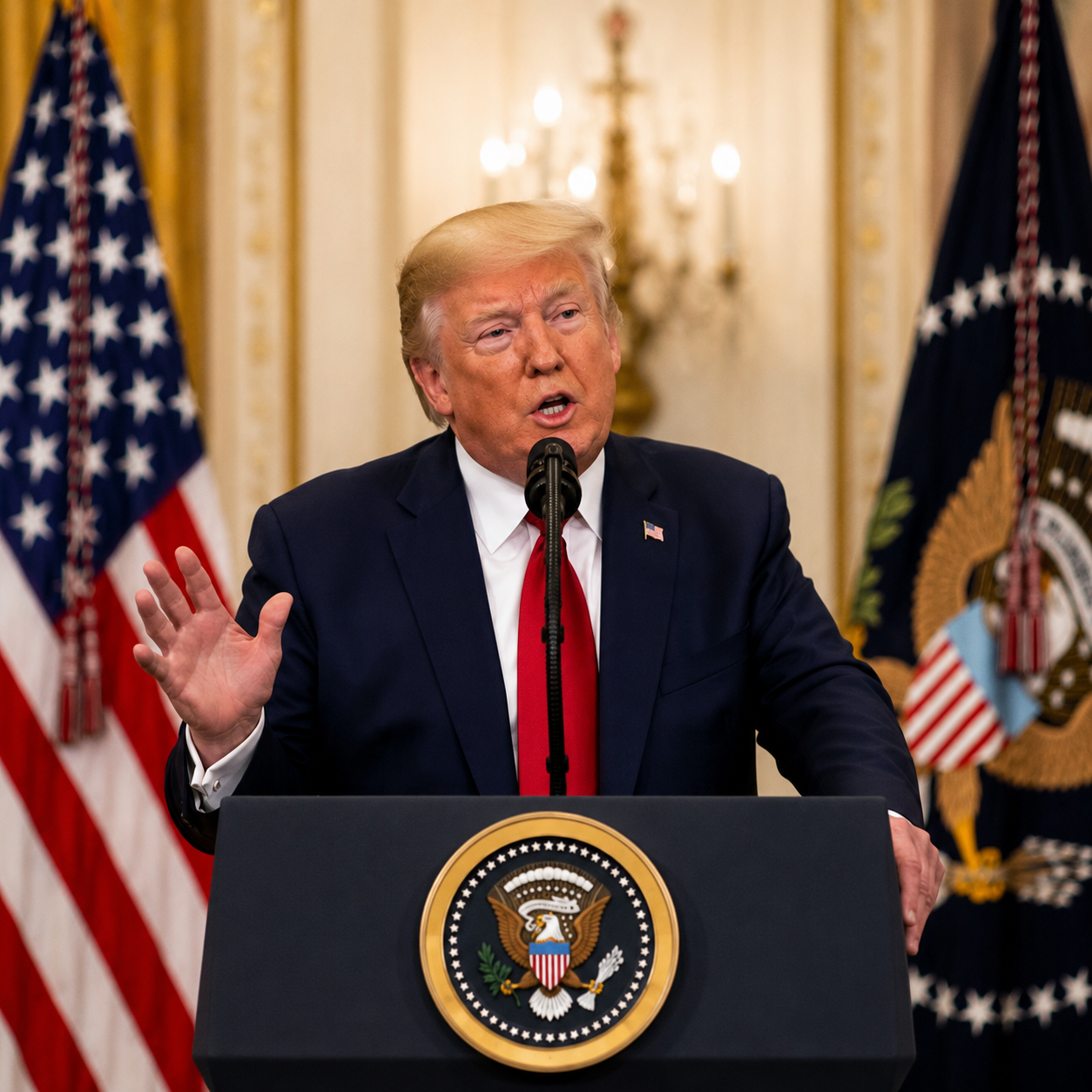
Source: Trump's White House speech compilation: Odaily Planet Daily Original title: What did Trump say on the night of the cryptocurrency explosion? The White House organized a “Cow Comes” show! Core point of view: At the White House cryptocurrency industry executives gathering, Trump explained the results of his administration's policies to promote the development of digital assets, emphasized America's position as a global leader through executive orders, legislation, and regulatory reforms, and called on Congress to pass the CLARITY Act to strengthen competitive advantage. Key elements: 1. Participants included SEC Chairman Paul Atkins, CFTC Chairman Michael Selig, and executives such as Coinbase, Robinhood, and Ripple, highlighting the trend of cooperation between the industry and the government. During the conference, BTC once surpassed 70,000 US dollars, ETH rose nearly 20%, and the market response was positive. 2. Trump announced the dismissal of former SEC Chairman Gary Gensler, terminated “Operation Blockpoint 2.0,” and signed an executive order banning CBDC and launching “Project Crypto” to reform the rules. 3. The government establishes US strategic Bitcoin reserves and digital asset reserves to use Bitcoin as a permanent asset of the Treasury; the “GENIUS Act” paves the way for widespread adoption of US dollar stablecoins. 4. The CFTC approved the first Bitcoin perpetual futures contract and promoted Hyperliquid compliance into the US, showing the gradual implementation of the regulatory framework. 5. Trump criticized the high interest rate policy, arguing that interest rates should be cut to support growth when economic data is strong; he emphasized that the fintech revolution has created jobs and wealth, and that the stock market has reached 80 new highs in a year and a half. 6. He called on Congress to pass the “CLARITY Act” as market structure legislation to ensure that the US continues to lead competitors such as China in the fields of encryption and AI. Editor's note: In the early morning of August 20, Beijing time, the White House held a meeting of cryptocurrency industry executives. Trump himself attended and delivered a speech. Government executives such as SEC and CFTC, industry representatives from Robinhood, Coinbase, Ripple, Gemini, a16z, etc., and senior traditional finance executives such as the Intercontinental Exchange and NASDAQ all attended the conference. Perhaps influenced by this positive signal, the cryptocurrency industry soared at night. At one point, BTC broke the $70,000 mark, and ETH rose close to 20%. Below is Trump's own statement on his speech at the conference. Seriously, a group of important people came to the scene today. If you love the world of finance as much as I do — I really love finance — all of you here today are big names in the financial world. It's incredible that you might not know some of them, but anyone in the financial world should know every one of them. Thank you so much for being here today. We're excited to welcome some of America's best talent in finance, cryptocurrency, and technology. In Washington, D.C., we are about to welcome the first meeting of the US Commodity Futures Trading Commission (CFTC) Innovation Advisory Committee (Innovation Advisory Committee). It's a committee of very smart people who will give us suggestions and tell us what we should do. Right, Paul (referring to SEC Chairman Paul Atkins)? They'll tell us a few things. But I think Paul probably knows these issues better than anyone else, and he did a great job. We're very happy with Paul, and I think everyone thinks the same. He's really amazing. From the cryptocurrency market and prediction market, to traditional finance, to decentralized finance, the people in this room are making sure that the future of the commercial market can be created and improved here in the US. We are competing with many other countries for control of these markets, market share, and the profits, jobs, and everything else they create. And we did a great job. We are leading the way in every aspect, including artificial intelligence, and by a huge margin. We want to continue this lead. I would like to thank CFTC Chairman Michael Selig for his outstanding leadership. (Find someone first) Michael, come over... (Then suddenly found him around) Why am I so close that I almost didn't recognize you. At the same time, I would like to thank a very special person, someone who has been respected by everyone for a long time. I would have liked him to take this role — I wanted him to do this job before he became SEC chairman. Paul Atk...

2d ago22#BTC skyrocketed #Trump

The US OCC expects to finalize GENIUS Act rules by November and will be adjusted based on feedback from the crypto industry

Comparing news, crypto journalist Eleanor Terrett wrote that the head of the US Monetary Authority (OCC) said at the Wyoming SALT Conference that digital asset-related licensing activities had increased 8 times compared with the Biden administration, and that the previous administration's attempt to eliminate risk was extremely short-sighted. It said the OCC expects to finalize the rules relating to the GENIUS Act by November and will adjust the rules based on feedback from the crypto industry.

3d ago

American Bankers Association: Support the passage of the CLARITY Act, but stablecoin reward provisions should be tightened

Comparing news, American Bankers Association (ABA) President and CEO Rob Nichols said the goal was to strengthen rather than prevent the passage of the CLARITY Act. It believes that the digital asset industry needs a clear regulatory framework, but one of the key provisions of the bill relating to stablecoin rewards still needs to be further tightened. Nichols pointed out that the 2025 GENIUS Act prohibits stablecoin issuers from paying interest or income to holders, and the current dispute is whether related parties such as crypto trading platforms can provide similar interest rewards. He believes that if stablecoin wallets attract outflows of bank deposits through such mechanisms, it may weaken banks' financial base for small business loans, housing mortgages, and agricultural financing. The American Bankers Association proposed amending the relevant statement in the bill to prohibit stablecoin rewards substantially similar to interest payments, and remove some potentially ambiguous wording. Nichols said the modifications won't stop crypto companies from offering other rewards programs, but they could prevent the reward mechanism from evolving into disguised deposit interest. He also said that the American Bankers Association is pushing for the Senate to amend the relevant provisions before the September vote, and believes that the US can become both a global banking center and a global crypto center, but only if clear and consistent regulatory rules are established.

3d ago

US Treasury Seeks Public Comments on GENIUS Act Stablecoin Implementation Draft

On August 17, the U.S. Department of the Treasury (U.S. Department of the Treasury) issued a proposed rulemaking notice (NPRM) on the implementation rules of the “Guiding and Conducting National Innovation for U.S. Stablecoins” (Guiding and Proposed National Innovation for U.S. Stablecoins) and solicited comments from the public to advance the implementation of the regulatory framework for US payment stablecoins. US Treasury Secretary Scott Bessent said that the Trump administration and Congress are pushing for the passage of the GENIUS Act, which establishes a “landmark regulatory framework and clear rules” for payment stablecoins, and the Treasury Department is speeding up implementation of the relevant system. He said that the Treasury Department hopes to support the innovation and development of enterprises in the US by providing regulatory certainty, while strengthening the US dollar's position as a global reserve currency and promoting the US as a global crypto asset center. According to the GENIUS Act, it is anticipated that from January 18, 2027, any entity that wants to issue payment stablecoins in the US will generally have to obtain an appropriate federal or state license. Furthermore, digital asset service providers are generally prohibited from providing, selling, or distributing foreign-issued payment stablecoins to the US market unless the foreign issuer has the technical ability to comply with US regulatory requirements and is able to comply with relevant arrangements reached between the US and its jurisdiction. Starting July 18, 2028, the Act further requires that digital asset service providers are generally prohibited from providing or selling payment stablecoins to “persons in the US” unless the relevant stablecoin is issued by a licensed issuer. The draft rules issued by the Treasury Department mainly provide regulatory explanations on two key issues: one is to clarify what acts constitute “issuing payment stablecoins in the US” to help issuers determine when to apply for permission under the GENIUS Act; the other is to clarify what acts constitute “providing or selling payment stablecoins to people in the US” to provide compliance guidelines for companies to participate in the US stablecoin market. The US Treasury Department said that this public consultation will continue for 60 days after publication in the Federal Register (Federal Register), and the public and industry participants can submit comments. This article is sponsored by GENG, Build Your Fortune on GENG (https://geng.one)

5d agoburnking

US Treasury Secretary Bezent says the Treasury Department is rapidly advancing the implementation of the GENIUS Act

Comparative news, according to Bitcoin Magazine quoting related statements, US Treasury Secretary Scott Bessent (Scott Bessent) said that the Treasury Department is rapidly advancing the implementation of the GENIUS Act. Bessent pointed out that the expected effective date of the bill is January 18, 2027, and the Ministry of Finance has begun implementation arrangements based on this. The GENIUS Act is an important federal legislation for payment stablecoins in the US. It aims to clarify issuance, reserve, and regulatory requirements and provide a unified framework for compliant US dollar stablecoins. Bezent's statement this time shows that the US Treasury Department is speeding up supporting rules and implementation preparations according to the legal schedule in order to make the bill operable until the entry into force.

5d ago
70 years since the dollar left: stablecoins, not a new invention?

70 years since the dollar left: stablecoins, not a new invention?

Author: Lacie Zhang, Bitget Wallet Researcher Some people say that the real global reserve currency has never been the US dollar, but the European dollar. The name originated from a bank's telex address, but was eventually used to refer to all dollars outside the US. 70 years ago, in order to avoid the freezing of dollar accounts in the US, the Soviet Union and Eastern European countries deposited dollars in the Nordic Commercial Bank established in Paris and the Moscow National Bank established in London. The Nordic Commerzbank's telex address is “Eurobank” — the name of the European dollar, from there. However, it was Britain that turned these dollars into a large-scale credit market. After the Suez Canal crisis in 1956, Britain tightened foreign exchange controls, and bankers in London switched to using these foreign dollar deposits to lend, and European dollar credit services were born as a result. By 1957, the Bank of England further liberalized its policies, and London became the center of the European dollar market. Surprisingly, however, the explosion on the scale of the European dollar was mainly driven by the US itself: interest rates on domestic deposits were too low, and foreign dollars had no liquidity; during the oil crisis in the 70s, most of the dollar profits of oil-producing countries did not return. They are locally deposited in London or other offshore banks. The European dollar market has thus been pushed from a few million dollars to the trillions of dollars. From this moment on, the “Eurodollar” no longer belongs only to Europe. The story of the European dollar also unfolds along two main lines at the same time: on one line, institutions that carry dollar credit are constantly changing, from bank accounts, to fintech companies' databases, to stablecoin issuers' reserve statements; on the other, the relationship between users and accounts is also quietly changing: from completely handing over money to institutions to being able to control assets on their own today. However, there are three things that run through the two main lines and have not changed in 70 years: the US dollar can continue to expand outside of the US; its final liquidation will always be inseparable from the US; and the person who manages your account is never necessarily the same as the one who actually promises to pay. In other words, the “who owes you a dollar” question itself never went away, but the answer to it changed all the time. The story I want to tell in this article is how this problem entwined two migrations all the way up until today. 1. At the moment the US dollar left the US deposit and transferred to London, something that was easily overlooked happened: the Bank of New York originally owed this amount of money, but now, the person who owes this money has become the Bank of London. The unit of currency has not changed, but the person who guaranteed it has changed. If that were all, the story would have ended here, but the Bank of London soon discovered something even more interesting: not only can they accept US dollar deposits, but they can also create more dollars out of thin air around these deposits. When a bank lends a dollar loan to a company, the asset side has an additional claim against the borrower, but the debt side also has an additional “dollar deposit” — this deposit can be immediately used to pay the supplier's bills, buy equipment, and pay off other debts. Milton Friedman (Milton Friedman), a representative figure of monetarism, later commented on this incident and said it very well: the source of the European dollar was not a money printer, but “a bookkeeper's pen.” Banks don't create wealth out of thin air; they're just using an old credit game rule. As long as payment promises are accepted by the market, dollars written on the ledger can be used as real dollars. This pen proved one thing for the first time: it doesn't have to be a bank in the US to carry the dollar. What is really growing this market is a regulatory wall. The US “Q Regulations” stipulate the upper limit of interest rates that banks can pay to depositors. Without this wall, the Bank of London can naturally offer higher interest to steal business. Economic historian Catherine Schenk (Catherine Schenk) examined British archives and found that in June 1955, London's Midland Bank absorbed about $49 million in 30-day dollar deposits in just one month because interest rates were a bit higher than what her American peers could give. After the British pound crisis in 1957, Britain did not allow domestic banks to use British pounds for trade financing in third countries. The Bank of London simply switched completely to the US dollar business. Businesses and governments that wanted to finance began to bypass New York and directly ask for money from London. The world's appetite for the US dollar is growing, yet America's own banks are tied to their feet — this gap feeds an entire dollar market that can self-circulate and expand outside of the US. Around 1960, this market was about 1 billion US dollars; ten years later, it was close to 50 billion US dollars; in the 1973 oil crisis, huge dollars earned by oil-producing countries went back through the London banking system; by 2007...

8d agoburnking#Figure