Huobi · 878

Binance will no longer process transactions involving platforms such as HTX and EXMO

Comparative news, according to an official announcement, Binance stated that in accordance with recent changes in regulatory requirements, in order to continue to comply with relevant regulations and ensure the safety of users' assets, it will stop processing related transactions involving some crypto asset service providers or platforms in stages. Among them, Shelbit and Aban Tether Exchange have been in effect since August 7; A7 Nigeria, A7 Africa, and PilotFinance Ltd have been in effect since August 13. Starting August 23, affected entities will also include Rapira, Aifory Pro, ABCEX, WhiteBird, NooneCrypto, Tradex, Monease, BitPapa, Exnode, Exnode Pay, HTX (Huobi Global SA), and EXMO Ltd. Binance reminds that after the corresponding effective date, users should avoid transferring assets directly or indirectly through Binance, receiving assets from such entities, or making other transactions with them through Binance. If users still attempt to conduct related transactions, they may be subject to additional compliance reviews. The relevant wallets may be restricted during the review period, and related activities may also involve violating Binance's Terms of Use. Binance stated that these measures are aimed at fulfilling the regulatory and compliance obligations in the jurisdiction where it operates, and maintaining the user's trading environment and asset safety. This article is sponsored by GENG, Build Your Fortune on GENG (https://geng.one)
8d agoburnking

The UK sanctions Huobi and ruble stablecoin issuers, and first uses bank-level sanctions against crypto exchanges

Comparatively, the British Foreign Office imposed sanctions on 18 entities and individuals, accusing them of helping Russia evade restrictions and funding the Russian-Ukrainian war. The targets of the sanctions include the crypto exchange Huobi Global S.A. (HTX operator), Rapira Group, Bitpapa, and the Kyrgyz affiliate “virtual asset issuer” — which issues a gold-backed stablecoin USDKG. For the first time, the British side applied section 17A of the “Russian Sanctions Regulations” to crypto exchanges, requiring British financial institutions to freeze relevant funds, trace transactions, and conduct compliance reviews of transactions across multi-hop blockchains. Blockchain analysis company Elliptic pointed out that HTX has an annual transaction volume of about 3.3 trillion US dollars and is suspected of providing services to the Russian A7 payment network and Garantex (later renamed Grinex), which was previously sanctioned. The British side said that the Kremlin-supported A7 payment network transferred more than 90 billion US dollars last year for oil revenue settlement and military procurement. The sanctions are effective immediately.

88d agoWendy

Hong Kong stablecoin payment company RedotPay is raising new capital with a target valuation of over $4 billion to go to the US for an IPO

According to the news, Hong Kong stablecoin payment company RedotPay is in talks with various institutions about a new round of up to 150 million US dollars of financing. Previously, the company had completed more than 150 million US dollars in financing in September and December of last year. Investors include the venture capital departments of Coinbase and Circle. RedotPay is currently valued at over $1 billion and aims to be listed in the US this year at a valuation of over $4 billion. While advancing its IPO, the company faced frequent executive changes. In the past year, at least five senior employees worked for less than 12 months, the head of compliance changed twice, and is currently proceeding with the listing plan without a chief financial officer. According to investor data reviewed by Bloomberg, the total annualized payment volume of RedotPay exceeded 10 billion US dollars in December of last year, doubling from the previous year. Revenue reached 158 million US dollars, more than 6 million users, and covered more than 100 countries. Additionally, some of RedotPay's connections to mainland China have attracted attention. Co-founder Dawei Yuan is a former co-founder of crypto exchange Huobi, and the chief operating officer Troy Yao previously managed a team of engineers in China that moved to Hong Kong in 2025 due to concerns from US investors. The participation of Beijing venture capital firm Gao Rong Venture Capital was not disclosed due to China's regulatory stance on cryptocurrencies.

157d ago

Qian Zhimin, the main culprit in the 60,000 BTC money laundering case, bought a total of 194,951 BTC from 2014 to 2017

According to Caixin, according to Caixin, between 2014 and 2017, Qian Zhimin used the name Blue Sky Gree to launch ten zero-risk, high-return wealth management products such as Blue Sky 1 and Blue Sky 2. Through holding promotion meetings and pyramid schemes, they lured the public to participate in investment with high interest. Over a period of about four years, the total amount of non-absorbed funds reached more than 40 billion yuan, affecting nearly 130,000 people. Of these funds, 34 billion yuan was used to pay off the proceeds of previous products, and billions of yuan were taken away for use by Qian Zhimin and his co-conspirators. A large amount of money was used by Qian Zhimin to buy cryptocurrencies. We learned from the English court that in June 2014, Qian Zhimin directed his front desk to open an account for himself on the cryptocurrency trading platform Huobi (Huobi) and used 180 million yuan of investor funds to buy 10,250 bitcoins; since then, the number of bitcoins in this account has increased to 14,3951. Between January and June 2017, she also purchased 51,000 bitcoins through over-the-counter (OTC) transactions with 468 million yuan of investor capital. So far, Qian Zhimin has bought a total of 194,951 bitcoins. According to Qian Zhimin's defense attorney, she first learned about Bitcoin in 2012, and her ambition is to hold 210,000 bitcoins one day, accounting for 1% of the total amount of bitcoins. And she almost reached that goal. The defense attorney also claimed that the average price Qian Zhimin bought bitcoins on Huobi was 2,815 yuan/piece (statistical caliber unknown). On the day of her sentence in the UK, the unit price of Bitcoin had risen 266 times to 750,000 yuan/piece.

279d ago
Before the amnesty: Zhao Changpeng's 180-day journey

Before the amnesty: Zhao Changpeng's 180-day journey

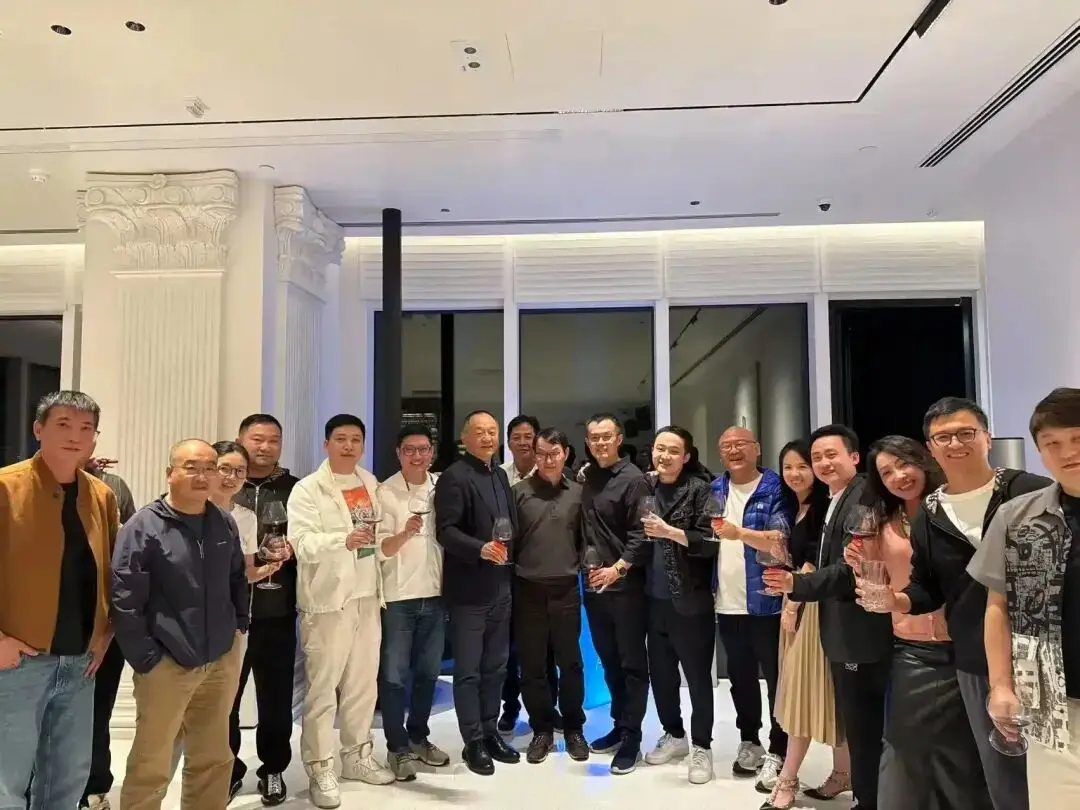
Source: Lin Wanwan, Blockchain Beats Original title: Running, Saving Yourself, 180 days before Zhao Changpeng was pardoned. On the night of October 23, 2025, in the middle of the night of October 23, 2025, Zhao Changpeng, the richest man in Chinese cryptography, was announced to have been pardoned by US President Trump. According to public information, President Trump previously expressed his sympathy for Zhao Changpeng's claim that he is facing “American political persecution.” However, just a year ago, on April 30, 2024, Zhao Changpeng was experiencing the darkest moment in his life: he was stripped naked, subjected to humiliating body searches, showing his hips, and then placed in a cold cell. The inmates were muscular men with tattooed faces and patterns engraved on their heads [1]. In the federal court in Seattle, Zhao Changpeng pleaded guilty to his crime while wearing a prison uniform. This man, known as the “richest Chinese man,” voluntarily chose to hand over 4.3 billion US dollars in fines and said in front of the media: “I chose to voluntarily pay political fines.” If someone had told him at the time, not only will you be amnestied by the US in a year, but you will also be able to step back into China, and the cold eyes and punches in the Seattle cell right now, along with the 4.3 billion dollar political fine, will all be cleared to zero. He probably scolds in his heart; this is kind of dark humor. The signal about Zhao Changpeng's amnesty was released starting September 17, 2025. On the same day, CZ suddenly updated their Twitter profile and changed “ex- @binance” back to “@binance.” To some extent, it shows that I can return to Binance to settle the dust. Meanwhile, in October, the two major “compliant trading entrances” in the US almost gave signals: Coinbase, a crypto listing platform, and Robinhood, a mainstream brokerage firm regulated by the SEC, have successively opened BNB trading. This platform coin from the Binance ecosystem founded by Changpeng Zhao has obtained official entry into the mainstream US financial system for the first time. White House Press Secretary Caroline Leavitt (Karoline Leavitt) announced the entry into force of the amnesty and emphasized: “The Biden administration's war on cryptocurrencies has come to an end.” We set the time back to 180 days before the amnesty. What was Zhao Changpeng, the richest Chinese man and founder of Binance, when he was one step away from a “political amnesty”? In the spring of 2025, the air of Victoria Harbour was filled with a hint of excitement that had been lost in a long time, and a group photo quickly flashed through the screen. Four people stand in C position for the group photo: Huobi founder Li Lin, Zhao Changpeng CZ, Sun Yuchen, and Kong Jianping. The group photo shows Li Lin, founder of Huobi, nine on the left, and Zhao Changpeng, founder of Binance on the left, and Kong Jianping on the left. For others, this is just a group photo of a few big names in the coin industry, but in the eyes of people who know how to act, this scene itself is a signal. Eight years ago, China completely stopped ICOs and trading platforms, Binance hurriedly went overseas, and Zhao Changpeng became “the least likely person to return home.” Eight years later, he reappeared in this group photo. This is his opening statement to re-establish links with local capital and institutions. Li Lin, the host of this party, was once the founder of Huobi, one of the top three trading platforms in the world. Three years ago, he sold his own company to Sun Yuchen, who was also in the restaurant. However, the person who had the most contact with CZ after this dinner was Kong Jianping, who was standing next to them. Kong Jianping used to be the co-chairman of the board of directors of the well-known mining machine manufacturer Jianan Technology. In 2020, he founded Nano Labs and served as the chairman. He is also a director of Hong Kong Cyberport, a member of the Hong Kong “Task Force to Promote Web3 Development”, and was even appointed by the Secretary for Financial Services and the Treasury of the Hong Kong Special Administrative Region Government to serve as a member of the tribunal [2]. Two months after the party ended, Kong Jianping made a high-profile announcement that he would build a $1 billion BNB treasury with the goal of hoarding 5% to 10% of circulation and packaging the Binance platform currency BNB into a “US stock listed company.” CZ personally retweeted it on Twitter, and market sentiment was immediately ignited. The stock price soared all the way up, and the intraday increase was as high as 107% +. Zhao Changpeng stressed that he and his associated entities “did not participate in this round of financing.” However, they are “still very supportive.” Since then, Kong Jianping can be seen behind most of Zhao Changpeng's public speaking engagements in Hong Kong. Four months later, when Zhao Changpeng returned to Hong Kong for the second time, he was no longer just a “mystery guest” at the Binance event, but came with a clear agenda: on the one hand, he officially announced the cooperation with Huaxing Capital before the event; on the other...

302d agoLuxurytracy#CZ
An Illustrated Guide to Hong Kong's Crypto Industry: Division and Game, Integration and Rebirth

An Illustrated Guide to Hong Kong's Crypto Industry: Division and Game, Integration and Rebirth

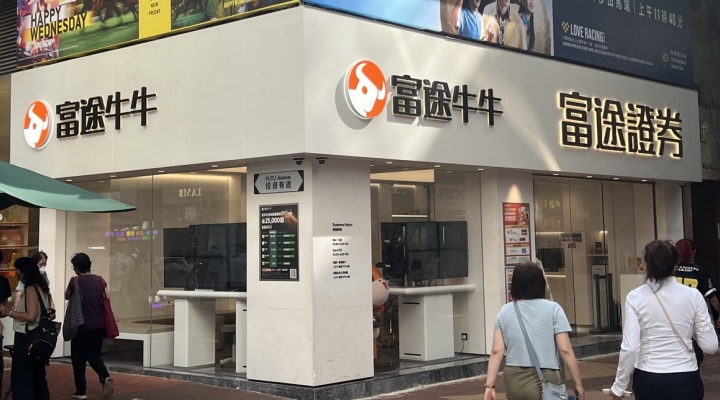
Author: Zhou Zhou, Foresight News Original title: Hong Kong Currency Exchange Guide: Fragmentation, Confrontation, and Integration In 2025, the sense of rift in the Hong Kong currency market became more and more obvious. “Every day, traditional financial institutions come to discuss the crypto business with us, and we ourselves are also trying to promote new businesses to YouTube, X and other platforms, and find influential KOLs to cooperate with bloggers.” When a brokerage practitioner talks about expanding the crypto business, the tone was full of energy and anticipation. On the other side, a blockchain company employee who had just joined the company and chose to leave had a low tone: “I'm gone, I can't stand this kind of state-owned enterprise style.” In the same Hong Kong and the same cryptocurrency ecosystem, some people feel the excitement and opportunity brought about by the industry's economic upturn; others feel the burnout and loss caused by institutional and cultural friction. Dramatic rips unfold every day. On the one hand, almost all mainstream Hong Kong brokerage firms are already involved in the cryptocurrency business. According to the latest statistics, more than 40 brokerage firms, more than 35 fund companies, more than 10 large banks and large accounting firms are already involved in virtual asset business in Hong Kong. For example, Futu Niu, the largest technology brokerage firm in Hong Kong, already provided customers with virtual asset trading services such as Bitcoin and Ethereum as early as August of last year. By the end of last year, its average daily trading volume had exceeded 35 million US dollars. From brokerage firms, funds, banks, auditing to insurance, mainstream financial institutions in Hong Kong are methodically and comprehensively integrating cryptocurrencies into Hong Kong's financial system. This made some financial practitioners involved in the cryptocurrency industry across borders feel the long-lost atmosphere of innovation and a kind of “upward beauty in the industry's economy.” However, on the other hand, Crypto Natives (Crypto Natives), some of whom have joined compliance companies, are experiencing a profound disillusionment — the decentralized utopia they once believed in is constantly colliding with actual regulatory, compliance, and financial logic. Not only do they want to maintain the “style” and “tone” of Crypto Native, but they also want to share a share in the compliance industry, this is becoming a difficult conflict for them to resolve. The integration of Hong Kong's cryptocurrency industry is gradually spawning a new species in the midst of the continuous fragmentation and fusion of the three major cultures. The first culture is Crypto Native. Early Hong Kong-compliant cryptocurrency exchanges, such as HashKey and OSL, have attracted many Crypto Native practitioners who have moved from Huobi, Bybit, Binance, etc., so the cultural undertones of these companies are still relatively “native” and maintain an open, flexible, and market-first atmosphere. Similar to Digital Natives (Digital Natives), Crypto Native (Cryptocurrency Natives) are familiar with the on-chain world, are naturally sensitive and creative about crypto culture, and believe that decentralization and technology have no boundaries. However, at present, it seems that Crypto Native practitioners are being continuously diluted, and more Internet finance and traditional finance practitioners are entering this industry and quickly taking the lead under the compliance framework. The second type is internet finance culture. Futu, Ant Group, Ant Math, and JD are all typical examples. They are actively entering the Hong Kong cryptocurrency market with mature online operations and user growth experience. Among them, some are well integrated into Hong Kong's mainstream financial culture. Take Futu Niu Niu as an example. As the largest online brokerage firm in Hong Kong, it has not only firmly occupied the online market, but has also opened 6 offline physical stores in Hong Kong's busiest neighborhoods, showing a strong combination of internet finance genes and localization. While visiting an offline physical store in Hong Kong, an offline employee of Futu enthusiastically helped the author open a US stock account and told the author that every week she receives more than 100 customers who come to inquire about services such as US stocks, Hong Kong stocks, and cryptocurrencies. “Currently, Hong Kong accounts can handle cryptocurrency business, but mainland ID card users cannot.” The employee said. According to reports, the number of registered users of Futu Holdings has exceeded 26.25 million. Among them, Futu Niu Niu Niu Niu Niu Niu has penetrated more than 50% of the Hong Kong adult population. The large number of existing users gives it a natural advantage in the Hong Kong cryptocurrency market. An industry source revealed that Futu Hong Kong users' cryptocurrency transactions currently rely on HashKey Exchange's underlying trading system, and this part of the transaction volume already accounts for HashKey Exchange...

368d agoLuxurytracy#Cryptographic circle #hongkong
The triple rift in the Hong Kong currency market: the confrontation and integration of crypto freedom, mutual fund efficiency, and traditional compliance

The triple rift in the Hong Kong currency market: the confrontation and integration of crypto freedom, mutual fund efficiency, and traditional compliance

Author: Zhou Zhou, Foresight News Original title: An Illustrated Guide to the Hong Kong Currency Circle: Fragmentation, Confrontation, and Integration In 2025, the sense of rift in the Hong Kong currency market became more and more obvious. “Every day, traditional financial institutions come to discuss the crypto business with us, and we ourselves are also trying to promote new businesses to YouTube, X and other platforms, and find influential KOLs to cooperate with bloggers.” When a brokerage practitioner talks about expanding the crypto business, the tone was full of energy and anticipation. On the other side, a blockchain company employee who had just joined the company and chose to leave had a low tone: “I'm gone, I can't stand this kind of state-owned enterprise style.” In the same Hong Kong and the same cryptocurrency ecosystem, some people feel the excitement and opportunity brought about by the industry's economic upturn; others feel the burnout and loss caused by institutional and cultural friction. Dramatic rips unfold every day. On the one hand, almost all mainstream Hong Kong brokerage firms are already involved in the cryptocurrency business. According to the latest statistics, more than 40 brokerage firms, more than 35 fund companies, more than 10 large banks and large accounting firms are already involved in virtual asset business in Hong Kong. For example, Futu Niu, the largest technology brokerage firm in Hong Kong, already provided customers with virtual asset trading services such as Bitcoin and Ethereum as early as August of last year. By the end of last year, its average daily trading volume had exceeded 35 million US dollars. From brokerage firms, funds, banks, auditing to insurance, mainstream financial institutions in Hong Kong are methodically and comprehensively integrating cryptocurrencies into Hong Kong's financial system. This made some financial practitioners involved in the cryptocurrency industry across borders feel the long-lost atmosphere of innovation and a kind of “upward beauty in the industry's economy.” However, on the other hand, Crypto Natives (Crypto Natives), some of whom have joined compliance companies, are experiencing a profound disillusionment — the decentralized utopia they once believed in is constantly colliding with actual regulatory, compliance, and financial logic. Not only do they want to maintain the “style” and “tone” of Crypto Native, but they also want to share a share in the compliance industry, this is becoming a difficult conflict for them to resolve. The integration of Hong Kong's cryptocurrency industry is gradually spawning a new species in the midst of the continuous fragmentation and fusion of the three major cultures. The first culture is Crypto Native. Early Hong Kong-compliant cryptocurrency exchanges, such as HashKey and OSL, have attracted many Crypto Native practitioners who have moved from Huobi, Bybit, Binance, etc., so the cultural undertones of these companies are still relatively “native” and maintain an open, flexible, and market-first atmosphere. Similar to Digital Natives (Digital Natives), Crypto Native (Cryptocurrency Natives) are familiar with the on-chain world, are naturally sensitive and creative about crypto culture, and believe that decentralization and technology have no boundaries. However, at present, it seems that Crypto Native practitioners are being continuously diluted, and more Internet finance and traditional finance practitioners are entering this industry and quickly taking the lead under the compliance framework. The second type is internet finance culture. Futu, Ant Group, Ant Math, and JD are all typical examples. They are actively entering the Hong Kong cryptocurrency market with mature online operations and user growth experience. Among them, some are well integrated into Hong Kong's mainstream financial culture. Take Futu Niu Niu as an example. As the largest online brokerage firm in Hong Kong, it has not only firmly occupied the online market, but has also opened 6 offline physical stores in Hong Kong's busiest neighborhoods, showing a strong combination of internet finance genes and localization. While visiting an offline physical store in Hong Kong, an offline employee of Futu enthusiastically helped the author open a US stock account and told the author that every week she receives more than 100 customers who come to inquire about services such as US stocks, Hong Kong stocks, and cryptocurrencies. “Currently, Hong Kong accounts can handle cryptocurrency business, but mainland ID card users cannot.” The employee said. According to reports, the number of registered users of Futu Holdings has exceeded 26.25 million. Among them, Futu Niu Niu Niu Niu Niu Niu has penetrated more than 50% of the Hong Kong adult population. The large number of existing users gives it a natural advantage in the Hong Kong cryptocurrency market. An industry source revealed that Futu Hong Kong users' cryptocurrency transactions currently rely on HashKey Exchange's underlying trading system, and this part of the transaction volume already accounts for HashKey Exchange...

369d agoburnking#Hashkey #Huobi #YouTube #JD, HashKey Exchange #Safety, Tether #Binance, Bybit #Bitcoin, Hong Kong, public chain, Ethereum, stablecoins, insurance, KYC #Shengli Securities, financial institution #Ant Group, OSL
10 Questions and 10 Answers Clarify the “Black Box” of Market Makers: Why Did VCs End Up Market Making? Is it really easy for the project party to be “backstabbed”?

10 Questions and 10 Answers Clarify the “Black Box” of Market Makers: Why Did VCs End Up Market Making? Is it really easy for the project party to be “backstabbed”?

Author: flowie, Nian Qing Source: ChainCatcher Last week, Binance suddenly explicitly blocked market makers, and the conflict finally moved from VC and exchanges to market makers. However, for most people, a market maker is like a black box. They don't understand it, and there are often misunderstandings. This article has sorted out some common questions and answers about crypto market makers (mainly CEX market makers in service projects). 1. What crypto market makers are there? RootData currently includes around 60 crypto market makers. However, the actual market participants are probably far more than these; many market makers keep their names hidden behind the scenes. However, only a few of the 60 companies that have been publicly disclosed are active in everyone's eyes. What market making projects have market makers participated in is also a black box for most ordinary users. It is difficult to clearly classify or rank market makers, but currently, judging from total on-chain holdings, the main ones with large capital volumes are Jump Trading, Wintermute, QCP Capital, GSR Markets, B2C2 Group, Cumberland DRW, Amber Group, and Flow Traders, which are also well-known market makers in the market. 2. What kind of market maker is likely to be a market-manipulating bookmaker? From an insider's perspective, market makers are generally divided into active market makers and passive market makers. Head of Ecosystem Maxxx of Metalpha's market maker business gave a detailed explanation in his tweet. Simply put, active market makers are generally “bookmakers” in everyone's mouth, collude with the project party or backstabs the project party to manipulate market prices and harvest retail market investors. Many active market makers are likely to be investigated and sued by regulators before they are revealed. Passive market makers mainly place maker orders on both sides of the order book of centralized exchanges to provide market liquidity, are more neutral, and do not dominate currency prices. The strategies and techniques offered are also quite standard. Since active market makers have great compliance risks, most of them remain anonymous. Other active market makers may be clothed in the guise of investment institutions, incubators, etc. The market maker Web3port, which was revealed to have been banned by Binance this time, appeared as an incubator. It has participated 26 times in the past year, including at least 6 projects that have issued coins. From the extent to which they make money, it is also possible to know to some extent whether they are active or passive market makers. According to crypto KOL @octopusycc的理解, “market-making agencies that make money” are probably all doing business, rarely market-making. Because a healthy market maker business should provide quotes to buyers and sellers to maintain market liquidity and relative price stability. Under this model, there isn't much oil or water, and it is necessary to rely on models such as exchange incentives. 3. Which crypto market makers are being sued or investigated by regulators? After the crypto thunderstorm in 2022, crypto market makers became one of the key targets of investigation by regulators. However, after Trump came to power, the regulatory environment was loosened, and some lawsuits were gradually withdrawn or settled. Jump Crypto was the first to be targeted by regulation. According to the 2023 US class action lawsuit documents, in the 2022 Terra UST stablecoin crash, Tai Mo Shan Limited, a subsidiary of Jump Crypto, cooperated with Terra to manipulate the price of the UST coin and made a profit of nearly 1.3 billion US dollars. As a result, it was sued by the SEC to manipulate the market and act as a registered securities dealer. However, in December 2024, Tai Mo Shan finally agreed to pay the SEC $123 million settlement, and recently expanded the team to resume the crypto business. In addition to the SEC accusation, on June 20, 2024, according to “Fortune”, the CFTC is also investigating Jump Crypto, but the CFTC has yet to file formal charges. Another major market maker, Cumberland DRW, was also charged by the SEC as an unregistered securities dealer, and Cumberland obtained millions of dollars in illegal profits through transactions with investors. The lawsuit was also recently dropped. Compared to the above two large market makers, in October 2024, accusations of large-scale fraud and manipulation of 18 individuals and entities in the crypto market initiated by the SEC in conjunction with the FBI and DOJ only brought to light some market makers, including Gotbit Consulting, ZM Quant Investment,...

523d agoWendy#Amber Group #B2C2 Group #CLS Globa #Cumberland DRW #Flow Traders #Gotbit Consulting #GSR Markets #Jump trading #QCP Capital #VC #Wintermute #ZM Quant Investment #Make a market #market maker #Project side
Bitcoin's epic crash, 700,000 people burst out of positions, surpassing 312

Bitcoin's epic crash, 700,000 people burst out of positions, surpassing 312

On February 3, according to CNBC, cryptocurrencies experienced a safe-haven trend and plummeted sharply on Sunday after US President Donald Trump imposed long-threatening import tariffs on Canada, Mexico, and China. According to Coin Metrics, it recently plummeted 7% to $93,768.66. The CoinDesk 20 Index, which measures the 20 largest digital assets by market capitalization, fell 19%. Ethereum plummeted 25% to its lowest level since November. According to Coinglass data, the entire network sold out 2.119 billion US dollars in the past 24 hours, of which more than 1.78 billion US dollars were sold out and 270 million US dollars in empty orders. A total of 718,513 people around the world have had their positions liquidated. The biggest single liquidation occurred at Binance-ethBTC worth $25.635 million. On March 12, 2020, the crypto market experienced a brief sharp decline. At that time, the number of people bursting out of positions was over 100,000. According to Coin data, on March 12, in just 24 hours, more than 100,000 people experienced liquidation across the network. The largest single liquidation occurred on Huobi. The value of BTC was about US$58.32 million, while the total amount of liquidated positions across the network was US$2.93 billion. According to CNBC, Trump signed an order imposing a 25% tariff on imported products from Mexico and Canada and a 10% tariff on China. The order will take effect on Tuesday. Since then, US goods have begun to decline. The trade volume between the US and these three countries is about 1.6 trillion US dollars. Jim Bianco, founder of Bianco Research, said that many people are asking why BTC is falling so much due to tariff news. Because BTC is a speculative asset. It's 2x QQQ (or 3x if not). After the stock opened, S&P futures opened down 117 points, or 1.9%. On Monday, Deepseek also caused the S&P Index to drop 100 points, or 1.5%. NDX futures opened down 600 points, or 2.95%. Jeff Park, head of alpha strategy at Bitwise Asset Management, said the ongoing tariff war would be “amazing” for Bitcoin in the long run as the dollar and US interest rates would eventually weaken. According to Jeff Park, to understand current tariff issues, it is necessary to consider two contexts: one is the curse of the Triffin Problem; the other is Trump's personal goals. By analyzing these two backgrounds, the final result becomes clear: tariffs may just be a temporary measure, but the final conclusion is that Bitcoin will not only move higher, but also faster. First, the Triffin conundrum: the US dollar's status as a reserve currency gives the US “excessive privilege” in financial transactions/trade, which will have some effects: 1) the dollar is structurally overvalued because other countries need to hold the dollar in a price-inelastic manner; 2) the US must continue to maintain a trade deficit in order to provide the world with these dollars; 3) the US government can therefore continue to borrow at interest rates lower than it should. The US wants to keep point 3, but get rid of points 1 and 2 — but how to do it? The answer is tariffs. Recognize that tariffs are often an ad hoc negotiation tool to achieve goals. The ultimate goal is to seek a multilateral agreement to weaken the US dollar, essentially the Plaza Accord 2.0. One hypothetical scenario is that the US clearly states that countries must reduce their dollar reserves while asking them to hold US Treasury bonds even longer. In other words, Trump is trying to find a “YCC, not YCC” strategy within the administration. Undoubtedly, Bezent agreed with this because he realized that Yellen left him with a bag of garbage. Yellen's legacy is that by doubling the debt financing ratio (increasing false liquidity), the Treasury's ability to manage periods was almost permanently damaged, leaving the US at the mercy of refinancing when interest rates began to rise. The costs for American taxpayers cannot be underestimated. As a result, the US is paving the way to achieve the holy grail of fiat money alchemy: lower dollars and yields. This brings up the second point: I've said before that Trump's primary goal is to lower the 10-year interest rate because his own wealth depends on this: real estate. His obsession with Powell's cut in short-term interest rates and then realised it wasn't going to work; this was the catalyst. Never doubt those simple, transparent, profit-oriented motives and stand with him. Remember my words: interest rates on 10-year Treasury bonds will drop no matter the cost. Therefore, the asset you should hold is Bitcoin. When the US dollar is weak, US interest rates...

565d ago碳链价值#The value of the carbon chain