2022 Annual Review丨Applications: From NFTs to the Field of Innovation
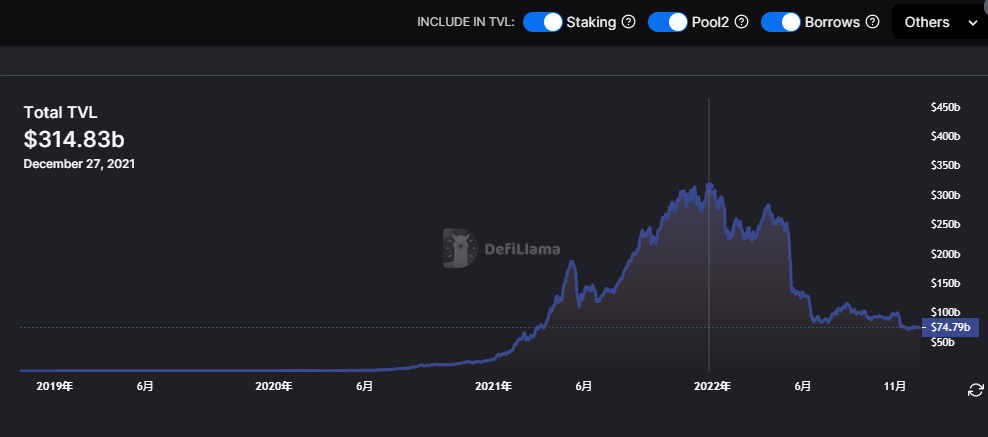
In 2020, blockchain began exploring the financial field around Ethereum, pioneering the decentralized financial DeFi 1.0 ecosystem, including several types of financial models such as over-collateralized loans, AMM, yield aggregation assets, synthetic assets, derivatives, and algorithmic stablecoins, and showed high combinability. Furthermore, with the continuous improvement of infrastructure, NFTs once again entered people's eyes, and applications such as game items and collectibles became popular in the market. After entering 2021, in addition to seeing the large-scale application of blockchain technology in the financial field, it also began to emerge in the field of entertainment and social networking. First, in the financial sector, the application ecosystem shows a trend from the expansion of Ethereum to other public chains; in addition, after about a year and a half of market testing, these new financial applications have settled a number of successful algorithm models, leading to several innovative breakthroughs in the field of spot trading and derivatives (such as liquidity mining, implementing perpetual contracts based on AMM methods, etc.), and some DeFi 2.0 projects that optimize locked asset liquidity and capital usage efficiency have also gradually emerged; finally, in terms of market increment, Grayscale and others are allocating alternative assets to institutional investors, such as trusts and Bitcoin ETFs. The product attracted a large number of institutional investors under the influence of the general environment where the mainstream economy is sluggish. Blockchain applications in the field of entertainment and social networking have shown a wide variety of experiments, which are attractive to a wider range of user groups. After two years of technological iteration and application innovation in 2020 and 2021, the development of the blockchain industry in 2022 also showed a different scene. Next, let's first analyze the development of blockchain in the financial and NFT fields, and summarize the progress and innovation in 2022 based on the market application development in the previous two years. Second, sort out the breakdown of blockchain applications in fields other than finance and NFTs. Blockchain industry applications in the financial sector The overall innovation and development of blockchain in the financial sector showed a slowing trend in 2022. According to DeFilLama data, on December 27, 2021, the total amount of capital locked up (TVL) of various blockchain platforms participating in financial applications reached a record high (US$314.83 billion), then gradually fell back to the level of early 2021 in 2022 (as shown in Figure 1). In particular, after the collapse of Luna and UST in May 2022, there was a cliff-style decline in the amount of capital locked up in the market. Furthermore, after the FTX exchange bankruptcy incident in November 2022, it attracted great attention from regulators in various jurisdictions. Figure 1: Total lock-up volume of the DeFi market in the NFT sector of blockchain industry applications. According to NFTScan data, as of December 14, 2022, the frequency of NFTs on Ethereum was 28,628,998 transactions throughout the year, and the number of active wallet addresses was about 33,865,590, which is significantly higher than in 2020 and 2021. The NFT market was also affected by the collapse of Luna and UST in May. The transaction frequency and number of active wallet addresses reached an all-time low on May 12 (20,983 transaction frequency, 32076 active addresses), but returned to normal values in the week after that, and reached the highest value for the whole year on June 2 (161,074 transaction frequency, 163,614 active addresses), and then began to fall back to the trading level in early 2021. Figure 2: The frequency of transactions and number of active addresses in the NFT market, according to the Nansen NFT Index (as shown in Figure 3), the specific performance can be summarized as follows: First, in the first quarter of 2022, 20 metaverse NFT pooled indices, including land, real estate, avatars, assets, and utilities, were significantly stronger than other indices, and began to weaken markedly in the second quarter. Next is the 20 Art NFT Collection Index, which maintained a steady trend throughout the year. Although the trading volume was at the end of the NFT circuit in Q1 of 2022, it maintained a steady trading volume for the next three quarters. Among them, Q4 was able to take a leading position, not because popular products appeared on the art NFT circuit, but art NFTs maintained a stable trading volume when the development of other NFT tracks was weak. Finally, there is the Gaming NFT circuit. It can be seen from the 50 NFT collection indices, including play-to-earn, role-playing, and DeFi-related games. Apart from Q1 being affected by popular Move-to-Earn games such as STEPN, the other few quarters were significantly lower than the market average. Figure 3: The Nansen NFT Index is used in the NFT market...