Kikitrade · 9
ABCDE presses the pause button. What is the current state of survival of Chinese VCs?

ABCDE presses the pause button. What is the current state of survival of Chinese VCs?

Source: ChainCatcher Author: Nian Qing Recently, ABCDE Co-Founder Du Jun (Du Jun) officially published an article announcing that ABCDE Capital has stopped investing in new projects and suspended the second phase of the fund raising plan, and announced the launch of a new incubator product, Vernal. ABCDE has launched 19 times in the past year and isn't particularly conservative. Despite having plenty of ammunition, it still can't resist the current boring crypto market. After the FUD VC revolution began, Crypto VC began pressing the pause button under hell-level difficulty. Some chose not to take action and only keep core personnel to maintain post-investment services, and some VCs began to seek transformation to second-level investments, projects, incubators, and crypto marketing. Compared with European and American VCs in the same period, Asian VCs seem to be more conservative. ABCDE investment and research partner Lao Bai asked the question a month ago — why while we are “out of fire” in Asia, Europe and the US are still “firing”; why are they daring to pull the trigger in this valuation? In response to this, he speculates that the reasons may include different exit cycles, differences in investment decisions, and values, Asian VCs are more concerned about yield, and European and American peers are idealistic and long-term. Furthermore, according to investor data from the RootData platform, in terms of the number of launches in the past year, most VCs in Chinese-speaking regions have adopted a more conservative investment strategy, and the number of shots taken was less than 10. Of course, there are also leading venture capitals such as Animoca Brands, OKX Ventures, HashKey Capital, SNZ Holding, Waterdrip Capital, Mask Network, Nomad Capital, and NGC Ventures, which still maintain high-frequency transactions, and have launched more than 20 times in the past year. Although IOSG Ventures, Fenbushi Capital, SevenX Ventures, LongHash Ventures, PAKA, etc. have launched more than 10 times in the past year, the number of investments has decreased significantly compared to the previous year. This article sorts out the current situation of major Chinese-language VCs/VCs founded by Chinese people that have had few launches in the past year. (Note: The data in this article is based on publicly disclosed investments. It is not ruled out that there may be undisclosed internal operations or investments, which may differ from actual investment data.) Continue Captial, founded by Continue Captial Coin Circle OG Pima (Pima), has invested only 0 in the past year. The most recent investment was in March of last year, and participated in io.net's Series A financing. Pima is a senior investor in the cryptocurrency industry. He entered the digital currency field in 2013 and has invested in many well-known blockchain projects. Currently, both the two co-founders and Continue Captial are in a “lying flat” state, and neither the official blog nor Twitter are operating. The latest news about Continue Captial was in October of last year. Lin Xiahong, the co-founder of Continue Capital, is suspected of having stolen 35 million dollars. Lin Xiahong himself wrote on the X platform in response: “I accidentally revealed that I haven't left the ring; I passively made charity headlines.” LD CapitalLD Capital has made only 8 investments in the past year. The most recent investment was in September of last year, which is a significant reduction in the frequency of previous investments. LD Capital also has businesses such as secondary market investments and trading funds. Its funds include Beco Fund, FoF, hedge funds, and Meta Fund. In 2023, LD Capital also established Cycle Ventures, an early-stage investment fund focused on Infra, AI, and Dapps. In response to the VC dilemma, Lee Lihua, founder of LD Capital, said that the decline of Web3 investors was due to changes in hedging rules, low investment success rates, and “good projects, undervaluation, and large amounts” constituting a “triangular problem” that investors cannot balance. He also pointed out that in the end, many investors only get a quota of a few points, and may not only bear financial losses, but also face reputational risks. Bixin Ventures, founded by OG Starry Sky in the Chinese currency industry, has invested only 5 transactions in the past year. The most recent investment was in January of this year, compared to 202...
487d agoWendy#ABCDE #Animoca Brands #HashKey Capital #Lao Bai #Mask Network #NGC Ventures #Nomad Capital #OKX Ventures #SNZ Holding #VC #Waterdrip Capital #Du Jun #venture capital
Deciphering the Different Chinese-Language Crypto Market: Real User Research, Chinese-Language VC Inventory

Deciphering the Different Chinese-Language Crypto Market: Real User Research, Chinese-Language VC Inventory

Publisher: TechFlow Deep Dive Article: 0xmin & Zolo & Min L Do you know the real Chinese-language crypto market? When the Chinese Coin and the Hong Kong concept came to the forefront, the Chinese-speaking market undoubtedly once again attracted widespread attention. Once upon a time, agencies/projects were still hesitating about whether to expand the Chinese-speaking market, and in the recent impact of the Hong Kong concept, they have also witnessed the strength of the Chinese language market that should not be underestimated. Compared to scattered analysis and second-hand information, we have direct communication with many partners, and based on TechFlow's long-term deep cultivation and insight in the Chinese-speaking market, we present comprehensive and interesting report content from the perspective of the market environment, user portraits, VC, and communication, and uncover unknown insider information. Whether you are an organization, project party, or individual, I hope this section of the report will help you quickly establish your understanding of the Chinese-language crypto market and help you expand your ecosystem. Thanks to Min L, co-author of this issue, market strategy director for the top ten global exchanges, ten years of experience in the global market, and co-founder of FAB DAO. *This article is an excerpt from the Chinese-language market section of the “Asia Pacific Web3 Truth” report produced by TechFlow. 1. Overview of the Chinese-language crypto market The largest in the Asia-Pacific market is the Chinese-speaking market. Its definition generally refers to all places with Chinese people, such as mainland China, Hong Kong, Taiwan, Singapore, Thailand, and Malaysia. According to the China Investment Network survey report, in addition to China, the 6 countries with the most Chinese are: Indonesia, number of Chinese: over 10 million Malaysia, number of Chinese: about 10 million Malaysia, number of Chinese: 7.4 million US, number of Chinese: 5.08 million Singapore, number of Chinese: 2.98 million Canada, number of Chinese: 1.77 million. Different encryption policies in various regions have also brought about different cryptographic user profiles. In September 2017, the People's Bank of China and other regulators announced a ban on ICOs and a notice to close cryptocurrency exchanges. In May 2021, the relevant regulators issued another notice to crack down on Bitcoin mining and trading. At this point, exchanges, project parties, miners, and users have all begun to go overseas. However, Chinese-speaking users are only migrating; they haven't actually disappeared. According to Triple A's data estimates, the global cryptocurrency ownership rate will average 4.2% by 2023 (including non-on-chain users). Among them, if only the Chinese-speaking regions are calculated: Mainland China 19.9 million, Hong Kong 0.18 million, Singapore 0.64 million, and Taiwan 0.54 million, the number of crypto users is 21.26 million. However, if this data includes the proportion of Chinese people in Indonesia, Thailand, Malaysia, the US, and Canada, it can be roughly calculated that the number of users that can radiate Chinese-language content is at least 23.57 million. (The calculation formula is crypto users in the region* (total number of Chinese speaking users in the region/total number of users in the region)) The concept we have always emphasized is the Chinese-speaking market, not the mainland China market. In addition to mainland China, there are still a large number of Chinese in Hong Kong, Taiwan, Singapore, Malaysia, North America, and Europe, and this group also has strong purchasing power. For any aspiring entrepreneur, you can say that you don't pay attention to the Chinese market due to policy or other reasons, but you can't ignore the Chinese market. Hong Kong is a bridgehead connecting the global Chinese market. At the same time, Taiwan is also a place we need to pay great attention to. Even if many projects want to enter the Chinese-speaking market, they will first use the Taiwanese market as a testing ground. Taiwan has decades of infrastructure and stable economic development, and an industrial structure with many small and medium-sized enterprises, which enabled the Taiwanese market to move towards a well-off and well-off society in the 1960s. Most post-80s Taiwanese have not experienced a life of “suffering to the point where they have nothing to eat.” Compared to the widening gap in the mainland economy and the rigidity of social classes in Japan, South Korea, and Hong Kong, the average salary of Taiwanese can at least meet basic needs. Therefore, Taiwanese users are more likely to “continue to accumulate assets” rather than become rich all at once. Therefore, long-term projects (such as lending, regular investment and financial management, DeFi strategies) and easy-to-understand trading products (such as grid trading, copy trading) will be more popular among Taiwanese users because they can steadily accumulate assets. On November 14, 2022, the FTX incident broke out, and the world's second-largest exchange went out of business...

1179d ago深潮TechFlow#Deep Tide TechFlow
Deciphering the Different Chinese-Language Crypto Market: Real User Research, Chinese-Language VC Inventory

Deciphering the Different Chinese-Language Crypto Market: Real User Research, Chinese-Language VC Inventory

Chinese-speaking users are just migrating; they haven't really disappeared. Do you know the real Chinese-language crypto market? When the Chinese Coin and the Hong Kong concept came to the forefront, the Chinese-speaking market undoubtedly once again attracted widespread attention. Once upon a time, the agencies/projects that were still hesitant about whether to expand the Chinese-speaking market have also seen the strength of the Chinese language market not to be underestimated in the recent impact of the Hong Kong concept. Compared to scattered analysis and second-hand information, we have direct communication with many partners, and based on TechFlow's long-term deep cultivation and insight in the Chinese-speaking market, we present comprehensive and interesting report content from the perspective of the market environment, user portraits, VC, and communication, and uncover unknown insider information. Whether you are an organization, project party, or individual, I hope this section of the report will help you quickly establish your understanding of the Chinese-language crypto market and help you expand your ecosystem. Thanks to Min L, co-author of this issue, market strategy director for the top ten global exchanges, ten years of experience in the global market, and co-founder of FAB DAO. * This article is an excerpt from the Chinese-language market section of the “Asia Pacific Web3 Truth” report produced by TechFlow. 1. Overview of the Chinese-language crypto market The largest in the Asia-Pacific market is the Chinese-speaking market. Its definition generally refers to all places with Chinese people, such as mainland China, Hong Kong, Taiwan, Singapore, Thailand, and Malaysia. According to the China Investment Network survey report, in addition to China, the 6 countries with the most Chinese are: Indonesia, number of Chinese: over 10 million, number of Chinese: over 10 million Malaysia, number of Chinese: 7.4 million, number of Chinese: 5.08 million Singapore, number of Chinese: 2.98 million Canada, number of Chinese: 1.77 million. Different encryption policies in various regions have also brought about different cryptographic user profiles. In September 2017, the People's Bank of China and other regulators announced a ban on ICOs and a notice to close cryptocurrency exchanges. In May 2021, the relevant regulators issued another notice to crack down on Bitcoin mining and trading. At this point, exchanges, project parties, miners, and users have all begun to go overseas. However, Chinese-speaking users are only migrating; they haven't actually disappeared. According to Triple A's data estimates, the global cryptocurrency ownership rate will average 4.2% by 2023 (including non-on-chain users). Among them, if only the Chinese-speaking regions are calculated: Mainland China 19.9 million, Hong Kong 0.18 million, Singapore 0.64 million, and Taiwan 0.54 million, the number of crypto users is 21.26 million. However, if this data includes the proportion of Chinese people in Indonesia, Thailand, Malaysia, the US, and Canada, it can be roughly calculated that the number of users that can radiate Chinese-language content is at least 23.57 million. (The calculation formula is crypto users in the region* (Chinese speaking users in the region/total number of users in the region)) The concept we have always emphasized is the Chinese-speaking market, not the mainland China market. Apart from mainland China, there are still a large number of Chinese people in Hong Kong, Taiwan, Singapore, Malaysia, North America, and Europe, and this group also has strong purchasing power. For any aspiring entrepreneur, you can say that you don't pay attention to the Chinese market due to policy or other reasons, but you can't ignore the Chinese market. Hong Kong is a bridgehead connecting the global Chinese market. At the same time, Taiwan is also a place we need to pay great attention to. Even if many projects want to enter the Chinese-speaking market, they will first use the Taiwanese market as a testing ground. Taiwan has decades of infrastructure and stable economic development, and an industrial structure with many small and medium-sized enterprises, which enabled the Taiwanese market to move towards a well-off and well-off society in the 1960s. Most post-80s Taiwanese have not experienced a life of “suffering to the point where they have nothing to eat.” Compared to the widening gap in the mainland economy and the rigidity of social classes in Japan, South Korea, and Hong Kong, the average salary of Taiwanese can at least meet basic needs. Therefore, Taiwanese users are more likely to “continue to accumulate assets” rather than become rich all at once. Therefore, long-term projects (such as lending, regular investment and financial management, DeFi strategies) and easy-to-understand trading products (such as grid trading, copy trading) will be more popular among Taiwanese users because they can steadily accumulate assets. On November 14, 2022, the FTX incident broke out, and the world's second-largest exchange...

1180d agody zhang#BNB Chain #NFTs #Solana #VC #WEB3
Dragonfly Investment Landscape Inventory: 150+ Projects Across DeFi, Infrastructure, and NFTs

Dragonfly Investment Landscape Inventory: 150+ Projects Across DeFi, Infrastructure, and NFTs

Dragonfly's investment pace accelerated markedly in 2022, investing in at least 53 projects throughout the year, focusing on areas such as NFTs, metaverse, chain gaming, Web3 social networking, creator economy, DAO, etc. Article: Peng Sun, Foresight News is a first-generation Internet technology and application investor in China and one of China's earliest blockchain evangelists. Dragonfly, founded by Feng Bo, is famous in the crypto industry. It is a cryptocurrency venture capital fund that originated in 2018 and was co-founded by Alexander Pack, an investment advisor at Bain Capital Ventures, and Ceyuan Venture Capital under Feng Bo's leadership. Today, Dragonfly has grown into one of the world's top investment institutions. Although Liquid Opportunities was acquired by Brevan Howard Asset Management in March of this year, Dragonfly's funds still include Dragonfly Ventures and Metastable, one of the oldest crypto hedge funds. Over the five years of development, the slogans “Global from day one” (Global from day one) and “Technology is Culture” (Technology is Culture) have always guided Dragonfly's investment practices. A group of members from around the world with a global perspective and humanistic care for technology have long been adhering to the three main investment directions, namely core blockchain technology and underlying protocols, infrastructure connecting centralized and decentralized economies, and investing in new types of crypto asset management funds as parent funds in an attempt to achieve complementarity between East and West in technology and markets, and promote Web2 and classical VC into the blockchain and Web3 world. Guided by the above investment philosophy and direction, Dragonfly's investment style and practice also has a gradual and refined process, which also reflects the development trend of the crypto industry: in 2018, Dragonfly Capital raised $100 million for the first fund Dragonfly Ventures to focus on investing in cryptocurrency startups; on March 26, 2021, Dragonfly Capital became the second fund “Dragonfly “Ventures II” raised $225 million, focusing on NFTs, DeFi, Ethereum Layer 2 solutions and related businesses; on April 27, 2022, Dragonfly Capital raised $650 million for its third crypto fund “Dragonfly Ventures III”. The fund will focus on blockchain and crypto companies in all stages of creating a “new digital economy” and double down on supporting crypto infrastructure, DeFi, and intelligence Contract expansion and the next breakthrough in breakthrough consumer products such as NFTs, chain games, and DAOs. Up to now, according to the official website and other public statistics, Dragonfly has more than 150 portfolios, covering DeFi, CeFi, L1 & L2, NFT & metaverse & gaming, infrastructure, crypto funds, etc., across public chain ecosystems such as Ethereum, Avalanche, Polygon, Aptos, Solana, Cosmos, and NEAR, in 1inch, dYdX, Compound, Lido, Dragonfly can be seen in the financing of star projects such as MakerDAO, ConsenSys, Flashbots, RSS3, Animoca Brands, Dune Analytics, Galxe, OneKey, StarkWare, and Matter Labs. Dragonfly's investment pace accelerated markedly from the second half of 2021 to 2022 as the Web3 concept fully expanded. According to data from Blockchain Daily, Dragonfly invested in a total of nearly 80 projects between 2019 and 2021, and initially invested in 2021...

1235d agody zhang#Aptos #Avalanche #BNB Chain #Cosmos #DeFi #Dragonfly #NEAR #NFTs #Polygon #Solana #WEB3 #Ethereum

Crypto social investment platform Kikitrade plans to suspend sales of Hong Kong savings products in response to regulatory requirements

According to Twitter, the crypto social investment platform Kikitrade announced that it will suspend the provision of flexible savings and locked savings products for Hong Kong users starting December 30, 2022 in response to the Hong Kong Securities and Futures Commission (SFC)'s regulation of assets in the form of digital tokens. The company's other services will not be affected. According to Sean Tao, the company's co-founder and CEO, they are currently communicating with the Hong Kong Securities Regulatory Commission to adjust services, and are working to comply with the commitments made to users and apply for a licensed virtual asset trading platform in order to comply with applicable laws and regulations when carrying out business.

1346d agoBTC2025NB#Kikitrade
Metaverse Weekly 丨 Citibank predicts the size of the metaverse market in 2030; there may be a standardized second-tier digital collection trading market in China; the metaverse is still the focus of giant companies

Metaverse Weekly 丨 Citibank predicts the size of the metaverse market in 2030; there may be a standardized second-tier digital collection trading market in China; the metaverse is still the focus of giant companies

Overview The metaverse is no longer just a “bastard” in the eyes of tech giants; in the gaming field and even in the financial industry, you can see the metaverse frequently flashing the screen. This week, HSBC said it will launch metaverse funds for private banking clients in Asia to provide them with metaverse investment opportunities. This is not the first time that HSBC has ventured into the metaverse sector. In March of this year, HSBC completed a partnership with blockchain gaming company The Sandbox, becoming the first bank to own land in this metaverse. Meanwhile, Citibank released a report entitled “Metaverse and Money: Demystifying the Future”, predicting that the metaverse economy may reach 13 trillion US dollars. The metaverse ecosystem is inseparable from monetary support, and the banking industry is also accelerating the digitization process. The metaverse economy will bring a new business model, and a transformation in the financial sector is imminent. Despite the recent weakening of the NFT sector from an economic point of view, it has not affected the enthusiasm of other industries to try their hand at entering the NFT sector. Paramount Pictures will release “Star Trek” NFTs; Starbucks CEO says he will get involved with NFTs within this year. In addition to businesses, the UK also announced plans to create its own NFTs. With the further spread of blockchain technology, people have discovered that NFTs are not exclusive to the art field; media and brands can use NFTs to create new value. Of course, in any market, regulation plays a critical role. A number of digital collection platforms on WeChat were shut down last week, which seemed to send a negative signal. However, Guosheng Securities said that there may be a standardized and uniformly managed second-level digital collection trading market in China, which also means that under complete supervision, digital collections have prospects for development. On the other hand, although digital collections are becoming more and more popular, there is also a process of improving regulations. The ban may be for a better start, and participants should also be wary of the risks. The metaverse era is dawning, and we're looking forward to it. The following are the details of this weekly issue. Our Metaverse Mind divides it into two major sections: Important News [Citibank: The metaverse economy may reach 13 trillion US dollars in 2030, and the number of users will reach 5 billion] Citibank released a new report on Thursday entitled “Metaverse and Money: Unraveling the Future”. The report predicts that the total market of the metaverse economy may grow to between $8 trillion and $13 trillion in 2030, and the number of metaverse users may reach 5 billion dollars. Citi said, “We believe the metaverse may be the next generation of the internet. The metaverse combines physical and digital worlds in a lasting and immersive way rather than a pure virtual reality world. “Furthermore, according to the report, the future metaverse will include more digital native tokens, but will also be embedded in traditional forms of money. Currencies in the metaverse can exist in different forms, namely in-game tokens, stablecoins, central bank digital currencies (CBDC), and crypto. [The capital of Argentina has begun developing a blockchain-based digital identity platform] Buenos Aires, the capital of Argentina, has begun developing a blockchain-based digital identity platform with the aim of allowing the city's residents to control their personal data. Recently, Buenos Aires Minister of Innovation and Digital Transformation Diego Fernández said the city published a white paper on Tuesday containing proposals for the platform, which will be operational between the last quarter of 2022 and the first quarter of next year. Fernández said the platform will be decentralized, public, and permissionless, adding that any organization, government administration, or company looking to mint verifiable identities can use the platform without requiring approval from the city. [Renmin University of China Law School establishes a digital law teaching and research center] Renmin University of China Law School established a digital law teaching and research center to unify the Internet, big data, cloud computing, blockchain, artificial intelligence, algorithms, etc. into “digital technology.” [HSBC: Launching metaverse funds for private banking clients in Asia] According to the HSBC press release, HSBC launched a discretionary investment portfolio to provide private banking customers in Asia with metaverse investment opportunities. HSBC Asset Management's metaverse discretionary investment strategy will target high-net-worth and ultra-high-net-worth professional and qualified investor clients in Asia. This strategy aims to “seize the development of the metaverse ecosystem” to bring growth opportunities to the world over the next ten years. [Lenovo Group's new fiscal year restructuring: will focus on edge computing, cloud services, and metaverse] On April 6, Lenovo Group held the 2022/23 Fiscal Year Pledge Conference in Beijing and a new round of organization...

1595d ago元宇宙之心MetaverseHub#7oClock #CatcherVC #Elon Musk #K24 #MetaverseHub #NFTs #The Sandbox #Tritium #metaverse #Digital collections #Citibank
A conversation with Animoca founder Yat Siu: Why are we betting heavily on the NFT circuit in '18?

A conversation with Animoca founder Yat Siu: Why are we betting heavily on the NFT circuit in '18?

When we saw the potential of an NFT, it represented digital property rights for us, and we basically gave it our all and never looked back. Forbes: Can you tell me the history of Animoca? Siu: We actually started as a mobile game business. We were one of the largest mobile game companies in Asia until 2012, when Apple didn't like the way we cross-promoted the company's apps and dishonorably removed our platform. Back then, we had well over 40 million installs and an annual revenue of $20 million. Forbes: What made you focus on cryptocurrencies? Siu: We got into blockchain and NFTs with CryptoKitties in late 2017. We were in the process of completing the acquisition of a Canadian studio called Fuel Powered, which shared an office with another company called Axiom Zen. They are working together on this little thing called CryptoKitties, which launched in November 2017. The co-founder of Fuel Powered was invited to join Dapper Labs as a co-founder. In this case, we became shareholders of Dapper Labs and publisher of CryptoKitties in January 2018. When we saw the potential of an NFT, it represented digital property rights for us, and we basically gave it our all and never looked back. Forbes: How did you structure your early investment portfolio? Siu: We've invested in Decentraland, OpenSea, Wax, and Sky Mavis, the developer of Axie Infinity. We also bought The Sandbox. This all happened between 2018-2019. Those were very, very early days, and we were a bit of a lone ranger in this field. If you remember, in 2018, and especially at the end of 2018, everyone was fleeing the NFT scene, and here we're talking about NFTs. You can imagine how difficult it was for us (or anyone) back then. We were one of the very few people at the time who actually went for it. We know Bitcoin, and we know that decentralization is a technology. But it's not fungible tokens that really capture our imagination because they focus more on money. What excites us is what NFTs represent. That's basically why we decided to go all out, and I think we arrived at a time when the market was really crushed — in the broader sense of cryptography, this gave us lots of opportunities in hindsight. Forbes: How is this impacting your funding? How did you afford all of these acquisitions? Siu: Prior to that, we were a publicly traded company listed on the Australian Stock Exchange. We ended up losing our listing status on this exchange because we took a deep dive into NFTs and cryptocurrencies. It's a different kind of deplatforming. In 2018, when we saw the potential of NFTs, we were also a very small listed Australian company. As chairman, I led the company in this direction, and we used $500,000 to recapitalize the company. Our market capitalization at the time was only $3 million. When we were delisted in 2020 (although we were suspended in 2019), our company was worth around $100 million. We fought against the suspension of trading for seven or eight months, so we didn't trade during that time. In the end, we were evicted from the exchange, mainly to trade cryptocurrencies. The Australian Stock Exchange was hostile to cryptocurrencies at the time. Despite this, we raised funds in the process, but these were all microfundraising activities. By the time we first reached unicorn status, we had only raised around $20 million. So, one of the ways we trade — which is part of what gets us into trouble — is through massive stock swaps. This means we became each other's shareholders for the deal with Sky Mavis and OpenSea. But our last formal funding was in October, and I think we raised $65 million at a valuation of $2.2 billion. (Editor's note: On January 18, Animoca closed a $350 million funding round at a $5 billion valuation.)...

1667d agody zhang#Animoca #NFTs #incorporation #invests #Forbes #USD
According to the disclosure, Alan Howard currently holds 5.8% of German crypto asset management company Iconic Holding

According to the disclosure, Alan Howard currently holds 5.8% of German crypto asset management company Iconic Holding

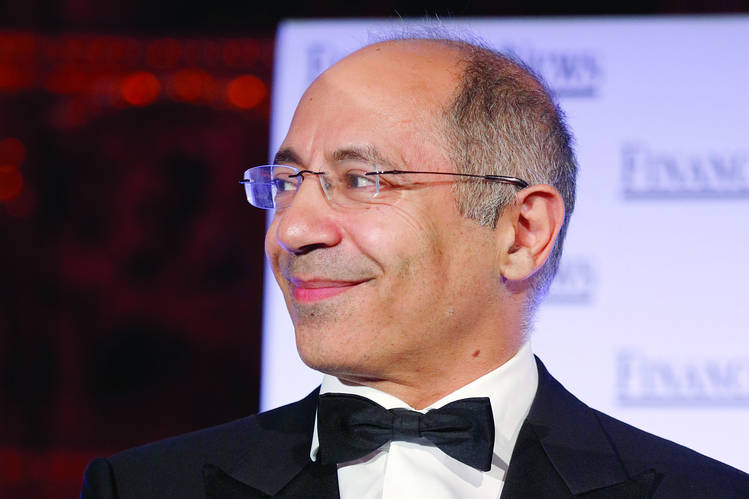
According to the German Commercial Registry's shareholder list, Alan Howard, the co-founder of macro hedge fund Brevan Howard, invested in German cryptocurrency asset management company Iconic Holding. As of May, the well-known financier owned about 5.8% of the company's shares, the document said. According to Coindesk, Alan Howard's spokesperson said the investment amount could be “negligible.” Howard has been an active investor in the cryptocurrency space for some time. Elwood Asset Management manages his personal digital assets, and he recently participated in a funding round on Sam Bankman-Fried (SBF)'s FTX derivatives exchange, the largest in cryptocurrency history. In June, the billionaire participated in a Series B funding extension for the cryptocurrency escrow business Copper, and he also invested $4 million in cryptocurrency trading app Kikitrade. The veteran hedge fund manager is one of the largest shareholders of digital asset management company CoinShares and led a Series A funding round for custodian Komainu in March. In April, it was reported that Brevan Howard, the fund he helped found, would invest directly in digital assets and plans to allocate 1.5% of its main fund to cryptocurrencies. Iconic Holding is a crypto asset management company headquartered in Frankfurt with offices in Singapore, New York, and Dubai. The company has three business divisions. Iconic Funds, which provides ETP and index funds linked to cryptocurrencies; Iconic Lab, a venture capital group focused on blockchain and cryptocurrency companies; and a fund platform called Multi-Manager. The Iconic Holding website publishes a list of strategic investors: Cryptology Asset Group Plc, Finlab AG, and HTGF (Hundred Grunderfonds). Image source: Internet Author: Chen Zou This article is from Bitpush.News. The source is required for reprinting...

1844d agoChen.Zou#Alan Howard #Brevan Howard #FTX #Iconic Holding #Sam Bankman Fried

Cryptocurrency social investment platform Kikitrade receives $8 million investment

According to Twitter, cryptocurrency social investment platform Kikitrade recently announced the completion of a pre-A round of financing of 8 million US dollars, led by blockchain venture capital Dragonfly Capital, international unicorn catcher Xinyuan Capital, and blockchain game giant Animoca Brands. These organizations will also join Kikitrade's board of directors.

1970d agoLuxurytracy#Kikitrade #invests
No more