


A conversation with Animoca founder Yat Siu: Why are we betting heavily on the NFT circuit in '18?
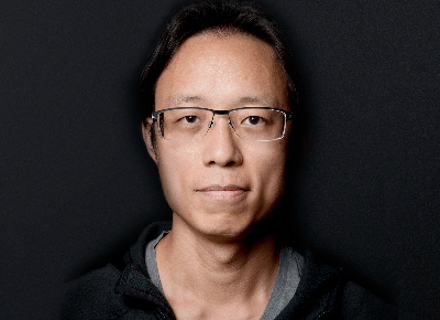
When we saw the potential of an NFT, it represented digital property rights for us, and we basically gave it our all and never looked back.
Forbes:Can you tell me the history of Animoca?
Siu:We did start as a mobile game business. We were one of the largest mobile game companies in Asia until 2012, when Apple disliked the way we cross-promoted the company's apps and dishonorably removed our platform. Back then, we had well over 40 million installs and an annual revenue of $20 million.
Forbes:What made you focus on cryptocurrencies?
Siu:We entered blockchain and NFTs through CryptoKitties in late 2017. We were in the process of completing the acquisition of a Canadian studio called Fuel Powered, which shared an office with another company called Axiom Zen. They are working together on this little thing called CryptoKitties, which launched in November 2017.
The co-founder of Fuel Powered was invited to join Dapper Labs as a co-founder. In this case, we became shareholders of Dapper Labs and publisher of CryptoKitties in January 2018.When we saw the potential of an NFT, it represented digital property rights for us, and we basically gave it our all and never looked back.
Forbes:How did you structure your early investment portfolio?
Siu: We've invested in Decentraland, OpenSea, Wax, and Sky Mavis, the developer of Axie Infinity.We also bought The Sandbox. This all happened between 2018-2019. Those were very, very early days, and we were a bit of a lone ranger in this field. If you remember, in 2018, and especially at the end of 2018, everyone was fleeing the NFT scene, and here we're talking about NFTs.
You can imagine how difficult it was for us (or anyone) back then. We were one of the very few people at the time who actually went for it. We know Bitcoin, and we know that decentralization is a technology. But it's not fungible tokens that really capture our imagination because they focus more on money. What excites us is what NFTs represent. That's basically why we decided to go all out, and I think we arrived at a time when the market was really crushed — in the broader sense of cryptography, this gave us lots of opportunities in hindsight.
Forbes:How does this impact your financing? How did you afford all of these acquisitions?
Siu:Prior to that, we were a publicly traded company listed on the Australian Stock Exchange. We ended up losing our listing status on this exchange because we took a deep dive into NFTs and cryptocurrencies. It's a different kind of deplatforming. In 2018, when we saw the potential of NFTs, we were also a very small listed Australian company. As chairman, I led the company in this direction, and we used $500,000 to recapitalize the company.Our market capitalization at the time was only $3 million.
When we were delisted in 2020 (although we were suspended in 2019), our company was worth around $100 million. We fought against the suspension of trading for seven or eight months, so we didn't trade during that time. In the end, we were evicted from the exchange, mainly to trade cryptocurrencies. The Australian Stock Exchange was hostile to cryptocurrencies at the time.
Despite this, we raised funds in the process, but these were all microfundraising activities. By the time we first reached unicorn status, we had only raised around $20 million. Therefore,One way we trade — which is part of what gets us into trouble — is through massive stock swaps. This means we became each other's shareholders for the deal with Sky Mavis and OpenSea. But our last formal funding was in October, and I think we raised $65 million at a valuation of $2.2 billion. (Editor's note: On January 18, Animoca closed a $350 million funding round at a $5 billion valuation.)
Forbes:What's your best option in terms of investment size?
Siu:In terms of financial resources, we certainly have the ability to compete with big players if needed, but we don't play that way. If you take a look at Andreessen Horowitz, the venture capital firm we respect very much, they tend to come even later in comparison. For example, the company led Axie Infinity's final funding round and entered OpenSea last year. A few years ago, we were engaged in these businesses using seed round valuations. We ended up investing less than $800,000 in Sky Mavis in 2019.
So people like Andreessen paid too much to get in. I don't think they're irresponsible, but they have to pay more to get in.We are seed and Series A investors because we are working capital, not financial capital.
Forbes:Let's talk about how the way you invest has evolved over the past few years. I see you're expanding into infrastructure such as hosting and wallets, and becoming a network validator.
Siu:We are validators for many chains, including Flow. For us, broadly speaking, when considering all the investments we've made to help build the metaverse/Web3, each of them is meant to deploy an emphasis on property rights within this metaverse; for us, this is an NFT.
To facilitate this, we need to create something to help establish the network effect of all of these NFTs. This means, for example, making it easier for users to use through investment. We've invested in platforms like Kikitrade, which is basically a very simple entry point into crypto; for example, we invest in projects like validators, and we own tokens in the ecosystem.
This is what we call a hedging strategy. Due to our investment in Dapper Labs, we are a major shareholder in FLOW; we are a large holder of AXS, and we also have over 100 tokens in this space. For us, it's more than just an investment; it's a way to hedge ourselves and help grow the ecosystem.If we believe the future is in the metaverse, we need to have more and more currencies that grow in that space. There's no point in cashing out in the real world because going back to the real world is expensive.
Forbes:Sandbox has received a lot of attention recently, particularly partnerships with brands such as Adidas and Budweiser. What does this partnership strategy look like? More generally, how do you handle partnerships?
Siu:Our early digital brand relationships in fields such as gaming were helpful, and we can use those relationships to bring them to NFTs and blockchain. Sometimes they say to us, “Of course. Yes, we trust you. We've been in business for a long time. Let's keep going.” But they don't really know what happened. Since then, we've finally brought some big brands to the Sandbox, such as F1, Carebears, and Smurfs. Today, we work with hundreds of brands, some announced and some unannounced.
In the case of Adidas, it has a special focus on Sandbox, which has become a platform in its own right. But our other brand relationships are usually top-down; we have licensing relationships, partnerships, or sometimes joint ventures, and then we work with all companies. I'd say the sandbox itself has become unique because it really captures the idea of becoming a digital Manhattan. Everybody wants to own a piece of land.
Author: Steven Ehrlich
Original title:《How Animoca Brands Built A $5 Billion NFT Fortune》
Compiled by Gu Yu, Chain Catcher
