Animoca · 1243

The SEC plans to set out two channels for crypto compliance: more than 1,600 projects have accumulated a four-year funding limit of $5 million

Comparative news, according to RootData data, out of 3,244 cryptographic projects with a financing record span of less than four years, 1,617 had a cumulative financing amount of less than 5 million US dollars, accounting for 49.8%. The median funding for this batch of projects was $2.5 million, and about 96% recorded only one round of financing. On the racetrack side, DeFi, infrastructure, and gaming projects together account for 59.2%. Microfinance mainly flows to protocol development, underlying technology, and consumer applications. However, one-quarter of the projects in the sample have ceased operations, indicating that lowering the regulatory threshold can improve financing efficiency, but it cannot replace product demand and sustainable operation capacity. Institutional participation was also higher than the market's usual perception of “small projects”: 92.9% of the sample had identifiable investor records, and 83.5% disclosed at least two investors. Among them, Animoca Brands, Shima Capital, and Big Brain Holdings participated in 84, 69, and 67 projects, respectively. According to reports, the US SEC officially proposed “Regulation Crypto Assets” on August 18. The proposal proposes to establish two issuance exemptions: projects can raise no more than $5 million in one go over four years; projects with high financing needs can raise up to $75 million each within 12 months, subject to submission of financial statements and ongoing reporting obligations. The proposal is currently in a 60-day public comment period and has yet to officially go into effect.

2d ago#financing
HKD stablecoin “big retreat”: 36 applicants, only 2 left

HKD stablecoin “big retreat”: 36 applicants, only 2 left

Source: Foresight News Author: Joe Zhou Original title: The Hong Kong Dollar Stablecoin “Great Retreat” is strategically negative and tactically aggressive. The participants in the HKD stablecoin are waiting for a reason to get them excited. “We are not optimistic about the HKD stablecoin.” An industry insider close to the regulatory level said bluntly to the author, “Being optimistic about stablecoins does not mean being optimistic about Hong Kong dollar stablecoins — these are two completely different things.” He paused and added: “Let the least willing and least motivated institutions dominate the Hong Kong dollar stablecoin and marginalize the most motivated and thoughtful institutions. How can this be done?” This is not personal prejudice. I learned from many participants in the Hong Kong stablecoin business that the ownership of the first two Hong Kong dollar stablecoin licenses already reflects the embarrassment of “passive defense” supervision: Standard Chartered Bank-led Anchoring Fintech Co., Ltd. took the initiative, while the other licensed institution “didn't want to do it at all” — this is already an open secret in the community. At the same time, companies with strong intentions to explore the Hong Kong dollar stablecoin scenario, such as Ant Group, JD Technology, and Yuancoin Technology, have failed to actually enter the market or have no core dominance. “Engaged, but not optimistic.” Two people from different institutions, both close to the Hong Kong stablecoin business, spoke almost in unison. Currently, the situation of Hong Kong dollar stablecoins is showing three subtle patterns: one type of institution is optimistic about the stablecoin circuit but has reservations about the Hong Kong dollar stablecoin, but they have to “take their place”; another type of institution is not enthusiastic about stablecoins and is being forced to enter the market by regulation; there is also a category of institutions that have the will, resources, and scenarios, but are turned away because of their status. This misalignment is the most realistic footnote to the Hong Kong dollar stablecoin's “Great Retreat”. One license, two attitudes, three positive reactions for Standard Chartered, negative for HSBC — one license, two attitudes. In September 2025, 36 institutions flocked to apply for a HKD stablecoin license, which was very exciting. Nearly a year has passed, and today in August 2026, few people have taken the initiative to mention the Hong Kong dollar stablecoin. The hustle and bustle has receded, and there are only two real players left: Standard Chartered and HSBC. A brand-new business model was eventually completely handed over to organizations that are mainly engaged in traditional business models. Market sentiment is as cold as ice. “Everyone in the community knows that HSBC is not active.” Two people from different Hong Kong licensed crypto exchanges invariably told the author. On 10 April 2026, the HKMA issued the first batch of two HKD stablecoin licenses to Anchorage Financial Technology Co., Ltd. (Standard Chartered Bank (Hong Kong), Hong Kong Telecom and Animoca Brands) and Hong Kong Shanghai Banking Corporation Limited. However, according to industry sources, the two institutions have very different attitudes towards stablecoins. Standard Chartered has shown some initiative and has begun to lay out a global stablecoin strategy. On July 2, 2026, Standard Chartered and USDC issuer Circle jointly announced the launch of an institutional-grade USDC one-stop access service. On August 12, 2026, Anchorage Financial launched the first phase of the Hong Kong dollar stablecoin HKDAP. Currently, it is only open to institutional distributors and professional investors such as HashKey and OSL, and plans to expand to retail users as early as the end of 2026 depending on market conditions. HSBC is a different story. “HSBC is passive; they only do it when they are pointed at their nose.” An industry insider spoke bluntly to the author. Compared with Standard Chartered's aggressive promotion, HSBC's Hong Kong dollar stablecoin program is clearly behind schedule until the second half of 2026. Behind this delay is HSBC's careful consideration of the stablecoin business based on real interests. “HSBC is more inclined to implement tokenized deposits rather than stablecoins.” A person close to HSBC revealed. The root cause is that stablecoins directly conflict with HSBC's main business. According to the data, about 85% of HSBC's payment business revenue comes from net interest income based on deposits, and the payments business itself accounted for about 22% of its total revenue in 2025. HSBC's core business model is to absorb low-cost deposits and earn interest spreads through loans and investments — and stablecoin issuance just diverts bank deposits and shakes its foundation. What's more, the business of issuing compliant stablecoins itself is far from being “profiteering”: revenue is highly dependent on the interest rate environment, yet profits are being encroached upon by various channels such as issuance, hosting, and distribution. For HSBC, which has deposit and loan spreads as the core and holds a large number of customer deposits, active all in stablecoins not only erodes its deposit base, but also does not earn significant profits, and lacks internal commercial driving force. In addition to Standard Chartered and HSBC, the reaction of 13 licensed crypto exchanges to the Hong Kong dollar stablecoin was also mixed...

8d ago22#Hong Kong dollar stablecoin

Anchorpoint, a subsidiary of Standard Chartered Bank, officially launches the first phase of the Hong Kong dollar stablecoin HKDAP

Comparatively, according to The Block, Anchorpoint, a subsidiary of Standard Chartered Bank, officially launched the first phase of the Hong Kong dollar stablecoin HKDAP on Wednesday, opening test access to institutional distributors and professional investors. Anchorpoint was established as a joint venture between Standard Chartered Bank, HKT and Animoca Brands. It was granted a stablecoin issuance license by the Hong Kong Monetary Authority (HKMA) in April this year, and was one of the first licensed institutions. This article is sponsored by GENG, Build Your Fortune on GENG (https://geng.one)

10d agoburnking

E-commerce operation advance RWA platform Dow Protocol completes $10.5 million seed round, MH Ventures, Mapleblock Capital, and Animoca Brands participate

According to official news, Dow Protocol, an e-commerce operation advance RWA platform, announced the completion of the $10.5 million Seed round, co-led by MH Ventures and Mapleblock Capital, with Animoca Brands, Arcane Group, Hashkey Chain, Essentia Partners, and Quartet Group participating. Dow Protocol provides working capital advances to merchants on the world's leading e-commerce platforms based on their sales accounts receivable and actual operating data. Its underlying asset service system is embedded in mainstream e-commerce platforms, and the original operating data of merchants can be directly obtained for credit and risk control; at the same time, through cooperation with the platform, repayment risk is controlled at the source, and a leading collection mechanism in the industry has been established. On the financial side, Dow Protocol uses stablecoins' instant settlement capabilities to reduce the lengthy loan process in traditional loans to the fastest same-day payment. For working capital markets that are sensitive to cash flow, the speed of lending itself is a value, so they are willing to pay a premium for this efficiency. At the same time, Dow Protocol promotes a new logic that is natively generated on the chain for operating advance funds, so that advance terms are executed in a highly granular programmable manner, and the underlying operation logic of supply chain finance is restructured. Dow Protocol is positioned as a generic pan-e-commerce PayFi RWA advance agreement. Its framework can be extended to supply chain finance advance requirements in various scenarios such as e-commerce, catering, payment, gaming, and AI computing power.

15d ago#financing

Depin project VanGrid completes $9 million token financing to build a physical AI spatial data network

Comparing news, the Depin project VanGrid completed a $9 million seed round, and HashKey, Crypto.com Capital, and Animoca Brands participated. The financing was completed in multiple batches in January 2026 using the SAFT structure. The project builds a decentralized spatial data network. Users collect real location data through smartphones and convert it into a 3D spatial model, and sell it to customers after on-chain verification. Target customers are physical AI developers, including robots, autonomous agents, and digital model builders, which also serve defense and government departments. The project stated that the face and license plate were anonymized before the data left the device. Vangrid is built on the Base network and uses the Ethereum Proof Service to verify data batches. At present, the network has accumulated nearly 100,000 pieces of verification data. The web version and Android app have been launched, and the iOS version is under development. The team is headquartered in Amsterdam with 14 core members and plans to expand engineering and data operations positions over the next few quarters.

16d agoWendy#financing #starters

E-commerce operation advance RWA platform Dow Protocol completes $9 million seed round, with OKX Ventures, MH Ventures, and Animoca Brands participating

In comparison, Dow Protocol, an e-commerce operation advance RWA platform, announced the completion of the $9 million Seed round, with MH Ventures, OKX Ventures, Animoca Brands, Arcane Group, Essentia Partners, and Quartet Group participating. Dow Protocol provides working capital advances to merchants on the world's leading e-commerce platforms based on their sales accounts receivable and actual operating data. Its underlying asset service system is embedded in mainstream e-commerce platforms, and the original operating data of merchants can be directly obtained for credit and risk control; at the same time, through cooperation with the platform, repayment risk is controlled at the source, and a leading collection mechanism in the industry has been established. On the financial side, Dow Protocol uses stablecoins' instant settlement capabilities to reduce the lengthy loan process in traditional loans to the fastest same-day payment. For working capital markets that are sensitive to cash flow, the speed of lending itself is a value, so they are willing to pay a premium for this efficiency. At the same time, Dow Protocol promotes a new logic that is natively generated on the chain for operating advance funds, so that advance terms are executed in a highly granular programmable manner, and the underlying operation logic of supply chain finance is restructured. Dow Protocol is positioned as a generic pan-e-commerce PayFi RWA advance agreement. Its framework can be extended to supply chain finance advance requirements in various scenarios such as e-commerce, catering, payment, gaming, and AI computing power.

25d ago#financing
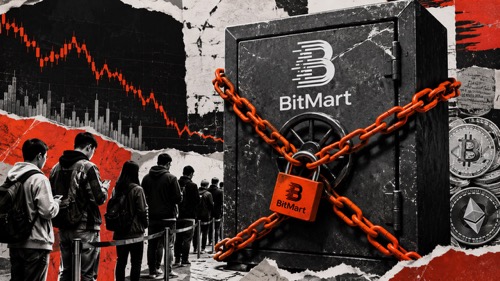
Insiders broke the news: April ban, May layoffs, BitMart shutdown long predicted

Insiders broke the news: April ban, May layoffs, BitMart shutdown long predicted

A “wave of bankruptcies” of cryptocurrency exchanges is spreading at an accelerated pace. Following the announcement of the shutdown of AscendEX (formerly BitMax) and BitMEX, on July 26, BitMart made an official announcement announcing the decision to stop operations in an orderly manner after comprehensively evaluating the company's operating status, market environment, and future strategic direction. There was an uproar in the crypto community, but in fact, the downfall of BitMart was by no means a “sudden decision”; some signs have already appeared. Withdrawal abnormalities already occurred in April, and layoffs began in May. At the end of April this year, abnormalities have already begun to occur within BitMart. According to information circulating in Lark's internal group at the time, the platform clearly indicated that user orders were not in line and directly gambled with users — as long as users won money, funds would be locked in. The customer service response was that withdrawals are prohibited for at least three months, and will not be lifted when they expire. At the beginning of May, several BDs reported the issue of user funds being banned in an internal group. As a result, contract leader Gavin directly requested Roham, the head of the mainland region, to close the group. The BDs moved to another group and continued to report, and were also kicked out. In the same period, some employees inquired about the company's asset reserves in the group, and was harshly criticized by founder Sheldon Xia. Sheldon clearly stated that BitMart was unwilling to disclose asset reserve certificates. An anonymous Bitmart employee told Bitpush that the entire department's layoffs began in May. Interviewees said that in May of this year, the company had already begun to “silently” abolish some business divisions — no formal announcements, no separation compensation negotiations, and the entire department was notified “not to be used tomorrow.” These abolished departments mainly focus on business lines where growth is weak or compliance costs are too high, including some overseas operations teams and marketing departments. With this complete shutdown, many people only learned through the official social media that they have lost their job, without the slightest preparation. DI (@Start16Start), a whistleblower who claims to be a “former BitMart employee and current WEEX employee,” wrote on the X platform that BitMart “went from using the unattainable KPIs of CIS employees to reduce our salaries to the chaos within the entire company.” He alleges that the company has long been delinquent on employees' wages and bonuses and refuses to deliver on promises to employees, traders, and KOLs. “This endless act of deception is the reason I chose to leave and keep my key partner as far away from that conflict as possible.” DI wrote. The most absurd thing about this shutdown is that BitMart Global CEO Nenter (Nathan) Chow posted a clarifying statement on X: “On July 24, 2026, I was told that my position as Global CEO will be terminated, and the separation process will begin immediately. I have yet to receive confirmation of my final separation date. Since July 24, I have not participated in any management or decision-making of the company, nor have I been consulted on any operational matters. I was not involved in the decision announced today, was not consulted, and was not informed in advance. I only learned about it when I saw the public announcement. “Chow said he is most concerned about BitMart users and employees, advising users to only handle account matters through official channels and “not comment further on this matter”. Chow joined Bitmart as a partner at Animoca Ventures in April 2025 as Global CEO. At that time, founder Sheldon Xia became Group President. In just over a year, the CEO witnessed the end of the company by being “fired”. Just a month ago, BitMart also reported that its asset management business AUM increased by about 256% month-on-month. At the time, Chow also stated “BitMart is eight years old and we plan to work for another eight years.” Bitmart also previously claimed to have obtained an Australian AFSL license, serving more than 13 million users. It was only one month from “working for another eight years” to “announcing the shutdown”. Founder Sheldon Xia has not made any direct comments on the shutdown as of press time. KOL: Customer service and BD garbage exchanges will go out of business. Crypto KOL @tradermige posted an article on the X platform saying, “The employees at BitMart and BitMEX are all in a shambles. No wonder they have gone out of business. I had a hunch for a long time.” He recounted his experience working with BitMart: BitMart has set up a rebate agency for him, but “all...

26d agoWendy#bitmart #Exchanges #Shut down the tide topic #original #Withdrawal #BEARISH

Data: Leading crypto VCs are still actively deploying, and DeFi circuit financing hits a new low in recent years

Comparatively, according to CryptoRank, the overall crypto venture capital market has been running low since 2025, but leading institutions such as Coinbase Ventures, Animoca Brands, Andreessen Horowitz (a16z crypto), and Tether are still active. Among them, Coinbase Ventures participated in about 33 transactions, Animoca Brands about 19, and a16z crypto about 18 transactions. Overall, the total monthly financing scale has fluctuated in the range of hundreds of millions of dollars to several billion US dollars. Early rounds account for a relatively high proportion, and funding is more concentrated on early project screening and structural opportunities. Meanwhile, VC investment in the DeFi circuit has been declining for three consecutive quarters. The amount of investment in the current quarter fell to its lowest level since the fourth quarter of 2023, and the DeFi financing round in the second quarter of 2026 also hit a new low since 2020, indicating that capital screening of DeFi projects has become stricter, and the circuit has entered a deep inventory game stage.

33d ago

L1 Blockchain ILITY Closes $1 Million Institutional Funding Round, Archer Capital and TBV Participate

Comparatively, according to official sources, the L1 blockchain ILITY received an investment of 1 million dollars from Archer Capital and TBV to accelerate the deployment of the Agent ecosystem. According to reports, ILITY's AI agent (Agent) economic ecosystem will soon be launched, and this round of funding will mainly be used to further cultivate this emerging sector. ILITY Network is an infrastructure for the AI agent economy, providing autonomous AI agents with verifiable on-chain identity, real-time machine-to-machine (M2M) payment settlement between agents, and a reputation system that can be carried across services based on real on-chain performance records; its native token, $ILY, is the ecosystem's gas and settlement currency. Previously, the project's last round of financing was supported by institutions such as Animoca Brands, DuckDAO, UZ Capital, and Vega Ventures.

35d ago#financing
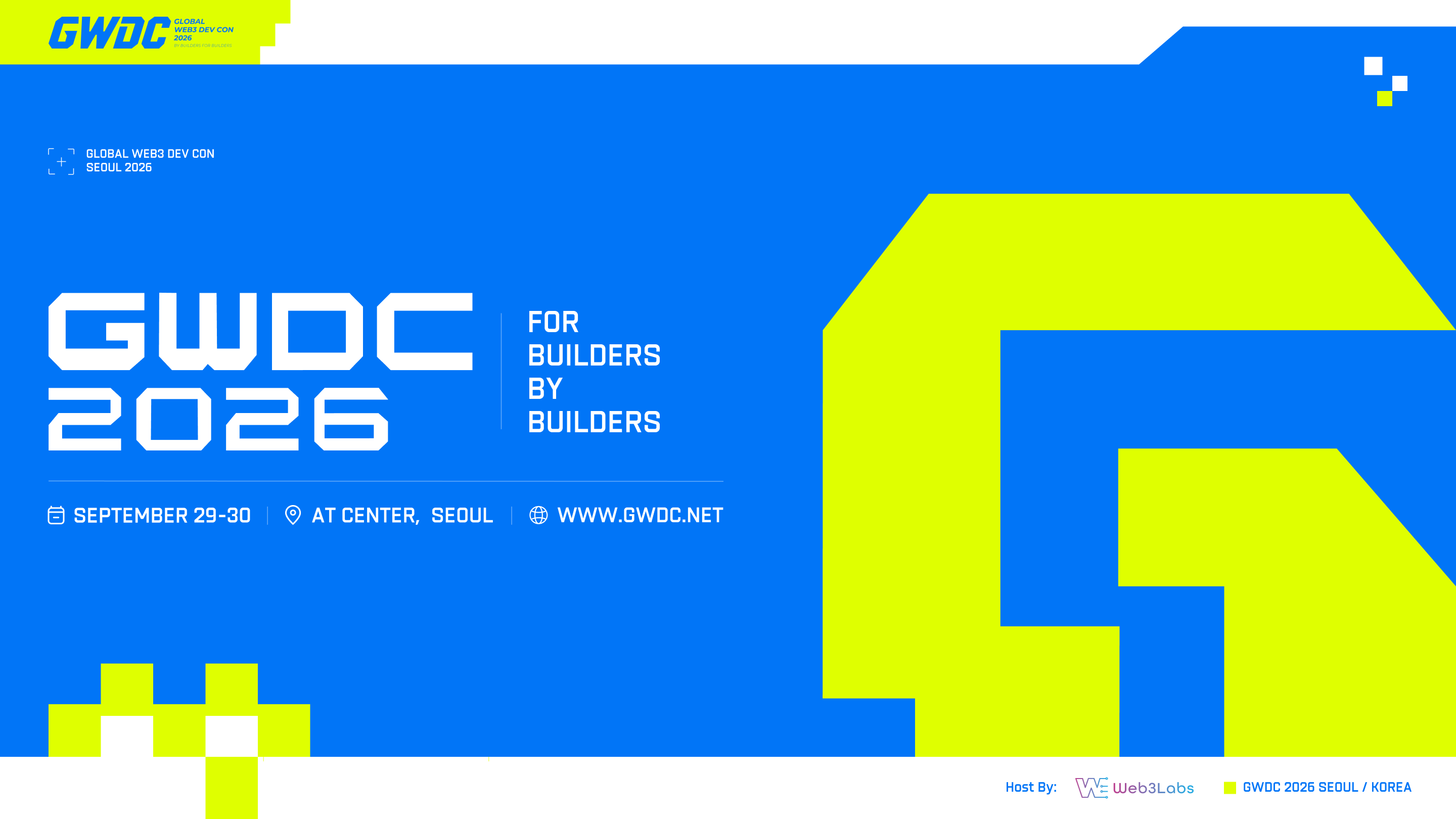
“GWDC 2026 KOREA”, the new Asian paradigm of Web3 and AI, landed in Seoul on September 29-30, inviting you to the pinnacle of global developers

“GWDC 2026 KOREA”, the new Asian paradigm of Web3 and AI, landed in Seoul on September 29-30, inviting you to the pinnacle of global developers

Following the successful hosting of the first Global Web3 Developers Conference (GWDC HK) in Hong Kong in February this year, sparking the Asia-Pacific technology wave and bringing together more than 2,000 industry elites, Web3 Labs, the conference organizer, officially announced a major upgrade today: the 2nd Global Web3 Developers Conference (GWDC 2026 Korea) will land at aT Center in Seoul, South Korea from September 29th to 30th. The conference will continue to adhere to the hard-core geek spirit of “For Builders, By Builders”, focus on Asia's top tech highlands, and strive to create a new paradigm for the integration of the global Web3 developer ecosystem with next-generation industries. According to the latest predictions of the organizing committee, Seoul Station will usher in a full-scale fission and leap up in scale. At that time, more than 8,000 participants, 500 of the world's top developers, 100 major industry speakers, and 100 exhibitors will gather in Seoul to witness the historic moment of the deep integration of Web3 and artificial intelligence (AI), and open a new chapter in the development of Web3 in Asia. Space Reshaping: Deconstructing the Web3 Future GWDC 2026 Korea Station broke the single dimension of the traditional exhibition and reshaped the spatial layout at the Seoul AT Center. Through the four core themed exhibition areas, it covered a full range of macroeconomic strategies, technical practices, geek contests and business matchmaking: Main Stage (Main Stage) | Strategic Leadership and Global Dialogue The main stage is the core of the conference's top-level design and macroeconomic strategy. The conference will invite government officials from Hong Kong, China and South Korea, decision makers from global tech giants, and visionaries in the Web3 field to play an in-depth game. The topics will focus strongly on “policy coordination” and cross-border cooperation, hard-core dismantling of AI applications and next-generation decentralized infrastructure, and defining new trends in Asian technology. Innovation Stage (Innovation Stage) | Deep Collision of Vertical Technology Sub-Forum rejects empty talk theory and aims to deliver practical practical insights. The conference accurately launched three core sessions: “Developer Ecosystem” focused on the evolution of open source culture and development tool chains; “Web3 and Financial Infrastructure” deciphering new paths of RWA, DeFi, and cross-border financial innovation; and “AI and Cloud Native” directly hit the underlying code behind model training and architecture upgrades. In addition, the grand finale of the conference, the GWDC Hackathon Finals and Awards Ceremony, will also be the pinnacle of the road show here. Innovation Booth Zone (Innovation Booth Zone) | An immersive marketplace for cutting-edge technology plans over 99 themed booths, spanning multiple tracks such as AI, blockchain, SaaS, and developer tools (DevTools). The exhibition area abandoned the boring traditional stall model and fully implemented an “interactive demo” to show the hard power of the project. Not only did 30 top KOLs follow up and link with global social media at high frequency, but they also cleverly integrated the highly popular “Good-looking Girl Group Flash Dance” in Korea with the hard-core technology exhibition area to boost traffic in the exhibition area. Hackathon Zone (Hackathon Zone) | 48 Hour Extreme Programming Challenge As the soul section of the conference, the hackathon is bringing together more than 500 geeks from China, Korea, Japan, India and Southeast Asia. The competition broke the shackles of a single ecosystem and invited 5 leading public chains to release development challenges simultaneously. To this end, the organizing committee provided a cash prize pool of more than 100,000 US dollars, and received huge computing power and resources from the world's top cloud service providers to create the ultimate testing ground linking top capital, public chain ecosystem, and talented developers. GWDC 2026 Korea's first wave of political and business leaders and ecological partnership matrices shockingly revealed that the core influence of GWDC 2026 Korea's cross-border integration continues to ferment, successfully bringing together a top international lineup covering “government, production, integration, and research.” We are pleased to announce that the following heavyweight speakers have confirmed their attendance at the conference: Johnny Ng, member of the National Committee of the Chinese People's Political Consultative Conference and Hong Kong Legislative Council member, Suk-hun Yoon, member of the National Assembly, sponsor of the Basic Law on Digital Assets, and member of the Government Council Suk-hun Yoon; Chairman of the Asian Economic Development Committee Caspar Wong; Jack Kong, CEO of Web3Labs; Lee Jae-won, CEO of Bithumb Evan Auyang, President of Animoca Brands E...

37d agoWendy#GWDC 2026 KOREA