
Olix · 2
High school dropout, net worth over 100 million at age 25: he relied on chips to become Europe's youngest billionaire

High school dropout, net worth over 100 million at age 25: he relied on chips to become Europe's youngest billionaire

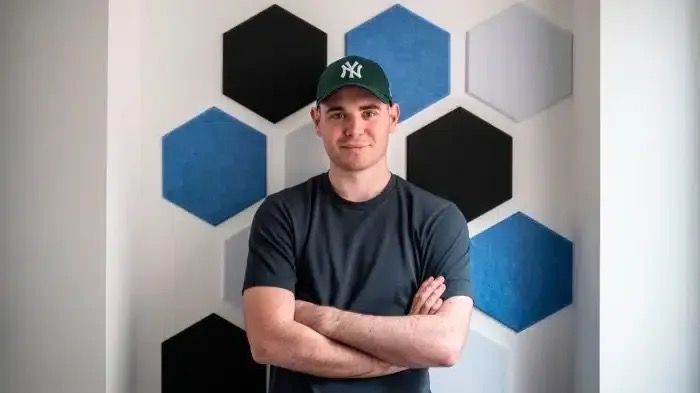
Source: Forbes Original title: Europe's youngest self-made billionaire is born: 25, starting when he dropped out of high school. In 2017, James Dacom dropped out of high school and founded CoMind, a brain monitoring startup. Four years later, he received a Till scholarship and gave up college to focus on building his first startup. Today, the 25-year-old is the youngest self-made billionaire in Europe with Olix, a chip company that was founded only two years ago, and his shareholding in CoMind (he is still running the company, the exact share ratio is not disclosed). 01Orix is headquartered in London and was founded in 2024. At the beginning of August, the company raised $312 million from investors such as New York investment company Fundomo, NASDAQ listed chip design company Arm, US quantitative fund Hudson River Trading, and Netflix co-founder Reed Hastings. The valuation tripled to $3.3 billion in six months. The UK government's sovereign AI fund also participated in this round of investment. After a new round of financing, it is estimated that Dacom, who holds 30% of the company's shares, joined the billion-dollar club. He also holds 12% of CoMind's shares. The company raised US$102.5 million in August 2025, but the valuation was not disclosed. Neither Orix nor Comind responded to Forbes' requests for comment. Counting Dakom, there are now 11 self-made billionaires in the world who have not yet reached the age of 30. Only four of them are from outside the US, and Dacom is one of them. Europe's second-youngest self-made billionaire after Dacom is Arvid Lunnemark (Arvid Lunnemark), the co-founder of popular AI code editing company Cursor, now 26 years old. This Swede went to the US to study at MIT, co-founded the company with three college friends in 2022, and currently lives in San Francisco. On August 14, local time, SpaceX bought Cursor for 60 billion US dollars. The wealth of Lunnemark and the three co-founders all almost doubled, reaching an estimated 2.4 billion US dollars. The oldest Cursor co-founder was Sualeh Asif (Sualeh Asif), a Pakistani native who is also 26 years old. Coincidentally, recently another 26-year-old Swedish billionaire almost doubled his wealth. He is Fabian Hedin (Fabian Hedin), the co-founder of Lovable. Herding lived in Stockholm, a few months older than Lennemark. In December of last year, his “Ambient Programming” startup was raised at a valuation of $6.6 billion, making him a billionaire. On August 12, Lovable announced that it would refinance $400 million at a valuation of $13.3 billion. Herding's net worth almost doubled to an estimated $3.1 billion. 02 These young giants are in the midst of an entrepreneurial boom spreading around the world, and this wave is spawning a wave of younger and younger billionaires at an alarming rate. In the US, the title of the youngest self-made billionaire has changed hands several times over the past year. Currently, the youngest self-made billionaire in the world is Surya Midha (Surya Midha) of the United States. In October of last year, Mercor, the AI recruitment startup he co-founded, raised it at a valuation of 10 billion US dollars, and at the age of 22, his net worth increased to 2.2 billion US dollars. Mida narrowly beat co-founders Brendan Foody (Brendan Foody) and Adarsh Hiremath (Adarsh Hiremath) in the battle for the title, both of whom were about two months older than Mida (they are now 23). Mida took over the title from Polymarket's Shayne Coplan (Shayne Coplan) at the time, while Coplan, 28, took this honor from Scale AI's Alexander Wang a few weeks ago. The latter was 29 years old. Dakom's big bet is based on the idea that Nvidia's AI chip is powerful, but not all tasks need to be done with it. His idea is to develop special chips for different aspects of the AI model inference stage (that is, the stage of model generation and output), rather than just using a single type of chip. Orix chips also use photonic technology, where data is transmitted between chips in the form of light rather than electrical signals, thus helping to reduce latency and power consumption. The company is also deliberately avoiding expensive high-bandwidth storage hardware, which is currently in short supply. According to a company press release, Orix plans to do so in 2027...
4d agoWendy#AI #CoMind #Olix #chips
OpenAI falls into the quagmire of “physical AI”: broken hardware dreams, compliance crisis, and collapse of giant alliances

OpenAI falls into the quagmire of “physical AI”: broken hardware dreams, compliance crisis, and collapse of giant alliances

Article: MICHAEL SPENCER Original title: OpenAI Falling Into the AI Hardware Trap: Is Apple Lawsuit, Youth Layoffs, and Uncontrolled Product Line AI Increasing Age Discrimination in the Workplace? Just as the 2027 consumer AI economy is about to launch a “physical AI” and wearable competition, the possibility of OpenAI's entry into the competition is facing serious threats — legal disputes and increasing scrutiny are raging. The Apple lawsuit over the weekend dealt a further blow to OpenAI's already severely damaged brand image and commercial partnership capabilities. As of 2026, I'm not sure which other corporate customers would want to do business with them. But what about ChatGPT users? OpenAI's past 24 hours (Saturday, July 11): An executive leaves his job unexpectedly (claiming health reasons) to shut down Atlas, a browser tool that has been in operation for 9 months — Another failed product was sued by Apple for stealing trade secrets and was revealed to sell products to China in violation of sanctions. Finally, the indictment alleges that OpenAI carefully planned a systematic theft and use of Apple's confidential information and trade secrets. The evidence seems unequivocal. How can this be recovered? I expect Microsoft will also file a lawsuit against them in the next few months on the grounds that OpenAI is in violation of Microsoft's terms to switch to Amazon. Apple is seeking (Ed Ludlow explains): The jury trial demands that OpenAI stop abusing Apple's trade secrets, order the court order to destroy all Apple's proprietary materials to redesign upcoming OpenAI hardware products, ensure that the timeline of Apple's technical events is not included. I am Chang Liu, Apple's senior systems electrical engineer, worked for the iPhone team January 8, 2026: Leave Apple and join OpenAI Apple I ignored the request to return the computer haha this is my computer. Within a few hours of leaving my job, I sent a message to my friend Yu-Ting “Alyssa” Peng, who is still at Apple: Using her account to access confidential Apple information within a few weeks, I borrowed her Apple work computer February 9: Trying to access Apple's network storage, which is a cloud repository of confidential project files, has a bug, and it's actually still usable! Message Peng: “Haha, I found out I can still access [network storage], that's funny.” While developing the hardware for OpenAI, I downloaded dozens of confidential documents, including a collection of over 1000 pages of technical documents, including MLB (main logic board) manufacturing and test reports, and sent a link to Peng's proprietary folder, instructed her to look at specific project data and teach her how to “avoid being discovered by the security team” and told her what to research before the OpenAI interview Confidential Apple materials warned her that another person “messed up” and made her “download some data” when answering Tang Tan's question about Apple's secret project. Read her in advance: Switch to LINE communication software, don't let people see these conversations. She got an offer from OpenAI. She left Apple on April 16, and at the same time, every message was left on the work computer distributed by Apple July 10: Apple sued Chang Liu first on the list of defendants He, who had interests before OpenAI and Tang Tan, was really unable to keep up with Anthropic, and many of its operating methods are being revealed. Successive product failures, project delays, legal trouble, strategic mistakes, and broken partnerships have all added additional risk to OpenAI — and it's preparing to launch a major IPO with SpaceX and Anthropic sometime next year. At that time, the company's momentum may have stagnated or even declined relative to competitors (Meta, Google, Anthropic, SpaceXAI, Alibaba, ByteDance, etc.). From a visual point of view, this completely overshadowed GPT-5.6's limelight. Even if you're bearish on OpenAI (like me), watching this scene is painful. After all, American politics...

39d ago谢伟伦#OpenAI #apples #layoffs
No more