Omniverse · 79
Li Feifei: Functional Classification of World Models and Prospects for Spatial Intelligence

Li Feifei: Functional Classification of World Models and Prospects for Spatial Intelligence

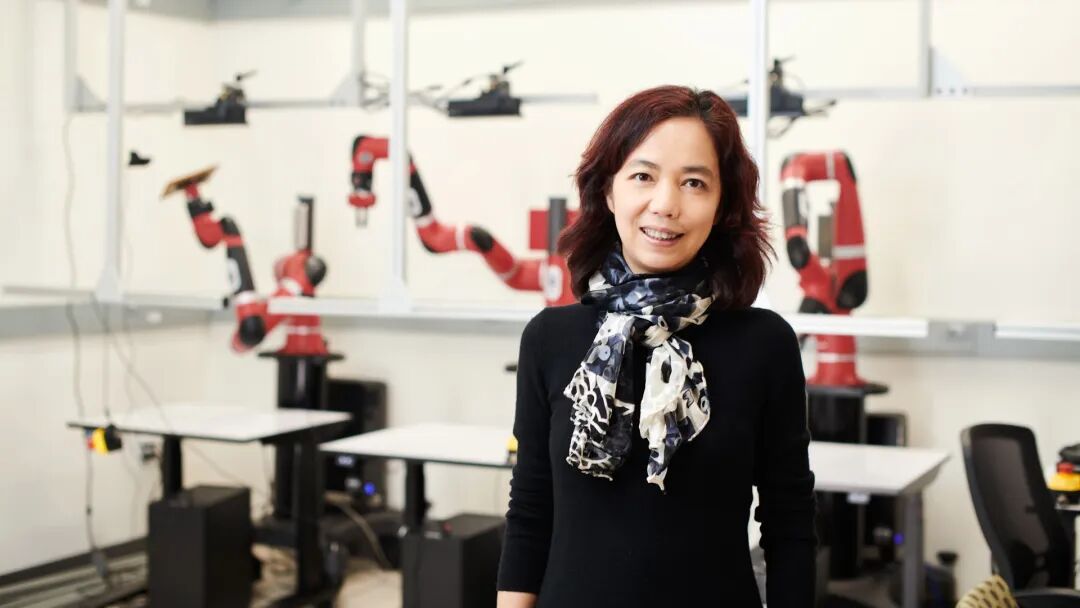
Author: Ga Yang Original title: Li Feifei Latest Long Article: When video generation, robots, and NVIDIA all call themselves world models, we need a taxonomy “world model” which is probably the hottest and most confusing concept in the AI field since 2025. When Sora came out, OpenAI called it a world simulator; Genie lets you walk around in the generated images, also called a world model; the robotics company said it was making a world model; NVIDIA said Omniverse was the infrastructure for the world model, and even the game engine was pulled into this story. Everyone is using the same words, but they aren't saying the same thing at all. Today, Li Feifei published a new article on his personal Substack clarifying this concept. She first went back to the most classic diagram in the reinforcement learning textbook (POMDP closed loop: intelligence → action → state → observation → smart body), then pointed out that what is now called a “world model” is actually three different projections of this closed loop. The output pixel (observation) is the renderer, the output state is the emulator, and the output action is the planner. The classification criteria are very simple, depending on which part of the closed loop you are outputting. (Source: MIT Technology Review) Of the three, she determined that of the three, the renderer is the most commercialized but has a ceiling (good looking doesn't mean physically correct), the planner is the most exciting but furthest from actual deployment (the gap between lab demonstration and actual use is still huge), and the emulator is a critical hub that is seriously underestimated. Because the simulator works at the level of geometry, physics, and dynamics, it can not only project pixels upward for human consumption, but also derive action consequences downward for robots to use. Once you master simulation, you have the foundation for rendering and planning at the same time; not the other way around. This post is, of course, a World Labs product declaration. Their Marble is already outputting both Gaussian spatter and collision meshes in an attempt to unify the renderer and simulator into a single model. The end story depicted at the end of the article is a unified world basic model that can freely switch between rendering, simulation, and planning according to downstream requirements. Whether this vision can be realized is another story, but as an analytical framework, the renderer/simulator/planner's rule of three may indeed help penetrate some of the noise of the current “world model” concept. The full text is translated below. “The world is the sum of everything that happened.” ——Wittgenstein, “Philosophy of Logic,” 1921 The world is not composed of words. In an earlier article, we proposed that spatial intelligence is the next frontier of AI, and the world model is the path to it. Now, the World Labs team and I wanted to go one step further: Of the many things that are now called “world models,” which functional modules actually make up this capability? What are their respective uses? Language models give machines strong control over concepts, vocabulary, and reasoning, but the physical world, whether virtual or real, operates on a completely different basis. The language model learns the statistical structure of text, and the world model learns the statistical structure of space and time: how light falls on a surface, what a garden looks like from an angle never captured by a camera, and how responsive objects are and follow the laws of physics. This makes “world model” one of the most important and most misused terms in AI today. Computer vision, robotics, reinforcement learning, and generative AI all claim to be modeling the world, but they each refer to very different things. A video model that can generate gorgeous but physically impossible flames, a language model that improvises playable games, and a physical engine that faithfully simulates the combustion process are all called by the same name. The ancient Greeks were never able to agree on what constituted the world, whether it was fire, water, or inseparable atoms, because the “world” was never a single thing. It's always an alternative word used by a certain thinker to reason about a certain generality. AI inherits the same problem, and it just happened at a time when accuracy was most needed in this field. To clear this confusion behind the closed loop of taxonomy, we can start with a map that is older than all of the techniques described above. All reinforcement learning materials, including the classic Sutton and Barto, have used variants of the same picture to describe how agents interact with the world for decades. The official name of this map is Partial Observable Markov Decision Process (POMDP...

46d ago谢伟伦#AI #Omniverse #robots #Li Feifei

Hwang In-hoon explains DSX AI factory economics: computing power is revenue. By the end of this decade, the world will launch 100GW of AI computing power

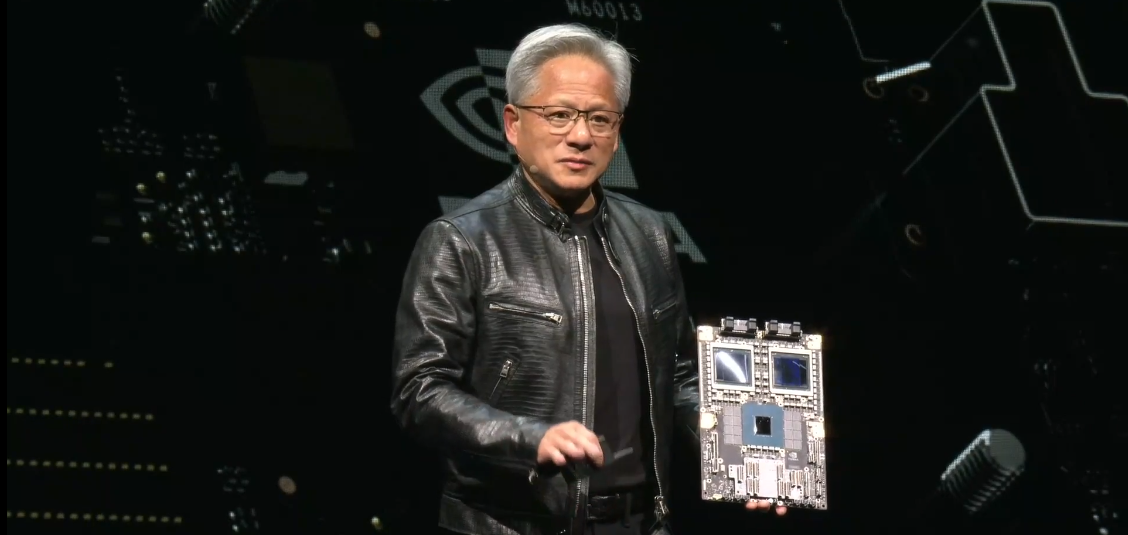
Comparative news, according to monitoring, Huang Renxun systematically introduced Nvidia DSX (the third largest product line after RTX and DGX) during his speech at GTC Taipei 2026, positioning it as an end-to-end reference design and operation platform for AI factories. He said that Nvidia has evolved from a GPU company to a systems company and is now once again transforming into an AI infrastructure company: customers don't want to buy computers; they want to build AI factories. The DSX consists of four major modules. DSX SIM is based on Omniverse digital twins, and completed layout planning, power cooling simulation and network verification of the entire factory before the first rack is landed; DSX OS is responsible for automatic infrastructure configuration, operation monitoring and fault repair, transforming the system into multi-tenant, highly available AI-ready computing power; DSX MAX LPS solves the 40% power overallocation problem common in AI factories today, and deploys more GPUs within the same power budget through dynamic power allocation between racks and peak current smoothing; DSX Flex reads grid signals in real time and dynamically adjusts factory electricity consumption when the grid needs mitigation, making the AI factory a flexible energy asset for the power grid. Additionally, Nvidia's ready 45°C high-temperature liquid cooling technology can eliminate traditional chillers and drastically reduce water and energy consumption. Hwang In-hoon gave a clear economic account: every token can be profitable, computing power is revenue, and each watt of performance is your revenue. The cost of a single 1GW AI factory has climbed from $20 to $30 billion to $50 to $60 billion, and will soon reach $80 to $100 billion. By the end of this decade, a 100GW AI factory will be launched around the world, which he called the largest infrastructure construction in human history. He also showcased a number of emerging AI cloud companies built on Nvidia's full stack: CoreWeave (estimated at $50-70 billion and growing rapidly), Nebius, N Scale (customers include British Telecom and Google), India's Yoda, Singapore AI Singapore, Indonesia's IndoSat, and Taiwan's GMI, etc., stressing that AI will be implemented in every region, and every company will be driven by AI.

82d ago
Full text of Huang Renxun's GTC speech: trillion in revenue, LPU, space chips, one-click “shrimp farming”

Full text of Huang Renxun's GTC speech: trillion in revenue, LPU, space chips, one-click “shrimp farming”

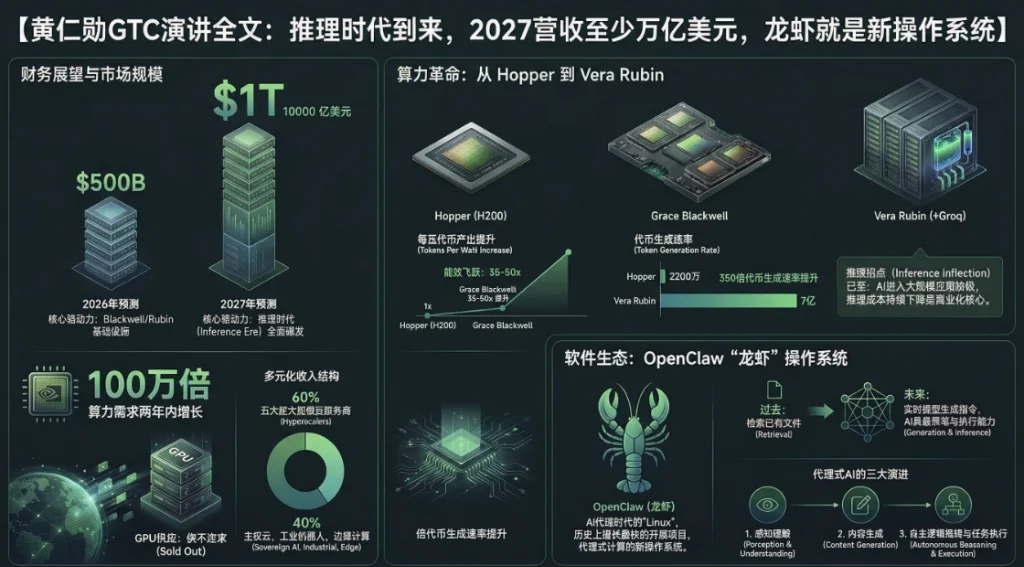
Source: Wall Street News Original title: Huang Renxun's GTC speech full text: The era of reasoning has arrived, lobster is the new operating system. On March 16, 2026, the Nvidia GTC 2026 conference officially opened. Nvidia's founder and CEO Hwang In-hoon delivered a keynote speech. At this conference, which is regarded as the “annual pilgrimage for the AI industry,” Hwang In-hoon explained Nvidia's transformation from a “chip company” to an “AI infrastructure and factory company.” Faced with the market's biggest concern about performance sustainability and growth space, Huang Renxun detailed the underlying business logic that drives future growth — “Token Factory Economics.” The performance guidelines are extremely optimistic. In the past two years, global demand for AI computing has exploded exponentially in the past two years, “at least $1 trillion in demand in 2027.” As large models evolve from “perception” and “generation” to “reasoning” and “action (execution of tasks),” the consumption of computing power has increased dramatically. In response to the order and revenue ceiling that the market is paying close attention to, Hwang In-hoon gave extremely strong expectations. In his speech, Hwang In-hoon said bluntly: At this time last year, I said that we saw a high-confidence demand of 500 billion US dollars, covering Blackwell and Rubin until 2026. Right now, right here and now, I see at least $1 trillion in demand (at least $1 trillion) by 2027. Hwang In-hoon's trillion dollar forecast once boosted Nvidia's stock price by more than 4.3%. More than that, he added to that number: Is that reasonable? That's what I'm going to talk about next. In fact, we'll even be in short supply. I'm sure the actual computational requirements will be much higher than that. Hwang In-hoon pointed out that today's Nvidia system has proven itself to be the “lowest-cost infrastructure” in the world. Since Nvidia can run AI models in almost every field, this versatility allows the $1 trillion invested by customers to be fully utilized and maintained for a long life cycle. Currently, 60% of Nvidia's business comes from the top five largest cloud service providers, while the other 40% of Nvidia's business is widely distributed in various fields such as sovereign cloud, enterprise, industry, robotics, and edge computing. Token factory economics, performance per watt determines the lifeblood of business In order to explain the rationality of this 1 trillion dollar demand, Hwang In-hoon showed a new set of business thinking to global corporate CEOs. He pointed out that future data centers will no longer be warehouses for storing files, but “factories” that produce tokens (basic units generated by AI). Hwang In-hoon emphasized that every data center and every factory is, by definition, limited by electricity. A 1GW (gigawatt) factory never becomes 2GW; this is a law of physics and atoms. At fixed power, whoever has the highest token throughput per watt has the lowest production cost. Hwang In-hoon divided future AI services into the following commercial tiers: free tier (high throughput, low speed), middle tier (~$3 per million tokens), premium tier (~$6 per million tokens), high speed tier (~$45 per million tokens), ultra-high speed tier (~$150 per million tokens). He pointed out that as the model gets bigger and the context gets longer, AI will become smarter, but the token generation rate will decrease. Hwang In-hoon said, “In this token factory, your throughput and token generation speed will be directly converted into accurate revenue for next year. Hwang In-hoon emphasized that Nvidia's architecture allows customers to achieve extremely high throughput in the free tier, while improving performance by an astonishing 35 times in the highest-value inference layer. Vera Rubin achieved 350x acceleration in two years, and Groq filled the limits of extreme speed reasoning. Under this physical limit, Nvidia introduced its most complex AI computing system ever, Vera Rubin. Hwang In-hoon said, “When I mentioned Hopper in the past, I would hold up a chip. That was very cute. But when you think of Vera Rubin, you think of the whole system. In this 100% liquid-cooled system that completely eliminated traditional cabling, it used to take two days to install a rack, but now it only takes two hours. Huang Renxun pointed out that through extreme end-to-end software and hardware co-design, Vera Rubin created an amazing data leap in the same 1GW data center: in just two years, we increased the token generation rate from 22 million to 700 million, achieving a 350-fold increase. Moore's Law can only bring about a 1.5 times improvement over the same period of time. To solve high-speed reasoning (such as 1000...

158d agoLuxurytracy#AI #Hwang In-hoon
Huang Renxun appeared in Tang costume at the Chain Expo: I have been financially free for a long time and have no dreams

Huang Renxun appeared in Tang costume at the Chain Expo: I have been financially free for a long time and have no dreams

Author: Jing Yu, Geek Park Original title: Huang Renxun: After 30 years of financial freedom, I had no dream that a foreigner wearing a Tang costume in China would cause a huge stir. It was Tang Jin, the former agent of boxing champion Michael Tyson. After a lapse of more than 20 years, the second one is Nvidia founder Huang Renxun. The latter's current position in the tech world is probably as good as Tyson's heyday in the boxing world. On July 16, Beijing time, at the “Chain Expo” held in Beijing, Huang Renxun, who visited China for the third time in a year, changed his leather coat and gave a speech wearing a Tang suit, and the image of meeting with senior officials three months ago was different. “I look very handsome in a Tang costume; it was a gift from someone else.” In a media interview on the afternoon of the 16th, Huang Renxun switched back to his leather coat and joked with the media. He seemed in a pretty good mood — just the day before the chain fair, Nvidia's H20 chip, which had previously been banned from being exported, was re-qualified for export and is expected to continue supplying Chinese technology companies. At the same time, there is also an RTX Pro chip dedicated to digital twins and robots, which will also be sold in China. From a group photo conversation with Lei Jun, to Huawei's chip, to the recent super crazy AI robbery war in Silicon Valley, Huang Renxun gave his own opinions. Just a few days ago, Nvidia became the first company in the world to surpass $4 trillion in market capitalization, yet the founder of the company with the highest market capitalization said he “had no dreams.” 01 talked to Lei Jun about AI. I really wanted to buy a SU7 Ultra. Two days before the chain expo, a group photo of Huang Renxun and Lei Jun went viral on social media. On the same day, Huang Renxun praised Lei Jun and Xiaomi. The former said that when he met Lei Jun decades ago, he anticipated that he would make a very successful business, just like Xiaomi today. After many years of meeting again, Huang Renxun said that he had a conversation with Lei Jun about AI, and of course Xiaomi cars. Regarding Lei Jun and Xiaomi's hottest products right now, Huang Renxun also said that China's new energy vehicles are doing a very good job and that he really wants to buy a Xiaomi SU7 Ultra, but since this popular electric car is not sold in North America, he is only “very sorry.” Of course, Huang Renxun also praised the products of companies such as Geely, Xiaopeng, and Ideal, one by one, and thought they were also excellent. Not surprisingly, these companies are all direct customers of Nvidia's smart driving chips Orin and Thor. Nvidia covers all aspects of autonomous driving, from chip, design, simulation to training, and can generate 5 billion US dollars in revenue for the company in a year, and as Thor chips are rolled out, it is clear that the market size is still expanding, and Nvidia still has no real powerful challengers in the field of high-end smart driving chips. “We're always grateful and looking for smart customers who are trying to innovate because it also keeps our technology innovative.” Hwang In-hoon said. The 02H20 isn't the best, but it's still excellent. On the day before the press conference, Nvidia announced that the US has approved an export license for the H20 chip. This AI chip, which has been banned for several months, will soon be supplied to Chinese customers again. This is good news for Chinese AI companies and internet giants, as well as Nvidia itself — the former requires AI chips to train models and perform inference; for the latter, the Chinese market, which accounts for 15% of global revenue, is obviously very important; otherwise, Huang Renxun wouldn't have visited three times in half a year. Of course, compared to the latest chips such as the GB300 released by Nvidia at GTC in March, the H20 is clearly not Nvidia's best AI chip, but Hwang In-hoon believes that the H20 is still “very good.” Hwang In-hoon is surrounded by reporters, again! | Photo Source: Geek Park “H20 isn't our best product, but you know, I have a lot of 'kids' and I'm not going to rank them.” Hwang In-hoon said that many products are designed for different usage scenarios. He believes that the H20's advantage is that the system's memory bandwidth is excellent and very efficient. And for models that are being created like DeepSeek, Senju, and Kimi, it's perfect for the H20 chip. At the same time, Nvidia will also sell the RTX Pro chip in China, which is based on the Blackwell architecture, and the biggest advantage of this chip is that it has computer graphics and ray tracing functions. Ray tracing is very important for sensor simulation, such as lidar and radar, and computer graphics. With this technology, people can...

401d agoburnking#Hwang In-hoon
Nvidia's AI Super Legion is here! Hwang In-hoon says: Demand for AI computing power will skyrocket 100 times

Nvidia's AI Super Legion is here! Hwang In-hoon says: Demand for AI computing power will skyrocket 100 times

Nvidia founder and CEO Huang Renxun told thousands of viewers at the company's annual AI developer conference on Tuesday that artificial intelligence is at a “critical inflection point.” At GTC 2025, known as the “Super Bowl of the AI World,” Hwang In-hoon's keynote address focused on Nvidia's latest breakthroughs in the AI field and shared his predictions for the industry's development in the next few years. He pointed out that demand for GPUs from the world's top four cloud service providers has surged, and Nvidia's data center infrastructure revenue is expected to exceed $1 trillion in 2028. Hwang In-hoon said that to promote the development of artificial intelligence, especially moving towards AI agents (AI agents) and inference AI models (Inference AI models), strong computational capabilities are needed, even far beyond the current level. This trend is moving towards AI agents and inference AI, which means “a significant increase in the amount of computation required to train and infer these models.” In contrast, traditional big language models (LLM) have lower computational requirements and can generate answers instantly. The inference model, on the other hand, requires multiple rounds of internal reasoning before an answer, so the computational requirements are much higher and the response time is longer. “In order to maintain the model's responsiveness so that users don't lose patience due to waiting, we now need to increase the calculation speed by 10 times,” said Hwang In-hoon. “The overall computing demand can easily grow to 100 times.” 01. Nvidia GPUs are still indispensable. Hwang In-hoon's remarks are intended to emphasize that the AI industry still needs a large number of Nvidia GPUs. However, in January of this year, AI startup DeepSeek revealed that they only used 2,000 slower Nvidia H800 chips to train high-performance basic AI models, while companies such as OpenAI usually require tens of thousands or more GPUs. This news once raised concerns in the market, causing Nvidia's stock price to plummet, and the market value evaporated by nearly 600 billion US dollars within a day. Wall Street investors feared that GPU demand was overestimated. However, Hwang In-hoon believes that the future development of AI agents and inference AI will bring greater demand. He predicts that in the future, there will be 10 billion AI agents working together around the world's 1 billion knowledge workers. Strong growth in market demand is already being traced. Hwang In-hoon revealed that in the year demand for Nvidia Hopper GPUs was at its peak, the company delivered 1.3 million chips to the four major cloud computing companies AWS, Microsoft, Google, and Oracle. In its first year of launch, the latest Blackwell-architecture GPUs have already shipped 3.6 million units. Also, during the presentation, Hwang In-hoon showed an AI model duel — Meta's LLAMA open source model and DeepSeek's R1 inference model. The user asked the two models a wedding seating arrangement question: at the 7-seat table, make sure that the bride and groom's parents are not next to each other, and that other restrictions are met. Llama quickly gave an answer, generating 439 tokens (each token is about 0.75 words), but the answers were wrong. Although R1 answered correctly, the calculation time was longer and 8,559 tokens were generated. Since users are charged per token, the calculation cost is also higher. Hwang In-hoon said that although there are optimization techniques that can improve AI computing efficiency and thereby reduce the consumption of computing resources, overall demand will continue to grow. AI computational efficiency is also a problem that many startups are overcoming. For example, Inception Labs, co-founded by Stanford University, UCLA, and Cornell University professors, is developing parallel computing technology to change the AI token generation process from traditional one-by-one generation to parallel generation, thereby reducing GPU computation time. 02. Important: During the much-anticipated launch of the Blackwell Ultra and Rubin AI chips, Hwang In-hoon revealed more details of Nvidia's next-generation GPU architecture: Blackwell Ultra: scheduled to be launched in the second half of 2025; Vera Rubin (RubinAI chip, named after famous astronomer Vera Rubin): expected to be released at the end of 2026; Rubin Ultra: expected to be unveiled in 2027. In his speech, which lasted more than two hours, Hwang In-hoon reviewed “extraordinary progress” in the field of AI. He said that in the past ten years, AI has evolved from initial perception and computer vision to generative AI, and now it is moving towards intelligent AI (Agentic AI) with inference capabilities. This means that AI can not only understand and generate content, but also has the ability to make autonomous reasoning and intelligent decisions...

520d ago元宇宙之心MetaverseHub#MetaverseHub, the heart of the metaverse
Messari: Overview of the Decentralized Physical Artificial Intelligence DepAI Map

Messari: Overview of the Decentralized Physical Artificial Intelligence DepAI Map

Author: Dylan Bane, Messari Analyst Compiled by Yuliya, PanNews Today, with the rapid development of artificial intelligence, decentralized physical artificial intelligence (DePai) is providing a new solution for controlling robots and physical artificial intelligence infrastructure. From real-world data collection to intelligent robot operation based on decentralized physical infrastructure (DePIN) deployment, the development of DePai is progressing steadily. As Nvidia CEO Hwang In-hoon predicted, “The ChatGPT moment for general robotics is coming.” Looking back at the development of technology, the digital age first started with hardware and then expanded into the invisible field of software. The age of artificial intelligence, which began with software, is now marching into the final frontier of the physical world. In a world where robots, smart cars, drones, and robots operated by autonomous physical artificial intelligence agents are gradually replacing traditional labor, the ownership issue of these smart devices has become a social issue that cannot be ignored. At a time when centralized players have yet to fully dominate the market, DePai provides a rare opportunity to establish a Web3-based physical artificial intelligence system. Currently, DePai's infrastructure is being improved at an accelerated pace, and the data collection level is the most active. This level not only provides physical AI agents on robots with real-world data required for training, but also transmits the data stream required for environmental navigation and task execution in real time. However, obtaining high-quality real-world data remains a major bottleneck limiting the development of physical artificial intelligence. Although Nvidia's Omniverse and Cosmos provide innovative solutions through analog environments, synthetic data is only one part of the entire ecosystem, and remote operation is just as essential as real-world video data. Remote operation In the field of remote operation, Frodobots is deploying economical delivery robots worldwide through DePIN. During operation, these robots can not only capture human decision-making behavior in a real environment, create high-value data sets, but also effectively solve the problem of insufficient capital investment. Through a token-driven virtuous cycle mechanism, DePin is accelerating the deployment process of data collection devices and robots. For robotics companies that want to improve sales performance while reducing capital expenses and operating costs, DePIN has significant advantages over traditional models. Video data applications In terms of video data applications, DePai can make full use of real-world video data to train physical artificial intelligence systems and build spatial perception of the real world. Among them, Hivemapper and NATIX Network are expected to become important data sources with their unique video databases. As Mason Nystrom, junior partner at Pantera Capital, points out, “While individual data is difficult to achieve commercial value, there is much to be done when it is aggregated.” The Quicksilver platform developed by IoTeX is capable of aggregating data across Depins while ensuring data verification and privacy protection. Spatial intelligence and computing In the field of spatial intelligence and computational protocols, the industry is working to achieve spatial coordination and decentralized management of real-world 3D virtual twins through DePin and DePai. For example, Auki Network's Posemesh technology enables real-time spatial perception while ensuring privacy and decentralization. Applications of physical artificial intelligence agents are already beginning to bear fruit, such as SAM using Frodobots' global robot network for geolocation. In the future, with frameworks such as Quicksilver, AI agents will be able to better access real-time data provided by DePin. For investors interested in entering the field of physical artificial intelligence, investing in DAOs could be an ideal entry point. Taking XMAQUINA as an example, it provides members with a diversified physical artificial intelligence asset portfolio, covering physical machine assets, DePin agreements, robotics companies and intellectual property, etc., and is supported by a professional internal R&D team...

554d agoWendy#DePai #DePin #Messari #decentralizing
Roundtable discussion: Why is the price of Ethereum so weak? How to break the game in the future

Roundtable discussion: Why is the price of Ethereum so weak? How to break the game in the future

Edit | Wu said that the audio for this issue of Blockchain is a Twitter space organized by Polysphere, the Chinese community of Polysphere, and Wu said it was reprinted with permission. Guests include Polysphere contributor Kristen, ChainFeeds Co-Founder Pan Zhixiong, Omniverse Labs Co-Founder Jason, 1inch CM Joe, Crust Core Developer Brian, and EthStorage investment partner Anthurine. This podcast explores the current challenges and opportunities of Ethereum in the Web3 ecosystem. The guests discussed the impact of market sentiment on Ethereum, bottlenecks in technology development, and the future of layer 2 technology expansion. Despite the pressure, they believe Ethereum still has the potential to continue to lead the industry through innovative applications, and needs to find new growth points in a wider range of application scenarios. The audio transcription was done by GPT and there may be errors. Listen to the full podcast: Microcosm: https://www.xiaoyuzhoufm.com/episodes/66d4b7bb4a0f950f84c5c44fYouTube:https://youtu.be/wiG6oJNek-0开场介绍潘志雄:Hello,大家好,我是潘志雄. We are currently running a newsletter called ChainFeeds. If you are interested, you can follow it. I first used Ethereum about seven years ago, and have been watching Ethereum's progress ever since, particularly its technological progress and ecosystem development, including the DeFi ecosystem. So I'm very happy to be able to talk to you today, thank you. Anthurine: Hi everyone, I'm Anthurine from EthStorage. EthStorage is an infrastructure project on Ethereum, and our main focus is on Ethereum's storage expansion. We're a Layer 2 solution, but unlike other Layer 2's, we focus on expanding the storage capacity on the Ethereum chain rather than increasing TPS (transactions per second). We don't compete with other Layer 2s; instead, we can help them make up for their shortcomings in on-chain storage. Simply put, we can think of it as Ethereum's IPFS layer, but unlike Filecoin or Arweave, we're not a standalone blockchain, but rather a Layer 2 fully integrated into the Ethereum ecosystem. We store not only cold data, but also dynamic data and programmable data, so the forms of storage are more diverse. We believe ethStorage can fill this gap in the Ethereum ecosystem and support the future development of Ethereum. Jason: Hi, I'm Jason, or you can call me 404. I'm the founder of Omniverse Labs, a full-stack development team with experience in multiple blockchain ecosystems, including Near, Flow, Polkadot, and Polygon. We have now returned to the Ethereum ecosystem and continue to monitor its development. I'm excited to be invited to participate in the discussion today. Joe: Hi everyone, I'm Joe from 1inch. 1inch is mainly an aggregator for decentralized exchanges (DEX). In the past, we have always focused on overseas markets, but in fact, users in the Asia-Pacific region are the largest in our user base. Therefore, next, we will step up our promotion efforts in the Chinese market and launch new products in the fourth quarter, so stay tuned. What is everyone's sentiment about Ethereum? Pan Zhixiong: I think the topic of Ethereum accounts for more than half of my current attention, more than 60%. I'll also keep an eye on Bitcoin and other ecosystems. I don't care that much about the FUD sentiment. After all, Ethereum has experienced many ups and downs, and it's normal to experience these feelings; similar feelings occur every once in a while. Although the difficulties and problems objectively exist, the root cause of these problems is that the market overestimates the short-term impact of technology. If we only look at the short term, we might think that Ethereum is progressing too slowly, that new applications are appearing too slowly, and that there are too few exploits. These problems may be affected by other techniques such as A...

715d agody zhang#DeFi #Polygon #Ethereum #Wu says blockchain is real
10,000 word transcript of Huang Renxun's speech at the COMPUTEX 2024 conference: We are experiencing the calculation of inflation

10,000 word transcript of Huang Renxun's speech at the COMPUTEX 2024 conference: We are experiencing the calculation of inflation

On the evening of June 2, Nvidia CEO Huang Renxun presented Nvidia's latest achievements in the field of accelerated computing and generative AI at the CompuTeX 2024 conference in Taipei, and also drew a blueprint for the future development of computing and robotics technology. Summary: On the evening of June 2, Nvidia CEO Huang Renxun presented Nvidia's latest achievements in the field of accelerated computing and generative AI at the CompuTeX 2024 conference in Taipei, and also drew a blueprint for the future development of computing and robotics technology. The presentation covered everything from basic AI technology to future robotics and generative AI applications in various industries, and comprehensively showcased Nvidia's outstanding achievements in driving changes in computing technology. Hwang In-hoon said that Nvidia is at the intersection of computer graphics, simulation, and AI; this is the soul of Nvidia. Everything shown to us today is simulated; it's a combination of math, science, computer science, and amazing computer architecture. None of these are animations, but homemade, and Nvidia has incorporated it all into the Omniverse virtual world. Accelerated Computing and AI Hwang In-hoon said that everything we have seen is based on two basic technologies, accelerated computing and AI running within Omniverse. These two fundamental forces of computation will reshape the computer industry. The computer industry has been around for 60 years. In many ways, everything that is being done today was invented one year after Hwang In-hoon was born in 1964. IBM System 360 introduced a central processing unit, general-purpose computing, separation of hardware and software through an operating system, multitasking, IO subsystems, DMA, and various technologies used today. Architectural compatibility, backward compatibility, series compatibility, everything we know about computers today was mostly described in 1964. Of course, the PC revolution democratized computing, putting it in everyone's hands and at home. In 2007, iPhone introduced mobile computing and put computers in our pockets. Since then, everything is connected and running anytime via the mobile cloud. Over the past 60 years, we have only witnessed two or three times, really not many. In fact, two or three times, major technological changes, two or three structural changes in computation, and we are about to witness all of this happening again. Two basic things are happening. First, there is the processor, the engine running in the computer industry. The performance improvement of the central processing unit has slowed down significantly. However, the amount of computation we need to do is still growing rapidly and exponentially. If processing demand continues to grow exponentially in the amount of data that needs to be processed but there is no performance, calculated inflation will occur. In fact, I'm seeing this now. The amount of electricity used in data centers around the world is growing dramatically. Computational costs are also growing. We are going through the process of calculating inflation. Of course, this situation cannot continue. The amount of data will continue to grow exponentially, and the increase in CPU performance will never return. We have a better way. Nvidia has been studying accelerated computing for nearly two decades. CUDA boosts the CPU, offloads, and speeds up the work that a dedicated processor can do better. In fact, the performance was excellent, and now it's clear that everything should be sped up as CPU performance increases slow down and eventually stop significantly. Hwang In-hoon predicts that all processing intensive applications will be accelerated, and of course every data center will be accelerated in the near future. Now it makes perfect sense to speed up the calculation. If you look at an app, where 100t represents 100 units of time, it could be 100 seconds or 100 hours. In many cases, as you know, AI applications that run for 100 days are now being investigated. 1T code refers to code that requires sequential processing, where a single-threaded CPU is critical. Operating system control logic is very important and requires execution one instruction after another. However, there are many algorithms, such as computer graphics processing, that can be operated completely in parallel. Computer graphics processing, image processing, physical simulation, combinatorial optimization, graph processing, database processing, and of course linear algebra, which is very famous in deep learning, all of these algorithms are ideal for acceleration through parallel processing. As a result, an architecture was invented, which was achieved by adding a GPU to the CPU. A dedicated processor can speed up time-consuming tasks to extremely high speeds. Because these two processors can work side by side, they are both autonomous and independent, and can be used as needed...

810d agody zhang#AI #Nvidia #inflationary #Hwang In-hoon

PayPal's patent application shows it is paying close attention to the Layer2, NFT sector

Comparative news, according to a Blockworks report, according to a series of recently published patent application documents, Layer 2 and NFT seem to be some of the areas that PayPal's R&D work focuses on. The latest application, published on Thursday, delves into the details of how validators or miners should be selected in the process of adding transactions to the blockchain. The document notes that the technology disclosed by the company could “advantageously allow blockchain requests to be directed to the required subset of miners/validators.” A patent application proposes so-called new “methods and systems” to enable off-chain transactions through the NFT marketplace. Another application mentioned the omniverse concept, implying a product that deals with multiple metaverses. PayPal said it has developed an “online transaction processor” that can suggest which digital assets users should buy based on their blockchain preferences and which metaverse they most often interact with. The PayPal patent application also mentions a conceptual online transaction processor. The goal of this processor is to facilitate payments between users and merchants operating on different network layers (L1 and L2) in a more efficient way.

1058d agoWendy#layer 2 #NFTs #Paypal #patents #metaverse
When AI Meets Climate Change: A Game Between Technology and Nature

When AI Meets Climate Change: A Game Between Technology and Nature

Recently, the weather has not been very “peaceful”. The sun is big this second, and the next second there will probably be heavy rain. Extreme weather is frequent around the world, and artificial intelligence may help people cope with the effects of climate change. Google DeepMind executive Colin Murdoch said that artificial intelligence has the potential to accelerate world-changing innovations, such as “limitless” clean energy and better weather models. The Huawei Cloud Pangu Meteorological Model, which previously appeared in the “Nature” (Nature) journal, officially launched the official European Mid-Term Weather Forecast website on July 31, allowing the world to see the power of large domestic models to solve problems in the field of meteorology. This article will answer your questions about how AI affects the climate and which companies and products are currently worth paying attention to in the market. 01. How does artificial intelligence work on the climate? “Weather forecasting For decades, traditional weather forecasting has relied on a system called numerical weather forecasting. Due to the many mathematical and physical calculations involved, numerical weather models require extremely high computational power, which makes them both expensive and time-consuming to operate. The detailed processes that can be accurately captured by the model also have limitations, such as the physical properties of individual clouds that are difficult to simulate in models that make large-scale global predictions. Today, weather forecasting is expected to introduce artificial intelligence prediction methods. These systems can produce faster and more accurate results than traditional models, and even have the potential to change the weather forecasting industry. Artificial intelligence models do not need to use a large number of traditional mathematical equations to calculate actual physics. Instead, they absorb large amounts of historical weather data and learn to identify patterns. Then, when provided with real-time data on weather conditions, AI can use recognition patterns to make predictions. Researchers say that even if current artificial intelligence prediction systems do not replace traditional models, they are still valuable in conveying information about the weather. “Saving energy and reducing emissions Today, almost every human activity affects the carbon footprint to some extent: construction, transportation, electricity, food, computing power. Among them, there are quite a few energy saving initiatives that can effectively apply artificial intelligence. Over the past few years, hundreds of world-renowned companies have publicly pledged to achieve zero carbon emissions by reducing emissions and purchasing carbon offsets, and adjusted their operating plans accordingly. As a result, quantifying carbon emissions using artificial intelligence, comprehensively understanding carbon footprints, optimizing low-carbon decisions, and constructing AI-driven carbon offsetting markets have become new commercial hotspots. The latter mainly applies computer vision to aerial images and sensor data, automatically estimates carbon stored in afforestation, and continuously monitors data from its carbon offsetting projects. Whether in agriculture or industry, artificial intelligence can help monitor and reduce greenhouse gas emissions and improve the performance and stability of energy systems. Agriculture is a major contributor to climate change, accounting for 10% to 15% of the world's greenhouse gas emissions. Modern resource-intensive agriculture often causes large amounts of resources to be wasted. The application of AI technology can improve agricultural efficiency, reduce carbon footprint, and increase food production. In industry, for example, electricity cannot be effectively stored on a large scale, so power grids must continuously balance supply and demand in real time, and AI can achieve more efficient automation and more accurate systematization. “Simulating decisions to accurately simulate extreme weather remains a major challenge for climate models, and using artificial intelligence technology to simulate the climate system helps us find suitable solutions. Climate models are different from models used for weather forecasting. The forecast range for weather forecasts is a few days, and climate models can be simulated over decades or even hundreds of years. We can use techniques such as deep learning and convolutional neural networks to quickly process and analyze massive amounts of meteorological observation data, satellite images, radar signals, etc., to extract useful features and information from them to provide higher quality data for the input and output of climate models; we can also use machine learning, reinforcement learning and other techniques to optimize and improve climate models constructed by traditional physical equations or statistical methods, thereby reducing model errors and biases. Relying on artificial intelligence technology to simulate the climate system can help us better understand the complexity and uncertainty of the climate system, improve the accuracy and efficiency of climate prediction, and provide scientific evidence and decision support for climate change adaptation and mitigation. 02. Companies and products worth watching The famous venture capitalist in Silicon Valley, Chamas Palihapitia once said that the world's new trillionaires will be born in the midst of climate change. Combating climate change is not only a global human priority; it also contains huge business opportunities. It is also an inevitable choice for the world's common destiny. “Google Google has always taken environmental issues seriously. As a company with global influence, Google has made significant contributions in actively promoting sustainable development. At 20...

1093d ago元宇宙之心MetaverseHub#MetaverseHub #metaverse