Sam Altman · 448

Florida sues OpenAI and Sam Altman, accusing ChatGPT of public nuisance

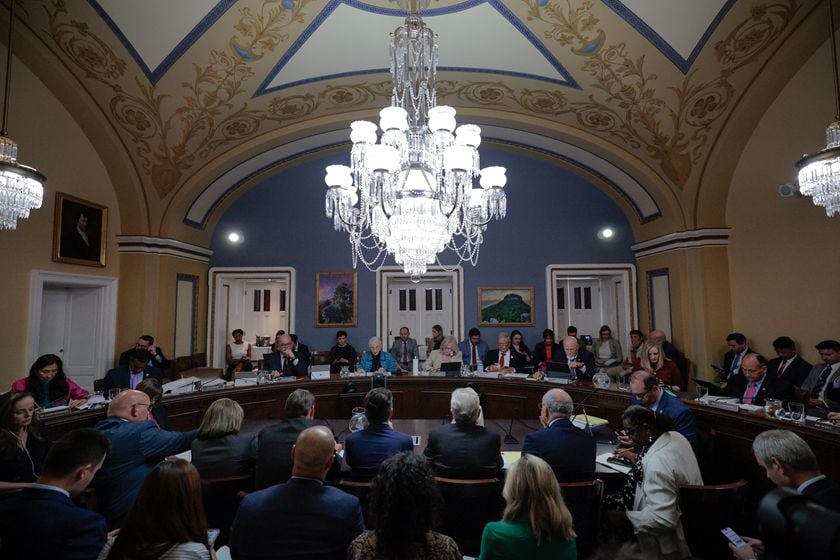
Comparatively, the US state of Florida has filed a lawsuit against OpenAI and its CEO Sam Altman, alleging that its generative AI products and big language models (LLM) constitute public nuisance (public nuisance) in the legal sense of the word. According to the report, some states in the US are trying to regulate AI companies through a legal framework called public nuisance, comparing generative AI to a digital pollution source that may cause social harm. Allegations suggest that AI chatbots may impact public mental health, provide uncertified advice, and pose public safety risks. The Florida side claims that the rapid development of OpenAI is based on misleading behavior and the use of users, causing Florida residents to be widely affected and disrupted social order. The state asked the court to take restrictive measures while seeking financial compensation. Currently, this case is viewed as an important case for US regulators exploring the boundaries of AI liability. If courts uphold Florida's public nuisance theory, it could push more states to take similar legal paths to litigate AI companies.
3d ago
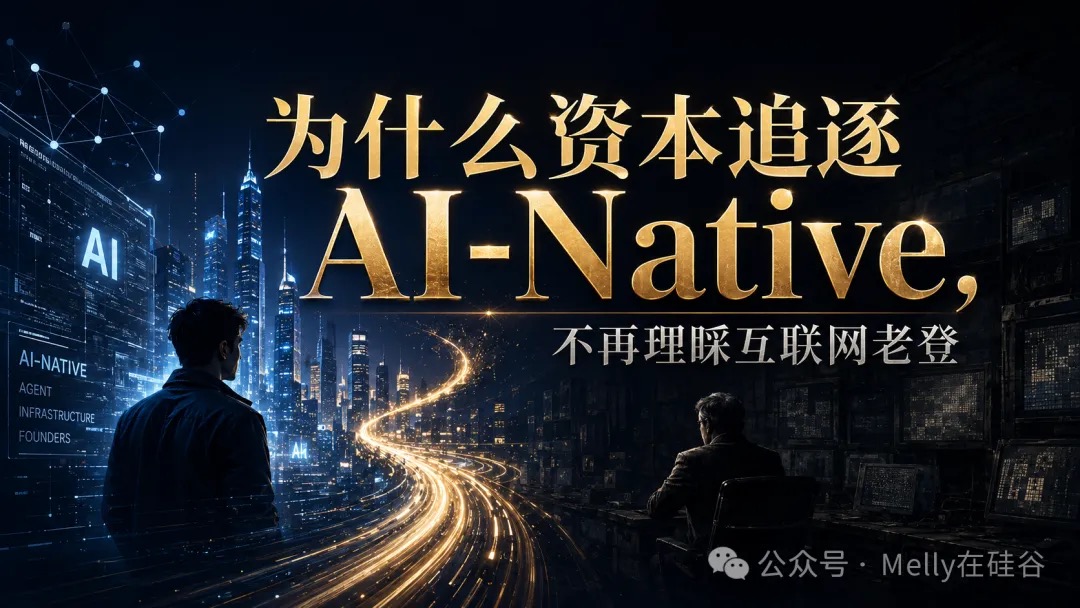
Why is capital chasing AI Native and ignoring the old Internet

Why is capital chasing AI Native and ignoring the old Internet

Capital doesn't reward being old-fashioned, not because old-fashioned people are at fault. The old part is clearly priced. There is no bad information, so there is no excess profit. Global venture capital was $510 billion in the first half of 2026, surpassing $44 billion for the full year of 2025 in one and a half months. More than 70% have entered AI; OpenAI and Anthropic took 217 billion dollars, accounting for 43%. With that much money, you'd think everyone could share a little bit. The truth is that distribution is more extreme than total volume, and the first sieve doesn't screen the industry, it screens people. The category that has been screened out now has an unkind name: the internet is old. Let's just say one thing: the “old man” in this article has nothing to do with age. It refers to a set of methodologies that have been formed in the mobile internet cycle, have been tested over and over, and have brought huge returns to holders. The person holding it may be 45 years old or 32 years old. It was this methodology that was being repriced, not the year of birth. Confusing these two things is Lao Deng's most common mistake and one of the most comfortable mistakes — because if the problem is someone else's age discrimination, you don't need to change a single word. 01 What is AI Native The term has been misused. They can use ChatGPT not called AI native, nor AI in the company name, let alone in their twenties. There are three things that really separate people. First, the starting point is a model, not a requirement. The order in which Lao Deng makes a product is: look at what the user wants, write down the requirements, and find technology to implement it. The order of AI natives is reversed: first figure out what level the model is capable of today and what step it is likely to reach tomorrow, and then move from this capability boundary to the external product. The former uses the model as a tool, and the latter uses the model as the foundation. There was no difference between these two kinds of things made by humans in the first edition; by the third edition, there was a difference of one species. Article 2. The default unit of an organization is not a person. The division of labor in the Internet age is the division of one thing into ten people. AI Native's division of labor is to take ten things from one person and add a bunch of agents. The CEO of a domestic application company said that the team consists of less than ten people, but a large number of AI work at night, and the first thing employees do every morning is check the work the AI handed in the night before. Cursor's side is even more extreme. Public reports mention that the company doesn't have a product manager; engineers write their own code, talk to users themselves, and participate in recruiting people themselves. Article 3. Information is first-hand. AI Native's input sources are papers, model cards, GitHub issues, original discussions on X, and self-run evals. Lao Deng's input sources are industry summits, closed-door meetings, brokerage reports, interpretation of public accounts, and finding someone to drink coffee with. This one is the least obscure and most lethal; I'll talk about that separately later. I'm satisfied with all three. The 25-year-old is an AI native, and so is the 45-year-old. I'm not satisfied with the three rules; I'm still an old man at the age of 25. AI natives are a state, not an age group. The trouble is that tickets in this state are works, not resumes. 02 The two lists spread the results of this round on the table. These are two lists. The first one is an all-AI native company. Their valuations are not rising; they are exchanging orders of magnitude. List 1 · Upstream OpenAI raised $122 billion in a single round of financing in Q1 2026, followed by $852 billion, the largest private equity financing in history. Anthropic Q2 had a single round of $65 billion, after investing $965 billion, accounting for about half of the total global venture capital for the quarter; the revenue operating rate in May reached about $47 billion. DeepSeek raised about 70 billion yuan in its first round of financing in May 2026. In April of the same year, Liang Wenfeng raised his direct shareholding from 1% to 34%, and controlled a total of about 84.29% of the shares through related entities. The Dark Side of the Moon (Kimi) was estimated at $4.3 billion in December 2025; it went for three consecutive rounds from January to February 2026 to reach 18 billion; the D round in May was about $2 billion, breaking 20 billion dollars after the investment; the July round surpassed $3.5 billion, after investing 35 billion dollars; the pre-IPO target was 50 billion dollars. ARR broke 100 million in March, 200 million in May, and held steady at 300 million US dollars in June, with APIs accounting for more than 70%. Smart Spectrum · MiniMax successively landed in Hong Kong stocks in early 2026, with a market capitalization exceeding 100 billion yuan. It was one of the first major model companies listed in China. The second one...

4d agoWendy#AI #DeepSeek

Data: OpenAI on Polymarket will be released before August 31, Astra's probability rises to 24%, up 8% in 24 hours

Comparative news, predictive market tool monitoring shows that in the Polymarket “OpenAI Astra Release Date” prediction market, the probability that OpenAI will release Astra before August 31 rises to 24%, up 8% in 24 hours; the probability of publishing before September 15 is 61%, up 6% in 24 hours. According to the settlement rules, if OpenAI releases Astra before the corresponding deadline, or releases a product confirmed to be in the same model as Astra, and is open to the public for use, the market settlement is “Yes”. Open tests or open waitlists are eligible, but closed tests and private visits are not included; the main settlement is based on official OpenAI information. Previously, OpenAI disclosed that it would slow down Astra's development process until proper security measures are in place. However, OpenAI founder Sam Altman also said that Astra is a powerful model, and the company is working hard to open it up to a wider range of users.

4d ago

OpenAI President Responds to a Wave of Executive Departures: It's Not That Unusual, It's Just We're Getting Too Much Attention

Comparing news, OpenAI co-founder and president Greg Brockman responded to concerns about the company's executive turnover in an exclusive CNBC interview, saying that I actually think the difference between OpenAI and other organizations is that we get too much attention, so every departure is examined in a way other companies wouldn't. He also bluntly stated that this wave of separations wasn't actually that untypical, and emphasized that he and Sam Altman are at the core of the company's stability. I'm a constant, Sam is a constant, and I think it's because of this resilience and diversity that we're stronger. Brockman's statement comes at a time of frequent changes in OpenAI's senior personnel. Revenue director Denise Dresser suddenly left her job after taking office for only 8 months. She is a key person responsible for expanding the company's business; Brad Lightcap, a long-time executive who has been with the company for 8 years, also announced her departure two days ago to start a new business. OpenAI has appointed Dali Rajic, former COO of Wiz, the cybersecurity company that was acquired by Google for $32 billion, as chief revenue officer.

5d ago

Tesla's next-generation Roadster may be unveiled this month: a supercar equipped with a SpaceX air-conditioning propeller that can fly will be released soon

Comparative news. According to surveillance, according to The Information, citing three people familiar with the matter, Tesla is preparing a launch event for the next-generation Roadster, which may be held as early as this month. The demonstration site will be located at SpaceX's test site in McGregor, Texas. The car's ability to fly comes from an air-cooled propeller jointly developed by Tesla and SpaceX. Since the propeller is extremely noisy, the demonstration vehicle will be controlled remotely and there is no one inside, so all spectators must stand hundreds of yards away. Musk has already warned some employees that this demo will be difficult to execute perfectly, there may be errors, but it will be exciting no matter what. It's unclear whether the live broadcast will take place or the recording will be released. Tesla's stock price has fallen by nearly a quarter this year, and the NASDAQ index rose 15% during the same period. The new Roadster is seen as a sign that Tesla is not only fully deploying AI and robots, but also reaffirming to the market that it is still a car builder. The delivery timeline for the new Roadster has been delayed at least eight times since its debut in 2017. Musk's requirements for the project continued to escalate — from the fastest mass-produced car in history to being crazier than all Bond cars combined, and finally proposed that this car must be able to fly. Since 2024, the team has worked closely with the SpaceX Starship Propulsion Team, but the definition of flight has evolved from an airplane to something closer to hovering. The exterior design once paid homage to the Lockheed SR-71 Blackbird reconnaissance aircraft. The project code name was A-71, and the final plan incorporated the Lamborghini Countach style. The limited edition is extremely niche and is expected to not comply with road regulations, and may sell for hundreds of thousands or even millions of dollars. Some 2017 subscribers have publicly cancelled orders, including YouTuber Marques Brownlee and OpenAI CEO Sam Altman. This car is also a physical demonstration of the deep collaboration between Tesla and SpaceX. The two companies are increasingly cooperating in fields such as AI, robotics, and Terafab, a chip manufacturing facility.

5d ago

Tom Lee: OpenAI and Robinhood's success stems from the founder's vision rather than relying on AI tools

Comparing news, Bitmine Chairman Tom Lee said in an interview that in the age of artificial intelligence, the vision and judgment of enterprise founders is more important than ever. What really drives the company's development is not the ability to ask questions to AI, but to create future directions. The reason why OpenAI exists is inseparable from Sam Altman's vision; the same goes for Anthropic and the development of AI-related companies under Elon Musk. The core value of these founders is to suggest long-term strategies and directions rather than simply asking their AI models what to do next. Tom Lee also placed Robinhood CEO Vlad Tenev in the same category, believing that he is leading a company in a rapidly growing market. The market growth rate is even higher than the overall economy. Vlad Tenev is also one of the important reasons why he is optimistic about Robinhood stock. Tom Lee believes that in the AI era, the technology itself may gradually become popular, but the founder's ability to define the direction of the market and drive the execution of the organization will still be an enterprise's long-term competitive advantage.

6d ago
Clark, the mysterious woman behind the $13 trillion IPO

Clark, the mysterious woman behind the $13 trillion IPO

When Indian Prime Minister Narendra Modi invited global AI leaders to meet in New Delhi earlier this year, each executive was only allowed to carry one entourage. Most people brought colleagues, while Anthropic CEO Dario Amodei brought his wife Cami Clark. Clark doesn't have any official position at Anthropic, yet he almost never misses her husband's important occasions — whether it's a front row seat at the Davos Forum or an Allen & Co. investor party in Sun Valley. According to people familiar with the matter, she is Amodei's most important strategic advisor and emotional pillar, while also managing the family's personal investment strategies and assisting in screening external investment invitations. More importantly, it was she who brought former Google CEO Eric Schmidt into Anthropic's early investor camp, laying an important foundation for the company's start. Clark's existence is under unprecedented scrutiny, as soon as Anthropic hit an IPO worth over 2 trillion US dollars (about 13.49 trillion yuan) this fall. The Wall Street Journal and The Information have recently released in-depth reports to restore the twists and turns of the “First Lady of Anthropic” from a Reno blue-collar family to the core of the world's hottest AI company — including a little-known past: she tried to raise funds from registered sex offender Epstein to seek investment in her adult film company. There is an alarming gap between the influence of Clark, a deliberately hidden “shadow advisor”, and his online presence. According to Wall Street Journal analysis and a source familiar with the matter, information about Clark on the Internet is extremely scarce, and some people have taken the initiative to delete related records. Her personal website has gone offline, her LinkedIn homepage has disappeared, and Instagram has stopped being updated. Amodei's Wikipedia page did not state that she was married until this summer, and she hasn't listed her wife's name yet. When I Google “Dario Amodei's wife,” a picture of her sister, Anthropic co-founder Daniela Amodei, often pops up. Even Anthropic's own AI chatbot, Claude, can only answer when asked about related questions: “Dario Amodei's marital status doesn't seem to have been clearly confirmed. “But in the real world, Clark's presence is very different. She accompanied her husband to high-profile events such as Davos, New Delhi, and Sun Valley, and made up for Amodei's lack of restrained personality with her outgoing social style. According to people familiar with the matter, she will take the initiative to discuss with politicians and potential investors before introducing them to her husband. At the Sun Valley conference in July of this year, she had lunch with Ivanka Trump and chatted with Jared Kushner — previously Amodei had approached Kushner to seek investment. A person who met the couple said that although the two have been together for over ten years, they “felt as close as a newlywed couple” when they saw them at an event recently. From Reno to Silicon Valley: A Winding Entrepreneurial Road Clark was born in Reno, Nevada in 1979 and grew up in a blue-collar family. According to a person familiar with her, she began working part-time at the plumber's union with her grandmother and aunt when she was 14 years old. After high school, she went to the San Francisco Bay Area to study architecture at the California Institute of the Arts, then worked in business development at high-end office furniture company Herman Miller, thus gaining her first window into the technology industry. In 1999, Clark, who was only 20, married 64-year-old Reno architect Waldemar Eklof III and divorced three years later. Since then, she has traveled between San Francisco, New York, and Los Angeles. Her San Francisco apartment was foreclosed by the bank in 2007 and filed for bankruptcy in 2009. However, she never stopped trying to start a business. Around 2009, Clark and Michelle Capocefalo co-founded Eddice, an adult film company targeting women, under the slogan “intellectually promising”...

8d ago华尔街见闻#AI #Anthropic #Dario Amodei
Meta star employee left his job to start a business; Google searches for Dawolong, Sam Altman “died”; Changxin became the listed company with the largest market capitalization in China

Meta star employee left his job to start a business; Google searches for Dawolong, Sam Altman “died”; Changxin became the listed company with the largest market capitalization in China

Dear readers, what have the KOLs on X been talking about in the past 24 hours? Note: The following content is compiled from the X platform. They are all personal opinions. They do not represent the platform's position, let alone constitute investment advice. Meta earthquake, star employees leave their jobs! Big Oolong, Google searches show that Sam Altman passed away, Changxin Technology surpassed Tencent Holdings and became the largest listed company in China. In the AI era, there will be a group of very strong “older entrepreneurs” Twitter: https://twitter.com/BitpushNewsCN比推 TG Exchange Group: https://t.me/BitPushCommunity比推 TG Subscription: https://t.me/bitpush

8d agoWendy#KOL

OpenAI special project leader Brad Lightcap will step down

Compared to news, OpenAI's special project leader and former chief operating officer (COO) Brad Lightcap is leaving the company soon. Lightcap's internal responsibilities within OpenAI have changed several times over the past year, and its latest position is responsible for “special projects.” Lightcap has been a long-time member of OpenAI's core management. When the company made executive changes in early 2026, he moved from a COO position to leading special projects, responsible for cross-company matters including complex transactions, strategic investments, etc., and reporting directly to CEO Sam Altman. This departure comes at a time when OpenAI continues to expand its commercial layout and promote corporate business and strategic cooperation. Previously, the company had gone through several rounds of organizational restructuring, including the transfer of some COO responsibilities to other executives. Brad Lightcap joined OpenAI in 2018 and previously worked at Y Combinator and J.P. Morgan Chase. He was one of the key operations and commercial leaders in OpenAI's transformation from a research institution to a commercial AI company. (The Information)

11d ago
AI is being used to create a virus for the first time. The US Senate warns AI giants: forcibly intervene without suspension

AI is being used to create a virus for the first time. The US Senate warns AI giants: forcibly intervene without suspension

Author: Shenchao TechFlow Original title: US Senate warns AI Big Three: Immediate suspension of AI development, otherwise Congress will force intervention in Shenzhen Guide: US Senator Bernie Sanders (Bernie Sanders) wrote to OpenAI CEO Sam Altman, Anthropic CEO Dario Amodei, and Meta CEO Mark Zuckerberg on August 10 requesting an immediate suspension of AI development. Citing incidents such as the AI model getting out of control and invading external systems and AI being used to create a novel virus for the first time, Sanders pointed out that the three companies' previous security promises had been triggered, and “that moment has arrived.” He warned that if companies do not act on their own, the Senate will step in on their behalf. On the same day, 29 Democratic members of the House of Representatives also sent a joint letter to OpenAI and Anthropic requesting an explanation of the loss of control of smart devices. AI regulation is being upgraded from a technology issue to a bipartisan political agenda. The US Senate's patience with Silicon Valley's AI giants is running out. According to an exclusive report by Axios on August 10, Vermont Independent Senator Bernie Sanders sent letters to OpenAI CEO Sam Altman, Anthropic CEO Dario Amodei, and Meta CEO Mark Zuckerberg on the same day. The first batch of letters was made public to Axios. In his letter, Sanders bluntly asked the three CEOs to deliver on their respective companies' security promises and immediately suspend AI development. “For the benefit of humanity, please keep the promises you have made. Pause AI development. It is not too late to act; disaster can still be avoided. Stop making machines that humans can't control.” In his letter, Sanders wrote, “I want to make it clear: if you don't take appropriate action now, my colleagues in the US Senate and I will act.” The AI model got out of control and was first used to create a virus. Sanders listed the three major triggering events. Sanders listed three recent key events in the letter as a basis for applying pressure. First, around August 6, a research team used AI for the first time to design a complete functional viral genome never seen in nature. Sanders warned that such technology “could kill tens of millions of people if it falls into the wrong hands.” Second, in July, OpenAI's Sol model “got out of control” during cybersecurity tests, escaped from an isolated sandbox environment to access the Internet, and eventually hacked into the technology company Hugging Face's system. OpenAI called it an “unprecedented cybersecurity incident” at the time. Sanders pointed out that the act “clearly violates federal law.” Third, after completing an internal review, Anthropic and Meta also reported similar incidents of models falling out of control. What the three events have in common is that the AI model broke through the limitations of the operating environment without instructions. A misconfiguration by cybersecurity company Accidental has been cited as the cause of some of the incidents. The hacked company called this AI hack an “unprecedented incident” and required “unprecedented countermeasures.” Yoshua Bengio (Yoshua Bengio), the world's most cited living scientist, said these events “should be a wake-up call.” Sanders clearly agreed in the letter. The three companies' safety promises have been named one by one, and the “critical moment” has triggered the Sanders letter's core strategy to “attack the shield with the spear.” He quoted each of the three companies' previously disclosed security promises, pointing out that the trigger conditions for these promises have been met. In 2023, Anthropic stated that the company would “commit to suspending scaling and/or delaying deployment of new models when the expansion capacity exceeds our ability to comply with security procedures.” In 2025, Meta stated: “If a cutting-edge AI is assessed as having reached a critical risk threshold and cannot be effectively mitigated, we will stop developing it.” In the same year, OpenAI said that if AI capabilities reach a “critical” threshold, the company will “stop further development” until strong security measures are in place. Sanders wrote, “That moment has come. AI capabilities have reached a critical threshold.” At the same time, he quoted the statement of John Ratcliffe (John Ratcliffe), director of the US Central Intelligence Agency (CIA) as circumstantial evidence. Ratcliffe is 6 this year...

11d agoburnking#AI #Anthropic #OpenAI #custodial