
Solana · 8684

Bonk Guy: Major public chains are fully competing for retail investors, liquidity, and users. The on-chain market may explode in this round

Comparing news, crypto KOL “Bonk Guy” Unipcs wrote that the market may have seriously underestimated the scale of development of the on-chain market in this round. Currently, Robinhood, BNB Chain, Base, and Solana are all vying for retail market, liquidity, users, and attention. Unipcs believes that all major ecosystems hope to become the leading chain in this cycle and are willing to invest significant resources to promote ecological growth. It is expected that competition and activity in the on-chain market will further heat up.

1m ago
Grayscale: New US SEC regulations may benefit ETH, SOL, and BNB; on-chain issuance will drive the return of value

Comparatively, according to Bitcoin.com, Grayscale Research Director Zach Pandl pointed out in the analysis report that if the SEC's proposed new regulation of crypto assets (Crypto Assets) is finally implemented, Ethereum, Solana, and BNB Chain may become the main beneficiaries. The proposal establishes two exemption routes: projects with financing under $5 million can be exempted from registration for 4 years, projects with financing under 75 million US dollars can be exempted from registration for 1 year, and a conditional safe haven. The aim is to provide a clear domestic compliance path for the issuance of crypto assets and reduce issuers' motivation to operate overseas. Pandl pointed out that tokenized financing was previously blocked due to vague regulations. If the new regulations stimulate issuance activities, it will bring more US issuers and investors to go online and drive value back to underlying networks and native tokens such as ETH, SOL, and BNB. The proposal is still in the comment phase, and the final rules may be adjusted due to public comments and SEC review, and larger network activity does not guarantee a rise in the token price. This article is sponsored by GENG, Build Your Fortune on GENG (https://geng.one)

1h agoburnking

Coinbase adds CP, BASECAT, DRB, POD, and GRASS to the listing roadmap

According to the official website of Coinbase, Coinbase updated its asset listing roadmap, adding Cluster Protocol (CP), Basecat (BASECAT), DebtRelievBot (DRB), Dolphin (POD), and Grass (GRASS). Among them, CP, BASECAT, DRB, and POD are base chain assets, and GRASS is Solana network assets. Coinbase said that inclusion in the roadmap does not mean that trading has been officially opened; the relevant assets must meet conditions such as market-making support and technical infrastructure before starting the transaction.

11h ago

SOL Treasury HSDT: Supports the Solana Constitution but opposes adjusting inflation and fees now

Comparatively, SOL treasury company Solana Company (HSDT) announced its vote on the first three Solana Governance Proposals (SGP). It supports the passage of the SGP-0001Solana Constitution; opposes SGP-0002 doubling the rate of inflation reduction; and opposes SGP-0003 changing transaction fees from fixed to floating. On-chain voting is expected to open on August 22nd. The company said it supports the Solana Constitution because the new governance system allows every pledger to vote directly, and holders can always reverse the votes of operators they have delegated, which helps the agency participate in online decisions. However, with regard to the other two proposals, the company emphasized that it was not against the direction itself, but rather against the timing. This is a critical stage for institutions to consider entering Solana. The most important thing for institutions is that the rules are stable and predictable. Changing the two core economic parameters of the inflation rate and handling fees at this time may make institutions that are still on the sidelines even more hesitant. The company said that it will support rediscussions to reduce inflation after seeing that SOL continues to have a net inflow of capital; it is also willing to reconsider the plan to change the handling fee to a floating rate after ecological adaptation.

20h ago

FT: Bitcoin is expected to have the best weekly performance in more than three years, and Bezent expands US bond repurchases to weaken the dollar

Comparative news, according to the Financial Times, after US Treasury Secretary Bezent announced the expansion of long-term US bond repurchases, market hedging and currency depreciation transactions heated up, and assets such as Bitcoin and gold rose sharply. Bitcoin rose nearly 8% on Friday, with a cumulative increase of 24% this week. The price surpassed 78,000 US dollars, a new high since May this year, and is expected to record its best weekly performance in more than three years. Gold also performed strongly during the same period. It rose 1.5% to about 4,585 US dollars/ounce on Friday, with a cumulative increase of more than 13% in August, which is expected to be the biggest monthly increase since 1999. Market participants believe that the core factor driving the current market is the expansion of the US Treasury's long-term treasury bond purchase plan. US Treasury Secretary Scott Bessent said earlier that he would at least double the scale of long-term US debt repurchases. The measure reduced the yield on 30-year US Treasury bonds in the short term, but it also raised concerns about the decline in the purchasing power of the US dollar, and the dollar index continued to weaken thereafter. Jefferies chief European economist Mohit Kumar said that gold and crypto assets rose sharply after Bezent announced related measures, further supporting expectations of a weaker dollar. This rise has reignited currency depreciation transactions (Debasement Trade), where investors hedge against the risk of declining fiat currency purchasing power by allocating assets such as gold and bitcoin. Previously, the conflict between the US and Iran led to a rise in inflationary pressure, which once interrupted the logic of this transaction, but now the market has returned to expectations of liquidity easing. In addition to Bitcoin, Ethereum, Solana, and XRP have risen 29%, 17%, and 40%, respectively, over the past week. Previously, the crypto market continued to be sluggish since the fall of last year, and Bitcoin's biggest decline in the past year once reached 31%. Meanwhile, crypto-related stocks rose at the same time: Coinbase is up 16% this week, stablecoin issuer Circle is up 17%, and Bitcoin holding company Strategy is up 21%. Analysts pointed out that Bitcoin's rapid rise triggered a squeeze on bears, and large numbers of short positions were forced to close, further driving up the price. Furthermore, US President Trump's meeting with regulators and heads of crypto companies this week and the introduction of new crypto regulation proposals by the US Securities and Exchange Commission (SEC) were also viewed by the market as good for the industry. This article is sponsored by GENG, Build Your Fortune on GENG (https://geng.one)

1d agoburnking

Solana reduces block generation time to 350 ms for the first time

Comparing news, Jacob Creech, vice president of technology at the Solana Foundation, wrote that Solana has officially shortened slot time for the first time since its inception, and has now entered a new stage of 350 ms, with the next target of 300 ms. Slot time is a unit of time corresponding to each block in the Solana network. Shortening helps improve transaction confirmation speed and network throughput. Previously, Solana's target slot time remained at around 400 ms for a long time, and this adjustment marks an important update in network performance parameters. This article is sponsored by GENG, Build Your Fortune on GENG (https://geng.one)

1d agoburnking

Analysis: Behind PUMP's monthly doubling, positive ecological feedback is the main driver

Comparing news, PUMP has continued to rebound since hitting a low of $0.001 at the end of June. It has risen about 19% in the past 24 hours and is close to $0.004, up 36% on the 7th, 98% on the 30th, and about 116% on the 90th. The crypto market has picked up in the past two days. Bitcoin once surpassed 79,000 US dollars. Some meme coins, such as PEOPLE, NEIRO, and BOME, are on the Binance rise list, which is in line with the common rhythm of market recovery and memes taking the lead. However, PUMP's rise was significantly earlier than the current market round, starting about two months earlier. PUMP's strong rise this time is driven by its fundamentals: Pump.fun is forming a positive feedback cycle of revenue, buyback, and traffic. On-chain data shows that in the past 30 days, the platform's processing fee was about US$38.15 million and revenue was about US$29.19 million, second only to Tether, Circle, and Canton, surpassing agreements such as Hyperliquid, Polymarket, GMGN, and Tron. The window that appeared in Gold Fork coincided with the re-acceleration of revenue, the continuous repurchase and destruction of PUMP, and the return of users trading on the platform. Pump.fun uses 50% of revenue to buy back and destroy PUMP. The recent weekly fee revenue surpassed $10 million (one of the best levels since the end of January), corresponding to potential buyback pressure of around $5 million. The platform recently launched Callout Rewards and reduced Solana transaction fees to 0% and cross-chain fees to 0.1%, using revenue advantages to subsidize traffic and compete with users of imported products such as GMGN and Fomo. If active weekly and daily active trading users continue to reach new highs, PUMP's market narrative may shift from a simple meme platform coin to a trading portal with high cash flow. Overall, this round of growth was driven by technical signals and positive feedback from fundamentals, with revenue scale and repurchase mechanisms being the core supporting factors.

1d ago

Data: Circle mints an additional 500 million USDC on the Solana chain

Comparing news, on-chain data shows that stablecoin issuer Circle has just minted 250 million USDC each on the Solana chain twice, for a total of 500 million USDC. This article is sponsored by GENG, Build Your Fortune on GENG (https://geng.one)

1d agoburnking#On-chain dynamics
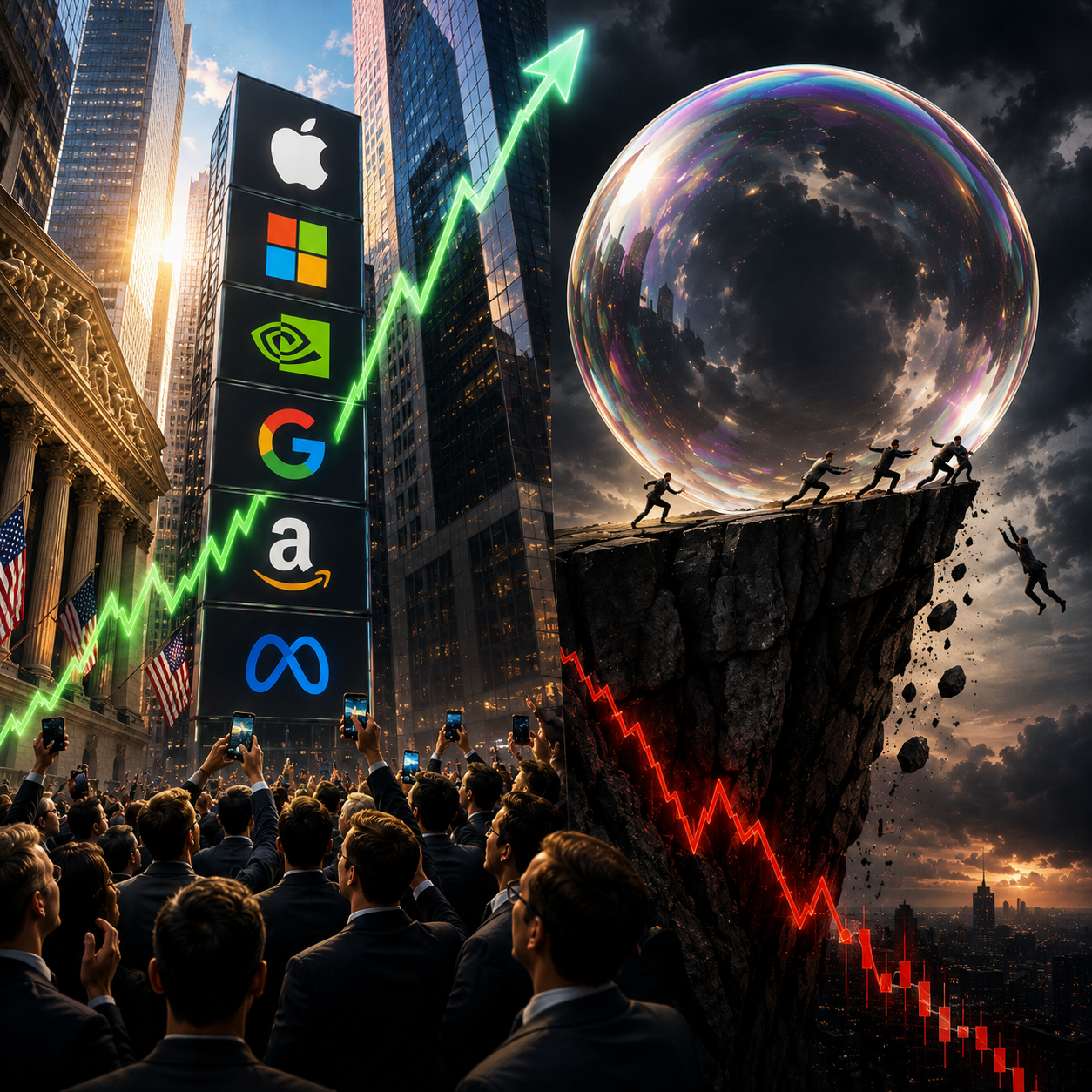
US Stock Value Investing Is Heading Into Another Trap

US Stock Value Investing Is Heading Into Another Trap

Source: Shenchao TechFlow Original title: (Opinion: Value investing in US stocks is not equal to fundamental investment) When “fundamentals are dead” becomes a consensus, investors who blindly organize giants will eventually experience astonishing capital destruction. Guide: When the market shouted “fundamentals are dead” and the capital frenzy formed a group of tech giants, the author used an astronomy discovery to unravel the logical loopholes behind this narrative. Starting from the composition of valuation multiples, this article reminds investors to distinguish between the true quality of an enterprise and the premium that the market is willing to pay. It is particularly cautionary about long-term allocation in the crypto and technology sector. I promise this introduction won't be as long as the last one on the weather. But please give me 90 seconds. More than 100 years ago, a woman named Henrietta Levitt was doing the tedious job of measuring the brightness of thousands of stars on photographic negatives (the way they were imaged before film appeared). She noticed one characteristic of a class of pulsating stars: the slower they pulsate, the brighter they themselves are. ¹ This might just seem a little interesting today, like “OK, that's pretty cool.” But at the time, astronomers couldn't tell the difference between a dark star very close to Earth and a very bright star far away. For them, the two left the same stain on the photographic film. Visual brightness is a messy mix of these two variables: how bright the thing itself is, and how far away it is from us. Henrietta's work decouples these two things: if you can observe the rate of pulsation, you can know its true luminosity; if you know its true luminosity, you can reverse the distance based on how dark it looks. Astronomers call it “standard candlelight.” A few years later, a man named Edwin Hubble discovered one of these pulsating stars, applied Levitt's math, and discovered what he had always thought was a cloud of gas within our galaxy; in fact, it was an entire independent galaxy, one million light years away. So in simple terms, the observable universe has grown about a trillion times larger, just because one person has figured out how to tell the difference between what things look like and what they actually look like. That in itself is obviously pretty cool. But another interesting thing is that around the same time period, two other astronomers each independently drew a scatterplot. One axis was actual luminosity, and the other axis was temperature. They discovered that stars are not randomly distributed in this space, but rather clustered into different families. The meaning behind this is: stars with the exact same visual brightness may and do belong to a completely different family, have a completely different past, and most importantly, have a completely different future... So what is written in the star? Over the past few years, there has been much discussion about markets, narratives, capital, company building, and financial nihilism. This feeling seems to have reached a feverish climax as the tech and financial world begins to face a very different future than a few decades ago. What is particularly clear is that separating progress from asset prices has become more noisy and in many ways more repulsive. But as an investor who makes a living by buying assets that (hopefully) outperform, a simple framework is: forward returns are roughly equal to growth in fundamentals multiplied by changes in valuation multiples (and multiplied by the dividends you've collected along the way). In this case, the valuation multiplier can very cleanly correspond to the smudges on the photographic film. It's an observable data point, but it entangles two things that the market can't directly see: how good the company actually is, and how far (or how long) its future cash flow is now. I think most of the money that can be made comes from investors who are most capable of unraveling these two variables earlier than others (or “perception of differences”), and we will continue to see astonishing capital ruin for investors who treat their stains as stars. Value investing is not equal to fundamental investing. I think there is a misunderstood view: fundamental investing has historically dominated the creation of excess returns. Most of these legends come from the Graham, Buffett, and Tiger Foundation lineage, as well as numerous narratives built around this group of people. It is believed that by some point in the 2000s, this approach was no longer effective, and anyone who invested in this way was overwhelmed by momentum, trends, and “direct buying tech giants.” The conclusion was (and still is?) It's “fundamentals are dead.” ² The modern version of “fundamentals don't matter” itself isn't stupid. It's rooted in a lot of ideas that many of us on the Compound team have written before. The biggest companies get the most mechanical purchases, and the software industry has a winner-take-all economic law. AI means that giants can transform scale into moats faster than challengers, and there are also reasons why the market's microstructure embeds momentum more deeply into our market infrastructure. These are all real...

1d ago深潮TechFlow#US stocks