key · 1612

HashKey Global: HSK price breaks above $0.1094, 24-hour increase of 21.15%

Comparative news, according to HashKey Global quotes, the HSK price surpassed $0.1094, up 21.15% in 24 hours. HashKey Global is a global flagship virtual asset exchange under the HashKey Group, providing licensed virtual asset trading services to users around the world. HashKey Global has obtained a full license for the digital asset investor protection system issued by the Bermuda Monetary Authority (BMA) to provide mainstream trading and service products such as LaunchPool, contracts, and leverage.

1d ago
From 4 models to more than 500, OpenRouter was acquired after growing 30,000 times in three years

From 4 models to more than 500, OpenRouter was acquired after growing 30,000 times in three years

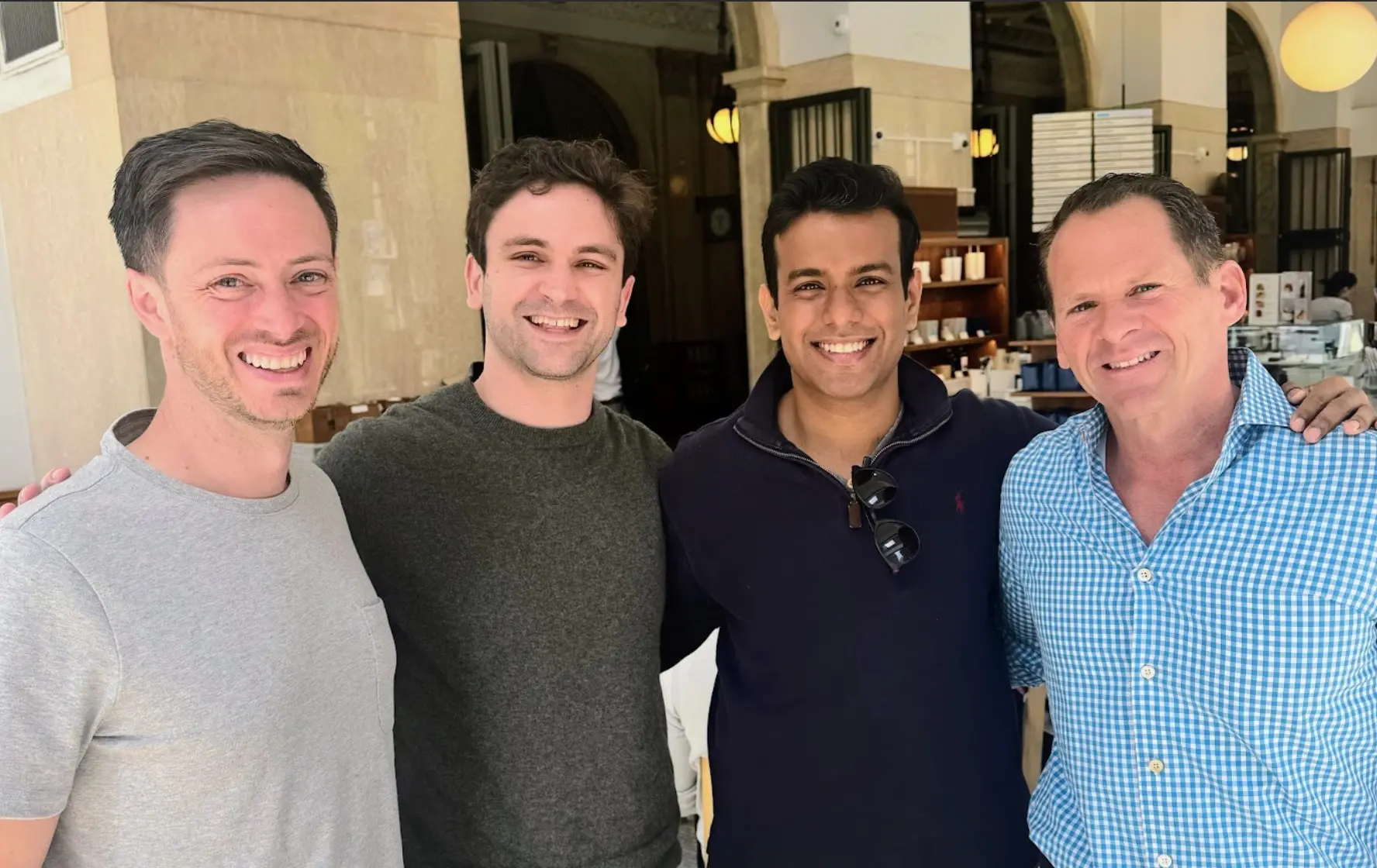
Author: Menlo Ventures Compiled by: Jia Huan, ChainCatcher Original title: Early Investors Behind OpenRouter Revisited Investments Today, OpenRouter announced that it has reached an acquisition agreement with Stripe. OpenRouter was launched in 2023, just over three years ago. OpenRouter was initially launched as a “unified interface for LLM” and only supported 4 models at the time: GPT-3.5, GPT-4, GPT NeoXt and Cohere xlarge by Together. When the company was founded, it was based on two core judgments: first, AI will eventually be used on a large scale and penetrate various fields; second, there will be many different models on the market, each with trade-offs, and users will choose different models according to different needs. As it turned out, both judgments far exceeded expectations at the time. Since its launch, the number of tokens processed by the OpenRouter platform has increased by about 30,000 times. Currently, it has exceeded 4,500 trillion tokens on an annualized basis, and the scale of expenditure on the platform has reached a very impressive level. Meanwhile, the number of models supported by OpenRouter has grown from the original 4 to over 500. Figure: OpenRouter Token usage growth from inception to acquisition Menlo Ventures is fortunate to be part of this journey. In March 2025, we participated in OpenRouter's seed funding round through the Anthology Fund set up in partnership with Anthropic. OpenRouter founder and CEO Alex Atallah previously founded OpenSea, which was once valued at $13.3 billion. His co-founders include tech guru Louis Vichy, whom he met on Discord, and highly executive COO Chris Clark. In May 2025, we led OpenRouter's Series A funding round, with Matt joining the company's board of directors, and Deedy as a board observer. Earlier this year, after seeing OpenRouter's rapid growth in customer numbers and revenue, and the company built a product route with stronger “model intelligence” capabilities around model selection and evaluation, we continued to step up Series B financing. In the tech industry, it often takes years for an idea to change from the judgment of a few people to industry consensus. And just a few weeks ago, this happened: from Ramp to Cursor, more than 10 companies launched their own model routing products almost simultaneously. In just a few years, OpenRouter has become one of the most important companies in the AI era. Picture: Group photo when deciding to lead OpenRouter Round A At first glance, Stripe doesn't seem like the most natural buyer of OpenRouter, but the two companies are actually strikingly similar. Both use an API that can be directly accessed to simplify the otherwise complicated transaction process and charge a certain percentage of the fee. It's just that OpenRouter deals with AI models. As Stripe has always said, the two companies combined and are still doing the same thing: increasing “internet GDP.” In fact, over a year ago, OpenRouter called itself the “Stripe of LLM.” OpenRouter's core value OpenRouter was one of the first companies Deedy came into contact with after joining Menlo in 2024. This company is almost right at the heart of our AI infrastructure investment logic. Menlo presented two judgments necessary to invest in OpenRouter in the 2024 Enterprise AI Report: AI spending will increase dramatically, and developers will not only use one model, but multiple models at the same time. Figure: Menlo's initial contact email to OpenRouter As someone who can also write code and actually use these models, we realized long ago that there is a very clear difference in cost, latency, and performance between the different models...

2d agoburnking#OpenRouter
[Comparative Daily News Picks] Yushu Technology will be listed on the Science and Technology Innovation Board on August 19; Anthropic's annualized revenue exceeded 65 billion US dollars before the IPO; Ethereum developers plan to upgrade Hegotá's priority promotion of private transaction proposals in 2027, and FOCIL has confirmed inclusion; the US-Iran situation has added another variable, and the yield on 30-year US bonds hit a new high in 19 years

[Comparative Daily News Picks] Yushu Technology will be listed on the Science and Technology Innovation Board on August 19; Anthropic's annualized revenue exceeded 65 billion US dollars before the IPO; Ethereum developers plan to upgrade Hegotá's priority promotion of private transaction proposals in 2027, and FOCIL has confirmed inclusion; the US-Iran situation has added another variable, and the yield on 30-year US bonds hit a new high in 19 years

Daily AI · Crypto · Macro · Market News, Bitpush helps you set priorities ↓ AI · News [Yushu Technology will be listed on the Science and Technology Innovation Board on August 19]. Comparing news, Yushu Technology announced that the company's shares will be listed on the Science and Technology Innovation Board of the Shanghai Stock Exchange on August 19, 2026. [Anthropic's annualized revenue surpassed 65 billion US dollars before the IPO] In comparison, according to people familiar with the matter, Anthropic's current performance means that the company's annualized revenue is expected to exceed 65 billion US dollars, an increase of more than seven times from the level at the end of last year. As of the end of July, Anthropic's annual recurring revenue (ARR) had reached $65 billion, according to people familiar with the matter. One of the people familiar with the matter said that Anthropic shared this data when regularly updating investors on the company's situation. The sharp acceleration in revenue has further strengthened Anthropic's confidence in advancing its listing plan. Both Anthropic and OpenAI have secretly submitted documents related to the listing. Anthropic is expected to land on Wall Street as soon as this fall, possibly earlier than OpenAI. [OpenAI Super Data Center officially launched, Nvidia covered up to 105 billion US dollars] Comparing news, OpenAI's Ohio Super Data Center officially signed a contract. This project was previously revealed. At the time, OpenAI was still discussing a long-term lease with SB Energy, and Nvidia was only considering providing a guarantee. Now that the first 4.25 GW has been officially launched, Nvidia can continue to lock in the remaining 3.75 GW. Previously, the two sides discussed guarantees of up to 250 billion US dollars, and in the end, the initial liability was limited to 105 billion US dollars. This isn't money given directly to OpenAI. Only if OpenAI goes bankrupt or doesn't pay rent, and there is still a gap after the project is re-leased or sold, will Nvidia need to make up the difference. After that, OpenAI will also have to pay back the money actually advanced by Nvidia. Nvidia will also invest $1.5 billion in developer SB Energy, and the park will mainly use Nvidia's AI computing power. Hwang In-hoon estimates that each generation of systems deployed here may correspond to about 1.5 million GPUs and 150 billion to 200 billion US dollars in revenue. Until now, outsiders have been questioning that this model is circular financing: Nvidia backs up the customer's infrastructure, and the customer then uses the money to buy Nvidia chips. Hwang In-hoon also specifically responded this time, stressing that Nvidia only bears specific rent, electricity, and asset residual value risks; it is not responsible for the entire project on behalf of OpenAI. Crypto · Market [Ethereum developers plan to prioritize private transaction proposals in the 2027 Hegotá upgrade, FOCIL has confirmed inclusion] In comparison, Ethereum Foundation researcher Toni Wahrstätter said that the protocol architecture team hopes to prioritize Frame Transactions (EIP-8141) and FOCIL (EIP-7805) in the Hegotá upgrade planned for 2027. Frame Transactions can collaborate with Keyed Nonces and Recent Roots (EIP-8272) and Transaction Assertions (EIP-7906) to enable the privacy pool to pay transaction fees and let the wallet set execution conditions after transaction submission. FOCIL can provide agreement layer inclusion guarantees for eligible transactions. Currently, FOCIL is the only proposal that Hegotá has confirmed inclusion, and the Frame Transactions related scheme is one of 66 proposals currently being evaluated. Other candidate solutions include transaction pricing, status growth, block access lists, and optional zkEVM certification for the main network. Vitalik Buterin previously proposed improving Ethereum's privacy, resisting quantum security, and reducing reliance on second-layer networks. Hegotá will follow Glamsterdam, and the developers plan to complete Glamsterdam by the end of 2026. [CleanSpark, BitFufu, and Canan Technology's Bitcoin production in July fell by about 5%, 10%, and 28%, respectively] In comparison news, according to The Block, Bitcoin mining companies CleanSpark, BitF...

4d agoBitpushNews#Compare Daily Picks

Ethereum developers plan to prioritize privacy transaction proposals in the 2027 Hegotá upgrade, and FOCIL has confirmed inclusion

Comparing news, Ethereum Foundation researcher Toni Wahrstätter said that the protocol architecture team wants to prioritize Frame Transactions (EIP-8141) and FOCIL (EIP-7805) in the Hegotá upgrade planned for 2027. Frame Transactions can collaborate with Keyed Nonces and Recent Roots (EIP-8272) and Transaction Assertions (EIP-7906) to enable the privacy pool to pay transaction fees and let the wallet set execution conditions after transaction submission. FOCIL can provide agreement layer inclusion guarantees for eligible transactions. Currently, FOCIL is the only proposal that Hegotá has confirmed inclusion, and the Frame Transactions related scheme is one of 66 proposals currently being evaluated. Other candidate solutions include transaction pricing, status growth, block access lists, and optional zkEVM certification for the main network. Vitalik Buterin previously proposed improving Ethereum's privacy, resisting quantum security, and reducing reliance on second-layer networks. Hegotá will follow Glamsterdam, and the developers plan to complete Glamsterdam by the end of 2026.

5d ago

The storage price increase may continue into the fourth quarter. Wall Street's average price target for Micron is $1,549

Comparative news, according to the “Barron's” report, one of the reasons behind the recent rebound in storage stocks is SanDisk (SNDK)'s strong long-term outlook for the NAND market. KeyBanc expects DRAM prices to rise 15% to 20% month-on-month in the third quarter of 2026 and 15% in the fourth quarter; NAND will rise 30% to 40% month-on-month in the third quarter and 15% in the fourth quarter. Based on simple compound interest calculations, compared to the second quarter, DRAM had a cumulative increase of about 32% to 38% before the end of the year, and NAND about 50% to 61%. Although storage prices have risen sharply before, the price increase continues, exceeding the market's previous expectations, and whether DRAM and NAND price increases can continue until the fourth quarter is viewed as an important variable in the recent storage sector. In terms of valuation, UBS analyst Timothy Arcuri gave Micron Technology (MU) a target price of $1,625. Due to the current shortage of supply, which puts short-term profits at a high level, UBS did not use 2027-2028 profit, but instead based the 2029 EPS forecast and gave a price-earnings ratio of about 11 times. UBS believes that even if the storage industry gradually normalizes or experiences a downward cycle by 2029, Micron's long-term profitability may still be higher than in the past cycle. UBS also mentioned that an increase in the share of long-term supply agreements (LTAs) may reduce the storage industry's past performance fluctuations due to expansion of production, overflow, and falling prices. Wall Street analysts' average price target for Micron was $1,549, above its closing price of $970.20 on August 14, according to FactSet data.

6d ago

Losing around $750,000 in BTC, long-term Bitcoin holder's Google account hacked

Comparing news, Bitcoin News posted an article on the X platform stating that less than 12 hours after a long-term Bitcoin holder transferred BTC to a major Australian exchange, all assets in the account were withdrawn. According to his friend, the hacker had been hacking into its Google account for about 3 months, obtained its email and cloud-backed Google Authenticator verification credentials, and then waited for it to deposit BTC to the exchange. The exchange identified the hacker as the account itself and approved the withdrawal, and the holder was notified that the withdrawal was approved at 3 a.m. The post suggests turning off Google Authenticator cloud backup and using a hardware security key such as YubiKey; set up two keys to use as a backup if one of them is lost.

7d ago

Claude Code Official Provincial Token Guide: 11 Tips to Make Your Credit Last Longer

According to monitoring, Anthropic released Claude Code provincial token guidelines. The point is: the longer the context, the more expensive each subsequent round. Chats, files, and command output will continue to consume tokens, which will also consume credits faster as a result. To put it together, here are the 11 most practical tips: 1. Change tasks to /clear. Once a task is completed, the context is cleared. I'm still doing the same task, but the previous content is useless, and I'm compressing it with /compact. Longer sessions get more expensive as each round brings back previous content. 2. Choose the model and effort right from the start. Executing /model or /effort midway will destroy the prompt cache (prompt cache), and the next round will require reprocessing of the entire context. Fast mode is the same; it's best to turn it on at the beginning. 3. /compact before leaving. The subscribers' cache expires in about 1 hour, and the API Key is about 5 minutes by default. After the cache expires, it comes back, and the next round usually involves reprocessing the entire context. It's cheaper to compress while the cache is still there. 4. The last few rounds have been biased towards /rewind. It only deletes the next few rounds, and the previous cache can still be used. /compact rewrites the entire conversation, which is more expensive. 5. Use the @ file name directly for the file. Claude gets the files directly in the first round, saving them a single read or search. You usually only need @ once for a file; repeating @ may instead put another copy of the same file into context. 6. Prompt try to be as specific as possible. Instead of saying the test is stuck, it's better to just tell Claude which test and which file. Otherwise it might grep, search, and read a bunch of files first, and these results would continue to take up context every round after that. 7. Test and log output as little as possible. Build, test, and git log output all stay in context. You can add a quiet parameter, output only errors, or truncate with tail. Instead, Claude Code automatically writes command output over 30,000 characters to a file, leaving only the summary and path in the session. 8. Use /context to check the startup load. At the beginning of a new session, you can see how much context Claude.md, MCP, and tool definitions take up. Claude.md only contains general rules, special processes include skills loaded as needed, and use /mcp to turn off unused MCPs. 9. Simple tasks use smaller models and less effort. Larger model inputs and outputs are more expensive, and thinking is also an output token. There is no need to use the most advanced models and the highest level of reasoning power all the time to perform tasks. 10. Give the big log to the subagent, don't abuse the small tasks. The Subagent has an independent context and only brings the final results back to the main session. It is suitable for reading large numbers of logs and searching documents. But it also requires rereading files and running multiple rounds on your own; small tasks can be more expensive. You can also specify Haiku or Sonnet for tasks such as searching and reading logs. 11. /loop is best to have a separate session. Each loop is a complete round, and carries the full context of the current session over and over. If the interval exceeds the cache time, the cache may also expire once more. The official recommendation is to open a separate terminal and use a clean session to run the loop exclusively. Anthropic's advice boils down to: save useless content, clear tasks as soon as they're done, and don't drag on for too long.

7d ago
Is the myth of “absolute safety” debunked? Trezor 14,000 encrypted user information leaked, a “wrench attack” is approaching

Is the myth of “absolute safety” debunked? Trezor 14,000 encrypted user information leaked, a “wrench attack” is approaching

DID YOU KNOW? Buying a hardware wallet is probably more dangerous than posting luxury cars on social media. Because from the moment you place an order, your name, phone number, and address are permanently tied to the “hold crypto assets” label. And this information is probably lying in an Excel table from a dark web seller right now. Trezor customers are being targeted. On August 13, the hardware wallet giant confirmed that its logistics partner ShipMonk had been accessed without authorization, and 11,742 customers' names, emails, phone numbers, and full delivery addresses had been obtained; the names, cities, and emails of 1,947 other customers had been leaked, for a total of 13,689 people. The affected users are located in the US, UK, Sweden, Colombia, Brazil, Italy, and Portugal. Note that Trezor's own system hasn't been broken, the hardware wallet is still safe, and the private keys are fine. So what's the problem? The reason — buying Trezor became a “target” in itself. This instantly turned an ordinary logistics database into a “list” in the eyes of potential attackers. From a phishing email to someone knocking on your door, there have been quite a few things that have happened in the crypto industry. In 2020, Ledger's e-commerce and marketing database was leaked. More than 1 million email addresses were leaked, and details such as the names, addresses, and phone numbers of about 272,000 customers were later made public. Since then, Ledger has had to remind customers for a long time to prevent phishing emails and scams impersonating official websites. But today in 2026, things aren't just about the internet. According to data released by Chainalysis in August this year, by the end of June, the world had recorded 46 violent attacks against crypto asset holders; more than half involved kidnapping, and more than one-third involved house robberies. Since 2026 alone, more than $30 million in crypto assets have been successfully stolen through violent coercion. Insiders call it a “$5 wrench attack” ($5 wrench attack). The name has a bit of dark humor, but the logic is scary: Hack a hardware wallet? It's so hard. But if I know you have coins and know where you live, then I only need to spend 5 dollars to buy a wrench and say “please” the mnemonic phrase at the door. In January 2025, Ledger co-founder David Balland and his partner were kidnapped at their home in France. The kidnapper demanded a cryptocurrency ransom and severely maimed Balland's hand. French police later rescued two people, and several suspects were arrested. In November 2025, Danylo K., the son of the deputy mayor of Kharkiv, Ukraine, and a 21-year-old student, was kidnapped in Vienna, tortured for a long time to obtain a password for his wallet, and then burned to death in gasoline. The suspect was later arrested in Ukraine and the associated crypto account has been emptied. There is also an American cross-state violent robbery gang. Several suspects are accused of posing as delivery workers or pizza delivery in California and other places, bundling and assaulting victims, and forcing money transfers. In one case, about 6.5 million US dollars of crypto assets were extorted in a single transaction; other gangs carried out similar attacks in several states, with cumulative losses of millions to tens of millions of US dollars. The latest one is even more outrageous: a young couple in the French province of Somme (farmers and bank employees, who don't play with coins at all) bought a second-hand house. The former homeowner is a retired crypto-rich man. After the former landlord's tax information and old address were leaked to the dark web, from June 24 to July 17, 2026, they were robbed three times in less than a month. Although the two suspects have been jailed in the local court, the victim's lawyer pointed out that the dark web leak made the new owners innocent, and the couple are now preparing to sell their house and move. This is where the “wrench attack” is really scary. You don't need coins; as long as others “think” you have them, you're no longer safe. After “Not your keys, not your coins,” the next problem was actually two weeks before Trezor's launch. Another wallet manufacturer, Coldcard, had just experienced a key generation vulnerability crisis. Galaxy Research later estimated that related losses had reached about 130 million US dollars. As a result, Galaxy made a very interesting judgment: self-hosting does not eliminate the risk of hosting; it only transfers the risk to hardware, software, and key generation. And this time, Trezor has taken the risk one step further: the risk will also be transferred to the logistics company, order database, your mobile phone number, and your home address. Hardware wallets can be signed offline, so that private keys never touch the internet, but from the moment the user places an order, they have already entered the other...

8d agoBitpushNews#Trezor #mnemonic #original #Bitcoin #hardware wallet #private key

Fixed-rate lending agreement TermMax will conduct TGE on August 25

Comparatively, fixed-rate lending and revolving strategy protocol TermMax announced that the Token Generation Event (TGE) for its governance and utility token TMX is scheduled to be held on August 25, 2026. According to official reports, TermMax currently has more than 90 million US dollars in TVL, more than 1.5 million registered wallets, and more than 90,000 daily active users. It has been deployed on 10 EVM chains including Ethereum, BNB Chain, Arbitrum, Base, and Berachain, and integrated with Morpho, Aave, Venus, Pendle, etc. The total number of tokens is fixed at 1 billion, and rewards obtained through XP, AP, and MP will be claimed after TGE. Details of distribution, lock-up, and staking will be announced in advance. Previously. TermMax is supported by Cumberland DRW, Decima Fund, HashKey Capital, Longling Capital, and MZ Web3 Fund.

8d ago
HKD stablecoin “big retreat”: 36 applicants, only 2 left

HKD stablecoin “big retreat”: 36 applicants, only 2 left

Source: Foresight News Author: Joe Zhou Original title: The Hong Kong Dollar Stablecoin “Great Retreat” is strategically negative and tactically aggressive. The participants in the HKD stablecoin are waiting for a reason to get them excited. “We are not optimistic about the HKD stablecoin.” An industry insider close to the regulatory level said bluntly to the author, “Being optimistic about stablecoins does not mean being optimistic about Hong Kong dollar stablecoins — these are two completely different things.” He paused and added: “Let the least willing and least motivated institutions dominate the Hong Kong dollar stablecoin and marginalize the most motivated and thoughtful institutions. How can this be done?” This is not personal prejudice. I learned from many participants in the Hong Kong stablecoin business that the ownership of the first two Hong Kong dollar stablecoin licenses already reflects the embarrassment of “passive defense” supervision: Standard Chartered Bank-led Anchoring Fintech Co., Ltd. took the initiative, while the other licensed institution “didn't want to do it at all” — this is already an open secret in the community. At the same time, companies with strong intentions to explore the Hong Kong dollar stablecoin scenario, such as Ant Group, JD Technology, and Yuancoin Technology, have failed to actually enter the market or have no core dominance. “Engaged, but not optimistic.” Two people from different institutions, both close to the Hong Kong stablecoin business, spoke almost in unison. Currently, the situation of Hong Kong dollar stablecoins is showing three subtle patterns: one type of institution is optimistic about the stablecoin circuit but has reservations about the Hong Kong dollar stablecoin, but they have to “take their place”; another type of institution is not enthusiastic about stablecoins and is being forced to enter the market by regulation; there is also a category of institutions that have the will, resources, and scenarios, but are turned away because of their status. This misalignment is the most realistic footnote to the Hong Kong dollar stablecoin's “Great Retreat”. One license, two attitudes, three positive reactions for Standard Chartered, negative for HSBC — one license, two attitudes. In September 2025, 36 institutions flocked to apply for a HKD stablecoin license, which was very exciting. Nearly a year has passed, and today in August 2026, few people have taken the initiative to mention the Hong Kong dollar stablecoin. The hustle and bustle has receded, and there are only two real players left: Standard Chartered and HSBC. A brand-new business model was eventually completely handed over to organizations that are mainly engaged in traditional business models. Market sentiment is as cold as ice. “Everyone in the community knows that HSBC is not active.” Two people from different Hong Kong licensed crypto exchanges invariably told the author. On 10 April 2026, the HKMA issued the first batch of two HKD stablecoin licenses to Anchorage Financial Technology Co., Ltd. (Standard Chartered Bank (Hong Kong), Hong Kong Telecom and Animoca Brands) and Hong Kong Shanghai Banking Corporation Limited. However, according to industry sources, the two institutions have very different attitudes towards stablecoins. Standard Chartered has shown some initiative and has begun to lay out a global stablecoin strategy. On July 2, 2026, Standard Chartered and USDC issuer Circle jointly announced the launch of an institutional-grade USDC one-stop access service. On August 12, 2026, Anchorage Financial launched the first phase of the Hong Kong dollar stablecoin HKDAP. Currently, it is only open to institutional distributors and professional investors such as HashKey and OSL, and plans to expand to retail users as early as the end of 2026 depending on market conditions. HSBC is a different story. “HSBC is passive; they only do it when they are pointed at their nose.” An industry insider spoke bluntly to the author. Compared with Standard Chartered's aggressive promotion, HSBC's Hong Kong dollar stablecoin program is clearly behind schedule until the second half of 2026. Behind this delay is HSBC's careful consideration of the stablecoin business based on real interests. “HSBC is more inclined to implement tokenized deposits rather than stablecoins.” A person close to HSBC revealed. The root cause is that stablecoins directly conflict with HSBC's main business. According to the data, about 85% of HSBC's payment business revenue comes from net interest income based on deposits, and the payments business itself accounted for about 22% of its total revenue in 2025. HSBC's core business model is to absorb low-cost deposits and earn interest spreads through loans and investments — and stablecoin issuance just diverts bank deposits and shakes its foundation. What's more, the business of issuing compliant stablecoins itself is far from being “profiteering”: revenue is highly dependent on the interest rate environment, yet profits are being encroached upon by various channels such as issuance, hosting, and distribution. For HSBC, which has deposit and loan spreads as the core and holds a large number of customer deposits, active all in stablecoins not only erodes its deposit base, but also does not earn significant profits, and lacks internal commercial driving force. In addition to Standard Chartered and HSBC, the reaction of 13 licensed crypto exchanges to the Hong Kong dollar stablecoin was also mixed...

8d ago22#Hong Kong dollar stablecoin