


How to choose the next trillion-level investment opportunity in space innovation companies?

Currently, the world's largest listed companies with a market capitalization of around 7 trillion US dollars are all companies related to technology, especially the Internet. So what is the next trillion-dollar investment trend? The author believes that it is only possible in the following two industries: healthcare and space. After the COVID-19 outbreak this year, the importance of the healthcare industry has been recognized by investors in the Chinese and US stock markets, and there are broad prospects for the next development. The space industry, another trillion-dollar investment outlet, also surfaced this year. Of course, many development opportunities within it are still gradually being revealed. The author hopes to give you some ideas through this article. The space industry includes four segments: manned space travel, satellite launches, satellite communications, and data analysis. Currently, there are some innovative companies in these sectors that can pay attention to.
I. Personal space travel
For modern human society, the ultimate travel adventure should be space travel. However, one space travel investment that investors in the US stock market can participate in is the listed company Virgin Galactic (Virgin Galactic) space travel company. Virgin Galactic is a space exploration company that went public in 2019 through a special purpose acquisition company (SPAC). The company's SPAC sponsor is a social capital (Social Capital) company founded by Parihaputaya, a former Facebook (Facebook) executive. Virgin Galactic focuses on space tourism (sending passengers into space) and hypersonic point-to-point travel (developing Mach 3 aircraft). Currently, the company is the only company engaged in suborbital space tourism and high-speed flights. Due to revolutionary growth opportunities for space travel, it can be said that there is huge room for growth. The founder of Virgin Galactic is Richard Branson, founder of Virgin Atlantic and Music Group. The company has a strong management team, which includes Chief Space Officer George Whitesides, who has worked for NASA for over 20 years, and is also an astronaut himself. The company's CEO is Michael Colglazier, who has worked at Disney for over 30 years, managing Disney's global amusement parks. It can be said that the company combines Silicon Valley innovation, NASA technology, Disney entertainment, and Wall Street capital. Virgin Galactic's competitive advantage lies in the company's ability to integrate vertically. The company completed everything on its own, from the design and manufacture of spacecraft to the New Mexico spaceport, to commercial operations. Of course, the company also has huge risks. For example, if an accident occurs during a space trip, it will have a big impact on the company's operations. Of course, for many space enthusiasts, experiencing a “planetary perspective” should be a lifelong dream!
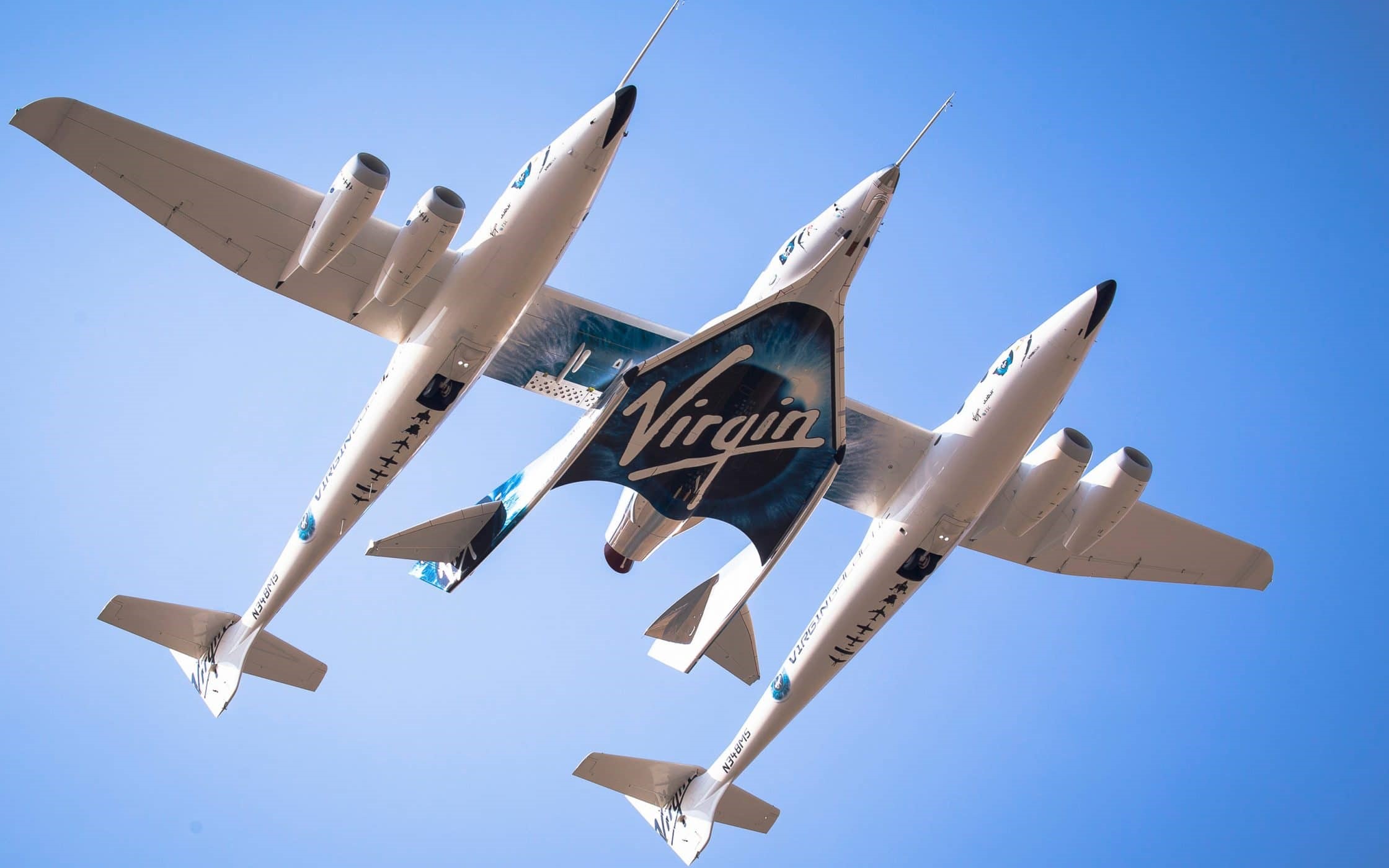
(VikingBank Space Travel aircraft, photo credit: InceptiveMind)
Similar to Virgin Galactic, there are also two space companies invested and built by billionaires: Blue Origin (Blue Origin) and Space Exploration (SpaceX). Of course, neither of these companies are listed companies yet, and secondary market stock investors are still unable to participate. Blue Origins is funded entirely by Bezos, the founder of Amazon. The company has developed a recyclable rocket for space tourists. The founder of space exploration company SpaceX is PayPal, Elon Musk, the founder of Tesla Motors. The company's Falcon rocket has been successfully launched 100 times and successfully recycled many times. SpaceX is currently planning to use its huge starship rocket as a means of transportation from Earth to Mars, a point-to-point space trip. Virgin Galactic has also received an investment from Boeing in a joint venture to study whether it can mature its space tourism technology and build rockets capable of point-to-point high-speed travel. SpaceX has become America's most active rocket launch vehicle, greatly reducing the cost of launching satellites, while also proving that it can reuse the most valuable part of the rocket by landing boosters. SpaceX has also been researching and producing the Dragon spacecraft capsule, and has successfully begun launching astronauts to the International Space Station for use by NASA.
Although “Blue Origin” has yet to begin manned space flight, the company has applied what it has learned from space tourism programs to various ambitious space flight projects: developing powerful yet reusable rocket engines, building large new rockets, and using lunar lander to fly cargo and people to the moon for use by NASA. Lockheed Martin has also joined Blue Origin's lunar landing program and has been building Orion capsules for NASA's deep space missions. NASA has promised to buy six Orion spacecraft from Lockheed Martin for at least $4.6 billion, and the agency is likely to invest more in the future.
Boeing, like SpaceX, is developing a space capsule to take NASA astronauts to the space station. Boeing will receive $4.2 billion from NASA to build a spaceship called the Starliner (Starliner) to end America's dependence on flying with Russia to get people into orbit. In addition, Boeing is also the main contractor for NASA's Space Launch System (SLS), a giant rocket designed to send astronauts to places such as the Moon. But SLS is a few years behind, with development budgets exceeding billions of dollars, and a recent White House budget document indicates that each launch will cost more than $200 million. Finally, it is worth mentioning NanoRacks, an unlisted private company dedicated to studying various human space opportunities from Earth to space stations. NanoRacks also has a wide range of customers, from NASA to the European Space Agency to many private US companies.
II. Space satellite launch
The global space industry is in the midst of extensive transformation. Over the past ten years, many young companies have begun to participate in space satellite research, production, and launch services. Wall Street's consensus is that space will develop into an economy worth trillions of dollars over the next 10 to 20 years. Aerojet Rocketdyne (Aerojet Rocketdyne) focuses on propulsion systems for various rockets and spacecraft. The company's stock performed steadily, growing more than 25% due to continued growth in rocket engine sales. In 2018, value investing guru Mario Gabelli (Mario Gabelli) identified Airjet Rocket Motor Company as one of his top stocks and noted that CEO Eileen Drake (Eileen Drake) “did an excellent job running this company.” But last year, the Airjet Rocket Engine Company lost to Blue Origin when bidding for the AR1 engine for the Allied Launch Alliance's new Vulcan rocket. Despite a missed opportunity, Airjet Rocket Engine's latest quarterly report shows that 2019-2020 was another year of sales growth.
Northrop Grumman (Northrop Grumman) is another company in the space satellite launch business. They acquired Orbital ATK, one of the top suppliers of solid rocket engines last year, and renamed the company Northrop Grumman Innovation Systems (Northrop Grumman Innovation Systems). In addition to manufacturing spacecraft to transport spacecraft to the International Space Station, Northrop's space division is also developing Omega rockets to secure a number of competitive US Air Force launch contracts. The Joint Launch Alliance (ULA) is a joint venture owned by Boeing and Lockheed Martin. ULA was the sole provider of US Air Force launches for several years before SpaceX became the challenger. Of course, for many large manufacturing companies, the current scale of the space business is still relatively small, so in quarterly reports, several companies either do not divide the space into an independent business unit or include it in their aerospace business. These companies include Honeywell, Thunder, L3 Technologies, Bauer Aerospace, and more. It can be said that there are relatively few companies focusing on the space business, and this is also a development space for SpaceX and Blue Origin.
Sierra Nevada (SNC) is another private space industry company not to be overlooked. Space is only one part of SNC, but the company is steadily growing its space business, and its reusable cargo spacecraft “Dream Chaser” (Dream Chaser) is one of the most notable tools for launching satellites into orbit. Among other private rocket manufacturers, the most important is Rocket Lab (Rocket Lab), which makes and launches small rockets into specific orbits, and has successfully carried out 9 launches. Then there's Virgin Orbit, a spin-off of Branson's Virgin Galactic, which will try to launch the first rocket and use a modified Boeing 747 jet as its mobile launch pad. Finally, investors should focus on both Firefly Aerospace and Relativity Space (Relativity Space) — the former is only a few months away from its first launch, while the latter is using ambitious 3D printing methods to transform the rocket's manufacturing process.

(Sierra Nevada Dream Seeker spacecraft, photo credit: SNC)
III. Invest in satellite communications
Satellite communications have a wide range of businesses, from manufacturers to broadband video providers to operators and terrestrial systems companies. However, for investors who now want to invest in the space industry, satellite communications provide the largest number of listed companies' targets to watch. The largest by market value is DISH Network, which owns and operates a range of broadcast satellites. DISH used to provide services through EchoStar. Now EchoStar has independently emerged as a company listed on the NASDAQ exchange. In addition to radio and television, it also provides a variety of communication services.
Other companies in the satellite communications sector include ViaSat, Intelsat, and Loral Space Communications. They are all dedicated to providing broadband services, including the internet, through broadband satellites, which operate in fixed locations but far from Earth to cover as much area as possible. ViaSat-1, for example, is a 7-ton satellite that covers most of North America. Iridium Communications (Iridium Communications) and Globalstar (Globalstar) both provide various satellite phones and other mobile communication services. Iridium is often regarded as one of the turning points of the space industry, as the company went bankrupt ten years ago, then recovered, and completed its $3 billion Iridium NEXT satellite network last year.
More and more satellite companies want to provide IoT or IoT, communications services, and ORB Communications (ORBCOMM) positions itself as one of the leading providers in this segment. Gilat Satellite Networks (Gilat Satellite Networks) is headquartered in Israel but traded on NASDAQ and focuses on mobile and relatively small antenna ground station services. Other than that, the smallest is Global Eagle Entertainment, which provides entertainment and internet services to airlines. Although the stock once rose above $10, the stock price has plummeted since 2014. Among the world's largest telecommunications companies and traditional American telecommunications companies, the American Telegraph and Telephone Company (AT&T) and Comcast (Comcast) all use satellites as part of broadcast distribution. Sirius XM Broadcasters also operates a range of satellites to provide its radio broadcast services.
Currently, new competition has also emerged in the field of satellite communications, and some companies are building extensive networks composed of hundreds or even thousands of small satellites to provide high-speed Internet access. A set of satellites is commonly referred to as a “constellation,” but the plans of SpaceX, OneWeb, Telesat, etc. all launch such tens of thousands of satellites and are therefore called “giant constellations.” Amazon's recently launched Internet satellite program “Project Kuiper” (Project Kuiper) is a way investors can bet on these superconstellations. The Cooper project will put 3,236 satellites into orbit, and the company is already building facilities on the ground through its new Amazon Cloud Services ground station division.
OneWeb is one of the early companies to pursue the Internet constellation, as the company plans to launch 650 satellites into orbit over the next two years. Since its inception in 2012, OneWeb has raised $3.4 billion, with investors including Japan's SoftBank Group, Mexican conglomerate Grupo Salinas, Qualcomm, the Rwandan government, Virgin Group, Coca Cola, Airbus, Intelsat, EchoStar-owned Hughes Communications, and Bharti Enterprises, a major Indian company. According to PitchBook, in Intelsat's failed takeover attempt, OneWeb was valued at $14 billion in June 2017.
Perhaps the most ambitious internet constellation launch plan is SpaceX's Starlink (Starlink). Musk's company has been steadily launching satellites this year. Starlink will include up to 30,000 satellites when completed. Company president Gwynne Shotwell recently claimed that her company's network is far ahead of OneWeb, and she said, “Each of our satellites has a much larger capacity than our competitors.” Starting in May, SpaceX launched 60 to 12 Starlink satellites almost every month.

(Starlink Program's Global Coverage Network, Photo Credit: SpaceX)
IV. Space images and data analysis
The fourth subcategory of the space industry, the imaging and data analysis category, has the smallest total market capitalization. But due to private investment over the past decade, the imaging and data analysis category is likely to grow the fastest in the next few years. Maxar Technologies (Maxar Technologies), which is listed on the New York Stock Exchange, is a company that specializes in space data analysis. Since acquiring DigitalGlobe (DigitalGlobe) in 2017, Marcosda Technology has operated what is known as the “world's most advanced” imaging satellite constellation.
Space Angels (Space Angels), a small company based in New York, is also a company in the field of space image analysis. Many investors see potential for companies using the new geospatial imagery, which they describe as “satellites that spatially provide information about the world around us, so we know where things are and where they move.” Today's geospatial imagery can be compared to the development of the Global Positioning System (GPS) in the late 1970s. Just like when GPS was introduced back then, a number of consumer app companies, including map navigation company Garmin, were very popular. Future space geospatial images can become an underlying data tool for a new generation of consumer goods application companies.
In addition to these listed companies, there are also unlisted companies that focus on different areas of image and data analysis. Bessemer Venture Capital Fund (Bessemer) selected Spire Global (Spire Global), Planet Labs (Planet Labs), and Orbital Insight (Orbital Insight) as three “venture capital support companies” that are likely to go public soon. Antenna Global and Planetary Laboratories each operate small satellite constellations. The former collects data on weather and other data, while the latter collects conventional images of the Earth's surface. According to data from the venture capital fund industry, Planet Labs was valued at US$2.2 billion in August 2017, while Antenna Global was valued at US$345 million when financing in November 2017. Over the past ten years, space industry-related companies have received a total of 24.6 billion US dollars in private capital, and a total of 509 companies have received investment. 2019 set a new record for annual space investment. Private investment reached US$5 billion in 146 rounds of space financing throughout the year. Investment in space-related industries continued to accelerate in 2020. Part of the new reason is serious global climate change. Space data analysis helps manage and analyze global climate change.
5. Summary
There are plenty of investment opportunities in the space industry. Currently, there are many successful listed companies, as well as hundreds of unlisted innovative companies. They cover four industry segments: manned space travel, satellite launch, satellite communications, and space data analysis. They all have one characteristic in common: huge investment, huge risk, and huge return. As a result, the listed company sector in the space industry as a whole has extremely sharp stock price fluctuations. Investors need to do a good job of risk management and position control when participating in space sector investments. Of course, hardware costs in the space industry have dropped dramatically in recent years, and software development is also extremely rapid, so the industry's profit margin is also constantly rising. Today's space industry can be compared to the computer industry, which just began to enter the stage of commercial application in the mid-90s. Looking forward to the future, from space travel, to high-speed Starlink Internet services, to climate monitoring, the space industry should see some trillion-dollar companies with a market value.
