


A conversation with Taiko co-founder Daniel: How will the end of the zk L2 expansion dispute evolve?
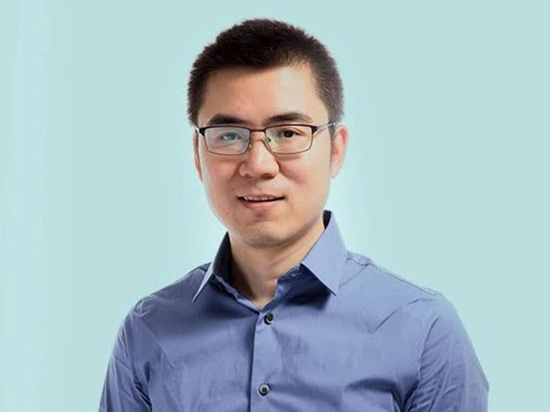
TaikoCo-Founder and CEOWang Dong谈EthereumThe end of the expansion, the development direction of L2 and its classification standards, and the impact of the Cancun upgrade on the L2 competitive landscape.
Interview and compilation:0xRJ.eth

The article was compiled from a recent interview with Wang Dong:https://youtu.be/iUqmElZyTnA?si=jN-7dovHteftxmuV
Full text overview:
Founder's Journey
The reasons behind Taiko's decentralized choice (and finding a balance between security, efficiency, and decentralization)
The impact of the Cancun upgrade on the L2 competitive landscape: pros and cons
Taiko's chance to overtake a corner
The end of Ethereum's expansion
The development direction of zk L2 track “classification standards”
Looking back on your experiences, judgments, choices, and thoughts over the years, what do you think you did the most right thing? And what's your biggest regret?
Founder's Journey
RJ: Hello everyone, I'm RJ. Today, I am very happy to invite Daniel, the founder and CEO of Taiko, an Ethereum layer-2 scaling network based on zero-knowledge proofs.Let's have a conversation about the end of Ethereum's expansion, the competitive landscape of the Layer 2 circuit, and the direction of development.
Daniel is a former senior Google engineer and former senior R&D director at JD. He is also Ethereum's earliest transaction matching agreement based on ZK RollupLoopringThe founder of. I personally think that an L2 track like this should get a lot of attention in 2023, and on the eve of the major Ethereum upgrade, the Cancun upgrade, take a good look at Rollup Track OG's opinion and the thinking behind it.
Then why don't we start with this journey of your heart? I'm sure you're actually no stranger to most people in the coin industry. Everyone knows you're the founder of Loopring. But I think people probably don't understand how you came into contact with Crypto from traditional companies like Google and JD and entered this circuit, and what kind of opportunity led you to start using Loopring, and then to now start building a second-tier network that expands Ethereum's capacity based on ZK (zero knowledge) proof. What is your vision for doing these projects or public chains?
Daniel: The initial idea was that in traditional Web2 companies, big companies like Google, would accumulate enough experience and then start their own relatively large Web2 company. This is what many aspiring young people at the time wanted to do. The state at the time was “copy to China,” that is, “copy to China” something from abroad is different now; now many Americans are copying Chinese things.
At the beginning, there really wasn't much idealism. But then I chose blockchain. On the one hand, I think it was because it was a bit boring in traditional big companies. In particular, Internet companies in China are actually not entirely technology-driven. So as a technician, I think it's not very comfortable. Then there are all kinds of people's problems and all kinds of management problems, then blockchain gives people a refreshing feeling. You suddenly think that engineers can change the world. Of course, there is still a long, long way to go before changing the world, but it gave you a small sense of hope. So after being at JD for a while, I felt like the Web2 story wasn't right for me, and I came up with technology to change the world.
At the time, there wasn't much mention of the Blockchain concept. The main thing was to mention Bitcoin, and how can Bitcoin change traditional finance so that people in third world countries can have their own wallets. In fact, before I started my first blockchain company, I went to Kenya, Africa, and Nigeria, where the mobile phones used were their own wallets. Of course, they had very little money in their wallets, and then the transfer fee was very high. But they can pay via SMS, so Africa has evolved a small payment solution, even though it sounds rudimentary. However, this demand is huge, and the market is also very large.
Probably in about 14 years, when I went to Africa, I was inspired to try out this blockchain, so the first blockchain company was a Bitcoin exchange, and then at that time, I actually didn't encounter the actual underlying blockchain technology; in fact, I was doing the same thing as nowCoinbaseIt's very similar to what Binance is doing, bringing Bitcoin to the masses.
It wasn't until I started Loopring (Loopring) that I thought about whether to use blockchain technology to do some things that can be done in the traditional financial field and use blockchain to change the financial intermediary. The reason why financial workers earn so much is because the benefits in the middle are actually huge, and the fees are actually very high. So you see, big banks are very profitable; financial companies and financial management companies are all very profitable, so our entry point at the time was also to erase the middle layer through blockchain, so that end users can directly transact with each other through blockchain's trustless mechanism, etc.
Being a Taiko actually has a more ambitious goal. I think I can use it as a general platform for others to use it. This path is also about exploring step by step and slowly accumulating before I dare to think that way. Even though I have an engineer background, I was suddenly allowed to do (generic) Layer 2 without experience. This is definitely unimaginable, so it's necessary to follow the path of these years until now.
Reasons behind Taiko's decentralized choice
RJ: Taiko's CTO, another co-founder Brecht, mentioned that since he was in Loopring before, Taiko is doing this now or choosing such an expansion solution. In fact, when you were in Loopring, it evolved from a problem you faced at the time.
Daniel: When I was at Loopring, everyone actually had the idea of making an app. We were doing decentralized matchmaking at the time, and no matter how we changed our thinking, the cost was actually very high. At its peak, we might have to pay hundreds of US dollars.
Then we ask ourselves, can this really change the world? Expansion is actually an idea derived from our original idea of starting a business. When we do Loopring, we need to make a dApp, do decentralized matchmaking, and after doing it for a while, we find out that the cost is very high, then we ask ourselves if this solution can actually replace traditional exchanges. Of course, traditional exchanges have many trust issues and security issues. But it's cheap after all.
Therefore, cost is a very important factor for users to consider. It turned out that after looking at the best projects like 0X at the time, it was not that popular with many users, because people thought you were a good demo, you were a good prototype, but there was no way to actually use it to replace the existing Web 2 products at the time. So let's just try a different path from others. That is, we have this core idea. You can't completely please others; you have to dare to do things that others didn't think to do, so when we were at Loopring at the time, we said that our funds were also limited; there were very few of us, probably less than 20 people, or about a dozen people. Then we said that with a relatively small amount of money, let's just try to use zero-knowledge proofs to do an expansion, so we don't even know to what extent. At that time, we wouldn't even call it ZK Rollup, or even the term Rollup was extremely niche at the time.
It's almost online as we're doing it. I was in New York once, attending a conference organized by Consensys in Brooklyn, and Vitalik was there. Then, when I made Keynote, I said that this Loopring performed very well; in fact, people were skeptical that you came out with a Chinese team. Then put a lot of numbers on this table and talk about whether your stuff is reliable or not. Because at that point in time, it was probably 19 years or something. At that point in time, many Chinese teams went out to tell stories about me building a new chain. The performance of this chain required 1 million strokes per second, which is a huge exaggeration.
So at that time, I felt like our reputation wasn't particularly good either. The overall Chinese developer community was too exaggerated, and then too capital-driven, so at the conference at the time, I said that our performance was about a few hundred pens per second, etc. This is already much larger than Ethereum; I'd say our success was 2 cents US dollars, or 1 cent US dollars. A lot of people just listened and thought you were just trying to fool people. After speaking about this Keynote at the time, I met Vitalik at the venue, and then he was also interested in expansion and was very concerned (expansion). At that time, we thought (only realized) that the stuff we originally made was the ZK Rollup he said, but the ZK Rollup wasn't Vitalik's own idea; it was an idea from Barry WhiteHat. But no one was able to do it at the time; we were actually the first to do it, and it was a more orthodox Rollup — honestly putting the data into this one tier of the network. So this was forced out. Then I accidentally made the first ZK Rollup, but I wasn't bold enough at the time. Maybe the technology wasn't that mature at the time, and there were relatively few usable codebases, etc. Back then, Rollup was relatively simple and made a lot of trade-offs, and there were no ways to do it in many areas, including no programmability at all.
Because the challenge was so big, it wasn't that I hadn't tried it at the time, but I didn't even dare to think about it. At that point in time, there was such a process of evolution, and then before Taiko. My idea at the time was to make a social network, let more people use blockchain, and then change people's lives to some extent.
But one question to ask yourself, if we make this stuff, where do we put it? In fact, currently the best dapp platform is Ethereum, or whether it's an Ethereum layer 2 network or sidechain (but no one talks about sidechains anymore). About a year and a half less than two years ago, the only option at that time was Ethereum plus, for example, the OP that everyone was familiar with.
The Optimistic Rollup chains are actually quite centralized, so decentralized networks are not suitable for social networks because they are resistant to censorship. There's no way to implement it on those few sidechains or L2, so later we wanted to say either keep making such an application and then wait all the time. After a few years, L2 decentralization was better and safer, and our app was launched. The other one is that we simply went the extra mile. After all, we've done Loopring and have some experience with Rollup, so why should we try to do a generic L2, so that's why doing a generic L2 to do Rollup is actually a by-product, or there's no way to do it, and then we get to this point.
Actually, it's fun to make an app. After making an app, your community will use it, share images, and videos. It's very comfortable to use as a user myself, but doing infrastructure is actually quite boring. Telling the story, of course, you can say how many users I will host in the future, but when I use it on a daily basis, I won't use that chain to make transfers every day. so
My biggest interest is actually making social apps, but now I think now that I'm following the L2 generic L2 path, I think it's also great; at least it can let others do all kinds of apps on it.
RJ: I actually think this is really interesting. This is equivalent to because you started out as an agreement/dApp. From a developer's point of view, the bottlenecks, difficulties, and needs you have encountered actually represent the real needs of this market. In fact, this explains why Taiko chose to be completely decentralized from the beginning; it was completely decentralized on the part of the proposer.I think this part of the journey I'm talking to you about today made me better understand why Taiko is so persistent.
Daniel: Yes, the degree of decentralization requirements of an app varies depending on the characteristics of the app and its positioning. That is, if you just make an app that doesn't have censorship-resistant features or requirements, you won't actually put forward such requirements. Social networks have this demand, so they are forcing us to do it. But there's actually another reason: I don't believe an L2 can do it. Centralization did a great job, and then immediately turned it into a decentralized one. There are two paths you can take. The first path is decentralization to begin with, then slowly improve performance. The second path starts with centralization, the performance is very good, and then slowly decentralize. I think the first route is actually relatively easy to follow. I can't say it's very easy; it's relatively easy to walk around. The second path is equivalent to Alibaba Cloud being very powerful now, and then immediately decentralizing it. This is extremely difficult. Because he was involved in potentially more changes to the underlying layer, we said at the time that even if the performance is not as good as others, we must do it. It can actually be decentralized. At least from the perspective of the design of the agreement, it is completely acceptable to be decentralized.
However, in reality, there is a question mark about whether it will be (completely) decentralized on the first day after the launch. After all, no matter how you say, the priority of users' asset security is far higher than the degree of decentralization. Therefore, we still need to ensure careful decentralization on the premise that the codebase is relatively large, because decentralization is equivalent to removing control over one's responsibilities and capabilities, but if a hacker incident occurs, “I can't do anything” is not a good explanation that the community can accept. I think as a user, I won't accept it.
I'd rather say that if you control first and then there's a hacker attack, you can recover my assets, then slowly you relinquish your rights. However, in the process of abandonment, the network infrastructure did not need major changes, because it (network infrastructure) originally supported (decentralization). I'm just saying we need to slowly configure it to give up centralized control altogether. So I don't think Taiko will be completely decentralized in the beginning after it goes online, because the assets are safe and the risk is too high for users.
RJ: It is equivalent to finding a balance between overall security, efficiency, and decentralization, and adjusting (and maximizing) the degree of (decentralization) from different dimensions. For example (first, the overall mechanism design supports complete decentralization; the speed of subsequent decentralization is more of an option. (After balancing these three), Taiko was able to achieve maximum decentralization in the early stages — that is, in terms of setting up a proposer mechanism. As far as I know, Taiko is probably the first and currently the only L2 company in the proposer area, which is fully decentralized from the beginning of Day 1 until now. (Essentially because the place where it was built is designed for complete decentralization)
Daniel: We're also exploring, but it's actually hard to use a more quantitative indicator to say how many dencentralized networks you have. You see, Ethereum's miners are also very centralized now, just like Lido's mining pool, which actually controls more validator resources or affects validator resources, so it's hard for us to say who is more decentralized than who. But I think we're allowing a greater degree of decentralization. Let's say there are more people willing to participate in Taiko's block or prove that they are permissionless in the first place, that is, he can join without our permission, but as for whether they have a competitive relationship or a cooperative relationship, it's actually difficult to control at the blockchain protocol layer, but if 100 provers want to compete with each other rather than cooperate, then this agreement allows you to compete. Then make the cost lower and lower, of course, maybe better. A complementary design to this agreement can motivate different provers to compete rather than not cooperate. We haven't found such a solution yet, but generally speaking, as long as you are permissionless, you can allow this possibility of decentralization, and then the second step is how to strengthen this kind of decentralization. Through incentives, it is best if neither of you cooperate, but instead make more money. Well, whether this can become a reality is a question mark; I still don't really know (at the moment).
On the Proposer side, we're probably the only base rollup right now. In fact, it's unlikely we'll end up with a professional Taiko proposer. Instead, L1 miner validators work part-time to make L2 proposals. In this way, they make more money and the whole solution relies on Ethereum to the greatest extent, so we don't need to reinvent the wheel, does Taiko also have a pool like a validator, so there's no need for MEV solutions like this. Because of this money-making opportunity, in fact, the L1 validator is currently talking about how to do MEV in L2, so we just told the L1 validator that the MEV opportunity in L2 is for you. As long as you do it right and then release the block in a timely manner, L2 users will benefit.
So this is about the idea. There won't be big and complete solutions; instead, they are small and beautiful, such as reusing the L1 infrastructure as much as possible, so we can walk more lightly. Otherwise, the team will also need many people, and then the probability of mistakes in a plan that is too complicated will actually be higher.
The end of Ethereum's expansion
RJ: The entire Type1 ZK-EVM design was actually a coincidence (for the team). For developers (and very friendly), including in terms of the long-term development of the entire project, I think the potential “benefits” are quite large.
Daniel: We definitely believe this; we'll wait and see what the final results are. Because from a longer-term perspective, whether Type1 is actually not that important, in the future, all L2 standards for app developers should be slowly driven. Today's L3, L4, etc. will slowly move closer to one or two standards.
For example, ZK-EVM may slowly have a standard, what kind of OP Code should be supported, what kind of state tree it has, and then ZK-VM might use a certain language. For example, Starkware's language or whatever language becomes very popular, then the underlying VM (virtual machine), which is the EVM of Ethereum, will become a competitive or complementary operating environment. So maybe one or two standards are there, and then all L2s rely on it.
The real Ethereum programming experience is no longer important in the future, because the application on Ethereum is probably Rollup, and no other application is willing to pay that high transaction fee, so Ethereum's own programming experience will slowly become the programming experience of all apps. Actually, I think that will be a change that will become more and more obvious. It's just that currently, Ethereum is not able to completely abandon its role as an app platform. Because L2 hasn't started yet, once it's up, Ethereum may make some op codes particularly expensive, and then ordinary users won't be able to use them; they can only use L2. At this point, Ethereum is probably more mature, and as an L1, its own programming experience should be a little more simplified, not that it can do anything; it's unnecessary.
RJ: You just mentioned “when the whole L2 Rollup will be up”, do you think this is probably the time?
Daniel: My own judgment will probably take 5 to 10 years. 5 years is relatively fast; it may take 10 years to replace Ethereum, or replace all other L1, and then become the default app development platform. Because zero-knowledge proof actually continues to evolve, there are no particularly satisfactory indicators in various areas or a particularly good solution.
Recently, new ideas have come out, so it has to keep changing. Moreover, the code base is also quite large, so the solution is really mature. This code has to stand the test of time, and it is a dynamic process that is constantly being optimized in the process. I don't think there was an L2 that said in three or four years; I can already prove that my security is actually exactly the same as Ethereum.
RJ: The “replacement” you just mentioned doesn't mean replacing the Ethereum chain, right? It was more replaced by the functional aspect of “hosting dApps”. However, parts such as DA (data availability) still rely on Ethereum, and security still depends on Ethereum.
Daniel: Yes, I just took the responsibility of Ethereum as an application platform for apps to L2, and then Ethereum became an L2 platform or a multi-chain secure aggregation platform. I don't know how to say this name. But generally speaking, ordinary users don't always need to go to the central bank to transfer money; they can just transfer money at a local bank or commercial bank. Currently, it will be more and more expensive for us to use (central bank) Ethereum to transfer money.
The development direction of zk L2 track “classification standards”
RJ: If you focus more on all of the ZK L2 expansion plans, you think the future of this track will end up being the same as Vitalik imagined in his article.Will all types of ZK-EVM slowly move towards one side, such as moving closer to Ethereum, or will they be distributed very evenly between Type1 and 4, or will they present the two extremes of Type1 and Type4?
Daniel: I think the so-called Type1 and Type4 actually have a reference target, which is Ethereum's current programming experience. But I think one question we might want to ask is, is this really the only target we can reference in the future? There are still many, so let's take a look at traditional non-blockchain programming. For example, if you have a Java virtual machine. Then you have native code, which are at least two completely different programming solutions. So on Ethereum, we can say that there may be some L2 in the future and they will eventually move closer and closer to this EVM. However, the EVM in L2 at that time was probably not the same as the EVM in L1. Slowly, everyone relied on this standard for this L2 EVM, so the so-called Type1 at that time was not the same as Ethereum's own programming. Then, uh, there will be another VM or multiple VMs like this. Just like Starkware's VM, and then everyone relies on that standard, so there will be multiple different standards and then they may be very different from each other.
I think in the future, from the perspective of the application layer as a platform, all L2 may have different standards. One standard is the evolution of EVM, and now ZK-EVM will slowly converge to a certain standard between Type1 and Type2, for example, but it will also differ to a certain extent compared to Ethereum's EVM.
As an example, this blob transaction is in the future, after this Hard Folk, this blob will have this op code on Ethereum, that is, you can use this blob. But you can't use this in L2, so this would break the definition of so-called Type1. Other engineers and teams are also studying this type of ZK-VM, including Starkware's ZK-VM, which may slowly converge to one or two different standards.
When there are more developers, there are probably more standards. Because different people have different preferences for different programming languages and programming models, everyone on Ethereum is currently interested in Solidity, which is relatively simple and easy to use.
However, in the future, I think not one or two standards may be more, some may be more popular, and some may be less popular, so the app programming experience will also be very different. For example, some apps may be in the financial field, and those may use a safer language to write this financial app.
Then some might need more performance, especially optimizing its computational volume, etc. So the language it uses is probably more like C++ or a language like RUST, and it has better performance. But it's more cumbersome and more flexible to program, so this standard may slowly be established in the future, but now it's time for us to discuss this standard. The only standard we have now is Vitalik said from Type1 to Type4, but this standard still has limitations because the standard that his target refers to is Ethereum.
RJ: Vitalik's (standard) assumption is that Ethereum is immutable, and that Ethereum's own programming aspects may be further adjusted, or that its own (Ethereum) positioning may also be further adjusted.
Daniel: Ethereum also has many plans for future upgrades. Verkle Tree and this Purge, Splurge (names of different stages in the Ethereum roadmap), etc., will have some impact. Also, consider that Ethereum now has a so-called Consensus Layer (Consensus Layer) and Execution Layer (Execution Layer). His standard is actually a collection of these two different layers. However, L2 doesn't have these two layers; it only has Ethereum's execution layer as our base layer, and then it also has its own (execution layer). It actually has two execution layers, one of which is the base layer and the other is L2. As a result, the structure of the entire network is a bit different. It's hard to describe your comprehensive L2 programming experience. Being able to become exactly like Ethereum is next to impossible in the future.
The impact of the Cancun upgrade on the L2 competitive landscape: pros and cons
RJ: I mentioned this blob -- next, a very core underlying change in the Cancun upgrade, just so we can talk about this in detail, because I think the Cancun upgrade can be said to be the biggest and probably the most noteworthy Ethereum upgrade right now. At the same time, this upgrade will undoubtedly directly benefit all Layer 2 and the entire L2 track, so do you think the Cancun upgrade will have an impact on the current pattern of the entire Layer 2 circuit, and be more specific, like the blob you just mentioned What impact will the design have on the overall L2?
Daniel: The core concept of Rollup is that you throw data into your L2 transactions onto L1, and then this is called Data Availability data availability. In other words, with this data, you can recreate the state of a world at any point in time in L2. So this DA is data availability, which is very important for Rollup. However, currently data on Ethereum is quite expensive, which is why even though your Rollup calculation is not on Ethereum, the cost of L2 cannot be reduced because the data is so expensive.
Since Ethereum needs to use Rollup as a central point for expansion, it says I want to solve the problem that data is too expensive, so this blob actually turns data into another kind of data market. Its price and the price of the Ethereum Op Code will become two separate parts. If you have enough hard drives and are willing to store the data, then slowly Ethereum's data will get cheaper. This is a core concept. So it's beneficial to the entire Rollup ecosystem. No matter what kind of Rollup, as long as it can be transformed into something that doesn't look at the specific content in the data, then it can become cheaper.
But some Rollups don't work. For example, Loopring's Rollup is designed when your data is on the chain
In L1, I want to check what kind of data there is something in this data, so there's no way for a Rollup like this to be transformed into data that can use blobs. Well, when Taiko was designed, I assumed that this data didn't read the data at all; I only needed to know its hash or its promises.
Well, this also has a question mark for other L2 chains. Now that these Rollups have been launched on the main network or test network, they need to look at the content of the data in the L1 contract when designing. If they have this assumption (after the blob is deployed) then it's more difficult for them to redesign the protocol and then write the code again.
We already included this assumption when designing it, so for us, this blob is very important and very friendly to the protocol. I believe generic L2 will be compatible with this blob data in the future, otherwise there is no way it can be adopted on a large scale. Now because the Blob EIP-4844 thing hasn't been launched and hasn't been in operation for a period of time, we don't know how cheap this Ethereum L1 data can be, or whether this design allows it to compete with other chains that specialize in data, and even outperform it.
Currently, there are a lot of chains: I don't do anything; I only do data usability. But in fact, from the perspective of a hardware provider, for example, I have many hard drives, so I'm willing to use this hard drive to use this data, right? I use Ethereum L1 and other chains; which one should be cheaper? So if Ethereum says it can be cheaper, then there's no need for people to use other (modular) chains for data usability. But at the moment, this is a question mark; I don't know. We don't know how many times cheaper Ethereum can be compared to other chains, that is, how many times cheaper than its current data cost is now a question mark, because after all, it's a separate market.
It has a supply and demand relationship, that is, the more people you use, the more expensive it is, and the fewer people you use, the cheaper it is, so in reality, everyone is quite optimistic. However, it is also more careful to say that it can be 10 to 50 times cheaper, about the same, but if you want to say that it is 1,000 times cheaper or even that the cost of this data can be ignored, this seems too optimistic.
I think this blob may be further modified by EIP in the future to make it cheaper, but there is no initial data yet. In fact, Ethereum is also unlikely to state that this is the best design, so let's wait and see. Everyone will use it when it goes live at the end of this year or the beginning of next year, and it will probably take a long time. For example, it will take a year and a half to know how cheap this thing really is. But overall, this is a huge benefit. This is a feature we've all been looking forward to in L2 for a long time, and without it (Proto-dankSharding), we at Taiko don't really want to go online because it's too expensive.
Taiko's chance to overtake a corner
RJ: Actually, this explanation also partially explains whyTaiko is currently expected to launch in the first half of next year.After all, the market, especially this year, everyone is saying that this L2 track is about to explode; most L2 projects will actually launch on the main network just in time for Q3 Q4 this year.
Daniel: One advantage of going online after EIP-4844 is that you will support this EIP-4844 faster. Because once you go online to the main network and then change wheels while running in the car in the future, it will take longer (required to support EIP-4844). If our initial preparations are good, we can test all of these on the testnet and then go online. In fact, maybe Taiko will become the first project to use EIP-4844 on the main network, then we aim to become such a project.
But timing isn't the most important either, because it's even more important to provide developers with an overall programming experience that is very easy to use. There's really no need to be the first one or the fastest.
RJ: Mainly, it depends on whether the first-mover advantage brought about by this “preemption” is sustainable. If there is such a larger racetrack thing, it is likely that the entire track will be reshuffled somewhat in this (major trend) dimension, then I think this is probably a very good chance to overtake corners for projects that don't have such an early launch on the main network.
Daniel: Yes, so underneath these major changes, there will be more opportunities like this. If Ethereum itself is fully mature, there are actually fewer opportunities for new projects. There have been changes in Ethereum, but it will be easier for new projects to seize some of these opportunities.
Review and outlook
RJ: If you look back at your experiences, judgments, choices, and thoughts over the years, what do you think you did the most right thing? And what's the most regrettable thing?
Daniel: I'm still a long-term blockchain believer. I don't follow the flow and do many short-term things, so it's important to think more and then try to avoid the effects of some noise. Because everyone's energy is limited, there are all kinds of interesting stories in the blockchain world. Whether you are seeking to maximize short-term profits or pursue some interesting operational projects, you can become a completely different kind of person in the blockchain.
I'm still technology-driven and want to do something, so being able to focus and stay away from temptations is very important. For example, I don't play DeFi very much, and I never play leverage. If I get stuck in it, it's actually hard to quit myself, and it's hard to pursue a long-term mindset, so I think this is the right place for me to do it.
The bad part is that it will also take some detours. There probably aren't many that are too obvious to be done well. I think I'm still lucky to make some choices. For example, I'm more optimistic about Ethereum, and many people also doubt my insistence a few years ago, saying that Ethereum is slow, and another chain is better. I'll try to convince them why Ethereum is good and why I'm more optimistic, so maybe it's actually just luck to some extent.
RJ: If you were to give it another chance to go back in time, you'd make some adjustments and different choices.
Daniel: I haven't stopped working on blockchain until now. I stopped for a year in about 17 or 16, and the market was also very bad, then I went back to Web2. So if you want to say that a person claims to be a blockchain believer and never doubted that, because people still have to surrender to this reality, when you have the pressure of real life, and then when you don't find an opportunity in the blockchain field, you will still return to a life to support your family, so I'm also a relatively realistic person. Of course, if I insisted at that time, it was probably a different situation, but life couldn't always choose (compare) all the best paths, because there were no options, so naturally I reached this point. Then try to do every step of the way, and you'll be fine, and you won't regret it.
RJ: I actually don't think this (leaving Web3 during the period) is a “second-best”; I think it's just that the two sides switch (in and out of the circle) for various realistic reasons, and then it will make you more aware of what you want. And it'll make you think better.
Daniel: Yes. From this perspective, I would also say to the people on my team that they actually have realistic needs. I can't sell the perfect ideal to them, and then say you want to be an idealist. In fact, we always try to do some things that we think will contribute to society or the industry in the future on the basis of being satisfied with reality. Even if everyone only does a little, I think that's good enough. If you're completely peddling ideals, then it's actually not that different from a scammer.
Moreover, many times, there is no way to sell these ideals; they can only influence them indirectly and subtly influence them.
I especially want people on our team to stick to ideals more, and then be able to do something like we're completely open source now, and never had any private code. This is one of our team's positions. I think I'm quite proud. Everyone is willing to contribute in this way, not that I'm applying for a patent, what copyright protection, etc. I think Taiko is doing a good job at the moment.
RJ: Thank you so much for your time today and for all these valuable shares. We look forward to talking about track-related content in more detail next time.
Daniel: OK OK. Thanks RJ!
