


SBF's Prison Conversation: Living with a Murderer Convinced in Innocent Rice as Currency
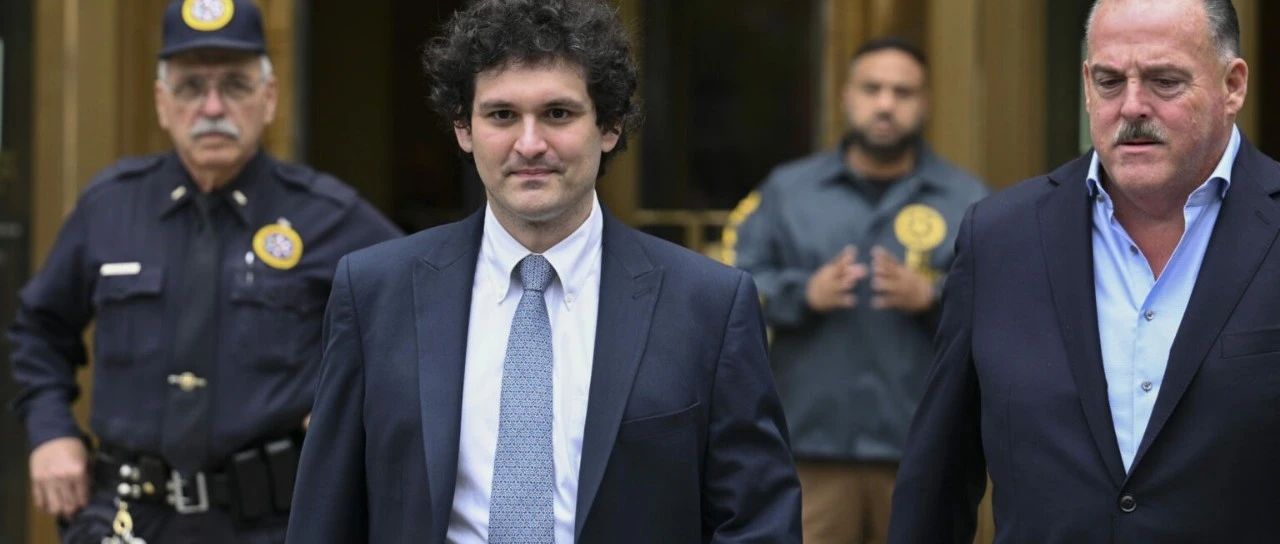
authorship | WILLIAM D. COHAN, PUCK
compiling | Neko brother
Link to the original text:
https://puck.news/exclusive-prison-chat-with-sam-bankman-fried/
On Tuesday afternoon, I found myself in a very unusual situation — sitting at the federal penitentiary, the Metropolitan Detention Center (MDC) on 29th Street in Sunset Park, Brooklyn, in a cramped plastic chair and a crowded table. Outside, the weather was beautiful, and the picture-like, slightly humid weather inevitably reminds long-time New Yorkers of the morning of September 11th. However, the prison's visitation room had no natural light, no sunlight, only the Hitchcock hum of fluorescent lights and the three vending machines in the corner. The posters on the wall attempted to make up for the gloomy atmosphere by cheerfully welcoming visiting families.
The first time I sawSam Bankman-FriedIt was in December 2021, when his power and influence peaked, when he was the richest person under 30 in the world. My friend Anthony Scaramucci, aka The Mooch, connects us. I interviewed him on a cold winter night at the One Hotel on 6th Avenue when I was working on a documentary about Bitcoin and its developer, Satoshi Nakamoto. Sam showed up wearing a black t-shirt and cargo shorts, apparently just flew in a private jet from the Bahamas and an hour late. Sam's cryptocurrency exchange a month laterFTXFrom a group of high-end investors — including SoftBank, Temasek andParadigmLeading the investment raised $400 million in its final round of funding, bringing the company's valuation to $32 billion, making it one of the most valuable companies in the industry. At that moment, Sam's worth is said to have reached $26 billion.
This week, we reconnected in a very different setting. Sam and I arranged this visit through his Corrlinks email account, on the advice of his mother, Barbara Fried, and the family's prison adviser. We'll meet on Tuesday at 1 p.m., because that's the only time MDC allows visits, a legacy of the COVID-19 era. Prisoners can receive visitors in one of two time periods, either at noon or at 5 p.m.
Due to a shortage of staff in the facility, we met later than noon. I was allowed to bring in $1 or $5 bills totaling less than $30 in case I wanted to buy Sam some water, soft drinks, or snacks from the buzzing vending machine. I was told to put my $20 bill, wallet, and iPhone in a locker. Sam himself is not allowed to buy anything.
After about an hour of bureaucratic mistakes (I went to the wrong building at the beginning, and I wasn't wearing dark pants — despite the exception for me) and other forms of prison treatment (taking off my shoes and belt, going through a metal detector, putting my hands in the scanner), I was finally allowed to go to jail and couldn't carry my phone, watch, recording device, or even paper or pencil. (Of course, I knew this beforehand, and as soon as I left the facility, I immediately began to keep memories of our conversations.)
After a few minutes of waiting, I looked up to see Sam Bankman-Fried, standing in a corner wearing a chocolate brown prison jumpsuit, still his signature fluffy curls. Today Sam looks a lot thinner than when we last met — at least 25 pounds. But honestly, he looks better and healthier than I thought — less round, less fanatical, less restless, and has no dark circles right now.
He said he made his living from rice and beans because the prison food was unsurprisingly difficult to eat, especially the vegetarian main dish he was served, which even his fellow inmates felt smelled like poop. He's not complaining, just pointing out that he's trying to do his best in a bad situation. The rice he bought at the prison kiosk has become a currency within MDC. We joked briefly that the arbitrage opportunities in prison were better than anything he experienced when trading cryptocurrencies at Jane Street Capital or trading assets at Alameda. He looks me in the eye almost all the time, something he rarely did to people in the past.
After we shook hands, he sat in his plastic chair with a camera on the ceiling watching us. We are surrounded by several similarly dressed inmates facing their visitors.Sam initially declined my offer to buy snacks, but eventually agreed to buy a $4 bottle of water and a $2 packet of Wheat Thins cookies, which he couldn't wait to eat.
The next 75 minutes or so was the first time he was interviewed by reporters since he was imprisoned at MDC in August of last year and was later convicted of two counts of wire fraud, conspiracy to commit wire transfer fraud, and securities fraud. In March of this year, he was sentenced to 25 years in prison. The conversation under these rather extreme circumstances was a profoundly shocking and fascinating experience.
Prison Diary
Sam first answered my questions about his life in prison. According to him, he lives in an area of the prison where mainly female inmates are held, except for him and 35 other men sharing dormitory-style living in a large open room — bunk beds, no privacy, extreme boredom, four televisions, and access to ESPN, Telemundo, BET, and a news channel. Sam said he could try to persuade other inmates to change channel choices, but TV was boring to him, so he wasn't interested in the challenge. He preferred to watch a few movies or play some secondary video games on his tablet without an internet connection, which the prison offered him and other inmates.
When I told him he looked better than I expected, he replied that he had become good at disguising. So yeah, life in MDC isn't the Bahamas. But in reality, I thought I'd see him cope less well. At MDC, Sam has been allowed to use his prescriptions for most of the time, and he said the mix of medications he was allowed to use made him think clearly and energized his plans to fight the ruling in the near future.
At the same time, he told me he wasn't worried about his safety. He can take a bath several times a week and use the bathroom in peace. He hasn't been sleeping well, and he still hasn't slept very much at MDC, but mostly because sometimes people bother him at night and want the bags of rice they plan to trade.He was not touched or abused, for which he was particularly grateful.
He admits that his case back at MDC is unique, and his inmates did recognize him. He estimated that about half of the 35 other men in his unit were murderers who were turned into cooperating witnesses for the prosecution in exchange for not having to serve a life sentence. In prison, many inmates consider cooperative witnesses to be the least harmful, or even lower than paedophiles.Sam also told me that some other inmates tried to get close to him and thought being close to the former billionaire would benefit them financially. He said he didn't cooperate.
We didn't discuss his trial strategy, or whether he deliberately transferred FTX clients' $8 billion funds to Alameda. At this point, both topics seem irrelevant. We discussed his previous girlfriend, Caroline Ellison, who chose her to manage Alameda because lawyers have been tangling with the inherent conflict between him managing FTX and hedge funds. (He chose to manage FTX) He admitted that he had asked several other people if they were interested in the position, but they all declined. He said Ellison is a person who is good at management and administration, but she doesn't like to make big investments or take risks. (Obviously, to a hedge fund manager, this might seem like an odd disgust, but I haven't gotten too bogged down on this.) Either way, Alameda ended up doing both.
He regrets not having tried harder to find another executive. He also said that he should have ignored his lawyer's advice and continued to manage FTX and Alameda at the same time, regardless of the conflict, a bit like Elon Musk overseeing his various companies. Ignoring the lawyer's advice was a topic for Sam during our visit.
legal treatment
We did discuss his appeal in detail and how he thought he was set as a scapegoat — a victim of a narrative arc that was built and then destroyed. His case theory is that by fall 2022, everyone is fighting on their own on what appears to be a sinking ship. By early November 2022, FTX faced a liquidity crisis. Sam first sought an agreement with Binance, which quickly broke down or never actually worked, and in an attempt to raise billions of dollars, his lawyers suggested that he hand over the FTX keys to John J. Ray III, and Sam did the same. Ray soon filed for bankruptcy for FTX and appointed Sullivan & Cromwell, the company's external counsel, as attorneys for the debtors.
Sam told me that on November 9, 2022, a day or two before the bankruptcy filing, Sullivan & Cromwell's external advisors showed them what they thought Sam might have planned between FTX and Alameda, he was targeted by federal prosecutors, which was described as stealing $8 billion of customer funds. S&C attorney Andrew Dietderich said in an affidavit about that meeting that he only reported to the US Department of Justice the issues FTX US General Counsel Ryne Miller told him about “reconciling digital assets and rights,” and did not mention Sam and his alleged violations.
Sam told me that had it not been for Sullivan & Cromwell and his personal attorney to relinquish his C.E.O. position to Ray, the company wouldn't have filed for bankruptcy and would still be a booming business worth $80 billion. In this alternate reality, he would be worth $40 billion, and of course he wouldn't be in MDC. (S&C declined to comment on Sam's case theory. (It should also be repeated here that Sam was sentenced to 25 years in prison after being convicted by a jury on these charges.)
I have a clear sense that Sam still doesn't think he has committed any crime, except that he is responsible for putting FTX in a position vulnerable to bank overcrowding and competitors' craftsmanship, just like the failure of Bearsden and Lehman Brothers in 2008. Sam couldn't help but ask why was Bearsden and Lehman Brothers being prosecuted when none of them faced criminal charges? In our conversation, Sam showed remorse and was clearly punished, but he didn't really apologize: he insisted that he was innocent, except for some negligence — which, in his opinion, could be punishable by civil consequences rather than criminal penalties and a quarter-century sentence.
According to Sam's theory, the reason he went to jail wasn't for mixing FTX and Alameda's assets. Instead, he was an innocent man with no chance to negotiate an agreement with federal prosecutors, and he wanted to know why he was being sued for what he thought was a form of bank crowding. Instead, they just showed him his indictment and told him it was acceptable — accept and plead guilty and then be sentenced, or go to trial and try to fight. Since there was no plea agreement on the table, he said he contested the charges during the trial and failed. Unlike his fellow inmates, he told me that Sam would talk to his new attorney for about an hour almost every weekday, as the focus of his appeal became clear. He expects to file an appeal this fall. Yes, he will appeal, but most people think his chances of success are slim.
On the day of my visit, Sullivan & Cromwell was still legal counsel to the debtor in the FTX bankruptcy case, and they submitted the first draft of a restructuring plan that seemed to allow their clients and creditors to return the full amount of funds, and even more—$15 billion for the $12 billion claim—in large part because of Sam's investments through Alameda. The plan still has a long way to go before it is confirmed, and Sullivan & Cromwell and other FTX advisors were “exempted” from future lawsuits relating to their actions in this matter. This is not unusual in restructuring plans. But Sam has detailed ideas on this subject, and I'll probably explore them with him in a later conversation.
Transfer of incarceration
I'm not sure how long Sam will be at MDC, and he himself isn't sure. He has requested to stay at least until the fall, to remain in Brooklyn when his appeal is due. But of course it's not up to him to decide. I was told that if he was transferred, this could happen at any time without warning or explanation, and he might be sent to California, closer to Palo Alto where he grew up, and his parents were both Stanford law professors. At that point, the question will be whether he will spend his years in a federal prison, mostly scary places full of hardcore criminals, or in the lowest-security prison where Mike Milken once stayed.
If he were indeed transferred out of Brooklyn, his family and legal team feared that he could spend up to four months on the bus, handcuffed to his seat, and slowly crossing the country. Prison buses like this often stop — pick up new inmates, drop off others — which explains why they take so long to reach their final destination. He is also likely to be arranged to fly on one of the many aircraft operated by the US Marshals Service (also known as “Con Air”). But they fear he's more likely to get the notorious “diesel treatment.” Either way, in this hypothetical journey across the country, Sam will completely lose touch with his family and lawyers before arriving at his new home in California, and will be denied the minimal internet and email access he currently enjoys in Brooklyn.
Just as we were preparing to discuss tough issues, such as his choices in the trial or the fact that many people who had worked for him betrayed him in order to save themselves, it was time for us to meet. This is non-negotiable. We quickly shook hands again. Sam then went back to his dorm room, and I went outside on a beautiful spring afternoon.
