
FTX · 5219
US Stock Value Investing Is Heading Into Another Trap

US Stock Value Investing Is Heading Into Another Trap

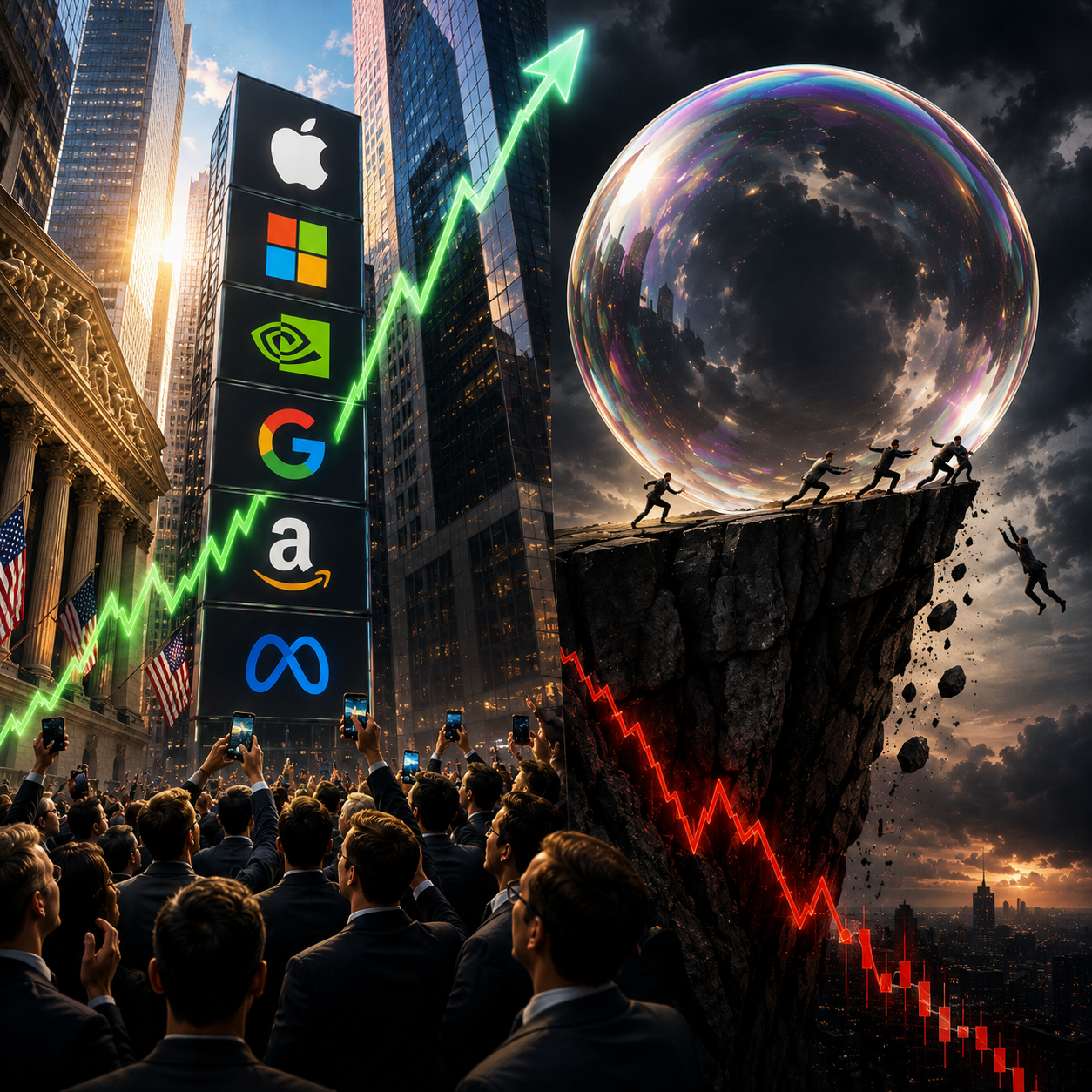
Source: Shenchao TechFlow Original title: (Opinion: Value investing in US stocks is not equal to fundamental investment) When “fundamentals are dead” becomes a consensus, investors who blindly organize giants will eventually experience astonishing capital destruction. Guide: When the market shouted “fundamentals are dead” and the capital frenzy formed a group of tech giants, the author used an astronomy discovery to unravel the logical loopholes behind this narrative. Starting from the composition of valuation multiples, this article reminds investors to distinguish between the true quality of an enterprise and the premium that the market is willing to pay. It is particularly cautionary about long-term allocation in the crypto and technology sector. I promise this introduction won't be as long as the last one on the weather. But please give me 90 seconds. More than 100 years ago, a woman named Henrietta Levitt was doing the tedious job of measuring the brightness of thousands of stars on photographic negatives (the way they were imaged before film appeared). She noticed one characteristic of a class of pulsating stars: the slower they pulsate, the brighter they themselves are. ¹ This might just seem a little interesting today, like “OK, that's pretty cool.” But at the time, astronomers couldn't tell the difference between a dark star very close to Earth and a very bright star far away. For them, the two left the same stain on the photographic film. Visual brightness is a messy mix of these two variables: how bright the thing itself is, and how far away it is from us. Henrietta's work decouples these two things: if you can observe the rate of pulsation, you can know its true luminosity; if you know its true luminosity, you can reverse the distance based on how dark it looks. Astronomers call it “standard candlelight.” A few years later, a man named Edwin Hubble discovered one of these pulsating stars, applied Levitt's math, and discovered what he had always thought was a cloud of gas within our galaxy; in fact, it was an entire independent galaxy, one million light years away. So in simple terms, the observable universe has grown about a trillion times larger, just because one person has figured out how to tell the difference between what things look like and what they actually look like. That in itself is obviously pretty cool. But another interesting thing is that around the same time period, two other astronomers each independently drew a scatterplot. One axis was actual luminosity, and the other axis was temperature. They discovered that stars are not randomly distributed in this space, but rather clustered into different families. The meaning behind this is: stars with the exact same visual brightness may and do belong to a completely different family, have a completely different past, and most importantly, have a completely different future... So what is written in the star? Over the past few years, there has been much discussion about markets, narratives, capital, company building, and financial nihilism. This feeling seems to have reached a feverish climax as the tech and financial world begins to face a very different future than a few decades ago. What is particularly clear is that separating progress from asset prices has become more noisy and in many ways more repulsive. But as an investor who makes a living by buying assets that (hopefully) outperform, a simple framework is: forward returns are roughly equal to growth in fundamentals multiplied by changes in valuation multiples (and multiplied by the dividends you've collected along the way). In this case, the valuation multiplier can very cleanly correspond to the smudges on the photographic film. It's an observable data point, but it entangles two things that the market can't directly see: how good the company actually is, and how far (or how long) its future cash flow is now. I think most of the money that can be made comes from investors who are most capable of unraveling these two variables earlier than others (or “perception of differences”), and we will continue to see astonishing capital ruin for investors who treat their stains as stars. Value investing is not equal to fundamental investing. I think there is a misunderstood view: fundamental investing has historically dominated the creation of excess returns. Most of these legends come from the Graham, Buffett, and Tiger Foundation lineage, as well as numerous narratives built around this group of people. It is believed that by some point in the 2000s, this approach was no longer effective, and anyone who invested in this way was overwhelmed by momentum, trends, and “direct buying tech giants.” The conclusion was (and still is?) It's “fundamentals are dead.” ² The modern version of “fundamentals don't matter” itself isn't stupid. It's rooted in a lot of ideas that many of us on the Compound team have written before. The biggest companies get the most mechanical purchases, and the software industry has a winner-take-all economic law. AI means that giants can transform scale into moats faster than challengers, and there are also reasons why the market's microstructure embeds momentum more deeply into our market infrastructure. These are all real...
1d ago深潮TechFlow#US stocks

Coinbase CEO: Clarity bill will prevent FTX incident from happening again

In comparison, Coinbase CEO Brian Armstrong said that the US cryptocurrency Clarity Act will help prevent similar FTX crashes from happening again. Armstrong emphasized that by passing a clear regulatory framework, the Act can improve market transparency and investor protection. The Clarity Act aims to provide a clearer regulatory definition for digital assets, differentiate between securities and commodity attributes, and strengthen exchange compliance requirements. The industry generally believes that such legislation is expected to reduce systemic risks and promote the development of the crypto industry's compliance in the US.

1d ago

The US CFTC's two co-founders against FTX: Ellison and Wang have both been banned from trading for 5 years and have not sought refunds or civil fines

Comparatively, the US Commodity Futures Trading Commission (CFTC) recently disclosed that the US District Court for the Southern District of New York has issued supplementary consent orders against former Alameda Research CEO Caroline Ellison and Gary Wang, co-founder of Alameda and FTX to formally resolve the CFTC's enforcement case against the two. According to the court order, both Ellison and Wang are required to continue to cooperate with the CFTC investigation. Ellison was given a 5-year trading ban and a 10-year registration ban, and Wang was given a 5-year trading ban and an 8-year registration ban. The relevant ban period is calculated from the effective date of the initial consent order that the two previously signed on December 23, 2022. In 2022, the court found Ellison involved and was responsible for two cases of fraud alleged by the CFTC, and also found Wang responsible for one fraud charge and permanently banned the two from violating the Commodity Exchange Act and CFTC's relevant anti-fraud regulations. Notably, the CFTC is not seeking additional recovery, return of illegal proceeds, or civil fines against Ellison and Wang at this time. CFTC law enforcement said the decision was based in part on significant cooperation between the two in the investigation and related litigation, including pleading guilty in a federal criminal case and assisting in the investigation of FTX-related matters. CFTC law enforcement chief David I. Miller said that Ellison and Wang committed fraud as Alameda and FTX senior executives and were found responsible by the court, but the final penalty reflected the important assistance they provided to the CFTC investigation. Furthermore, in related criminal cases, both have pleaded guilty to multiple crimes, including conspiring to commit commodity fraud, and are jointly liable for a forfeiture order of approximately $11.02 billion. This consent order means that the CFTC's relevant enforcement actions against Ellison and Wang have officially come to an end.

1d ago
Is “Cow Lai” really here? Bitcoin skyrocketed, and $2,743 billion bears were brutally liquidated

Is “Cow Lai” really here? Bitcoin skyrocketed, and $2,743 billion bears were brutally liquidated

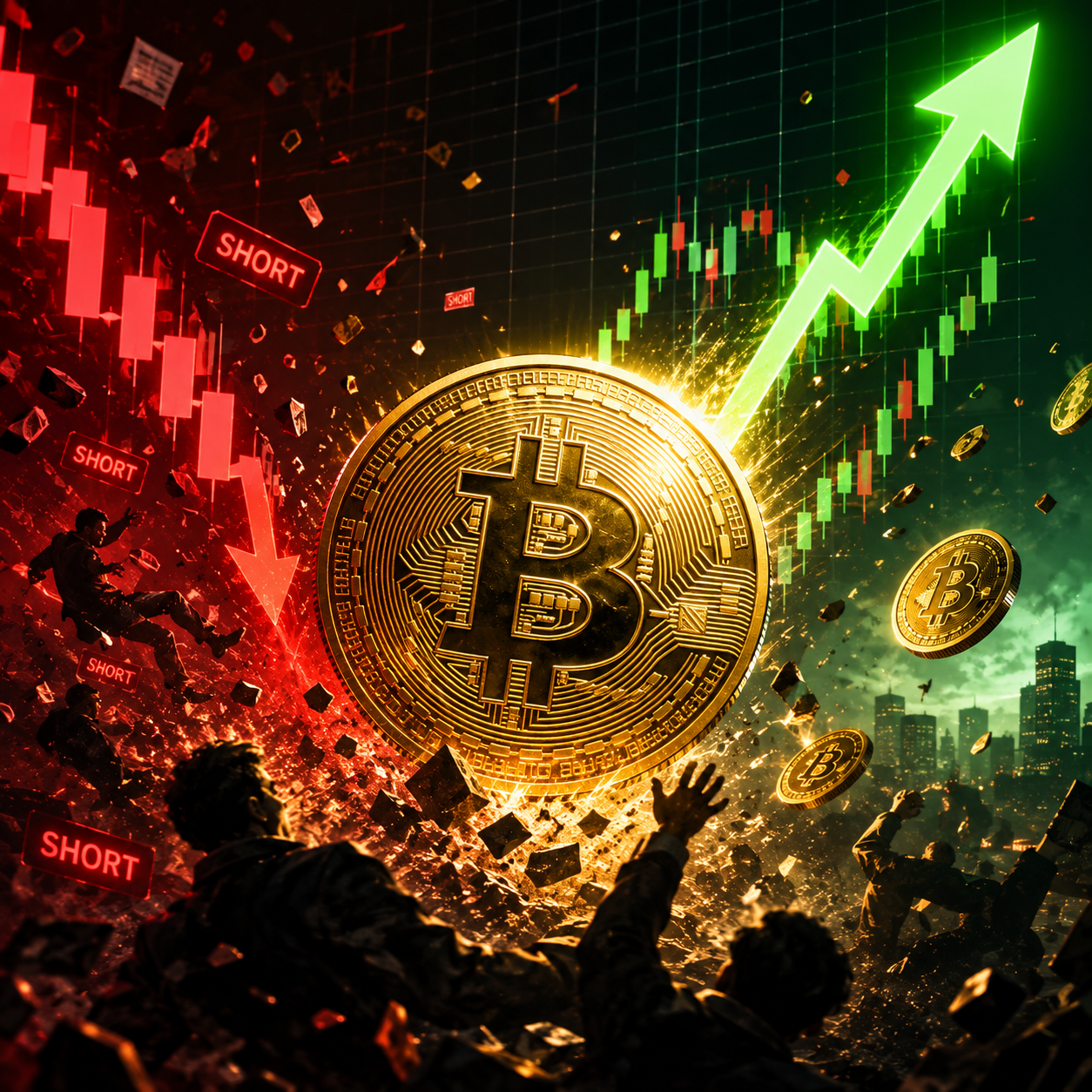
Source: PanNews Author: Nancy Original title: Is “Cow Coming” Really Here? Bitcoin changed overnight, and bears hit the main points of the biggest liquidation day in history: Bitcoin rebounded strongly on August 19, with an intraday increase of more than 7.4%, once approaching 70,000 US dollars, a new high since the beginning of June; Ethereum simultaneously broke through 2,300 US dollars. Over the past 24 hours, the entire network closed out more than 2,986 billion US dollars, of which short liquidations reached 2,743 billion US dollars, setting a new record for short liquidation in a single day. The recovery in the market was driven by multiple factors: the US Treasury expanded the scale of long-term treasury bond repurchases to improve liquidity; the SEC proposed new crypto asset issuance rules to exempt some registration requirements; and Trump met with crypto business executives and made supporting remarks, urging Congress to pass the Clarity Act. Furthermore, the net inflow of Bitcoin spot ETFs has exceeded US$480 million in the past two days, causing large-scale short liquidation effects. On-chain data shows that spot demand is about to improve, with a median increase of about 18.1% over the next 60 days. However, Glassnode pointed out that high real interest rates are still a suppressing factor, the market is still bottoming out, and the capitulation is not completely over. VanEck believes that 8 of the 12 capitulation indicators have been triggered, but this is not a sign of bottoming out. The potential cumulative window may be from September to November. Standard Chartered Bank expects Bitcoin to rise to 100,000 US dollars by the end of 2026. If it effectively breaks through $65,500, it may confirm the low in the cycle. CEO Strive believes that the long-term downward trend in the US dollar may bring the strongest macro tailwind to Bitcoin. Overall, there are positive signs in the market, but continued strengthening still requires verification of demand, liquidity, and macro environment, and investors should maintain reasonable positions. While the movie “Cow Lai” continues to be popular, the market's expectations for a “return to the bull market” are also constantly being ignited. Coincidentally, the crypto market also suddenly ushered in a long-lost “bull attack”. Bitcoin's strong counterattack overnight led to a collective recovery of the market. For the crypto market, which has been dormant for a long time, this surge not only means a breakthrough in price, but also a return to market volatility. After the market heated up rapidly, market sentiment was instantly ignited, and coin industry players even ridiculed that “native families are finally getting better.” Meanwhile, this sudden strong rebound also simultaneously triggered a single-day liquidation wave of bears on an astonishing scale. Bitcoin fought back strongly. On the evening of August 19, the bears experienced the biggest wave of liquidation in history. On the evening of August 19, Bitcoin broke out of a long-lost positive line and strongly broke through the consolidation range that continued for several months. According to CoinGecko data, Bitcoin suddenly experienced a strong rebound, with an intraday increase of more than 7.4%, once approaching 70,000 US dollars, a new high since the beginning of June. Ethereum strengthened at the same time. At one point, the price broke through 2,300 US dollars, reaching a new high of nearly three months. Mainstream assets rose collectively, rapidly driving the overall recovery of the crypto market. Over the past 24 hours, the total crypto market capitalization has risen by around 7.5%, recovering to around $2.46 trillion. However, this sudden surge also turned into a large-scale bear slaughter. According to CoinGlass data, the total amount of online liquidations in the past 24 hours has exceeded 2,986 billion US dollars, and more than 175,000 traders have been forced to close their positions. Among them, the biggest single liquidation occurred in the BTC-USD contract on the Hyperliquid platform, which amounted to about US$48.8 million. Judging from the historical scale, this wave of liquidations has surpassed the single-day liquidation record of about 2.23 billion US dollars during the “tariff shock” in February 2025, ranking the eighth largest liquidation event in crypto history. What is more noteworthy is that this liquidation almost showed a one-sided pattern of bears squeezing. According to CoinGlass data, in the past 24 hours, the amount of short liquidation reached US$2,743 million, far exceeding the liquidation scale of about US$243 million for longs. This figure even surpassed the scale of short liquidations of about 2.46 billion US dollars on the largest settlement date in history on October 10, 2025, setting a new record for the scale of short liquidations in a single day in the crypto market. The crypto market welcomed multiple benefits. Trump's bullish remarks ignited optimism behind the collective reversal of the crypto market's decline, mainly driven by multiple factors such as improved macro liquidity, bearish shortfall, regulatory optimism, and the return of ETF funds. At the macro level, the US Treasury expanded the scale of long-term treasury bond repurchases, which became the core trigger for this round of market recovery. The Ministry of Finance announced that it will double the maximum limit of liquidity support repurchases of 10-year to 30-year treasury bonds from at least US$2 billion to US$4 billion. The measures will be implemented on September 9 and will continue until November 4. The market generally interpreted this as strong support for the liquidity of the treasury bond market, which effectively lowered long-term yields. The yield on 30-year treasury bonds declined markedly from a high level of about 5.33% to 5.34%. And the decline in US bond yields...

2d ago22#Blood washes empty heads

US CFTC imposes trading ban on FTX co-founder Gary Wang and former Alameda CEO Caroline Ellison

Comparatively, the US Commodity Futures Trading Commission (CFTC) announced that the Southern District Court of New York has signed supplemental consent orders (supplemental consent orders) against former Alameda Research CEO Caroline Ellison and FTX co-founder Gary Wang. According to the court order, Ellison and Wang are required to continue to cooperate with the CFTC investigation while facing transaction and registration restrictions. Among them, Ellison was given a 5-year trading ban and a 10-year registration ban; Wang was given a 5-year trading ban and an 8-year registration ban. The relevant injunction period is calculated from the date the first consent order was signed on December 23, 2022. Earlier, on December 23, 2022, the court found Ellison responsible for two counts of fraud charged by the CFTC and held Wang responsible for one fraud charge. The initial consent order between the two permanently prohibited them from violating the Commodity Exchange Act (Commodity Exchange Act) and CFTC related anti-fraud regulations. David I. Miller, head of the CFTC's enforcement department, said the ruling reflects the regulators' emphasis on “effective cooperation.” Although Ellison and Wang participated in the relevant fraud as Alameda and FTX executives and were found responsible, due to their important assistance in FTX-related investigations, regulators granted appropriate mitigation measures. The CFTC said that Ellison and Wang will not currently be required to pay compensation, return illegal proceeds, or pay civil fines, mainly due to the degree of cooperation between the two in the investigation and related criminal cases, as well as the $11.02 billion asset forfeiture order involved in the US criminal case. Both have previously pleaded guilty in criminal cases, including pleading guilty to conspire to commit commodity fraud.

3d ago

US Attorney: Asking the Court to Dismiss Former Celsius CEO's Application to Revoke Conviction and Commute Sentence

According to Cointelegraph, according to Cointelegraph, the US Attorney's Office for the Southern District of New York urged the court in court documents to reject former Celsius CEO Alex Mashinsky's application to revoke the conviction and commutation of sentence, saying that his legal arguments were “unfounded.” Mashinsky was jailed for 144 months and fined $48 million in May 2025 for commodity fraud and securities fraud. He told the court in May that he would defend himself. The motion he submitted involved FTX and former colleague Roni Cohen-Pavon's charges, but the prosecutor indicated that he had not submitted a sworn statement supporting the charges and requested the court to dismiss it without hearing. Cohen-Pavon has reached the end of his sentence for providing “substantial assistance.” Additionally, the CFTC permanently banned Mashinsky from trading in the commodity market in June, and the SEC's civil lawsuit against him is still ongoing, and the parties are in the “settlement discussions” phase.

3d ago

Netflix: FTX-related series The Altruists is scheduled to be released on November 19

Comparatively, Netflix announced that the series “The Altruists,” inspired by the rise and fall experiences of FTX founder SBF and former Alameda Research CEO Caroline Ellison, will be released on November 19, and stills will be released for the first time. The 8-episode series features Anthony Boyle as SBF and Julia Garner as Caroline Ellison. Netflix said in the synopsis that the drama tells the story of two young idealists trying to quickly reshape the global financial system, then being accused of stealing $8 billion and ultimately falling from the peak of financial power. “The Altruists” was created by Graham Moore and inspired by articles by New York Magazine reporters Kevin T. Dugan and Jen Wieczner. Barack Obama and Michelle Obama are also executive producers of the show.

8d ago

Analyst: BTC has been suppressed by short-term holders' cost lines for 2 consecutive months, and the market is in a weak balance

According to Twitter, trader Murphy (@Murphychen888) posted an article on the X platform that the Realized Price for Bitcoin short-term holders (< 3m) who have held the coin for less than 3 months is currently around $67,900. Since June 20, BTC's rebound has continued to be suppressed after approaching this cost line, and it has now been close to 2 months. At the same time, the slope of the cost curve is close to zero, indicating that related chip exchange activities continue to decline. According to the analysis, a similar situation occurred at the end of the bear market in 2018 and 2022. At that time, BTC was suppressed by <3m in price for about 3 consecutive months, then fluctuated sharply due to the BCH hashrate war and the FTX incident, respectively. Continued suppression of this cost line may reflect that the market is in a state of weak structural balance. With any external force, the weak balance will be broken.

9d ago

Data: Alameda Research transfers $8.25 million in SOL to BitGo escrow wallets, or for FTX creditor payments

In comparison, according to Arkham monitoring, the Alameda Research associated address transferred a total of $8.25 million in SOL to the BitGo escrow wallet through 24 transactions, presumably to distribute compensation to FTX creditors. According to Arkham data, Alameda still holds more than $200 million worth of SOL. This article is sponsored by GENG, Build Your Fortune on GENG (https://geng.one)

10d agoburnking

The Alameda Research bankrupt wallet transferred about 152,000 SOL to the BitGo escrow wallet, suspected of carrying out OTC OTC OTC transactions

Comparative news, on-chain monitoring shows that after about 10 hours of releasing the pledge of about 201,700 SOL, the Alameda Research/FTX bankruptcy management wallet distributed 201,700 SOL (about US$15.2 million) to multiple BitGo escrow wallets today. On-chain analysts pointed out that the funds are being routed and are suspected to be disposed of through over-the-counter (OTC) transactions. In September of this year, the bankrupt wallet transferred about 35,000 SOL to the exchange address in batches. As of now, FTX founder Sam Bankman-Fried is still serving his sentence. He was sentenced to 25 years in prison last year.

10d agoWendy#starters