


Ethereum's 10-year power change: 3 internal shuffles, now trying to say goodbye to the Vitalik era
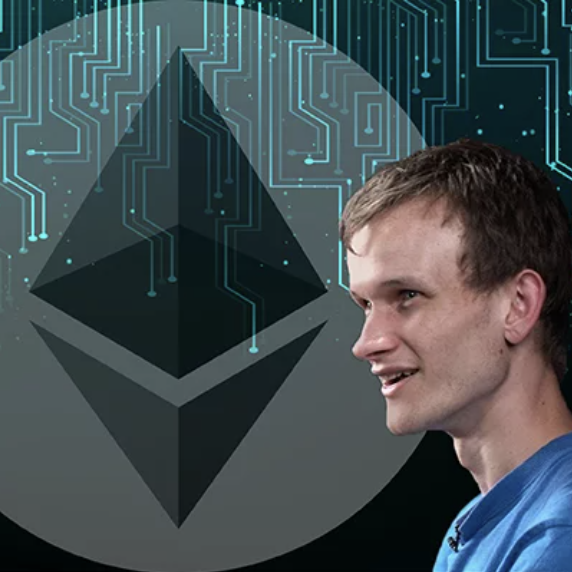
I don't know this, how can I say I understandEthereum?
By Jaleel Plus Six, BlockBeats
The “car” is too heavy, the “store” is too scattered, and the price of ETH, which is the 34th largest asset in the world, has stagnated, and Ethereum has ushered in its own “midlife crisis.”
This year is a special year for Ethereum, the 10th anniversary of the ICO. Looking back at global tech companies, 10-year-old Apple almost went bankrupt, with a maximum market capitalization of only $20 billion. Microsoft's market capitalization grew from $6.7 billion to $130 billion in the decade since it went public. The market capitalization of Ethereum is $321 billion. Although Ethereum grew rapidly in terms of market capitalization in the first 10 years, it was even thought that it would surpass Bitcoin at one point. However, in this crypto cycle, with Ethereum stagnating growth, Bitcoin has repeatedly reached new highs.Solana“Live after death”. After many times reflecting on “What happened to Ethereum?” Only then did the community really realize that Ethereum is facing the dilemma of having wolves and then tigers, and it is not irreplaceable.
In fact, the Ethereum Foundation has quite a few shortcomings, and the organizational structure is also very confusing. As a decentralized non-profit organization, it's not easy to handle Ethereum's internal organizational structure. Looking back at Ethereum along the way, the eight founding teams didn't match their “separation” philosophy and staged a cryptographic version of “The Eight Fairies of Silicon Valley.” With only Vitalik left, this decentralized non-profit organization became this prodigy's “centralized” era, and his influence and authority were unprecedented.
Today, complex relationships and ideological conflicts within the Ethereum Foundation continue, researchers are fighting each other, and ideology is changing subtly. After experiencing the changes of the crypto age, the survival and death of the Russian-Ukrainian war, and life experiences, 30-year-old Vitalik also seems to have begun a new script, playing a completely different role in Ethereum than before.
Phase 1: Vitalik personally elects the “Eight Kings Assembly”
The focus of this phase was the split and ideological conflict of the Ethereum founding team, which took place during the period 2014-2015. Vitalik Buterin, a programmer genius who always makes fun of technology, always answers “the 8 co-founders thing” when asked what his biggest regret during his Ethereum journey was. Obviously, these 8 founders, who have long since left, are on his mind.
When Vitalik had nothing but an idea, he greeted the top 10 developers who responded and wanted to join, and selected 5 of them as leaders, the 5 founders of Ethereum:Vitalik Buterin, Anthony Di Iorio, Charles Hoskinson, Mihai Alisie, and Amir Chetrit.
“This was clearly a very bad decision. They looked like nice people, and they wanted to help, so I thought at the time, why not let them be leaders?” Vitalik said this when he looked back on his decision at the time.
Regarding the co-founder of Ethereum, this is a controversial topic. There are many versions on the internet, and even Wikipedia's related entries are constantly being edited and revised. After Vitalik “personally certified 8 co-creators,” the version widely recognized by the community was: Following the 5 founders, 3 other developers became co-founders in 2014: Joseph Lubin, Gavin Wood, and Jeffrey Wilcke.

At this point, Ethereum has completed the early formation of 8 core leaders, like the “Eight Kings Council” in the early Yuan and Qing Dynasties to prevent the Emperor (Big Khan) from arbitrarily implementing it.
Berlin “Pilgrimage”, prequel to Ethereum
In the recently released “Vitalik: An Ethereum Story” documentary, Vitalik recalls that he has been a digital nomad since mid-2013.
That was the prehistory of Ethereum. Bitcoin was only $204, more than a year since Vitalik and Mihai Alisie founded Bitcoin Magazine. While building Ethereum, he ran all over the world because he was invited by various communities around the world. In 2013 and 2014, Ethereum had headquarters in Switzerland and Berlin, the white paper came out, and Vitalik visited China to crowdfund Ethereum and visit miners.
Berlin is the city he's been waiting for a long time. “Pilgrimage,” Vitalik described himself active in Berlin's Bitcoin Kiez area at the time.

Room 77 dining bar, taken by Vitalik Buterin in 2013, now closed
Cryptocurrency payments are very common in Berlin's Bitcoin Kiez region. Within about a few hundred meters, there are more than a dozen stores that accept BTC payments. The “Room 77” dining bar in the heart of the community is also a community center, frequented by technology developers, political activists, etc.
Near this area, Ethereum has rented an office, only 1.5 km from the “Room 77” dining bar, and Vitalik can be reached in less than 20 minutes on foot. Now search for the Ethereum office address “Waldemarstraße 37A, 10999 Berlin” on Google Maps, and you can also see that this address is labeled Ethereum Network Launch (30/07/2015) and a group photo of the early members of the Ethereum core at the time.

At the beginning of 2014, most of Ethereum's core members were mostly close to Vitalik, and the Ethereum team was in a highly cohesive state.
At the Miami Bitcoin Conference in January of that year, Vitalik and his co-founders stood together for the first time to present their project to the world. The results were good, and Ethereum officially entered the public eye. However, this was also the night before separation.

First Ethereum Meetup in Miami in January 2014, Source Network
Switzerland's “World War I”, a turning point for Ethereum
June 7, 2014 was bound to be a day of separation. All members of the Ethereum leadership attended an internal meeting in Switzerland, where discussions focused on the future direction of Ethereum.
Switzerland's Spaceship House, the venue for the conference was chosen here. This is the birthplace of ETH, and also Ethereum's first headquarters.

Spaceship House, Source: Mihai Alisie
In fact, prior to this meeting, this topic had already been debated internally for a long time, and even spawned factional divisions long ago. The relationship within Ethereum became strained. “Is it taking venture capital funds, or is it crowdfunding from all ordinary people; is it going the profitable route and becoming a cryptographic Google, or is it a pure non-profit organization?” It became an ongoing debate.
While recalling this memory, Vitalik said, “I was once persuaded to move Ethereum towards a more enterprise path. But this thing has never made me more comfortable, even a little dirty.”
The meeting to decide on the “life and death” of Ethereum was said to have lasted all day, and Vitalik's decision was to choose the decentralized and non-profit route. “I tried to shirk responsibility the whole time because I really didn't want to take responsibility, and eventually I had to get rid of some people.”
This decision became the first turning point in Ethereum's history and directly led to the team's first major split. Charles Hoskinson, Joseph Lubin, Amir Chetrit, and Anthony Di Iorio have all left.
Charles Hoskinson is the most obvious opponent of this conflict. He has always argued that Ethereum should become a commercialized company, receive capital through venture capital, and later develop into a profitable technology giant. “A horizontal power structure where cleaners and senior management would be in the same position is just crazy.”
After leaving Ethereum, Charles founded the development company IOHK (later restructured as a venture capital studio) and launched Cardano, a Pos public chain. This has been a leading copycat for many years. It is known as “Japanese Ethereum” because of its early focus on the Japanese market. It is also a first-generation “Ethereum killer”, and is the top ten crypto market capitalization all year round.
Following Charles Hoskinson, Joseph Lubin also decided not to participate in core development and switched to founding the incubator ConsenSys. In 2022, he completed Series D financing of US$450 million with a valuation of 7 billion US dollars. The financiers included top VCs such as ParaFi Capital, Temasek, SoftBank Vision Fund Phase II, and Microsoft. Over the years, ConsenSys has incubated a number of blockchain startups and built a number of rich ecosystem projects for Ethereum. The most successful was MetaMask, the plug-in wallet Little Fox, which is the most commonly used wallet in the Ethereum ecosystem, with a weekly revenue of 300,000 US dollars, with a total revenue of nearly 300 million US dollars.
Similar to Joseph Lubin, Anthony is also a wealthy second generation with a strong family. The reason he participated in Ethereum was to make more money. As a result, after Ethereum established a non-profit operating model, Anthony began to gradually retreat to the second tier, was in a semi-exit state, created Decentral, developed the Jaxx digital wallet, and finally decided to leave Ethereum in December 2015. The 2018 Forbes list estimated his net worth at $750 million to $1 billion, making him one of the top 20 richest people in the cryptocurrency sector. However, in 2021, he announced that he decided to “clear the warehouse” based on personal safety considerations, no longer fund any blockchain projects, and plan to engage in charity and other causes in the future.
Amir Chetrit, on the other hand, left the Swiss conference due to lack of investment in Ethereum and was criticized by other developers and founders, and later joined other industries because he had always been anonymous and focused on privacy protection, and his information was scarce.
When the dust settled at the end of 2014, only four of the original eight co-founders remained with the team: Vitalik Buterin, Gavin Wood, Mihai Alisie, and Jeffrey Wilcke.

Vitalik also reflected that he was too hasty in selecting the team and failed to take into account the deep differences, conflicts of ideas, and clash of interests among the members, which was far more complicated than he had initially anticipated. “I really realized then that people in the cryptocurrency sector aren't all striving for ideals like me; a lot of people really just want to make a lot of money. Relationships between people are a real problem.”
Phase 2: Ethereum staged an encrypted version of the “Eight Immortals of Silicon Valley”
After the first shuffle was completed, the co-founder team lost more than half. Fortunately for Vitalik, however, the Foundation is taking over more jobs, and his most important technology partner, Gavin Wood, is still working side by side with him.
Not only Ethereum, but the whole of 2014 was not that ordinary for the coin industry. The theft and bankruptcy of Mentougou caused the price of Bitcoin to drop severely, from a peak of $951.39 to $309.87, a drop of 67%. Also this year, CZ sold her Shanghai home and became OK CTO for $600 in Stud Bitcoin. SBF, who just graduated from MIT, is applying for a resume on Wall Street.
Vitalik's work continues, and Ethereum has begun large-scale recruitment efforts. On November 28, 2014, Ethereum hosted the important DEVCON developer conference, which was held at the Berlin office. Most members of the Ethereum project team gathered in Berlin. Most of the project members had previously communicated via Skype. This was the first time they met.

DEVCON Meeting 0, Source: Ethereum Foundation
Vitalik and Gavin still maintained a close partnership at the time. In the photos left at the conference, the two stood side by side as always, symbolizing the closeness of that time. However, no one expected that the leader of the Ethereum engineering team and the author of the Ethereum Yellow Book would be the next to leave.
Gavin Wood chose to leave in October 2015, and he believes that Ethereum's need for a more centralized engineering management model would be more efficient. However, Vitalik once again said “NO.” Huge differences eventually prompted Gavin to leave the team and start his own company, Parity (Ethcore). Parity soon became an important node operator on the Ethereum network, once controlling more than 40% of the network's nodes. Since then, Gavin has fully promoted the development of Polkadot, which has been one of Ethereum's key competitors for a long time.
Gavin's departure directly curtailed Ethereum's ability to implement engineering, and his leadership and technical expertise were critical in the early development of Ethereum. As he left, the team's efficiency issues gradually came to light. Ethereum's Geth client developers are distributed around the world, and team management and coordination issues occur frequently, and development progress is affected as a result.

Vitalik, Jeff, Gavin, Source: Vitalik
However, after Gavin left, the only two remaining co-creators Mihai Alisie and Jeffrey Wilcke left one after another during this period.
Mihai Alisie was one of Vitalik's earliest partners. The two co-founded “Bitcoin Magazine”. He helped set up the legal framework for Ethereum in Switzerland and served as the foundation's vice chairman. Mihai's departure came naturally; he didn't have a violent conflict with the team, but the core strength of Ethereum's early construction was further reduced.
Jeffrey Wilcke's gradual exit was after The Dao had a huge amount of ETH stolen by hackers and forked Ethereum, and handed over the development work and technical supervision of the Ethereum Go client Geth to his assistant Péter Szilágyi. He turned his energy to game development and spending time with his family, probably in March 2018.

Jeffrey Wilcke takes care of his children, Source Network
With the departure of these founding members, Vitalik's loneliness in Ethereum is increasing day by day. Some developers revealed that 2015 was a lonely and difficult year for Vitalik, who often spent the night in his Berlin office.
Interestingly, at the ETHCC7 conference in Brussels in July of this year, after Vitalik's speech, Vitalik Buterin, Joseph Lubin, and Gavin Wood, the three former core founders of Ethereum, completed a group photo of the century, which is considered a decent end and settlement to this “break-up.”

The “Centralization” Era of “God V”
Meanwhile, as the core team disintegrated, Vitalik's influence and control over Ethereum was unprecedented. If you name an Ethereum developer other than Vitalik, 90% of ordinary community members can't do it, and the authority of God V alone can represent the whole of Ethereum.
Unlike Bitcoin's “off-chain technical elite governance,” Ethereum relies more on Vitalik's personal leadership. Although on the surface, Ethereum uses “off-chain founding authority governance,” and technical improvements must be agreed upon by the community, in reality, Vitalik's appeal often pushes proposals to pass quickly.
For example, after The DAO incident in 2016, the hard fork proposal led by Vitalik received 85% of the vote, which is in stark contrast to Bitcoin's more decentralized decision-making mechanism. Ethereum has gone from being a decentralized community to a “one-size-fits-all” company controlled by Vitalik and the Ethereum Foundation.
Lane Rettig, one of the core developers at the time, bluntly criticized the foundation's decision-making mechanism. The Ethereum Foundation often showed excessive caution when making important decisions, fearing favoring one party or even being held legally liable. This hesitation has caused the Foundation to be slow to act on issues such as releasing new platform improvement plans and rewarding developers, or even unable to respond to community needs in a timely manner.
“The governance of Ethereum has failed; it is actually expert rule: a small group of technical experts have the final say on protocol updates.” Lane Rettig criticized.
In this context, Ah Jian, a former hardcore content contributor to the Ethereum Chinese community, also wrote “Ethereum's Hidden Worries | The Prophet Weekly #130》一文表示:「以太坊基金会从来没把自己当成是这个范式的修补维护者,也从不觉得自己的权力应该有什么限制。」
From Ah Jian's point of view, there is no indication that the Ethereum Foundation believes their power should be limited; they only see that they use this power arbitrarily to disdain other people involved in the Ethereum blockchain, so Ah Jian switched from the Ethereum Chinese community to the Bitcoin Chinese community BTCStudy. The attitude of Lane Rettig and Ah Jian represents the voices of many people in the community.
Even Consensys, which has been extremely supportive of the Ethereum ecosystem in the past, told the truth, in “Interpreting the Consensys Paper: Is Ethereum Becoming More Centralized?” In the research report paper, the researchers analyzed various data and indicators and came to the conclusion: The findings clearly showed that the entire Ethereum ecosystem showed concentrated elements of control, which may be much less than what the community expected.
It was also at this point, especially in the Chinese community, that people began to resist calling Vitalik “V God,” and centralization of power led him down the altar.
“Infancy” foundations stumbled
At the same time, the Ethereum Foundation is still in a stumbling “infancy stage,” and many foundation members have been appointed on an ad hoc basis.
For example, Kelley Becker and Frithjof Weinert at the time served for a short time as the chief operating officer and chief financial officer of the Ethereum Foundation, responsible for the daily operation management and financial management of the foundation to ensure that the foundation had sufficient funds to support the development and operation of Ethereum. However, their tenure was short, and they soon left the Foundation.
Until April 10, 2015, the Ethereum Foundation began operations and gradually got on the right track, becoming an important pillar supporting technology development and governance decisions. The Ethereum Foundation has opened the board of directors selection. The foundation's initial organizational structure: Switzerland and Berlin are the largest centers.

In mid-2015, Ming Chan, who has many years of experience in IT and management consulting, was appointed as the new executive director of the Ethereum Foundation to handle the Foundation's daily operations, manage it in a standardized manner, and ensure that technology development and community operations proceed smoothly under the legal and regulatory framework.

The Foundation's internal structure has also been further clarified. In addition to Vitalik remaining a central figure in technology and community, Lars Klawitter, Vadim Levitin, and Wayne Hennessy-Barrett have joined the Foundation's board of directors.
Lars Klawitter is responsible for the integration of technology and innovation in the foundation. He was active as an entrepreneur during the Internet revolution in his early years and was the head of the innovation business for Rolls-Royce Motor Cars. Vadim Levitin, on the other hand, is a technical expert with extensive international experience who has worked for the United Nations to help the Ethereum Foundation expand its influence on a global scale. Wayne Hennessy-Barrett, another board member who brings a global perspective to the Foundation, has extensive operating experience in emerging markets in Africa.
With the addition of these new members, the Ethereum Foundation gradually improved its governance structure, and the Foundation's core mission gradually changed from technology development to community coordination and resource allocation. At the same time, the foundation also holds significant ETH assets and supports the development of the Ethereum ecosystem by funding various research projects and developer teams.
Meanwhile, the core developers of Ethereum were included in the Ethereum Foundation's research team. July 30, 2015 marks a historic moment when the Ethereum mainnet went live. At the Berlin office, a very historic photo was taken to record some of the core members at the time. At this point, Ethereum has basically completed its second reshuffle.


Vitalik's peers include Gustav Simonsson, Christian Reitwiessner, Christoph Jentsch, and a few notable core developers include:
Gustav Simonsson was an early security advisor to Ethereum and played a critical role in the security of the Ethereum mainnet. After leaving Ethereum, he joined Dfinity to continue his career in the decentralized computing network field.
Christian Reitwiessner is the developer of the Solidity programming language and provides the foundation for running smart contracts on Ethereum.
Liana Husikyan is also an important member of the Solidity development team. She is one of the main developers of Remix IDE. Remix is an integrated development environment for writing and deploying smart contracts, helping to simplify the smart contract development process.
Meanwhile, Christoph Jentzsch is the founder of Slock.it and one of the founders of The DAO. Although a security breach led to a fork in 2016, The DAO is still one of the most important experiments in blockchain history, driving the exploration of decentralized governance models.
Additionally, there are Fabian Vogelsteller, author of ERC 20 and ERC 725, Vlad Zamfir, who drove Ethereum's transition from Proof of Work (PoW) to Proof of Stake, and Jutta Steiner, head of security at the Ethereum Foundation (who later became CEO of Parity Technologies founded by Gavin).
Phase 3: Ethereum's “Midlife Crisis” and Attempts to Vitalik
The third shuffle of Ethereum's core members began in 2018.
At this point, the coin industry had already experienced the ICO explosion and 94 major falls, and the “year of regulatory liquidation” of cryptocurrencies began. The price of Bitcoin fell from a maximum of $19870 to a minimum of around $3,000, and Binance quickly became the world's largest trading platform. Solana, the “killer of Ethereum,” which focuses on high performance, efficiency, and high throughput, is still 2 years away.
However, when people talk about Ethereum, they basically mention two things: one is the Ethereum 2.0 upgrade, and the other is that the Ethereum Foundation is selling coins again.
The supply of ETH controlled by the foundation has been declining over the years, and community members have shown too much negative sentiment. However, some members of the Ethereum Foundation said that this is one of the signs that the foundation intends to decentralize. “It is a good thing that EF consciously wants to reduce its influence and role.”
Indeed, since Aya Miyaguchi (Miyaguchi Reiko) succeeded Ming Chan as the new executive director of the Ethereum Foundation in 2018, the Foundation is no longer the central hub for all development work as it was initially, but has moved more towards supporting and coordinating communication and collaboration between different projects, and expanding the Foundation's collaboration with external partners, such as ConsenSys.
After Aya Miyaguchi took office, EF's division of responsibilities became more clear, mainly limited to:
1. Host Devcon or Devconnect once a year;
2. Maintain an execution client Geth, but do not maintain any consensus client;
3. Providing tens of millions of dollars of untied funding to the wider community every year;
4. Host conference calls: such as All Core Devs (ACD) hosted by Tim Beiko, All Devs Consensus (ACDC) hosted by Alex Stokes, etc.;
5. Conduct research: This may be one of the departments that are still centralized, but it is possible that some EF research teams will be independent;
6. Roadmap development: Vitalik updated the roadmap diagram, and dozens of tasks were developed in parallel by different teams;

Source Vitalik tweet
The Ethereum Foundation's official website currently lists only three leadership members. In addition to Aya Miyaguchi and Vitalik, there is also a board member Patrick Storchenegger.
During this period, several next-generation core developers in the Ethereum Foundation gradually emerged and became key players in Ethereum 2.0 and the entire ecosystem. Here is a list of people I personally think are important in Ethereum, including: Danny Rya, Justin Drake, Tim Beiko, Dankrad Feist, Christian Rwitqiessner, and Péter Szilágyi, creators of Solidity. (In my opinion, there is no specific order, and there is no breakdown of them all)
Danny Ryan is a core member of the Ethereum 2.0 team and is known by the community as the “Chief Engineer of Ethereum 2.0”. He played a critical role in coordinating the development process of Ethereum 2.0, particularly during the launch and merger upgrade of the beacon chain, and was the first Ethereum Foundation researcher to appear in the documentary “Vitalik: An Ethereum Story”. (Note: In the process of writing this article, Ryan announced his indefinite withdrawal from Ethereum development due to personal reasons on September 13, ending his seven-year career in Ethereum development)
Since joining the Ethereum Foundation in 2017, Justin Drake's main work has also been Ethereum's transformation to Proof of Stake (PoS), and has played a key role in the execution of the ETH merger. Additionally, Justin Drake is one of the main speakers in the community on Ethereum's future technology roadmap. He often participates in podcasts and interviews to educate the public, such as the Ethereum Foundation's Reddit AMA. Justin Drake is also one of several key speakers and has a very good foundation in the community.

Tim Beiko joined the Ethereum Foundation full time in 2018 and became one of the core developer leaders in 2021. He is responsible for organizing the ACD conference call and is an important bridge between core Ethereum developers. As a protocol engineer, his work covered advancing several Ethereum improvement proposals.
Dankrad Feist is a key researcher at the Ethereum Foundation, focusing on research on statelessness (statelessness) and data availability (Data Availability) issues. The “Danksharding” concept he proposed was in Ethereum's sharding technology route, so the last expansion plan chosen for the Ethereum main network was Dankrad Feist, named after himself. At the same time, his research on the MEV (maximum extractable value) issue also provided new insights into the security of Ethereum; however, he had a public dispute with Péter Szilágyi, the current development leader of Geth, and eventually forced Vitalik to mediate. Related reading: “The Ethereum Foundation's Internal and External Problems: Researchers and Engineers Argue, Members Act as EigenLayer Advisors or Conflicts of Interest”.
After stabilizing team members, the expansion of the Ethereum ecosystem gained mainstream recognition from 2018 to 2022. In 2019, DEXs such as Uniswap, Compound, and SushiSwap provided generous yields for any DeFi user providing liquidity, and DeFi Summer made Ethereum's TVL grow rapidly. In 2021, the “first century of the metaverse,” Facebook changed its name to Meta, paving the way for the explosion of NFTs. In 2022, the coin industry experienced a “Lehman moment”. Luna and FTX fell one after another, and the Solana ecosystem was heavily hammered, while Ethereum successfully switched from PoW to PoS. The Layer 2 circuit was booming and full of scenery for a moment, completing its own explosive period.
Ideological crisis: EF “parliamentarized”
However, the month is full of profits and losses, and water overflows; everything prospers extremely; things are extremely counterproductive. Yin and Yang are transformed, and profits and losses grow.
Finally, Ethereum faced its own “midlife crisis.”
This year marks the second anniversary of the switch to PoS, and the price of ETH has stagnated. Although the price once again broke through $4000 at its peak, the performance of BTC in this market cycle was extremely poor compared to SOL. The decrease of ETH against BTC was about 48.70%, and the decline of ETH against SOL was about 63.55%.
Most obviously, after Bitcoin reached a new high this year, Ethereum is still hovering around $2300-$3000. As the 34th largest asset in the world, Ethereum's “car” is too heavy and the “store” is too scattered. At this scale, it is very difficult for Ethereum to grow, almost fighting against “gravity.”
Another rule in the financial world is that when an asset reaches 300 billion or 500 billion US dollars, it will face a “growth bottleneck”. Ethereum is in this “bottleneck” stage. Not only is it a price “bottleneck,” Ethereum is also facing a crisis of ideological change.
“Preventing the rigidity of Ethereum” and “the ideological change of the Ethereum Foundation” have also become common issues of discussion among Foundation members.
Continuing with Dankrad Feist's topic just now, the controversy caused by Dankrad Feist was not only about the MEV issue with Péter Szilágyi, but also escalated to the issue of neutrality as a member of the Ethereum Foundation.
On May 21, Justin Drake and Dankrad Feist revealed that they had previously been EigenLayer advisors and were rewarded with EIGEN tokens “which may exceed the sum of their current wealth.”
Although both researchers claim that they are participating as advisors in their personal capacity and that EigenLayer is “ready to end” their advisory positions if it is against the interests of Ethereum, it is clear that the community is not buying this, and it is difficult for one to guarantee that the potential income “may exceed the sum of one's current wealth”, and it is difficult for one to guarantee that they regard money as dung.
Obviously, during this reshuffle period, the Ethereum Foundation is like the “parliament” of Ethereum. The EIP written by the researchers can directly change the direction and pattern of Ethereum and affect the ecological industry of hundreds of millions of dollars. As the number and volume of ecosystem participants continues to grow, EIP involves more and more interests. Every participant wants to get “special care” in the upgrade like L2, but not everyone is in line with Ethereum's interests, so EF researchers have become “members of parliament” that must be won over in the eyes of capital.
This makes sense why EigenLayer is willing to spend a fortune to hire members of the Ethereum Foundation because they spent the money to buy a lobbyist at EF. Related reading: “EF Doesn't Have Dreams.”
For the project, in order to gain ecological legitimacy for yourself, you must try your best to have a good relationship with EF through various means. At this time, if you have someone close to EF, it is much easier to do things on stage and offstage. For VCs, a good relationship with EF is a convenient channel for early access to high-quality investment targets. With projects recommended by EF researchers, not only is it easier to get a share, but it is also possible to get a higher level of insurance in advance in terms of legitimacy.
Whether they want to or not, EF researchers are bound to be surrounded by hunting capital from various sources, either by offering consultancy positions or directly sponsoring the researchers' individual research, and the researchers themselves don't seem to be offended by this. Against the backdrop of increasingly obvious modular trends such as EiGenda and Celestia, this situation will probably be shown in a faster and more obvious way. More teams will have their own team of members of parliament in EF, and EF itself will also undergo ideological changes due to the unbundling of the interests of all parties and embark on the path of “parliamentarization.”
Ethereum without Vitalik
While the Ethereum Foundation is moving towards “parliamentarization,” there are also signs of becoming Vitalik.
In Vitalik's father's recollection, when Ethereum was first established, Vitalik didn't want to lead; more thought was, “Hey, I came up with a cool idea, let me write it down first, then maybe some smart and influential people will do something about it.”
But then things changed a bit, and a lot of people joined the project, and they told Vitalik, “You are the one who should drive this project.” As a result, people promoted him to the position of leader, but none of this came naturally; for him, this was outside his comfort zone, and this is still one of the biggest challenges he faces.
“Vitalik has almost perfectly satisfied our society's deepening image of the founder of technology, the cult of youth, and obsessive fascination with a kind of innocence yet powerful.” As Nathan Schneider, an economics professor at Vitalik who has been interviewed many times, said.
But in 2024, Vitalik turned 30.
While working as Zuzalu in Montenegro, he saw someone ten years younger than him in leading roles on various projects, as organizers or developers; at a hacker party of around 30 people in Korea, he first became the oldest person in the room.
Vitalik has satisfied the imagination of a large number of programmers of their ideal self, young and legendary. Vitalik is a symbol; no longer young, he's no longer fit to play such a role, and he himself is aware of this.
Ten years ago, he wanted to do something cool, and many people praised him as one of the world-changing, amazing, young prodigy like Zuckerberg. Now, after experiencing the changes of the crypto age, the Russian-Ukrainian war, survival and death, Vitalik has a new sense: “I am playing a completely different role now, and it is time for the next generation to take over the mantle that once belonged to me.” Related reading: “Vitalik's Thoughts on Life at Age 30: It's Time for the Next Generation to Take Over the Mantle That Once Belongs to Me”.
“I'm curious if Ethereum would survive without Vitalik's leadership?” Nine months ago, a related discussion post was discussed a lot on Ethereum reddit: “Vitalik really didn't lead Ethereum as much as people think in the past few years”, “I've even heard that Vitalik isn't even the best person to explain the Ethereum roadmap.”
Marcocastignoli, who works at the Ethereum Foundation, also expressed her own personal opinion: “Although I'm not one of them, I know very well that Vitalik is just a member of the EF research team. The research team is made up of a group of too smart brains, and Vitalik is just average among them”
The new core members mentioned earlier (Danny Rya, Justin Drake, Tim Beiko, Dankrad Feist, Christian, and Péter Szilágyi, etc.) have gradually emerged as core developers in the Ethereum community.
Furthermore, according to Electric Capital statistics, there are currently 99 active Ethereum core developers. This figure is far ahead of other blockchain projects such as Bitcoin, Cardano, EOS, or Tron. Looking more broadly, the Ethereum network currently has more than 250,000 developers and researchers, making it one of the most decentralized blockchain development communities.

When young Vitalik was abandoned by Blizzard, he was able to use his technology to create a new world, as if everything was created by technology. And after going through these rounds of major shuffling of Ethereum team members, he discovered that he was finally powerless, and Vitalik's self began to be deconstructed from this point on.
As he wrote at the end of his 30-year-old vision of life: communities, ideologies, “scenes,” countries, or very small companies, families, or relationships — are all created by people.
It wasn't created by technology. Furthermore, Vitalik is no longer the youngest, smartest, or even the most representative roadmap technical researcher on Ethereum. Vitalik's role will continue to weaken, and one day, Ethereum will become Ethereum without Vitalik.
Maybe now is the time to imagine Ethereum without Vitalik.
Author's note: This article tries to summarize changes in the core membership of Ethereum, but the membership of Ethereum is much richer than I know. Putting them all in one article structure requires omitting many details, so there are slight omissions. It is best to just treat this article as a rough summary rather than a detailed historical and technical explanation. Thanks to everyone who provided information and other feedback.
