


Ten Questions About Binance: CZ's Return and Deep Reflections on Six Years of Success
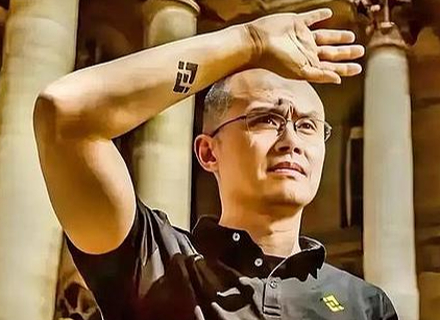
On September 28,BinanceoriginatorsZhao Changpeng(CZ) Tweeted a short “GM”. Immediately after that, on September 29th, he published a long post to express his gratitude to his followers and supporters, and revealed that Binance is still thriving without his direct supervision.In the future, he will continue to invest in blockchain, decentralized technology, artificial intelligence, and biotechnology, while also writing a book.All of this has sparked a buzz throughout the crypto world, as if announcing his strong return.
Going back to June 29, 2018, MarsBit (Mars Finance) conducted an exclusive interview with Binance founder Zhao Changpeng (CZ) on “Wang Feng's Ten Questions”.At the time, just one year after CZ founded the Binance Exchange, it was already listed as a billionaire on the digital currency richest list by “Forbes”. Binance's valuation was as high as 10 billion US dollars, and its spot trading volume was stable at the top of the industry.

However, the strong rise of a new generation of exchanges represented by transaction mining has made competition in digital currency exchanges more intense. MarsBit (Mars Finance) invited CZ. The CEO of the crypto trading giant revealed the industry's difficulties, market competition, and future strategies during a laugh and talk.
Six years have passed in a blink of an eye. The crypto world has gone through ups and downs, how many projects have had ups and downs, and new things are constantly emerging.
When we personally witnessed events such as Luna's thunderstorm and FTX bankruptcy, we discovered that many of CZ's views were not only forward-looking, but also demonstrated his ability to understand and solve problems from a high level of industry perspective.The ten questions asked about CZ back then have now taken on even more profound significance. So, did CZ actually live up to that year's answer? Next, let's dive deeper into the implications behind these questions.
Question 1: Binance pioneered the world, from Uganda to a global layout
MarBit (Mars Finance) asked at the time: Why did they choose Uganda as the first stop for Binance fiat transactions? Can fiat transactions bring more traffic to digital assets, or simply trigger an asset bubble?

CZ: Many people are eyeing developed countries where it's easy to make money, but Binance needs to take a deep dive into the industry and spread blockchain and digital currencies all over the world at its own pace. I believe the channels for transactions between fiat and currency should be opened up as much as possible. The bigger the better, the wider the better. In this case, more people can freely enter and exit. We do have very deep communication with the financial regulators in Uganda, and they are very supportive of this. In fact, with our efforts, more and more countries and regulators should support digital currencies; in this case, the entire industry will grow bigger.
In a 2018 interview, when CZ chose Uganda as the first stop for the Binance Fiat Exchange, some people were quite surprised by this choice. However, this choice shows the unique vision of CZ's global strategy:Since its inception, Binance has focused on promoting the development of digital currencies on a global scale, not just in developed countries.
In 2018, Binance launched a fiat exchange in Uganda and worked closely with local regulators and financial institutions to ensure compliant operations. Additionally, Binance has launched new products in Russia and is connecting with local Russian partners to promote the use of digital assets.
In 2020, Binance further increased its investment in the African market, particularly in South Africa and Nigeria, and launched localized versions of the Binance Exchange to enhance the user experience. Meanwhile, Binance is also partnering with Brazilian fintech companies to begin exploring the potential of the Latin American market. Addition of fiat currency channels: Binance has added support for up to 15 fiat currencies, including the UAE dirham, Australian dollar, and euro, through partnerships with partners such as Etana Custody. This allows users to easily make fiat deposits via SWIFT transfers.
In 2021, Binance announced a partnership with financial institutions in Argentina and Chile to promote the use and popularization of digital currencies. CZ has also been frequently mentioned at various international conferences that Binance will continue to focus on emerging markets and promote digital currency education and popularization around the world.
In 2022, Binance's global presence was further expanded, collaborating with the UAE's financial regulator and obtaining a license to operate legally. Additionally, Binance is actively promoting compliance processes in countries such as India and the Philippines, and has established good communication channels with local regulators to promote the healthy development of digital currencies.
Six years later, Binance has business coverage in more than 100 countries around the world. Binance's global layout complies with local regulations and has obtained regulatory approvals in multiple jurisdictions. Additionally, Binance has set up offices in various regions around the world, such as Abu Dhabi, Bahrain, Dubai, and Paris, to better communicate with local users and regulators. Binance is also hiring compliance talent globally, including senior executives from leading financial institutions such as Morgan Stanley and Kraken. Additionally, Binance has launched an independent platform, Binance.US, in the US to meet local regulatory requirements. Binance's new CEO Richard Teng emphasized the importance of a global regulatory framework and said that as the industry evolves, more standardized regulatory convergence is expected.
Overall, CZ's “pioneer first, then cultivate” strategy continuously adapts to and responds to changes in the regulatory environment in different countries and regions, making Binance quickly take the leading position in global exchanges.
Question 2: Exchange wars, competition and sustainable development
MarBit (Mars Finance) asked a question at the time: FCoin, which features “trading is mining,” took just 15 days, and claims that the turnover reached number one, and “the transaction volume is still the sum of the second to seventh.” What was your first reaction to its market performance? How does Binance view the exchange war brought about by “trading is mining”?

CZ: For any business model to be successful, it must be sustainable. Don't worry about the threat they pose; the ultimate competition depends on products and services. Affected by the relationship between supply and demand, the trading or mining model will fall into a vicious cycle. It is no longer easy to last this long.
Zhao Changpeng pointed out the sustainability issues faced by many exchanges in an outspoken, succinct and powerful manner. Looking back now, one can't help but wonder that his predictions have come true.
In 2020, FCoin announced the closure of the exchange, and its founder, Zhang Jian, has been criticized for suspected fraud. Similarly, BitMax adopted a transaction mining model in 2019, but due to drastic changes in the market environment and the weakening of user trust, the platform experienced a liquidity crisis in 2021 and had to adjust its business model to maintain operations. Although it hasn't completely gone out of business, BitMax's market share and reputation have been hit hard. Similarly, CoinTiger introduced a transaction mining mechanism in 2018. Although it initially attracted a significant user base, over time, trading volume and user activity dropped drastically, and eventually forced to shut down in 2022, failing to maintain the sustainability of the business model. It can be seen from this that many exchanges based on the transaction mining model have ultimately failed.
In stark contrast to this, Binance's success reflects the long-term value of a focus on products and services.During this period, Binance continued to launch new trading pairs, options, contract trading, as well as liquidity mining and DeFi products, providing users with a variety of service options.Facts have proven that for any business model to be successful, it must be sustainable, and the exchange's ultimate competition still depends on products and services. CZ's sharp market judgment and prudent strategy have made Binance stable as a rock in the fierce exchange competition.
Question 3: Binance Coin Listing Maintains a Low Breakout Rate
MarBit (Mars Finance) asked at the time: How does Binance maintain a low breakout rate and attract high-quality projects?

CZ: The most important thing is that you have a brand effect. You must do the right thing to form a cycle of positive energy. Strict review is the second step. Binance's cryptocurrency listing team started to corrupt the research project. Even so, they will step into the pit, but the number of pitfalls should be minimal. Treating the elderly in the industry equally, and offended quite a few people for this, but Binance's principle of putting users first will never change.
CZ mentioned in an interview that year that year that Binance's listing policy is extremely strict, and the review team values team strength, product quality, and community feedback.This strict review system has enabled Binance to attract many high-quality projects over the past six years.
In 2019, Binance launched Launchpad, which allows blockchain projects to raise capital through initial exchange offerings (IEO).
In 2020, Binance launched several high-profile coins, the most popular of which was Dogecoin (DOGE). Although Dogecoin was launched back in 2013, it regained huge attention in 2020 due to social media promotion and community support, and received trading support on Binance.
Additionally, Binance has launched other popular coins, such as Chainlink (LINK) and Yearn.finance (YFI). Chainlink in particular, as an important project in the DeFi field, received widespread attention during the “DeFi Summer” in 2020, and prices also rose sharply.
In 2021 and 2022, projects such as Polygon (MATIC), Axie Infinity (AXS), and STEPN launched on Binance one after another, and quickly became the star projects in the crypto market.Those vibrant moments, when everything competed, can still be seen today.
Binance has established a strong brand reputation in the market and has become the preferred listing platform for project parties and investors. If you want to obtain maximum liquidity, it is certainly wise to choose Binance. However, this phenomenon caused Binance to experience quite a bit of trouble in 2024.
At the beginning of 2024, the market was generally preparing for a bull market, but Binance launched several high-FDV tokens one after another. Since then, Bitcoin has failed to effectively break through 73,000. The market fluctuated downward, and the market value of altcoins repeatedly reached new lows. Newly launched Binance tokens such as AEVO, W, and STRK fell as much as 90%. The anti-VC wave is spreading in the crypto world, and many old users have blamed Binance's listing policy for affecting the liquidity of this bull market.
By September, Binance continued to launch some small-cap coins, such as NEIRO tokens with a market capitalization of less than $15 million and only a few thousand community members. The move sparked market discontent, and some even questioned Binance's internal trading practices. In this context,He came forward to stabilize the situation, emphasizing that Binance has a strict listing process. The core principle is to select projects with a user base, continuous development and solid business logic, and denies that there are any internal transaction issues.
In the current market environment, Binance has surpassed the scope of traditional exchanges, become a symbol of user expectations and gathering, become an industry benchmark, and has great influence. As a result, every move is in the spotlight. This also explains why other trading platforms have had a lackluster response when launching MEME or TG game tokens, while Binance's similar move has sparked widespread controversy.
Currently, Binance seems to be in a dilemma: launching infrastructure tokens may be accused of deviating from community positions and supporting VC; while launching MEME tokens may be seen as lowering listing standards and manipulating the market. If you choose to maintain the status quo, you may also be criticized for lacking innovation and unable to lead the development of the industry.
Despite many questions, Binance remains the leader in the ecosystem. In the ecological network, differences between users and managers gradually became apparent, internal and external uncertainties became a trigger, and even offensive remarks appeared against each person.
Today, the new coins listed on Binance can't guarantee a low breakout rate, and I don't think any exchange can do that. Looking forward to CZ, who has already been released from prison, to provide new answers.
Question 4: What crises has Binance experienced
MarBit (Mars Finance) asked at the time: What difficulties did Binance encounter when expanding from China to Japan to the world?

Zhao Changpeng commented on Bermuda shorts: they are very formal to wear and feel comfortable and organized
CZ:Our team is a very international team. In fact, when we were in China, we also had teams in other countries. I've lived in many countries since I was a kid, so I didn't have any problems changing places. I think it's more important for me to understand international user habits and international culture. This is very important; this is the most important part of our ability to go international. Earth is my home. If Elon Musk turns humans into a transgalaxy, our range will be a little larger. I think most Chinese people probably only look at one place in China; in fact, the world is quite big. If you walk around the world, you'll find that most countries now want to attract blockchain companies and digital currency exchanges. Actually, it's not that these small countries have relatively few resources; it's just that their small countries respond more quickly. Their internal departments coordinate and act relatively quickly. At the time of this round of change, it should have a very strong advantage.
In May 2019, Binance Exchange experienced a major security incident. Hackers successfully obtained user account information and transferred more than 7,000 bitcoins, amounting to 40 million US dollars. Faced with the crisis, Binance quickly took steps, suspended withdrawals, initiated investigations, and promised to use secure funds to cover users' losses to restore trust.
In June 2021, Binance was banned by the UK Financial Conduct Authority (FCA) prohibiting it from providing regulated services in the UK, which had a serious impact on its market operations and drew attention from other regulators around the world.
In 2022, Binance announced that it would move its headquarters to the UAE to respond to regulatory changes in the global crypto market and enhance expansion in the Middle East and North Africa.
In November of the same year, Binance witnessed the collapse of the FTX exchange.FTX is reported to be facing a liquidity gap of up to $8 billion, and Binance was shocked by the huge hole in its financial situation when it conducted due diligence on FTX. Although Binance initially wanted to support FTX's customers and provide liquidity, it ultimately decided not to pursue a potential acquisition of FTX due to issues beyond Binance's control and capabilities. This incident, like the crypto industry's “Lehman moment,” once again raised deep doubts about centralized trading platforms. To restore industry confidence, Binance promised to publish an auditable Merkle Tree reserve certificate within a month. Calls within the industry for stronger regulation are once again on the rise, and this incident is also regarded as a landmark moment in the history of the development of regulations in the crypto industry.
In 2024, Binance announced plans to recruit 1,000 people, many of whom will be designated as compliance positions to meet increasingly stringent regulatory requirements.CEO Richard Teng notes that Binance has spent more than $200 million annually in the process of meeting US regulations. Binance plans to have over 700 compliant employees by the end of 2024, currently around 500.
Over the past six years, Binance has faced drastic changes in regulations and policies around the world, particularly compliance challenges in developed countries such as Japan, the US, and the UK, which has forced CZ to adopt a quick response strategy. CZ's phrase “Earth is my home” shows his flexible and varied global strategy. He has maintained close ties with governments and regulators in many countries, so that Binance has always maintained a diversified global strategic layout and no longer relies on a single market.
CZ resolutely chose to live in prison in 2024. The persistence and resilience he has shown makes people believe that Binance will no longer be afraid of the next crisis.
Question 5: What is CZ's eye
MarBit (Mars Finance) asked at the time: How did you convince your old partner to join Binance? What is the “first sister in the coin industry” in your eyes?

CZ: What I think is “clearly I can eat with good looks, but I chose to fight for my ideals”, and it's not a personal ideal; it's an ideal for really wanting to do something meaningful. I knew from the beginning that there would definitely be no problems with the cooperation between the two parties. I can't do anything she can do, and I don't have any abilities she has. Always look for people who are more powerful than yourself and give them space, responsibility, and rights. Our philosophy is the same, so it's easy.
In July 2017, Binance launched its own platform token, BNB, with an issue price of 1 yuan. However, soon after the launch, the price of BNB fell below the issue price and dropped to 0.5 yuan, causing Binance to face intense criticism.He Yi recalled that that period was the period of greatest stress for CZ. He lost 10 kg of weight in three weeks. After Ho Yi joined Binance, the price of BNB quickly rebounded, trading volume surged, and even squeezed into 10th place in the world. Half a month after joining the company, the price of BNB soared from $0.15 at the time of the ICO to $2.57, an increase of more than 20 times.
In March 2018, Binance Exchange was hacked. He Yi actively participated in crisis PR and promptly communicated through social media to ensure that users obtained transparent information.
In 2019, in order to promote newly launched contract products, He Yi started arguments with competitors such as Huobi and OK in the WeChat group, which became a rare and lively scene in the coin industry back then.
In 2020, He Yi made a number of compelling remarks in media interviews. Faced with questions from the outside world about all the donations on Binance, she responded, “The destination of online currency donations is Binance's freedom.” Regarding the Binance ICO being accused of being illegal, she said, “CZ did not specifically consider the Chinese market, which reflects our lack of Oriental wisdom.”
In 2022, Binance was investigated by the US Securities and Exchange Commission. He Yi actively participated in communication with the SEC in an effort to demonstrate Binance's compliance and ensure the legal operation of the US market.
In 2023, Ho Yi will participate in Binance's expansion plans in Latin America, particularly in Brazil and Argentina, collaborating with local partners to launch localized products and promote user education activities.
On April 30, 2024, CZ submitted a letter to Judge Jones, who was in charge of the case, on the eve of the verdict, sincerely apologizing for his actions and admitting full responsibility. In this letter, Ho Yi's handwritten letter is particularly remarkable. The three-page letter lovingly conveys her deep feelings for CZ and Binance. He Yi recalled the ten years of ups and downs he experienced with CZ, especially the six years of building Binance together. Some lesser-known details mentioned in the letter vividly show the common history of CZ and Binance. Many industry veterans expressed their emotions on social media, saying, “Although many things have changed, your sister is still your sister.”
Today, Binance's official website says, “Binance's growth into the world's largest cryptocurrency exchange is inseparable from the business strategy developed by the team he led. “She transformed Binance from a cryptocurrency trading platform into a global blockchain ecosystem, able to break through fierce competition and occupy more than 60% of the market. Her strategic vision and employment strategy are critical to any business.”
Question 6: Practice behind closed doors, Binance's trading system
MarBit (Mars Finance) asked at the time: Why are you so interested in trading platforms? Where exactly did your understanding of trading come from?

CZ: I was actually quite lucky. I was exposed to the corresponding trading system when I was in college, so I was always in an industry where finance and technology converged at the time. I think trading is the lifeblood and heart of an economic system, and exchanges should be more like the heart, so you can directly see its impact on the entire economy.
A trading platform must have a bottom line, not participate in trading, not manipulate the market, and provide users with a fair trading environment. This is something we have always done, but our values are to protect users. Users are members of our community. What I will do is an exchange. I know how to make a very fair exchange, and we need to correct this industry.
In 2019, Binance is committed to global expansion while obtaining the necessary regulatory approvals in new markets. The move demonstrates its commitment to compliance and transparency, aligning with local laws and ensuring a fair trading environment free from market manipulation.
In 2020, Binance introduced additional security features to protect user accounts and transactionsThis is critical to maintaining a fair trading platform. The User Funds Safe Asset Fund (SAFU) has been established to protect user funds in extreme situations and further ensure a fair and secure transaction environment.
In 2021, Binance released a series of transparency reports detailing how it operates and how it handles the listing process and market events. These reports are part of educating users about the internal workings of the exchange and promoting transparent relationships with the community.
In the event of Luna's collapse in 2022, Binance took a number of measures to ensure the fairness of the platform's transactions, did not participate in trading or market manipulation, and tried to provide users with a fair trading environment. Following this incident, Binance strengthened its monitoring of the market to better monitor and respond to possible future similar situations. This includes improving its market monitoring system to detect and prevent potential manipulation.
In 2023, Binance strengthened its interaction with the community, directly collected user feedback through social media platforms and other channels, and promptly resolved issues encountered by users during the transaction process.
These measures not only reflect Binance's emphasis on user and market responsibility, but also highlight its unremitting efforts in maintaining fair transactions and market order. Through these ongoing efforts, Binance hopes to create a fairer and more transparent trading environment and further strengthen its position as the world's leading cryptocurrency exchange.
Overall, Binance's initiatives and strategies demonstrate its determination to drive the positive development of the industry globally, and emphasize the key role and responsibility of an exchange in the market. As Binance continues to advance these core values and principles, it sets new standards for the healthy and long-term development of the cryptocurrency industry.
Question 7: Public chain performance is the future, and it will take time for DEX to replace CEX
MarBit (Mars Finance) asked at the time: Why develop the Binance Chain? The idea and progress of decentralized exchanges?

CZ: Public chains will definitely be a trend in 5, 10, and 20 years, so we won't give up on a really good model; we embrace change and innovation. Currently, the performance of public chains is not fast enough. In the short term, large transaction volumes should still be on centralized trading platforms. Decentralized trading platforms may take several years to become mainstream.
In 2018, CZ showed great expectations for decentralized exchanges (DEX) and is convinced that this model will lead future financial trends. However, public chain performance and liquidity issues at the time significantly limited the rise of DEX. As technology continues to advance, especially after the launch of the Binance Smart Chain, decentralized exchanges have ushered in new opportunities.
In September 2020, Binance launched the Binance Smart Chain.Designed to support smart contracts and decentralized applications (dApps). The launch of BSC quickly attracted many projects and became an important player in the DeFi ecosystem.
With the rise of DeFi in 2021, Binance Chain grew rapidly and became one of the most popular blockchains on the market. Numerous DeFi projects and NFT platforms have settled in, promoting the widespread application of BNB.
In 2022, Binance Chain changed its name to BNB ChainThe integration promoted the further expansion of the ecosystem and emphasized the concept of decentralization and multiple chains. The BNB chain is beginning to host a wider range of applications, including GameFi, SocialFi, and metaverse projects, and is committed to building a comprehensive virtual ecosystem. Among them, PancakeSwap quickly became the largest decentralized exchange on the BNB chain and won the favor of a wide range of users.
PancakeSwap is famous for its efficient and convenient token exchange experience, and users can easily trade without intermediaries. The core features of the platform include a liquidity pool, where users can deposit assets to earn transaction fees while supporting yield farming, allowing users to earn additional income by staking tokens.
Over the past six years, DEXs on other chains have also made significant progress, further proving CZ's foresight.For example, through centralized liquidity and cross-chain expansion, Uniswap's trading volume surpassed $1.5 billion per day in 2024, solidifying its leading position in the DeFi ecosystem. At the same time, Curve Finance focuses on stablecoin transactions, making it the first choice for users due to its low slippage and efficiency, with a daily trading volume of US$139 million. Furthermore, SushiSwap and dYDX have continued to attract users since their launch, making a splash in 2021 and becoming an important part of decentralized finance. As the largest DEX in the Solana ecosystem, Raydium has repeatedly reached new highs in 2024 with the meme coin boom, greatly improving market liquidity and transaction efficiency.
All of this not only highlights CZ's deep insight into the future of decentralized finance, but also shows his vision driven by technological progress. It is this unique vision that has enabled CZ and Binance to always be in a leading position in the rapidly developing DeFi sector, laying a solid foundation for the rise of decentralized finance.
Question 8: There is no point in falsifying exchange data
MarBit (Mars Finance) asked at the time: Is there an article pointing out that all virtual currency exchanges in China falsify trading volume?

Exchanges moving forward in question
CZ: But I think users are all smart. Whose transaction volume is real or whose transaction volume is fake, including the issue of spending volume. Users should know this in their hearts; no one is stupid. I think that too much money is being sold now, and a lot of fake trading volume is bad for our industry; it seems like our industry is very fake. Real powerhouses don't call themselves the best players every day. In a non-transactional context, the more correct expression is that we don't care about being number one; what we care more about is how much infrastructure work we have done for this industry rather than harvesting. Actually, it's not about being the first to do it; it's just about getting things right; it's not important. Also, all of the rankings are flawed now, and rankings are very difficult to do, so it really doesn't matter.
In 2018, CZ expressed deep views on the issue of exchange volume fraud, emphasizing the wisdom of users and the negative impact of this behavior on the entire industry. He pointed out,The real powerhouses don't flaunt their status, but focus on the industry's infrastructure rather than short-term “harvesting.”
In the past six years, several exchanges have experienced serious consequences due to volume fraud, and even caused some exchanges to go out of business.
Bitfinex was accused in 2019 of manipulating the market through its relationship with its parent company Tether to increase trading volume and prices. While Bitfinex denied the allegations, the incident drew widespread attention, causing many users to question its transparency and compliance.
At the end of 2021, FTX was revealed to have problems with financial opacity and false trading volume, although FTX was a leader in the industry until then. In 2022, the exchange crashed due to a liquidity crisis, causing massive turmoil in the crypto market. This incident not only led to the loss of hundreds of millions of user assets, but also made both within and outside the industry reflect more deeply on the compliance and transparency of the exchange.
Coinbase faced “volume laundering” accusations in 2022, and some analysts indicated that its trading volume data may have been artificially inflated. Although Coinbase has publicly denied these allegations, the incident has once again sparked widespread discussion about the authenticity of crypto exchange data.
These incidents not only highlight the prevalence of exchange volume fraud, but also reveal the harm of this behavior to users and the industry as a whole. As regulations continue to be strengthened, the requirements for transparency and compliance within the industry are becoming more stringent.
CZ's views are still relevant today, emphasizing the importance of building trust and transparency to promote the healthy development of the entire industry.
Question 9: CZ's personal style, from behind the scenes to the leader in front of the stage
MarBit (Mars Finance) asked at the time: Why has CZ always been mysterious and low-key?

CZ: I do work in technology, so I still have a lot of actual work to do, and I have a lot of work, so I have less time. The interview sparked the explosion. Actually, it has nothing to do with me personally; the main thing is that our brand is quite well known. Another possibility is that domestic news is often exchanged, and there are many debates. I generally don't like to participate in these discussions. I like to participate in discussions about technology, which are helpful to the industry.
The once low-key CZ has gradually become Binance's ambassador over the past few years. He frequently appears at various international summits and social media to express his views on market trends and regulatory policies. He is not afraid to speak out publicly and speak out about market trends and competitors. As Binance became a global exchange leader, CZ also transformed from a “tech house” to a global industry leader.
In 2019, CZ spoke for the first time at the Singapore FinTech Festival to discuss the potential of decentralized finance and encourage the industry to adopt new technologies. This appearance marks the beginning of his journey from behind the scenes to the front of the stage, showing his influence in the industry.
Entering 2020, CZ actively participated in discussions at the Blockchain Summit, shared his vision for Binance's future development, and emphasized the importance of globalization and compliance. “We have to adapt to the changing regulatory environment, which will be the key to our success,” he said. His statement further solidified Binance's leading position in the market.
By 2021, CZ delivered a speech at the Consensus conference calling for greater transparency and trust in the cryptocurrency industry. He proposed the concept of “community trust”, which he believes is the core driving force for the development of the entire industry. This year, CZ frequently appeared in various media interviews, responded positively to market fluctuations, and showed strong market control.
In 2022, CZ's influence reached an unprecedented level. After experiencing a series of events such as the collapse of Luna and the bankruptcy of FTX, CZ is still active on Twitter Spaces to respond positively to the concerns of the community. He emphasized Binance's efforts in compliance and user protection, which have effectively revived the confidence of a large number of crypto holders. One of his words”If You Can't Hold, You Won't Be Rich” It quickly became synonymous with him, conveying an unwavering investment belief and inspiring every crypto holder in a bear market.
This series of public statements and appearances not only reflects CZ's growth and changes, but also marks his leading position in the crypto industry. As Binance's dominance in global exchanges continues to grow, CZ's unique vision and strategic thinking have laid a solid foundation for the rise of decentralized finance.
Question 10: Binance has no IPO plans
MarBit (Mars Finance) asked at the time: Will Binance choose traditional IPOs or move closer to traditional finance?

CZ: We have no plans for an IPO. IPOs in the traditional financial industry have become a form of financing or a tool for early investors to unpack, so I don't want to do that. It should be said that it is a VC unbundling tool. We have no VC investors; blockchain has brought us to the next era.
Over the past six years, CZ has mentioned IPO-related topics many times and has always maintained his critical views on traditional financial models. In 2019, he emphasized in an interview that Binance will continue to focus on technology and user experience rather than chasing short-term financing.
Over time, CZ mentioned in several public appearances in 2021 and 2022 that Binance is not planning to do an IPO, especially in the face of the changing market environment and compliance challenges in the crypto industry. At this point, he once again expressed his cold attitude towards IPOs, believing that this is no longer a key measure of a company's success.The advent and development of blockchain has enabled companies to operate in a more flexible and decentralized manner, making IPOs, a traditional financial instrument, seem obsolete.
CZ believes that blockchain technology is driving us into a new era, giving users and businesses greater freedom and ability to innovate. This series of speeches and positions reflects his firm belief in the potential of blockchain technology and shows his vision as a leader in industry transformation.
Back to the past, count the famous people, and still look at the present

Using history as an example, we can learn from it. After six years of twists and turns, CZ's release from prison not only marked his personal rebirth, but also injected new vitality into the entire crypto industry. Looking back at that inspiring interview in 2018, the ten questions now seem even more profound in a new context. These questions not only reflect CZ's foresight, but also reflect the valuable experience and wisdom he has accumulated through ups and downs.
From Binance's choice of Uganda as the starting point of globalization to bold responses in the face of industry challenges, these topics have taken on new meaning over time. The ideas and strategies that CZ adheres to still sparkle with wisdom even after testing.
Today, Binance is not only one of the world's largest cryptocurrency trading platforms, but is also driving the entire industry on a path of compliance and transparency.CZ's persistence and resilience make us believe that no matter how the future changes, he will continue to lead Binance forward and explore a wider range of possibilities.
