Zhao Changpeng's public donation address destroyed 4,444 meme tokens “Niulai”
Comparing news, CZ's public donation address changed again a few minutes ago, destroying 4,444 meme tokens, “Oxlai.”
6d ago#Cow Lai topic


Comparing news, CZ's public donation address changed again a few minutes ago, destroying 4,444 meme tokens, “Oxlai.”
Comparing the news, Binance founder Zhao Changpeng wrote on the X platform that we may be in a bear market, but we still have a large amount of capital looking for investment opportunities.
Comparing the news, CZ wrote that AI is powerful, but it cannot protect personal assets from inflation, and Bitcoin can.
Comparing the news, Binance founder Zhao Changpeng tweeted that this was a snapshot of his autobiography “Binance Life” cover photo. In the video, he recalls his tearful moments the night before he pleaded guilty, and also talks about his new understanding of freedom, fame, trust, forgiveness, and life choices. In his view, blockchain represents freedom of money, and AI brings intelligent freedom. However, when personal freedom and freedom of information were taken away, he realized more clearly that what really mattered was not money, but health, and meaningful connections such as family and friends. Speaking about pardons, he said that Trump's pardon only fixes name; it cannot change what he has done; fame can only be slowly earned back through time and action. After experiencing the turmoil, he did not define himself as a winner or loser, but instead emphasized less resentment, more action, and continuing to do what is valuable to others.
Comparing news, on June 29, Binance founder Zhao Changpeng said on the “The Block” podcast: After trying it several times, he never fully understood Strategy's STRC products, and thought the design of such financial products was too complicated. He is worried that if he can't even understand it himself, then there is probably still a group of people who don't understand exactly what they are buying. However, he believes that the market is overreacting to Strategy's sale of 32 bitcoins — the company always has to pay dividends and sooner or later gets a selling point.
According to Reuters, nearly 1,700 British investors are suing the crypto trading platform Binance (Binance) and its founder, Changpeng Zhao (CZ), in the London High Court, with claims amounting to at least £150 million (about $200 million). The plaintiff alleges that since the end of 2019, the Binance entity has sold high-risk and complex crypto derivatives such as leverage to UK retail investors without regulatory authorization, and has carried out related promotions in violation of the UK's Financial Services and Markets Act. Some of the plaintiffs claimed that they had lost tens of thousands of pounds as a result. According to reports, the defendants in this lawsuit include Binance Holdings registered in the Cayman Islands, Nest Exchange registered in the UAE, Zhao Changpeng, and other unknown operators of the Binance trading platform. In response to the allegation, a Binance spokesperson declined to comment specifically on the ongoing lawsuit, but stated that the company would actively defend and emphasized that Binance remains committed to fulfilling its obligations to users and operating within the framework of applicable law. According to background data, the UK Financial Conduct Authority (FCA) explicitly banned crypto companies from providing derivatives services to retail customers in 2021.
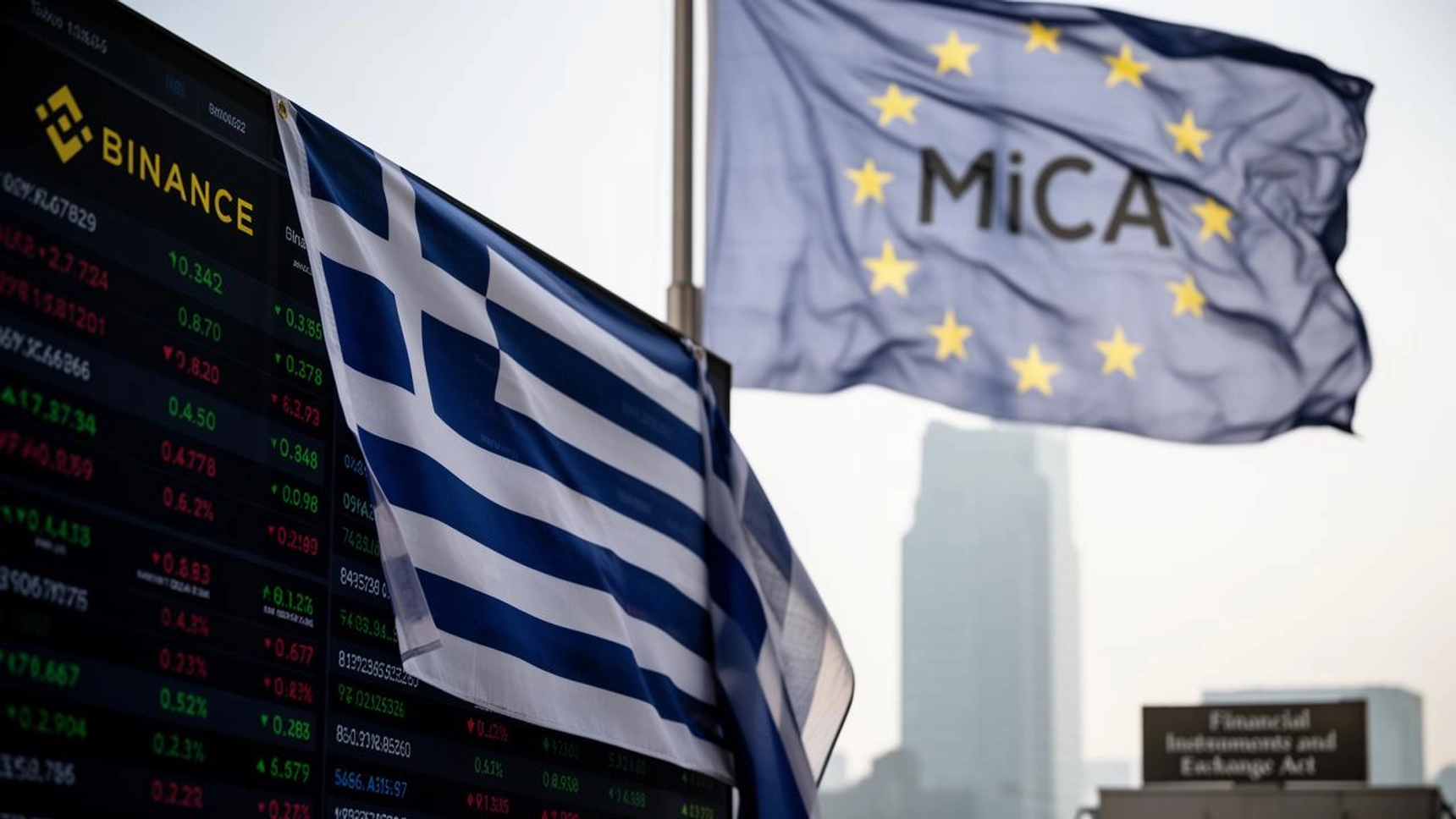
Author: Claude, Shenzhen TechFlow Original title: European Crypto “Line of Life and Death”: Binance is blocked from the door, who got the pass? Guide to Deep Wave: MiCA, the EU's crypto regulatory framework, will be implemented on July 1. Out of more than 1200 licensed institutions across Europe, only about 210 have obtained CASP passes, with a customs clearance rate of about 17%. Binance, the world's largest exchange, suspended most EU services on July 1, and switched to France after withdrawing Greek license applications; Bybit Global simultaneously restricted EEA users and diverted them to the already licensed Bybit EU. Coinbase, Kraken, OKX, Crypto.com, etc. held the pass, and the European crypto landscape was reshuffled. July 1 marks the end of the EU's Crypto Asset Market Regulation Act (MiCA) transition period. After this day, any crypto platform that wants to serve EU customers must hold a CASP (Crypto Asset Service Provider) license issued by the supervisory authority of at least one member state; otherwise, it is illegal and must stop operating. ESMA (European Securities and Markets Authority) has made it clear many times: there is no grace period, no extension, no intermediate status. Either it's licensed or it's illegal. With a customs clearance rate of only 17%, the world's largest exchange fell off the MiCA list. The real lethality is reflected in a number. According to CCN quoting ESMA provisional register data, MiCA previously had more than 1,200 institutions across Europe holding VASP (virtual asset service provider) registrations issued by various countries, but as of May 2026, only about 210 companies had completed the conversion to CASP licenses, with a customs clearance rate of about 17%. More than 80% of the remaining institutions either missed the window, had no legal status before completing the process, or quietly left the market. Binance has fallen on the side of the violation. It previously bet on Greece as an entry point into the European Union. In January 2026, it submitted a MiCA application through a Greek subsidiary. Co-CEO Richard Teng also publicly stated in February that Greece's talent reserves and security environment made it superior to a larger financial center. However, on June 16, Reuters reported that the Greek Financial Supervisory Authority (HCMC) is preparing to reject the application. According to the Financial Times, the barriers focus on anti-money laundering compliance and MiCA's “fit and proper” (suitability) standards for shareholders and managers. The core issues are the past legal records and corporate governance structure of co-founder Changpeng Zhao. The three regulators of Greece, Ireland, and Latvia have jointly followed up on this application. On June 24, Binance voluntarily withdrew the Greek application before it was officially rejected, stressing that “no formal veto has been received” — the wording was deliberate, leaving room for subsequent re-applications. Gillian Lynch, head of Binance Europe, told Reuters that “Binance has not left Europe” and that the company plans to turn to France to seek a license, saying it can be obtained “within the next few months.” For EU users, this means that Binance will stop accepting new users and limit some services in markets such as France, Italy, Poland, and Spain starting July 1. Binance promises that assets are safe and can be withdrawn normally, but new transactions and deposit channels will be cut off. Whether it can obtain a license through France within a few months is the key to Binance's return — and the French regulator itself has an unfinished investigation into Binance. If France approves what Greece is prepared to reject, it will also reveal differences in the scale of MiCA implementation by member countries. For EU readers with Binance accounts, what they need to do now is pay attention to account notifications directly sent by Binance, follow the guidelines to process positions before the deadline, or transfer assets to self-hosted wallets and other licensed platforms. Bybit also restricts EEA users, but the opposite of Binance is the same time that Binance announced the suspension of service. Bybit also issued a restriction notice for European Economic Area (EEA) users, covering 29 EEA countries including Germany, France, Italy, and Spain. On the face of it, it's the same thing; in reality, the direction is completely opposite. Bybit obtained a MiCA license through the Austrian Financial Markets Authority (FMA) as early as May 2025 and operated an independent compliance entity Bybit EU (bybit.eu, Vienna headquarters). The platform was launched in July 2025...
By Chloe, ChainCatcher Original title: What do you think of Binance's competitive advantage? On June 16, 2026, Reuters quoted two people familiar with the matter as reporting that the Greek Capital Markets Commission (HCMC) was preparing to reject Binance's MiCA license application; two days after the news broke, OKX founder Star (Xu Xingxing) published a long article on X to dismantle Binance's competitive advantage in regulatory blind spots. As regulatory pressure continued to heat up, a few days later, on June 24, Binance officially announced that it had decided to withdraw its MiCA license application in Greece and would turn to other EU member states to seek authorization. As we examine the four strengths that Binance has been accused of: regulatory arbitrage, speculative narrative cycle, social media control, and paper compliance, and then compare the MiCA dead line currently unfolding in the EU to examine how many of the moats Binance has accumulated over the past ten years when the rules are gradually completed and all exchanges stand on the same starting line, how much of the moat that Binance has accumulated over the past ten years is actually a real product or technology, and how many are just the dividends of lack of rules? Dismantling Binance's competitive advantage Xu Mingxing split Binance's competitive advantage into four pieces in the article. If you look at them side by side, you'll find one thing in common: each is not “Binance has made a product that others can't do,” but “Binance is not bound where others are bound.” Regulatory arbitrage: Operating where rules are fewest The core argument is that over the past decade, cryptocurrency competition has long been affected by regulatory arbitrage: companies operating under less regulatory constraints often enjoy more advantages than those that invest heavily in licensing, compliance, governance, and regulatory participation. In other words, when an exchange can serve global users without establishing an entity, applying for a license, or cooperating with regulation, its cost structure is inherently lighter than a serious compliant competitor. This gap is not due to the product, but to the lack of rules themselves. Speculative narrative cycle: There is always the next chance to get rich. He described Binance's business model as “a continuous cycle of speculative asset promotion”: when one asset story loses momentum, the other quickly makes up; users lose money in one cycle, and their attention is quickly directed to the next token, the next trend, and the next opportunity. He also pointed out that over the years, Binance has built a huge ecosystem composed of founders, former employees, venture capital funds, incubation projects, and affiliate market participants. Many projects received listing and exposure, but prices fell more than 95% from their peak after launch. Critics believe that the real profits are related insiders and early participants, while much larger retail investors have borne most of the losses. Social media machines: Ability to shape cognition The third advantage is social media control. Xu Mingxing pointed out that over the years, Binance has invested heavily in establishing links with KOLs, media agencies, promotion partners, and the community to develop one of the strongest communication networks in the industry; whenever negative news appears, it is often seen that a group of influential accounts immediately post positive content, while criticism is often questioned, refuted, or attacked. Supporters see it as strong community building and marketing, while critics see it as narrative management. Whichever claim is true, almost no one denies that Binance has built one of the most efficient social media machines in the history of the crypto industry, but this is also not a product power, but rather the distribution of influence in the public opinion arena. Paper compliance: The 1,500-person compliance paradox The fourth one is compliance. Binance often emphasizes that it employs more than 1500 compliance professionals and is one of the most compliant crypto companies in the world. Xu Mingxing's objection is that for any financial institution, compliance is never determined by the number of employees, but depends on whether the organization actually values compliance from a conceptual point of view and establishes control measures to manage real risk exposures. Citing reports from the “Wall Street Journal” and other media, he questioned Binance's “heavy form and light substance” in sanctions risk exposure, market monitoring, and suspicious account handling, and using Binance's sale of business to ComMex after leaving Russia, and the close relationship with Aster as an example to raise a fundamental question: if a business model is so risky that Binance is unwilling to directly operate, then is it acceptable to do it through an “independent” entity that is still closely linked to its ecosystem? These are all one-sided accusations by Xu Mingxing, and Binance does not necessarily agree with them. But what I want to say is actually the same sentence: this is not a company that wins by its products; it is a company that wins by a regulatory gap. MiCA Deadline: The First Positive Collapse of Regulatory Arbitrage Advantages The European Union's “Crypto Asset Market Regulation” (MiCA) came into full effect at the end of 2024, and the transition period will end on June 30, 2026; starting July 1...
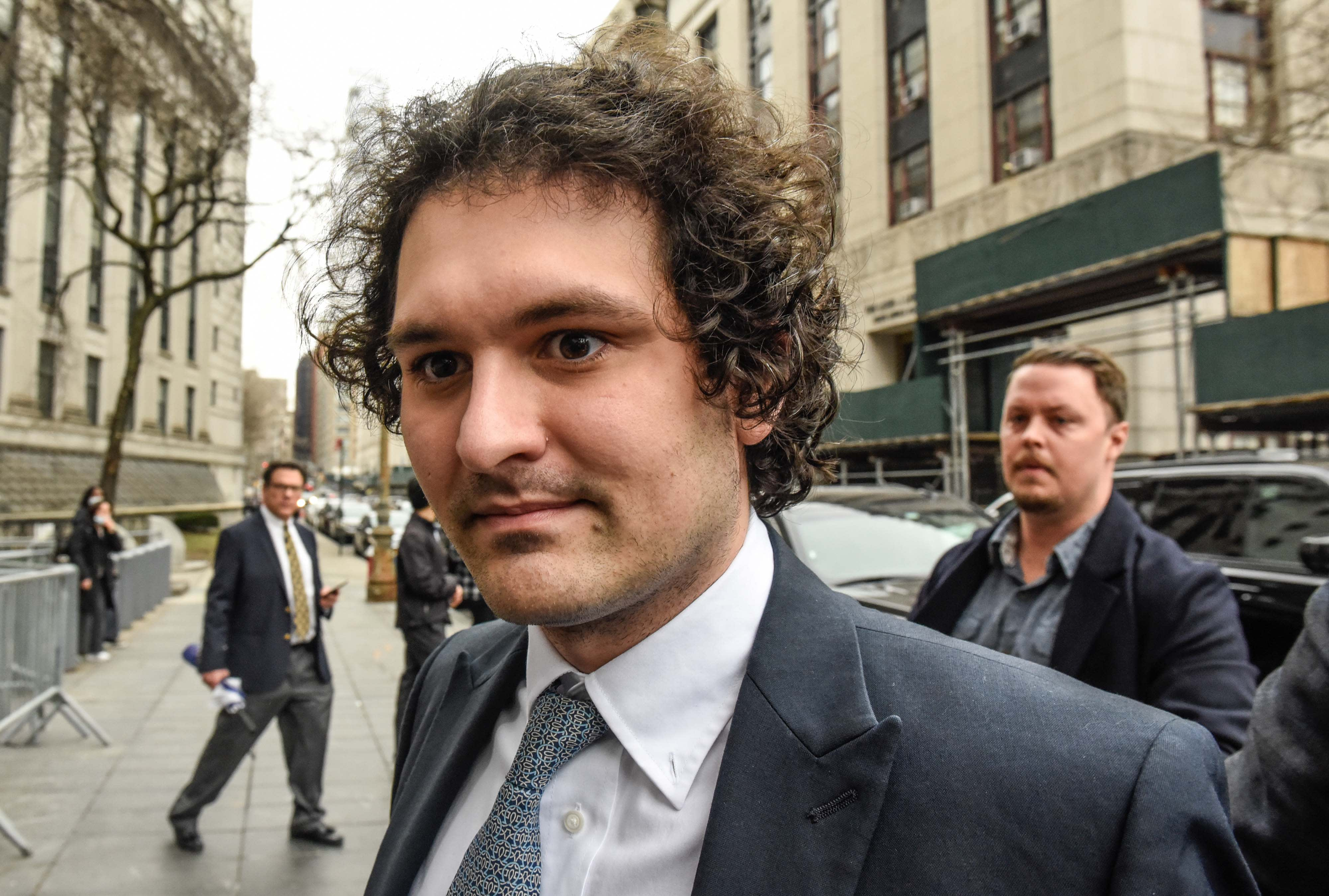
Author: Oluwapelumi Adejumo Compiled by: Chopper, Foresight News Original title: SBF asks for pardon, FTT skyrockets: a political gamble with only 8% win rate TL; DR: Sam Bankman-Fried (SBF) officially applied for presidential pardon, and FTT tokens rose more than 50% within 24 hours. The surge had nothing to do with the actual value of the token; it was simply a speculative bet on the market's amnesty application. Trump has refused pardons many times, predicting that the probability of approval given by the market is only 8%, and the transaction risk is extremely high. Sam Bankman-Fried (SBF), founder of the discredited cryptocurrency exchange FTX, is serving 25 years in federal prison for planning one of the largest financial fraud cases in US history. However, cryptocurrency speculators are betting that a newly submitted presidential pardon application may turn their fortunes around. SBF sought Trump's pardon this week. SBF officially submitted an application for administrative pardon through the official website of the US Department of Justice's Office of Pardon Lawyers. The move marks an official escalation of the family and legal team's months-long secret lobbying campaign. This operation violates conventional legal practice and breaks the rule that it is necessary to wait five years before applying for pardon after a judgment. The chances of approval are slim, however, as President Trump has repeatedly denied any pardons to the SBF. Notably, traders on the blockchain-based prediction market Polymarket currently believe that Bankman-Fried has only an 8% chance of getting a presidential pardon before the end of the year. Probability of SBF being pardoned before the end of the year on Polymarket The speculative rise in ghost tokens Although both political analysts and forecasters believe that the probability of a pardon being approved is extremely low, the news of “submitting an application” alone is enough to trigger a speculative frenzy on digital asset exchanges. According to CryptoSlate data, SBF's legal actions directly benefit FTT, the native token of the FTX exchange. Today's FTT is already a ghost asset: since FTX went bankrupt in November 2022, the token had no actual application scenarios, no maintenance by a development team, and no underlying business support. But the crypto market has always been driven by emotions, predicament narratives, and algorithms. After news of the pardon application came to light, FTT24 rose by more than 50% per hour, hitting a high of $0.35, a sharp rebound from the previous all-time low of $0.2141. Meanwhile, CoinMarketCap data shows that the bankrupt token's trading volume soared by more than 600%, surpassing $16 million. According to market data, about 30% of speculative transactions occurred on Binance, a competitor that cleared FTT holdings at the end of 2022, directly triggering an FTX crowding storm. This recent wave of gains suggests that some market participants see FTT as a political option to bet on SBF's fate. Traders believe that if the amnesty is passed, the market may briefly rekindle interest in FTX-related assets, and FTT will therefore become a direct game tool. What needs to be clarified is that such transactions have nothing to do with legal proceedings or bankruptcy recovery. The presidential pardon cannot resume FTX operations, restart FTT's original functions, change the creditor claim structure, and only affects SBF's personal freedom and political narrative. SBF's defense In March 2024, a jury found SBF guilty of two wire transfer fraud charges, two counts of conspiracy to commit wire transfer fraud, and conspiracy relating to securities fraud, commodity fraud, and money laundering. Federal prosecutors have charged him with embezzling billions of dollars from FTX clients, defrauding exchange investors, and misleading Alameda Research lenders. In the end, US District Judge Lewis Kaplan sentenced him to 25 years in prison, 3 years of supervised release, and confiscation of over $11 billion in assets. However, SBF has always denied the outside world's core characterization of the FTX crash. In interviews and online statements, he said that the exchange was experiencing a liquidity crisis rather than actual insolvency, and that the asset recovery situation after bankruptcy proved that customer funds could have been paid in full. Its core argument focuses on FTX's remaining assets and venture capital value, arguing that assets outweigh liabilities in the event of bankruptcy, and that control of the company should not be handed over to external restructuring advisors. This statement completely contradicts the evidence presented by the prosecution during the trial. Government evidence shows that FTX customer deposits were secretly transferred to Alameda to cover transaction losses, investments, purchases...
Author: Lin Wanwan Original title: A Chinese at Harvard did a 2.9 trillion dollar business. Wall Street teamed up to sue him that when you did an IPO, at least four companies were sharing money with you: brokerage firms, underwriters, custodian banks, and trading platforms. Each of them costs a sum of money. Of course, this is a common rule for A shares, US stocks, and Hong Kong stocks, and has not changed in over 100 years. On May 13, 2026, two century-old trading platforms in Chicago and New York suddenly discovered that a trading site had bypassed all of these pumping points. It is registered in Singapore and was founded by a young Chinese graduate from Harvard. It has only 11 employees and serves users around the world. A few days later, two century-old trading platforms in Chicago and New York joined forces to find US regulators and demand that this website be shut down. That night, four top investment banks, as lead underwriters, priced the AI chip company Cerebras's IPO at $185 per share. Cerebras' rival is Nvidia, which is the biggest tech stock IPO to date in 2026, raising $5.5 billion, the biggest in the US since Uber rang the bell in 2019. The underwriting fee is 4% to 7% of the total IPO, and the four investment banks split about $220 million to $380 million in underwriting commissions that night. This money goes into their US accounts, pays US corporate income tax, pays bonuses to US employees, and employees then pay US personal income tax. Every step is a tax collection point for the US Treasury. At the same time, on a website called Hyperliquid, Cerebras' pre-IPO perpetual contract was being traded, with the contract code $CBRS and launched on May 1. Pre-IPO perpetual contracts say that a company hasn't gone public yet, but you can already place an online order to bet on its future stock price. Hyperliquid is a program that provides this ordering service. On May 13, the contract price was $291, which was 57% higher than the $185 agreed upon by the four investment banks. 24-hour trading volume of $230 million. Hyperliquid takes about 0.025% of the matchmaking fee, which is equivalent to $57,500. This money goes into an on-chain account, doesn't pay US corporate income tax, and doesn't go through any Wall Street intermediaries. Of course, compared to the hundreds of millions of dollars split between the four Wall Street investment banks that night, $57,500 is only a fraction. But the reason ZERO became news is because it points to a future where the US Treasury is very uncomfortable: any global asset can be traded on the chain for 24 hours, and the US doesn't receive a single cent in tax. Two days later, on the afternoon of May 15, 2026, a Bloomberg exclusive came. CME of the Chicago Mercantile Exchange and ICE, the parent company of the New York Stock Exchange, joined forces to find the CFTC (US Commodity Futures Supervisory Authority) and members of Congress to require that Hyperliquid be regulated by the US, mandatory real-name authentication, and mandatory transaction monitoring. The reasons they say are “market manipulation” and “sanctions evasion.” The term compliance is not the same thing as “legal” in the US financial system. More often, it refers to whether the US can derive corresponding benefits from it. Hyperliquid didn't violate US law, but it didn't pay taxes to the US. This is probably why CME and ICE sued Hyperliquid to the CFTC. Hyperliquid circumvented tax collection rights and the first thing that CME and ICE began to feel wrong happened on the weekend of February 28, 2026. On that day, the United States and Israel jointly attacked Iran. Iran is OPEC's fourth largest oil producer, and the Strait of Hormuz carries one-third of the world's maritime crude oil transportation. But it was a Saturday, Chicago CME closed, London ICE closed, and Singapore SGX closed. Oil prices around the world were frozen from Friday afternoon to Sunday evening in New York time. In the week before the war, the daily trading volume of WTI crude oil perpetual contracts on Hyperliquid was around $21 million. The weekend after the war broke out, the daily trading volume of the same contract soared to $1.7 billion, close to 250 times. On March 20, JPMorgan published a research report by top analyst Nikolaos Panigirtzoglou. He wrote a research report on global capital flows, the most in the world...