


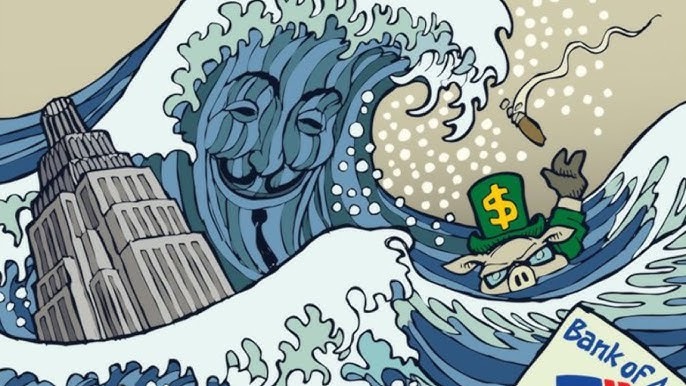
A financial tsunami could occur after the introduction of the stablecoin bill
Authors: Zhu Weisha, Wang Yuxiao
Stablecoin is a popular term. It refers to a type of cryptocurrency that is backed by a secure financial asset and the face value is anchored to fiat currency. It is the most realistic application of cryptocurrency in the world, and it has begun a process of financial transformation. Stablecoins are a key tool connecting traditional finance and the crypto ecosystem. The introduction of the US “Genius Act” and Hong Kong's “Stablecoin Regulations” marks the beginning of the global financial system to regulate this emerging field.
Although the US and Hong Kong have introduced stablecoin laws for different purposes, they are all enacted based on the practice of cryptocurrency stablecoins, and they all hope to expand them to the current fiat currency system in a way that is beneficial to them. Comparing the similarities and differences between the two local laws helps us understand future trends in financial development. This is a great event of human progress, and marks another big step forward in the financial revolution initiated by a new generation of cryptocurrency elites represented by Satoshi Nakamoto. The content of the bill will not be detailed in this article, nor will it talk about the merits. There are already many related articles. We will mainly discuss the issues here.
There are no final bailouts in either bill
Relief measures are necessary for the stability of the financial system. The most famous one is the financial tsunami in the US from 2008 to 2009. Joint bailouts from the US government and the Federal Reserve only restored financial stability. As far as the US “Genius Act” is concerned, since reserve assets are strictly limited to high-liquidity, low-risk dollar-denominated assets such as short-term US bonds and US dollars, US bailout measures are necessary; the reserve asset class of Hong Kong issuing stablecoins allows the use of combined assets (including non-Hong Kong dollar assets) as reserves, and government bailouts do not seem that necessary for Hong Kong.
In fact, stablecoins have been bailed out by the Federal Reserve. When the Bank of America's Silicon Valley went bankrupt in March 2023, USDC, the second-largest stablecoin, dropped by more than 10%. The Federal Reserve later bailed out the Bank of Silicon Valley. USDC was only able to preserve the 3.3 billion US dollars stored in the Bank of Silicon Valley, and USDC was restored to 1 dollar. However, in the US “Genius Act,” I only saw the supervisory authority: the Monetary Supervisory Service, but not the unit that could help — the Federal Reserve or similar agencies.
When there is no licensing system for stablecoins, stability, security, and exchange are guaranteed by unreasonable “pulling the plug”. In the same incident mentioned above, Sun Yuchen and many other investors exchanged and redeemed large amounts of USDC, and large amounts of redemptions caused the price of USDC to drop. At the time, cryptocurrency and stock traders Robinhood, exchanges Binance, and Coinbase all announced the suspension of some USDC services, which means redemptions were prohibited. Also, USDT, the largest stablecoin in 2021, absorbed the $700 million redemption requirement within 48 hours, and only processed the $2 billion redemption request within 40 days, accounting for 22% of its reserve assets. In traditional finance, it's impossible to handle it this way.
Once laws are enacted, they must be complied with. Judging from the idea of the bill, stablecoin issuance is managed according to traditional finance. The US reserve assets are clearly “dollar cash, US Federal Savings and Insurance Company (FDIC) insurance deposits, US Treasury bonds with a maturity date of less than or equal to 93 days, overnight repurchases supported by the New York Federal Reserve, and central bank reserves.” In this way, the Federal Reserve's bailout is quite reasonable. The reserve assets required by Hong Kong cover a wider range of assets. Theoretically, the more types, the higher the uncertainty. USDC stored dollars separately in multiple banks, increasing the uncertainty brought about by banks, and it suffered when banks exploded. USDT, for the most part, bought into US debt and escaped the bankruptcy of individual US banks. Hong Kong's portfolio assets are broadly defined. The risk of reserve assets is higher than that of the US, and they are also more difficult to rescue. However, since most of the stablecoins issued are not HKD stablecoins, bailouts are not the responsibility of the HKSAR Government. The Hong Kong government handled this very smartly.
From the standpoint of the US, does the government need to back up the US dollar stablecoin? It only maintains the stability of the US dollar. The stability of stablecoins is the responsibility of each issuer, and each issuer bears the responsibility if there is a problem. If not an ecosystem makes sense, just like cryptocurrencies don't affect each other. If it's an ecosystem, something is wrong with the chassis. For example, the cryptocurrency Luna has gone wrong as the foundation of the ecosystem, and all ecological projects are dead. In other words, something went wrong with Luna's mortgage project, dragging down Luna's entire ecosystem. All US dollar stablecoins are issued in the US dollar ecosystem, and judging from the practice of cryptocurrencies, they need to be backed up. Finance is a testing ground for society as a whole; there were no examples before it happened. Once it happens, the costs are high. Cryptocurrency is also finance. The field of cryptocurrency forms a “testing ground” for traditional finance, and the lessons learned here are invaluable. All of the examples are likely to be replicated in the new stablecoin environment.
The Senri embankment collapsed into an ant den. The algorithm stablecoin UST (Luna) team's move to reduce collateral interest caused the sale of 100 million US dollars in arbitrage, which had a ripple effect, causing the stablecoin UST (Luna) to collapse. Although he cooperated with local agencies to carry out the bailout and is said to have spent several billion dollars, the market value almost returned to zero in just a few days. A plate of over $30 billion eventually leveraged the cryptocurrency market capitalization loss of $700 billion. Cryptocurrency adjusts faster than traditional financial systems. Fortunately, it has not spread to the fiat currency system because the two systems are isolated. Back then, Powell stopped the fiat chain reaction caused by the UST (Luna) crash. When the two systems were opened up, we faced an unknown new situation, and I don't know how much chaos there was.
Finance is a game of chess. It is maintained by credit, and people's trust can instantly turn into fear. Cryptocurrency is a global market, and there are no barriers. If the 2009 financial turmoil were to occur in the cryptocurrency sector, there might not be time to bail out.
Finance is a game of chess. The cryptocurrency FTX exchange went bankrupt due to market panic caused by Luna and falling asset prices. If it survives today, the market value of FTX assets will recover. Luna's failure lies in the absence of an overall rescue measure. Assuming a bailout by the Federal Reserve back then, he wouldn't die, and he wouldn't have lost 700 billion dollars in cryptocurrencies. Of course, this has nothing to do with the Federal Reserve; it won't take action, but in the end, the fire caught on to it.
Finance is a game of chess. The Hong Kong dollar belongs to the US dollar ecosystem. When Hong Kong becomes a cryptocurrency financial center, the fast financial system, and because losing money has nothing to do with the Hong Kong government, the Hong Kong government doesn't need to go undercover. Once the fighter jets are missed, the problem may get out of control. The US bill only allows institutions with banking licenses to issue stablecoins; Hong Kong is not limited to bank licenses. There is a possibility that a major US tech company will go to Hong Kong to issue stablecoins. When a company can issue stablecoins, with current management methods, fiat currency used as a reserve asset is not transparent, and there is a high possibility of fraud. Hong Kong's current “Stablecoin Regulations” may become a feast for speculators, and will most likely become the starting point of causing a financial tsunami.
Transaction time difference issues for stablecoins and fiat assets
Stablecoins are 7x24 hour transactions, and so is forex. But stablecoins are not reserve assets. This problem isn't very prominent in the US. However, for Hong Kong, various combinations of reserve assets will have transaction time differences, causing trading time differences between the primary market and the secondary market.
The Hong Kong government's method of stabilizing the Hong Kong dollar is to buy and sell at a specified price in the secondary market; stablecoins stabilize the price through arbitrage in the secondary market and the primary market. When the price in the secondary market falls below $1, arbitrators can make a profit by buying stablecoins in the secondary market and exchanging $1 with the stablecoin issuer at a 1:1 ratio in the primary market. This arbitrage process also means that when stablecoin issuers throw out reserve assets to meet the arbitrator's cash redemption, selling pressure from investors in the secondary market will eventually trigger the sale of reserve assets. For big players, such as the Hong Kong Monetary Authority, due to credit, the delay in settlement of reserve assets can first be advanced and exchanged by an exchange in the secondary foreign exchange market. Even if small stablecoins have reserve assets, they do not have enough credit. Once there is no bailout or if the timing of the rescue does not match, it will be crowded out. This is particularly evident in the cryptocurrency sector, because the assets on the chain are all traceable, so if a vulnerability is found, it can be attacked.
Regulators and market participants all want stablecoins to have a low risk of crowding out while maintaining price stability, but these two goals are conflicting and driven by different forces. In particular, according to regulations, stablecoins allow unlimited redemptions, which will improve arbitrage efficiency. Under normal circumstances, price stability can be improved, and once a panic situation occurs, it will cause a higher risk of crowding out.
The time difference between stablecoins and fiat currency systems can be risky if not properly addressed.
Panic must be excessive once it appears; this is the butterfly effect of the Amazon rainforest.
The US practice of issuing US dollar stablecoins is inconsistent with the practice of issuing Hong Kong dollars
Hong Kong requires a capital of HK$25 million or equivalent assets to issue specific stablecoins after obtaining a license, which means that offshore RMB or US dollar stablecoins can be issued in Hong Kong. Unlike US legislation, Hong Kong allows various eligible entities to issue stablecoins, adapting to Hong Kong's status as a financial center.
In fact, the last thing Hong Kong needs to issue is the Hong Kong dollar stablecoin.
The Hong Kong dollar is essentially the US dollar's stablecoin, but there is no cryptocurrency. The issuance level of Hong Kong dollars has so far been the ceiling for the issuance of sovereign stablecoins. Hong Kong dollars are issued by three major companies: HSBC, Standard Chartered and Bank of China. The HKD is running well, and the Hong Kong team is the only team in the world with over 40 years of experience in stablecoin management. Why can't any bank in Hong Kong issue notes? Why don't they apply the experience they already have? The meaning here is very deep. The discussion requires a lot of text, which is beyond the scope of this article.
Here's just the conclusion:
Hong Kong's experience in issuing Hong Kong dollars shows that the practice of issuing US dollar stablecoins is inconsistent with the practice of issuing Hong Kong dollars. Can the stablecoin experience of successfully experimenting with cryptocurrencies on a small scale be placed almost unchanged in a more complex financial environment?
Hong Kong has established rules for issuing stablecoins. The issuance conditions are relaxed, and the illegal conditions are very detailed. They are subject to strict supervision, and all kinds of stablecoins can be issued. The US pursues the hegemony of the US dollar, and Hong Kong pursues a financial center. This is the fundamental difference between the two bills.
The two have different purposes; it's hard to say that the US should use the Hong Kong dollar model to issue stablecoins, but who can explain the risks of US stablecoins?
Reminds us of Soros
Are stablecoins minimally risky? Money is the unit of measure and is the foundation of all financial activity. Pull in one go and move your whole body. Back then, Soros's hunt for Hong Kong dollars was a joint operation of the stock market, futures market, and foreign exchange market. If Hong Kong did not have the support of the Chinese government and the efforts of Hong Kong officials, Soros would have succeeded.
History chronicles this difficult moment:
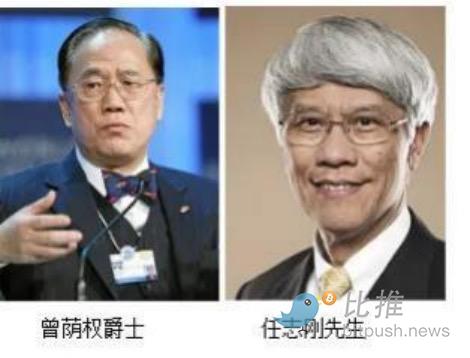
“Donald Tsang, who is tough, doesn't want to give up the exchange rate; he just steals his life.”
“After making difficult choices, Donald Tsang made a decision that will go down in history: instead of letting the wealth of Hong Kong people fall into the hands of speculators, it is better for the government to enter the market, use foreign exchange reserves, and go for it.”
“Donald Tsang and Joseph Yam then reported this idea to Tung Chee-hwa, the Chief Executive of Hong Kong at the time. The uneasy two didn't expect that it only took half an hour for Tung Chee-hwa to clap and release.”
“At this point, Donald Tsang knows very well. It's fine to win against the hard-earned money of the Hong Kong people; if they lose, let alone resign, a few of them would be petty to apologize for the crime. But in front of them, there is no other path to follow.”
“Donald Donald Tsang cried all night that night. Sometimes, history just requires people to make difficult decisions. The final confrontation between the two sides came as scheduled. ” (Quoted from Shenhejun, Professor of Alchemy)
This is the biggest challenge the Hong Kong dollar has ever faced. If Hong Kong had failed at the time, it would have gone back more than 10 years. Back then, the financial quality of Hong Kong people was extremely high. August 28, 1998 was a decisive battle day. The great Hong Kong people made every effort to cooperate with the Hong Kong government in the stock market and foreign exchange market, and the banking industry raised interest rates on short-term loans; until the close at 4 p.m., the Hang Seng Index was finally fixed at 7,829 points! The full-day trading volume reached the highest record in the history of the Hong Kong stock market — HK$79 billion! Hang Seng Index futures were finally settled at 7,851 points. Over a total of 10 trading days, the Hong Kong government used foreign exchange reserves equivalent to HK$120 billion to raise the Hang Seng Index by 1,169 points. Hong Kong has finally won.
Salute the heroes who defended Hong Kong.
There is now one more currency market than when Soros hunted the Hong Kong dollar. The stock market, futures market, foreign exchange market, and stablecoin markets are linked. What will happen? I think the smartest financial speculators in the world are already thinking about it. In particular, they control a great deal of financial power. Furthermore, stablecoins are a new thing, and flaws in the system are waiting to be discovered.
We saw the Trump team trying to use stablecoins to strengthen the dollar and resolve the US debt problem; this is a great and ambitious idea. However, it is based only on the stablecoin experience of successfully testing a small range of cryptocurrencies, and this experience does not include a final bailout; furthermore, there are no affiliations between the Federal Reserve and the government; people creating obstacles are everywhere; it's really not easy to think about.Once a loophole in the system is exploited, if it causes a financial tsunami, the government will inevitably have to spend a huge amount of money to make up for it.
Stablecoins use fixed exchange rates and leverage issues
I'm in “Using the Hong Kong dollar to achieve the Bitcoin standard” The article analyzed the Hong Kong dollar. Based on the situation at the time, the Hong Kong dollar represented a stronger economic fundamentals than the US. The confrontation with Soros does not depend on fundamentals; it depends on short-term funding. Whoever has more money wins.
Maintaining a fixed exchange rate is difficult; historical experience has determined that the Hong Kong government never mentions Hong Kong dollar stablecoins. What kind of impact will the issuance of HKD stablecoins have on the HKD? In fact, issuing Hong Kong dollar stablecoins leverages the Hong Kong dollar. If the Hong Kong dollar remains unanchored and the 24-hour exchange is resolved, it is not very risky at first glance.
If the market reproduces Soros-style attacks, leverage will amplify the strength of the attack. What would an attack look like in the new circumstances?
We don't know how much leverage this is. The amount of financial assets is greater than the amount of currency. There is a provision in the US Act prohibiting the re-collateral of stablecoins. In fact, there is no collateral. When issuing stablecoins, issuers get fiat currency. The fiat currency is then bought into short-term US bonds, then becomes a reserve asset, and then issues stablecoins. One dollar can buy two yuan of treasury bonds, which is very beneficial to the digestion of bonds. If I use my brain again, can I still make three, four, or more purchases?
For stablecoin issuers, stored value assets have interest, and there is no interest to stablecoin buyers. This implies a very profitable business model. There is little problem with banking institutions issuing stablecoins in the US, but according to Hong Kong's “Stablecoin Regulations”, stablecoin issuers are diverse, and non-bank institutions are not subject to compliance restrictions on bank management rules, which undoubtedly amplifies the risk of the entire financial system.
The following statement is hypothetical.
It is legal to exchange fiat currency for stablecoins. There is no interest on stablecoins. It is also legal to buy treasury bonds with fiat currency and interest, which is of interest to the issuer. Since it's not a collateral, it's not impossible for issuers to cycle up. According to Hong Kong's approach, if you include bond-type reserve assets, you can basically achieve multiple leverage, and even more if they are all cash reserve assets. When a company has a license, it can issue stablecoins. If it circulates stablecoins to earn interest, should it matter? How to manage it?
The amount of money issued by commercial banks should be included in M2 (broad currency). The leverage brought about by stablecoins is theoretically the US should be included, but how is it included? This raises new issues in the management of the US currency. If Hong Kong is not a Hong Kong dollar stablecoin, it should not be included.
Malaysian and Thai fiat currencies that use fixed exchange rates have not withstood Soros' attacks. Countries that want to issue stablecoins have leveraged their fiat currencies, increasing financial risks. The issuance of currency by a sovereign country should be based on the fundamentals of the economy, so does issuing stablecoins amplify the financial bubble?
There are many, many more unintelligible and emerging issues like this.
Of course, there are advantages and disadvantages; to be discovered in practice, progress is better than stagnation.
Issuance of sovereign stablecoins. The Hong Kong Monetary Authority is an example
How should stablecoins be issued? The current method is to post one for each person. How many of the world's currencies can everyone remember? It's good to remember 30. Thousands of households are issuing stablecoins, do people remember? The design here is very flawed.
The Hong Kong dollar issued in Hong Kong is a US dollar stablecoin. It uses the same name: HKD. It has been in operation for decades without incident, which indicates the rationality of the issuance. There are three banknote issuing banks in Hong Kong: HSBC, Standard Chartered, and Bank of China. They do not separately issue HSBC, Standard Chartered, and Bank of China coins; the currencies they issue are all called Hong Kong dollars. The HKMA is responsible for maintaining the stability of the Hong Kong dollar, rather than each bank maintaining the stability of its own currency. The Hong Kong banking industry working together to maintain the stability of the Hong Kong dollar is far less risky than maintaining each company. This is the correct way to issue stablecoins linked to a sovereign exchange rate that has been tested by history. Of course, the US is excluded, because the US dollar is currently the base currency.
The excellent designer of Hong Kong's linked exchange rate is Sir John Henry Bremridge (Sir John Henry Bremridge).

The HKMA underpins the stability of the Hong Kong dollar; this is one way to bail out. Does every stablecoin issuer have the ability to back the stablecoins they issue?
The current stablecoin issuance method clearly has three major risks: no back-up measures, opacity of fiat assets, and inconsistent names of issued stablecoins.
Back-up measures are not technical issues; the latter two problems can be solved with technology.
These two bills are new wine in old bottles
Since the fiat currency part endorsing stablecoins is not transparent, the US and Hong Kong naturally thought of using bank supervision methods to regulate stablecoins. The lack of transparency in reserve assets has raised concerns about whether they must be guaranteed by means of audit or assurance. For example, the Bank for International Settlements (BIS) is concerned about the real reserves of assets behind stablecoins, especially for projects such as Tether (USDT) with high market share but opaque information.
Does the Bitcoin system need to be managed? No need! Because it's a transparent ledger. Satoshi Nakamoto quoted David's words “the ledger needs to be disclosed” in the white paper and used David's article as the first quote in the white paper. Actually, this is the core concept of Satoshi Nakamoto's white paper. However, the generalization of decentralization and blockchain is one level lower than this concept.
Ledger Transparency (Ledger Transparency) has restructured the liability mechanisms of financial intermediaries such as banks.The responsibilities of traditional financial intermediaries mainly rely on trust and compliance statements, while the Bitcoin system translates “intermediary liability” into “verifiable behavioral liability” and “procedural structural responsibility” through transparent ledgers. This transformation is not only a technological upgrade, but also a deep reshaping of the logic of the financial intermediation system. Using a combination of an immutable ledger, computing power, and timestamps, Satoshi Nakamoto built a system where no one can be trusted and trust can be established by connecting the ledger through a trusted block connection.
This trust system uses an open, transparent and verifiable method to form a credit root out of thin air; the transmission of credit is driven by program logic, which cleverly makes the process trustworthy.This idea is far more advanced than computers requiring a secure computing area (TEE) to generate credit roots. The safe area of a computer is inaccessible to the average person; it is open to core programmers. We can't verify that they must be trusted. It's like believing that banks won't do evil. There is, of course, legal deterrence. The credit roots generated by traditional computer theory and social practice are imperfect, because there is a problem where verification is impossible and verification is lagging behind. Satoshi Nakamoto solved this problem very cleverly.
Both bills do not meet these characteristics. It doesn't take advantage of the advanced ideas of cryptocurrencies, and there is a lot of room for improvement.
We need a low-cost regulatory system
Hong Kong's Stablecoin Ordinance is very detailed, and there is a requirement to disclose assets on a daily basis. The requirement to have 110% reserve is very well written. But how can you tell if the material is real or fake? The cryptocurrency exchange boss Binance published a certificate based on Merktree's reserves, which should be said to be significant. However, the market did not accept it and raised many questions because it did not match the idea of cryptocurrency, that is, the way Binance credit roots were generated was not credible enough. Similarly, today's bill doesn't fit the idea of cryptocurrencies. It's not as trustworthy as Binance, and it's completely unreliable to resolve credit roots.
The essence of Satoshi Nakamoto's idea is to use the transparency of the ledger so that the supervisory responsibility mechanism is embedded in the ledger structure. It is no longer an audit or statement after the fact, but exists in the data in real time, and the management and processing process is integrated. If we still need an audit after the fact, it doesn't match the evolution of the times.
An excellent regulation should be low cost. If it doesn't match the size of the Web3 team, we need to reflect on what went wrong? Bitcoin has only 4 maintainers, the Ethereum Foundation has about 30 people, and USDT (Tether) has just over 100 people.
If fiat reserve assets corresponding to stablecoins can be made transparent, the supervisory responsibility mechanism of financial intermediaries will be restructured, supervision will be carried out based on ledger transparency, and supervision costs will be drastically reduced. The Bank for International Settlements (BIS)'s concerns about the real reserve status of the assets behind stablecoins have been allayed.
Issuing transparent stablecoins is an upgrade of traditional finance
The “Unified Ledger (Unified Ledger)” design promoted by the Bank for International Settlements (BIS) is too complicated, and faces many challenges in terms of multi-technology architecture compatibility, cross-agency collaboration, and multi-regional regulatory adaptation. In other words, using pure blockchain and alliance chains is insufficient to build a “visible+controllable+verifiable+upgradeable” transparent ledger intermediary platform. Blockchain ledgers are a good template, but there are still shortcomings in traditional finance, and the ledger needs to be re-innovated based on Satoshi Nakamoto's ideas.
We need to solve the problem that fiat assets are not transparent, and we need to make stablecoins and underlying assets transparent at the same time. Transferring trust through technological innovation and issuing transparent stablecoins is a better solution that matches the purpose of issuing stablecoins today.
Taking it a step further, using transparent stablecoins can actually also implement the Hong Kong Monetary Authority's logic of issuing Hong Kong dollars, that is, all banks use a single name to issue stablecoins. Not just big banks, any small bank can issue transparent stablecoins of the same name. Use the issuance of stablecoins by banks as an opportunity to gradually make the bank's business transparent, use Web3 ideas and technology to completely transform the traditional financial industry, and avoid the collapse of the banking industry.
Satoshi Nakamoto's idea is not just for transparent stablecoins. Expanding Satoshi's idea of transparency, we are welcoming transparent stablecoins, transparent banks, transparent contracts, transparent exchanges, and transparent enterprises. This is an optional direction for future financial industry development and enterprise development.
As mentioned earlier, stablecoin issuance has three major risk problems. In addition to rescue measures, using transparent stablecoins can solve the remaining two problems: the opacity of fiat assets and the problem of inconsistent names of issued stablecoins. The technological potential shown based on Satoshi Nakamoto's ideas and the practice of the Bitcoin system can contribute to technological upgrading in the traditional financial industry.
BTW, the bank's KYC and AML are mature. Generally, the KYC and AML hurdles for companies aren't easy to overcome. Banks are the main issuers of stablecoins under the US Act, so this one would be better.
The way forward is to first take the step of making a good Bitcoin national strategic reserve
The promulgation of the bill follows the trend of history and grasps the root of the problem. The question is accurate, but the approach needs to be iterated.
This is a chaotic world. The old order is messed up, and the new order has not been established. The bill was introduced to establish a new order, and while bringing opportunities, it could also cause new chaos. I think Americans are mentally prepared for chaos. When chaos has reached great power, only great politicians dare to take this risk.
You can't take risks. The life cycle of crediting the US dollar is over half. For this, see my article“Predicting when the US dollar will collapse from the natural growth curveCrash”The root cause of all kinds of chaos in the world today is fiat money. As the saying goes, “the scale is inaccurate.” Believers of fiat money scoffed at this view. You can't talk about Xia Bao; if there were no problems with fiat money, Bitcoin wouldn't have appeared.
There is an opinion that stablecoins are more important and have a higher priority than Bitcoin's strategic reserves. Actually, no; the Bitcoin National Strategic Reserve should come first. Because Bitcoin's strategic reserves have no unknown risks, operating capital is not a problem. Stablecoins, on the other hand, have unknown risks, and there is simply no way to protect them.
Bitcoin strategic reserves are what the US should do the most right now. In addition to buying bitcoins themselves, the US can use its super influence to make people follow the trend and lock large amounts of dollars into bitcoins. Just as China's real estate locked in the yuan as a reservoir, bringing 40 years of prosperity to China. Only creating demand for additional assets is fundamental to driving prosperity.
A prosperous world economy needs a new growth point. If we believe that the Bitcoin standard will replace the dollar standard, Bitcoin is a better global economic growth point than Chinese real estate, because Bitcoin has no price cap and real estate has it. Bitcoin still has a period of rapid growth of 4 and a half cycles of 18 years. Interested readers can read the article “Bitcoin's natural growth curve》The forecast curve describes Bitcoin's price changes over 30 cycles. The fourth cycle described in this article is an inflection point cycle. The fifth cycle is 200,000 US dollars, while the high point is 220,000 to 240,000 US dollars. Compared to artificial intelligence, Bitcoin's strategic reserves are inclusive and a new growth point for the overall prosperity of the economy.
What stablecoins are currently doing is to expand the scope of transactions. Transactions are complex, and eventually made finance the boss of all industries from a service sector. We have also enacted the most financial laws for this purpose. Trading serves the purpose of asset demand, not the other way around. These are two sides of the same coin, which reinforce each other. It must be that economic growth has taken the lead, and economic growth has gone up in the dark. Ignoring Bitcoin's strategic reserves overlooks the biggest engine of economic growth.
Bitcoin's strategic reserves are simple; they should be simple. The US can calmly gradually complete the transition from the fiat currency system to the Bitcoin system within 50 years through Bitcoin's strategic reserves. Even if there are problems with stablecoins, the US cryptocurrency strategy is pretty good because of the Bitcoin national strategic reserve hedging, which gives people an overall impression. Bitcoin's strategic reserves are timely. The sooner the better, the higher the priority.
Refer to the author's article on Bitcoin's strategic reservesSolution to achieve Bitcoin's dollar standard”. There are similarities between this plan and US Congressman Loomis's plan, in additionUnlinked websitesThere are also columns”Bitcoin's dollar standard” There are 16 articles. I won't go into details here.
There are also related comments on websites related to Bitcoin strategic reserves and stablecoins. My opinion is that fiat currency conversion takes three steps: Bitcoin strategic reserves, Bitcoin dollar standard, and Bitcoin standard. America is now taking the second step. Although not as described, the purpose is the same. However, the US skipped the first step.
If you don't know anything about cryptocurrencies, ourUnlinked websitesIt allows you to quickly understand why fiat money is bound to die out and why cryptocurrencies are the future. History has its own rules, and it is not driven by people's will.
Looking at it now, preparations for the stablecoin bill are still insufficient, as is the case in the US and Hong Kong. The impact of stablecoins on the market is multifaceted. They touch on the fundamentals of finance and influence the whole body. Also, since everything is related to stablecoins, there are unpredictable risks.
We knew from the introduction of an imperfect bill that we needed an independent cryptocurrency advisory board,The scope should be broad, including of course Satoshi Nakamoto.Absorbing top wisdom to reduce the occurrence of chaos, we can reduce chaos why risk it?
Based on the results of cryptocurrencies, it is the easiest way to issue transparent stablecoins using current accounts as a foundation to form a trusted chain. Before transparent stablecoins were introduced, there were huge regulatory loopholes. The financial tsunami hit at any time, and the government needed to take a prudent attitude to fill the loopholes as soon as possible.
