美联储 · 12593

The US debt repurchase program unexpectedly boosted Bitcoin by 25%, and the scale of short liquidations reached $4 billion

Comparatively, after the US Treasury expanded the scale of long-term US bond repurchases, the yield on 30-year US bonds fell from a 19-year high of 5.34% to about 5.19%, while Bitcoin rose by about 25% within a few days, breaking through $79,000 at one point. Approximately $4 billion of short cryptocurrency positions were liquidated during this period, further amplifying the gains. The US Treasury Department previously announced that it would increase the scale of the longest term treasury bond repurchase operation from a single $2 billion to $4 billion. Analysts pointed out that this operation is not equivalent to the Federal Reserve's quantitative easing (QE). The main effect is to improve the liquidity of old securities and optimize the debt structure, but the market sees it as a signal of policy support for long-term US bond yields. Analysts believe that the key to Bitcoin's surge is not the buyback itself, but rather that the market's previous short positions were too concentrated. After the long-term decline in US bond yields, bears were forced to close their positions, creating a strong shorting market. Meanwhile, the net inflow of US spot Bitcoin ETFs was around $6.5 billion this week, and Trump once again urged Congress to move forward with the CLARITY Act to further strengthen market risk appetite. CoinEx chief analyst Jeff Ko said that the key right now is whether Bitcoin can hold the 200-day EMA of around $69,000 and turn it from resistance to support. Market participants also warned that if the 10-year US Treasury yield rises above 4.7% and the 30-year yield approaches 5.3%, Bitcoin's current breakthrough may face a new test. Bitcoin has now broken through the 200-day EMA and continues to rise. In the next phase, the market will focus on whether it can maintain its gains in a high-yield environment.

3h ago

Next week's macro outlook: US and Iran sanctions, Jackson Hole, PCE, and Nvidia's earnings report are coming in four major variables. The gold sword points to $4,700

Comparing news, the global market will face multiple risk events next week. The escalation of US and Iran sanctions, Federal Reserve Chairman Walsh's debut at the Jackson Hole World Central Bank Annual Meeting, the release of PCE inflation data in the US for July, and the disclosure of Nvidia's earnings report may become core variables affecting risk asset trends. This week, the sharp rise in US long-term bond yields raised market concerns. After the Treasury expanded the scale of long-term US bond repurchases, the pressure on the bond market eased somewhat, but investors are still concerned about the US fiscal deficit, inflation, and developments in the Middle East. Driven by US debt sustainability concerns, the weakening dollar, and the Treasury Department's expansion of the US bond repurchase program, spot gold surpassed 4,600 US dollars/ounce this week, rising for the third consecutive week, and hit a high of around $4,632 on Friday. Analysts believe that if gold effectively breaks through $4,600, the next target may be at $4680 or even $4,700. Next week, the US-Iran relationship will be the primary focus of the market. US Treasury Secretary Bessent said that the Trump administration will announce new sanctions against Iran on Monday. Trump previously warned that any country providing support to Iran could face economic consequences. Meanwhile, transportation activities in the Strait of Hormuz continue to be blocked, and energy supply risks are driving crude oil to rise continuously. On the Federal Reserve side, the Jackson Hole Global Central Bank Annual Meeting will be held from August 27th to 29th, and Federal Reserve Chairman Walsh will deliver his first speech on August 28. The market is concerned about whether it will release future interest rate path signals and whether it can ease recent pressure on the US bond market. Currently, the market expects that the probability that the Federal Reserve will cut interest rates in September has declined, and traders will focus on Walsh's statement on the 2% inflation target, long-term interest rate, and monetary policy framework. In terms of economic data, the US core PCE price index for July will be released next week. This is the inflation indicator that the Federal Reserve is focusing on. The market expects core PCE to rise 0.2% month-on-month. If the data is higher than expected, it may weaken expectations of interest rate cuts and put pressure on gold; if it falls short, it may further drive the rise of precious metals. In addition, revised US second-quarter GDP values, durable goods orders, consumer confidence index, and revised non-farm payroll benchmark data will also be released one after another next week. On the corporate side, Nvidia's (NVDA) earnings report will be the focus of the US stock market. Technology stocks have recently been under pressure. The Nasdaq index fell about 2% this week, and the semiconductor sector fell by more than 4%. The market will focus on Nvidia's continued investment in AI infrastructure, the progress of Rubin chips, and the state of business in China. Analysts believe that if Nvidia's performance continues to strengthen AI growth expectations, it may become an important catalyst for the S&P 500 index to hit 8,000 points; if performance or guidance falls short of expectations, it may increase the pressure on technology stocks to adjust.

4h ago

FT: The economy was under pressure in the Trump era, oil prices rose at the same time as mortgage interest rates, and US debt surpassed $40 trillion

Comparing news, the Financial Times article said that the Trump administration's economic policy is facing multiple pressures: US federal debt has surpassed 40 trillion US dollars, long-term US bond yields have risen to a 19-year high, the Iran war has driven up energy prices, and mortgage interest rates have continued to rise. This week, the US long-term treasury bond market experienced sharp fluctuations. Investors are driving long-term US bond yields higher due to concerns about the expansion of government borrowing and the risk of inflation brought about by the war. US Treasury Secretary Bezent then announced an expansion of the long-term treasury bond repurchase program and plans to introduce measures to reduce the fiscal deficit, but the market response was limited, and the US dollar weakened. According to the data, the size of the US government debt surpassed 40 trillion US dollars for the first time this week, and the growth rate of federal spending reached the fastest level since the pandemic. The US fiscal deficit fell only slightly to 5.8% of GDP in FY2025, and Trump's tax cuts are expected to further increase fiscal pressure in the future. On the energy side, the US-Iran conflict is driving up fuel prices in the US. The price of gasoline rose by about 40% from before the war, to $4.11 per gallon; the price of diesel rose to $5.58 per gallon. Rising energy costs have weakened Trump's previous policy goals of reducing living costs and energy prices. The housing market was also under pressure, and interest rates on 30-year US mortgages rose to 6.65%, up from 5.98% before the war broke out. Meanwhile, consumer inflation in the US rose to a three-year high of 4.2% in May and fell back to 3.4% in July, but Federal Reserve officials are still worried that inflationary pressure continues. Although the US economy is still supported by consumer spending and AI infrastructure investment by big tech companies, the growth rate is below the government's previous target. The annualized growth rate of US GDP in the second quarter of 2026 was about 1.5%, lower than the previously proposed growth forecast of 3% or more. Market participants believe that high debt, high financing costs, and rising energy prices are weakening consumer confidence and may become important political pressures facing the Trump administration. Bessent said that the US is still expected to improve its fiscal situation through economic growth.

6h ago

Review of this week's macro hot topics: the US debt crisis, AI infrastructure, and geopolitical conflicts are the main lines of the market this week

Comparing news, the global market this week focused on US debt pressure, AI capital expansion, and the US-Iran economic game. After the US Treasury expanded the scale of long-term treasury bond repurchases, US bond yields declined briefly, but the market feared that fiscal deficits and debt growth pressure would be difficult to ease through liquidity tools. The US federal government debt surpassed 40 trillion US dollars for the first time. The yield on 30-year US bonds once rose to a high level since 2007, and the global long-term bond market was under pressure simultaneously. The minutes of the Federal Reserve's July meeting show that internal hawkish forces are growing, and there are more than three voting members supporting interest rate hikes. Some officials are concerned that tariffs, energy prices, and AI infrastructure investments could drive up inflation. Meanwhile, Federal Reserve Chairman Walsh suggested that in the future, consideration could be given to reducing the number of annual meetings from 8 to 6. Driven by the weakening dollar and risk aversion, gold broke through the 4,600 US dollars/ounce mark this week and rose for the third week in a row; crude oil was higher, supported by the risk of the Strait of Hormuz and expectations of US sanctions against Iran. Geographically, the US-Iran relationship is shifting to putting pressure on the economy. The US plans to weaken Iran's economy by expanding sanctions and economic isolation, while Iran is studying countermeasures against energy transportation nodes, and the safety of the Strait of Hormuz has become the focus of market attention. In the field of technology, AI infrastructure competition continues to escalate. Nvidia guarantees up to $105 billion for the OpenAI data center project, and Broadcom is also planning an AI financing plan of up to $100 billion. Meanwhile, Anthropic's revenue surpassed OpenAI for the first time, and plans to advance IPOs, further intensifying AI companies' commercialization competition. On the capital market side, Yushu Technology skyrocketed on the first day it landed on the Science and Technology Innovation Board. At one point, its market capitalization exceeded 44 billion yuan, and founder Wang Xingxing's net worth increased dramatically. South Korean semiconductor giant SK Hynix announced a repurchase plan of approximately 40 trillion won, and Samsung is also planning to increase shareholder returns. Furthermore, trade negotiations between the US and Canada ushered in a critical window. The US suspended the imposition of up to 50% tariffs on Canadian goods for three days, and the two sides continued to seek trade agreements. The core logic of the market this week still revolves around three themes: whether US fiscal pressure worsens further, whether AI capital investment is forming a new round of asset bubbles, and whether global geopolitical risks are driving safe-haven assets to continue to rise.

8h ago
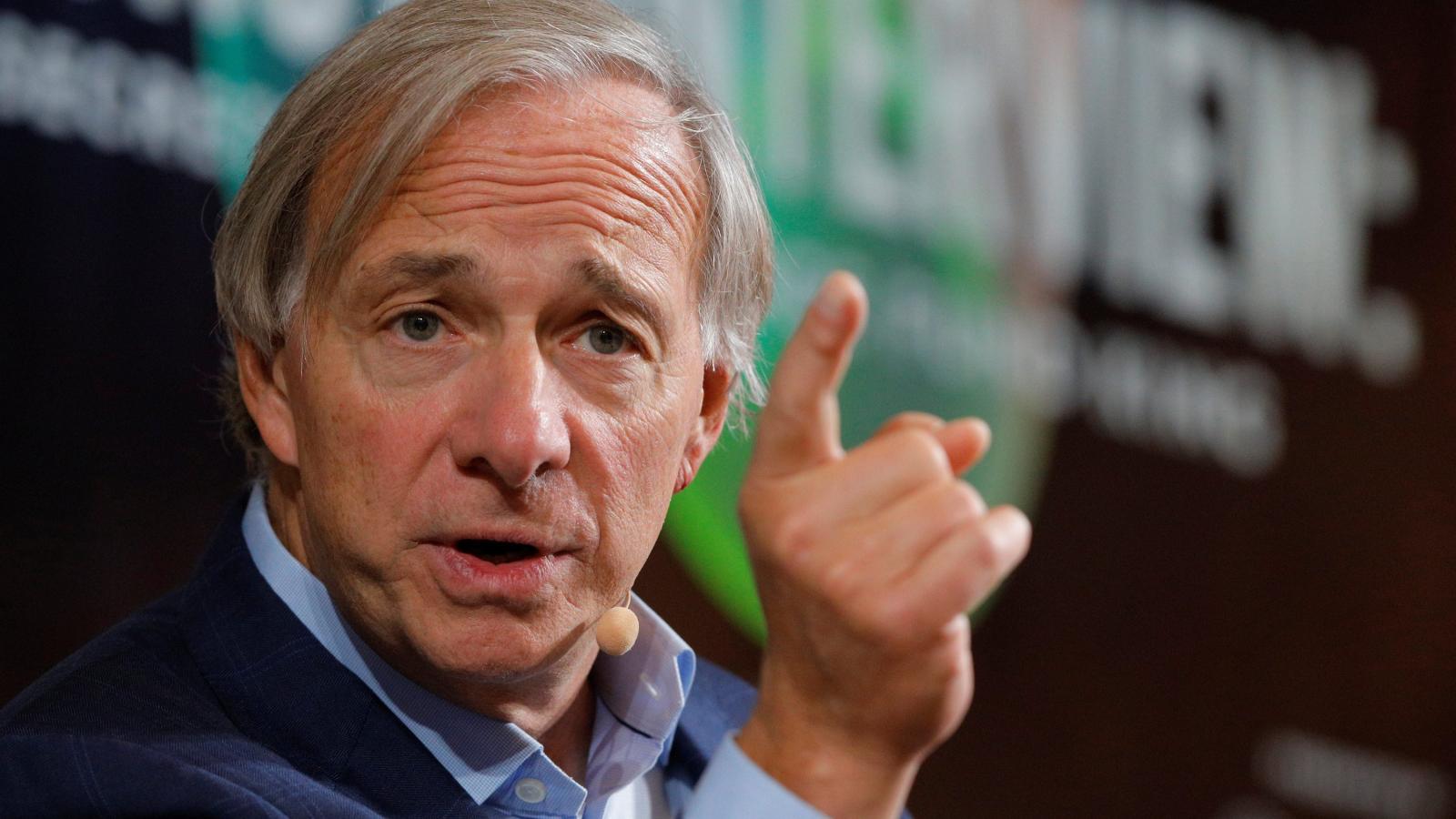
Dalio's latest warning: the US debt crisis may explode within three years. The antidote is...

Dalio's latest warning: the US debt crisis may explode within three years. The antidote is...

Author: Ray Dalio, founder of Qiaoshui Foundation Original title: How Countries Go Broke: The Dynamic Behind What is Incurable Now Compiled and organized by: bitPushNews In “How Countries Go Bankrupt: The Big Cycle,” I detailed an analytical framework to describe dynamic processes that are highly likely to occur due to unsustainable imbalances between debt supply and demand. Recently, three things happened at the same time: 1) The Japanese government sold part of its US Treasury holdings to return capital to Japan to support the yen and the Japanese capital market, and reduce exposure to US Treasury bonds while avoiding being forced to raise interest rates beyond its wishes in order to support the yen; 2) US bond yields hit new highs under long-term leadership, while the dollar weakened. The reasons include not only the current and anticipated supply of huge debt, but also weak demand for US bonds; 3) Treasury Secretary Bessent announced this week that the US Treasury would buy US Treasury bonds and be able to buy other US Treasury bonds The amount of capital used is limited, and many people ask me : Do these events fit the classic template I set out in my book? The answer is yes. To anticipate what might happen next, let's first review this operating mechanism. The operating mechanism explains in detail that the central government's debt dynamics are the same principles as the debt dynamics of individuals or companies. The only difference is that the central government has a central bank that can print money (this will depreciate the currency), and it can obtain funds from the public through taxation. Because of this, if you imagine how the debt dynamic would work if you or the business you run could print money, or get capital from people through taxation — then you can understand this process. But remember, your goal is for the entire system to work well, not only for yourself, but for all citizens. In my opinion, the credit/market system is like the human body's circulatory system, delivering nutrients to every corner that makes up the market and economy. If credit is used effectively, it can generate productivity and income to repay debt and interest on debt, which is a healthy state of affairs. However, if credit is not properly used to generate sufficient income to repay debts and interest, debt payments will continue to pile up like plaques in blood vessels, squeezing other expenses. When debt payments become very large, debt repayment problems arise, and eventually evolve into debt rollover problems — because debt holders are unwilling to continue to roll over and instead want to sell. Naturally, this will lead to a shortage of demand and sell-off of debt instruments such as bonds; when demand is scarce relative to supply, it either causes a) interest rates to rise, thereby suppressing the market and economic downturn, or b) the central bank “prints money” and buys debt, which will reduce the value of the currency, thereby driving up inflation (compared to the original level). Banknote printing also artificially lowers interest rates and harms lenders' returns. Both options are bad. When debt sell-offs are too large and difficult to contain, and the central bank has already purchased large amounts of debt, rising interest rates can cause the central bank to lose money and damage its cash flow. If this continues, the central bank will fall into a situation where net assets are negative. When this situation became serious, the central government and central bank needed to borrow money to repay the principal and interest of the debt, while the central bank printed money to provide loans due to insufficient free market demand, so a self-reinforcing spiral between debt/banknote printing/inflation formed. In summary, the classic indicators to pay attention to are the following: the ratio of government debt payments to government revenue (which is like the amount of plaque in the circulatory system), the ratio of government debt sold to the demand for government debt (this is like a plaque falling off and causing a heart attack), and the amount of government debt purchased by the central bank to cover the gap between the demand for government debt and the supply of government debt to be sold (this is like the central bank applying a larger dose of liquidity/credit to mitigate liquidity shortages, and the central bank has a risk appetite for these debts). These indicators usually rise over a long cycle of decades — debt and debt payments continue to grow in relation to income — until this state of affairs cannot continue because: 1) debt repayment expenses unacceptably crowd out other expenses, 2) the supply of debt that must be purchased is too large, causing interest rates to rise sharply, leading to a sharp decline in the market and economy, or 3) central banks are unwilling to let interest rates rise and suffer bad market/economic consequences, so they print large amounts of money and buy large amounts of government debt to cover the demand gap, thereby making the value of the currency significant Decreased. Either way, the return on bonds will be poor until the money and debt eventually become cheap enough to attract demand, or the government can cheaply buy back or repay...

15h agoBitpushNews#indebtedness #Bitcoin #economic crisis #US debt #DALIO #gold
Are Bitcoin's 80,000, 120,000, and 300,000 still far away?

Are Bitcoin's 80,000, 120,000, and 300,000 still far away?

Author: Debashree Patra Compiled by: Deep Tide TechFlow Original title: Bitcoin Sword Fingers at $80,000: Analysts Predict Breaking 120,000 Next Year and Shocking 300,000 in 2030 DeepWave Guide: Bitcoin rebounds strongly from around $63,000 to $75,401, completing a 5.8 times standard deviation increase within 48 hours, driving analyst Pierre Rochard to reaffirm his bullish roadmap — hitting $80,000 in 2026 and breaking through $120,000 next year. The sword in 2030 is $300,000. In the short term, bear liquidation and downtrend line breakouts provide momentum, but whether the leverage-driven surge can be turned into continued spot demand will determine whether the larger goal is realistic. Pierre Rochard's $80,000-$300,000 roadmap analyst Pierre Rochard (BitcoinPierre) expects Bitcoin to close around $80,000 in 2026. He believes that Bitcoin is not ready for a “parabolic rise,” but it is expected to break through $120,000 next year. In the longer term, he predicted that Bitcoin could reach $300,000 by 2030. The key variables in this forecast are the Federal Reserve and the broader macro environment. Rochard believes that if the economy is weak enough to allow the Federal Reserve to cut interest rates without reigniting inflation, Bitcoin will benefit from improved liquidity. He also pointed out that artificial intelligence (AI) may improve macroeconomic prospects by increasing productivity and reducing inflation. In that situation, interest rate cuts will create a more favorable environment for risky assets such as Bitcoin. The $80,000 target refocused on Bitcoin's latest price trend has shown signs of regaining momentum. BTC climbed from around $63,000 to $75401 in less than 48 hours. Previously, buyers successfully defended in the $63,000 area. Notably, Bitcoin formed higher highs and higher lows. This round of rebound was partly fueled by large-scale short liquidations. According to reports, as Bitcoin and Ethereum soared, around $14 billion to $17 billion of short crypto positions were liquidated, removing bearish leverage. Glassnode indicated an unusual pattern of this fluctuation. They said that Bitcoin's jump from around $75,401 was a 5.8 times standard deviation (5.8 sigma) of its 30-day volatility — the biggest upward move since October 2023. The last time Bitcoin closed at such a large daily rate was in February, which was only a rebound after a sharp drop of -14% the day before. And there's no crash to bounce back this time around — this is a 5.8 times standard deviation fluctuation compared to its own 30-day volatility, the biggest upward move since October 2023. — Glassnode (@glassnode) However, liquidation alone does not confirm the existence of sustainable spot demand. On-chain analyst Onchain Insights said that Bitcoin has broken through the annual downward trend line resistance and recovered to the $70,000 range. If it continues to close above this structural resistance, it may indicate a weakening of selling pressure and further upward momentum. Another analyst also said that short positions have limited resistance until $80,000, making it an important near-term target. The BTC giant whale sells for $74,000 and $80,000. The gap between these resistances is very large. ——CW (@CW8900) On Polymarket, the probability that Bitcoin will hit $80,000 in August rose to 13%, up 9 percentage points within 6 hours. BTC would need to rise about 14% more from $71,000 to reach $80,000. Can the $120,000 be recovered? Rochard expects Bitcoin to easily break through $120,000 next year if the macro environment turns favorable. His long-term goal of $300,000 by 2030 reflects broader bullish arguments around liquidity, supply, and adoption. His opinion was also supported by SkyBridge Capital CEO Anthony Scaramucci, who expected Bitcoin to surpass $100,000. He cites the halving cycle and new supply...

22h ago深潮TechFlow#Bitcoin

UBS raised the S&P 500 target level, optimistic that AI and profit growth will continue to drive the bull market

Comparatively, UBS raised its target level in the S&P 500 index. It is expected that the target level in December 2026 will rise to 8100 points, and the target level will rise further to 8,400 points in June 2027, due to strong corporate profit growth and continued economic resilience. UBS expects S&P 500 earnings per share (EPS) to reach $350 in 2026 and $400 in 2027, mainly driven by performance in the technology, semiconductor and energy industries. The bank continues to be optimistic that the US economy will remain resilient, the Federal Reserve's policy will remain patient, and the application of artificial intelligence will accelerate, believing that there is still room for continuation of the current bull market. However, UBS also suggests potential risks, including factors such as rising oil prices, re-heating inflation, and falling short of expectations in AI investment, which may put pressure on market valuations and upward momentum.

1d ago

Opinion: Federal Reserve Chairman Walsh may send a gentle signal of calm at the Jackson Hole meeting

Comparing news, TD Securities said that Federal Reserve Chairman Kevin Warsh (Kevin Warsh) may send a mild signal of stability to the market at the Jackson Hole Economic Policy Seminar next week. The market will pay attention to Walsh's more clear statement on the future path of monetary policy and whether he reaffirms the Fed's commitment to curb inflation. However, if Walsh continues to avoid providing forward-looking policy guidance, the market may still be disappointed. TD Securities anticipates that Walsh's speech is more likely to signal a gradual policy adjustment rather than suggest a major policy shift. Investors will try to find clues from their remarks about interest rate trends and changes in the Federal Reserve's policy framework.

1d ago

Analysis: Bitcoin hits the $80,000 mark, ETF capital inflows and macro-liquidity are key variables

Comparing news, Bitcoin rose to its highest level since May before the US market on Friday. After hitting $79,400 in the intraday period, it hovered around $78,000, just one step away from the $80,000 key resistance level. The US spot Bitcoin ETF recorded a net inflow of $606 million on Thursday, the highest level since May 1, and market risk appetite was boosted. James Butterfill, head of research at CoinShares, said that this round of growth is mainly driven by macro factors, not the crypto market's own factors, and Bitcoin is still highly sensitive to changes in liquidity expectations and actual yield. Earlier, US inflation data fell short of expectations and employment data weakened. In addition, the US Treasury announced measures to reduce long-term treasury yields, driving up risk assets. Butterfill pointed out that $80,000 is currently an important dividing line for Bitcoin. To achieve an effective breakthrough, the market needs to further confirm that the Federal Reserve's monetary policy is shifting towards easing. Relevant signals may be released at the Jackson Hole meeting next week. However, he also warned that if inflation continues to be high or the dollar weakens, the Federal Reserve may be forced to adopt a more cautious policy. Furthermore, the scale of increase in holdings of large holders is still limited, and the market still lacks strong confidence to support continued breakthroughs. Subsequent US spot Bitcoin ETF capital flows and macro-data performance will be key indicators for judging market continuity. (CoinDesk) This article is sponsored by GENG, Build Your Fortune on GENG (https://geng.one)

1d agoburnking