


Demystifying the logic of making money in the coin industry: how to get the first 10 million on the cusp
Author: @alpha_gege
Editor: Biteye core contributor Denise
Original title: Demystifying wealth myths in the coin industry, how to earn the first 10 million in life?
Every time the market fluctuates, friends call out, “Why can people have freedom of wealth?”
Today, Pigeon Pigeon will take everyone to eat melons. How did the 10 richest bosses in the coin industry get rich? Where did their first pot of gold come from? What are some exclusive routines? After reading it, remember to copy your homework well. After all, these are all the paths that the bosses have walked and stepped on!
01 List of famous billionaires in the coin industry
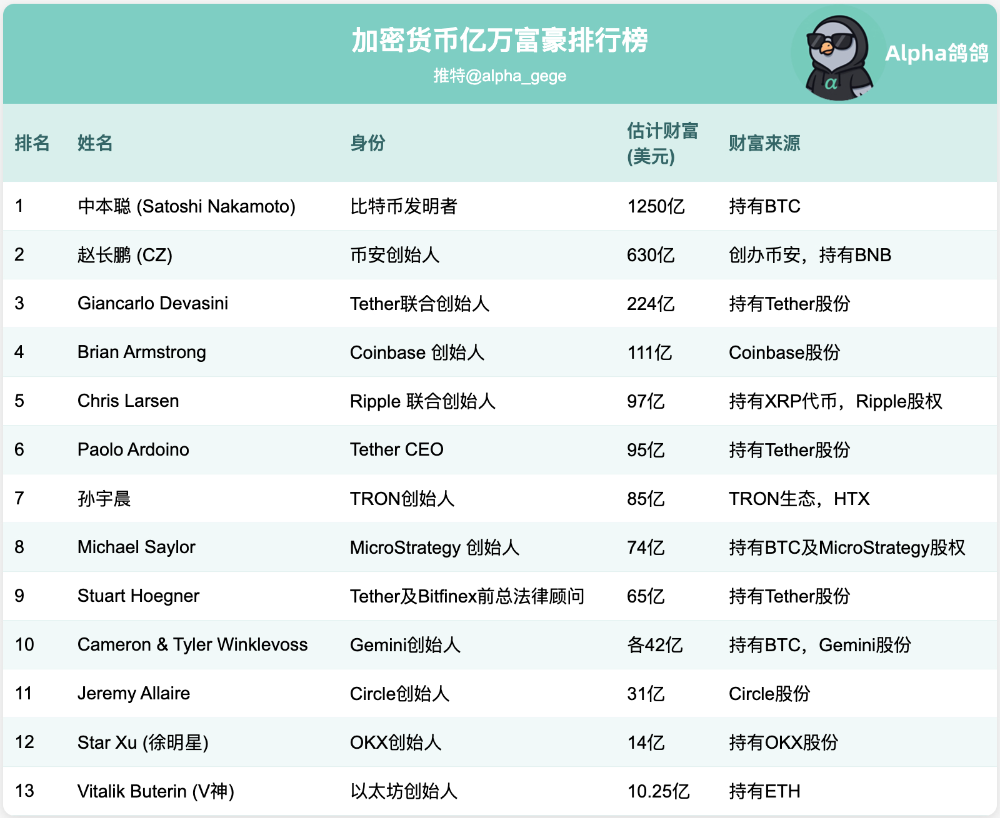
Note: The above is an estimate of public wealth. Actual market fluctuations may affect asset values.
Next, let's take a look at the rich stories of these wealthy people in the coin industry one by one, and how they each earned their first pot of gold.
1. Nakamoto Satoshi
When it comes to the richest people in the coin industry, it definitely can't get around the mysterious person Satoshi Nakamoto, the creator of Bitcoin. He published the Bitcoin white paper in 2008, officially launched the Bitcoin network in 2009, and is known as the “father of cryptocurrency.” Until now, nothing is known about his true identity. He has never appeared in public, and has always been one of the biggest mysteries in the coin industry.
Although no one knows who he is, the approximately 1.1 million bitcoins he unearthed in his early mining was his first pot of gold. These bitcoins have almost never been moved or sold, but have rapidly increased in value as the price of Bitcoin soared, and are now worth around $125 billion! Arguably, the more successful Bitcoin is, the more valuable the coin he holds. However, Satoshi Nakamoto himself disappeared after 2010, and some people even speculated that he might have lost his private key or is no longer alive. Regardless of the truth, the myth of wealth created by Satoshi Nakamoto's first-mover advantage is unquestionably the ceiling level in the coin industry.
2. Zhao Changpeng
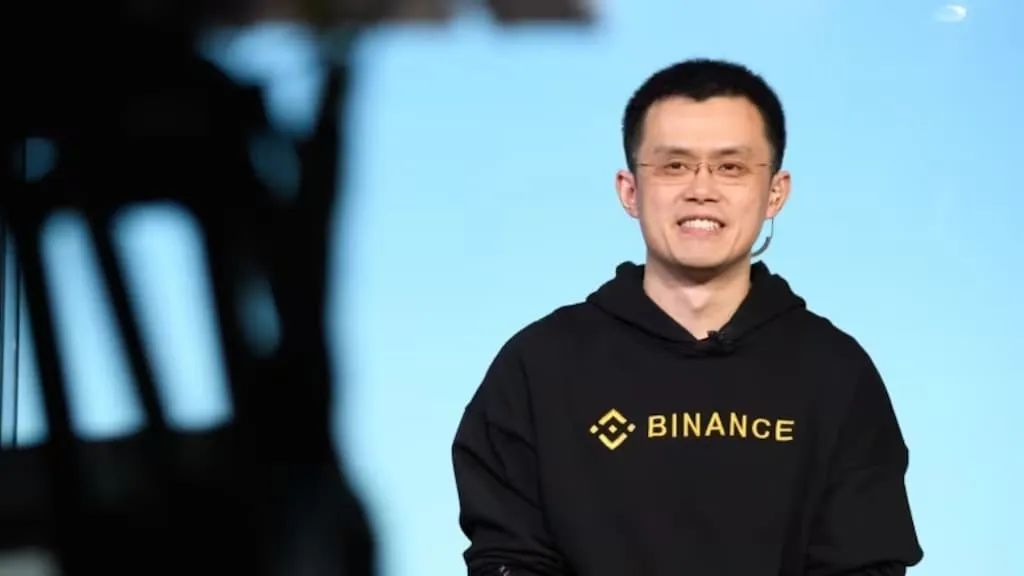
As the founder of Binance, Zhao Changpeng's experience was almost a textbook on entrepreneurship in the cryptocurrency industry. In his early years, CZ was a technical man who wrote code. He participated in the creation of the OKCoin exchange, but soon quit. His first pot of gold dates back to 2014, when he sold his house in Shanghai and exchanged it for about 1,500 bitcoins (the price of a bitcoin was only around $600 at the time). Bitcoin skyrocketed over the next few years, allowing CZ to achieve considerable asset appreciation and lay the capital foundation for his later ventures.
In 2017, he keenly grasped the bull market in the coin industry and founded Binance. Relying on an efficient matching engine, thoughtful user experience, and the issuer platform BNB as the core of the ecosystem, it only took a few months to become one of the most traded cryptocurrency exchanges in the world. Binance's initial profit model was also very simple and crude, matching transaction fees + platform currency appreciation. If you think about it, exchanges just charge “toll fees”. The more popular the market and the more transactions, the more money they make. Since then, with the rise of the Binance business, CZ's personal wealth skyrocketed like a snowball, and once became the richest Chinese. It can be said that creating a trading platform put CZ on the fast track to becoming rich, and his determination to go all in Bitcoin in the first place was a key step in his career.
3. Giancarlo Devasini
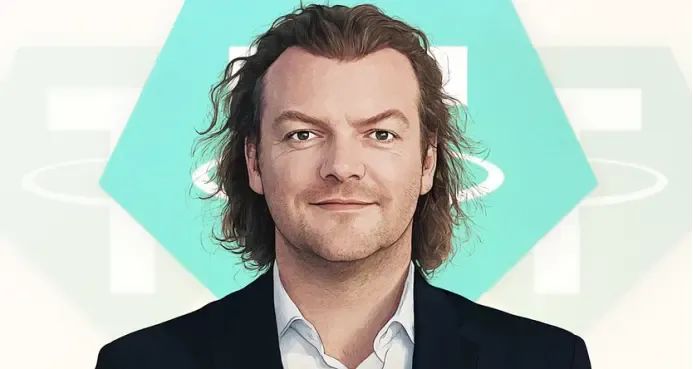
Giancarlo Devasini may not be familiar to many people, but everyone who plays with coins knows the USDT issued by Tether, which he founded. In fact, he first graduated as a plastic surgeon, but later got bored and switched to electronic products. Devasini's first cryptocurrency came from investing in the Bitfinex exchange in 2012, then co-founded the Tether stablecoin project with others in 2014. The stablecoin market was still empty at the time. Devasini saw this opportunity with a sharp eye and turned USDT into an alternative to the US dollar in the coin industry. Today, USDT is the main stablecoin commonly used by major exchanges. The resulting sharp rise in valuation has caused his wealth to explode in recent years. To put it bluntly, he just identified gaps in the market and then went to the end.
4. Brian Armstrong
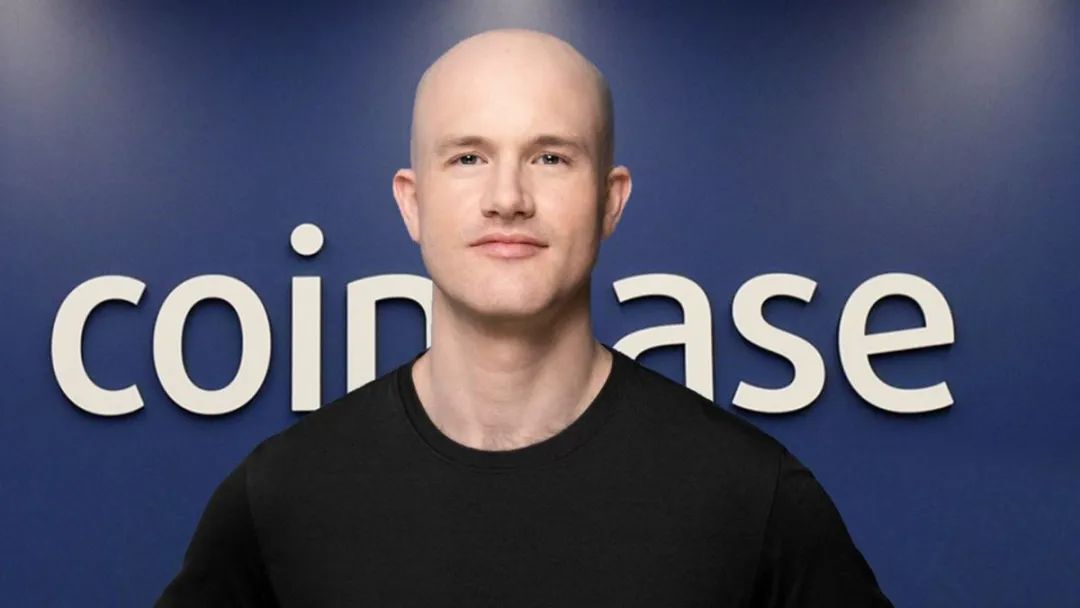
Brian Armstrong, founder of the largest US exchange, Coinbase, followed a completely different path. As a software engineer, he first came into contact with Bitcoin while working at Airbnb around 2010, and was keenly aware that the process of buying Bitcoin at the time was too cumbersome and unfriendly. He resolutely quit his job and founded Coinbase in 2012. Soon after, he received seed investment from Y Combinator, and soon attracted venture capital, including the NYSE. This gave him plenty of capital in the early stages of his business. His first pot of money came from startup financing. Coinbase has been following the compliance route since the beginning. Although this path is slow, it is better to be steady. Coinbase not only obtained a legal license in the US, but also successfully landed on the NASDAQ in 2021, with a market capitalization exceeding 100 billion US dollars.
It is worth mentioning that Coinbase later cooperated with established investment bank J.P. Morgan Chase to open up capital entry points for traditional banks, so that bank customers can directly use credit cards to buy cryptocurrencies. This series of compliance operations not only enabled Armstrong to make money, but also made him a bridge between traditional finance and the crypto world.
5. Chris Larsen
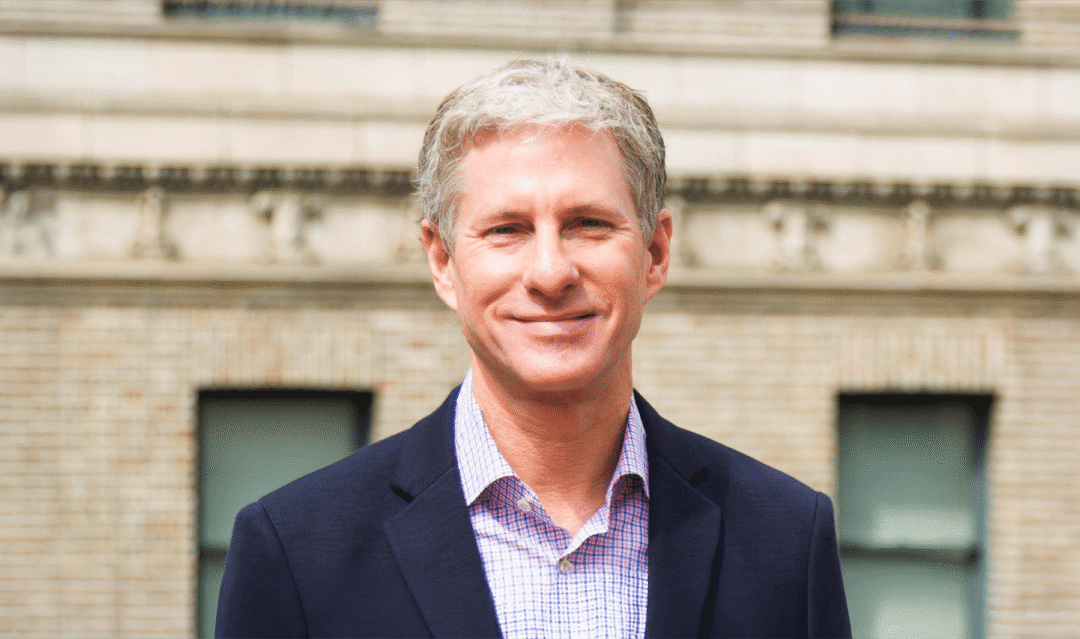
Chris Larsen started a business in the financial sector before entering the blockchain field, and founded E-Loan, an online loan company as early as the 1990s. Since then, it has also participated in the establishment of the P2P lending platform Prosper, which has flourished in the traditional financial world. Because of this, he knows all the pain points in the payments field.
In 2012, Larsen and his team co-founded Ripple to launch the Ripple payment protocol and XRP cryptocurrency in an attempt to use blockchain to transform cross-border payments. His first pot of money in the crypto industry can be said to have come from Ripple's startup and early XRP token holdings. Ripple received multiple rounds of financing between 2014 and 2016, and Larsen naturally held significant shares in XRP and the company as the co-founder. The price of XRP soared hundreds of times in 2017, making Larsen's personal wealth rise to the top of the crypto billionaire list for a while. Although the price of XRP has declined since then, thanks to a large percentage of its holdings, Larsen is still among the top richest people in the coin industry.
6. Paolo Ardoino
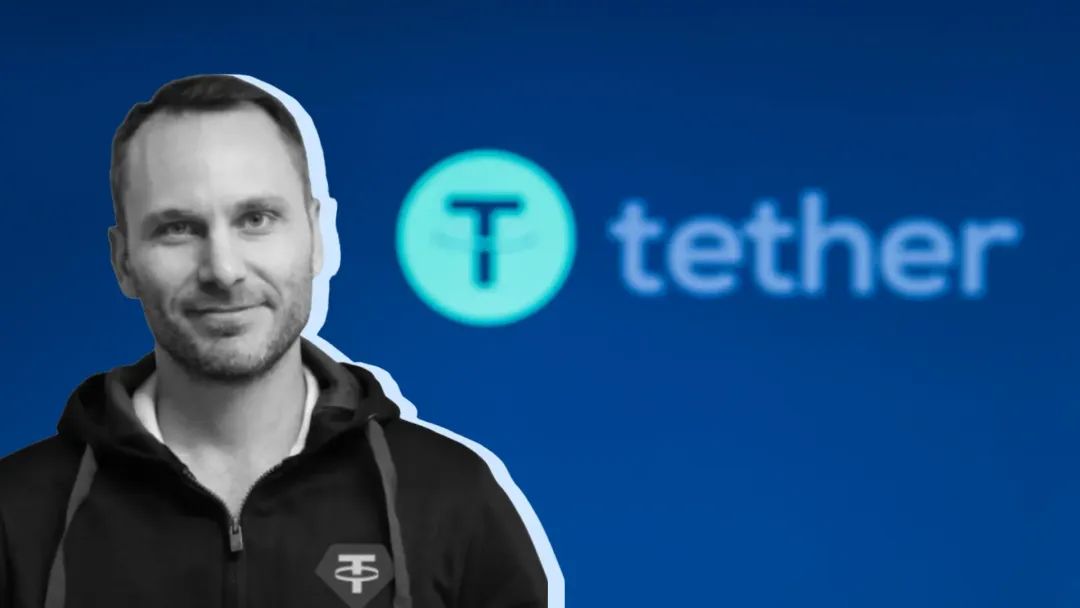
Tether's current CEO Paolo Ardoino is also a tech giant. In 2014, he joined the Bitfinex Exchange, who is proficient in computer programming. With his solid technical skills, Paolo quickly solved a series of early Bitfinex system problems and showed excellent architectural ability. This also attracted the attention of Devasini, founder of Tether, and it wasn't long before Paolo was invited to serve as Tether's Chief Technology Officer (CTO). Paolo's first pot of gold can be said to have come from the equity incentives he received in Tether. When he joined, USDT circulation was only tens of millions of dollars, but he helped the stablecoin rapidly expand to more than a dozen mainstream public chains such as Ethereum, Wave Field, and Solana, which greatly increased the daily trading volume and application scenarios of USDT.
It can be said that he used his technical strength in exchange for real money in return. When Tether made billions of dollars with interest income, Paolo's dividends were weakened as a shareholder. The investment in technology, combined with the takeoff of the stablecoin ship, created his wealth myth.
7. Sun Yuchen

The name Sun Yuchen is probably familiar to everyone. When I was 19, I became an early representative of Ripple in Greater China, and later received investment in the self-created social networking app “Follow Me”. However, what made Sun Yuchen actually earn his first pot of gold was the Wave Field TRON project he launched in 2017. In the ICO boom, Sun Yuchen raised tens of millions of dollars by issuing TRX tokens and accumulated huge original capital for himself. Afterwards, in line with the sharp rise in the crypto market, the TRX price once soared 100 times, causing the chips held by Sun Yuchen to instantly skyrocket in value. As the founder of TRON, he himself held a large number of initial tokens and achieved a leap in wealth during that bull market.
Since then, Sun Yuchen has begun various bold marketing and capital operations: spending 4.56 million dollars to photograph Buffett's lunch and became famous; successively acquired the exchange Poloniex, took a stake in Huobi (now renamed HTX), etc., and built his own crypto landscape. Sun Yuchen's style is simple and crude, focusing on technical chips on the one hand and the market's eye on the other. Although the outside world gave him mixed reviews, he did seize the opportunities given to young people by the times and put himself on the list of the richest people in the coin industry.
8. Michael Saylor
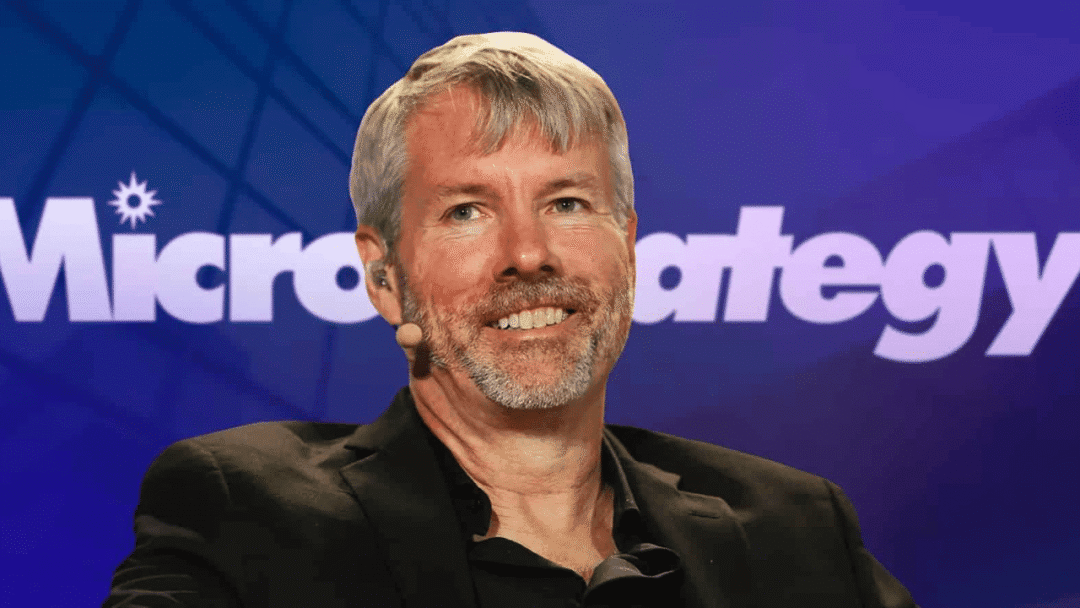
Michael Saylor's story is a little different from others. The founder of the MicroStrategy business intelligence software company is originally a traditional tech billionaire. However, in 2020, when he was already in his 50s, he suddenly became fanatical about Bitcoin. Saylor was aware of Bitcoin's potential and the dollar's potential inflationary risk at the time, and made an amazing decision to convert most of MicroStrategy's cash reserves into Bitcoin. This is equivalent to betting a company's “family” of several billion dollars on Bitcoin. Many people thought he was crazy at the time; after all, this is a NASDAQ listed company!
However, Saylor proved his judgment with facts. MicroStrategy has continued to buy Bitcoin since August 2020, and has accumulated more than 600,000 BTC as of 2025, making it one of the listed companies with the most coins in the world. This series of aggressive actions has earned him great rewards in the crypto field. As the price of Bitcoin later surpassed 100,000 US dollars, his book surged over 10 billion US dollars, and the company's stock price also doubled several times. Today, MicroStrategy simply lists Bitcoin as its main reserve asset, and Saylor has become the spiritual leader of the “radical bulls” in the coin industry.
9. Stuart Hoegner
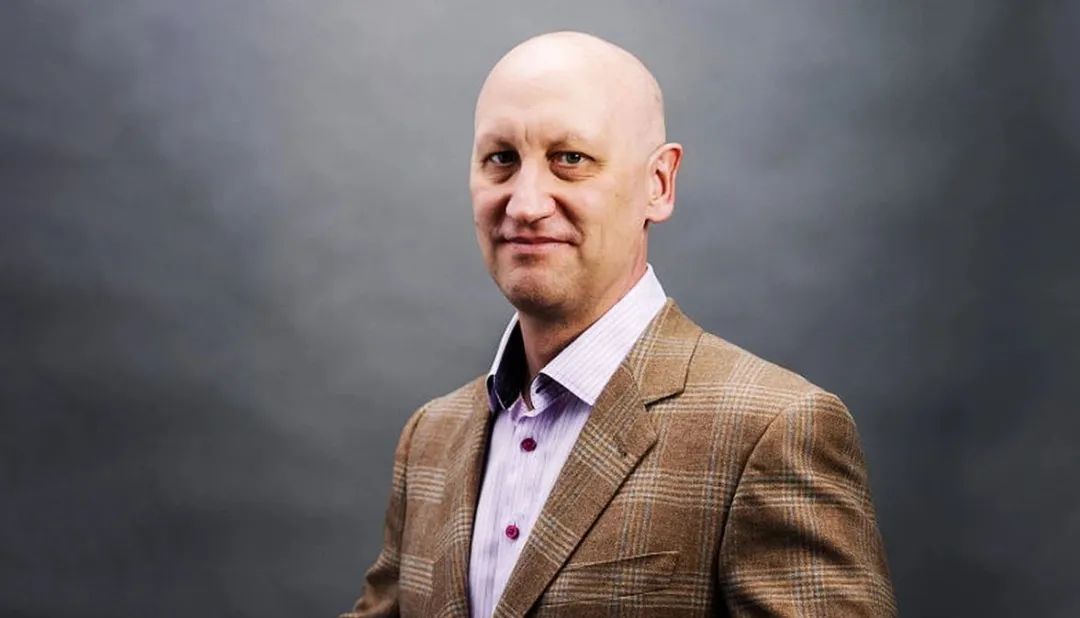
Stuart Hoegner is a pretty low-key person in the coin industry, but when it comes to wealth, he can definitely be considered an invisible millionaire. As an attorney, Hoegner had an early interest in digital currency legal compliance. In 2014, far from entering the public eye, he joined the Bitfinex and Tether teams. At the time, the industry was in a grey area of regulation, and they were both debating whether they could survive. Hoegner has shouldered tremendous pressure to establish a legal and compliance framework for Tether step by step, such as promoting regular audits of Tether reserves and transparent disclosure strategies, which greatly increased the market's trust in USDT. His first pot of gold came from his Tether shares held as a member of the founding team. Unlike other high-profile bosses, Hoegner almost never receives interviews and rarely makes public appearances. He is the quintessential type of person in the coin industry who makes a fuss about making a fortune.
10. Cameron & Tyler Winklevoss
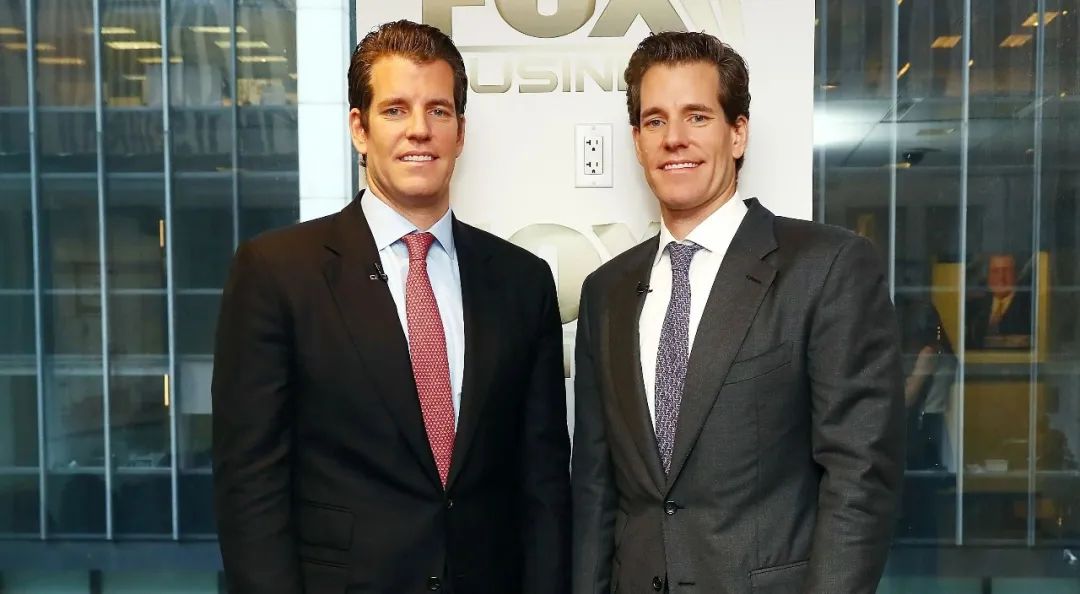
The twin brothers Cameron and Tyler settled a lawsuit with Zuckerberg back then to get about 65 million dollars in compensation. This money also became the starting point for them to get involved in the cryptocurrency industry. The brothers' first pot of money was to use the money earned from the Facebook lawsuit to buy Bitcoin at a low price in 2013. This foresight made them one of the earliest holders of large amounts of Bitcoin.
Although the Gemini exchange Gemini, which the two brothers later founded, developed moderately, this did not affect the rich returns they had from investing in Bitcoin in the early days. Up to now, the two are said to still hold around 70,000 bitcoins. With their first pot of gold paved the way, and their long-term belief in Bitcoin, the Winklevoss brothers continued to grow in wealth.
11. Jeremy Allaire
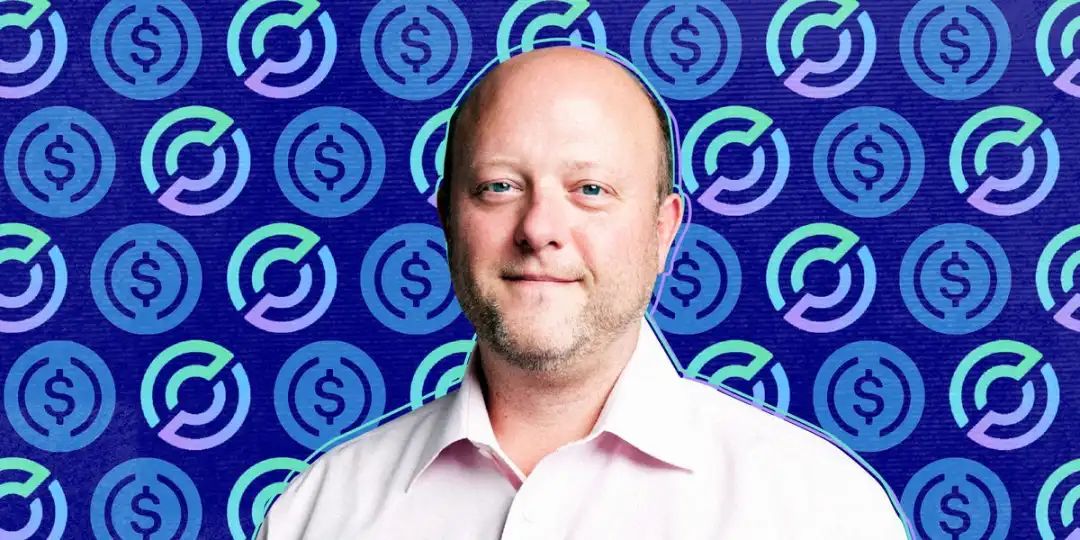
Jeremy Allaire created USDC, the world's second-largest stablecoin. As early as the internet age, he founded companies such as the video platform Brightcove. In 2013, he keenly grasped the opportunities of digital currency and founded Circle. His initial vision was to make cryptocurrencies easier to use by the public. After several transformations, Circle cooperated with Coinbase to launch the US dollar stablecoin USDC in 2018, relying on Coinbase's position and user network to rapidly expand the USDC market share. Allaire's first bucket of digital wealth came from Circle's entrepreneurial success and the rise of USDC.
As USDC circulation surpassed tens of billions of dollars, Allaire's personal wealth also jumped sharply between 2021 and 2023. Although USDC's current market capitalization is slightly lower than USDT, Allaire has successfully placed itself into the ranks of crypto billionaires.
12. Xu Mingxing
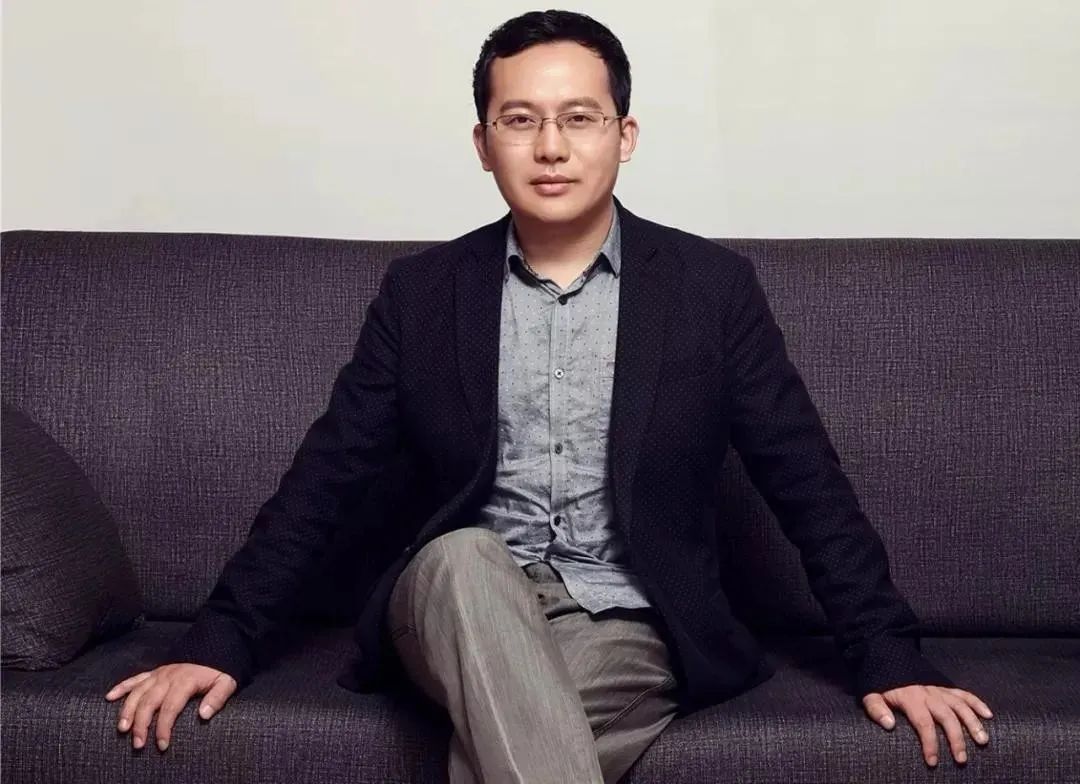
Xu Mingxing is one of the earliest entrepreneurs in China to enter the crypto industry, and the founder of OKCoin/OKX, one of the “three major companies” in the cryptocurrency industry. In 2013, 28, Xu Mingxing founded OKCoin. Back then, China's Bitcoin exchange had a three-legged trend (the other two were Huobi and Bitcoin China). With excellent products and market skills, Xu Mingxing quickly expanded OKCoin, and once occupied half of domestic transactions. Naturally, his first pot of gold came from the exchange's profits and Taiwan currency. OKCoin was later upgraded to OKEx and the platform currency OKB was issued. The platform's daily transaction fees plus OKB appreciation made Xu Mingxing a lot of money.
It is worth mentioning that in his early years, he also invited He Yi, Zhao Changpeng, and others to join, although a few people later parted ways due to poor ideas.
13. Vitalik Buterin (V God)
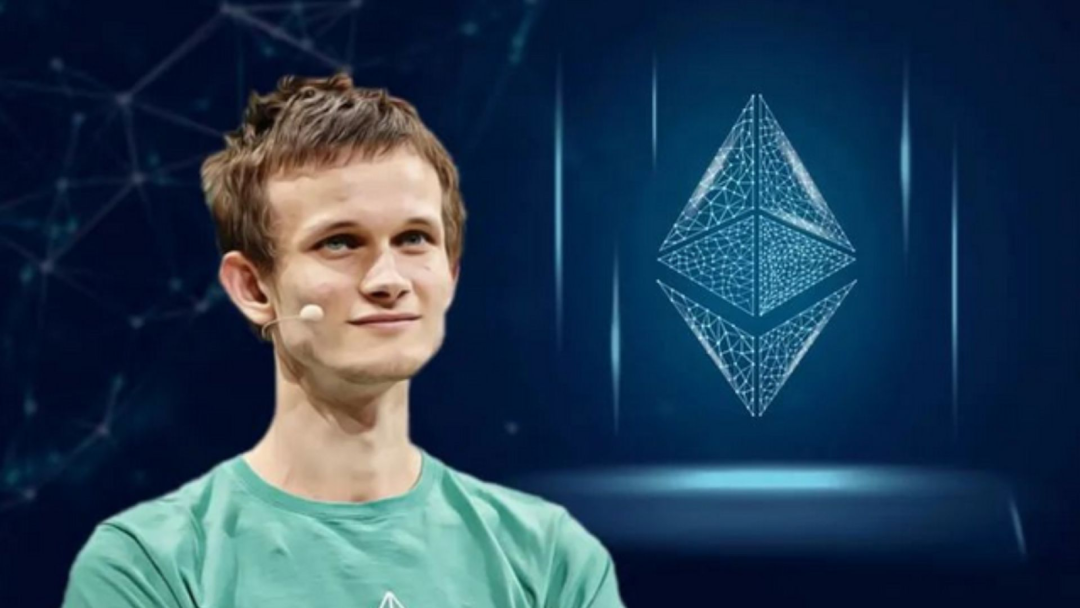
As the father of Ethereum, Vitalik Buterin is known as the “V God” in the Chinese community. When he was only 19 years old, he wrote an Ethereum white paper based on his ideas for improving Bitcoin. In 2014, V God raised funds through crowdfunding to officially launch the Ethereum project, and he himself held a considerable amount of initial ETH as a co-founder. The birth of Ethereum opened the door to smart contracts and decentralized applications, and blockchain has since ceased to be the only way to play with Bitcoin. V God's first pot of gold came from early Ethereum holdings.
However, this tech geek is not obsessed with money. He has donated huge amounts of crypto assets for charity and scientific research many times, and has also publicly expressed his concerns about the crypto bubble. Despite this, with his status as the founder of the Ethereum public chain, V God is still regarded as one of the most influential figures in the cryptocurrency industry. He proved to the world that young developers can also change the world and reap wealth through technological innovation.
02 Summary of the path to becoming rich: Three models to get rich disrupt traditional logic
After reading the stories of the biggest names in the coin industry above, some friends may ask: Do they have anything in common that they have successfully become rich? Pigeons have summed it up. In fact, there are roughly three types of routines behind the wealth myth in the coin industry, which can be said to have disrupted the “path to getting rich” the traditional logic of making wealth.
1. King of exchanges
The first category is “open an exchange and be the boss”. CZ and Xu Mingxing are outstanding representatives in this regard. The core of making money on exchanges is “charging fees + creating an ecosystem”. As long as users trade here, you get a steady stream of rewards. Another major exchange giant, Armstrong of Coinbase, chose a compliant listing route, and steadily obtained a license and listed on the NASDAQ. Today, the leading effect of the exchange industry is obvious. While earning fees, it is also possible to further amplify profits through the platform coin ecosystem. The appeal of this path is that as long as you stand at the entrance to the industry's capital flow, wealth will continue to flow to you.
2. Hold Bitcoin for a long time
The first type of model is difficult for most people to implement today. The second type of model is to hold Bitcoin for a long time, in other words, place a heavy bet and hold promising crypto assets for a long time, in exchange for exponential growth in value. Michael Saylor is one of the leading figures in Bitcoin betting. Even though he only started saving and buying Bitcoin in large quantities in 2020, he is currently the top three Bitcoin holders in the world. If you believe in Bitcoin a hundred times over ten years, then amassing a large amount of chips early on will undoubtedly lead to amazing compound interest effects. Of course, the premise of this route is to have an extraordinary vision and a strong belief in holding coins; otherwise, it is easy to be washed away in the midst of sharp ups and downs.
3. Ecological builders
The third category is ecosystem builders. They often have both technical talent and capital vision to obtain huge wealth by building new ecosystems. Back then, V led the development of Ethereum, and from writing a white paper at age 19, it is still leading technology iteration today. Since its launch in 2014, Devasini and Paolo have made USDT the core of liquidity in the entire market, and the ecosystem feeds back the value of the token. Jeremy Allaire launched USDC, and it took more than 10 years to establish its position as an “on-chain dollar.” Sun Yuchen, on the other hand, used TRON to refine the one-stop layout from the chain, stablecoin, and to the exchange. Not only did these people “seize the cusp,” but they took time to build a moat and long-term BUIDL in exchange for today's status.
03 What kind of jobs can ordinary people copy from money industry bosses?
Pigeons have summarized some highlights. I hope everyone can step less into the pit and turn around more in the midst of the high winds and waves in the coin industry:
1. Accurate vision and quick movement
Nakamoto invented BTC and CZ to establish Binance. These wealth myths all began with the idea of daring to think and act. When the tide comes, you need to get on the bus decisively. Don't wait until most people understand it before you start; the soup is all cold at that time. The chance is always left to the first person to eat the crab.
2. Secure your chips
The wealth secret shared by the biggest players in the coin industry is not frequent operations, but rather holding good projects for a long time. The most common mistake common people make is chasing the rise and fall; not being able to hold the currency; as a result, they make small profits and big losses. Or don't end up; if it ends, you have to have faith. Once you have secured good things, don't fiddle around; time will give you plenty of rewards.
3. Find advantages
Everyone has their own professional advantage. If you combine this advantage with opportunities in the cryptocurrency industry, the success rate is much higher. Ripple founder Larsen knows finance for cross-border payments, CZ knows technology as a matchmaking engine, etc. They all grafted their old business onto a new track, doing more with less. Think about what you're good at, and see if there are any relevant directions in the field of cryptography that you can further explore.
4. Live until old age, learn
The crypto industry is changing rapidly, and almost all of these bosses have one thing in common: maintaining a keen sense of new knowledge and a passion for continuous learning. New blockchain concepts are constantly emerging, and if you don't keep learning, it's easy to miss the next wave of opportunities or even step into the pit. Remember, surviving, learning, and self-upgrading in the cryptocurrency world will always be the most cost-effective investment.
Finally, Pigeon Friendly Reminder: The myth of wealth in the coin industry is tempting, but always remember that high returns are always accompanied by high risks! Although the successful experiences of bosses can be learned from, no one can completely copy someone else's life. After all, the real path is to follow your own path and find a way to make money that suits you, which is more important than blindly following others.
Twitter:https://twitter.com/BitpushNewsCN
Compare the TG exchange group:https://t.me/BitPushCommunity
Compare TG subscriptions:https://t.me/bitpush
