


Don't touch the parabola: three “asymmetric” ways to smartly short bubbles

Author: Campbell, Macro Analyst
Compiled by Yuliya, PANews
Original title: When the bubble hits, how to “smartly” go short?
Editor's note: Recently, the US stock memory chip sector has become the main focus of the technology market, and the stock prices of companies such as Micron Technology, SK Hynix, and SanDisk have continued to rise sharply. Meanwhile, the debate over whether AI has entered the bubble phase is heating up again. There are many opinions in the market: Dan Niles, a well-known chip analyst during the Internet bubble, believes that the current development of AI is closer to the mid-sprint period of Internet infrastructure construction in 1997, rather than the end of the bubble in 1999. He pointed out that the rise of AI agents is driving a sharp increase in demand for computing power. Although short-term valuations of chip stocks are high, they still have potential for the long term. Hedge fund legend Paul Tudor Jones also predicts that the AI bull market is now about 50% to 60% over, and may continue for another year or two. In contrast, Michael Burry, the prototype of the main character in the movie “The Big Short,” warned that the current market is highly similar to the day before the Internet bubble burst in 2000.
At a time when fanaticism and concern are intertwined, and the bosses are holding their own opinions, if a bubble does exist, how exactly should we deal with it? The author of this article shared a hard-core practical guide on “How to Empty a Bubble” based on his own experience. The following is the original article:
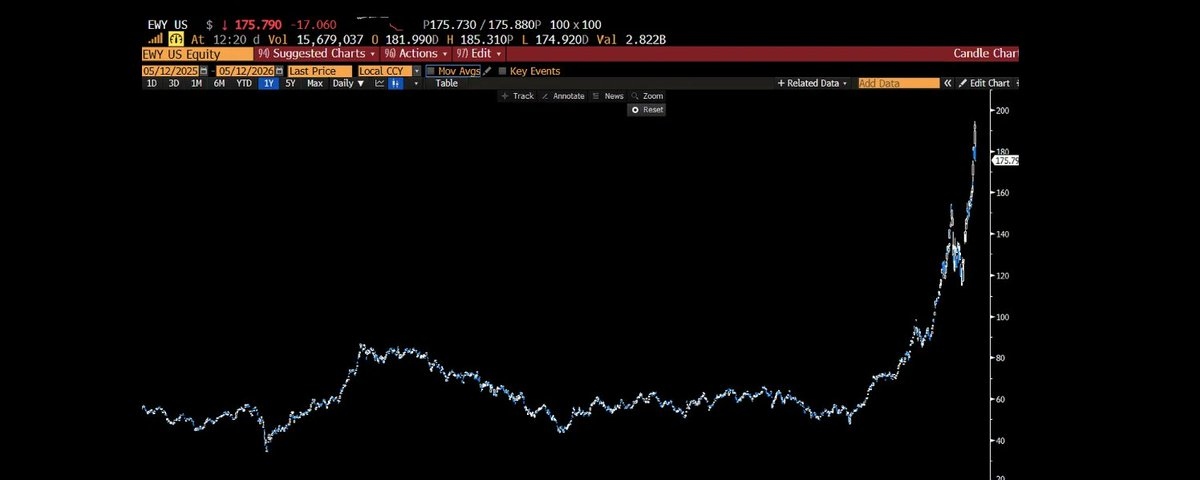
Honestly, I don't know if we're in a bubble right now, and I'm not even sure if this is a known issue. I'm pretty much familiar with what you've learned: the AI revolution is real.
Although I quit my professional investment career and have been writing relevant content for the past three years, I still don't think I've done enough. I looked around like you and saw that many people became extremely rich just by connecting tokens in series to create AI applications (or investing in infrastructure projects that provide garlic grains to generate these tokens), which made me feel cold and jealous. This then led to a feedback loop where I couldn't tell if my views were being influenced by jealousy or if jealousy was telling me a fact I already knew: “Keep going long.”
To some extent, I do think “the future is here, we need massive computing power”, so you really want to buy these assets.
I don't think software stocks are performing well, and the market is selling off these stocks, so there's nothing to be gained from that area.
Like you, I am also concerned about the ultra-undervaluation of Korean stocks, and I am very interested in opening up their market. This is obviously inextricably linked to the recent rise in the stock market.
I was also surprised that the government quietly relaxed the supplementary leverage ratio (eSLR). Banks and funds were allowed to hold less regulatory capital to buy US bonds. This is simply a classic release of water covered in sheep's clothing.
I can imagine one day interest rates rising enough to remove this “liquidity feast,” but that's not yet the time.
I can also imagine that the war would end this feast. The sharp fluctuations there shocked me from the rising market, so who knows what the future holds.
I can also imagine that Bank of Canada stocks, which have a net market ratio of up to 3 times and a very low volatility, are an excellent shorting opportunity, but due to lack of trading channels and long-term enough options, I can't write a good article to provide everyone with something interesting.
Frankly speaking, there's a lot more I can't say here. This doesn't change my fundamental view of trends, but it does greatly limit the people and things I can talk about here. If you know Andreesen's “stop domestic consumption” theory, you'll know that my worried personality meant I'd never become a billionaire.
But there's one thing I know how to do. This is also a little bit of alpha benefit I can give you. We're not going to discuss whether we're in a bubble today, but rather how you can empty a bubble if you want to.
Why is it so difficult to empty a bubble?
What is a bubble? If something looks like a bubble, sounds like a bubble, moves straight into the sky like a parabola, and requires higher and higher expectations and leverage to keep prices rising, then it's a bubble.
Why is the bubble so difficult to short?
The problem is that the easiest thing to short is the kind of thing where the fundamental shortfall is gradually known to the public, and then it falls all the way down and eventually collapses. In the process, you may run short (bears are forced to buy and close positions, leading to a sharp rise), but this instead provides you with a good opportunity to increase and short positions, because sooner or later, this thing will return to zero.
But shorting the bubble is something else entirely. When the price of an asset soars in an unsustainable manner, your exposure to shorting increases exponentially as the price rises.
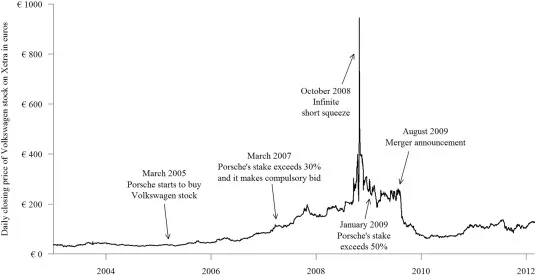
If you don't believe me, ask the people who shorted Porsche and Volkswagen in 2008.
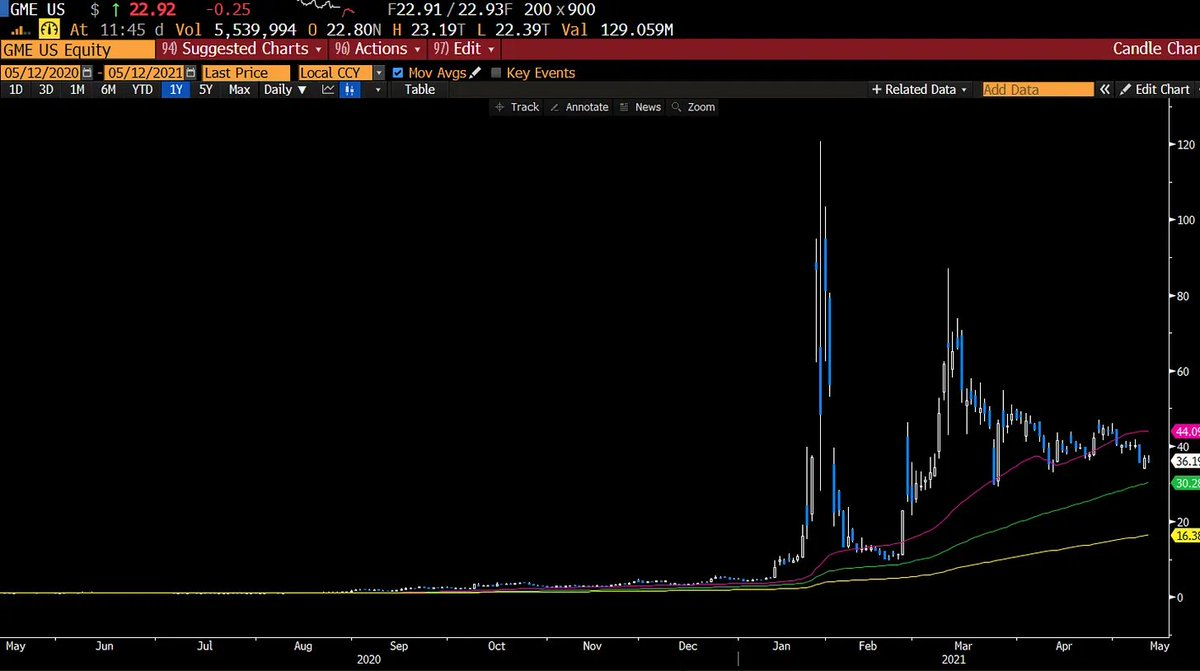
Just ask the GameStop shorting people.
Or ask the person who went short a few weeks ago that inexplicably became an AI company and crushed all the empty shoe companies.
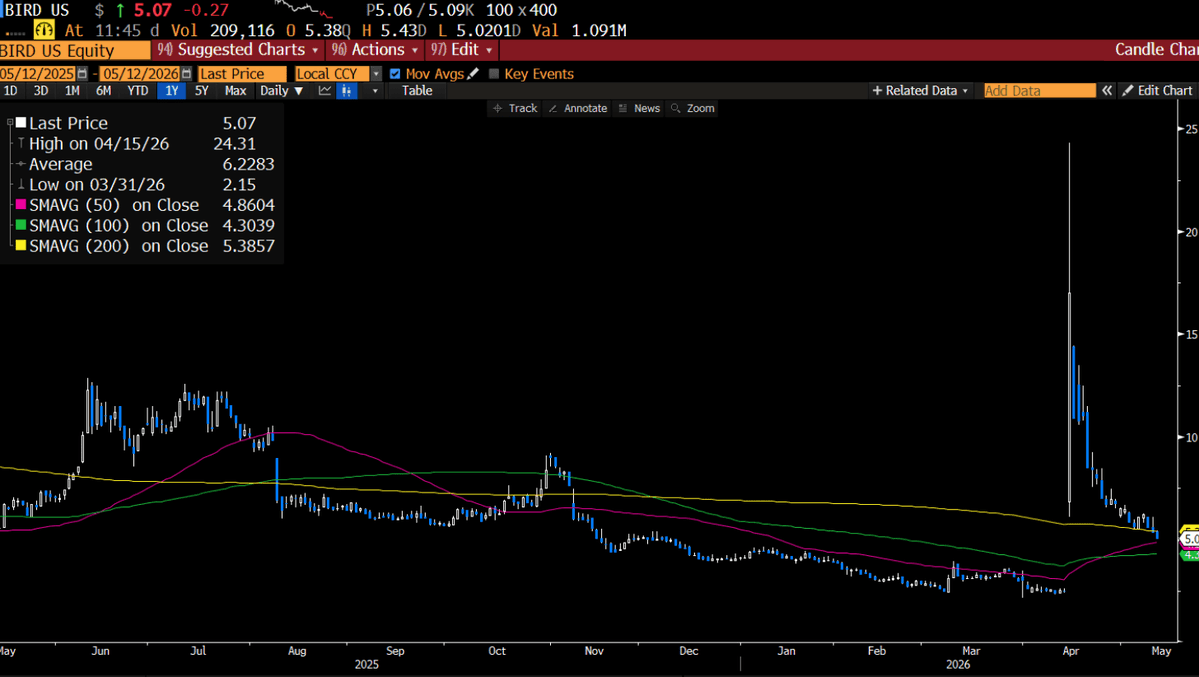
If people who do long sell, the big deal is to wait and see if they are short positions. However, if a shorting person sells, it means he must buy it back tomorrow to close the position and check out. If you can double his bill by 5 times, he'll be twice as motivated to close positions, sometimes at no cost.
Another reason the bubble is difficult to short is that it is the characteristic that makes the bubble look so cool — “Soaring volatility! Great!” ——As a result, their options are ridiculously expensive.
If it were to rise 10% daily, the annualized volatility would be 160. For options with a volatility of up to 160, if you just buy a long option today, you would have to spend half of the stock price. Because the hedging value brought about by actual fluctuations is too high, these options are simply useless in the direction of one-sided betting.
So, we have only a few paths left.
The only way to empty the bubble is to:
a) Look for “wedges” — find something that can pierce the bubble from the outside.
b) Shorting “victims” — betting on things that are associated with the bubble and fall to the bottom.
c) Wait for “confirmation” — wait for trends and charts to actually break.
The rest of the article will be examples of each approach.
A) Looking for a wedge
The first way to empty a bubble is to not directly empty the bubble itself.
You need to find that thing that can pierce the bubble. You then buy it to protect your account from bursting bubbles.
We started doing that today, just before the CPI (Consumer Price Index) data confirmed what we had known for a long time. Inflation is on the rise.
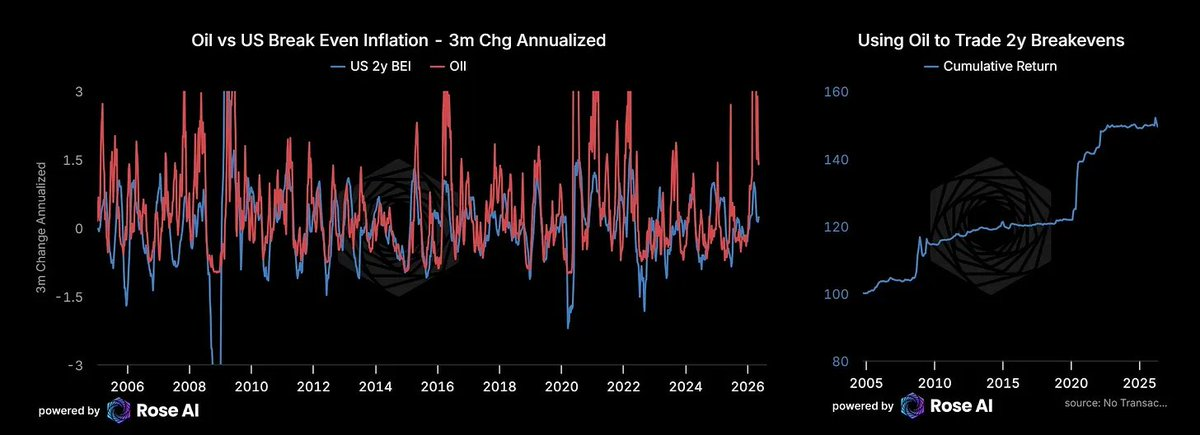
Interest rates are also likely to rise. As it turns out, as Bob Prince used to say, stocks also harbor the attributes of bonds.
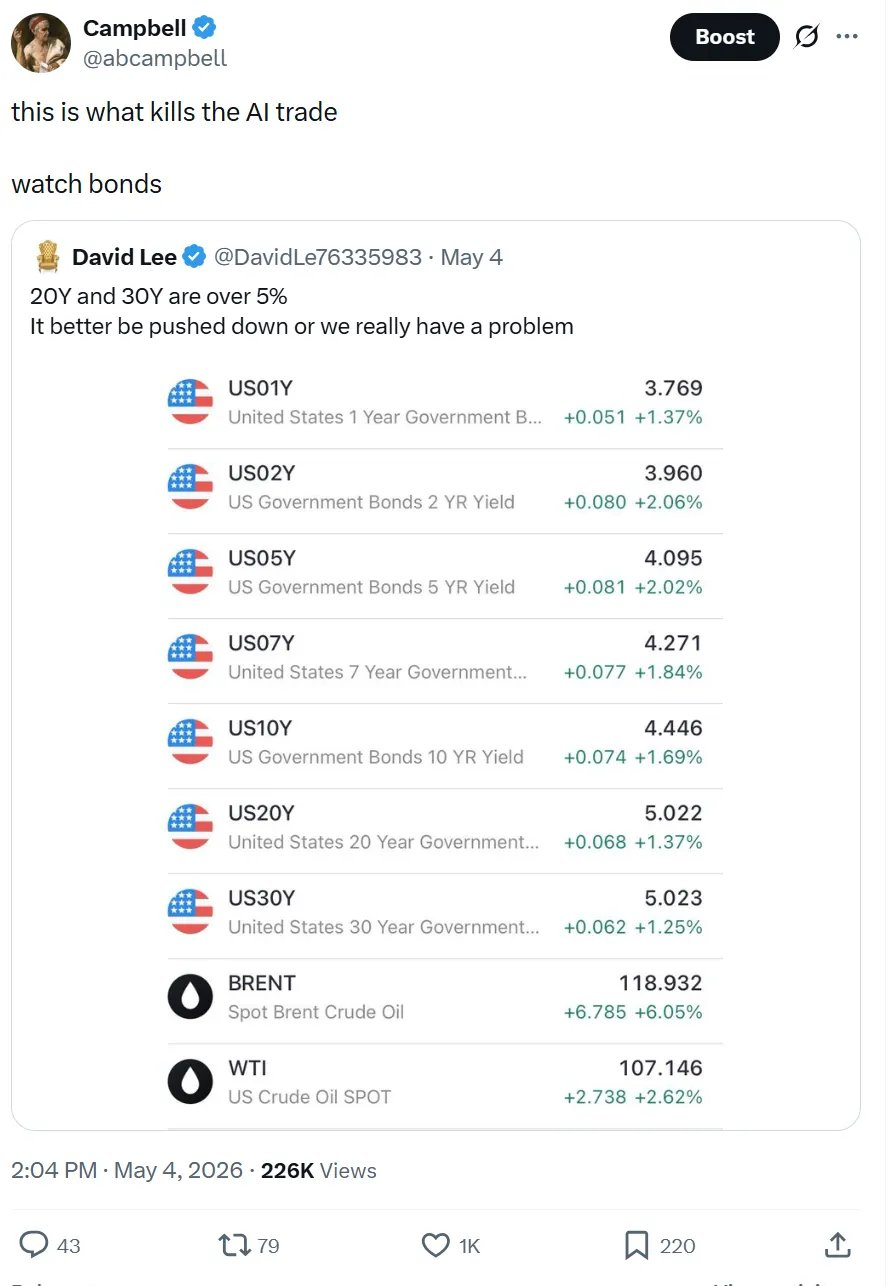
This is a “wedge.” You don't want to empty the bubble; you have to do more with the trend that kills the bubble. If AI is a bubble, then interest rates are a wedge to pierce it.
All assets with ridiculously high valuations are essentially disguised ultra-long-term assets. When the discount rate (interest rate) rises, the discounted value of those good expectations in the future will be greatly reduced, and stocks that are speculated on the cash flow of 2030 will be returned to their original form.
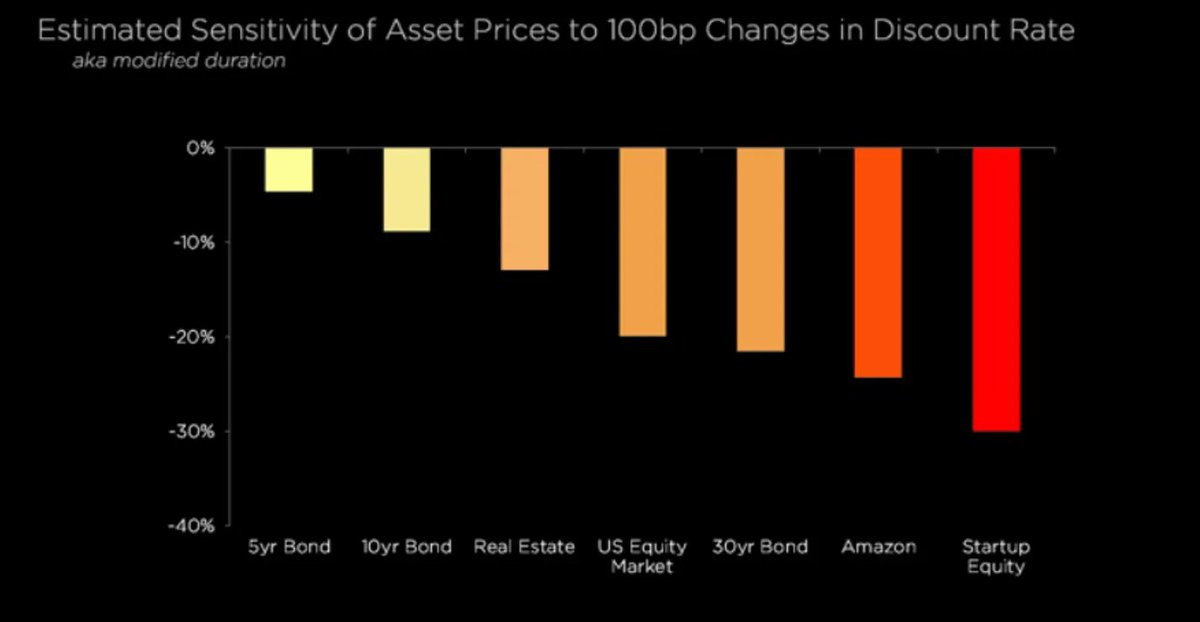
The core principle is: in every bubble, there are things that must depend on the bubble to survive. As soon as the bubble stops a little, the weakest link will break. You're not betting that the market frenzy will end; you're betting that the weakest link won't survive the market's pause.
The beauty of the “wedge” strategy is that you don't need to choose the right time. The bubble doesn't even need to burst; it only needs to stop accelerating for a quarter, and those highly leveraged junk assets will begin to collapse.
Where is the “wedge” now? I'll tell you what I'm watching. Those Canadian banks, which have a net market ratio of up to 3 times, are full of “negative amortization” mortgages (that is, the borrower's money doesn't even have enough interest, and the difference goes directly into principal, just like PIK loans with interest capitalization). The real estate market they faced simply made the US property market in 2007 seem extremely restrained.
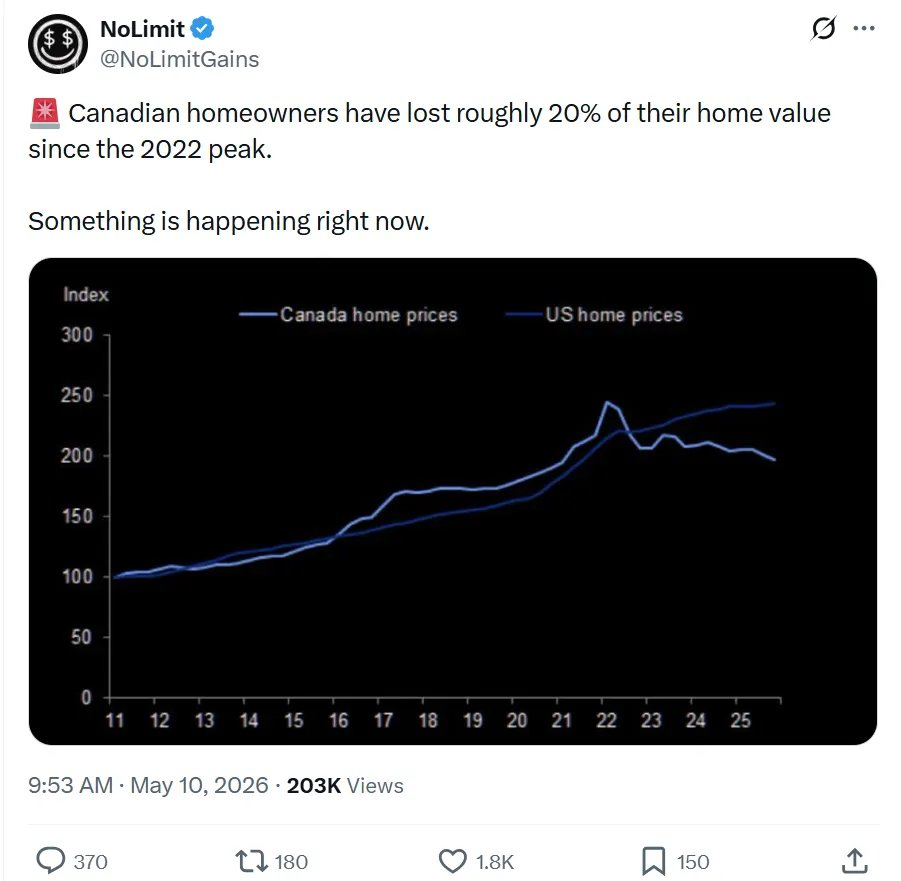
I can't buy the options I want from these banks, but I've been watching. Also, speaking of the credit market in a broad sense, we wrote about it in “Observe Credit” before. Today's private equity credit feels like a “cockroach house,” reflecting that overall lending standards are getting looser and looser. Once the money is put in, it won't come out. When the bubble stops, the book value of these assets won't change because no one is forcing them to revalue them. Until the day they had to face reality.
B) Victim of shorting
The second way to short the bubble is to find what will be buried with the bubble when it bursts, that is, the asset next to the bubble.
Evergrande is a great example. You don't need to short Chinese bank stocks; it will only cost you ten years of money in vain. What you need to look for is a developer that has ridiculously high leverage and is extremely dependent on pre-sale housing. Even if the Chinese property market only slows down slightly, it can explode in place. The bubble can keep blowing, but Evergrande can't stand it.
What you are looking for is a “downward convexity” (that is, a variety that falls faster and with greater amplitude). You can't directly short things that are surging exponentially; that is tantamount to fighting against double upward momentum.
But if you look at its neighbors, maybe its options volatility isn't as exaggerated as speculated to 70.
Think back to the airlines before the pandemic. They don't have bubbles themselves, but they can fall very violently because of the risk of being extremely asymmetrical. Put options were expensive at the time, but they weren't outrageously expensive. You can still buy options on both ends. So we just did that at the time. This may seem obvious in hindsight, but the “bubble” at the time was actually people's blind optimism that “everything is normal.”
Think back to financial stocks in 07/08. You don't need to directly short real estate (to be honest, directly shorting real estate is extremely difficult and the technical threshold is extremely high; of course, if you can actually find CDS default swaps for mortgages, that's great). All you need to do is short Bank of America.
The core principle is that bubbles create a kind of correlation that only becomes apparent when they collapse. The options market usually waits until a major disaster strikes to price this kind of correlation. Your mission is to find those “victims” whose options are cheap and are bound to be dragged down by those bubble assets with expensive options.
As for who is the current “victim”? Honestly, I haven't read it yet.
C) Awaiting confirmation
The third method tests discipline the most, which is why most people screw up.
That is: wait.
I know waiting is the hardest. Sometimes when you watch something soar in a straight line, you just can't control your hands. But then again, you definitely don't want to be run over by a full-speed locomotive.
So you have to wait for a confirmation signal. What does the signal look like?
It's usually a combination of the following situations:
The fundamentals began to deteriorate;
Purchases have dried up and market sentiment has run out;
The trend line has completely broken.
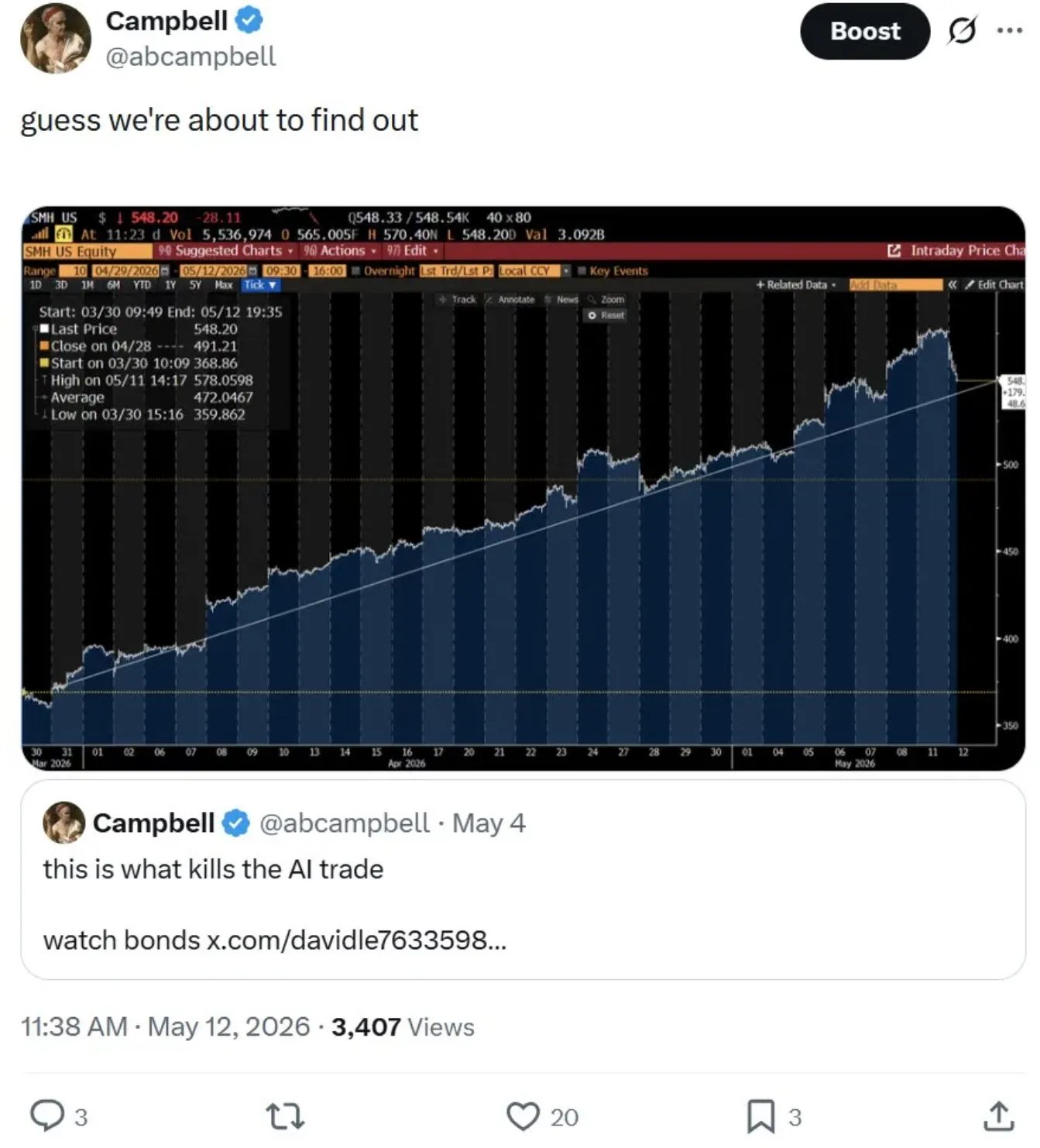
Note that it was not a slight pullback, but a complete break. It was the kind of thing that had been rising so well that suddenly fell below a beautiful support line, and people started frantically retweeting screenshots on Twitter. We've seen this fall in the silver trend in January of this year (but don't look at it now; it's back up; we'll talk about this in a later article).
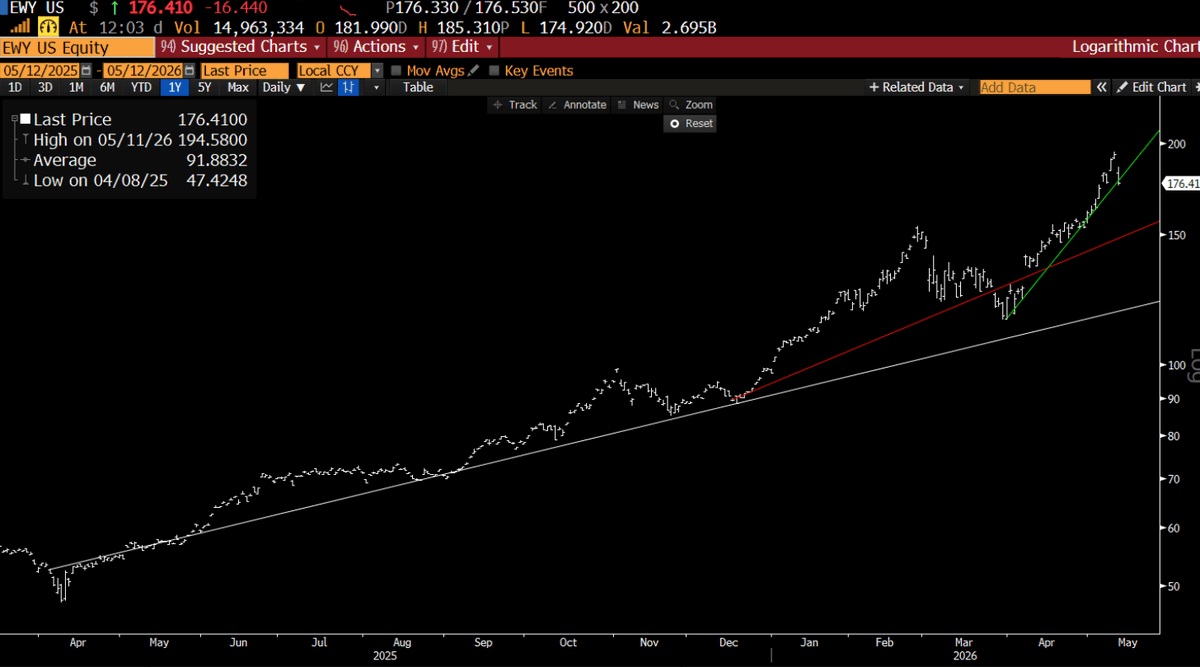
Depending on the time period you are looking at, the information given on the chart will also be completely different.
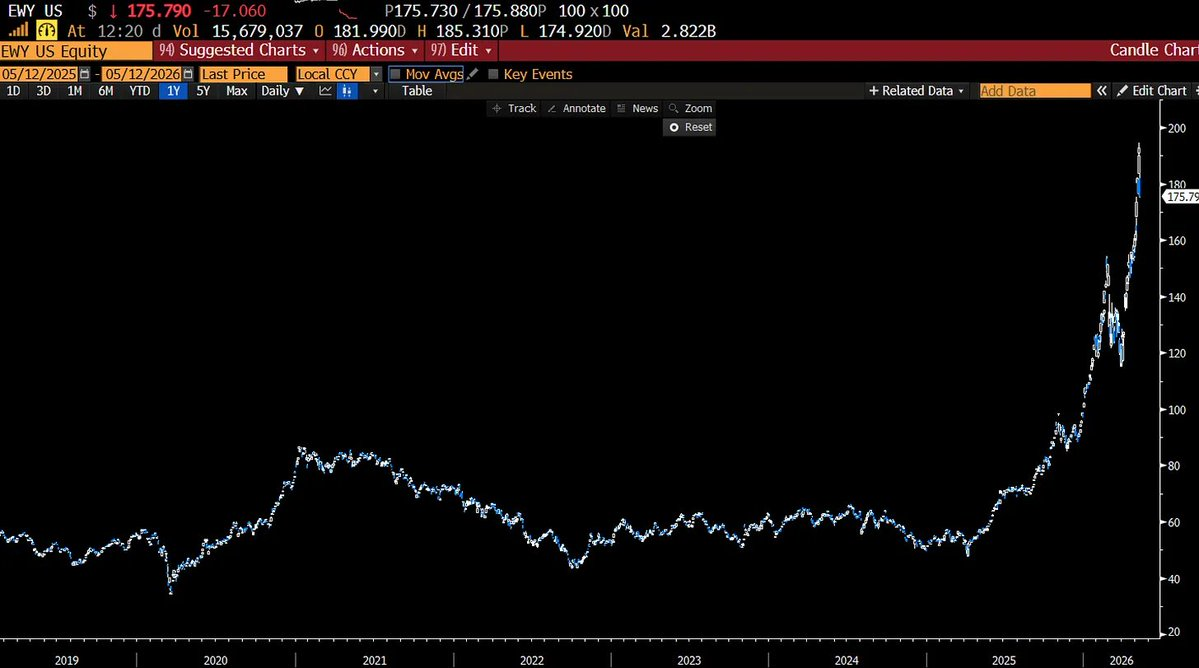
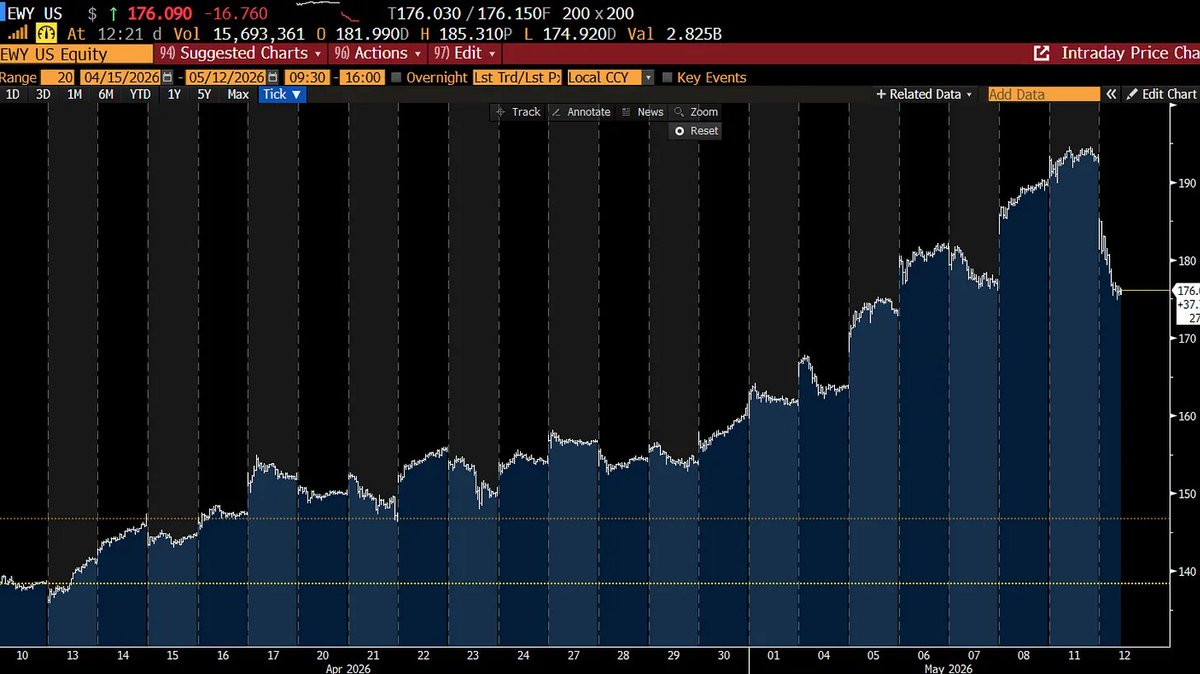
The core truth now is that when it comes to AI, the only thing that's getting worse is that too much of its cash flow is pinned on the distant future.
The problem is, you have to use today's interest rates to discount future flatbreads. If inflation rises and policymakers are forced to tighten monetary policy (imagine if oil prices soared to $150 to $200 a barrel, they would definitely do that), then the net present value (NPV) of many of these assets will shrink drastically. This is the same logic we wrote during the 2021 bond bubble.
Another thing to focus on is correlation. Be careful when the old routine of testing Bering suddenly doesn't work, and when it suddenly becomes sensitive to factors that could easily be ignored. We are probably witnessing this today.
Practice and summary
What did I do today? (Early morning of May 13, Beijing time) Before the market plummeted, I had done some hedging, but that wasn't enough. I shorted 5% of the S&P 500 Index (SPX) and 10% of high-yield bonds (HYG), then bought a little short-term put option spread. Then I left for a while and came back to take a look, the situation was terrible.
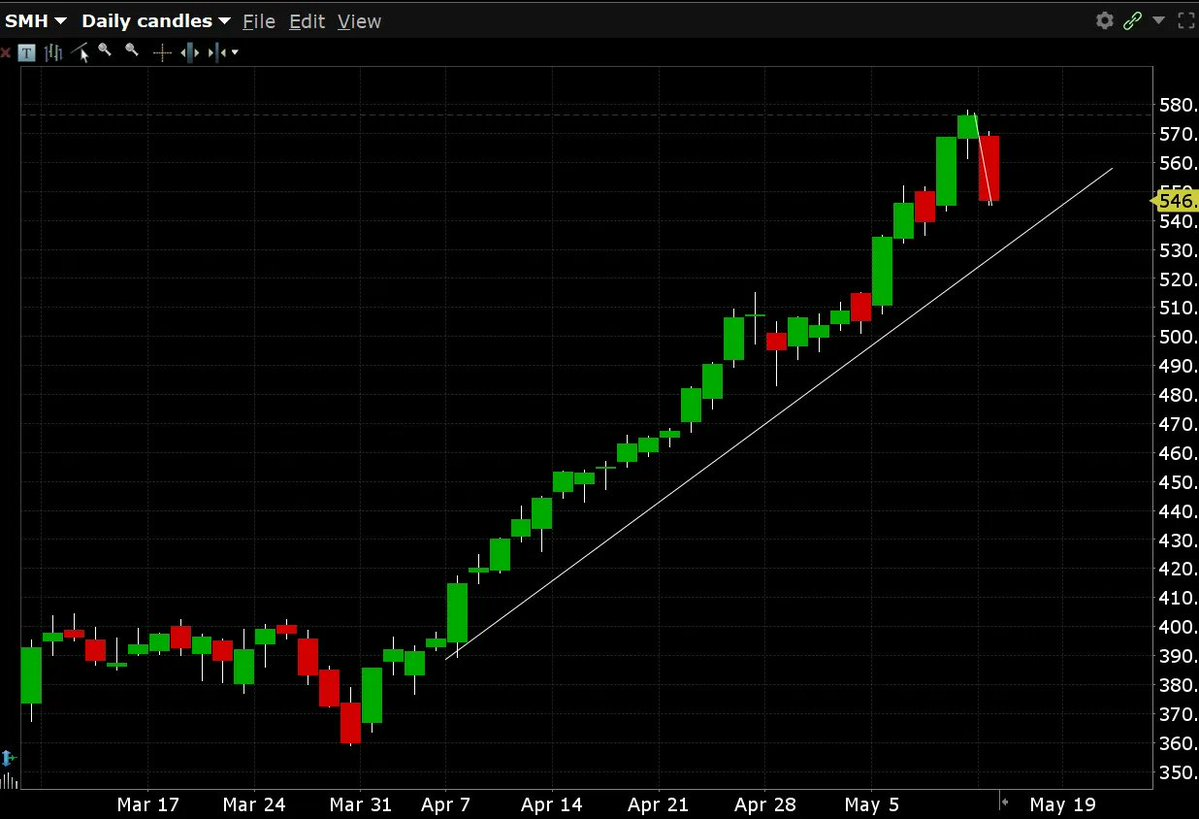
What the hell did I do? I'm not shorting semiconductors because the core fundamental needs are still there, and the upward trend has not been broken. But I did short more bonds. What I bought directly this time was the spread of put options on US Treasury bonds. If the trend line holds up and the market rebounds, I'll spend a small amount of money on my “wedge” strategy to buy peace of mind, no harm. If the trend line doesn't hold up, I still have cash and protected positions, then only then will I take a heavy position to attack those specific shorting targets. Oh right, I also sold 5% of Bank of Canada shares.
Hedge, find wedges, wait for confirmation, and hit back.
Listen, I don't know if we're in a bubble right now. This wave of the market may have only reached the fourth round (probably not; the price trend is already too strong), or it may have reached the ninth round (I don't really believe it; I need to see the market's demand for underlying computing power like Token being destroyed, but I haven't seen any signs of this yet). The only thing I know is that the “unstoppable” feeling AI brings to me is very similar to when I first pieced together my internet stock portfolio when I was in high school in 1999. Yes, those stocks eventually came back up, and giants like Amazon were born. If you keep getting it today, the internal rate of return (IRR) can be about 10%.
But I also haven't forgotten the drastic collapse back then.
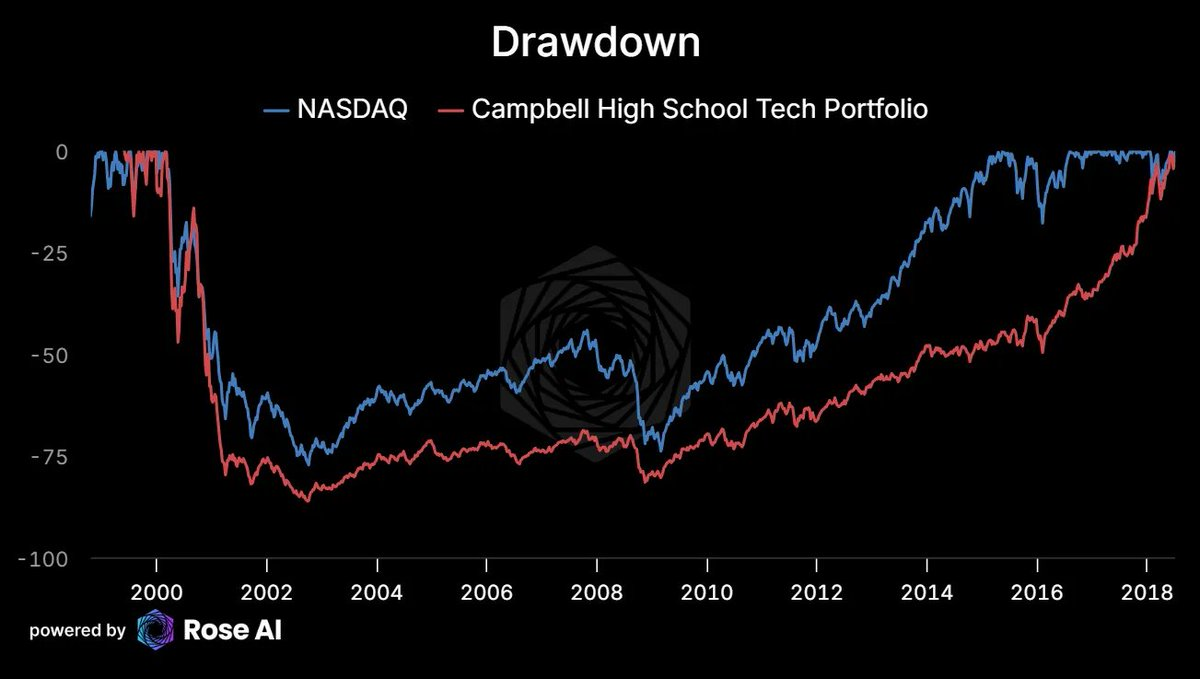
So if you read the end of this endless essay, you might be nervous. If you're nervous, the answer is definitely not to go short that vertical upward thing. The answer is: find a wedge, buy the victim's put option, wait for a confirmation signal to appear, and finally take a heavy position.
During this time, don't go against market trends. Never go short on something that is skyrocketing on a parabolic path.
Twitter:https://twitter.com/BitpushNewsCN
Compare the TG exchange group:https://t.me/BitPushCommunity
Compare TG subscriptions:https://t.me/bitpush
