


How far can Walsh's “working group” go to reform the Federal Reserve?
Author: Xu Chao
Source: Wall Street News
Original title: Reform the Federal Reserve, Walsh can't wait
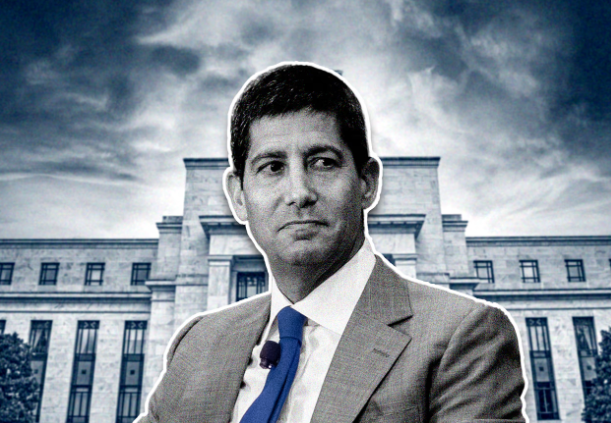
Kevin Warsh (Kevin Warsh) completed his debut as Chairman of the Federal Reserve with the shortest FOMC statement since 2007 and five reform working groups spanning the core functions of the Federal Reserve — the intention of the reform is clear, but the market and economics community's doubts about whether it can be implemented remain unresolved.
On Wednesday, the Federal Reserve decided by a full vote of 12 to 0 to keep the federal funds rate target range unchanged at 3.5% to 3.75%, remaining on hold for the fourth consecutive meeting. Walsh announced at the first press conference that special working groups will be set up in the five major areas of communication mechanisms, balance sheets and operating frameworks, alternative data sources, productivity and employment, and the inflation framework. At the same time, he reiterated that the 2% inflation target remains unchanged, and refused to fill in personal interest rate forecasts in the bitmap.
The market interpreted this signal as a hawkish surprise. The actual yield for TIPS's 10-year period rose to the highest level since May of last year, the US dollar recorded its biggest one-day increase during the year, and federal funds futures showed a marked rise in interest rate hikes during the year.
However, Walsh's debut was not without controversy. At the press conference, he avoided difficult issues directly related to recent policy debates on the grounds that “the working group will study” four times. Stephen Douglass, chief economist at NISA Advisors, said bluntly that Walsh was “quite evasive,” while Ian Katz, managing director of Capital Alpha Partners, pointed out that “leave it to the working group” almost became some kind of “mantra” at the press conference that day.
This situation revealed the internal tension of Walsh's strategy: minimal statements and refusal to participate in the bitmap enabled him to send a strong and independent signal to the market; however, the most difficult reform issues, such as the inflation framework, data methods, and balance sheet paths, were all handed over to working groups that are still being formed, and a framework report will only be provided as early as fall. During this transition period, uncertainty about the Fed's policy logic will gradually rise.
Minimalist statement: the first business card of the Walsh reform
The sharp decline in the length of this FOMC statement is the most direct sign that the market is sensing the change.
The text of the statement was reduced from the usual 341 words to about 130 words, and George Pearkes of Bespoke Investment characterized it as the shortest FOMC statement since 2007 (excluding the emergency interest rate cut statement at the beginning of the COVID-19 pandemic). The full statement contained only three paragraphs, covering interest rate decisions, economic situation judgments, and inflation assessments. It removed a number of historically commonly used forward-looking guidance statements and ended with the phrase “the Commission will stabilize prices”, while omitting the full voting list that is usually attached at the end.
Walsh accepted this adjustment as a result of active choice, saying the statement was “slightly shorter, slightly simpler, and some old statements were removed.” This is in line with the position he has publicly expressed many times before: the Federal Reserve has talked too much in the past.
Michael Feroli, chief economist at J.P. Morgan Chase, bluntly pointed out the contradiction in his report to clients: “Given this brief statement focusing on controlling inflation, it is puzzling why the Federal Reserve did not raise interest rates today.” TS Lombard's Dario Perkins pointed out that the contraction forward guidance is relatively easy — “it was designed for an era where interest rates were close to zero for a long time” — but compressing the Fed's balance sheet or moving to a new modeling framework is a “bigger challenge,” and none of these challenges can be met this week.
Five major working groups: reform the mechanism or “shirking the shield”?
The economics community was shocked by the breadth of coverage of the five major working groups announced by Walsh, focusing in particular on two areas: an examination of government data sources and a comprehensive review of the inflation framework.
On the data issue, Walsh said that the monthly non-farm payrolls report, which the Federal Reserve has always relied on, is nothing more than an “echo of history,” which is clearly different from the position of Federal Reserve officials who have always endorsed government data.
In terms of the inflation framework, the establishment of a special task force itself made the market begin to question the stability of the 2% target — although Walsh made it clear that the target did not change, he immediately added that he was concerned about the “number on the left side of the decimal point,” implying that the 2.9% inflation rate was to some extent or acceptable, leaving the outside world with doubts about the strict implementation of the target.
Walsh said that the working group is currently still in the “recruitment and identification of personnel” stage, will be officially launched in the “next few weeks”, will provide a preliminary framework report in the fall of this year, and is expected to complete most of the work before the end of the year.
Laura Rosner-Warburton, senior economist at MacroPolicy Investigations, said that the task force will cause economists to continue to question the Fed's decision-making logic until it is completed. “This has placed everything under questioning and scrutiny over a period of time, creating a high degree of uncertainty about the Fed's policy.” She also pointed out that it is still uncertain whether these working groups will be used to improve monetary policy or whether they are tools to implement the “transparency reduction agenda.”
Dot chart and inflation target: the direction is set, the border is still blurry
Walsh declined to fill in personal interest rate predictions, but 18 colleagues participated in this bitmap and collectively moved in the direction of raising interest rates. According to Bloomberg, the average forecast interest rate for the year rose from 3.24% to 3.83%, and committee members generally expect interest rates to be raised before interest rates are cut.
On the issue of the inflation target, Walsh made it clear that the 2% target remains unchanged, dispelling speculation that the Federal Reserve will quietly raise the target to 3% — the latter will create more room for interest rate cuts that the Trump administration hopes to push. However, Walsh's statement on the “left side of the decimal point” left a vague area at the market level.
This disagreement is also quite intriguing at the communication level: Walsh himself intended to abandon forward-looking guidance, but his colleagues used the existing bitmap mechanism to clearly convey a hawkish sense of direction. Walsh said he expected the Communications Task Force to eventually propose “some well-considered adjustments” to the Economic Forecast Summary (SEP).
Market shock: Hawks unexpectedly trigger rapid repricing
After the FOMC resolution was announced, the market reacted quickly and violently.
TIPS's 10-year real yield climbed to the highest level since May last year, financial conditions were rapidly tightened, and federal funds futures showed a marked rise in interest rate hikes during the year. The US dollar recorded its biggest one-day gain during the year, contrary to the Trump administration's clear goal of weakening the dollar, causing the global market to feel additional pressure.
Previously, falling oil prices could have provided Walsh with room to avoid tough statements, but he chose not to follow this path. Analysts believe this sends a key signal to the market: Walsh does not intend to be the executor of the president's intention to push for interest rate cuts.
For investors, the current pattern means that uncertainty about the Fed's policy path will continue during the transition period when forward-looking guidance fades out and working group conclusions are yet to be released. The market may need to get used to it — under Walsh's new communication framework, accidents from the Federal Reserve may be more frequent than before.
Twitter:https://twitter.com/BitpushNewsCN
Compare the TG exchange group:https://t.me/BitPushCommunity
Compare TG subscriptions:https://t.me/bitpush
